Table of Contents
- The Midnight Tremor: Setting the Scene on Vancouver Island, June 23, 1946
- The Origin Deep Beneath the Pacific: Unveiling the Aleutian Earthquake
- The Relentless Rise: How the Tsunami Was Born
- Waves of Destruction: The Tsunami’s First Arrival in Canada
- The Immediate Aftermath: Shock, Confusion, and Tragedy
- Silent Devastation Along the West Coast: Impact Beyond Vancouver Island
- Human Stories of Survival and Loss: Voices from the Disaster
- Governments Respond: Emergency Measures and Early Warning Efforts
- Scientific Endeavors: Tsunami Research Before and After 1946
- The Birth of a Warning System: Lessons Learned from Catastrophe
- The Cultural Imprint: How the Tsunami Affected Indigenous Communities
- Economic Ripples: The Post-Disaster Reconstruction in Coastal Towns
- Commemoration and Collective Memory: Preserving the 1946 Tragedy
- Tsunami Preparedness Then and Now: Evolution of Safety Protocols
- The Tsunami’s Legacy in Canadian and Pacific Rim History
- Comparing 1946 to Modern Tsunamis: Scale, Impact, and Science
- Climate and Geological Context: Understanding the Pacific’s Fury
- The Role of Media in 1946: Reporting Disaster in a Pre-Digital Age
- Lessons for Today: Why the 1946 Vancouver Island Tsunami Matters
- Conclusion: Resilience by the Sea—The Enduring Spirit of Vancouver Island
The Midnight Tremor: Setting the Scene on Vancouver Island, June 23, 1946
In the quiet hours just past midnight on June 23, 1946, a deep rumble unsettled the still air of Vancouver Island. The night was thick with the usual Pacific Northwest calm, the kind of calm that lulls residents and visitors alike into a false sense of security. Yet beneath these serene waves, an immense shift was about to shatter that tranquility. The earth heaved violently beneath the Aleutian Islands thousands of miles away, sparking a chain of events that would forever alter the lives of those along Canada’s rugged west coast.
As the first faint tremors wracked the island’s ground, no one could foresee the towering walls of water racing unseen across the vast Pacific Ocean, poised to unleash devastation. The night was about to give way to catastrophe—the 1946 Vancouver Island tsunami was imminent, a natural disaster etched in the collective memory of a region accustomed to the wildness of nature but unprepared for its sudden, devastating force.
The Origin Deep Beneath the Pacific: Unveiling the Aleutian Earthquake
The catastrophic tsunami that struck Vancouver Island was born of one of nature’s most destructive forces: an enormous seismic upheaval along the Aleutian Subduction Zone, where the Pacific Plate grinds forcibly beneath the North American Plate. In the early hours of June 23, a magnitude 7.8 earthquake ruptured this volatile fault line near the Aleutian Islands, triggering the release of pent-up tectonic energy.
This earthquake didn’t just shake the Aleutian Islands; it displaced millions of cubic meters of ocean floor, setting off a titanic displacement of water that sent energy rippling far beyond the point of rupture. This sudden upheaval of the seabed created a series of tsunami waves that accelerated outwards across the North Pacific Basin at jet speeds, transforming an invisible danger into an impending crisis for distant shores.
The Relentless Rise: How the Tsunami Was Born
The physics of tsunami formation are both fascinating and terrifying. When the earth’s crust shifts abruptly beneath the ocean, it forces the overlying water column to move violently. In this case, the Aleutian earthquake caused a downward and upward displacement of the seabed that in turn raised and lowered the ocean surface by several meters in places.
These initial ripples gathered strength as the water rushed outward, traveling at speeds reaching 800 kilometers per hour across deep oceanic trenches. Though stochastic and irregular at their origin, the waves would grow as they neared shallow coastlines, compressing into massive surges. What began as a subtle, fast-moving undulation hundreds of meters high under the ocean would become a formidable wall of water on the shores of Vancouver Island.
Waves of Destruction: The Tsunami’s First Arrival in Canada
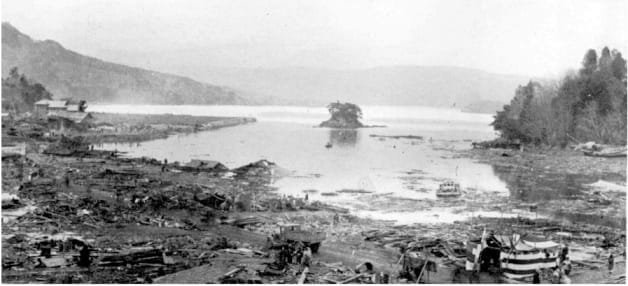
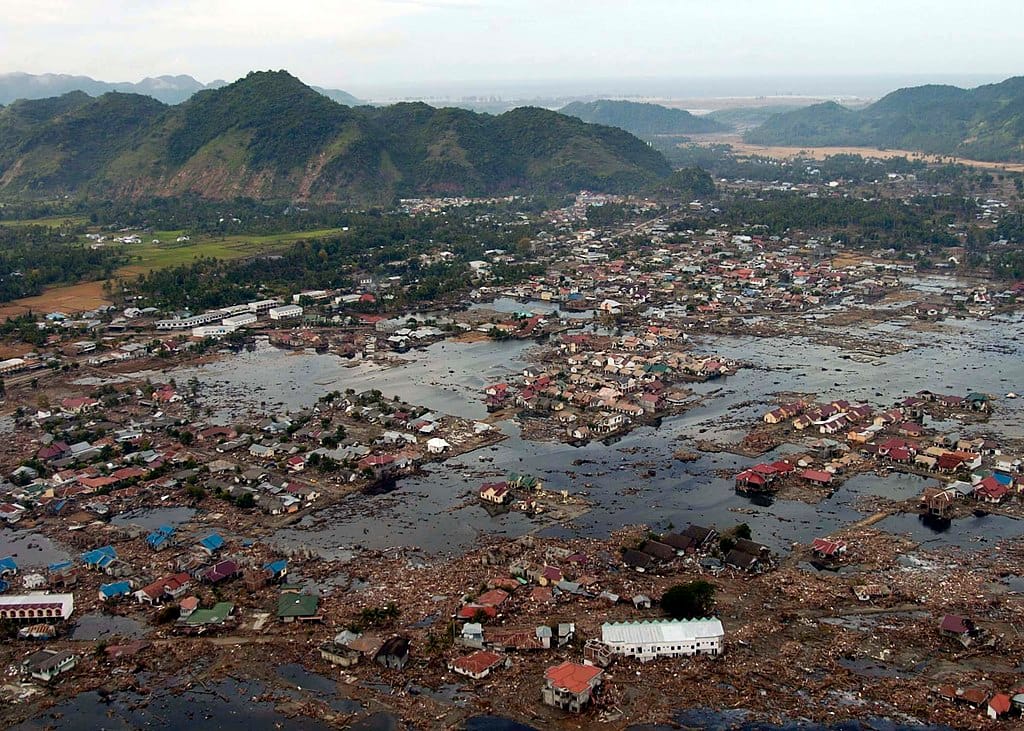
More than eight hours after the earthquake, the tsunami finally slammed into Vancouver Island’s west coast under the dawning light of June 23. Unlike a mere storm surge, these waves moved with uncanny force and velocity, rising up steep cliffs and flooding low-lying villages. The fury of the water uprooted trees, swept away homes, and left debris strewn across shores that had never endured such violence.
Communities like Port Alberni and Bamfield felt the full brunt of the disaster. Residents awoke or were pulled abruptly from sleep by unnatural sounds—the thundering crash of waves breaking inland, the roar of water funneling through narrow inlets, and the frantic cries of those caught unawares. The destruction was swift and merciless; lives were lost in moments, and entire neighborhoods were plunged into devastation.
The Immediate Aftermath: Shock, Confusion, and Tragedy
In the hours that followed, the survivors grappled with horror and disbelief. Communication lines were down, transportation severed, and emergency services were overwhelmed. Many coastal villages remained isolated, their inhabitants stranded among wreckage and flooded roads.
Casualty estimates varied, but it is known that dozens lost their lives to the tsunami’s onslaught. Beyond death, the emotional and psychological toll on survivors was immense—families torn apart, homes destroyed, and livelihoods eviscerated. But amid the chaos, stories of bravery and community resilience emerged, illuminating human strength in the wake of nature’s wrath.
Silent Devastation Along the West Coast: Impact Beyond Vancouver Island
While Vancouver Island bore the immediate brunt, the tsunami’s waves also radiated outward, impacting numerous communities along the British Columbia coastline. From the exposed northern fjords to the intricate labyrinth of inlets and bays, coastal towns experienced varying degrees of flooding and damage.
Further afield, the tsunami was recorded as far south as California and Hawaii, where its energy dissipated but still commanded attention. Across the Pacific, scientific stations and observatories grappled with the unprecedented scale of the waves, piecing together data to understand this nightmarish phenomenon.
Human Stories of Survival and Loss: Voices from the Disaster
Amid the tidal chaos, countless personal narratives surfaced—accounts of narrow escapes, of neighbors rescuing one another, and of lives forever changed by a sea that turned hostile. A fisherman swept from his boat by the sudden surge clung to driftwood for hours before washing ashore miles down the coast. A mother, separated from her children in the confusion, battled relentless tides to reunite with them.
Such stories embroidered the bare statistics with deep emotion, reminding us that every number was a human life: hopes, dreams, and memories washed away or forever altered by the tsunami’s merciless touch.
Governments Respond: Emergency Measures and Early Warning Efforts
In the wake of the tsunami, emergency response became a race against time. Canadian authorities, still recovering from the scars of World War II, mobilized rapidly to aid affected communities. Relief efforts included providing medical care, shelter, food, and rebuilding materials.
The disaster also spurred international cooperation and heightened awareness of the need for tsunami warning capabilities in the Pacific region. This tragic event was a wake-up call—prompting governmental agencies and scientific bodies to dedicate more resources towards preparedness and early detection.
Scientific Endeavors: Tsunami Research Before and After 1946
Before 1946, tsunamis were poorly understood by the general public and many scientists alike. The Vancouver Island tsunami became a pivotal case study, amplifying interest in seismic and oceanographic research. Scientists began to gather vital data on wave propagation, arrival times, and inundation patterns.
The event catalyzed advances in seismology and the nascent fields of tsunami modeling, leading to the recognition that such natural disasters were a persistent threat along the Pacific “Ring of Fire.”
The Birth of a Warning System: Lessons Learned from Catastrophe
Perhaps the most enduring legacy of the 1946 tsunami was its role in the genesis of the Pacific Tsunami Warning Center (PTWC). Established in 1949, just three years after the disaster, this organization developed protocols and communication networks designed to detect distant tsunamis and alert coastal populations swiftly.
This early warning system has since saved countless lives, transforming a once unpredictable calamity into a manageable risk through timely alerts and public education.
The Cultural Imprint: How the Tsunami Affected Indigenous Communities
For Indigenous peoples of Vancouver Island and the broader Pacific Northwest, the tsunami struck not only their lands and villages but also their cultural fabric. Coastal communities with deep connections to the ocean witnessed sacred sites altered or washed away.
Oral histories passed down through generations echo the trauma and resilience born from the 1946 event, blending natural history with spiritual interpretation and reinforcing an ethic of respect and vigilance toward the sea.
Economic Ripples: The Post-Disaster Reconstruction in Coastal Towns
Rebuilding from the tsunami’s devastation presented a formidable economic challenge. Fishing fleets were incapacitated, infrastructure was destroyed, and economic activity slowed dramatically. Community leaders and governments had to balance immediate relief with long-term reconstruction, integrating lessons about rebuilding more resiliently against future tsunamis.
The recovery process tested the resolve of small coastal economies but also spurred modernization and regional cooperation.
Commemoration and Collective Memory: Preserving the 1946 Tragedy
As decades passed, the memory of the 1946 tsunami has been enshrined through memorials, museums, and educational programs. Annual commemorations honor the victims and survivors, reminding new generations of the precariousness of coastal life.
Preserving this history has helped anchor community identity, fostering a shared narrative of loss, recovery, and vigilance.
Tsunami Preparedness Then and Now: Evolution of Safety Protocols
From the chaos and absence of warning in 1946, modern-day preparedness reflects refined emergency planning, improved infrastructure, and community drills designed to minimize casualties. Public education initiatives emphasize “Run to High Ground” policies, evacuation route signage, and the integration of cutting-edge technology.
These efforts illustrate how societies adapt their vulnerabilities into strengths, inspired by the painful lessons of the past.
The Tsunami’s Legacy in Canadian and Pacific Rim History
Though lesser-known internationally than events like the 2004 Indian Ocean tsunami or the 2011 Tōhoku disaster, the 1946 Vancouver Island tsunami has cast a long shadow over Pacific Rim hazard awareness. It stands as an early, sobering reminder that Canada is a player in the seismic drama of the Pacific, and that disaster preparedness is imperative even in regions often considered serene.
Its legacy informs policies, emergency services, and cross-border collaborations to this day.
Comparing 1946 to Modern Tsunamis: Scale, Impact, and Science
While the 1946 tsunami was devastating, subsequent events around the world have often exceeded its scale of destruction. However, each tsunami tells a unique story, shaped by local geography, population density, and preparedness.
Comparative study highlights the evolution of scientific understanding—from early post-event field investigations to today’s satellite and sensor networks—mapping humanity’s progress in reading and mitigating the ocean’s rage.
Climate and Geological Context: Understanding the Pacific’s Fury
The 1946 event cannot be isolated from the broader geophysical dynamics shaping the Pacific Northwest. Situated on the Cascadia Subduction Zone, Vancouver Island lies in one of the most seismically active regions on Earth. Understanding this geological context is key to grasping why such catastrophes occur and how vulnerable the area remains.
Simultaneously, climate factors can influence wave behavior, adding layers of complexity to risk management.
The Role of Media in 1946: Reporting Disaster in a Pre-Digital Age
In 1946, news traveled primarily through newspapers, radio broadcasts, and word of mouth. The tsunami’s arrival mid-night limited immediate reporting, and information often lagged behind events, complicating rescue and relief efforts.
This contrast with today’s instant global connectivity underscores shifts not just in technology but also in public engagement with natural disasters.
Lessons for Today: Why the 1946 Vancouver Island Tsunami Matters
Reflecting on the 1946 tsunami reminds us that the risk of disaster is ever-present—and that human resilience and ingenuity can only mitigate, never eliminate, nature’s power. The disaster sharpened preparedness culture in Canada and around the Pacific and stimulated scientific advances that save lives.
Remembering such catastrophes reinforces a collective commitment to vigilance, adaptation, and respect for the earth’s hidden forces.
Conclusion
The 1946 Vancouver Island tsunami remains a defining moment etched in the Pacific Northwest’s collective memory—a stark tableau of nature’s deep, unpredictable power and human vulnerability in its path. Yet beyond destruction and loss, the disaster seeded resilience, knowledge, and cooperation that echo far beyond the coastline.
It was a night when the earth whispered a grave warning and the sea rose like a titan, but it was also a testament to communities who faced overwhelming odds with courage and resolve. The tsunami’s legacy is not only in shattered homes and lost lives but in an enduring spirit—an awareness that prepares us to ride the tumultuous waves of an uncertain future with eyes wide open, hearts steadfast, and lessons deeply learned.
FAQs
Q1: What caused the 1946 Vancouver Island tsunami?
A1: The tsunami was triggered by a powerful magnitude 7.8 earthquake along the Aleutian Subduction Zone in Alaska, which displaced the ocean floor and generated massive waves that traveled across the Pacific to Vancouver Island.
Q2: How many people died as a result of the tsunami?
A2: Estimates suggest that dozens of people lost their lives, mainly in coastal communities like Port Alberni and Bamfield, though precise numbers are uncertain due to the era’s limited record-keeping.
Q3: What was Canada’s response to the disaster?
A3: Emergency services provided medical aid, relief, and reconstruction help. The disaster also spurred the creation of better tsunami warning systems, including eventual establishment of the Pacific Tsunami Warning Center.
Q4: How did the tsunami impact Indigenous communities on Vancouver Island?
A4: Indigenous communities suffered damage to their lands and cultural sites, and the event became part of oral histories that emphasize the ocean’s power and the importance of preparedness.
Q5: How did the 1946 tsunami influence tsunami science and warning systems?
A5: It catalyzed scientific research into tsunami generation and propagation and led to the development of the Pacific Tsunami Warning Center in 1949, improving regional disaster preparedness.
Q6: Is Vancouver Island still at risk of tsunamis today?
A6: Yes, Vancouver Island remains vulnerable due to its location near active subduction zones, though modern monitoring and preparedness have significantly reduced risks to human life.
Q7: How was news of the disaster disseminated in 1946?
A7: Information circulated through newspapers and radio, but communication delays meant many communities received warnings late or not at all.
Q8: What lessons does the 1946 tsunami hold for modern coastal populations?
A8: The event underscores the critical importance of early warning systems, public education, and emergency planning to mitigate disaster impact and save lives.