Table of Contents
- The Silent Morning Before the Wave
- Alaska’s Rugged Coast: A Land of Mysteries and Dangers
- Tectonic Tensions Beneath the Fjord
- November 3, 1994: The Day Nature Roared
- The First Signs: Earthquake Tremors and Shaken Spirits
- The Unfolding Fury: Tsunami Waves Crash into Skagway
- Lives upended: The Human Face of Disaster
- The Emergency Response: Chaos, Courage, and Coordination
- Media Coverage and Public Awareness: Stories Told and Untold
- Geological Insights: What Scientists Learned from the Event
- Comparing the 1994 Skagway Tsunami to Other Alaskan Disaster Events
- Long-Term Effects: Community Recovery and Resilience
- Economic Consequences: The Toll on Infrastructure and Livelihoods
- Cultural Echoes: Indigenous Perspectives and Oral Histories
- Environmental Impact: Fjord Ecosystems in the Aftermath
- Legacy of the 1994 Skagway Tsunami in Disaster Preparedness
- Remembering the Event: Memorials and Annual Commemorations
- The Role of Technology: From Forecasting to Early Warnings
- Tsunami Science in Alaska: Evolution Post-1994
- Global Implications: Understanding Tsunami Risks Worldwide
- The Power of Nature: Reflections on Human Vulnerability
- Conclusion
- FAQs
- External Resource
- Internal Link
The Silent Morning Before the Wave
The first light of dawn on November 3, 1994, filtered gently through the spruce-laden hills surrounding Skagway, Alaska. A town nestled between soaring mountains and frigid glacial waters seemed wrapped in peaceful stillness. The brandishing gulls cried overhead, the cold air crisp with approaching winter. Life here moved with the rhythm of tides, the steady beat of a remote community alive with rugged determination. For many, it was just another day: fishermen prepping gear, shopkeepers arranging their wares, children heading to school bundled against the cold.
Yet beneath this quiet surface, the earth was stirring ominously.
Alaska’s Rugged Coast: A Land of Mysteries and Dangers
To understand the tsunami that rumbled through Skagway’s fjord in 1994, one must first see the land itself — a wild mosaic of natural forces. Alaska’s coastlines, carved through millennia by glaciers and tectonic upheavals, have always harbored elements of beauty and latent menace. Skagway sits in the heart of the Alaska Panhandle, an area marked by sheer fjords like ribbons of cold, dark water slicing the coastal mountains.
The region is no stranger to earthquakes. Straddling the boundary of the Pacific and North American tectonic plates, Alaska epitomizes the Earth’s restless geology. The Pacific Plate relentlessly dives beneath its northern neighbor in a subduction zone so active it has birthed some of the most powerful earthquakes in recorded history. This ceaseless movement has shaped the fjord, the landscape, and, occasionally, the very lives of those who live here.
Tectonic Tensions Beneath the Fjord
Underneath what seemed a calm and silent expanse of water, geological forces built tension invisible to the eye. The sunken plates locked in a precarious embrace, strain accumulating with each passing day, month, and year. Scientists monitoring seismic activity had noted the region’s frequent minor tremors but struggled to predict when these might manifest into something catastrophic.
The fjord itself, a deep glacial scar filled with seawater, was essentially a natural amphitheater for a potential tsunami. The steep surrounding slopes were prone to landslides triggered by seismic tremors — a known catalyst for underwater displacement capable of unleashing devastating waves.
November 3, 1994: The Day Nature Roared
At approximately 8:17 a.m., a sharp earthquake ruptured below the waters of Skagway Fjord. The trembling earth was felt by residents who immediately sensed something was wrong — pictures on walls rattling, windows shaking, a low rumble echoing through the mountains. But it was not just the quake; the fjord was about to transform into a deathly trap.
Seconds after the shaking stopped, a massive landslide unleashed into the fjord’s waters, displacing millions of cubic meters of rock and ice. This colossal underwater avalanche generated an immense wave that raced across the narrow bay with terrifying speed.
The First Signs: Earthquake Tremors and Shaken Spirits
People remember vividly how the ground shook like never before, a reminder of the living planet beneath their feet. In the town, businesses froze mid-motion, the local radio station momentarily stunned into silence. Elderly residents recalled previous tremors, but this quake’s intensity carried an ominous weight.
Some hurried to high ground instinctively; others confusedly waited, unaware that the ground's shaking was just the prelude to a far more devastating force.
The Unfolding Fury: Tsunami Waves Crash into Skagway
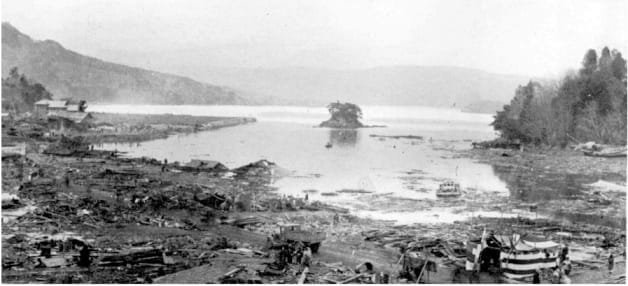
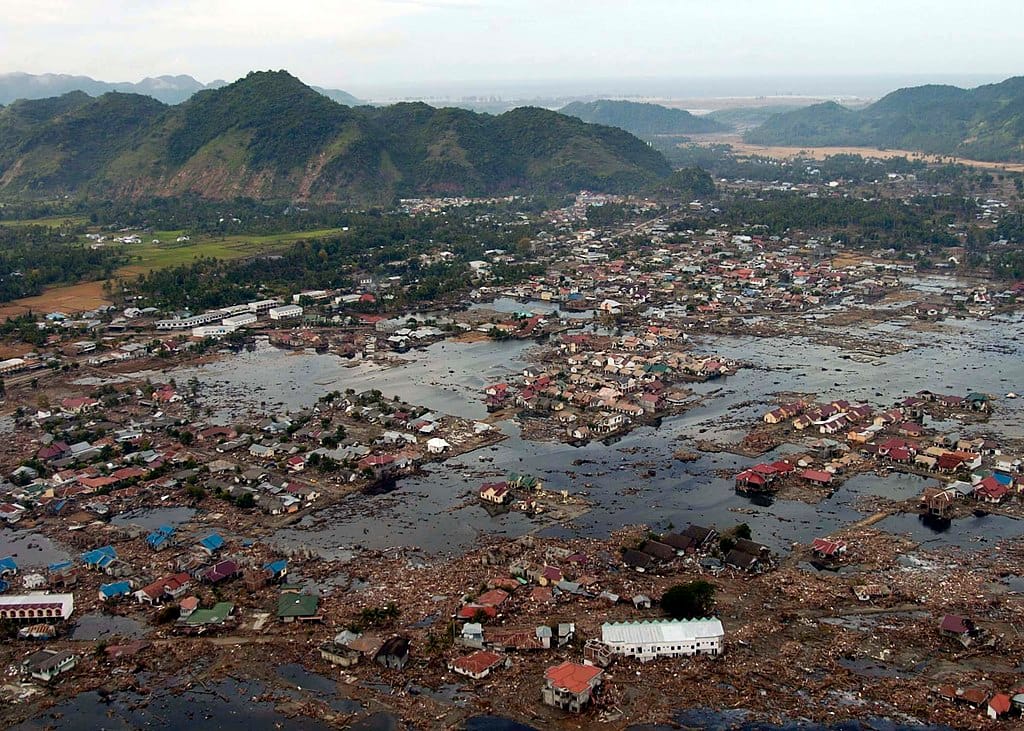
The first wave surged in roughly five minutes after the earthquake. The water rose abruptly — an angry, monstrous wall of cold seawater curling toward the docks, homes, and forests. Harbor boats were slammed against the piers, overturned, or swept seaward. Vehicles abandoned by panicked drivers floated away or were crushed beneath debris.
Citizens who had fled to higher ground watched helplessly as the waters surged, swallowing parts of the shoreline with violent, indiscriminate force. The fjord’s waters rumbled like a beast unleashed, carrying both destruction and a haunting reminder of nature’s unpredictable power.
Lives Upended: The Human Face of Disaster
Among the chaos, stories of survival, loss, and heroism emerged. Families clutching each other on the bluffs; fishermen who narrowly escaped the wave; townspeople organizing rescue efforts from wreckage strewn across roads once familiar. Not all were spared — some lives were tragically lost, and others permanently altered, the emotional scars deepening with every retelling.
Local emergency worker Maria Jensen described the moment: “I saw the wave come in like a wall. It was as if the fjord itself was reaching to swallow us whole. People screamed, but the cold was biting; it was survival, pure and frantic.”
The Emergency Response: Chaos, Courage, and Coordination
Skagway’s response was a test of resilience under crisis. Communication lines were down, roads blocked, and many isolated in the immediate aftermath. Yet local volunteers, armed with little more than crawler trucks and determination, began coordinating search and rescue.
The Alaska National Guard, alerted by regional seismic stations, was deployed by air. Nearby towns extended aid, and federal disaster agencies soon arrived to assist in relief efforts. Though the small community lacked extensive infrastructure for such a disaster, their cooperation became a beacon of hope amid destruction.
Media Coverage and Public Awareness: Stories Told and Untold
News of the tsunami reached national and international media quickly, but the remote location limited immediate reporting. Local newspapers printed harrowing human stories, underscoring the fragility of life in the face of natural disasters.
A striking element was how this event revealed gaps in tsunami preparedness awareness for northern waters, where tsunamis were often overshadowed by more famous southern Pacific events. Yet it captured the imagination of many, triggering renewed interest in disaster education.
Geological Insights: What Scientists Learned from the Event
The 1994 Skagway Fjord tsunami became a pivotal case study. Geologists and oceanographers examined the landslide mechanics, wave height, and descent velocity to better understand how fjord geographies influenced wave behavior.
Dr. Harriet Lowell of the University of Alaska notes: “This event exposed the complex interplay between earthquakes and landslides in triggering tsunamis in enclosed fjord systems. It reshaped our models and alerted us to similar risks worldwide.”
Comparing the 1994 Skagway Tsunami to Other Alaskan Disaster Events
Alaska’s history includes infamous earthquakes, from the Great Alaska Earthquake of 1964 to smaller regional tsunamis. Comparing these disasters highlights both similarities in tectonic processes and differences in scale and preparedness.
Unlike the 1964 megathrust earthquake and its massive tsunami, Skagway’s event was more localized but no less deadly for the community. The scale difference reiterates how even smaller waves in confined spaces can cause significant damage.
Long-Term Effects: Community Recovery and Resilience
The months and years following the tsunami saw Skagway slowly healing. Infrastructure was rebuilt often with resilience in mind. Psychological impacts lingered, but community spirit strengthened, evident in new local disaster committees and education programs.
The event became a rallying moment, transforming attitudes about natural hazards. Schools incorporated tsunami drills, local governments invested in early warning communications, and partnerships with scientific institutions blossomed.
Economic Consequences: The Toll on Infrastructure and Livelihoods
Economically, Skagway suffered losses in fishing equipment, transportation routes, and tourist infrastructure. Private businesses bore heavy costs, some never reopening until months later. Meanwhile, insurance claims flooded agencies as recovery funds stretched thin.
Yet Skagway’s economy, reliant on resourcefulness and adaptability, gradually rebounded, underscored by efforts to diversify and mitigate future risks.
Cultural Echoes: Indigenous Perspectives and Oral Histories
For Indigenous communities around Skagway, including the Tlingit peoples, the tsunami resonated not only as a physical disaster but as a spiritual and cultural event. Elders shared oral histories recalling past tsunamis and taught the importance of listening to nature’s signs.
This disaster revived interest in traditional knowledge, bridging modern science and ancestral wisdom in understanding and respecting the power of place.
Environmental Impact: Fjord Ecosystems in the Aftermath
The natural environment absorbed part of the blow, but the ecosystem suffered disruptions. Sediments displaced altered seabed habitats; saltwater intrusion affected freshwater streams; forests along the shore saw trees uprooted and soils disturbed.
Scientists studied these ecological changes to grasp long-term recovery trends, appreciating how intertwined human and natural worlds are in fragile regions.
Legacy of the 1994 Skagway Tsunami in Disaster Preparedness
The lasting imprint of the tsunami extends beyond immediate scars. Alaska’s emergency management incorporated crucial lessons into statewide protocols. Community hazard mapping improved; early warning sirens installed; interagency drills staged regularly.
Skagway’s experience became an essential case informing coastal risk strategies in fjord-like environments globally.
Remembering the Event: Memorials and Annual Commemorations
Every November, residents gather to remember those affected, honoring resilience and loss. Memorial plaques and community events foster collective memory — a sobering reminder amid tranquil landscapes that nature’s power commands respect.
These rituals emphasize healing, unity, and vigilance across generations.
The Role of Technology: From Forecasting to Early Warnings
Technological advances since 1994, inspired partly by this disaster, have enhanced seismic monitoring and tsunami detection networks. Remote sensors, satellite communication, and computer modeling offer faster, more accurate warnings now, crucial for saving lives in isolated regions.
Tsunami Science in Alaska: Evolution Post-1994
Scientists have continued refining tsunami risk assessment for Alaska’s complex geography. The 1994 event became a key reference for understanding submarine landslide-generated tsunamis versus tectonic uplift waves.
Universities and government agencies collaborate on research, training a new generation of geoscientists dedicated to this challenging field.
Global Implications: Understanding Tsunami Risks Worldwide
While local in scale, Skagway’s tsunami offers lessons for global coastal communities. It demonstrates that tsunamis are not exclusive to vast oceanic plates but can emerge from localized geological phenomena anywhere fjords or steep underwater slopes exist.
This event thus informed international disaster preparedness strategies, encouraging broader vigilance.
The Power of Nature: Reflections on Human Vulnerability
Walking the shorelines today, one might not immediately sense the violence of 1994’s wave. Yet beneath that tranquil surface lies a humbling testament to nature’s might and humanity’s fragile place within it.
This event challenges us to respect our environment’s power and to prepare thoughtfully, lest history repeat itself.
Conclusion
The 1994 Skagway Fjord tsunami stands as a poignant chapter in Alaska’s dramatic relationship with nature. What began as a quiet, cold morning transformed in moments into a terrifying ordeal, a surge of earth and water that tested the resilience and spirit of an entire community. Its lessons ripple beyond the fjord's edges, shaping scientific understanding, emergency readiness, and cultural memory.
But beyond the geology and statistics lies the human story: of lives interrupted, courage displayed, and a community’s enduring resolve. Skagway’s tale is one of coexistence with an untamable world, a reminder that while we cannot command the earth’s forces, we can — with knowledge, respect, and compassion — prepare to face them.
FAQs
Q1: What caused the 1994 Skagway Fjord tsunami?
A: The tsunami was triggered by a powerful underwater landslide in Skagway Fjord, itself caused by an earthquake along the tectonic boundary beneath the region.
Q2: How significant was the damage from the tsunami?
A: The tsunami caused localized but severe damage, including property destruction, disruption of infrastructure, ecological disturbances, and loss of life.
Q3: Were there early warnings before the tsunami struck?
A: Warning systems in 1994 were limited, especially in remote Alaskan communities. Residents mostly relied on feeling the earthquake and natural signs to respond.
Q4: How did the community respond to the disaster?
A: Despite challenges, emergency services and local volunteers coordinated rescues, relief, and rebuilding efforts, showcasing strong community resilience.
Q5: What lessons were learned from this tsunami?
A: Key lessons included the importance of tsunami awareness in fjord regions, advances in early warning technology, and the integration of indigenous knowledge in disaster preparedness.
Q6: How has tsunami science evolved in Alaska since 1994?
A: Scientists have improved seismic monitoring, developed better modeling of underwater landslides, and enhanced prediction capabilities tailored to Alaska’s unique geography.
Q7: Are tsunamis common in Alaska?
A: While Alaska experiences frequent earthquakes, large tsunamis are relatively rare but possible, especially in coastal fjord areas prone to landslides.
Q8: How is the 1994 tsunami remembered today?
A: Through memorial events, educational programs, and community initiatives emphasizing preparedness and honoring those affected.