Table of Contents
- The Morning the World Trembled: Nuugaatsiaq on June 17, 2017
- The Rocky Heart of Greenland: A Land of Ice and Fragility
- Geological Clockwork: Understanding the Fjord and Its Unseen Dangers
- Tectonic and Climatic Pressures: How Nature Staged Its Fury
- A Mountain’s Collapse: The Tragic Trigger of the Fjord Tsunami
- The Unfolding Disaster: Waves Racing Through Nuugaatsiaq
- Voices from the Edge: Eyewitness Accounts of Devastation
- Emergency Response in the Arctic: Challenges and Courage
- A Community Shattered: Human Toll of the Tsunami
- After the Wave: Rescue, Relief, and the Long Road Ahead
- Scientific Lessons from the Disaster: Monitoring Landslides in Cold Regions
- Climate Change’s Role: Melting Ice and Instability
- The Global Significance of Local Catastrophes
- Greenland’s Resilience: Rebuilding Lives Amid Harsh Realities
- How Governments and Scientists Adapted Post-2017
- The New Arctic Reality: Tsunami Risks in a Changing World
- Historic Parallels: Other Deadly Fjord Tsunamis in History
- The Art of Memory: Remembering Nuugaatsiaq’s Tragedy
- Cultivating Preparedness: Preventing Future Disasters
- The Human Spirit Against Nature’s Wrath
- Conclusion: Nature’s Reminder and Human Resolve
- FAQs about the Greenland Fjord Tsunami of 2017
- External Resource
- Internal Link
1. The Morning the World Trembled: Nuugaatsiaq on June 17, 2017
The sun had barely risen over the jagged rim of Greenland’s icy horizon. A serene silence filled the thin, crisp Arctic air, interrupted only by distant calls of seabirds and the gentle lap of water against the fjord’s frozen walls. Paradises like Nuugaatsiaq, a small Inuit settlement nestled on the shores of the Uummannaq Fjord, had long survived nature’s harsh shades. But this day was unlike any other.
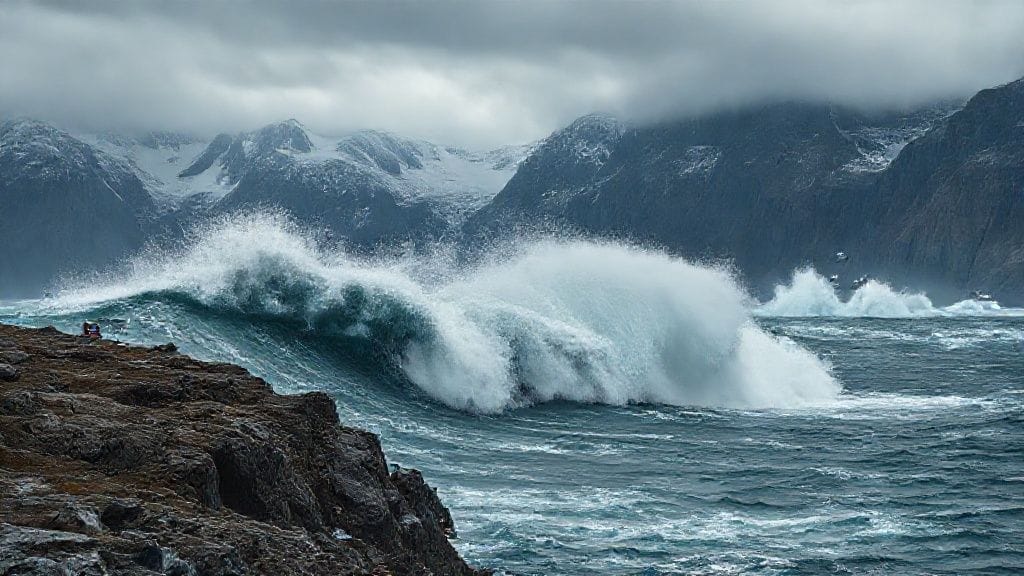
At 8:32 a.m. local time, a colossal roar shattered the tranquility. A mammoth section of the mountain looming above the fjord fractured and crashed into the icy waters below, triggering a cascading disaster. The fjord, usually a placid strip of shimmering cold, exploded into a cauldron of waves towering more than 30 meters high. The tsunami swept through Nuugaatsiaq with merciless ferocity, wiping 11 buildings off the map and claiming four precious lives.
This was not just a local catastrophe but a brutal reminder that beneath the Arctic’s majestic beauty lurked unpredictable and violent forces. The Greenland Fjord Tsunami of June 17, 2017, would go down in history as a stark testament to the fragile balance between humanity and nature.
2. The Rocky Heart of Greenland: A Land of Ice and Fragility
Greenland is a land that hovers between ancient serenity and eternal transformation. Its terrain is a vast mosaic of ice sheets, sculpted fjords, and towering mountains. Within this cold wilderness, communities like Nuugaatsiaq live in close harmony with nature’s rhythms, relying on fishing and hunting, their lives deeply intertwined with the sea.
But this seemingly frozen world is anything but static. Greenland’s geology is restless — a place where glaciers creep forward with the ponderous weight of history, mountains press against fjords, and tectonic plates quietly recalibrate. It is this delicate and dynamic environment that sets the stage for the disaster that would grip Nuugaatsiaq.
3. Geological Clockwork: Understanding the Fjord and Its Unseen Dangers
Fjords are one of nature’s most breathtaking masterpieces, carved by ancient glaciers plunging through rock. But these deep, narrow inlets with steep cliffs are also potential powder kegs. When massive rockfalls—or landslides—plummet into confined fjord waters, the displaced volume can create towering waves that surge downslope with terrifying speed.
On Greenland’s Uummannaq Fjord, cliffs soar as much as 1,000 meters high, a precarious vertical world where rock structures continuously face weathering, freeze-thaw cycles, and subtle shifts beneath the surface.
Scientists had long warned of potential stability issues along these fjords — but the precise timing and scale of such collapses are difficult to predict, especially in an environment where the cryosphere (frozen water) interacts constantly with geology.
4. Tectonic and Climatic Pressures: How Nature Staged Its Fury
The Arctic is warming twice as fast as the global average, with profound impacts on Greenland’s ice caps and permafrost layers. When permafrost thaws, it weakens rock structures, increasing the likelihood of landslides. Furthermore, rising temperatures accelerate glacier melt, adding water pressure and erosion to mountain bases.
In early summer 2017, the cumulative stresses—tectonic fractures under the rock mixed with thawing ice—reached a breaking point on a steep mountainside near the Nuugaatsiaq settlement. What had been slow, imperceptible movements accelerated, until gravity took charge.
5. A Mountain’s Collapse: The Tragic Trigger of the Fjord Tsunami
At exactly 8:32 am, over 35 million cubic meters of rock—a mass equivalent to several Great Pyramids of Egypt—detached from the mountain side above the Nuugaatsiaq area. This immense chunk plunged downward, crashing into the fjord’s waters with a force that was audible miles away.
The impact displaced an enormous volume of water, unleashing a tsunami wave hundreds of meters wide, surging like a freight train toward the tiny settlement below with speeds approaching 20 meters per second.
Locals, many preparing for the day’s work, had mere moments to grasp the burgeoning danger.
6. The Unfolding Disaster: Waves Racing Through Nuugaatsiaq
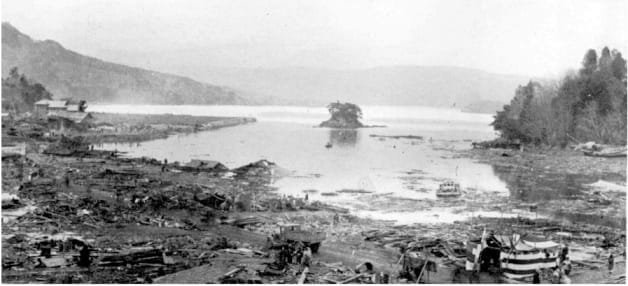
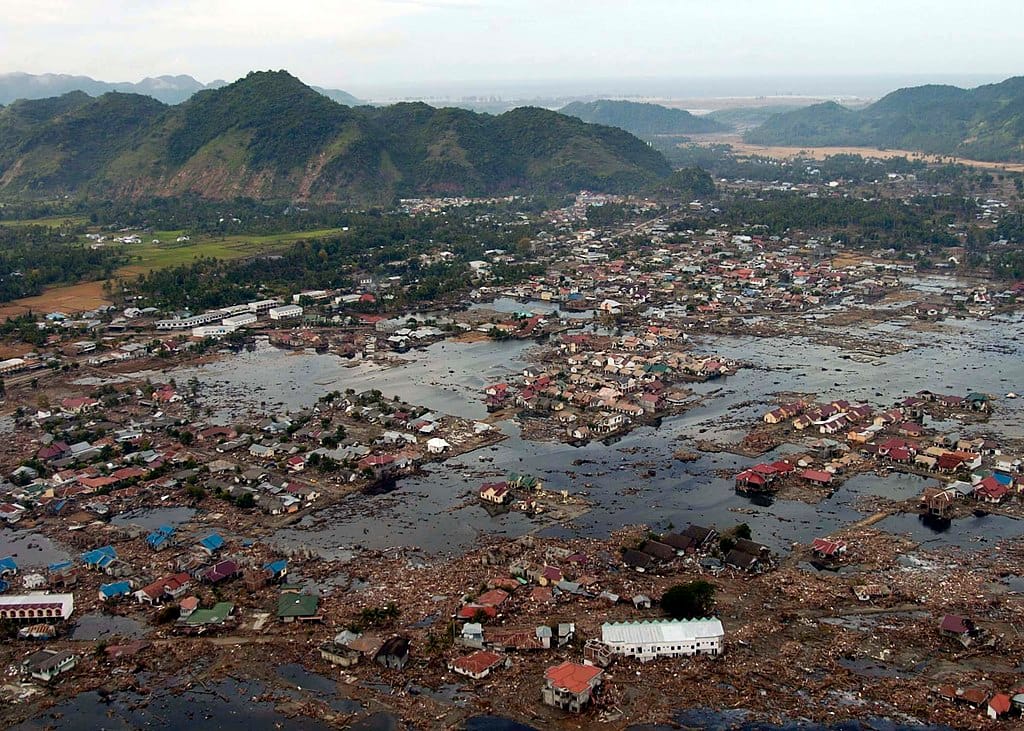
The tsunami struck the shore within seconds, swallowing the harbor, fishing boats, and waterfront homes. Wave heights reached up to 9 meters upon landfall, tearing through buildings and obliterating whatever lay in their path.
For several terrifying minutes, the water surged back and forth, flooding the village with mud and debris. The roar of destruction was punctuated by cries for help and the shattering of wood and ice.
This violent drama, when measured against the peaceful morning only moments prior, left bystanders stunned, many unable to comprehend the suddenness of their calamity.
7. Voices from the Edge: Eyewitness Accounts of Devastation
“Everything happened so fast. One moment I was standing near the dock, the next, a wall of water was barreling toward me,” recounted Aqqaluaq, a local fisherman. “I barely had time to run. The boats were all smashed, and houses collapsed like they were made of paper.”
Another resident, Inunnguaq, spoke of the haunting aftermath: “We lost neighbors, friends… the silence after the waves was worse than the chaos. Everyone was in shock.”
Their testimonies paint a portrait not just of loss but of the raw, human vulnerability when nature’s sudden fury descends.
8. Emergency Response in the Arctic: Challenges and Courage
Save for helicopters and a handful of rescue teams from nearby settlements, emergency response in the Arctic is notoriously difficult. Nuugaatsiaq’s isolation—accessible primarily by boat or air—with unpredictable weather compounded the challenge.
Nevertheless, local authorities, community members, and the Danish Emergency Management Agency rapidly mobilized. Evacuations were swift though complicated by ongoing aftershocks and the risk of further landslides.
The logistical hurdles of cold temperatures, fragile ice fields, and treacherous terrain did not deter rescuers, whose efforts saved many lives in the days following the disaster.
9. A Community Shattered: Human Toll of the Tsunami
The tsunami claimed four lives and injured several others. Eleven houses were destroyed, rendering many families homeless in the Arctic chill. The psychological trauma of survivors is profound—displacement in such a harsh climate, the loss of livelihood, and the terror of sudden catastrophe.
Beyond statistics, the disaster struck deep emotional chords in Nuugaatsiaq’s small population—of fewer than 200 people—who share tight-knit communal bonds.
10. After the Wave: Rescue, Relief, and the Long Road Ahead
In the immediate aftermath, relief efforts focused on shelter, food, and medical care. Temporary accommodations were established in safer neighboring zones, and infrastructure assessment began.
Yet rebuilding in the Arctic poses unique challenges—supply lines are fragile, construction seasons brief, and the risk of future slides ever-present.
The survivors of Nuugaatsiaq faced a dual battle: reconstructing physical homes while navigating their altered relationship with a landscape that betrayed their trust.
11. Scientific Lessons from the Disaster: Monitoring Landslides in Cold Regions
The 2017 tsunami drew global attention to the pressing need for integrated monitoring systems in fragile Arctic environments. Scientists deployed sensors and satellite technologies to track unstable slopes, seeking to provide early warning.
Studies published afterward underscored how thawing permafrost altered the geomechanics of rock formations, a key factor in triggering the landslide.
The event became a catalyst for interdisciplinary research, blending geology, climatology, and remote sensing to prevent similar tragedies.
12. Climate Change’s Role: Melting Ice and Instability
Undoubtedly, the accelerating pace of climate change—in particular Arctic warming—played a critical role in the disaster’s root causes. The thawing of permafrost, retreat of glaciers, and altered precipitation patterns all contributed to destabilizing the mountain.
Experts warn that such events may become more frequent and severe as Greenland’s ice sheets continue to diminish, reshaping the entire regional geohazard landscape.
13. The Global Significance of Local Catastrophes
While this event happened thousands of miles from major urban centers, its implications resonate worldwide. Fjord tsunamis in cold regions challenge assumptions about natural disaster risks. They highlight how interconnected planetary systems are—earth systems, climate, human settlements—and how vulnerable communities in remote places are to global climate shifts.
It’s a powerful reminder that no region is immune to the ripple effects of climate change.
14. Greenland’s Resilience: Rebuilding Lives Amid Harsh Realities
Despite devastation, Nuugaatsiaq’s community mobilized with remarkable fortitude. Rebuiliding efforts incorporated new knowledge about hazard zones, safer building practices, and community preparedness.
Local traditions and knowledge blended with modern technology created a framework not only to recover but to face an uncertain future with resilience.
15. How Governments and Scientists Adapted Post-2017
In response, Greenland’s government increased investment in geohazard monitoring and emergency planning. Collaborations with Denmark, international scientists, and Arctic organizations fostered knowledge exchange.
This disaster accelerated Arctic safety policies, including evacuation drills and risk mapping within vulnerable settlements.
16. The New Arctic Reality: Tsunami Risks in a Changing World
The catastrophic event in Nuugaatsiaq is part of a broader pattern emerging in polar regions: as ice melts and permafrost thaws, geological instability threatens more communities. Rising awareness and scientific developments are starting to reframe how we approach Arctic habitation.
No longer just a pristine wilderness, Greenland represents a frontline where nature’s volatile dialogue with humanity plays out with high stakes.
17. Historic Parallels: Other Deadly Fjord Tsunamis in History
Fjords have a tragic history of violent waves. The Lituya Bay megatsunami in Alaska in 1958 emitted waves over 500 meters high, leveling forests. Norway's fjords have seen devastating rockslides and tsunamis for centuries.
Comparing these events reveals recurring patterns of instability triggered by natural geophysical processes exacerbated by environmental change.
18. The Art of Memory: Remembering Nuugaatsiaq’s Tragedy
Memory keeps tragedy alive and meaningful. Commemorations in Greenland honor the lives lost, while storytelling preserves communal lessons. Art and literature from Inuit creators help articulate the emotional layers behind the scientific facts.
It is through memory that resilience is woven into identity.
19. Cultivating Preparedness: Preventing Future Disasters
Nuugaatsiaq exemplifies the necessity of proactive risk assessment. Technologies like LIDAR, satellite imagery, and ground sensors now form an essential part of Arctic safety strategies.
Education campaigns, infrastructure fortifications, and community empowerment are becoming linchpins of disaster prevention.
20. The Human Spirit Against Nature’s Wrath
Ultimately, the 2017 Greenland Fjord tsunami is a story of human courage confronting overwhelming natural forces. It is a testament to instinctive survival, communal solidarity, and the will to rebuild.
Far beyond the icy fjord, it speaks to our universal fragility—and remarkable capacity to endure.
Conclusion
The tragedy that unfolded in Nuugaatsiaq on June 17, 2017, continues to echo in the vast silence of Greenland’s fjords and beyond. In those catastrophic moments, nature unveiled a dramatic and humbling story of power—unstoppable and indifferent. Yet, amid loss and destruction, the human spirit proved resilient and adaptive, drawing strength from deep roots in place and tradition.
This disaster stands as more than a remote Arctic event. It is a vivid parable of our contemporary world: a delicate planet morphing under climate change, where ancient geological forces meet modern vulnerabilities. The Greenland Fjord tsunami urges vigilance, scientific inquiry, and community solidarity. It calls for respect—respect for nature’s immeasurable power and for the shared responsibility we bear living within its embrace.
As Greenland rebuilds, its frozen fjords remind us that beauty and peril coexist—and that in understanding the past, we prepare for a future shaped by both risk and hope.
FAQs
Q1: What caused the Greenland Fjord tsunami in Nuugaatsiaq in 2017?
A1: The tsunami was triggered by a massive landslide where 35 million cubic meters of rock collapsed into the Uummannaq Fjord, displacing water and creating destructive waves.
Q2: How many people were affected by the tsunami?
A2: The event killed four people, destroyed 11 houses, and caused significant displacement among the small village population of Nuugaatsiaq.
Q3: What role did climate change play in this disaster?
A3: Climate change accelerated permafrost thaw and ice melt, weakening mountain rock stability and increasing landslide risk, contributing directly to the 2017 collapse.
Q4: How did emergency responders handle the situation?
A4: Despite logistical challenges like Arctic isolation and weather, local authorities, Danish emergency units, and community members quickly evacuated survivors and initiated rescue and relief efforts.
Q5: Have similar fjord tsunamis happened elsewhere?
A5: Yes, historic events such as the 1958 Lituya Bay megatsunami in Alaska demonstrate that fjord tsunamis, though rare, can be hugely destructive.
Q6: What scientific measures have been taken since the event?
A6: Scientists have implemented advanced monitoring of unstable slopes using satellites, ground sensors, and climate data to provide early warnings of landslide risks.
Q7: How has the disaster influenced Greenland’s policies?
A7: The event prompted stronger governmental investment in disaster preparedness, risk mapping, and emergency planning focused on communities vulnerable to natural hazards in Arctic conditions.
Q8: What lessons can the world learn from Nuugaatsiaq’s tsunami?
A8: The tragedy teaches the importance of integrating climate science with geology and community preparedness, highlighting the complex interplay of environmental change and human vulnerability.