Table of Contents
- The Dawn of a Disaster: Morning Calm on Svalbard Fjord
- Arctic Norway’s Hidden Vulnerability
- Geological Unrest: The Precursor Signs
- The Moment the Earth Moved: The Tsunami’s Genesis
- A Wall of Water: The Tsunami Hits Svalbard Fjord
- Echoes Through the Arctic Silence: Witness Accounts
- The Speed of Catastrophe: How Fast the Waves Spread
- The Damage Revealed: Impact on Nature and Communities
- Scientific Teams Mobilize Amidst the Arctic Chill
- Climate Change and Its Role in Destabilizing the Arctic
- Historical Tsunamis in the Arctic: A Rare but Growing Threat
- Emergency Response in an Extreme Environment
- The Human Toll and Community Resilience
- Uncovering the Geological Cause: Landslide or Glacier Collapse?
- International Collaboration for Arctic Disaster Research
- The Lessons for Future Arctic Preparedness
- Media Coverage and Global Reactions
- The Environmental Ripple Effects
- Rebuilding Lives and Ecosystems
- Arctic Norway’s Changing Landscape After the Tsunami
- Scientific Debates: Tsunami Patterns in Polar Regions
- Cultural Memory: How Svalbard Remembers the Event
- What This Means for Arctic Sovereignty and Policy
- Looking Forward: Preparedness and Monitoring in the High North
The Dawn of a Disaster: Morning Calm on Svalbard Fjord
In the brittle chill of a September morning, the waters of Svalbard Fjord in Arctic Norway whispered gently under a pale, low-hanging sun. The sky, painted with faint streaks of rose and gold, promised a day like any other in this remote northern frontier. Yet, beneath this tranquil surface, unseen forces were stirring, readying to hurl a sudden and fierce reminder of nature's raw and unpredictable power.
The towns and research stations scattered along the fjord’s rim—few though they were—were still waking up. Scientists prepared for a quiet day of Arctic study, while local hunters and fishermen readied their small boats. There was no warning; only a subtle tremor, almost imperceptible, rippling through the land. Seconds later, a tsunami surged violently into the fjord—a rare and terrifying phenomenon in these frozen latitudes.
Arctic Norway’s Hidden Vulnerability
Often perceived as a pristine and stable wilderness, the Arctic region conceals beneath its icy veneer a complex and volatile geological environment. Svalbard—with its rugged mountains, steep fjords, and towering glaciers—is no stranger to natural hazards. Yet, the notion of a tsunami here seems incongruous, conjuring images more fitting to tropical or tectonically hyperactive regions.
But the Arctic’s geological history tells a different story. The region’s landscapes are sculpted by immense glacial movements and ongoing seismic activity. In just moments on September 9, 2022, these factors converged violently, exposing vulnerabilities that had been underestimated by many experts and laypeople alike.
Geological Unrest: The Precursor Signs
In the days preceding the tsunami, subtle warning signs flickered beneath the Arctic sky. Seismic detectors registered unusual tremors—a series of small earthquakes clustered around the fjord’s steep cliffs. Simultaneously, glaciologists monitoring the shifting ice sheets noted increasing fissures and ice avalanches from a nearby glacier tongue.
Yet, the vast isolation and harsh weather often obscure such signals. For many, life in Svalbard moved forward, grounded in routine and resilience. Little did the residents and scientists know that these tremors were the harbingers of a dramatic and sudden shift, one that would unleash the force of the fjord’s own frozen fortress.
The Moment the Earth Moved: The Tsunami’s Genesis
It began with a thunderous roar, a distant yet rapidly approaching growl of shifting ice and rock. On that fateful morning, a massive landslide—triggered by a combination of climatic warming, unstable permafrost, and the repeated tremors—plunged tens of millions of cubic meters of rock and debris into the glacial fjord below.
The violent act of displacement did what so many other landslides in the world’s fjord systems have done before—it pushed the narrow waters aside, generating a colossal wave. In the narrow confines of the Svalbard Fjord, this wave would rapidly transform into a destructive tsunami.
A Wall of Water: The Tsunami Hits Svalbard Fjord
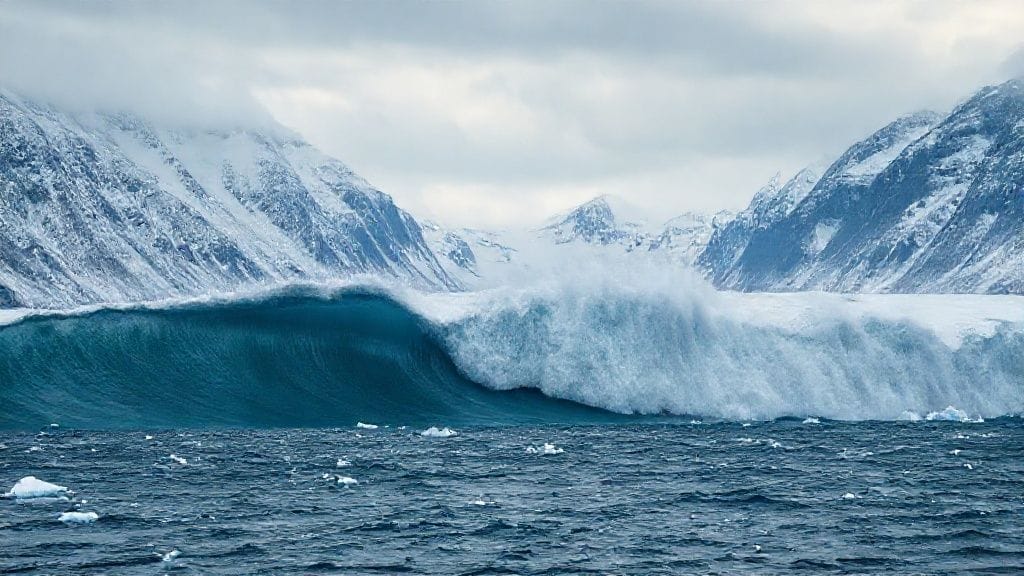
Witnessing the water’s menacing rise was like watching a living beast surge forward with growing energy. The height of the initial wave near the landslide site could have reached as much as 30 meters—a towering wall of icy water barreling towards the fjord’s shores.
As it swept in, it smashed boats, tore apart fragile infrastructure, and devastated the delicate Arctic coastal ecosystems. Trees were uprooted; beaches were scoured down to their rocky bed. For this remote, sparsely populated environment, it was a concentrated blast of force that the region had never truly prepared to face.
Echoes Through the Arctic Silence: Witness Accounts
Local residents, researchers, and indigenous hunters were among the just few dozen eyewitnesses to the tsunami's fury. Their accounts paint a picture as vivid as it is chilling. “The ground shook first,” recounted Anna Lind, a field biologist based at Ny-Ålesund. “Then came the wave—a frozen wall that smashed everything in its path. We barely had time to react.”
Another witness described the aftermath as “a sudden silence… as if the fjord itself was holding its breath, stunned by the violence it had just endured.” These personal testimonies not only provide crucial data but also humanize an otherwise isolated, scientific event.
The Speed of Catastrophe: How Fast the Waves Spread
Tsunamis move with formidable speed, but fjord tsunamis are particularly fast due to the narrow, deep water channels that funneled the waves. From the initial impact to the outer reaches of the fjord—spanning several kilometers—it took mere minutes for the tsunami to deliver its destructive blast.
This rapid progression made evacuation almost impossible for unprepared communities and researchers in the field. The natural topography acted like a rapid delivery system, focusing energy and speed in a way that magnified the damage rather than dissipated it.
The Damage Revealed: Impact on Nature and Communities
In the days following, the scale of destruction unfolded in stark contrasts. Apart from structural damage to research stations, boats, and simple dwellings, the ecological impact was profound. Fragile tundra ecosystems were flooded with saltwater. Nesting bird populations suffered severe losses. Marine life was disrupted by the sudden influx of sediments and debris.
For the small, isolated human population, the tsunami acted as a harsh wake-up call. Infrastructure that had seemed resilient—built for cold and isolation—was ill prepared for a disaster of this nature and scale.
Scientific Teams Mobilize Amidst the Arctic Chill
Immediately, scientific and rescue teams from Norway and beyond scrambled into action. Specialists in geology, oceanography, and climate science converged on Svalbard to study the tsunami’s causes and consequences. Using drones, satellite imagery, and ground surveys in freezing conditions, they pieced together a fuller picture of the disaster.
This event became a pivotal case study, expanding the global understanding of tsunami risk beyond traditional hotspot regions. The accumulated data would inform Arctic safety protocols and contribute to predictive models critical for future events.
Climate Change and Its Role in Destabilizing the Arctic
The shadow of the climate crisis loomed large over the Svalbard Fjord tsunami. Scientific consensus suggests that rising Arctic temperatures—twice the global average—are thawing permafrost and weakening slopes long held stable by ice.
“This wasn’t just a geological event,” emphasized Dr. Henrik Mikkelsen, a Norwegian geologist. “It was climate-driven. The warming Arctic is rewriting the rules, reducing natural buffers, and making events like this far more probable.”
Historical Tsunamis in the Arctic: A Rare but Growing Threat
Though rare compared to other global tsunami zones, the Arctic is no stranger to past tsunamis. Historical records and geological evidence reveal that landslide-generated waves have struck this region at intervals spanning centuries. However, the frequency and potential severity appear to be increasing.
The 2022 Svalbard event thus marked a critical point in Arctic natural hazard awareness, expanding the list of looming threats alongside melting ice and shifting ecosystems.
Emergency Response in an Extreme Environment
Responding to the tsunami posed unique logistical nightmares. The extreme cold, remoteness, and seasonal darkness lowered the efficiency of rescue operations. Helicopters and boats had to navigate treacherous conditions just to assess damage and provide aid.
Collaboration between local authorities, national emergency services, and international partners proved vital. The event highlighted the urgent necessity for specialized Arctic disaster response planning and infrastructure upgrades.
The Human Toll and Community Resilience
Thankfully, due to the low population density and the presence of early-warning seismic instruments, the human death toll was limited. However, trauma among survivors, loss of property, and disruption to livelihoods weighed heavily on the community psyche.
Yet, in the aftermath, stories of resilience emerged: neighbors helping neighbors, researchers sharing shelter with hunters, and indigenous traditions guiding recovery efforts. The human spirit in Svalbard’s harsh environment remained stoic and strong.
Uncovering the Geological Cause: Landslide or Glacier Collapse?
One of the more gripping scientific questions concerned the tsunami’s precise geological origin. Was it a massive rockfall from fractured prehistoric sedimentary cliffs? A sudden calving of a glacier tongue? Or a combination of multiple destabilizing factors?
Field investigations suggest a complex scenario where melting ice undermined permafrost cohesion, triggering a massive rock-ice avalanche. The confluence of these elements yielded the colossal disturbance in the fjord’s waters.
International Collaboration for Arctic Disaster Research
The tsunami catalyzed an unprecedented wave of international scientific cooperation. Researchers from the Arctic Council countries, EU, and universities worldwide pooled resources, knowledge, and technologies to better predict and mitigate similar catastrophes.
Joint workshops, data-sharing platforms, and new monitoring stations sprung up swiftly after the event. The tragedy was transformed into an opportunity for collective Arctic stewardship.
The Lessons for Future Arctic Preparedness
If the Svalbard tsunami taught one thing, it was that Arctic preparedness needs serious strengthening. Emergency protocols tailored to extreme climates, real-time monitoring networks, community education, and infrastructure bolstering are no longer optional—they are essential.
Policymakers and local leaders alike grapple with balancing development, conservation, and safety in this fragile region. The lessons learned here could save lives in future crises.
Media Coverage and Global Reactions
Surprisingly, the tsunami in one of the world’s most remote areas captured global attention. Images of waves smashing icy shores, interviews with shaken researchers, and analysis of climate links brought the Arctic disaster into popular media narratives.
This event underscored how interconnected our planet’s systems are—a vivid reminder that no corner of the Earth is truly isolated from the others' change and upheaval.
The Environmental Ripple Effects
Beyond immediate destruction, the tsunami altered the fjord’s underwater landscape. Sediments shifted, changing habitats for fish and marine mammals. Nutrient flows were temporarily disrupted, impacting plankton blooms fundamental to the Arctic food web.
Scientists continue to study how such disasters ripple through complex Arctic ecosystems, which are already under immense pressure from warming and human activity.
Rebuilding Lives and Ecosystems
Recovery in Svalbard has been slow and methodical. Efforts to repair infrastructure advance alongside environmental restoration projects. Reforestation of damaged tundra, protection of breeding grounds, and re-establishment of fisheries are key focuses.
This delicate balance of rebuilding human presence and natural habitats encapsulates the ongoing challenge of life at the poles.
Arctic Norway’s Changing Landscape After the Tsunami
The tsunami physically reshaped parts of the fjord’s coastline, eroding cliffs and carving new inlets. Satellite images reveal these subtle yet significant changes, which scientists eagerly monitor for clues about future geophysical shifts.
Svalbard’s landscape is no longer quite the same; it bears the mark of an event both destructive and transformative.
Scientific Debates: Tsunami Patterns in Polar Regions
In the academic world, the Svalbard tsunami sparked debates on whether Arctic tsunamis exhibit different behaviors than their tropical counterparts, due to factors like ice cover, water temperature, and fjord geometry.
Some posit that future events may become more frequent, others emphasize the importance of continued research into their triggers and propagation. The event opened a new frontier in tsunami science.
Cultural Memory: How Svalbard Remembers the Event
In Svalbard’s tight-knit community, the tsunami quickly entered local lore. Annual memorials, educational programs, and art installations serve as vivid reminders of the fragility and power of nature.
Elders recount the story, passing it down as both a warning and a testament to human endurance in the face of Arctic forces.
What This Means for Arctic Sovereignty and Policy
The disaster also has political implications. As Arctic nations compete for influence and access to resources, natural hazards like this one emphasize the importance of cooperative governance and transparent data-sharing.
Policies now increasingly incorporate disaster risk management, with a focus on ensuring safe and sustainable development in the High North.
Looking Forward: Preparedness and Monitoring in the High North
Today, new early-warning systems, satellite surveillance, and community drills are gradually transforming the Arctic’s approach to natural disasters. While the environment remains unforgiving, knowledge and preparedness grow stronger.
The 2022 Svalbard Fjord tsunami may have been a fierce upheaval—and yet, it also sparked hope for safer futures in the changing Arctic.
Conclusion
The Svalbard Fjord tsunami stands as a stark and powerful reminder of nature’s might in one of Earth’s most remote and fragile realms. It shattered the illusion of Arctic permanence, revealing how closely climate change and geological forces intertwine in shaping our world’s future.
Amid destruction and loss, this event illuminated resilience—not merely of people, but of communities, ecosystems, and scientific endeavors united by a commitment to understanding and adaptation. The whispering waters of the fjord now carry a story not only of catastrophe but of endurance, learning, and hope.
In bearing witness to this Arctic tragedy, we confront a broader truth: that the planet’s wildest places are inseparably connected to our shared fate. The lessons of Svalbard resonate far beyond the ice and silence, urging us toward stewardship grounded in respect for both nature’s power and humanity’s fragile place within it.
FAQs
Q1: What caused the 2022 Svalbard Fjord tsunami?
A1: The tsunami was triggered by a massive landslide, likely a combination of thawing permafrost and glacier destabilization, which displaced millions of cubic meters of rock and ice into the fjord.
Q2: How common are tsunamis in the Arctic region?
A2: Tsunamis in the Arctic are rare compared to other regions but have occurred historically due to landslides and glacier calving. Climate change is increasing their frequency and risk.
Q3: Were there casualties from the tsunami?
A3: Thanks to the low population density and some early warning, human casualties were minimal. However, the disaster caused considerable trauma and property damage.
Q4: What role does climate change play in Arctic tsunamis?
A4: Rising temperatures destabilize permafrost and glaciers, increasing the likelihood of landslides that can trigger tsunamis in fjord regions.
Q5: How did the local community respond post-tsunami?
A5: The Svalbard community showed resilience through cooperation, shared resources, and rebuilding efforts, supported by international scientific aid.
Q6: What have scientists learned from the event?
A6: The tsunami provided crucial data on Arctic tsunami dynamics, improved monitoring techniques, and highlighted the need for targeted disaster preparedness in polar environments.
Q7: Does the tsunami affect Arctic policy?
A7: Yes, it underscored the importance of international collaboration on Arctic safety, environmental protection, and disaster risk management.
Q8: How is the Arctic landscape changing post-tsunami?
A8: The tsunami physically reshaped parts of Svalbard’s fjord coastline, altered ecosystems, and served as a signpost for future environmental shifts linked to climate change.