Table of Contents
- A Glimpse into the Dawn of Microscopy: The First Microscope in Middelburg, 1590
- The Alchemical and Optical Renaissance of the Late 16th Century
- Middelburg: A Hub for Innovation and Curiosity
- Zacharias Janssen and the Mystery Behind the Microscope’s Birth
- The World Before the Microscope: Limits of Human Vision
- Crafting the First Microscope: Techniques and Materials
- The First Observations: What Did They See?
- The Spread of Microscopic Technology Across Europe
- Optical Theories and Rival Devices of the Era
- The Role of the Microscope in Science and Medicine’s Awakening
- The Intersection With the Telescope: Twins of the Optics Revolution
- Controversies and Claims: Who Truly Invented the Microscope?
- The Microscope’s Impact on the Scientific Method
- From Curiosity to Instrument: Microscope in the Cultural Imagination
- Microscope and the Birth of Microbiology: Early Discoveries
- Technical Evolutions Following the First Model
- The Microscope’s Legacy in Modern Science
- Remembering Middelburg: The City’s Place in Scientific History
- The Microscope’s Role in Shaping Human Perspective
- Human Stories: The Craftsmen, the Scientists, the Dreamers
- Conclusion: A World Transformed Through the Lens
- FAQs: Unveiling the Mysteries of the First Microscope
- External Resource
- Internal Link
1. A Glimpse into the Dawn of Microscopy: The First Microscope in Middelburg, 1590
Imagine a modest workshop bathed in the pale, diffused light of a Dutch morning, where a craftsman’s hands wrap a tiny, polished glass lens into a wooden or metal tube — a tool that would forever change the horizons of human knowledge. In Middelburg, Netherlands, in the year 1590, such a moment took place. A convergence of craftsmanship, curiosity, and optical innovation birthed the first compound microscope, stitched together from lenses that bent light and, more importantly, stretched the limits of human vision.
This was no mere toy, no fanciful instrument for aristocratic show. It was a profound gateway into the secret textures of the natural world, invisible before, waiting to be unveiled. The creation of the first microscope did not just mark a technological milestone; it was the beginning of a centuries-long revolution in science, medicine, and philosophy.
This is the story of that birth, woven through the cobbled streets of Middelburg, the minds of early inventors, and the hidden worlds revealed by their lens.
2. The Alchemical and Optical Renaissance of the Late 16th Century
The closing decades of the 16th century were a paradoxical stage of human history—a period where medieval superstition clashed with the dawning light of scientific enquiry. Europe was awakening to the promise of new knowledge, fueled by Renaissance humanism, the religious upheavals of the Reformation, and the restless voyages that mapped unknown continents. Parallel to these grand shifts, a quieter revolution was incubating in the very way people perceived their environment: the rise of optical instruments.
Optics, the science of light and vision, drew on ancient knowledge from figures like Alhazen and Ptolemy, but it received a fresh surge from Renaissance thinkers and skilled artisans. The invention of eyeglasses in Italy during the 13th century had gradually improved human vision, but only by the late 1500s did the technology flirt with a radical new concept: magnification through multiple lenses combined.
Amidst this milieu stood alchemists experimenting with lenses, carpenters and spectacle-makers sharpening their skills, and intellectuals hypothesizing about the very nature of light and sight. This fertile ground birthed what many now agree was the first practical compound microscope.
3. Middelburg: A Hub for Innovation and Curiosity
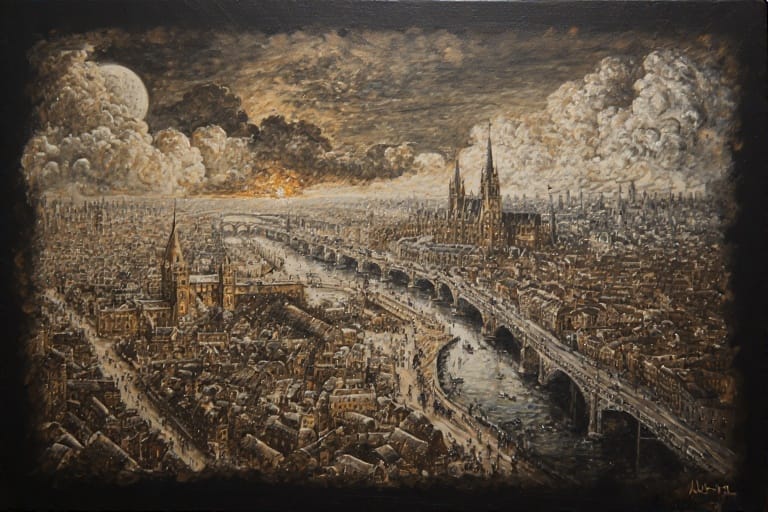
Middelburg, a bustling town in the province of Zeeland in the Netherlands, was far more than a scenic port; it was a crucible of commerce and innovation. Sitting at the crossroads of maritime trade routes, it attracted merchants, traders, and craftsmen alike. The city thrived on its open-mindedness and intellectual ferment, balancing commercial ambition with a penchant for technological curiosity.
This thriving urban milieu provided the perfect soil for inventions like the microscope to germinate. Middelburg’s lens grinders and spectacle makers were among the most skilled in Europe—able to craft lenses with a precision that could manipulate light in unprecedented ways. The city’s hands-on approach to making and experimenting blurred the lines between craftsman and scientist—a fundamental hallmark of Renaissance Europe.
Moreover, Middelburg’s political and religious relative tolerance meant that ideas could circulate more freely than in more restrictive centers. It was a place ripe for an invention that would shatter old perspectives and literally expand the way people saw the world.
4. Zacharias Janssen and the Mystery Behind the Microscope’s Birth
The name most frequently linked to the microscope's origin is Zacharias Janssen, a Dutch spectacle maker living and working in Middelburg during the late 16th century. Though his personal history is shrouded by time and partial records, his association with the first compound microscope has been insisted upon by several sources, foremost among them being the son’s later testimony.
Janssen’s work consisted of grinding lenses and assembling optical instruments. Around 1590, it is believed that he discovered—in a perhaps accidental manner—that placing two convex lenses in series significantly magnified small objects. What was initially a curiosity—a novelty object to impress customers—quickly became an instrument of scientific merit.
But the story is layered with uncertainty. Others, including Hans Lippershey, a contemporary spectacle maker in the Netherlands, claimed to have created similar devices around the same time. Some historical accounts also credit claims to Janssen’s father, Hans Martens. The absence of patent records or detailed technical documentation leaves a veil of mystery over precise authorship.
Nevertheless, the contribution of Zacharias Janssen remains pivotal, if not definitive. What matters most is the moment when the microscope stopped being a simple object of craftsmanship and became a tool for exploring the invisible.
5. The World Before the Microscope: Limits of Human Vision
Before Janssen’s microscope, the human eye was the limit to observation. Despite advances in astronomy enabling distant stars to be mapped, the microscopic realm—cells, bacteria, and the delicate structures within plants and animals—was simply beyond reach.
Artists and scientists who dwelled on the natural world were hampered by this limitation. Botanical drawings, anatomical treatises, and medical manuals were all filtered through imperfect sight and imagination. Many phenomena were attributed to mystical or supernatural causes, as the cause-and-effect chains at microscopic levels were invisible to the naked eye.
As Francis Bacon would later argue, "Knowledge is power," but without instruments to augment sight, knowledge itself was necessarily limited. The microscope was the key that promised to unlock hidden networks of life and matter.
6. Crafting the First Microscope: Techniques and Materials
The making of the first microscope was as much about craftsmanship as it was about theory. It relied on glass-blowing techniques refined over decades and skilled lens grinding—an art that melded science and dexterity.
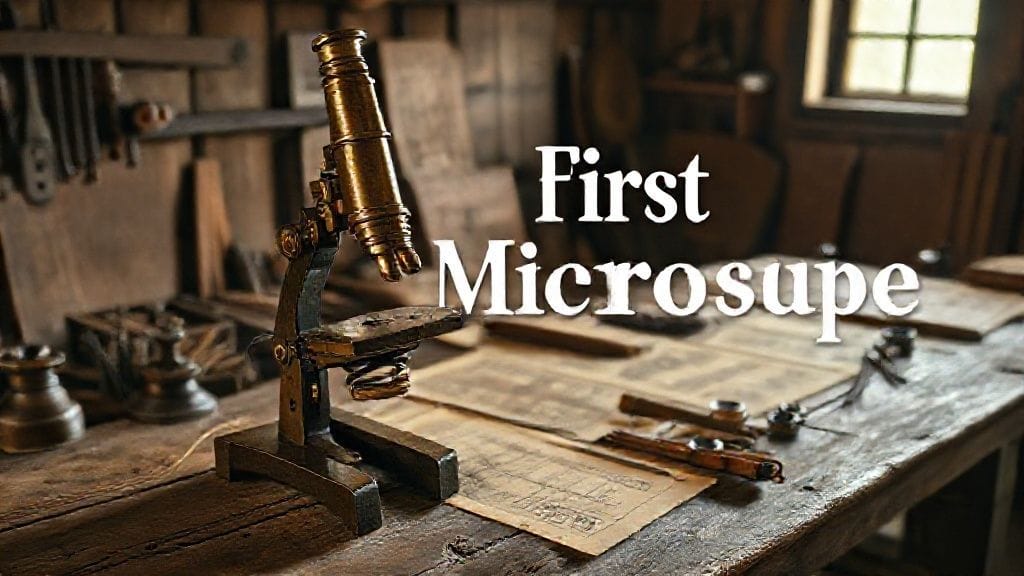
The basic design of Janssen’s compound microscope comprised two convex lenses arranged in a tube—a simple but revolutionary setup. The objective lens, close to the object, provided initial magnification, while the eyepiece lens, near the eye, further magnified the image. The layered magnification allowed tiny details to be seen far clearer than ever before.
Materials were simple yet challenging: clear glass for lenses, wood or brass for mountings, and precision-driven craftsmanship. Artisans had to ensure lenses were perfectly shaped and free from defects; even slight imperfections could distort images drastically.
This work demanded patience and skill, and each instrument was essentially bespoke. Success was measured by how clearly the microscope could reveal details previously invisible, and these early instruments offered a tantalizing glimpse into an uncharted dimension.
7. The First Observations: What Did They See?
The precise content of those first observations made in Middelburg remains largely undocumented, but historians speculate from later accounts what it might have been.
Early users examined plants, insects, and other everyday objects, marveling at the faceting of a fly’s eye, the intricate patterns in plant cells, or the complexity of feathers and surfaces too intricate for the naked eye. These initial glimpses were both thrilling and disorienting — they challenged long-standing assumptions about the structure of living beings.
Remarkably, these observations began to seed the modern understanding of biology and anatomy, even if the frameworks for interpreting them were still embryonic.
8. The Spread of Microscopic Technology Across Europe
Once the secret of the compound microscope was out, it began to circulate among scientists, physicians, and instrument makers across Europe. From its Dutch cradle, the device inspired a wave of innovation and debate.
Italy, England, and Germany soon saw their own experiments in microscopy. While the Dutch remained leading figures in lens craftsmanship, the instrument itself evolved as it traveled. Each region introduced refinements to optics, ergonomics, and magnification capabilities.
By the early 17th century, the microscope was no longer a curiosity but a legitimate scientific tool in the hands of pioneering figures like Galileo Galilei and Robert Hooke.
9. Optical Theories and Rival Devices of the Era
Parallel to the microscope, the telescope—and other optical instruments—were being developed and contested. This era of "lens wars" saw sharp disputes over who had first claimed and perfected these devices.
The microscope was not merely born of practical craftsmanship but stood at the crossroads of optical theory. Scientists debated the nature of light, refraction, and magnification, and instruments served as both proof and challenge to contemporary optics.
Such rivalries sharpened scientific progress and stimulated inventive solutions, as new generations sought to push beyond the limits of early lenses.
10. The Role of the Microscope in Science and Medicine’s Awakening
Though awareness of the microscope’s potential was slow to spread, its impact on medicine and natural history was profound.
Doctors began to see diseases in a new light, literally, as the microscopic structure of tissues and the behavior of “animalcules” came into view. The microscope helped to invalidate older ideas based solely on macroscopic observation and speculation.
Botanists could classify plants by their cellular architecture, zoologists could examine anatomy with increasing precision. The microscope ignited a new empirical approach—a departure from philosophical musing toward experimental demonstration.
11. The Intersection With the Telescope: Twins of the Optics Revolution
It is no coincidence that the first microscope and telescope emerged in the same period and region. Both relied on the manipulation of light through lenses but served vastly different purposes: the telescope explored the vastness of space, the microscope explored the infinitesimal worlds within.
This twin revolution expanded human perception on both macro and micro scales, challenging humanity’s place in the cosmos and the complexity of life itself.
Galileo’s telescopic discoveries and Hooke’s microscopic observations complemented each other in reshaping the scientific worldview.
12. Controversies and Claims: Who Truly Invented the Microscope?
The history of inventions is often tangled with disputes, and the microscope is no exception.
Zacharias Janssen is the most frequently credited inventor, but evidence is fragmentary. Hans Lippershey, who later claimed the invention of the telescope, was also suggested as a possible microscope pioneer. The testimony of Janssen’s son, decades later, sparked many debates.
Later historians and scholars have pieced together clues from court records, patent applications, and correspondence, yet no definitive, contemporaneous patent or exhaustive documentation remains.
Despite these disputes, the essence remains: the microscope’s invention was a collective achievement built upon incremental advances and primal ingenuity.
13. The Microscope’s Impact on the Scientific Method
Beyond its technical novelty, the microscope helped to transform how knowledge was acquired.
It emphasized observation, repeatability, and empirical data over mere speculation. Invisible details demanded verification through careful study, recording, and comparison.
This shift dovetailed with the rise of the scientific method championed by figures like Francis Bacon and later, Isaac Newton. The microscope became a symbol of inquiry that sees not just with naked eyes, but with tested precision.
14. From Curiosity to Instrument: Microscope in the Cultural Imagination
In the early years, microscopes were seen as marvels and curiosities, even magical devices. They inspired wonder, but also fear and suspicion—what did it mean to unveil invisible worlds?
Artists and writers began to include references to microscopes as symbols of insight and revelation. The instrument came to represent humanity’s quest to understand nature’s hidden depths and to challenge the boundaries of normal perception.
This cultural penetration helped cement its role beyond pure science, in philosophy, art, and education.
15. Microscope and the Birth of Microbiology: Early Discoveries
Though it would take decades, the microscope became the foundation stone of microbiology.
Anton van Leeuwenhoek, a Dutch tradesman and scientist, is famous for his later improvements on the simple microscope and his discovery of single-celled organisms, later called “animalcules.” His letters to the Royal Society opened humanity’s eyes to a hidden biosphere.
None of this would have been possible without the pioneering step in 1590—a first tool that said: “Look closer, there is more here than you imagined.”
16. Technical Evolutions Following the First Model
The early microscopes were limited by lens quality and design. Over the 17th and 18th centuries, refinements such as improved lens grinding, achromatic lenses reducing color distortions, and better stage designs advanced the technology.
Instruments grew more complex and reliable, leading eventually to the modern microscopes that could magnify thousands of times and reveal bacteria, cell structure, and viruses.
Yet all this stands on the sturdy foundation laid in Middelburg.
17. The Microscope’s Legacy in Modern Science
Today, the microscope is indispensable across biology, medicine, materials science, and nanotechnology.
From diagnosing diseases to exploring materials at atomic scales, it is hard to overstate its impact. Modern microscopes, using electron beams and lasers, trace their genealogy directly back to that 16th-century Dutch workshop.
It is a legacy of curiosity, craft, and relentless inquiry—a testament to human ingenuity.
18. Remembering Middelburg: The City’s Place in Scientific History
While Middelburg may not be as famous as other Dutch cities, it holds a unique place in the narrative of science as the birthplace of the microscope.
The city celebrates this heritage modestly but proudly. Museums and scholars honor Janssen and the early optics tradition that flourished there.
In understanding where knowledge begins, Middelburg reminds us of the power of small places with big ideas.
19. The Microscope’s Role in Shaping Human Perspective
The microscope did more than enlarge objects; it transformed humanity’s self-perception.
By revealing hidden life forms and structures, it forced a reconsideration of what constitutes life, health, and disease—and proposed that mysteries of nature could be uncovered by observation, not superstition.
It bridged the gap between the visible and the invisible, forever altering how we see ourselves and the world.
20. Human Stories: The Craftsmen, the Scientists, the Dreamers
Behind the glass and brass were hands of men like Zacharias Janssen, a humble craftsman whose curiosity ignited centuries of discovery.
There were also the scholars who dared to look deeper, the patrons who funded experiments, and the critics who demanded proof.
These stories of human ambition, error, and enlightenment knit together the microscope’s history—a story that continues to inspire.
21. Conclusion: A World Transformed Through the Lens
The invention of the first microscope in Middelburg in 1590 was a watershed moment in human history. It was the spark that set in motion a scientific and cultural revolution, expanding the boundaries of perception and knowledge.
Though born from simple lenses and artisan hands, the microscope opened infinite worlds within worlds. Its legacy is the continuing human quest to understand the unseen, to peel back layers of reality, and to embrace the complexity of life.
It is a testament to how a humble invention can shift paradigms, inspire wonder, and forever change what it means to look closely at our world.
FAQs
Q1: Who is credited with inventing the first microscope?
A1: Zacharias Janssen, a Dutch spectacle maker from Middelburg, is most commonly credited with creating the first compound microscope around 1590. However, some debate exists, with other contenders like Hans Lippershey also suggested.
Q2: What made the first microscope revolutionary compared to simple magnifying glasses?
A2: The first microscope used two convex lenses in tandem (compound microscope), significantly increasing magnification beyond what a single lens (simple magnifier) could achieve.
Q3: How did the invention of the microscope impact science in the 17th century?
A3: It allowed scientists to observe cells, tissues, microorganisms, and other tiny structures, contributing to developments in biology, medicine, and the eventual scientific method emphasizing observation and experimentation.
Q4: Why was Middelburg an important place for the microscope’s invention?
A4: Middelburg was a vibrant trade and craft center with skilled lens grinders and an open intellectual atmosphere, providing the ideal environment for optical experimentation.
Q5: How does the microscope relate to the invention of the telescope?
A5: Both devices emerged around the same period, manipulating light through lenses for magnification. While the telescope amplified distant objects, the microscope unveiled the very small, symbolizing a dual revolution in sight.
Q6: What was the cultural reaction to the microscope in its early years?
A6: Initially, it was viewed with wonder and suspicion alike—as a marvel that revealed hidden worlds but also unsettled traditional understandings.
Q7: Who were some early pioneers who advanced microscopy after Janssen?
A7: Anton van Leeuwenhoek significantly improved the microscope and made pioneering discoveries of microorganisms. Robert Hooke’s detailed observations also expanded the knowledge base.
Q8: What is the microscope’s legacy today?
A8: The microscope remains essential in countless scientific fields, enabling breakthroughs from microbiology to materials science, all tracing back to that first invention in Middelburg.