Table of Contents
- The Dawn of a New Era: Paris, July 1, 1846
- The Problem of Stitching: Humanity’s Needle in the Haystack
- Inventors and Innovators: The Race Before the Patent
- Elias Howe: The American Visionary Behind the Sewing Machine
- Paris, 1846: A City on the Brink of Industrial Transformation
- Recording History: The Patent Filing and Its Immediate Impact
- The Anatomy of the Sewing Machine: From Concept to Mechanism
- Public Reaction: Skepticism, Wonder, and Skeins of Doubt
- The Sewing Machine and the Transformation of Textile Work
- Women and the Machine: Liberation or New Chains?
- Industrial Repercussions: Factories, Economies, and Societies
- Patent Wars: Legal Battles That Shaped the Future of Invention
- The Global Ripple: How One Patent Changed the World’s Fabric
- Cultural Shifts: Sewing Machines Weaving New Social Norms
- The Machine's Legacy: From 19th Century Workshops to Modern Fashion
- Conclusion: Stitching Together Past and Future
- FAQs: Unraveling Common Questions on the Sewing Machine Patent
- External Resource
- Internal Link
1. The Dawn of a New Era: Paris, July 1, 1846
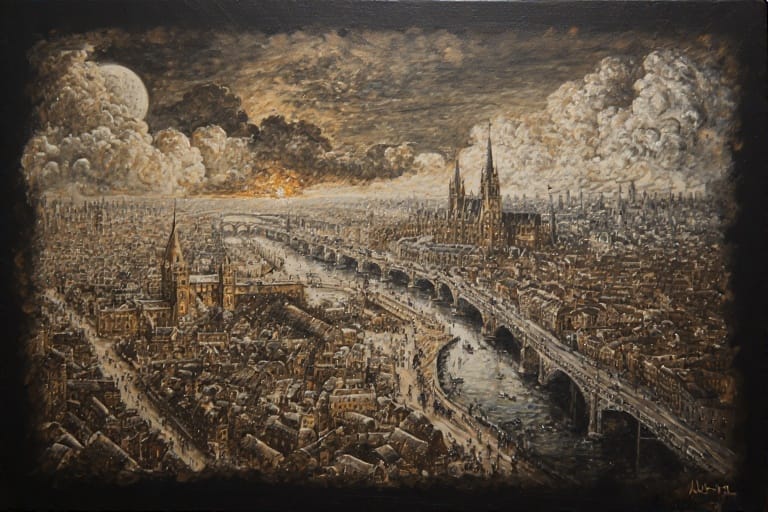
The summer sun hovered over the rooftops of Paris as the city bustled beneath a tide of change. On this particular day, July 1st, 1846, a seemingly modest yet revolutionary event quietly etched itself into history: the patenting of the sewing machine. While the broader world buzzed with industrial wonders, a small clatter of gears and needles was about to reshape textiles, economies, and social fabrics forever.
In a dimly lit workshop somewhere across the Seine, the rhythmic hum of machinery began to echo a new future—from cloth cutouts to a fully mechanized stitch. The sewing machine’s patented design was not merely an invention; it was the embodiment of a technological hope to mend, bind, and weave the threads of a transforming society.
2. The Problem of Stitching: Humanity’s Needle in the Haystack
Long before the sewing machine’s intricate teeth imprinted the fabric of history, sewing was a laborious and time-consuming task. For centuries, needle and thread were the tools of seamstresses who painstakingly wove garments by hand, a skill passed down generation after generation.
The challenge was clear: how to accelerate this fundamental human skill without sacrificing quality? For artisans, tailors, and garment makers, the process was inherently slow—each stitch a testament to patience, not productivity. As Europe entered the Industrial Revolution, demand for faster textile production soared. The need for mechanization was no longer a novelty; it was an economic imperative.
3. Inventors and Innovators: The Race Before the Patent
By the early 19th century, a slew of inventors across Europe and America grappled with this challenge. The sewing machine was an idea in flux—dozens of sketches and contraptions tested the boundaries between human dexterity and mechanical precision.
Noteworthy among these pioneers were Thomas Saint of England, who patented an early sewing machine design in 1790 that never saw production, and Barthélemy Thimonnier, a French tailor whose machine stitched chain stitches and briefly revolutionized garment creation in the 1830s. Yet, mechanical glitches, skepticism, and resistance from traditional craftsmen slowed widespread adoption.
Amid this crowded field, few truly grasped the key: a mechanism that could emulate the complex motion of hand stitching, consistently and reliably.
4. Elias Howe: The American Visionary Behind the Sewing Machine
In the United States, Elias Howe, a young machinist born in 1819, had begun experimenting with sewing machines around the early 1840s. While many were dabbling, Howe’s persistence and ingenuity yielded a critical breakthrough: a lockstitch mechanism employing a needle with an eye near the point and an automatic shuttle to create strong, durable stitches.
It was this design that formed the core of the patent filed abroad. Howe applied for, and secured, his U.S. patent on September 10, 1846. Yet, ironically, it was the machine’s recognition—and the patent claim—in Paris that marked a milestone in formalizing industrial progress across continents.
5. Paris, 1846: A City on the Brink of Industrial Transformation
Paris in 1846 was a city caught between tradition and innovation. Its streets, lined with artisans, peddlers, and emerging factories, were testimony to progress but also to social upheaval. The July Monarchy was fracturing, and mass movements simmered beneath cafés and ateliers.
It was within this vibrant milieu that the sewing machine patent was recorded. The French patent office, traditionally conservative, began opening itself to industrial inventions that promised to uplift manufacturing. For Parisian tailors and textile merchants, this machine hinted at a seismic shift—could a mechanical contraption truly replace the deft human hand?
6. Recording History: The Patent Filing and Its Immediate Impact
On July 1, 1846, the patent was officially submitted and recorded in Paris, signaling not only an acknowledgement of Howe’s design but the formal beginning of its commercial journey in Europe. This event, while administrative, carried monumental significance.
Newspapers circulated stories of an “astonishing machine” that could stitch faster than any human, and curiosity bloomed among industry leaders and social commentators alike. The patent was a signifier—it legitimated innovation, protecting its inventors from imitation while enticing manufacturers to invest.
But this was only the inception. For true progress, the machine had to overcome legal battles, production challenges, and public wariness.
7. The Anatomy of the Sewing Machine: From Concept to Mechanism
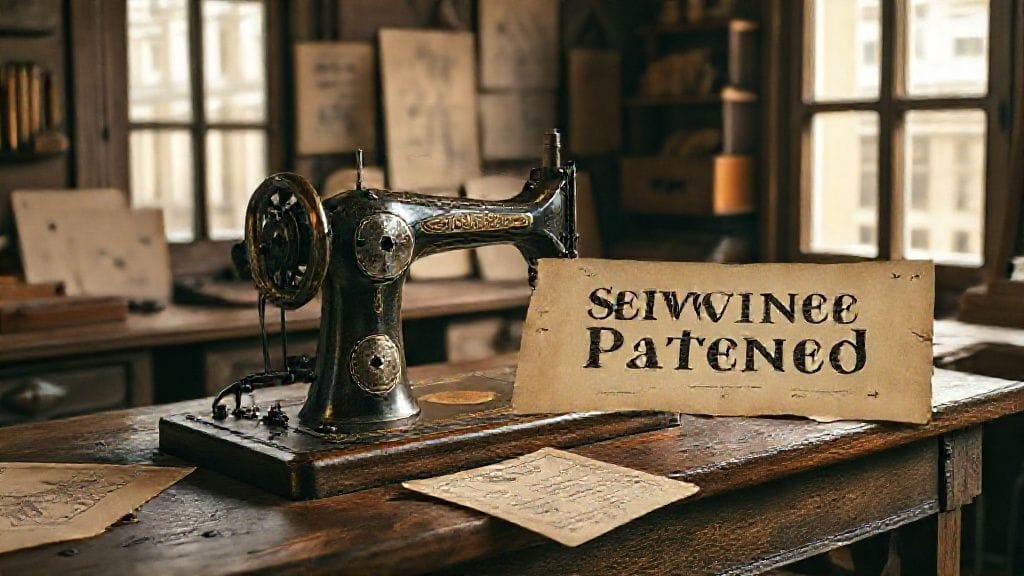
At its heart, the patented sewing machine was an elegant synthesis of motion and mechanics. The lockstitch method—producing balanced stitches without thread loops sticking out—revolutionized durability.
A needle, pierced through fabric with an eye near its point, passed the upper thread to an interlacing lower thread from a shuttle. Coordinating cams, levers, and feed dogs moved the fabric forward rapidly and precisely. This harmony allowed for unprecedented consistency.
From the mundane to the marvelous, this machine compressed hours of labor into minutes—a marvel of efficiency whose physics and intricacies would captivate engineers and artisans.
8. Public Reaction: Skepticism, Wonder, and Skeins of Doubt
Though the patent was a triumph, it invited controversy and incredulity. Traditional seamstresses viewed the machine with suspicion, fearing job losses and loss of artisanal prestige. Some accused the invention of being too complex or prone to failure, doubting its capacity to replace subtle human judgment.
Yet, salons and exhibitions buzzed with fascination. Paris hosted demonstrations where, amid gasps and applause, the machine's efficiency dazzled observers. A single hand crank could produce dozens of stitches in moments—a spectacle that promised to transform economy and fashion alike.
But beneath the public fascination lurked tensions—would progress be embraced or resisted?
9. The Sewing Machine and the Transformation of Textile Work
What followed the patent was an inexorable acceleration in textile production. Factories began integrating sewing machines into mass garment manufacturing, dramatically decreasing production costs and time.
What had once been a craft honed by individual hands became an assembly line marvel. This mechanization democratized access to clothing, making fashion affordable beyond elite circles. Ready-to-wear garments slowly replaced bespoke tailoring in urban centers.
Moreover, the machine shifted labor demands—introducing new roles and redefining skills, it blurred lines between artisan and assembly worker.
10. Women and the Machine: Liberation or New Chains?
The sewing machine also carried deep social implications, particularly for women. Traditionally the primary seamstresses, women found themselves both beneficiaries and victims of mechanized work.
On one hand, the machine allowed women to create goods faster and sometimes earn independent wages, lending a measure of economic empowerment. Home sewing machines became prized household tools for middle-class women, symbolizing modernity and efficiency.
Conversely, factory sewing demanded unrelenting speed, long hours, and often exploitative conditions. Debates sparked: Was the sewing machine an instrument of liberation or another chain binding female labor under industrial capitalism?
11. Industrial Repercussions: Factories, Economies, and Societies
The ripple effects extended beyond workshops and homes. The sewing machine catalyzed an industrial boom in textiles and garment manufacturing across Europe and America. New factories sprouted, fueling urban growth and migration.
Economically, nations witnessed surges in exports and domestic markets. This mechanization underpinned the modernization of fashion industries, facilitating the rise of brands, department stores, and consumer culture.
Societally, the machine challenged traditional crafts and enabled the rise of wage labor—a cornerstone of industrialized modernity that reshaped class structures.
12. Patent Wars: Legal Battles That Shaped the Future of Invention
Yet, the road was far from smooth. The patenting of the sewing machine ignited fierce legal battles, particularly in the United States, where Elias Howe and later Isaac Singer fought over intellectual property.
This high-stakes conflict revealed the fragile intersection of innovation, law, and commerce. Lawsuits stretched over decades, scarring inventors but also establishing legal precedents that protected and incentivized industrial creativity.
One might say the sewing machine’s patent litigation became as intricate as its chainstitches themselves.
13. The Global Ripple: How One Patent Changed the World’s Fabric
From Paris to New York, London to Bombay, the sewing machine’s patented design inspired a worldwide revolution. Factories in diverse industrial hubs embraced this technology, adapting it to local cultures and economies.
In colonies and emerging nations, the sewing machine would become a symbol of modernization and eventual economic self-determination.
It is striking how a single patent in Paris sparked waves of transformation that resonated through markets, cultures, and households globally.
14. Cultural Shifts: Sewing Machines Weaving New Social Norms
Beyond its mechanics, the sewing machine influenced art, literature, fashion, and social identity. It symbolized progress, technological mastery, and industrial modernity.
Fashion became more fluid and accessible; patterns, styles, and ready-made clothing accelerated trends. And in this, the sewing machine seeded new forms of expression and self-description.
Moreover, gender roles subtly shifted; women’s work became partially industrialized, and domestic life changed with mechanized home production.
15. The Machine's Legacy: From 19th Century Workshops to Modern Fashion
Looking back, the sewing machine patented on July 1, 1846, in Paris was much more than a device — it was a turning point. Its legacy is sewn into the very fabric of modern society.
Today’s haute couture ateliers and mass production factories still echo the principles Howe and his contemporaries pioneered. The democratization of fashion and the empowerment of workers owe much to that moment of mechanization.
One might say that every stitch on modern apparel is a tribute to that patent—and the dream of progress it embodied.
Conclusion
The invention and patenting of the sewing machine in Paris, 1846, marked a watershed moment where innovation stitched together threads of industry, culture, and society into a new global fabric. It was a story of persistence against skepticism, of technology blending with human needs, and of how a simple mechanical needle redefined the way humanity dressed, labored, and lived.
But more profoundly, this event reminds us of the power of invention to transform everyday life—in ways both tangible and intangible. As the needle pierced cloth with relentless rhythm, it pierced history itself, leaving a legacy woven into our collective identity.
It is incredible to think: a machine designed to sew tore apart old paradigms to weave a new world—one stitch at a time.
FAQs
Q1: Who patented the sewing machine in Paris on July 1, 1846?
A: The patent recorded in Paris acknowledged the design of Elias Howe, an American inventor whose lockstitch sewing machine became foundational to mechanized sewing worldwide.
Q2: Why was the sewing machine such a revolutionary invention?
A: It dramatically increased the speed of textile production, reduced costs, and democratized access to clothing, catalyzing industrial and social transformations.
Q3: How did the sewing machine affect women’s roles in society?
A: It both empowered women by providing avenues for income and skill development but also introduced new forms of labor exploitation in factories and homes.
Q4: What were some challenges following the sewing machine patent?
A: Besides technical improvements, inventors faced intense legal patent battles and public skepticism that delayed widespread adoption.
Q5: How did the sewing machine’s patent influence industry globally?
A: It spurred industrial growth in textile and garment sectors worldwide, influencing fashion, economies, and factory systems in multiple continents.
Q6: Are modern sewing machines still influenced by the 1846 patent design?
A: Yes, the fundamental mechanisms of lockstitching remain in use, and modern machines build upon the principles established in Howe’s patented design.
Q7: What was the public reaction to the sewing machine in 19th-century Paris?
A: Mixed—ranging from amazement and enthusiasm in industrial circles to fear and skepticism among traditional tailors and seamstresses.
Q8: How did the sewing machine contribute to the Industrial Revolution?
A: As a symbol and tool of mechanization, it embodied industrial principles of efficiency, specialization, and mass production that defined the era.