Table of Contents
- A Spark in the Heart of Berlin: The Birth of the Dynamo
- The Industrial Revolution’s Unyielding Pulse
- Germany in 1866: A Nation on the Brink
- The Spark of Genius: Who Invented the Dynamo?
- Michael Faraday and the Path to Electromagnetic Discovery
- The Genius of Werner von Siemens and His Spirit of Innovation
- From Laboratory to Workshop: Early Experiments with Electric Generators
- The Unveiling of the Dynamo: A Turning Point in Energy History
- How the Dynamo Revolutionized Electrical Power Transmission
- The Role of the Dynamo in Shaping Modern Industry
- Politics, Economics, and the Dynamo’s Arrival in Germany
- The Dynamo and the Franco-Prussian War: Electricity Amidst Conflict
- The Spread of Dynamo Technology Across Europe and Beyond
- Controversies and Rivalries Behind the Dynamo’s Invention
- Why the Dynamo is More Than Just an Invention: A Symbol of Progress
- The Environmental and Social Impacts of Electrical Power
- Dynamo Legacy in the 20th Century and Beyond
- Anecdotes From the Inventor’s Circle and Early Dynamo Trials
- The Dynamo's Cultural Imprint: From Science to Art
- Conclusion: A Light that Changed the World
- FAQs on the Dynamo’s Invention and Impact
- External Resource
- Internal Link
A Spark in the Heart of Berlin: The Birth of the Dynamo
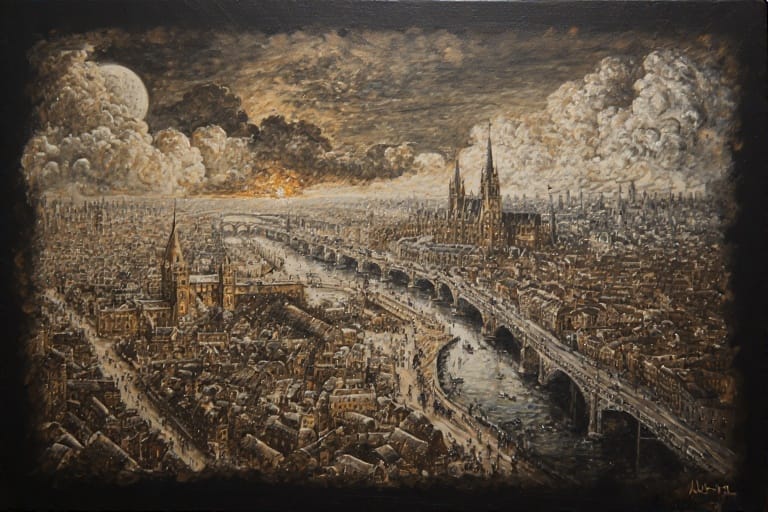
Imagine standing on the bustling streets of Berlin in 1866—a city pulsing with ambition, innovation, and political upheaval. The cold winter air carries the scent of coal and sweat, a testament to factories humming and the relentless march of industry. In a modest workshop, amidst clattering tools and the quiet crackle of experimentation, an invention is taking shape that will not only illuminate rooms but transform entire societies: the dynamo is born.
This moment, often overshadowed by larger political dramas of the era, marks a seismic shift in human technology—a transition from the reliance on steam and manual labor to the harnessing of electricity, a force as enigmatic as it was powerful. The dynamo, a machine that converts mechanical energy into electrical energy through electromagnetic induction, is not merely an apparatus; it is the gateway to modern civilization’s electrification.
The Industrial Revolution’s Unyielding Pulse
The mid-19th century was a time defined by relentless change. The Industrial Revolution, having begun in Britain, swept across Europe with inexorable force. Factories multiplied, railways stretched like veins through the continent, and the marketplace demanded faster, more efficient methods of production and communication.
Yet, alongside steam engines and coal-fired furnaces, electricity whispered promises of a new frontier. Scientists and engineers sought means to capture this abstract force, to bend it to society’s will. The “dynamo invented” was more than a milestone; it was a key turning point in the journey towards electrification that would ultimately alter daily life in ways inconceivable just decades prior.
Germany in 1866: A Nation on the Brink
Germany in 1866 was not yet the unified powerhouse it would become. The nation was fractured into kingdoms and republics, bound by language and culture but divided by politics. The year itself was charged with tension—the Austro-Prussian War was underway, destined to redraw maps and allegiances.
Berlin, as Prussia’s capital, was both a political and industrial hub. The city was home to burgeoning scientific institutions and the workshops of brilliant inventors like Werner von Siemens, whose contributions to electrical engineering would help define the age. It was here, amid turmoil and triumph, that the dynamo’s invention took place—an embodiment of progress even in uncertain times.
The Spark of Genius: Who Invented the Dynamo?
The story of the dynamo’s invention isn’t straightforward. Several minds, from different countries and traditions, contributed vital increments to its development. Among the most significant figures was Werner von Siemens, a German engineer whose name is now synonymous with pioneering electrical technologies.
But Siemens did not operate in isolation. The principles underlying the dynamo stretch back to early electromagnetic experiments, especially those by Michael Faraday in England. This interconnected narrative paints a picture of invention as a collaborative, even contested, process—where ideas cross borders, and individual genius meets collective advancement.
Michael Faraday and the Path to Electromagnetic Discovery
Before the dynamo could be invented, the science of electromagnetism had to be unveiled. Michael Faraday, an English scientist working in the 1830s and 1840s, discovered electromagnetic induction—the principle that a changing magnetic field creates an electric current. His experiments with rotating copper discs and magnetic fields laid the foundation for electrical generators.
Faraday’s work was largely experimental and descriptive—he revealed the laws but did not commercialize the technology. His famous quote, "Nothing is too wonderful to be true if it be consistent with the laws of nature," encapsulates the spirit driving the invention that would follow decades later.
The Genius of Werner von Siemens and His Spirit of Innovation
Werner von Siemens was born in 1816 into a family of modest means. His mechanical aptitude flourished during his military engineering service and early career. By the 1860s, Siemens had engaged deeply with electromagnetic devices, seeking practical means to generate electricity efficiently.
In 1866, Siemens and his contemporaries developed the first workable dynamo machine in Berlin. Their design was distinctive for employing self-excitation, where the dynamo used its own produced electricity to generate the magnetic field, drastically improving performance. This revolutionary approach differentiated Siemens’ dynamo from earlier, less efficient versions.
From Laboratory to Workshop: Early Experiments with Electric Generators
The evolution of the dynamo was incremental and challenging. Early generators were bulky, inefficient, and unreliable. Inventors grappled with materials, coil designs, and magnetic properties—all with limited knowledge and primitive manufacturing techniques.
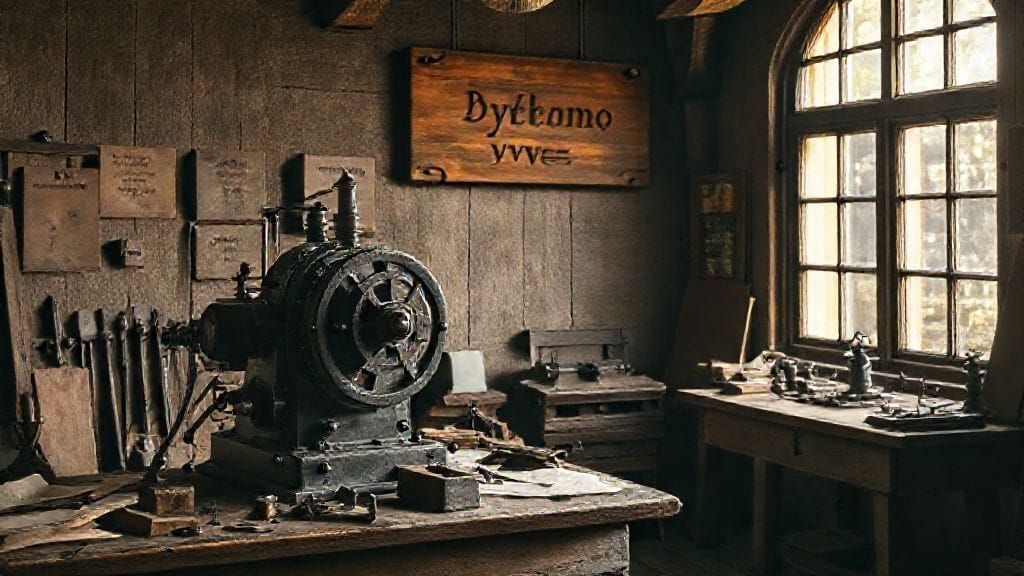
In Berlin workshops, the air was thick with the smell of oil and metal filings. Siemens and his colleagues tested rotating armatures, improved brushes, and refined magnetic circuits. Failures abounded, but so did breakthroughs.
These workshops were crucibles where theory met practice—where the dynamo moved from scientific curiosity to industrial tool. The trials of 1866 culminated in machines that could power lights and motors with sustained electrical currents, offering a glimpse of the future.
The Unveiling of the Dynamo: A Turning Point in Energy History
When Siemens publicly demonstrated the dynamo, it was met with awe and skepticism alike. The machine’s ability to convert mechanical energy directly into a sustained electric current opened vast possibilities.
The dynamo was not merely a mechanical novelty; it represented a new energy platform. Factories, transportation, communication systems—soon all would benefit. The invention was a key step toward electrifying cities and industries, diminishing reliance on steam power and gas lighting.
On that cold day in Berlin, amidst the clang of innovation and political uncertainty, Siemens’ dynamo sparked a flame whose glow would spread globally.
How the Dynamo Revolutionized Electrical Power Transmission
Before the dynamo, electrical experiments were limited to batteries or primitive magnets insufficient for large-scale applications. The dynamo’s continuous current generation enabled electric power to be transmitted over distances, a prerequisite for urban electrification.
This breakthrough made possible the development of electric lighting, streetcars, and early electrical appliances. Moreover, the ability to generate electricity mechanically meant integration with existing industrial machinery was feasible. Factories could harness electricity for new types of work previously unimaginable.
The Role of the Dynamo in Shaping Modern Industry
The dynamo did not merely light lamps; it powered the engines of modern industry. Electrification led to improved productivity, safer working conditions, and accelerated urbanization.
Factories transformed visually and functionally as their floors filled with electrically powered machines. The dynamo’s role extended into transportation—a vital cog in powering trams, trains, and even early electric cars.
The pulse of industry quickened; the dynamo was both catalyst and symbol.
Politics, Economics, and the Dynamo’s Arrival in Germany
Germany’s political landscape in 1866 was turbulent. The Austro-Prussian War culminated in Prussia’s ascendancy, fostering a new national identity and spurring economic modernization.
Within this milieu, the dynamo’s invention held economic weight. Industry leaders and politicians saw electrical technology as a lever for national power and prestige. Siemens himself navigated political circles, securing patents and support.
The dynamo’s rise was intertwined with state ambitions—electricity became a vector for progress and power.
The Dynamo and the Franco-Prussian War: Electricity Amidst Conflict
Just two years after its invention, Germany faced the Franco-Prussian War (1870–1871). Technology played an increasing role in warfare, though electricity was still emerging.
Yet, the dynamo’s principles began influencing communications through telegraph and field equipment. Siemens’ company contributed to military supplies utilizing cutting-edge electrical devices.
War and invention often collide, and here electricity’s role hinted at the transformations modern conflict would undergo.
The Spread of Dynamo Technology Across Europe and Beyond
The Berlin dynamo was only the beginning. Within decades, dynamo technology spread throughout Europe, America, and eventually Asia.
Inventors and engineers adapted Siemens’ model to new contexts, scaling machines for massive power plants and smaller applications alike.
Dynamo-generated electricity became the backbone of burgeoning electric utilities, lighting cities from London to New York.
Controversies and Rivalries Behind the Dynamo’s Invention
Like many great inventions, the dynamo’s genesis was contested territory. Inventors such as Zénobe Gramme in Belgium and Hippolyte Pixii in France made significant advances, sometimes clashing over patents and priority.
The challenge was not just engineering but recognition—who truly “invented” the dynamo?
Debates persist even today among historians, underscoring how scientific progress is often collaborative and competitive.
Why the Dynamo is More Than Just an Invention: A Symbol of Progress
The dynamo represents more than technology; it encapsulates a cultural shift toward mastery of nature’s invisible forces.
In the industrial age, the ability to generate steady electricity empowered humanity like never before. It launched an era of innovation that touched all aspects of life: from medicine to entertainment, from education to infrastructure.
It is a testament to human creativity—a symbol that innovation often responds to social needs and transforms them in return.
The Environmental and Social Impacts of Electrical Power
The dynamo’s invention set in motion modernization with both benefits and costs. Electrification improved public health through better lighting and sanitation and enhanced education access.
However, new industries driven by dynamo electricity also accelerated resource extraction and pollution. The complex legacies of industrialization began—improved living standards shadowed by environmental challenges.
Understanding the dynamo’s role means grappling with this duality of progress.
Dynamo Legacy in the 20th Century and Beyond
The dynamo’s principle endures. Though replaced in many applications by alternating current (AC) generators, the legacy remains foundational to power engineering.
Modern electric grids and renewable energy systems still depend fundamentally on concepts pioneered by Siemens and his contemporaries.
As urban centers glow at night and electronic devices hum, the dynamo’s echo continues through time.
Anecdotes From the Inventor’s Circle and Early Dynamo Trials
Behind the gleaming machines were characters full of hope and frustration. Siemens reportedly tested early dynamos personally in harsh Berlin winters, often risking injury from electrical arcs.
Colleagues recalled the excitement when the first sustained electric current flowed through their coils—an almost mystical moment.
These human facets remind us inventions are born not just of theory but passion, risk, and perseverance.
The Dynamo's Cultural Imprint: From Science to Art
Electric light inspired artists, writers, and thinkers to reimagine the urban nightscape. The glow of dynamo-powered lamps transformed cities into realms of possibility, causing poets and painters to capture this luminous revolution.
The dynamo became more than engineering—it entered the cultural imagination as a symbol of the modern age’s brilliance and promise.
Conclusion: A Light that Changed the World
From a modest Berlin workshop in 1866 to the global grids of the 21st century, the dynamo’s invention represents a pivotal chapter in human history. It is a story of curiosity, intellect, and indomitable will—a testament to the power of ideas to alter reality.
The dynamo invented in Berlin was not merely a machine; it was a beacon heralding a new era, one whose flickering light continues to illuminate the path of progress and challenge us to master the forces we once only hoped to understand.
FAQs
1. Why is the dynamo considered a crucial invention in electrical history?
The dynamo was the first machine to efficiently convert mechanical energy into continuous electrical current, making large-scale power generation and distribution possible, thus spearheading the electrification of industry and society.
2. Who invented the dynamo and when?
Though several inventors contributed, Werner von Siemens in Berlin is credited with inventing the first practical dynamo in 1866, incorporating self-excitation to produce continuous current.
3. How did Michael Faraday’s discoveries influence the dynamo’s invention?
Faraday discovered electromagnetic induction, the principle that changing magnetic fields create electric currents—this fundamental law enabled the design of generators like the dynamo.
4. What role did Berlin’s industrial and political environment play in the dynamo’s invention?
Berlin’s status as an industrial center, combined with its political ambition during the Austro-Prussian War period, fostered a climate that encouraged innovation and investment in cutting-edge technologies like the dynamo.
5. How did the dynamo impact everyday life following its invention?
The dynamo enabled electric lighting, powering factories and public transport, transforming urban living, extending work and leisure hours, and improving safety.
6. Were there any controversies surrounding the dynamo’s invention?
Yes, multiple inventors like Gramme and Pixii contested claims and developed similar technologies, leading to patent disputes and debates over priority.
7. What is the legacy of the dynamo in modern electrical engineering?
Though technological advances have yielded more efficient generators, the dynamo’s principles underpin modern electric power generation, making it foundational to electrical engineering.
8. How did the dynamo influence cultural perceptions of technology?
The dynamo and electric light symbolized modernity and progress, inspiring artists and intellectuals, reshaping urban life and cultural imaginations about the future.