Table of Contents
- The Dawn of a New Era: August 10, 1897, Augsburg
- Rudolf Diesel’s Vision: The Dream of a More Efficient Engine
- From Theory to Practice: The Birth of the Diesel Engine
- Behind the Scenes: The Scientific Foundations and Innovations
- The Crucible of Augsburg: An Industrial City on the Rise
- The Trials of August: The First Run under Tense Eyes
- Initial Triumphs and Lingering Doubts: Reactions from the Engineering World
- The Engine That Changed the World: Technical Breakthroughs Explained
- Fuel Efficiency and Power: A Comparative Revolution
- Economic and Industrial Impact: Transforming Factories and Transportation
- The Expansion Beyond Germany: Early Adoption Worldwide
- Diesel’s Struggles and Triumph: Patents, Partnerships, and Perseverance
- The Engine’s Role in Shaping the 20th Century
- Cultural Ripples: How the Diesel Engine Inspired Innovation
- Environmental Costs and Controversies: The Diesel Debate Begins
- Legacy of the First Run: Museums, Memorials, and Historical Memory
- Modern Reflections: Diesel Engines in Today's World
- Conclusion: The Persistent Pulse of Diesel Innovation
- FAQs: Understanding the Historic Diesel Engine First Run
- External Resource
- Internal Link
The Dawn of a New Era: August 10, 1897, Augsburg
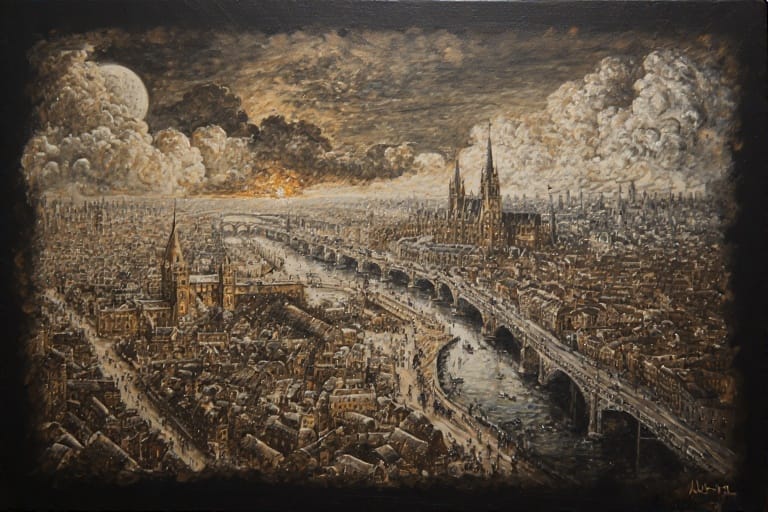
Summer at the end of the 19th century in Augsburg was thick with anticipation. The usual clatter of the city’s factories was now mixed with a tension that hummed through the air as if the future itself was being forged in those moments. On August 10, 1897, inside a modest workshop nestled amid the industrial sprawl of Germany’s Bavaria region, a small metal engine came to life. It was the first successful run of Rudolf Diesel’s internal combustion engine—an invention that promised a radical leap in efficiency, power, and mechanical design. The air was tinged with the sharp scent of oil and hot metal, but beneath that tangible atmosphere, ideas ignited with an invisible fire that would blaze through the century and beyond.
This inaugural run was more than a technical achievement—it was the birth of a new industrial revolution, quieter, more powerful, and more efficient than anything humanity had yet seen.
Rudolf Diesel’s Vision: The Dream of a More Efficient Engine
Rudolf Diesel was not content with the inefficiencies that plagued the steam engines dominating the 19th century’s industry and transportation. Born in Paris in 1858 and trained as an engineer amid the rapid industrialization of Europe, Diesel was obsessed with thermodynamics and the ultimate potential of fuel use. His vision was precise yet ambitious: to create a heat engine that capitalized on high compression to ignite fuel without spark plugs, dramatically increasing fuel efficiency.
"More work from less fuel," he envisioned, reflecting on the wasted energy he saw all around. His studies culminated in a patent filed in 1892, but it took years of relentless experimentation and financial strain to bring theory into practice.
From Theory to Practice: The Birth of the Diesel Engine
Between 1893 and 1897, Diesel worked predominantly in workshops and laboratories, pushing his engine design beyond theoretical models toward reality. The concept was grounded in the principle that compressing air to extremely high pressures could raise temperatures enough to ignite injected fuel—fuel that would burn slowly, ensuring a controlled, powerful, and more efficient explosion than the gasoline engines of the time.
The first diesel engine came into being in Augsburg at the Maschinenfabrik Augsburg, where Diesel found partners willing to manufacture prototypes. This was a pivotal handshake between theory and industry, a coalescence of ideas and practical workshop know-how.
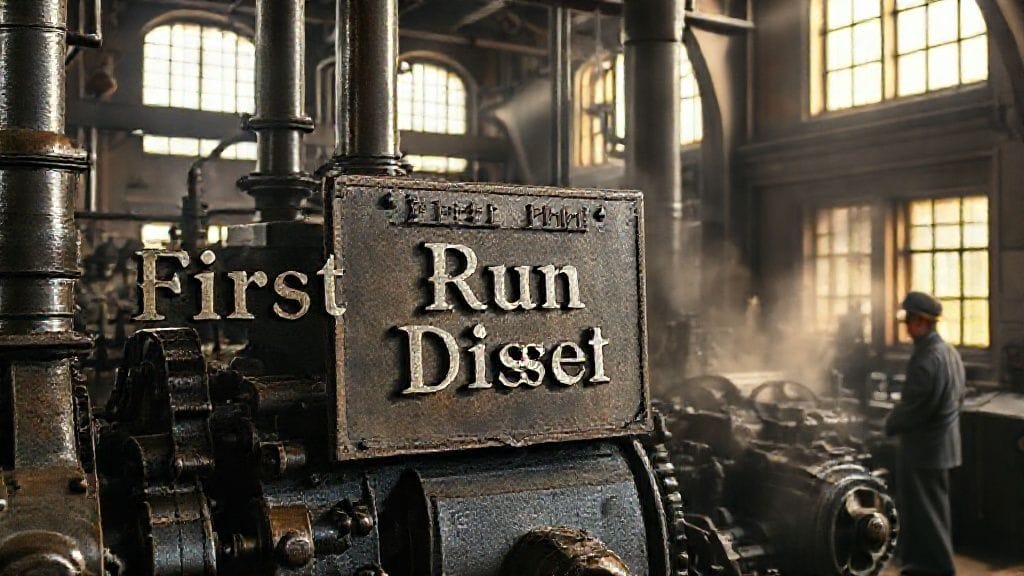
August 10, 1897, was the day the machine was first started under test conditions—a moment fraught with tension as years of hopes were planted on a few mechanical rotations.
Behind the Scenes: The Scientific Foundations and Innovations
The diesel engine’s innovation lay deep in the realm of thermodynamics and mechanical design. Diesel’s genius was his understanding of the ideal air/fuel mixture and the compression ratio. While gasoline engines of the 19th century relied on spark ignition and low compression, Diesel’s engine used compression ignition, making the combustion process both more efficient and safer.
The key was compressing the air to about 30 times atmospheric pressure, which raised the temperature to around 700°C. When fuel oil was then injected, it ignited spontaneously. The engine’s slow combustion cycle meant less noise and smoother operation, which was revolutionary compared to the gas engine’s rapid, noisy explosions.
The Crucible of Augsburg: An Industrial City on the Rise
Augsburg was no random location for this breakthrough. As one of the oldest trading and manufacturing centers in southern Germany, Augsburg was at the crossroads of tradition and industrial innovation. The Maschinenfabrik Augsburg was already a hub for mechanical work and precision engineering, which made it fertile ground for Diesel’s experiments.
The city buzzed with workshops, blacksmiths, and factories that supplied Europe with machinery, and this industrial environment was one that understood the value of practical innovations. The diesel engine’s birthplace mirrored the spirit of German engineering—a blend of precision, patience, and power.
The Trials of August: The First Run under Tense Eyes
On that fateful day in August, Diesel and his team gathered around the prototype. The test was simple yet profound: start the engine and watch the fruits of years of toil spring to life. The room held its breath as the flywheel began its cautious rotation.
The engine, an iron giant no larger than a modern motorcycle’s heart, thundered to life—its slow, steady, mesmerizing spin a testament to human ingenuity. It was not just the sound of moving parts; it was the sound of an idea made real, the first tangible proof that a new form of mechanical life was inside reach.
Yet, the first run was not flawless. Technical glitches appeared, temperamental behaviors cropped up, and Diesel was painfully aware that this was only step one of a grueling journey toward practical use.
Initial Triumphs and Lingering Doubts: Reactions from the Engineering World
News of the first run spread cautiously but eagerly through Europe’s engineering circles. Some hailed Diesel as a pioneer, recognizing that his engine promised a greater fuel economy by nearly a third compared to steam or gasoline counterparts. Others remained skeptical, doubting whether the engine could be scaled or made reliable.
Industrialists observed keenly. For many, the allure of reduced fuel costs and greater operational efficiency represented a potential goldmine, particularly for maritime and rail industries hungry for cheaper and more dependable power sources.
The Engine That Changed the World: Technical Breakthroughs Explained
What made the Diesel engine a turning point was its radically superior thermal efficiency. Steam engines typically converted only about 10% to 20% of fuel into useful work. Gasoline engines, advanced as they were, hovered around similar marks.
The diesel engine, however, was capable of efficiencies up to 30-40%, thanks to its unique combustion process. This efficiency was more than savings; it meant engines could run longer on less fuel, with heavier loads and greater endurance.
Moreover, the design’s inherent safety—no open flames from spark plugs—and its ability to use heavier, less refined fuel oils, added to its versatility and economic appeal.
Fuel Efficiency and Power: A Comparative Revolution
Compared to steam engines, which required enormous boilers and water consumption, Diesel’s engine was both compact and lighter. This opened new possibilities in transportation where weight and space were premium commodities.
Ships, locomotives, and even heavy road vehicles could now consider engines that burned cheaper fuel oils and consumed less energy—giving industry a powerful tool to scale and govern operations with cutting-edge efficiency.
Economic and Industrial Impact: Transforming Factories and Transportation
The diesel engine’s ripple effects soon reshaped trade and industry. Factories adapted to engines that ran cleaner and longer. Transportation fleets began envisioning ships and trucks plying new trade routes at lower cost, expanding markets and access.
Germany, fueled by Diesel’s invention, accelerated its industrial might, reinforcing its position as one of the world’s leading engineering hubs. The ripple effect reached much further, however, as license production and innovations spread swiftly across Europe, America, and beyond.
The Expansion Beyond Germany: Early Adoption Worldwide
By the early 20th century, enterprises and governments around the world recognized diesel power’s promise. Norway quickly adopted diesel engines for fishing fleets, while France and Britain retrofitted experimental locomotives. The United States, with its booming industrial economy, began exploring diesel technology for railroads and later, military uses.
Thus began the era where Diesel’s engine, conceived in quiet Bavarian workshops, began pulsing through the veins of global infrastructure.
Diesel’s Struggles and Triumph: Patents, Partnerships, and Perseverance
Despite early successes, Rudolf Diesel’s journey was marred by constant struggles—financial troubles, patent disputes, and personal pressure. His relentless pursuit was fuelled not only by innovation but by a desire to prove the validity of his vision against doubters and rivals.
Through partnerships with Maschinenfabrik Augsburg and later extensive licensing agreements, Diesel’s influence spread, even as he personally battled the burdens of invention.
The Engine’s Role in Shaping the 20th Century
Beyond industry, the diesel engine became a backbone of economic expansion, military logistics, and even urban development. It helped usher in modern farming machinery, revolutionized shipping routes, and powered global warfare machinery in both World Wars.
The silent revolution initiated in that small Augsburg workshop would echo through the entire 20th century, underpinning technologies that shaped nations.
Cultural Ripples: How the Diesel Engine Inspired Innovation
The impact was not purely technical. Diesel’s engine epitomized the belief that science and engineering could reshape societies, inspiring inventors and industrialists alike. It became a symbol of modernity—the belief that efficiency and improvement were both possible and necessary.
Writers, artists, and filmmakers later portrayed diesel-powered machines as icons of progress and sometimes of uncontrollable industrial might, reflecting society’s ambivalent relationship with new technology.
Environmental Costs and Controversies: The Diesel Debate Begins
Yet, the engine that promised efficiency would also sow seeds of environmental debate. Burning heavier fossil fuels meant diesel engines emitted particulates more readily than gasoline models. As the 20th century unfolded, concerns about air quality and pollution began to cast shadows over diesel’s promise.
Still, the technology’s economic benefits made it difficult to discard, setting the stage for ongoing debates about energy, environment, and economy that endure today.
Legacy of the First Run: Museums, Memorials, and Historical Memory
Today, August 10, 1897, is commemorated in numerous plaques, museums, and engineering academies. Augsburg proudly houses dedicated exhibits showcasing Diesel’s work and early engines, preserving the memory of a moment when human ingenuity bridged physics and industry.
The diesel engine remains a cornerstone of mechanical engineering history, studied and admired as the family patriarch of powerful engines that drive much of contemporary infrastructure.
Modern Reflections: Diesel Engines in Today's World
Over 125 years later, diesel technology remains vital, though evolving. Modern engines integrate electronic controls, cleaner combustion, and alternative fuels. Electric and hybrid technologies challenge diesel’s dominance, prompting reflections on sustainable energy futures.
Yet, the fundamental principles and design genius from that first run continue to underpin modern diesel innovations worldwide.
Conclusion
The first run of Rudolf Diesel’s engine in Augsburg on August 10, 1897, was a turning point—a humble moment that ignited a technological and industrial revolution resonating well into our contemporary world. Behind the clang of metal parts and hiss of compressed air lay the pulse of human aspiration, the desire to harness nature’s forces with efficiency and ingenuity.
Diesel’s engine was more than metal and fuel; it was a symbol of hope and persistence, embodying the relentless human pursuit to create, improve, and transform. Reflecting on this moment offers more than history—it invites us to consider how visionaries change worlds one revolution at a time.
FAQs
Q1: What was the main innovation of Rudolf Diesel’s engine compared to earlier engines?
A1: Diesel’s engine used compression ignition rather than spark ignition, allowing it to run more efficiently by burning fuel at higher pressures and temperatures, leading to greater fuel economy and power.
Q2: Why was August 10, 1897, such a significant date in engineering history?
A2: It marked the first successful run of the diesel engine prototype in Augsburg, validating years of theoretical work and experimentation and paving the way for widespread industrial adoption.
Q3: How did the diesel engine impact global industry after its invention?
A3: The diesel engine revolutionized transportation, shipping, agriculture, and power generation by providing a more efficient, powerful, and reliable source of mechanical energy.
Q4: Were there any initial doubts about the diesel engine's practicality?
A4: Yes, early engineers and industrialists doubted whether the engine could be scaled or operated reliably in real-world conditions, given technical challenges and novel technology.
Q5: What were the environmental implications associated with the diesel engine?
A5: Diesel engines burn heavier fuels, which can produce particulate emissions and pollution; these environmental concerns have fueled ongoing debates about cleaner energy alternatives.
Q6: How is Rudolf Diesel remembered today?
A6: Diesel is celebrated as a pioneering engineer whose invention fundamentally transformed the industrial world. Museums, plaques, and academic honors commemorate his legacy.
Q7: Did Diesel face challenges in protecting and commercializing his invention?
A7: Absolutely. Diesel struggled with financial difficulties, legal patent battles, and skepticism while trying to secure partnerships and widespread adoption.
Q8: How has the diesel engine evolved since 1897?
A8: Modern diesel engines incorporate electronic fuel injection, emission controls, and alternative fuels, balancing efficiency with environmental regulations.