Table of Contents
- A Silent Revolution Begins: Tübingen, 1908
- The Shadow of Radioactivity: Early 20th-Century Scientific Curiosity
- Who Was Hans Geiger? The Man Behind the Counter
- The Blueprint of Discovery: From Theory to Prototype
- The Birth of the Geiger Counter: A Marriage of Precision and Innovation
- Testing Invisible Forces: The First Measurements
- Scientific Ripples: The Instrument that Changed Physics
- From Laboratory to Battlefield: The Counter's Expanding Roles
- Radiating Awareness: Public Perception and Cultural Impact
- The Counter Goes Global: Spreading Through Science and Industry
- Technological Refinements: From Geiger to Geiger-Müller
- Measuring the Unseen: The Counter in Nuclear Energy and Medicine
- The Cold War and Beyond: Surveillance, Safety, and Strategy
- Human Stories and Anecdotes: Lives Touched by the Counter
- The Legacy of the Geiger Counter: Modern Applications and Symbolism
- Reflection on Innovation: How 1908 Reshaped Our Relationship with Radiation
- FAQs: Understanding the Geiger Counter and Its Historical Impact
- External Resource: The Geiger Counter on Wikipedia
- Internal Link: Dive Deeper with History Sphere
A Silent Revolution Begins: Tübingen, 1908
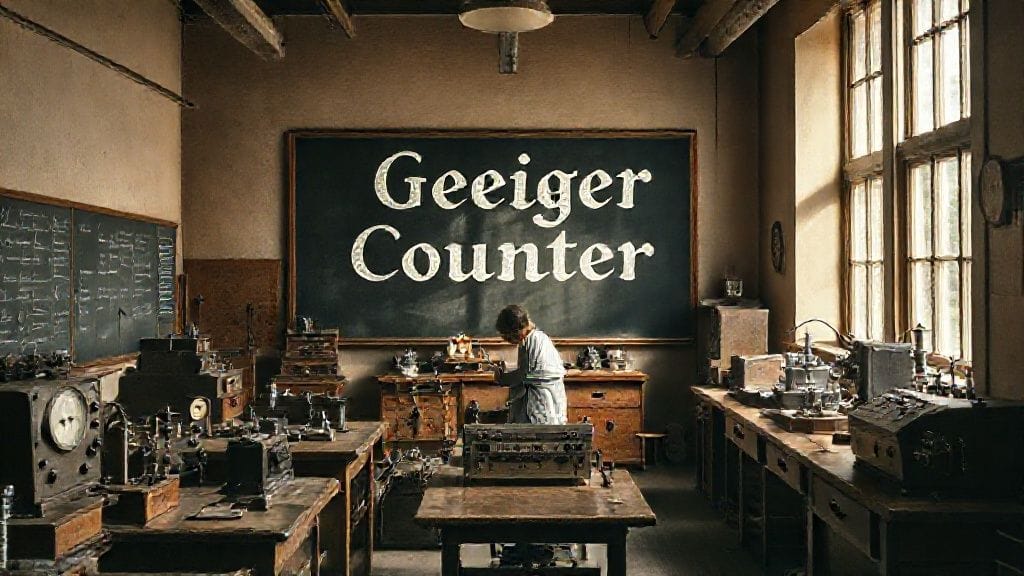
It was a crisp autumn morning in Tübingen, Germany, when the quiet town—known more for its ancient university halls than groundbreaking inventions—became the birthplace of a device that would illuminate invisible worlds. In the cramped, dimly lit laboratory of physicist Hans Geiger, a delicate instrument was born: the Geiger counter. This unassuming tool, designed to detect the faintest whispers of radioactive particles, was destined to alter humanity’s understanding of the atomic realm forever.
Imagine the atmosphere that day—smoke curling from chimneys, scholars bustling through cobblestone streets, and in one modest room, the faint crackle of electrons registering on a primitive scale. No one yet grasped the transformative power of that tiny click, the audible signature of atomic decay. It was more than a machine; it was the first interpreter of a hidden cosmos.
The Shadow of Radioactivity: Early 20th-Century Scientific Curiosity
At the dawn of the 1900s, physics was a tempest of discovery and mystery. The mysterious rays emitted by uranium, first uncovered by Henri Becquerel in 1896, and the subsequent work of Marie and Pierre Curie, had unveiled a strange, invisible form of energy: radioactivity. This phenomenon defied all classical physical explanations and hinted at a deep alteration of matter itself.
Yet, despite this fascination, there was no simple way to measure or quantify this eerie energy. Scientists relied on photographic plates that darkened in response to radiation or indirect evidence gleaned from chemical changes. This left much room for error and speculation. The need for direct, real-time detection was palpable. Into this void stepped Hans Geiger.
Who Was Hans Geiger? The Man Behind the Counter
Born in 1882, Hans Geiger was a German physicist whose curiosity transcended theoretical formulae. Brave in the laboratory and precise in measurement, Geiger had already collaborated with Ernest Rutherford in Manchester, England, where he contributed to understanding alpha particles. This background seeded the idea that a device could be engineered to count individual radioactive particles—a radical leap at a time when radioactivity was still a frontier.
Geiger’s personality was marked by both meticulousness and a pioneering spirit. Descriptions from colleagues paint a man deeply engrossed in the minute details of the atomic world, with a quiet determination to render the invisible visible. Between 1905 and 1908, his work culminated in what would become an emblem of nuclear science.
The Blueprint of Discovery: From Theory to Prototype
The invention of the Geiger counter wasn’t an overnight stroke of genius but rather an evolution of earlier experimental apparatus. Building on the principles of gas ionization and electric discharge, Geiger hypothesized that radioactive particles could ionize the air inside a sealed tube, creating a pulse of electrical current detectable as a signal.
The challenge was to design a device sensitive enough to detect single particles while discriminating against background noise. Early prototypes were cumbersome, fragile, and temperamental—sometimes registering phantom signals, at other times missing crucial emissions. Yet every failure edged Geiger closer to success.
Collaborations with physicists and chemists at Tübingen's university helped refine the design, materials, and electrical configurations. The process was slow, meticulous, and often frustrating—but ultimately forged an instrument capable of translating the ghostly dance of radiation into audible, countable clicks.
The Birth of the Geiger Counter: A Marriage of Precision and Innovation
In 1908, Hans Geiger unveiled the first version of his counter: a cylindrical ionization chamber equipped with two electrodes and connected to a sensitive measuring circuit. This device detected alpha particles emitted from radioactive materials, delivering short bursts of electric current heralded by a distinct “click.”
But the counter was more than a novelty; it represented a fundamental shift. For the first time, scientists could directly count radioactive particles, with discrete, reproducible data at their fingertips. This allowed mapping radiation intensity, studying decay chains, and testing theories with unprecedented rigor.
The simplicity of the recorded sound belied the complexity within. The Geiger counter was the bridge between human senses and the atomic microcosm.
Testing Invisible Forces: The First Measurements
The initial experiments were a mix of trial, error, and discovery. Geiger and his colleagues tested a variety of radioactive sources—radium, polonium, and uranium salts—gauging how many ionizations they could detect. The device responded faithfully, clicking more frequently near potent materials and barely at all in empty, shielded spaces.
One anecdote recalls Geiger’s astonishment upon hearing the steady stream of clicks permeate the lab, the once-silent room now alive with audible proof of atomic decay. This moment was not only scientific but deeply poetic—the invisible heartbeat of atoms laid bare.
The precision of these measurements soon invigorated parallel research, including Rutherford’s studies of the atomic nucleus, further cementing the Geiger counter’s role as an indispensable tool.
Scientific Ripples: The Instrument that Changed Physics
Until then, atomic theory had been, in many respects, an abstract concept. The Geiger counter tethered theory to empirical reality, enabling experiments that would culminate in landmark breakthroughs—most notably Rutherford’s gold foil experiment in 1911, which outlined the nuclear structure of the atom.
By counting decay events, physicists now quantified radioactive half-lives with accuracy, traced decay pathways, and gradually unraveled the complex transformations within unstable elements. This collective understanding propelled quantum theory, nuclear physics, and ultimately atomic energy.
The device’s impact could hardly be overstated. It was a catalyst that moved physics from speculative to measurable, from darkness to clarity.
From Laboratory to Battlefield: The Counter's Expanding Roles
Beyond academia, the Geiger counter took on new significance during the World Wars. Militaries recognized its value—not only to detect radiation from experimental weapons but also to safeguard personnel against invisible hazards.
Reports describe field units equipped with Geiger counters during nuclear testing and in the aftermath of bombings. The device became a symbol of vigilance and survival amid the terrifying promise of nuclear technology. Soldiers and scientists alike relied on its clicks as lifelines in radioactive landscapes.
Its portability and reliability transformed it from laboratory curiosity to a frontline instrument in the dark theaters of 20th-century conflict.
Radiating Awareness: Public Perception and Cultural Impact
As the atomic age dawned mid-century, the Geiger counter transcended scientific circles, entering popular culture. Its distinctive clicks appeared in films, literature, and journalism, epitomizing the eerie and unknown qualities of radiation.
For the public, sometimes fascinated, sometimes fearful, the Geiger counter was an audible reminder of humanity’s newfound power—and vulnerability. Its clicks underscored the atomic mysteries that defined much of the century’s anxieties and aspirations.
Educational programs introduced it to schools, museums displayed it as a marvel, while activists used it to measure environmental contamination, giving voice to ecological concerns born from nuclear proliferation.
The Counter Goes Global: Spreading Through Science and Industry
Following its German origins, the Geiger counter quickly gained international attention. Scientists in Britain, the United States, and elsewhere adopted and improved upon the design.
In industries ranging from mining to medicine, Geiger counters ensured safety and quality control. They became essential in uranium prospecting, medical diagnostics, and radiological research. The spread was rapid, fueled by a growing awareness of radiation’s benefits and dangers.
By mid-20th century, no laboratory, hospital, or nuclear facility was complete without some variant of the Geiger counter.
Technological Refinements: From Geiger to Geiger-Müller
While the original Geiger counter was a marvel, its evolution was equally dramatic. In 1928, Walther Müller collaborated with Geiger to develop a more sensitive and reliable version—the Geiger-Müller tube.
This adaptation broadened detection range to include beta and gamma radiation, extended operational life, and simplified manufacturing. The Geiger-Müller counter’s enhanced capabilities cemented its role as the world-standard radiation detector.
Today’s Geiger counters, though more advanced electronically, owe their lineage directly to these pioneering designs from early 20th-century Germany.
Measuring the Unseen: The Counter in Nuclear Energy and Medicine
The coming decades saw the Geiger counter embedded in the twin revolutions of nuclear power and medical imaging.
In nuclear reactors, it became a sentinel, monitoring fissile materials and detecting leaks. In hospitals, it enabled precise dosimetry, safeguarding patients and staff during X-ray or radiotherapy treatment.
Its role expanded into food safety, archaeological dating, even space exploration. Wherever ionizing radiation interacted with humanity, the Geiger counter provided an essential translation—a tangible interface with an otherwise invisible force.
The Cold War and Beyond: Surveillance, Safety, and Strategy
The geopolitical tensions of the Cold War intensified the need for radiation monitoring.
The Geiger counter featured prominently in nuclear test ban negotiations, environmental monitoring, and civil defense programs. Its clicks sometimes sounded as alarms, warning of fallout contamination or unauthorized tests.
The instrument’s symbolism merged with global politics—representing both existential threat and scientific mastery.
Even after the Cold War, it remains vital—as a tool for nuclear nonproliferation agencies, disaster response teams, and environmental activists confronting new challenges.
Human Stories and Anecdotes: Lives Touched by the Counter
Beyond the cold calculations lies a rich tapestry of human stories. Anecdotes recount researchers startled by unexpected clicks, or miners who discovered hidden radioactive veins thanks to their counters.
There are tales of brave civil defense volunteers who used these devices to map contamination. Children entranced by the clicking sound that turned them into amateur scientists. Geiger counters have been companions in joy, fear, and discovery alike.
One story tells of a physicist who, in mid-experiment, realized the counter’s persistent clicking shielded him from a lethal radiation dose—an unlikely guardian in a perilous moment.
The Legacy of the Geiger Counter: Modern Applications and Symbolism
Over a century since its invention, the Geiger counter remains a potent symbol of scientific curiosity, caution, and control.
Modern devices integrate digital displays, GPS, and data logging, but the essence remains steadfast: detecting particles that shape our understanding of matter and energy.
It teaches us humility before nature’s hidden forces, made accessible by human ingenuity. It is a reminder that the smallest clicks can reveal the universe’s greatest secrets.
Reflection on Innovation: How 1908 Reshaped Our Relationship with Radiation
When Hans Geiger’s counter first clicked in 1908, it heralded more than a new scientific instrument. It signaled a profound shift in human perception—a willingness to confront invisible phenomena with concrete technology.
From the dusty classrooms of Tübingen to the sprawling complexes of nuclear power plants and the hands of emergency responders, the Geiger counter shaped an era. It opened windows into the atomic world, forcing society to grapple with promise and peril alike.
It is incredible to consider how a simple counter, designed over a century ago, continues to echo in the rhythms of modern science and culture.
Conclusion
The invention of the Geiger counter in 1908 was not merely the crafting of a tool but the birth of a new human sense—one that listens to the silent decay of atoms and translates it into life-saving knowledge. Hans Geiger’s modest device illuminated the invisible, bridging the microscopic enigmas of radioactivity and the vast societal transformations that followed.
From its humble beginnings in a German laboratory to its place at the heart of global scientific and geopolitical dramas, the Geiger counter carved a legacy of precision, vigilance, and wonder. It remains a testament to the power of human ingenuity to comprehend and harness forces beyond immediate perception.
As we advance further into the atomic age, the echoes of its clicks remind us of both our capabilities and our responsibilities—a delicate balance struck over a century ago in Tübingen.
FAQs
Q1: Why was the Geiger counter invented?
The Geiger counter was created to detect and count ionizing radiation particles, enabling scientists to measure radioactivity directly and reliably—a necessity as radioactivity’s mysterious properties baffled early 20th-century physicists.
Q2: Who was Hans Geiger and what was his role?
Hans Geiger was a German physicist who designed the original device in 1908 to count alpha particles through detecting ionization. His work laid the foundation for modern radiation detection.
Q3: How did the Geiger counter impact science and society?
It transformed nuclear physics by providing accurate measurements, influenced military and medical applications, and became a vital tool for safety and research worldwide.
Q4: What is the difference between the original Geiger counter and the Geiger-Müller counter?
The Geiger-Müller counter, developed in 1928, improved sensitivity and could detect beta and gamma radiation, making it more versatile and practical for broader applications.
Q5: How did the invention influence nuclear safety?
It allowed for real-time radiation monitoring, informing safety protocols in laboratories, nuclear plants, and during wartime, thereby protecting countless lives from unseen radiation hazards.
Q6: Is the Geiger counter still relevant today?
Absolutely. Modern versions are used in environmental monitoring, medical diagnostics, nuclear industry safety, and emergency response, continuing its century-old legacy.
Q7: How did the public perceive the Geiger counter?
The clicks of the counter became an audible symbol of the atomic age—sometimes inspiring awe, other times fear—highlighting the dual nature of nuclear technology.
Q8: What was Tübingen’s role in the history of the Geiger counter?
Tübingen, as the location of Hans Geiger’s laboratory, was the birthplace of this groundbreaking instrument, marking the city as a pivotal site in nuclear science history.