Table of Contents
- The Dawn of a Digital Era: Berlin, May 1941
- The Man Behind the Machine: Konrad Zuse’s Vision
- Preludes to the Z3: Early Attempts at Mechanization
- The Birth of the Z3: When Dreams Became Circuits
- Technical Marvel in Wartime Berlin: The Z3’s Architecture
- The First Programmable Computer: What Made the Z3 Unique
- Overcoming Challenges: Resources, War, and Innovation
- The Z3’s Impact on Computing: A Silent Revolution
- The War and the Machine: The Struggles of Survival
- Rediscovery and Recognition: The Z3’s Legacy in Post-War History
- Comparing the Z3 to Its International Contemporaries
- The Concept of Programmability: How the Z3 Changed Computing Forever
- Anecdotes from the Workshop: Human Stories Behind the Machine
- The Z3 and Modern Computing: Tracing the Roots
- Preservation and Display: The Z3 in Museums
- The Broader Impact: Computing’s Transformation of Society
- From Z3 to Today: The Evolution of Programming Languages
- The Unseen Code: The Software Behind the Machine’s Power
- Konrad Zuse’s Later Works: Beyond the Z3
- The Ethics of Innovation in Times of War
- How the Z3 Influenced Today’s Digital World
- A Reflection on Innovation: Creativity Amidst Conflict
- The Z3: Forgotten or Forgotten No More?
- Conclusion: The Enduring Spirit of the First Computer
1. The Dawn of a Digital Era: Berlin, May 1941
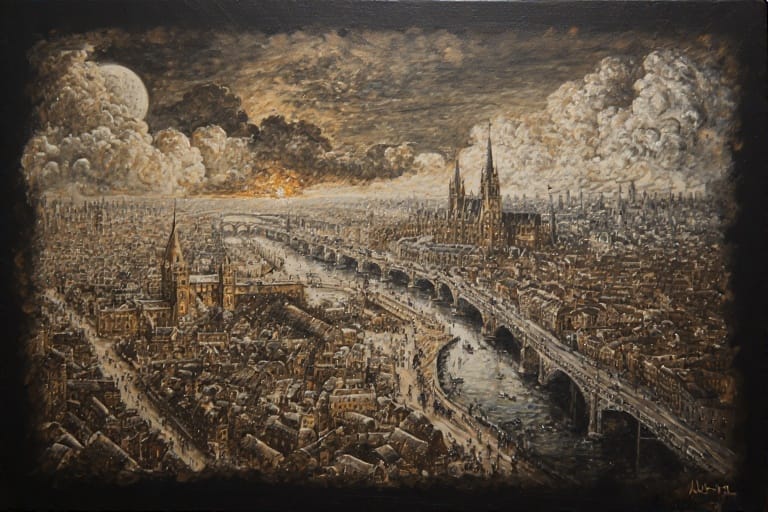
The air was thick with tension and smoke—Berlin in 1941, deep in the throes of global conflict, was far from the cradle of peaceful scientific discovery. Yet, in a modest workshop shadowed by the relentless clangor of war, a quiet revolution was unfolding. On May 12, 1941, a machine unlike any before it came to life: the Z3, the world’s first functional programmable, fully automatic digital computer. It was a moment both inconspicuous and monumental—an invention that would lay the cornerstone for the digital age, hidden beneath the clouds of war and censorship.
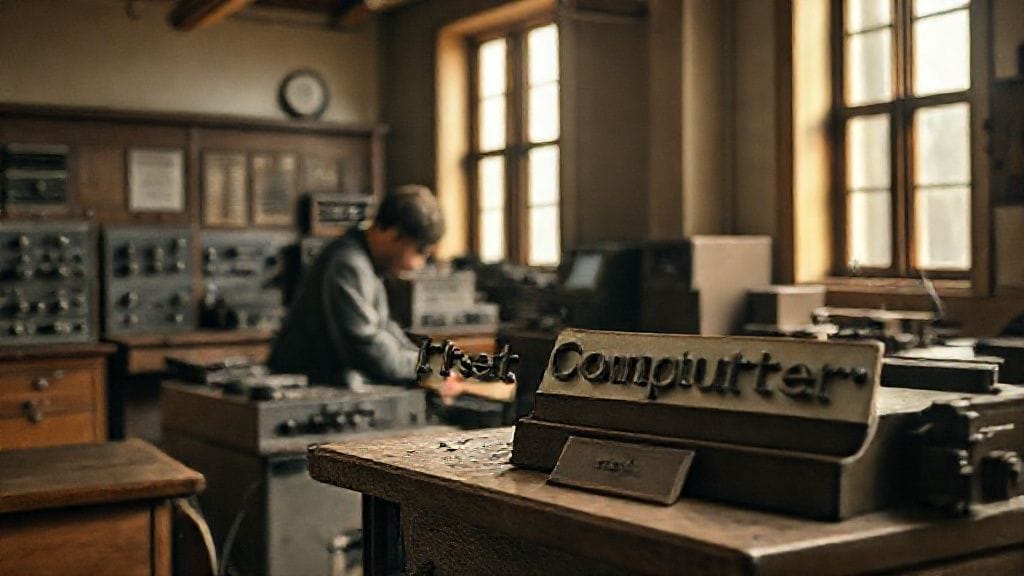
Inside the cramped laboratory, sparks flew from wires and glass tubes, as metal gears clicked in perfect harmony. The Z3 was humming, processing, calculating, and proving that thoughts could indeed be converted to mechanical precision. In this solitary moment, Konrad Zuse’s vision transcended theory and paper, manifesting into a machine that would alter the course of technology forever.
2. The Man Behind the Machine: Konrad Zuse’s Vision
Konrad Zuse was not just an engineer; he was a visionary dreamer bound by an engineer’s discipline. Born in 1910 in Berlin, Zuse’s fascination with machines and mathematics blossomed early. By the late 1930s, his ambitions surpassed the limits of mechanical calculators and punched-card systems. Inspired by the possibilities of automating complex calculations—especially useful for architectural and aeronautical design—he envisioned a machine that could be programmed, reprogrammed, and perform digital operations with unprecedented efficiency.
Yet, in an era dominated by analog devices and electromechanical calculators, Zuse was a maverick swimming against the current. Insisting on binary logic and automation, his work was revolutionary and, intriguingly, isolated—away from major research centers and resources commandeered by the war effort.
3. Preludes to the Z3: Early Attempts at Mechanization
Before the Z3’s debut, Zuse had already plunged into the realm of computation machines. His first prototype, the Z1 (completed in 1938), was an electromechanical marvel, featuring binary floating-point arithmetic and a program stored on punched tape—but it lacked reliability and precision. The Z2 followed soon after, with improvements on components and logic.
These earliest machines, while imperfect, were vital stepping stones. They tested concepts, materials, and programming methods that would underpin the Z3. The repetition of setbacks, broken parts, and wartime interruptions never deterred Zuse. “Structure is consciousness,” he once reflected—a belief that the architecture of a machine was the very soul of computation.
4. The Birth of the Z3: When Dreams Became Circuits
At last, in May 1941, the Z3 bridged the gap between theory and practice. This machine combined electromechanics with programmable capability, controlled by punched film tape. Using 2,600 relays, it performed arithmetic, branching, and floating-point calculations with remarkable speed and accuracy for its time.
The Z3 was not just a calculator; it was a programmable digital computer, capable of executing sequences of instructions autonomously. It could solve complex equations—tasks fundamental to engineering problems and, ironically, wartime applications.
For many, this achievement was astonishing yet invisible. The ongoing war meant that the Z3 existed in a vault of German innovation largely unknown and unshared with the broader scientific community.
5. Technical Marvel in Wartime Berlin: The Z3’s Architecture
At its core, the Z3 operated on a 22-bit word length using floating-point arithmetic—an innovation far ahead of most contemporaries. Its programming was handled via punched film tape, allowing conditional branching, loops, and subroutines—concepts foundational to modern computation.
Unlike analog devices, the Z3 relied purely on discrete binary states, with relays conducting the logical operations. Though slow by today’s standards (approximately 5 Hz operation), its speed and programmability were revolutionary in 1941.
Its architecture reflected Zuse’s commitment to modularity and clarity, balancing complexity with physical constraints. Every component, from memory to control circuits, was crafted with painstaking care under the scarcity of wartime materials.
6. The First Programmable Computer: What Made the Z3 Unique
What sets the Z3 apart from earlier machines is its fully programmable, automatic nature. While devices like the British Bombe or American Harvard Mark I performed computations, the Z3 allowed sequences of instructions to be changed without physical reconfiguration—thanks to the punched tape.
This programmability heralded a fundamental leap: computers could be universal calculators, configured for diverse problems. The Z3 embodied what would become the “stored-program” concept, an essential pillar of modern computing, even if it didn’t store programs electronically within memory.
“Programmability isn’t just a feature; it is the essence of digital computation,” wrote later historians. Zuse’s work embodied this ethos, making the Z3 a progenitor of all modern software-driven machines.
7. Overcoming Challenges: Resources, War, and Innovation
Berlin in 1941 was hardly fertile ground for peaceful invention. With bombs falling and resources scarce, Zuse’s workshop was a fortress of persistence. Relays were hard to come by, materials were rationed, and electricity supply was erratic.
Despite these odds, Zuse’s determination never faltered. Supported mainly by his family and a small team, he navigated bureaucratic indifference and wartime secrecy. Remarkably, the machine was completed and operational in this harsh context—a testament to ingenuity overcoming inevitability.
It’s telling that the Z3 program was used later for calculating wing flutter in airplane wings—a direct military application, though Zuse himself hoped the machine’s true legacy would be scientific and humanistic.
8. The Z3’s Impact on Computing: A Silent Revolution
The Z3’s existence was not widely known outside Germany during the war, and its potential largely unrecognized. Its silence was emblematic of the war’s disruption, but the machine itself planted seeds that would blossom posthumously.
Once discovered by Allied forces, the concepts behind the Z3 informed early computer science developments. Its pioneering use of binary arithmetic and floating-point operations influenced designs worldwide.
In a sense, the Z3 was the first chapter in a global narrative—the genesis of the digital era. Without it, the lineage of computers would have had a missing link.
9. The War and the Machine: The Struggles of Survival
As the war intensified, Zuse’s lab and the Z3 did not survive intact. Allied bombings destroyed the original Z3 in 1943, a tragic loss for history and technology alike. Only months later, the world would see the development of other early computers—it was a time of frantic innovation and destruction.
Zuse rebuilt his concepts post-war, but the original machine was lost to time, a victim of the very conflict that had spurred its creation. The war’s iron grip delayed recognition of Zuse’s achievements and redrew the map of early computing innovation.
10. Rediscovery and Recognition: The Z3’s Legacy in Post-War History
Only decades after the war did historians and technologists piece together the Z3’s significance. In 1961, an exact replica was constructed by the Deutsches Museum, showing the world the ingenuity of the early 1940s.
Since then, Konrad Zuse’s role has been acknowledged globally—as an unsung father of the digital computer, alongside pioneers like Alan Turing and John von Neumann. Today, the Z3 is celebrated not only as a technical achievement but as an emblem of persistence and vision.
11. Comparing the Z3 to Its International Contemporaries
While the Z3 predates many better-known early computers like ENIAC (1945) or Colossus (1943), it is unique for its programmability and floating-point operations. British and American machines often relied on decimal or analog systems, lacked full programmability, or were designed for specific codebreaking or ballistic calculations.
Unlike Turing’s theoretical machines, Zuse built a real, functioning device. The global technical community might have been unaware of Zuse’s work until after the war—a fascinating “what if?” in technological history.
12. The Concept of Programmability: How the Z3 Changed Computing Forever
At the heart of the Z3’s legacy lies programmability—a concept so foundational it reshaped the world. Previously, machines were single-purpose; each “calculation” required rewiring or manual reconfiguration.
The Z3 showed that storing a set of instructions on punched tape allowed dynamic operation, branching, and complex logic. This ‘software’ paradigm laid the framework for automation, efficiency, and the vast ecosystems of applications we experience today.
In many ways, the Z3 began the transition from mechanical calculation to the software-driven digital universe.
13. Anecdotes from the Workshop: Human Stories Behind the Machine
Zuse’s writings and interviews offer rare glimpses into the human dimension of this creation. He recalled nights “spent chasing relay failures by flashlight,” the camaraderie of a tiny team surviving shortages, and moments of despair mixed with exhilaration as the machine finally functioned.
One story tells of a failed flight test delayed because Zuse’s machine was verifying the wing calculations—an early example of software directly impacting aviation safety.
Behind the circuits was a mosaic of passionate individuals who refused to see impossibility.
14. The Z3 and Modern Computing: Tracing the Roots
Every smartphone or laptop today owes a debt to machines like the Z3. Its binary architecture and programmability are the DNA strands encoded into modern processors and computing logic.
By looking back at the Z3, we understand that innovation is often incremental but built on bold leaps. The machine’s principles prefigure microprocessors, coding languages, and automated systems that now dominate global life.
It is incredible to contemplate how a 1941 electromechanical calculator connects to today’s digital cosmos.
15. Preservation and Display: The Z3 in Museums
The reconstructed Z3 now sits in the Deutsches Museum in Munich, a symbol of technological heritage. Visitors witness the clatter of relays, the slow blinking lights, and the deliberate steps of a pioneering digital mind.
By preserving and showcasing the Z3, institutions remind us that innovation arises even from turmoil and that behind every byte is a human story.
The machine stands as a bridge between past ingenuity and future possibility.
16. The Broader Impact: Computing’s Transformation of Society
While the Z3 was a technical marvel, its broader significance is cultural and societal. It marked the dawn of automation in a world that would soon witness the rise of computers transforming economics, warfare, science, and everyday life.
The automation of complex calculations accelerated scientific discovery, changed industrial processes, and opened new realms of communication and information processing.
The Z3, therefore, was not just a machine but a genesis moment for civilization’s digital transformation.
17. From Z3 to Today: The Evolution of Programming Languages
The Z3’s punched tape programming was the precursor to a dazzling array of programming languages now powering everything from websites to spacecraft. The idea of ‘instruction sets’ trace back directly to these early machines.
Konrad Zuse himself developed early programming languages, including Plankalkül in the 1940s—a visionary conceptual language that predated many modern efforts but remained unpublished until years later. His work anticipated the complexity and creativity of software engineering as a discipline.
18. The Unseen Code: The Software Behind the Machine’s Power
While hardware often captures imaginations, the software—the instructions that tell machines what to do—is the Z3’s quiet triumph. The ability to read, interpret, and act upon coded instructions was a breakthrough.
By proving that hardware and software could be decoupled, Zuse laid the groundwork for versatile machines, paving the way for everything from video games to artificial intelligence.
19. Konrad Zuse’s Later Works: Beyond the Z3
Zuse continued to push boundaries after the Z3, creating the Z4—the world’s first commercial digital computer, which survived the war—and developing early ideas in computer graphics and software engineering.
His intellectual journey is that of an eternal innovator, showing how one inventive mind can ripple across decades.
20. The Ethics of Innovation in Times of War
The Z3’s war-era birth raises profound questions about science, ethics, and conflict. While intended for peaceful applications, the context tethered its legacy to war efforts.
Zuse navigated this landscape carefully, emphasizing innovation for societal benefit. His story invites reflection on the responsibilities innovators carry when their work intersects with geopolitics and conflict.
21. How the Z3 Influenced Today’s Digital World
From cloud computing to smartphones, the DNA of the digital world is rooted in machines like the Z3. Concepts of programmability, automation, and binary arithmetic are fundamental to how modern society functions.
Recognizing Zuse’s contributions enriches our understanding of computing’s origins and underlines the collaborative, global evolution of technology.
22. A Reflection on Innovation: Creativity Amidst Conflict
The Z3 exemplifies how necessity, imagination, and determination can flicker amidst chaos. It reminds us that even darkest times can birth light—one relay clacking at a time.
This machine encapsulates humanity’s relentless quest for knowledge and progress, often against overwhelming odds.
23. The Z3: Forgotten or Forgotten No More?
For years overshadowed, the Z3’s story was nearly lost. But today, it shines as a beacon of early computing innovation, enriching histories and inspiring dedication to uncovering hidden narratives of technology.
It now stands proudly alongside better-known pioneers in the global pantheon of inventors.
Conclusion
The first computer Z3 was more than a machine; it was a symbol—a testament to human ingenuity flourishing in a world overshadowed by conflict, chaos, and uncertainty. Konrad Zuse’s creation marked the genesis of the programmable digital computer, a seed planted quietly in Berlin’s wartime shadows with fruits rippling across generations.
As we navigate our digital lives today—streaming, coding, communicating—it is humbling and inspiring to recall the clatter of relays in a cramped workshop eight decades ago. The Z3 teaches us that innovation is profoundly human: a dance of hope, resilience, creative courage, and relentless curiosity.
The story of the Z3 invites us not only to honor a pivotal invention but to embrace the enduring spirit that drives technological progress: the determination to transform dreams into reality, no matter the obstacles.
FAQs
Q1: What was the first computer Z3, and why is it important?
The Z3, completed in Berlin in 1941 by Konrad Zuse, was the world’s first programmable, fully automatic digital computer. It is important because it introduced programmability and binary calculation, foundational concepts for all modern computers.
Q2: Who was Konrad Zuse, and what was his role in computing?
Konrad Zuse was a German engineer and inventor who built the Z3. He was a pioneer of computer science, inventing early programmable machines and developing one of the first high-level programming languages, Plankalkül.
Q3: How did the Z3 differ from other early computing machines?
Unlike many contemporaries, the Z3 was fully programmable via punched film tape and used binary floating-point arithmetic. It was mechanical and digital, not analog, allowing for more precise and flexible calculations.
Q4: What challenges did Zuse face during the creation of the Z3?
Zuse worked amid wartime constraints—scarce resources, bombings, and limited institutional support. Despite these, he managed to design and build the Z3 with a small team and limited materials.
Q5: How has the legacy of the Z3 influenced modern computing?
The Z3 introduced programmability and binary computation, shaping the development of software and hardware architecture. Its principles resonate in today’s digital systems, programming languages, and computer science theory.
Q6: Why was the Z3 not widely known until after World War II?
The secrecy and destruction of wartime Germany, along with isolated communication, kept Zuse’s work unnoticed abroad. The original Z3 was destroyed in 1943; recognition came only decades later with reconstructions and historical research.
Q7: Where can one see the Z3 today?
A functioning replica of the Z3 is displayed at the Deutsches Museum in Munich, Germany, where visitors can witness this pioneering machine in operation.
Q8: What was the ethical context of invention like the Z3 during wartime?
While born in a military context, the Z3 was primarily intended for scientific and engineering calculations. The ethical questions around technology developed during conflict remain complex, balancing innovation and responsibility.