Table of Contents
- The Dawn of a New Era: April 3, 1973
- Dr. Martin Cooper: The Visionary Behind the First Mobile Phone Call
- The World Before the Mobile Phone: Communication in the Early 1970s
- The Technological Landscape: From Landlines to Wireless Dreams
- The Rise of Motorola: Engineering the Impossible
- The Manhattan Streets Where History Was Made
- The First Call: A Moment Frozen in Time
- The Content of the Call: A Personal Conversation or a Signal to the Future?
- Reactions and Skepticism: How the First Mobile Call Was Received
- Technical Challenges to Commercial Success: Size, Battery Life, and Network Coverage
- Early Mobile Phones: From Prototype to Consumer Reality
- Societal Transformations: How Mobile Phones Changed Human Interaction
- The Broad Impact: Business, Emergency Services, and Daily Life
- The Mobile Phone’s Journey through the 1980s and 1990s
- Cultural Shifts: Media, Cinema, and the Mobile Icon
- Economic Ripples: The Birth of a Multi-Billion-Dollar Industry
- Obstacles on the Path: Regulation, Infrastructure, and Competition
- The Mobile Phone Today: Legacy and Evolution from the First Call
- A Global Phenomenon: How Different Regions Adopted Mobile Technology
- Anecdotes and Quotes from the Pioneers of Mobile Communication
- The Psychological Impact: Connectivity’s Double-Edged Sword
- The Environmental Footprint: Early and Modern Challenges
- Remembering April 3, 1973: Commemoration and Historical Significance
- The Future of Mobile Communication: Tracing the First Call to Tomorrow
- Lessons from the First Mobile Phone Call for Today’s Digital Age
On a spring day in Manhattan, April 3, 1973, a revolution whispered through the crowded streets — not in voices raised in protest or the roar of engines, but through a crackling voice carried invisibly over the airwaves. With that first call made on a handheld cellular device, Dr. Martin Cooper, a magnetic figure with determination etched into his features, changed the very fabric of human communication. The Mobile Phone First Call was not just an innovation; it was the birth of an era.
The Dawn of a New Era: April 3, 1973
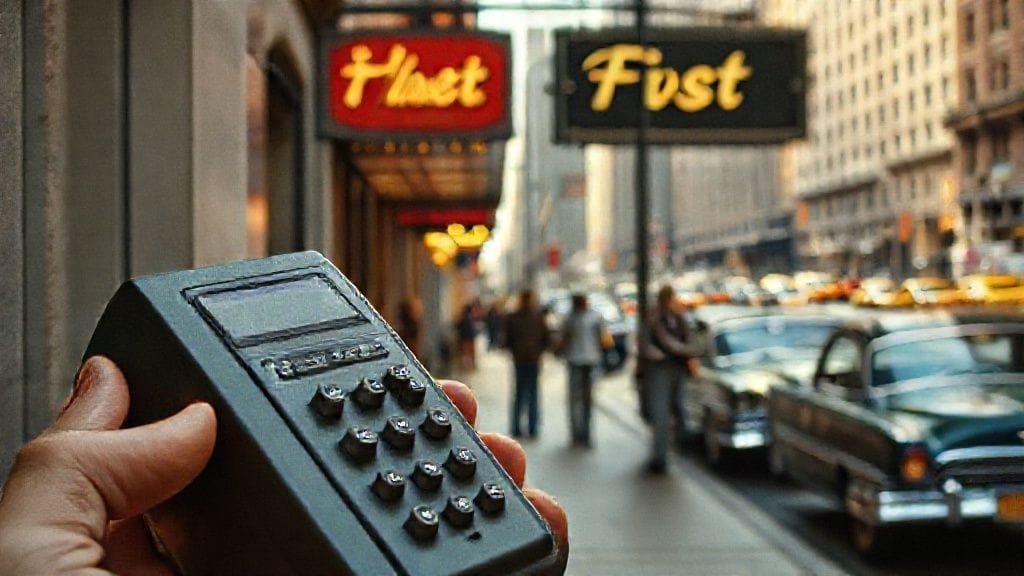
Imagine a sweltering New York City afternoon. The streets buzz with honking taxis, chattering crowds, and the unceasing pulse of urban life. Amid this chaos, a bulky black handset—over a kilogram in weight, a far cry from today’s slim devices—is lifted to the ear. The voice that emerges into the airwaves is Dr. Martin Cooper’s, reaching out not to summon a taxi or talk business but to challenge a way of life held for decades. This was the mobile phone’s debut, a moment that promised wireless freedom and perpetual connectivity.
“The first call I made was to my rival at Bell Labs,” Cooper later recalled with a grin. “I wanted to tell him, ‘I’m calling you from a phone I’m holding in my hand, no strings attached.’” That call wasn’t just a personal jab or professional boast — it was the manifesto of a wireless future.
Dr. Martin Cooper: The Visionary Behind the First Mobile Phone Call
Born in 1928 in Chicago, Martin Cooper’s fascination with radio communication dates back to his youth. A brilliant engineer at Motorola, Cooper nurtured a dream that radios could be miniaturized and liberated from their fixed stations. For years, he championed cellular technology as more than just a research project; it was a tool to redefine society’s very relationship to communication.
He faced skepticism and technological hurdles. The idea of “cellular” networks—dividing a city into many small radio cells, each with its own antenna—was revolutionary. Coordinating handoffs between cells, ensuring signal clarity, and creating a device small enough to carry posed herculean challenges.
Yet, Cooper’s persistence was relentless. His leadership culminated in that defining moment in 1973, symbolizing years of research, trial, and error.
The World Before the Mobile Phone: Communication in the Early 1970s
Before the mobile phone’s debut, communication was stationary. Telephone booths dotted streets and homes, tethered by cables that made movement impossible. Imagine an era when making an urgent call meant rushing to the nearest payphone or hailing a taxi to find one.
Landline telephones had become ubiquitous, yet their immobility was a shackle. Satellite and radio communications existed but were unwieldy and expensive. The idea of carrying a ‘phone’ to make a call anywhere was science fiction for most.
Business executives relied heavily on car phones—bulky and rare technologies tied to specific vehicles. For the average person, communication meant being where the phone was. This limitation shaped social norms, emergency responses, and even the flow of information.
The Technological Landscape: From Landlines to Wireless Dreams
The path to the first mobile phone call was layered with preceding innovations. Radio telephony, developed in the early 20th century, enabled ship-to-shore and military communications. By mid-century, this technology filtered into emerging commercial and emergency services.
The concept of “cellular” networks was first proposed by Bell Labs in the 1940s, theorizing an infrastructure of frequency reuse via hexagonally partitioned cells. Yet, practical implementation waited decades. Technology to miniaturize the radio transmitters and receivers presented stiffness in progress.
Motorola, under Cooper’s initiative, embraced the vision with engineering breakthroughs—transistors reduced size, signal compression techniques enhanced clarity, and battery technologies began addressing power demands.
The Rise of Motorola: Engineering the Impossible
In the late 1960s, Motorola became the battleground of wireless dreams. Against skepticism from investors and competing engineers, its cellular research group labored ceaselessly. The company’s culture of innovation meshed with Cooper’s charisma to fuel progress.
The result was the DynaTAC (Dynamic Adaptive Total Area Coverage) model, a portable cellular telephone that weighed approximately 2.5 pounds (1.1 kg) and offered thirty minutes of talk time per charge. Clunky by today’s standards, the DynaTAC was a triumph in miniaturization.
Motorola’s engineers even faced external challenges: regulations from the Federal Communications Commission (FCC), securing frequency allocations, and designing base stations for the cellular network. This wider ecosystem was as vital as the device itself.
The Manhattan Streets Where History Was Made
Cooper’s first call was made while standing at Sixth Avenue and 53rd Street—a busy Manhattan intersection. This location was more than arbitrary; it represented the beating heart of America’s economic and cultural capital.
Here, the city’s relentless pace reflected the increasing need for communication freedom. The ubiquitous yellow taxis, iconic skyscrapers, and thronging crowds framed the moment, pushing the idea that life was no longer bound to wires and fixed places.
As passersby witnessed a man talking on a strange black box nearly the size of a brick, it was impossible to predict the ripple effects. Little did the crowd know they were seeing the birth of a device that would diffuse communication across the globe.
The First Call: A Moment Frozen in Time
That first mobile phone call, brief and technologically precarious, was a symphony of human ingenuity. Cooper dialed the number to his rival Joel Engel, head of Bell Labs' cellular program, proclaiming, “Joel, I’m calling you on a real cellular telephone.”
The phone’s antenna was an eight-inch whip protruding awkwardly. With a reported talk time of about 30 minutes and a cost nearing $4,000 (equivalent to over $22,000 today), the DynaTAC was not a commercial product but a demonstration.
Yet, the technical triumph was immense: performing a call over the cellular network, transitioning between cells, managing interference — all while the device fit in one hand.
The Content of the Call: A Personal Conversation or a Signal to the Future?
Though technically mundane—a professional call to a competitor—symbolically, that moment represented a profound leap. It was the public declaration that wireless personal communication was possible.
Cooper saw it as a challenge to monopolistic giants and an open door to innovation. His words, though few during the call, echoed through decades: they heralded autonomy, immediacy, and accessibility.
Reactions and Skepticism: How the First Mobile Call Was Received
While insiders celebrated, the public and industry reactions were mixed. Newspapers called it “a remarkable new gadget,” but many dismissed it as a bulky curiosity.
Critics pointed out the impracticality: exorbitant costs, weight, network limitations, and battery constraints. Cellular networks were sparse and expensive. Some doubted wireless phones would ever become a household item.
Nonetheless, the main telephone companies, such as AT&T, felt the pressure. Some feared losing control over the communications market.
Technical Challenges to Commercial Success: Size, Battery Life, and Network Coverage
After that historic call, engineers conducted the painstaking work of refinement. Battery life was minimal; recharging took hours. The DynaTAC’s bulky size hindered portability.
The cellular networks themselves required massive infrastructure: base stations had to blanket cities with coverage, requiring cooperation and capital investment.
Furthermore, ensuring call hand-offs between cells without disconnection was a constant challenge.
Regulatory hurdles compounded these technical problems; real liberalization of spectrum for commercial mobile networks only came years later.
Early Mobile Phones: From Prototype to Consumer Reality
It was not until 1983 that Motorola’s DynaTAC became commercially available—the first true mobile phone in the hands of consumers. The $3,995 price tag immediately restricted buyers to executives and affluent professionals.
Mobile phones then tethered their owners to cars or briefcases but symbolized status and futuristic technology.
The call capacity remained relatively small until network expansion and digital cellular systems emerged.
Societal Transformations: How Mobile Phones Changed Human Interaction
Mobile phones began shrinking the world, reshaping social dynamics. Users could now maintain conversations while on the move, breaking traditional temporal and spatial boundaries.
This newfound immediacy encouraged close connections, but also sparked concerns about intrusion, distraction, and dependence.
Families arranged instant meetings; businesses conducted live negotiations on street corners; personal safety benefited as emergency calls became a reachable lifeline.
The Broad Impact: Business, Emergency Services, and Daily Life
One of the first revolutionary impacts was in business—a mobile phone became synonymous with efficiency.
Emergency responders found in mobile communications an essential tool, reducing response times.
The general public, however, only gradually adopted the technology, as cost and network limitations waned.
The Mobile Phone’s Journey through the 1980s and 1990s
As infrastructure solidified and technological advancements lowered costs, mobile phones proliferated globally.
The 1990s saw the rise of the “brick phone,” then more compact models with LCD displays and texting capabilities.
GSM standards standardized networks, allowing international roaming and compatibility.
Cultural Shifts: Media, Cinema, and the Mobile Icon
Mobile phones entered pop culture, symbolizing modernity and power. From films like “Wall Street” to TV shows and music, carrying a phone illustrated wealth and connectivity.
Yet, they also sparked cultural anxieties: fears of social isolation amid hyper-connectivity and debates about etiquette.
Economic Ripples: The Birth of a Multi-Billion-Dollar Industry
The mobile phone industry exploded into a global economic powerhouse, spawning manufacturers, network providers, app developers, and accessory markets.
Jobs, investments, and productivity boomed. The smartphone era would later eclipse these gains, but the seed was planted in 1973.
Obstacles on the Path: Regulation, Infrastructure, and Competition
Regulators balanced spectrum management and competition laws, sometimes slowing mobile adoption.
Infrastructure build-out costs delayed rural connectivity and affordable service.
Competition between Motorola, Nokia, Ericsson, and later Apple and Samsung, spurred innovation.
The Mobile Phone Today: Legacy and Evolution from the First Call
From the heavy DynaTAC to compact smartphones, every device owes its existence to that first breath-taking call.
Today’s mobile devices offer internet access, cameras, GPS — transforming communication into a multimedia experience unimaginable in 1973.
A Global Phenomenon: How Different Regions Adopted Mobile Technology
While the U.S. led in early development, mobile phones rapidly spread worldwide.
Developing countries leapfrogged landlines, boosting social and economic development.
Asia and Europe shaped global standards and manufacturing.
Anecdotes and Quotes from the Pioneers of Mobile Communication
Cooper famously quipped, “People didn’t realize what was coming. My first call was not just to announce the phone—it was to announce a new way of life.”
Joel Engel, the rival, acknowledged, “It was a historic moment not just for us, but for humanity.”
The Psychological Impact: Connectivity’s Double-Edged Sword
While bringing people closer, the mobile phone introduced new stresses: constant availability, digital fatigue, and privacy concerns.
The balance between connection and solitude remains a modern quest.
The Environmental Footprint: Early and Modern Challenges
Manufacturing handsets and infrastructure consume resources; e-waste is a growing problem.
Efforts to recycle, reduce battery toxic legacy, and green network operations continue.
Remembering April 3, 1973: Commemoration and Historical Significance
The anniversary of the first call is celebrated by tech historians, engineers, and communications enthusiasts as a pivotal turning point.
Museums, documentaries, and retrospectives honor Cooper’s pioneering spirit.
The Future of Mobile Communication: Tracing the First Call to Tomorrow
From 5G to 6G, from cellular networks to satellite internet, that first call laid a foundation for perpetual innovation.
Wearables, IoT, and AI assistants are among the latest explorations continuing this legacy.
Lessons from the First Mobile Phone Call for Today’s Digital Age
The 1973 first call reminds us innovation requires vision, persistence, and sometimes rivalry.
It challenges today’s inventors to anticipate societal impact beyond mere technology.
Conclusion
The first mobile phone call, made on April 3, 1973, was no mere technical feat—it was a seismic shift that rewrote human connectivity’s rules, straddling the worlds of engineering marvel and human story. Dr. Martin Cooper’s handheld call freed communication from its earthly chains and propelled society into a new dimension of immediacy and mobility.
Walking the bustling New York streets that day, few could imagine the invisible tendrils of wireless waves threading through every continent, touching billions. Yet, this single call was not just about technology: it was about humanity’s enduring desire to reach out, to connect, to share instantly across any distance.
As we now live embedded in networks of unprecedented power and complexity, it is humbling and inspiring to look back to that pivotal moment—a testament to vision, determination, and the transformational power of communication.
FAQs
1. Who made the first mobile phone call, and why was it significant?
Dr. Martin Cooper of Motorola made the first mobile phone call on April 3, 1973, marking the first time a wireless handheld telephone was used to connect over a cellular network. This event signaled the dawn of personal, portable communication.
2. What technological challenges did the early mobile phone face?
The initial device was heavy, with limited battery life and required a newly built cellular network infrastructure. Challenges included call handoff between cells, limited coverage, and regulatory barriers for spectrum use.
3. How did society react to the first mobile call at the time?
While some hailed it as a breakthrough, many were skeptical about its practicality due to size, cost, and coverage limitations. The broader adoption unfolded gradually over subsequent decades.
4. What impact did the mobile phone have on business and emergency services?
Mobile phones revolutionized business efficiency by enabling communication on the go. Emergency services benefited hugely by reducing response times and allowing calls from various locations.
5. How did mobile phones evolve after 1973?
The first commercial mobile phone launched in 1983. Technology evolved through digital networks, size reduction, texting, cameras, and ultimately to smartphones offering multimedia capabilities.
6. How did the invention of the mobile phone influence global society?
It connected people across geographies, propelled economic development, altered social interactions, and catalyzed further technological innovations globally.
7. What environmental concerns arise from mobile phone production and usage?
Manufacturing and disposal create e-waste and consume resources. Efforts today focus on sustainable production, recycling, and reducing the carbon footprint of network infrastructure.
8. How is the legacy of the first mobile call reflected in today’s technology?
All smartphones and wireless communication build on that first call’s foundation, evolving into an indispensable part of daily life and future technology trajectories.