Table of Contents
- The Evening That Changed Technology Forever
- Silicon Valley’s Bold Gamble: Setting the Stage for the iPhone
- Apple’s Journey up to 2007: Past Innovations and Growing Ambitions
- Steve Jobs: The Visionary Architect Behind the iPhone
- The Conception of the iPhone: Dreaming Beyond Phones
- The Secretive Development Process: Creating a Device in the Shadows
- Challenges and Setbacks: Innovation’s Price
- January 9, 2007: The Keynote That Electrified the World
- Unveiling the iPhone: Features That Captivated and Shocked
- Reactions from the Public and the Tech Industry: Awe and Skepticism
- From Prototype to Production: The Race Against Time
- Launch Day: The First iPhone Hits the Market
- Impact on Competitors and the Mobile Market Landscape
- The Birth of the App Ecosystem: A New Digital Frontier
- Cultural Ripples: iPhone and the Transformation of Daily Life
- Economic Consequences: Apple’s Rise to Consumer Dominance
- Controversies and Criticisms: Not Everything Was Perfect
- Global Reach and Adoption: Connecting the World Differently
- The iPhone Legacy: Revolutionizing Communication and Beyond
- Conclusion: The Dawn of a New Era
- FAQs: Understanding the iPhone Phenomenon
- External Resource
- Internal Link
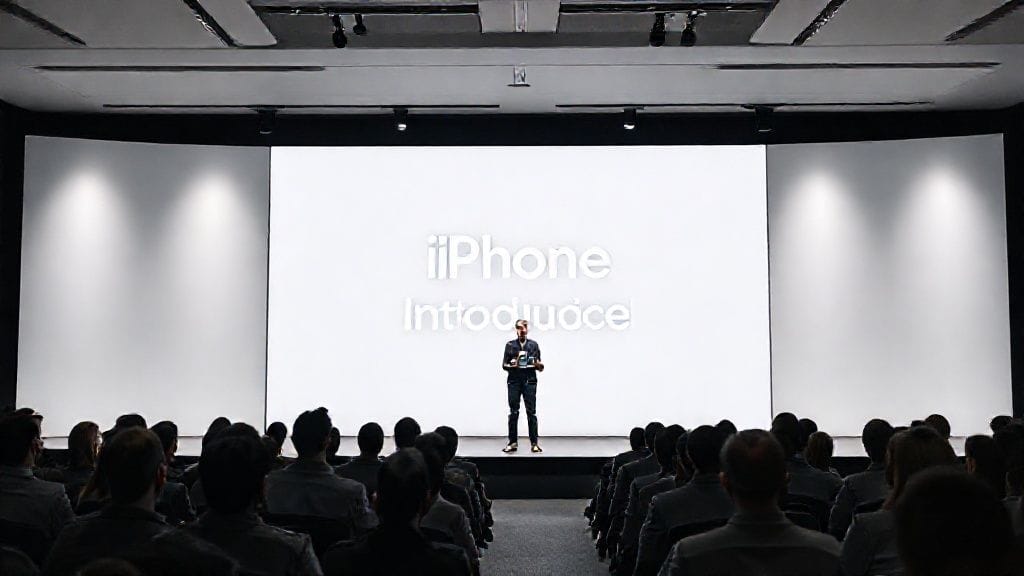
On the evening of January 9, 2007, an eager crowd gathered in the ornate Moscone Center in San Francisco. The air buzzed with whispered anticipation; industry insiders, journalists, and Apple enthusiasts prepared to witness what was promised as a pivotal event. The potent mixture of curiosity and excitement was palpable as Steve Jobs, donning his iconic black turtleneck and jeans, stepped onto the stage. The world was about to be introduced to a device that would not just change a company, but rewrite the very language of technology and communication: the iPhone.
1. The Evening That Changed Technology Forever
“Today, Apple is going to reinvent the phone,” Jobs declared with characteristic confidence. His voice carried the weight of audacity and clarity, capturing the room’s imagination instantly. The iPhone was not merely a product; it was a statement of intent, a vision for the future that combined music, telephony, and internet connectivity into a single sleek device. Sitting in that audience felt like witnessing the birth of something monumental — a device that would quietly but relentlessly infiltrate lives and societies worldwide in the coming years.
2. Silicon Valley’s Bold Gamble: Setting the Stage for the iPhone
To understand the significance of the iPhone’s introduction, one must grasp the state of mobile technology in the early 2000s. Mobile phones were becoming widespread, yet they remained clunky, fragmented, and limited. Feature phones with physical buttons dominated, with rudimentary web capabilities and often clumsy interfaces. Meanwhile, Silicon Valley buzzed with innovation but no product neatly combined design, functionality, and accessibility in one package.
Apple, recovering from previous fires and key product launches — most notably the iPod — sensed an opportunity: the world wanted simplicity and elegance wrapped in powerful technology. This was a gamble; Apple was not traditionally a market leader in mobile phones but rather in personal computing and music players. Could they transform a fragmented market dominated by giants like Nokia, Motorola, and BlackBerry?
3. Apple’s Journey up to 2007: Past Innovations and Growing Ambitions
Apple’s story before 2007 was a roller-coaster of highs and lows. The return of Steve Jobs in 1997 sparked a renaissance — from the colorful iMacs breaking from conventional computer design, to the iPod revolutionizing music consumption. Yet, Apple’s ambitions were growing: the company had already disrupted how people listened to music and surfed the web on desktop computers. The logical next step was to redefine communication itself.
The iPod’s success had given Apple a taste of consumer electronics domination, and Jobs saw the smartphone as a natural evolution. Apple’s portfolio of technologies—touch interfaces, internet browsers, music licensing, and design expertise—was converging toward something new, revolutionary.
4. Steve Jobs: The Visionary Architect Behind the iPhone
Understanding the iPhone’s introduction necessitates understanding Steve Jobs: the mercurial, often ruthless innovator whose perfectionism and intuition drove Apple’s fortunes. Jobs was a man obsessed with simplicity, usability, and aesthetics. He believed deeply that technology should serve human needs and emotions, not overwhelm or frustrate.
Jobs did not just want to build a better phone; he wanted to change how people interacted with technology, folding disparate devices into one seamless experience. His famous pursuit of the “magic and mystery” in products was in full force during the iPhone’s development.
5. The Conception of the iPhone: Dreaming Beyond Phones
The story of the iPhone’s conception is as much about what Apple wanted to leave behind as what it wanted to create. Early 2000s mobile phones were compartmentalized. You spoke with one device, listened to music on another, and browsed the web in a clunky, often frustrating fashion.
Apple’s engineers and designers imagined a future where touchscreens replaced buttons, where hardware and software merged harmoniously, and where the internet and media were accessible in the palm of your hand. This vision would lay the foundation of the iPhone’s unique selling points.
6. The Secretive Development Process: Creating a Device in the Shadows
Apple is renowned for its secrecy, but the development of the iPhone was legendary in its cloak of mystery. Teams were isolated, and projects were compartmentalized to avoid leaks. The company reportedly tested thousands of prototypes while seeking the perfect balance of hardware design and software intuitiveness.
This intense environment fostered innovation but also created tensions. Engineers pushed the boundaries of touchscreen technology and power management, while software teams worked on a revolutionary new operating system—what would become iOS.
7. Challenges and Setbacks: Innovation’s Price
Innovation rarely comes without obstacles. The iPhone’s touch interface was an enormous technical challenge; capacitive touchscreen technology was still maturing. Battery life, network compatibility, and UI responsiveness were all hurdles that threatened the project’s timeline.
Moreover, convincing third parties to join Apple’s ecosystem was difficult. App development and carrier partnerships required building trust and new models of collaboration. Jobs himself demanded ruthlessness in culling ideas and features to hit the target release date.
8. January 9, 2007: The Keynote That Electrified the World
On that iconic day, Jobs showcased the iPhone as “three revolutionary products in one”: a widescreen iPod with touch controls, a revolutionary mobile phone, and a breakthrough internet communicator. The presentation was not only a product launch but a masterclass in storytelling.
Jobs’ demonstration of pinch-to-zoom, visual voicemail, and a seamless multi-touch interface was spellbinding. In audience reaction and live media coverage, the sensation was immediate—this was not just a new phone, it was a paradigm shift.
9. Unveiling the iPhone: Features That Captivated and Shocked
The device itself was elegant and minimalist—no physical keyboard, only a single “Home” button beneath the screen. The multi-touch interface allowed users to scroll, zoom, and swipe intuitively, eliminating the clumsy styluses and buttons of the past.
Visual voicemail and the Safari browser on a mobile device marked a breakthrough in user experience. The iPhone was not trying to mimic traditional phones; it was rewriting the rules entirely. Yet, critics questioned its price and the absence of features such as 3G networks or expandable memory.
10. Reactions from the Public and the Tech Industry: Awe and Skepticism
The unveiling caused waves of excitement but also a chorus of skepticism. Traditional phone manufacturers were cautious, if not openly dismissive, while media outlets debated whether the iPhone was truly ready for prime time.
Consumers, meanwhile, were captivated by the device’s blend of familiarity and novelty. Apple’s brand charisma and Jobs’ charismatic pitch created a frenzy of interest that would translate into impressive initial sales and enduring demand.
11. From Prototype to Production: The Race Against Time
After the keynote, Apple faced the monumental task of manufacturing millions of devices for launch. Tensions mounted as bugs were fixed, suppliers coordinated, and marketing campaigns launched. The iPhone was deeply complex, and every aspect—from glass supplier to antenna assembly—was scrutinized.
This period tested Apple’s operational capacity, and the race to meet demand while maintaining quality control was a saga in itself.
12. Launch Day: The First iPhone Hits the Market
June 29, 2007—launch day—saw long lines outside Apple Stores across the United States. The palpable anticipation translated into immediate sales success. Consumers marveled at the iPhone’s novelty, and early adopters began exploring the vast new digital terrain the device opened.
The launch also marked the start of a new era of consumer electronics retail, with Apple Stores becoming pilgrimage sites for the tech-curious.
13. Impact on Competitors and the Mobile Market Landscape
The smartphone market was irrevocably altered. Giants like Nokia and BlackBerry suddenly faced a new formidable rival with unparalleled design and ecosystem strategies.
The iPhone’s success spurred a wave of innovation across competitors, accelerating the shift toward touchscreens and app-centric mobile computing, reshaping corporate strategies and industry priorities.
14. The Birth of the App Ecosystem: A New Digital Frontier
Although the App Store officially launched a year later, the iPhone was already laying the groundwork for a digital economy driven by software developers. Personalized applications, games, and utilities transformed phones from mere tools into extensions of personality and lifestyle.
This shift created opportunities for entrepreneurs and developers worldwide, altering the dynamics between hardware manufacturers and software creators.
15. Cultural Ripples: iPhone and the Transformation of Daily Life
Mobile communication became more than calls and texts. Photography, social media, navigation, and information consumption were reconceived through the iPhone experience.
Social behaviors, notions of presence and availability, and even language changed as people embraced constant connectivity, rewriting notions of privacy and interpersonal relations.
16. Economic Consequences: Apple’s Rise to Consumer Dominance
The iPhone paved Apple’s path from a niche computer maker to one of the world’s most valuable companies. It generated vast revenue streams, empowered ancillary markets, and helped build brand loyalty so intense it verges on cultural phenomenon.
This economic explosion also reshaped supply chains, retail strategies, and advertising, corralling a global consumer base with unprecedented reach.
17. Controversies and Criticisms: Not Everything Was Perfect
Despite its revolutionary status, the iPhone’s launch was not free from criticism. The initial model lacked 3G networks, limiting internet speed. Its high price placed it beyond reach for many. Privacy concerns, antenna problems, and restrictive software policies provoked debate and legal scrutiny.
These issues, however, became part of Apple’s evolving narrative of relentless iteration and improvement.
18. Global Reach and Adoption: Connecting the World Differently
While the first iPhone was US-exclusive initially, subsequent models and carrier agreements broadened its reach. In emerging markets, the iPhone’s symbolic status doubled as aspiration and access to global information.
This leap in global connectivity had far-reaching social and economic ramifications across continents.
19. The iPhone Legacy: Revolutionizing Communication and Beyond
More than a phone, the iPhone became a cultural touchstone, inspiring new industries and creating a model for innovation synergy between hardware, software, and services.
Its legacy is visible in the ubiquity of smartphones, the rise of mobile apps, the transformation of media consumption, and the acceleration of the digital age.
20. Conclusion: The Dawn of a New Era
The introduction of the iPhone in 2007 was a watershed moment — not only technologically but socially and economically. It was the beginning of a transformation in how humans connect, communicate, create, and live.
Steve Jobs’s vision materialized in a device that encapsulated the dream of seamless integration of technology and human experience. Yet, the story of the iPhone is not only about devices; it is about the spirit of innovation, the courage to change the world, and the relentless quest to make technology not just functional but magical.
FAQs
Q1: What made the iPhone different from previous mobile phones?
The iPhone combined a capacitive multi-touch screen, a user-friendly interface, and integrated internet and media capabilities into one sleek device, creating a seamless experience unlike any previous phone dominated by physical buttons and limited web use.
Q2: Who was responsible for the iPhone's development?
Steve Jobs spearheaded the project as Apple’s visionary leader, supported by a secretive and dedicated team of engineers, designers, and software developers inside Apple who collaborated to create the device.
Q3: Why was the iPhone introduction so significant?
It redefined mobile computing, popularized touchscreens, catalyzed the app development ecosystem, and transformed how billions of people communicate and consume information.
Q4: What were some criticisms of the first iPhone?
Critics pointed to its high price, lack of 3G connectivity, no expandable memory, and antenna issues. It was, however, the first iteration, paving the way for improvements.
Q5: How did the iPhone affect Apple’s business?
The iPhone became Apple’s primary revenue source and elevated it to one of the world’s most valuable and influential companies, reshaping consumer electronics.
Q6: How did the iPhone change consumer behavior?
It introduced constant connectivity, mobile internet at users’ fingertips, and access to apps that personalized communication, entertainment, and productivity, altering daily life profoundly.
Q7: Was the App Store part of the initial launch?
No, the App Store launched in 2008, but the iPhone was built to support third-party apps, unlocking a massive new software economy.
Q8: How long did it take Apple to bring the first iPhone to market?
The development took several years of secrecy and technical innovation, culminating in the 2007 launch after intense internal effort.