Table of Contents
- The Dawn of a New Reality: Introducing the Oculus VR Prototype
- Setting the Stage: Virtual Reality Before Oculus
- Palmer Luckey: The Visionary Behind the Artifact
- A Bedroom Dream: The Early Development of Oculus VR
- The Prototype Unveiled: July 2012’s Game-Changing Moment
- Kickstarter Sensation: Crowdfunding a Revolution
- The Tech Inside: Understanding the Oculus VR Prototype’s Innovation
- Industry Shockwaves: How Oculus VR Stirred Silicon Valley
- From Prototype to Platform: Early Developers and Experiments
- The Facebook Acquisition: A Turning Point
- Critics and Skeptics: The Polarized Reception
- Virtual Reality’s Cultural Impact Begins
- The Ongoing Race: Oculus and Its Competitors
- Challenges and Controversies Along the Journey
- Oculus VR’s Legacy: How a Prototype Changed the Future
- The Human Side: Stories from Early Adopters and Creators
- The Vision Today: VR’s Place in Contemporary Society
- Conclusion: Beyond the Prototype, Into New Dimensions
- FAQs About the Oculus VR Prototype and Its Impact
- External Resource
- Internal Link
In the sweltering heat of July 2012, within a modest garage in Irvine, California, a young man adjusted a bulky, slightly ungainly headset strapped to his face. Through the lenses of this rudimentary device, the world he knew melted away—replaced by an entirely new universe, one framed not by solid walls and familiar streets, but by pixels, sensors, and shimmering potential. This was not science fiction unfolding, but the birth of one of the most transformative technologies of the 21st century. The Oculus VR prototype had arrived, and with it, a brave new frontier of human experience beckoned.
The air was thick with anticipation and something more elusive: hope. This prototype embodied a vision—a hope to fundamentally reshape how humanity interacted with technology and, ultimately, reality itself.
The Dawn of a New Reality: Introducing the Oculus VR Prototype
Before this remarkable moment, virtual reality (VR) had long been relegated to the fringes of science and entertainment. Clunky, expensive, and largely disappointing devices peppered decades of history, from the Sensorama in the 1960s to the 90s’ Virtuality arcade machines. Yet, none had captured the public’s imagination in the way Oculus VR would.
Palmer Luckey, a then-21-year-old enthusiast and engineer, had been quietly tinkering with VR tech in his spare time. His dream was simple yet radical: create an affordable, high-quality headset that delivered immersive VR without the prohibitive costs.
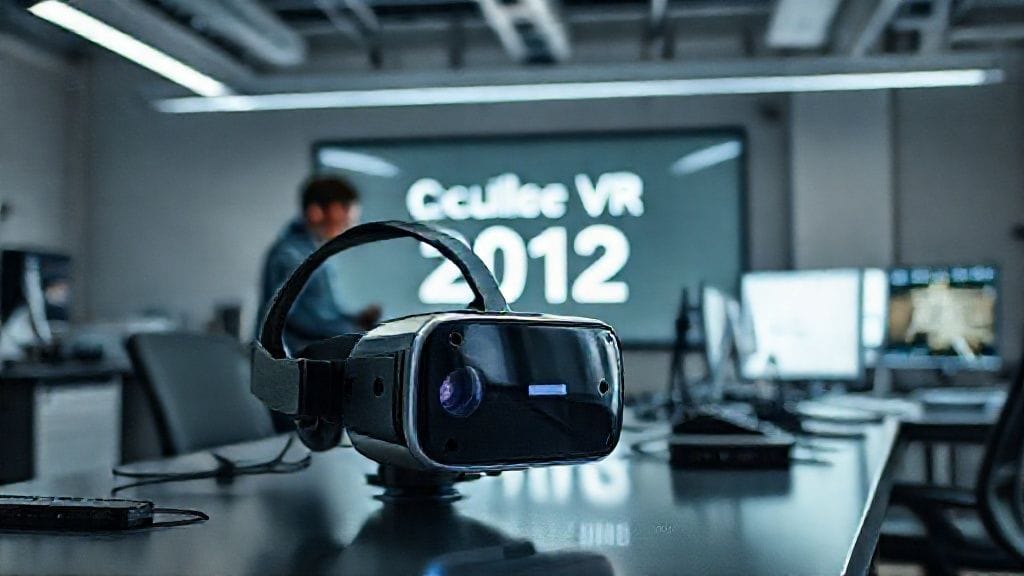
What emerged was the Oculus VR prototype—a sleek, lightweight headset powered by precise motion sensors and low-latency displays. Suddenly, the dream of stepping inside digital worlds felt tangible, and within months, the industry trembled.
Setting the Stage: Virtual Reality Before Oculus
Virtual reality is a concept older than many realize. As early as the 19th century, panoramic paintings and stereoscopic viewers hinted at humanity’s obsession with immersive experiences. The 1960s would see Ivan Sutherland’s “Sword of Damocles,” the first head-mounted display, yet the technology remained cumbersome and largely impractical.
The decades that followed featured highs and lows: NASA and military simulations advanced VR hardware, while the consumer market remained starved for quality experiences. By the early 2000s, VR was often regarded as a quirky hobbyist domain, a niche at best.
This background is crucial to appreciating the seismic impact the Oculus VR prototype had. Like a lightning bolt in a long, quiet night, it shook the foundations of an industry waiting for a spark.
Palmer Luckey: The Visionary Behind the Artifact
Palmer Luckey was no typical startup founder. Raised in Long Beach, California, his teenage years were filled with online forums, hardware modification, and self-directed education. By 2011, he had built multiple VR headsets from scratch but struggled to access capital or corporate interest.
His obsession was not profit—it was perception. He dreamed of a headset that delivered low motion-to-photon latency and high field of view, technical parameters that, when optimized, dissolve the disorienting disconnect users often feel in VR.
In interviews, Luckey would speak about VR like a philosopher: "It’s a chance to experience worlds beyond our own senses, to connect with others in ways never before possible."
This idealism shaped the prototype’s creation—a labor of love blending engineering prowess with visionary optimism.
A Bedroom Dream: The Early Development of Oculus VR
Unfolding in a small garage and bedroom, the early development period in 2012 was marked by relentless experimentation and iteration. Palmer Luckey soldered sensors, tweaked lens configurations, and hacked laptops into feedback systems.
One anecdote stands out: during a late-night coding marathon, Luckey and his small circle of collaborators—some friends, some early believers—tested the prototype by playing Doom on the original prototype. The visceral sensation of crouching in a dark digital maze, peering through the headset’s lenses, made it undeniable—something extraordinary was taking shape.
No wonder then that the prototype’s first video demonstration on YouTube, featuring a live gameplay with head motion tracking, went viral. Within days, it had garnered thousands of views and an influx of messages from gamers, developers, and investors.
The Prototype Unveiled: July 2012’s Game-Changing Moment
July 2012 was more than a date; it was the turning point. On July 16, Palmer Luckey posted a Kickstarter campaign seeking $250,000 to fund further development. The accompanying video, showcasing the prototype’s breathtaking immersion, ignited a storm.
Backers flocked, with over $2.4 million pledged by the campaign’s close—almost ten times the original goal. This overwhelming support proved the market potential was vast, and it attracted the attention of industry heavyweights and press alike.
The public unveiling was electric—a collective breath held as the boundaries between reality and virtuality blurred for millions overnight.
Kickstarter Sensation: Crowdfunding a Revolution
This grassroots funding model was symbolic. Oculus VR was not a top-down corporate initiative—it was a community-backed movement. Fans, eager to be part of VR’s rebirth, invested in the dream.
The Kickstarter campaign also underscored a shift in how technology innovations could emerge, circumventing traditional gatekeepers. It was a testament to the power of narrative and connection in the digital age.
The Tech Inside: Understanding the Oculus VR Prototype’s Innovation
Beneath the sleek black casing lay groundbreaking engineering. Key advancements included a high-refresh-rate OLED display, custom lenses designed to eliminate distortion, and precise gyroscopic and accelerometer tracking.
But the real breakthrough was latency minimization—the time lag between an action (like moving the head) and the display updating accordingly. Latency above 20 milliseconds causes nausea and breaks immersion. Luckey’s prototype managed to drop this below 10 milliseconds, a feat rival VR companies struggled to achieve.
This technical elegance was invisible yet essential—the secret sauce that transformed experiments into believable illusions.
Industry Shockwaves: How Oculus VR Stirred Silicon Valley
The impact was immediate. Tech giants, previously indifferent or dismissive, were compelled to pivot. Industry titans including Sony, HTC, and Microsoft revisited VR strategy. Investors scrambled to back startups in the space.
More than technology, Oculus represented potential beyond gaming—education, healthcare, military training, remote work, social connection. Silicon Valley began to see VR not just as a gadget, but as an infrastructural shift.
From Prototype to Platform: Early Developers and Experiments
Once the Kickstarter funds began flowing, Oculus VR expanded its hardware, software, and developer support. The maker community burst into creative overdrive, adapting everything from flight simulators to immersive storybooks for the headset.
Studios that had languished for years revived projects, and new companies formed with VR as their core mission. The prototype became a platform, a foundation, a challenge to imagine entirely new forms of human interaction.
The Facebook Acquisition: A Turning Point
In 2014, Mark Zuckerberg’s Facebook acquired Oculus VR for approximately $2 billion—an event that sent shockwaves through the tech world. For some, this was validation of virtual reality’s mainstream legitimacy. For others, it was cause for skepticism about corporate control over a then-open, community-driven project.
The acquisition propelled Oculus from visionary prototype to corporate product roadmaps, fueling massive investments into VR hardware and software development.
Critics and Skeptics: The Polarized Reception
Despite the excitement, not everyone was convinced. Critics warned of VR’s physical side effects—nausea, eye strain—and societal implications—addiction, escapism, privacy.
Skeptics doubted affordability or consumer appetite. There was also an ethical debate about immersive experiences blurring realities and their psychological impacts.
These conversations shaped VR’s trajectory as much as the technology itself, forcing developers to grapple with responsibility amidst innovation.
Virtual Reality’s Cultural Impact Begins
By 2015, immersive VR experiences were showcased at festivals, art galleries, and newsrooms. Oculus’ prototype had inspired a renaissance in storytelling, where viewers were no longer passive but participants.
Educational institutions experimented with VR labs, museums created virtual tours, and corporate training leveraged immersive simulations. The line between entertainment, education, and social interaction started to blur.
The Ongoing Race: Oculus and Its Competitors
The Oculus prototype awakened a global race. Competitors like HTC Vive, Sony PlayStation VR, and Valve Index pushed to innovate on tracking precision, comfort, and content libraries.
This competition accelerated improvements and lowered prices, making VR more accessible. Yet, the prototype’s original qualities—simplicity, immersion, low latency—remained benchmarks for all.
Challenges and Controversies Along the Journey
Behind the groundbreaking progress were hurdles: supply chain issues, developer frustrations, changing leadership at Oculus, intellectual property disputes, and privacy concerns after the Facebook acquisition.
One famous controversy involved alleged lawsuits around VR patents, which underscored the cutthroat nature of tech innovation and raised questions about collaboration versus competition.
Still, such challenges also forged a more mature, if complex, ecosystem.
Oculus VR’s Legacy: How a Prototype Changed the Future
The 2012 Oculus VR prototype was more than an invention; it was a catalyst. It rekindled global interest in VR and helped define what immersive technology could achieve.
Countries invested in VR research, large corporations built dedicated VR divisions, and artists found new canvases. The prototype’s DNA remains embedded in all modern VR headsets and ecosystems.
The Human Side: Stories from Early Adopters and Creators
Perhaps the most compelling evidence of the prototype's impact comes from the humans it touched. Storytellers who found new narrative freedoms, gamers who experienced worlds previously unimaginable, and engineers who saw the technology’s potential to aid rehabilitation and empathy-building.
One testimonial comes from a stroke survivor who found virtual reality therapy facilitated by Oculus technology critical to regaining motor functions. Another early developer recounted how creating VR educational modules made history lessons visceral and unforgettable for children with learning disabilities.
Such anecdotes make the technical breakthrough palpably human.
The Vision Today: VR’s Place in Contemporary Society
As of 2024, VR continues to evolve with advancements in wireless technology, haptic feedback, and artificial intelligence integration. Oculus, now branded under Meta Quest, spearheads global adoption with millions of units shipped, not just gaming but fitness, remote work, social platforms, and beyond.
The ethos behind the 2012 prototype—human connection through technology—remains central to VR’s ongoing story.
Conclusion
Standing at the crossroads of imagination and reality, the Oculus VR prototype of July 2012 was a spark that ignited a technological revolution. Palmer Luckey’s vision, born in obscurity and manifested in an unassuming garage, proved that the boundary between dreams and reality can be redefined.
This story is a testament to human curiosity, resilience, and the power of technology to transform not only how we see the world but how we experience ourselves within it. It reminds us that profound change often begins with a simple invention, a passionate individual, and a community willing to believe.
As virtual reality continues to unfold its possibilities, the legacy of this humble prototype endures—a beacon guiding us toward worlds yet unimagined.
FAQs
Q1: What made the Oculus VR prototype revolutionary compared to earlier VR attempts?
The key was its focus on reducing latency, optimizing field of view, and creating an affordable yet immersive headset. Unlike bulky, expensive predecessors, it brought high-quality VR into a reachable price point, catalyzing broader adoption.
Q2: Who is Palmer Luckey and why is he important to VR history?
Palmer Luckey is the inventor of the Oculus VR prototype. His youthful passion and technical skill inspired one of the most significant leaps in VR technology, turning VR from niche obscurity to mainstream anticipation.
Q3: What role did Kickstarter play in Oculus VR’s development?
Kickstarter provided crucial funding and public validation. The campaign exceeded goals massively, proving market demand and enabling Oculus VR to expand hardware, software, and developer engagement.
Q4: How did Facebook’s acquisition affect Oculus and the VR industry?
The acquisition became a turning point by injecting substantial resources into VR’s development but also raised concerns about corporate control and privacy. It accelerated Oculus’ growth while polarizing some players and users.
Q5: What are some challenges VR still faces today?
Physical discomfort during use, content limitations, high-quality real-time rendering demands, and ethical concerns about immersive experiences and data privacy remain ongoing challenges.
Q6: How has the Oculus VR prototype influenced other industries beyond gaming?
Education, healthcare, military training, architecture, and social networking have all incorporated VR technology inspired by Oculus innovations, demonstrating VR’s vast potential beyond entertainment.
Q7: What is the current status of Oculus technology?
Rebranded as Meta Quest, Oculus continues to develop advanced VR headsets with wireless capabilities, vast content libraries, and integration with social platforms, positioning itself as a leader in the evolving metaverse.
Q8: Can VR technology foster better human empathy and social connection?
Many studies and early examples suggest VR’s immersive nature can enhance empathy by allowing users to experience perspectives different from their own. Oculus helped pioneer this application.