Table of Contents
- The Dawn of a New Era: When Artificial Intelligence Challenged a Master
- The Ancient Game of Go: A Cultural and Intellectual Odyssey
- The Rise of AI in Competitive Gaming: From Chess to Go
- Lee Sedol: The Human Face of the Challenge
- DeepMind’s AlphaGo: Crafting a Digital Genius
- The March 2016 Showdown: Setting the Stage in Seoul
- Game One: A Historic Surprise Unfolds
- The Psychological Strain: Human vs Machine at the Brink
- Games Two to Four: The Tug of War Between Intuition and Calculation
- The Tidal Wave Moment: AlphaGo’s Unstoppable Force
- Lee Sedol’s Lone Triumph: A Human Spark in the Digital Storm
- The Final Nail: AlphaGo’s Victory and Its Immediate Impact
- The Philosophy of Intelligence: What AlphaGo Tells Us About the Mind
- The Global Ripple: Media Frenzy, Public Fascination, and Scientific Awe
- Consequences for AI Research: From Algorithms to Ethics
- The Future of Human-Machine Interaction in Strategic Thinking
- Cultural Reflections: Go, Technology, and the Eternal Question of Mastery
- Lessons from the Match: Humility, Innovation, and Adaptation
- AlphaGo’s Legacy: The Catalyst for a New AI Renaissance
- The Human Spirit in the Age of Intelligent Machines
On a March afternoon in 2016, in the heart of Seoul, the world watched with bated breath as a machine challenged centuries of human intellectual tradition. The atmosphere was thick with anticipation and the weight of history—this was no ordinary contest. It was the ancient game of Go, the quintessence of Asian cultural heritage, where intuition, patience, and infinite complexity held sway. AlphaGo, an algorithm birthed by DeepMind’s cutting-edge artificial intelligence, stood poised against one of the world’s greatest living masters: Lee Sedol. This was more than a match; it was a confrontation between human ingenuity and the promise—and threat—of machine intelligence.
The story of AlphaGo defeating a human champion is not just about a game; it is about the evolving relationship between humans and technology. It is about a machine’s quiet yet relentless breach of an arena long considered immune to computer dominance. But before we delve into the breathless moments when silicon met flesh and mind, we must understand the storied backdrop of Go itself, and how this event surged beyond its board-laden battleground to echo in culture, science, and philosophy.
The game of Go, mysterious and elegant, calls to mind swirling patterns and endless strategies. Originating over 2,500 years ago in China, where it was known as “Weiqi,” this board game is more than recreation: it is an art and a metaphor for balance, strategy, and the complexity of life. Unlike chess, which revolves around capturing the king through a relatively bounded set of moves, Go’s vast grid—19×19 intersections—allows for a near-infinite number of configurations. Its simple rules mask profound depth. In East Asia, Go is intertwined with intellectual pursuit and spiritual cultivation, carried across generations as a symbol of wisdom and mastery.
The complexity of Go made programming a computer to play it at a top professional level an elusive goal for decades. Whereas chess succumbed to brute-force computation, Go’s branching possibilities exploded combinationally, overwhelming traditional algorithms. For years, computers were able only to challenge novice players. The game was assumed to be safe from the cold logic of machines. Yet, the rapid advances in machine learning, neural networks, and reinforcement learning began to challenge that assumption in extraordinary ways.
Lee Sedol was the perfect protagonist for this historic clash. Born in 1983, he was known not only for his remarkable talent but also for his fighting spirit and unpredictable style. Nicknamed the “Go genius” of his era, Lee carried the weight of Korean pride and the deep-rooted tradition of Go masters who had perfected the game across centuries. For him, the match was more than a test of skills; it was a defense of human creativity against the perceived coldness of artificial intelligence.
The developers at DeepMind, a London-based AI research company acquired by Google, built AlphaGo with an unprecedented strategy. Combining deep neural networks with reinforcement learning, AlphaGo taught itself to play Go by analyzing a vast number of expert games and then playing millions of simulated games against itself. This was an entirely new approach that mimicked human learning more than classic programming. The goal: to create a program that could not just calculate but “intuit” the spirit of the game.
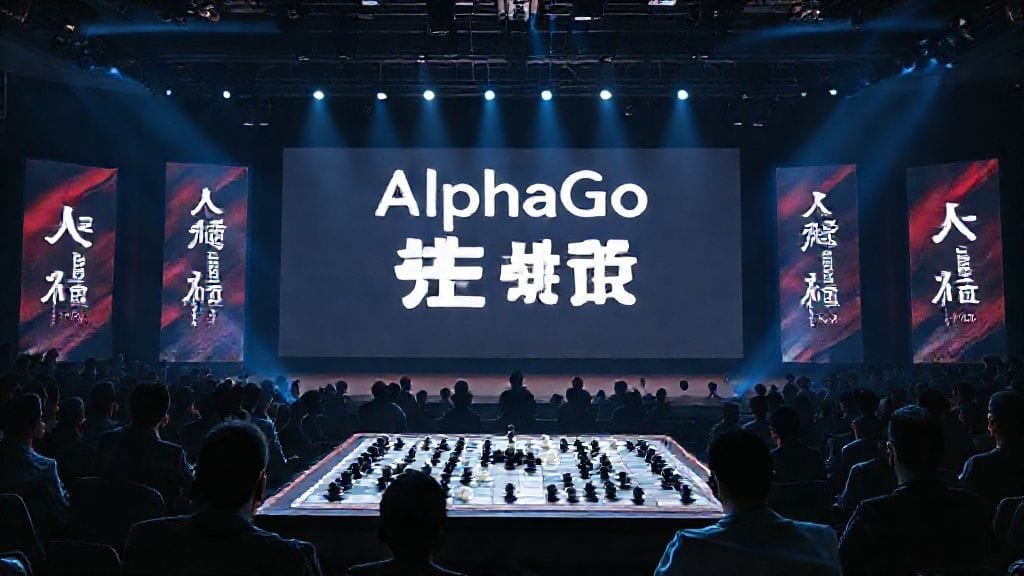
In early March 2016, the stage was set at the Four Seasons Hotel in Seoul. Cameras, experts, fans, and the world’s media converged to witness a contest that promised to redefine boundaries. The tension in the room was palpable. Spectators whispered, sensing that history might be made here—not through war or politics, but through the quiet concentration of minds across glass and silicon.
The first game stunned the audience and players alike. AlphaGo’s moves were unconventional, defying common Go wisdom, yet astonishingly powerful. Move 37 in game two famously baffled commentators and Lee himself, as it appeared strange and suboptimal—until the unfolding game revealed its brilliance. Each move by AlphaGo was a testament to a new form of intelligence, one that learned not by rules but by experience and subtle pattern recognition beyond human perception.
As the games progressed, Lee Sedol grappled with the mounting pressure. The interplay between man and machine spoke to anxieties far beyond the board. Was human intuition still relevant? Could creativity be reduced to computations? Lee’s stoic demeanor cracked during the fourth game, where he achieved a remarkable victory with a creative and unexpected move number 78—an ingenious strike that was later hailed as a defining moment for human agency in the AI era.
Yet AlphaGo’s dominance was undeniable. The final score was a resounding 4–1 in favor of the machine. This victory was a watershed, marking the first time a computer had bested a top-ranking professional in Go. The news rippled globally, touching off debates about the limits of artificial intelligence and the future of human endeavor.
The philosophical implications were profound. Go had long been a metaphor for human thought, decision-making, and balance. Could a machine truly grasp nuance, intuition, and emotion? AlphaGo shattered old illusions about the unique nature of human cognition, showing how intelligence—once seen as an exclusively biological phenomenon—could be mirrored and even surpassed by artificial entities.
The global reaction was intense. News outlets hailed AlphaGo’s triumph as a milestone on the path toward “superintelligent” machines. Scientists celebrated the methodological breakthroughs that combined machine learning and Monte Carlo tree search. Skeptics voiced concerns about automation and loss of control over increasingly sophisticated AI systems.
In the aftermath, AlphaGo became not a symbol of human obsolescence but of collaboration. The program continued to evolve, inspiring research across medicine, economics, and creative industries. The match illuminated how technology can augment human abilities, opening new avenues where intuition and calculation coexist.
Culturally, the event revived interest in Go worldwide, inspiring new generations to engage with this ancient art. It also underscored a deeper, enduring question: what does it mean to be intelligent? To understand? To create? Moving forward, the relationship between humans and machines would be defined by partnership rather than rivalry.
Reflecting on the AlphaGo–Lee Sedol match, one cannot help but admire the courage and curiosity that fueled both the man and the machine. Here was a moment where tradition met innovation, where the past and future bowed to each other with mutual respect.
This historic encounter reminds us that intelligence is not a monolith, but a spectrum that blends logic, creativity, and emotion. In the age of intelligent machines, it is the human spirit—the capacity to question, to wonder, and to adapt—that remains the ultimate frontier.
Conclusion
The tale of AlphaGo’s victory over Lee Sedol is far more than a technological milestone. It is a story of human tenacity, intellectual humility, and the expanding boundaries of possibility. It challenges us to rethink intelligence, creativity, and mastery in an increasingly digital world. Yet, beyond the calculations and codes, it is a human story—a testament to curiosity and courage under pressure.
This singular event in March 2016 reverberates still, a beacon of what is achievable when human endeavor partners with machine brilliance. As we move forward, the lessons of AlphaGo and Lee Sedol inspire us to embrace complexity, to welcome innovation, and above all, to celebrate the unceasing quest for understanding that defines us.
FAQs
1. Why was AlphaGo’s victory over Lee Sedol so significant?
AlphaGo’s win represented the first time a computer defeated a top human professional at Go, a game considered too complex for AI due to its immense number of possible moves and reliance on intuition. It marked a major breakthrough in artificial intelligence capabilities.
2. What technological advances made AlphaGo’s success possible?
AlphaGo combined deep neural networks with reinforcement learning and Monte Carlo tree search techniques, allowing it to learn from vast amounts of data and self-play, simulating millions of games to develop intuition and strategy similar to humans.
3. How did Lee Sedol respond to the loss?
Lee acknowledged AlphaGo’s incredible skill but also highlighted human creativity and adaptability, especially demonstrated in his lone win during the series. He saw the match as a learning experience and a glimpse into the future of AI-human interaction.
4. What were the broader implications of AlphaGo’s victory on AI research?
The victory accelerated interest in applying AI to real-world problems beyond games, including healthcare, robotics, and decision-making systems, while also encouraging ethical discussions about AI’s role and limits.
5. How did the global public and media react to the event?
The event captivated world attention, spawning widespread media coverage that framed it as a historic moment in the evolution of machine intelligence, eliciting both awe and concern regarding the future of human roles.
6. What is the ongoing legacy of AlphaGo in culture and technology?
AlphaGo not only revitalized interest in the traditional game of Go but also inspired developments in AI research, demonstrating the potential for machines to augment and collaborate with human skills rather than simply replace them.
7. Can AI truly “think” or “intuit” like humans?
While AI like AlphaGo mimics certain human learning processes and patterns, it operates differently—through vast data processing and probability calculations rather than consciousness or emotions. The match challenged old views but didn’t fully bridge this philosophical gap.
8. What does the AlphaGo match teach us about the future relationship between humans and machines?
It urges us to embrace AI as a collaborative partner, provides a model for human-machine symbiosis, and highlights the importance of human judgment and creativity in steering technological progress.