Table of Contents
- A Cold November Morning That Changed the World
- The Shadow of a Pandemic: A Global Standstill
- The Science of Hope: Unveiling mRNA Technology
- The Race Against Time: Scientists in Overdrive
- BioNTech and Pfizer: An Unlikely Partnership
- Germany’s Silent Revolution: BioNTech’s Rise
- The Announcement That Sparked Global Optimism
- Public Reactions: From Skepticism to Relief
- Scientific Triumphs and Ethical Dilemmas
- Distribution Challenges: The Logistics of a Global Vaccine
- Political Moves and International Responses
- The Role of Media in Shaping Vaccine Perception
- The Vaccine as a Beacon for Economic Recovery
- Behind the Scenes: Personal Stories of the Researchers
- The Ripple Effect: Impact on Future Vaccine Development
- Controversy and Conspiracy: Navigating Misinformation
- Equity and Access: Who Gets the Vaccine First?
- The Psychological Weight of the Cure
- The 2020 Holiday Season: A Season Unlike Any Other
- Lessons Learned: The COVID-19 mRNA Vaccine in Retrospect
- From Germany to the World: A New Era in Medicine
- Moral and Philosophical Reflections on Human Resilience
- Looking Ahead: The Promise and Limits of mRNA Vaccines
- Global Solidarity: Healing Amidst Division
- Final Thoughts: An Epochal Turning Point in History
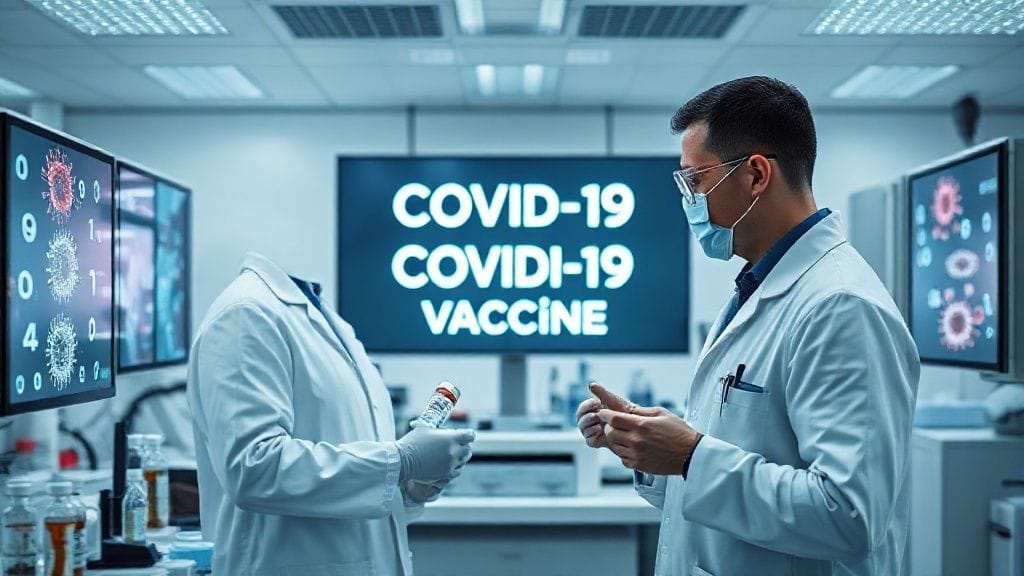
The chill of November 9, 2020, enveloped the world, but inside a modest laboratory in Mainz, Germany, warmth blossomed. It was not just a chilly autumn day but a day that would be etched into history — the announcement of a new hope, a breakthrough in humankind’s battle with an invisible enemy. The COVID-19 mRNA vaccine, painstakingly developed against all odds, heralded a new dawn. That morning, the stark headlines around the globe lit up with the promise that humanity's darkest chapter might soon close.
The Shadow of a Pandemic: A Global Standstill
By late 2020, COVID-19 had infected over 50 million people worldwide, halting economies, isolating societies, and upending normal life. Governments struggled to contain the virus with lockdowns, travel bans, and social distancing. But beyond the immediate crisis loomed a desperate question: when would a vaccine be ready? The race against the virus was not just scientific—it was existential.
Amid this backdrop, the challenge was immense. Traditional vaccine development usually spans years, often over a decade. But the urgency demanded an unprecedented acceleration. The world needed a solution yesterday.
The Science of Hope: Unveiling mRNA Technology
Unlike conventional vaccines that use weakened or inactivated viruses to trigger immune response, mRNA vaccines operate differently. Messenger RNA technology teaches our cells how to produce a protein that triggers an immune response inside the body. It was a novel concept that had previously hovered on the fringes of possibility but had never before been deployed on such a massive scale.
This innovation arose from decades of research, pivoting at a moment when the virus’s spike protein became the perfect target. mRNA vaccines promised precision, speed, and a strong immune reaction, but many still questioned their safety and durability.
The Race Against Time: Scientists in Overdrive
While the world grappled with rising death tolls and overwhelmed hospitals, a cadre of scientists worked feverishly behind the scenes. Laboratories and pharmaceutical companies worldwide pivoted their focus. In Germany, a small biotech firm named BioNTech, spearheaded by the husband-and-wife duo Uğur Şahin and Özlem Türeci, emerged as a beacon of hope.
They had been experimenting with mRNA therapies for years, mainly aiming at cancer treatments. Suddenly, history thrusts them into the epicenter of a pandemic response. With the onset of COVID-19, everything changed.
BioNTech and Pfizer: An Unlikely Partnership
Though BioNTech had the technology, it lacked the scale to distribute a vaccine worldwide. The wedding of science and global manufacturing prowess came through a partnership with the American pharmaceutical giant Pfizer.
This collaboration enabled rapid clinical trials and expedited regulatory review. Together, they launched one of the fastest vaccine development programs in history. The direct data sharing and cooperation across borders underscored a rare moment of global scientific unity.
Germany’s Silent Revolution: BioNTech’s Rise
Situated in a country better known for its engineering and automotive industries, BioNTech’s journey was remarkable. Founded in 2008 in Mainz, this modest firm blossomed into a pioneering force.
Germany’s robust scientific infrastructure, coupled with a culture that deeply values precision and quality, nurtured BioNTech’s work. But more than infrastructure, it was the relentless drive of Şahin and Türeci—both immigrants with immigrant children—that fueled progress. Their personal histories intertwined with this scientific moment, reminding us how human stories breathe life into innovation.
The Announcement That Sparked Global Optimism
On November 9, 2020, Pfizer and BioNTech released a press statement: their vaccine was more than 90% effective against COVID-19 according to interim Phase 3 trial results. This announcement sent shockwaves through the scientific community, financial markets, and everyday populations.
It was the earliest sign of triumph after months of despair. Images of tired healthcare workers and closed schools were momentarily replaced by visions of reopening borders and reclaiming lost freedoms.
Public Reactions: From Skepticism to Relief
Yet, the news was met by a complex tapestry of emotions. Relief and joy mingled with cautious skepticism. After all, the mRNA platform was new, and the speed of development unprecedented.
Some hailed it as humanity’s greatest scientific victory since polio; others worried about the long-term effects. Conspiracy theories festered alongside grassroots celebrations. The announcement was a spark in humanity’s collective psyche — shining hope but also igniting debate and fear.
Scientific Triumphs and Ethical Dilemmas
The victory was emphatic but not without its thorny questions. How could trials be accelerated without compromising safety? Were all populations represented in studies? How should countries prioritize vaccination rollouts? Questions of equity, medical ethics, and global solidarity came quickly into focus.
BioNTech and Pfizer reiterated their commitment to transparency, releasing data and inviting peer review. This era demanded not only technological breakthroughs but also profound ethical responsibility.
Distribution Challenges: The Logistics of a Global Vaccine
Announcing a vaccine was one thing; distributing it was an enormous logistical challenge. The mRNA vaccine required storage at ultra-cold temperatures around -70°C (-94°F), unprecedented for vaccines.
This challenged supply chains, especially in less developed regions. Cold storage equipment needed rapid scaling; transport routes had to be optimized. Nations scrambled to prepare infrastructure, and vaccine nationalism soon surfaced, threatening equitable access.
Political Moves and International Responses
The vaccine found itself at the center of geopolitical chess. Countries strove to secure doses for their populations swiftly, sometimes at the expense of poorer nations. Germany, as a leading EU member, played a pivotal role in negotiating access while advocating for coordinated responses.
The announcement also reshaped political landscapes, with leaders using vaccine progress as a symbol of their effectiveness. The intersection of science and politics became more visible than ever.
The Role of Media in Shaping Vaccine Perception
Media coverage oscillated between celebration and scrutiny. Journalists across the spectrum sought to unpack the science for lay audiences, battling misinformation and sometimes inadvertently fueling anxiety.
Social media’s double-edged sword amplified both credible information and dangerous myths. Trusted voices—scientists, doctors, policymakers—became vital in shaping public understanding.
The Vaccine as a Beacon for Economic Recovery
Financial markets reacted positively to the news. Businesses envisioned a post-pandemic rebound. The prospect of restored supply chains and reopened borders triggered hopes for renewed growth.
Yet economists warned of uneven recovery, contingent on vaccine distribution and continued public health measures. The news was a powerful symbol, igniting cautious optimism.
Behind the Scenes: Personal Stories of the Researchers
Beyond data and statistics lay deeply human stories. Şahin and Türeci, first-generation Turkish immigrants in Germany, exemplified immigrant success and dedication to public health. Their journey was not just scientific but intensely personal—a fusion of identity, perseverance, and vision.
Research teams worked grueling hours under pressure, balancing hope and fatigue. Many took months away from families to push the work forward, driven by the conviction that their efforts could save millions.
The Ripple Effect: Impact on Future Vaccine Development
The success of mRNA technology accelerated research pipelines in numerous fields. Cancer vaccines, treatments for rare diseases, and rapid responses to future pathogens gained new momentum.
This moment was not just a conclusion but a prologue to a new era in medicine, where genetic information could be harnessed swiftly and precisely.
Controversy and Conspiracy: Navigating Misinformation
As expected, the vaccine announcement also kindled conspiracy theories—claims ranging from microchips to population control. These narratives complicated public health messaging and vaccine uptake.
Efforts to combat misinformation became crucial, emphasizing transparency, education, and community engagement.
Equity and Access: Who Gets the Vaccine First?
Ethical questions on vaccine distribution echoed loudly. Should healthcare workers, elderly, or economically vulnerable be first? Wealthy nations secured large stocks, but poorer regions faced delays.
Organizations like WHO and COVAX strove to promote fairness, yet disparities remained stark. The vaccine highlighted global inequalities even as it promised universal hope.
The Psychological Weight of the Cure
The announcement carried emotional weight. For many, it marked the first step back toward normalcy. Yet, it also awakened anxiety—could this fragile victory hold? Would variants undermine it?
Mental health professionals noted mixed public reactions—relief blended with ongoing trauma.
The 2020 Holiday Season: A Season Unlike Any Other
As the vaccine news broke, the world approached a holiday season shadowed by uncertainty. Families hoped for reunions but remained cautious.
The juxtaposition of celebration and vigilance characterized this historic period—a paradox of joy and restraint.
Lessons Learned: The COVID-19 mRNA Vaccine in Retrospect
In hindsight, the November 9 announcement was a testament to global scientific collaboration and human resilience. Speed did not mean compromise; innovation paired with rigorous trials.
Yet challenges in distribution and public trust underscored ongoing lessons. Transparency, equity, and solidarity emerged as essential keys to pandemic response.
From Germany to the World: A New Era in Medicine
Germany’s announcement was not an isolated event. It triggered a global cascade—countries followed with approvals, vaccination campaigns, and renewed scientific investment.
The mRNA vaccine inaugurated a new chapter in preventive medicine, blending biology with digital age possibilities.
Moral and Philosophical Reflections on Human Resilience
The pandemic and its countermeasures raised profound questions about vulnerability, community, and scientific faith. The vaccine became a symbol of humanity’s capacity to confront existential threats through knowledge and cooperation.
This crossroads invited deeper reflection on our shared future.
Looking Ahead: The Promise and Limits of mRNA Vaccines
While the mRNA vaccine showed immense promise, scientists remained cautious. Questions remained: duration of immunity? Ability to adapt to variants? Accessibility worldwide?
This was a beginning as much as a milestone.
Global Solidarity: Healing Amidst Division
Amid rising nationalism, vaccine collaboration illuminated the possibility of global solidarity. How could humanity sustain this momentum for other global challenges?
The vaccine story was a microcosm of our interconnected fate.
Final Thoughts: An Epochal Turning Point in History
The announcement on November 9, 2020, was a quiet revolution in a lab in Germany that echoed across continents. It transformed despair into hope, science into salvation, and strangers into partners in humanity’s survival.
This moment will forever stand as a beacon of what we can achieve when urgency meets innovation—and the heart meets the mind.
Conclusion
Two years on, the announcement of the COVID-19 mRNA vaccine in Germany remains a seminal moment not only in medical science but in human history. It crystallized an extraordinary response to an unprecedented crisis—a convergence of innovative science, tenacious individuals, and an urgent global call to action.
But beyond efficacy rates and cold-chain logistics lies a deeper narrative: one of resilience, collaboration, and hope. The vaccine was more than a biological solution—it was a collective affirmation of humanity’s will to endure and to protect one another.
As challenges remain—from variant mutations to equitable access—the legacy of the November 2020 breakthrough serves as a reminder that human ingenuity, dedication, and empathy together create the path forward.
This chapter in history reminds us, poignantly and powerfully: the future is something we build together, often in the unlikeliest of laboratories and the most unexpected moments.
FAQs
1. What is the significance of the COVID-19 mRNA vaccine announced in Germany in 2020?
The vaccine represented the first time mRNA technology was successfully used to combat a pandemic-scale disease, marking a breakthrough in vaccine development speed and effectiveness.
2. Who were the key figures behind the BioNTech vaccine?
Uğur Şahin and Özlem Türeci, the co-founders of BioNTech, led the scientific and strategic efforts that culminated in the vaccine, blending years of cancer research with urgent pandemic response.
3. How did the partnership between BioNTech and Pfizer facilitate vaccine development?
BioNTech provided the innovative mRNA platform, while Pfizer contributed global manufacturing and distribution capabilities, enabling rapid development and rollout.
4. What were the main challenges in distributing the mRNA vaccine globally?
The vaccine’s requirement for ultra-cold storage complicated logistics, especially in low-resource settings, making equitable distribution a significant challenge.
5. How did the public react to the vaccine announcement initially?
Reactions ranged from relief and hope to skepticism and fear fueled by misinformation, highlighting the need for clear communication.
6. In what ways did the announcement impact political and economic landscapes?
Vaccine progress became a symbol of governmental effectiveness, influenced market optimism, and sparked geopolitical maneuvering over vaccine access.
7. What are the broader implications of mRNA vaccine technology beyond COVID-19?
The technology opens paths for rapid vaccine development for other infectious diseases and personalized medicine, especially cancer therapies.
8. How is the memory of the COVID-19 vaccine announcement preserved in global health narratives?
It is celebrated as a triumph of science and collaboration, often cited in pandemic preparedness frameworks and ongoing public health education.