Table of Contents
- The Dawn of a New Cosmic Era
- Christmas Day 2021: A Launch Like No Other
- Behind the Vision: The Origins of the James Webb Space Telescope
- The Architects of the Cosmos: Agencies, Scientists, and Engineers
- From Concept to Reality: Challenges Spanning Decades
- The Technological Marvels of the Webb Telescope
- Preparing for Liftoff: The Final Countdown at Kourou
- Unfolding the Universe: The Complex Deployment After Launch
- Traversing the Darkness: The Journey to the L2 Point
- A New Eye in the Sky: The James Webb Telescope’s Design and Instruments
- Scientific Goals: Peering Back in Time and Space
- The First Unfolding: A Breath-Holding Moment in Space
- Early Signals from the Depths of the Universe
- The Implications for Cosmology and Astrophysics
- From Discovery to Wonder: The Public’s Connection to the Cosmos
- The Telescope’s Place in the Legacy of Space Exploration
- Political and Financial Challenges Behind the Scenes
- The International Collaboration That Made It Possible
- The Future Openings: What the Webb Telescope Promises
- From Data to Insight: Turning Photons into Knowledge
- Challenges Ahead: Maintaining and Operating the Webb in Space
- The Cultural Impact of the James Webb Telescope
- Looking Beyond: Web’s Role in the Quest for Extraterrestrial Life
- The James Webb Telescope in the Pantheon of Scientific Giants
- Reflections: Humanity’s Endless Pursuit of the Cosmic Horizon
The Dawn of a New Cosmic Era
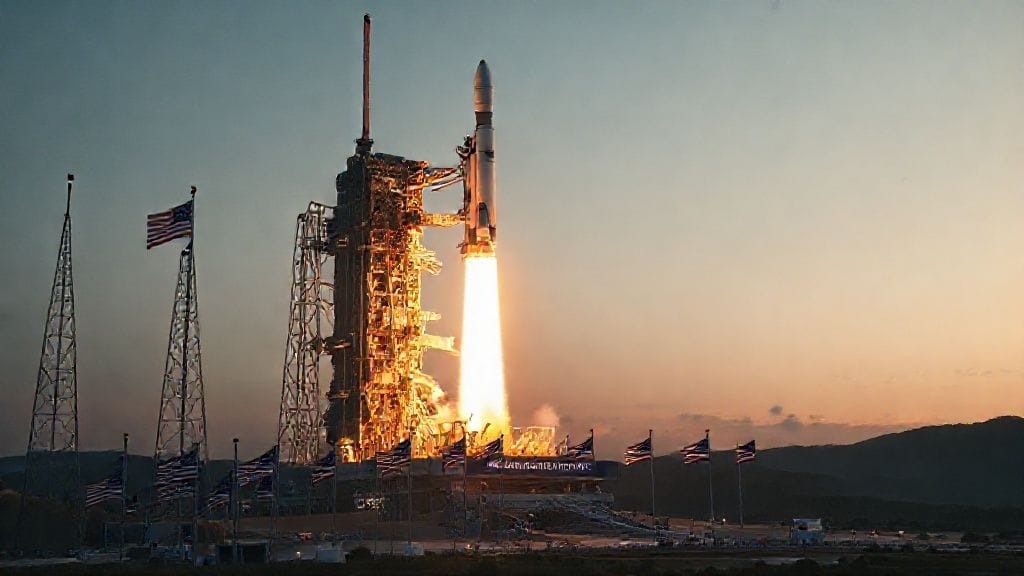
On a crisp, clear Christmas morning, as the world was steeped in the quietude and warmth of the holiday, a colossal step in humanity’s quest to understand its origins was quietly underway. High above the equator in Kourou, French Guiana, atop an Ariane 5 rocket, the James Webb Space Telescope (JWST) was poised to embark on a journey that would redefine our view of the cosmos. Moments before ignition, the stillness of dawn was cracked by a burgeoning roar, an explosion of raw power that lifted Webb away from Earth — a fragile spaceship carrying the promise of unlocking mysteries buried in 13.5 billion years of cosmic history. This was not just another launch; it was the advent of a new kind of cosmic vision.
The James Webb Telescope launched on December 25, 2021, signaling the culmination of decades of dreams, failures, and relentless human ingenuity. But what makes this date and this mission so indelibly profound? How did it come to be, and why does it inspire millions across the globe? To understand the magnitude of that Christmas morning, we must trace the turtles’ pace of progress, technological breakthroughs, human passion, and political landscapes that converged in a single launch.
Christmas Day 2021: A Launch Like No Other
The world’s gaze was not entirely on Kourou on Christmas Day. Yet, for those tracking aerospace news and science enthusiasts, the James Webb Space Telescope lift-off was more thrilling than any holiday fireworks. In a carefully timed window, the Ariane 5 bore this extraordinary payload into the pristine skies, beginning a meticulously choreographed dance in space.
Unlike earlier telescopes that had orbited closer to Earth, Webb was destined for the second Lagrange point (L2), roughly 1.5 million kilometers away — a position that placed it in permanent Earth's shadow, allowing for the ultra-sensitive infrared observations crucial to its mission. This single act of launching marked the start of months of precision unfolding and calibration — a process fraught with risk and complexity.
As Webb disappeared into the dark blue, whispers of historical comparisons arose. The Hubble Space Telescope, launched 31 years earlier, had opened the heavens in stunning new ways. Webb promised to do not just that but to peer further back in time, into the first light after the Big Bang, and into worlds unknown. It was a promise powerful enough to stir awe and hope among scientists and dreamers alike.
Behind the Vision: The Origins of the James Webb Space Telescope
The conception of the James Webb Space Telescope is a story steeped in ambition and determination. In the late 1980s, as Hubble’s launch was still on the horizon, astronomers and engineers began envisioning an even more powerful observatory — one capable of detecting the faint infrared light from distant galaxies and the earliest celestial bodies ever formed.
Named after James E. Webb, NASA’s administrator during the Apollo era and a champion for ambitious space science, the telescope was envisioned as a successor to Hubble but with revolutionary capabilities. Infrared technology would allow Webb to peer through dust clouds, revealing phenomena hidden to telescopes that relied on visible light.
Yet great visions carry equally great challenges. The task was daunting: to build a telescope of unmatched size, with a mirror of 6.5 meters (more than two and a half times larger than Hubble’s), folded to fit inside a rocket and then capable of unfolding perfectly in the microgravity environment of space. The design incorporated a tennis-court-sized sun shield to keep the instruments cooled to near absolute zero, necessary for detecting faint infrared light.
The Architects of the Cosmos: Agencies, Scientists, and Engineers
JWST’s creation reflected a unique international effort. Though NASA led the charge, the European Space Agency (ESA) and the Canadian Space Agency (CSA) contributed essential components and scientific instrumentation. This collaboration symbolized a shared human endeavor beyond borders, united by curiosity.
Thousands of engineers, scientists, and technicians participated, each with their own painstaking tasks. The inertia wheels, spectrometers, cameras, the immense segmented mirror—all had to operate flawlessly. Months of design revisions, testing phases, and simulations stretched over decades. The sheer complexity of the project made it one of the most intricate space observatories humanity had ever attempted.
In this timeline, individuals like John Mather and Sara Seager stand out, who advocated and refined the scientific goals, while engineers painstakingly developed deployment mechanisms that had never been tried in space. The telescope’s heart pulsed with human ingenuity, patience, and sometimes frustration.
From Concept to Reality: Challenges Spanning Decades
The path to launch was far from smooth. Originally proposed for launch in the early 2000s with a budget under $1 billion, Webb faced numerous hurdles. Technical setbacks, budget overruns, and schedule delays dominated headlines and congressional hearings.
Setbacks with sunshield materials, mirror manufacturing, and instrument sensitivity repeatedly tested resolve. There were moments when cancellation seemed likely, a victim of political and fiscal turbulence.
Yet every crisis was met with renewed commitment. Engineers worked around the clock, reinventing parts and refining procedures. When the COVID-19 pandemic struck in 2020, the team adapted swiftly to protect the schedule.
The telescope’s multi-billion-dollar budget was a point of contention, but its potential scientific yield justified a tenacious persistence that spanned nearly 30 years. As Carl Sagan once said, “Somewhere, something incredible is waiting to be known.” Webb was built to find it.
The Technological Marvels of the Webb Telescope
Designed as a marvel of optical and thermal engineering, the James Webb Telescope comprises 18 hexagonal beryllium mirrors coated with gold to optimize infrared reflection. Each segment was polished to within nanometers of perfection.
The immense sunshield, about the size of a tennis court, uses five layers of special ultra-thin material to block heat and light from the Sun, Earth, and Moon. This shield allowed Webb’s instruments to cool down to 40 Kelvin (-233 Celsius), crucial for its infrared vision.
Its suite of instruments — the Near Infrared Camera (NIRCam), Near Infrared Spectrograph (NIRSpec), Mid-Infrared Instrument (MIRI), and Fine Guidance Sensor/Near InfraRed Imager and Slitless Spectrograph (FGS-NIRISS) — provide unprecedented sensitivity and spectral resolution.
These details speak not only to engineering genius but to a cooperative endeavor that fused science and technology to peer deep into the cosmic past.
Preparing for Liftoff: The Final Countdown at Kourou
The Guiana Space Centre, nestled at the edge of the Amazon basin, was the perfect launch site due to its proximity to the equator, offering efficiency for launches toward the L2 point. In the weeks leading to December 25, 2021, Webb underwent final checks and encapsulation in the Ariane 5’s payload fairing.
The launch was conducted under strict weather and technical conditions, with a narrow time window. The crew at ESA and NASA nerve centers monitored every telemetry point. Technicians worked tirelessly as families worldwide celebrated the holidays, their eyes set on the skies.
The tension was palpable — launch windows are unforgiving, and the slightest anomaly could postpone the mission months or years. Yet, as dawn broke, the countdown continued flawlessly.
Unfolding the Universe: The Complex Deployment After Launch
Once in orbit, the Webb telescope faced perhaps its greatest challenge: deployment. Imagine unfolding an origami masterpiece, the size of a small house, thousands of kilometers away from Earth, controlled remotely.
Over two weeks, Webb’s sunshield deployed meticulously, its membranes stretching like a cosmic sail. The primary and secondary mirrors unfolded in multi-stage actuations. Any failure could doom the mission.
The mission team held their breaths; daily news updates carried a global audience into this suspenseful ballet. The successful completion of deployment was a triumphant miracle — a testament to years of engineering and testing.
Traversing the Darkness: The Journey to the L2 Point
Unlike Hubble, which orbits about 550 km above Earth, Webb was destined for Lagrange point 2 — a gravitational sweet spot where solar and Earth gravity balance spacecraft orbit.
This distant vantage offers thermal stability and an unobstructed view of deep space. However, the journey to L2 is itself a slow pilgrimage, taking nearly a month to cover 1.5 million kilometers.
Every thruster burn was critical for trajectory correction. Once there, Webb would enter a halo orbit, forever shadowed from Earth, providing the dark cold of space needed to observe faint heat signatures from the dawn of creation.
A New Eye in the Sky: The James Webb Telescope’s Design and Instruments
Webb’s design is, at once, a tribute to its predecessors and a leap into the unknown. Its mirror segments employ a sophisticated alignment system — the mirrors must act as a single optical surface, adjusted by tiny motors inching in nanometer steps.
Its instruments operate at key wavelengths in the near and mid-infrared spectrum, enabling it to detect the faint glow of stars forming inside dust clouds, or the faint heat of exoplanet atmospheres orbiting distant suns.
Webb’s capabilities provide astronomers tools to answer profound questions: How did the first galaxies form? What are the atmospheres of other worlds composed of? Could there be conditions compatible with life?
Scientific Goals: Peering Back in Time and Space
At the heart of the James Webb Telescope’s mission is time travel of a kind — its infrared eyes pierce the expanding universe’s veil, capturing photons emitted billions of years ago. We see these signals today, and with Webb, astronomers can study epochs where the first stars ignited, the first galaxies assembled.
Moreover, Webb is tailored to analyze exoplanet atmospheres through spectroscopy, searching for water vapor, methane, carbon dioxide, key ingredients in the recipe of life.
Its observations of our own solar system’s icy bodies also promise to rewrite chapters on planet formation and the evolution of celestial chemistry.
The First Unfolding: A Breath-Holding Moment in Space
As the sunshield deployed, engineers and scientists experienced what astronauts call the “seven minutes of terror,” only these minutes stretched over days with countless nerves on edge.
Real-time updates, streamed globally, saw disbelief giving way to cheers as each step was completed. The telescope’s mirror segments began aligning, a cosmic symphony of movement measured in microns.
This painstaking process was proof of concept: a machine designed to be serviced on Earth, instead set free in the void to collect light from the universe’s infancy.
Early Signals from the Depths of the Universe
The first images and data releases from Webb electrified the scientific community. Old nebulae revealed previously invisible shapes, and distant galaxies emerged in crisp detail.
Initial results confirmed Webb’s sensitivity and opened pathways for future discovery. Already, hints of complex molecules in exoplanet atmospheres began to tantalize experts — the search for biosignatures had truly begun.
The Implications for Cosmology and Astrophysics
Webb’s data promises to alter fundamental understandings in physics and cosmology. Details about dark matter distribution, star formation rates, and interstellar dust properties will refine models of the universe’s evolution.
The telescope will also enable breakthroughs in understanding black holes, galaxy mergers, and the nature of cosmic reionization — when the first light turned on after the cosmic “dark ages.”
From Discovery to Wonder: The Public’s Connection to the Cosmos
Beyond the lab, Webb ignited imaginations worldwide. Stunning images streamed into living rooms, fueling a renewed cultural fascination with the stars.
This mission transcends science; it embodies humanity’s yearning to explore, to know, to dream. Schools, artists, philosophers, and seekers found inspiration in this technological marvel unfolding light-years away.
The Telescope’s Place in the Legacy of Space Exploration
Webb stands on the shoulders of giants — from Hubble to the Viking probes, from Apollo astronauts to Mars rovers. Its success reaffirms the potential of human collaboration, engineering, and perseverance.
As part of this legacy, it also raises questions about future missions — how space telescopes might evolve, or how Webb may guide manned missions beyond the solar system.
Political and Financial Challenges Behind the Scenes
The project’s tumultuous history reflects broader issues in space science funding and policy. Spiraling costs, shifts in governmental priorities, and international diplomacy required skilled navigation.
Webb’s eventual launch is a rare political and logistical victory, highlighting the importance of sustained investment in scientific exploration despite competing interests.
The International Collaboration That Made It Possible
ESA’s Ariane 5 launcher and Canadian instruments are pillars in Webb’s successful deployment. The project’s international dimension symbolizes peaceful cooperation in space, a hopeful beacon amid global tensions.
Shared expertise and resources allowed the project to overcome barriers no single agency could face alone.
The Future Openings: What the Webb Telescope Promises
Looking forward, Webb’s mission will span at least a decade, sending back data that will shape astronomy far beyond its operation life.
Its revelations may lead to new telescopes, inform theories in physics, and perhaps answer some of the most profound questions: Are we alone? How do stars and galaxies truly evolve?
From Data to Insight: Turning Photons into Knowledge
Each image, each spectrum, is a piece of a cosmic puzzle. Teams worldwide analyze Webb’s data, from universities to observatories, converting raw numbers into stories of the universe’s history.
This wondrous translation from light to knowledge embodies never-ending scientific curiosity.
Challenges Ahead: Maintaining and Operating the Webb in Space
Webb is designed without means for direct maintenance or repair; unlike Hubble, it cannot be serviced by astronauts. This places intense pressure on the spacecraft’s reliability.
Software updates, occasional course corrections, and temperature control are ongoing concerns for mission controllers managing this orbiting marvel.
The Cultural Impact of the James Webb Telescope
Webb’s launch and success rekindled a collective dream, influencing art, literature, and education. It reminds us of the delicate balance between scientific rigor and poetic wonder.
Many now see Webb as a symbol of hope, human creativity, and the infinite mysteries still awaiting discovery.
Looking Beyond: Webb’s Role in the Quest for Extraterrestrial Life
With its unprecedented capacity to analyze exoplanet atmospheres, Webb is the closest thing yet to a cosmic detective in the search for life beyond Earth.
Its findings could redefine our place in the cosmos, driving profound philosophical and existential reflections.
The James Webb Telescope in the Pantheon of Scientific Giants
Few scientific instruments have unified global attention like Webb. Its ambition and scale place it alongside the Large Hadron Collider and Apollo missions as milestones of human exploration.
Webb’s success demonstrates what humanity can achieve with sustained vision and collaboration.
Reflections: Humanity’s Endless Pursuit of the Cosmic Horizon
The James Webb Space Telescope launched, not just a machine, but a testament to humanity’s unquenchable thirst for knowledge and exploration.
Its journey is a story of perseverance, of transcending obstacles, and of daring to see farther than ever before.
As Webb opens the gate to the ancient light of the universe, it invites us all on a journey into wonder — a journey with no end, only beginnings.
Conclusion
The launch of the James Webb Space Telescope on December 25, 2021, was a moment suspended in time — a marriage of technology, vision, and human spirit. It symbolized not only an extraordinary leap for science but a beacon of hope and curiosity at a moment when the world needed both.
Webb’s journey and mission echo an eternal truth: our desire to look up and understand is nothing less than a reflection of our desire to understand ourselves. As the telescope unfolds its wings in the silent darkness, it carries our collective hopes, questions, and dreams into the vast unknown.
In the end, the James Webb Telescope is more than an observatory; it is a mirror of humanity’s boundless curiosity — an invitation to keep reaching, to keep wondering, and to never stop exploring the cosmos within and beyond us.
FAQs
1. What was the significance of the James Webb Telescope launch on December 25, 2021?
The launch marked the beginning of a mission to observe the universe in unprecedented detail, especially in infrared light, opening new windows into the early universe, planet formation, and potential habitats for life.
2. How did the James Webb Telescope differ from its predecessor, Hubble?
Webb has a much larger mirror (6.5 meters vs. Hubble’s 2.4 meters) and focuses on infrared observations, allowing it to see through cosmic dust and peer further back in time to moments just after the Big Bang.
3. Why was the telescope sent to the L2 point, and what does that mean?
L2 is a gravitationally stable spot 1.5 million kilometers from Earth, where the telescope can maintain a steady position, remain shaded by its sunshield, and avoid thermal interference essential for sensitive infrared measurements.
4. What were some of the biggest technical challenges in building the James Webb Telescope?
Designing and testing the complex folding mirrors and sunshield, ensuring ultra-cold operation temperatures, and achieving flawless deployment in space without the possibility of repair were major hurdles.
5. What kind of discoveries can we expect from the James Webb Telescope?
Webb will study the first galaxies, star formation, exoplanet atmospheres, and the chemistry of celestial bodies, providing insights that could reshape our understanding of cosmic history and possibly the existence of life beyond Earth.
6. Which countries and agencies collaborated on the James Webb Telescope project?
NASA led the project, with substantial contributions from the European Space Agency (ESA), which provided the Ariane 5 launcher and instruments, and the Canadian Space Agency (CSA), which contributed advanced scientific payloads.
7. How long is the mission expected to last, and can the telescope be repaired?
The mission is planned for at least 10 years, but Webb cannot be serviced or repaired in space, unlike Hubble, placing greater emphasis on the reliability of its components and systems.
8. How has the public reacted to the launch and initial findings of the James Webb Telescope?
The launch generated worldwide excitement, inspiring awe and renewed interest in astronomy, while the initial spectacular images captivated the public imagination and scientific community alike.