Table of Contents
- A Heartbeat in the Night: Paris on December 2021
- The Dream of Mechanical Life: Origins of the Artificial Heart
- From Experiment to Reality: The Journey of Cardiac Prostheses
- Shaping a New Era: The Scientific Landscape Leading to 2021
- The Patient's Story: Facing the Edge of Life
- The Surgical Symphony: Inside the Operating Room
- Pioneering Minds: The Surgeons and Engineers Behind the Implant
- The Artificial Heart Implant: Technology and Design
- Bridging Man and Machine: Ethical and Medical Challenges
- The City's Pulse: Paris’s Role as a Hub of Medical Innovation
- Public Reactions: Hope, Fear, and Media Frenzy
- The Post-Operative Days: Life After Implantation
- Scientific Validation: Studies, Data, and Early Results
- Beyond Survival: Quality of Life and New Horizons
- The Ripple Effect: Impact on Global Medical Practices
- Funding, Politics, and the Race for Innovation
- The Future of Cardiac Care: Lessons from Paris
- Memories Etched in Time: Patients, Families, and Caregivers
- Reimagining the Human Body: Déjà-vu and the Moral Frontier
- Closing the Circle: From Laboratory to Life
- Conclusion: The Beat Goes On
- FAQs: Unpacking the Artificial Heart Implant
- External Resource
- Internal Link
December 2021. Paris—under the gentle glow of winter lamps and beneath a sky sown with stars—was the setting for an extraordinary convergence of science and human will. In a high-tech operating theater nestled within one of the city's leading hospitals, a man entrusted his life to a machine—the first fully implantable artificial heart of its design, a marvel born of decades of tireless research and relentless hope. This was no ordinary medical procedure; it was a moment when the boundary between biology and technology blurred, where the very essence of life found a new rhythm, dictated not just by flesh but by circuits and silicon.
The Dream of Mechanical Life: Origins of the Artificial Heart
Long before that December night in Paris, the idea of an artificial heart was a spark in the mind of visionaries who yearned to conquer death and disease. The quest began in the mid-20th century, when cardiologists and engineers first dared to imagine replacing the failing human heart with a mechanical device. From the earliest attempts with cumbersome external pumps to the revolutionary, yet rudimentary devices like the Jarvik-7 in the 1980s, the journey was strewn with broken hearts—both metaphorically and literally.
This dream was fueled by the stark reality: heart disease remains the leading cause of death worldwide. For many patients, transplantation was the only hope, but donor hearts were tragically scarce, leaving thousands on waiting lists, their breaths growing ever more shallow.
From Experiment to Reality: The Journey of Cardiac Prostheses
The evolution of artificial hearts over the decades is a testament to human ingenuity. Early experiments in the 1950s, such as Dr. Vladimir Demikhov’s dog heart transplants, seemed more like science fiction than science. Yet they laid a foundation. By the 1960s, the world witnessed the first implantation of partial artificial hearts that acted as temporary life-support systems.
The 1980s saw the first permanent total artificial heart implants, accompanied by equally harrowing tales of success and failure. Each iteration grew smaller, more sophisticated, and more biocompatible, incorporating breakthroughs from biomaterials, fluid dynamics, and power management.
Shaping a New Era: The Scientific Landscape Leading to 2021
Fast-forward to the 21st century. Decades of incremental innovation formed the bedrock for the device implanted in Paris. Researchers embraced cutting-edge technologies—miniaturized sensors, lithium-ion battery systems, advanced polymers that mimicked cardiac tissue flexibility, and wireless controls synced with the patient’s nervous system.
Collaboration between bioengineers, cardiac surgeons, and patients became the new norm. Artificial intelligence algorithms began to regulate pumping speed autonomously, adapting to physical activity and emotional states. France, particularly Paris, emerged as a nucleus of such medical innovation, bolstered by government-funded research centers and world-class institutions.
The Patient’s Story: Facing the Edge of Life
The man who became the recipient of the 2021 Paris artificial heart was sixty-two years old and had been battling end-stage heart failure for years. No compatible donor demanded his wait; his condition deteriorated rapidly. Amid the sterile yet hopeful hospital corridors, he stood between mortality and something profoundly unknown.
“You feel the weight of the moment,” he would later recount, “like time itself holds its breath.” His family surrounded him with a mixture of hope and fear. He was about to become a living testament to humanity’s audacity—to beat life into a machine.
The Surgical Symphony: Inside the Operating Room
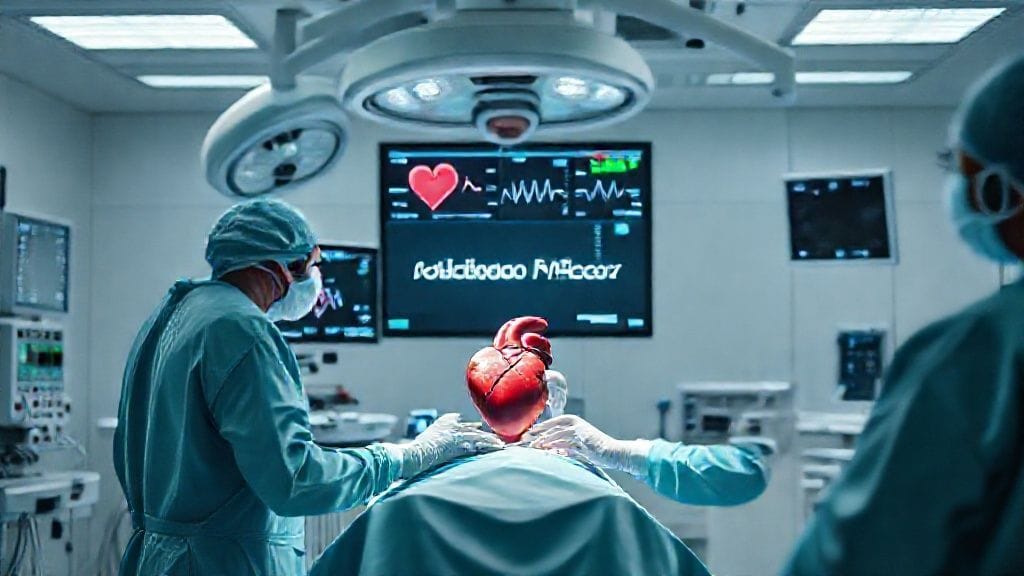
The day of implantation was nothing short of a finely choreographed ballet. Surgeons in crisp whites and masks exchanged terse words, their movements precise and deliberate. The artificial heart lay gleaming on the instrument tray, a delicate marvel of engineering.
For over eight hours, the team worked through the human chest cavity, delicately removing the failing heart and implanting the device in its place. Microsurgical techniques reconnected arteries and veins, while engineers monitored real-time data to ensure the device synchronized perfectly with the patient’s physiology.
“This is not just surgery,” the lead surgeon noted, “it’s rewriting the very definition of human endurance.”
Pioneering Minds: The Surgeons and Engineers Behind the Implant
Behind this milestone stood a constellation of dedicated experts. Dr. Marie-Claire Dubois, the chief cardiac surgeon, was renowned for her pioneering approaches to heart failure. Alongside her was engineer Thomas Lefèvre, who had spent a decade perfecting the heart’s miniature motor.
Their partnership symbolized what modern medicine could achieve—interdisciplinary collaboration where no boundary was sacred. “When I saw my work sustain a human life,” Lefèvre confessed, “I realized this was more than engineering. It was faith.”
The Artificial Heart Implant: Technology and Design
The device itself was a masterpiece—lightweight, biocompatible, and powered by a compact internal battery charged wirelessly through the skin. Its materials included silicone-based polymers coated with a special endothelial-mimicking layer to prevent clot formation.
It closely mimicked the natural heart’s dual-chamber pumping action, with sensors that adjusted pumping rates based on physiological needs. The implant was designed to last years, not just months—a leap far beyond prior models.
Bridging Man and Machine: Ethical and Medical Challenges
Yet, this success was enmeshed with dilemmas. Would reliance on machines reduce the humanity of care? How to ensure equitable access to such costly treatments? And what of device failure—a sudden heartbeat without a human pulse?
Ethicists debated the implications tirelessly. “The artificial heart challenges not only biology but the soul,” philosopher Jacques Renard observed. “It forces us to confront what it means to live and to be alive.”
The City’s Pulse: Paris’s Role as a Hub of Medical Innovation
Paris had long been a luminous beacon in medicine, from Pasteur’s vaccines to pioneering surgeries. The city’s unique blend of academic rigor, public investment, and a culture that embraces risk fostered an environment ripe for such breakthroughs.
Hospitals like Hôpital Coeur Moderne, where the operation took place, unified research and clinical practice, blurring lines between laboratory discoveries and bedside care.
Public Reactions: Hope, Fear, and Media Frenzy
News of the implant electrified headlines worldwide. Some greeted it as a leap into a new age of medicine; others worried about the societal implications. Streets buzzed with chatter, families debated the morality, and experts flooded social media with threads dissecting the risks and promises.
“It’s incredible, isn’t it?” remarked a Parisian passerby; “life breathed again by technology.”
The Post-Operative Days: Life After Implantation
Recovery was slow but steady. The patient’s body adapted, learning to trust the alien heart nestled within. Physical therapists worked tirelessly to rebuild strength. Psychologists supported his mental resilience.
He often described the sensation as “a strange harmony—part human, part machine”—yet undeniably alive.
Scientific Validation: Studies, Data, and Early Results
In the months following, rigorous data collection underscored the implant’s success. The patient’s cardiac output normalized, and inflammatory markers remained low. Peer-reviewed journals celebrated the procedure as a landmark.
Still, cautious optimism prevailed; this was a first step, not the finish line.
Beyond Survival: Quality of Life and New Horizons
The transplant marked not only survival but a reclaimed future. The patient could walk, even dance slowly with his daughter during family visits—moments once thought impossible.
The implant’s promise extended beyond individuals—hinting at potentials to transform numerous chronic illnesses.
The Ripple Effect: Impact on Global Medical Practices
Hospitals in the United States, Germany, Japan, and beyond eagerly monitored Paris’s success. A new wave of investment in artificial cardiac devices surged.
This event sparked international collaborations to refine technology and expand patient eligibility.
Funding, Politics, and the Race for Innovation
Behind the scenes, the race for artificial heart superiority involved complex political and financial networks. Governments balanced the cost with public health gains, while private companies eyed lucrative patents.
France’s commitment to healthcare innovation was tested but ultimately rewarded.
The Future of Cardiac Care: Lessons from Paris
The implant embodied more than technology—it was a blueprint for patient-centered, precision medicine. It underscored the need for holistic approaches blending engineering, surgery, ethics, and policy.
The journey ahead pledged enhancements in miniaturization, durability, and affordability.
Memories Etched in Time: Patients, Families, and Caregivers
Beyond machines and medicine, this was a human story. The gratitude of a family, the quiet resolve of caregivers, the patient’s courage—all etched into the collective memory of Paris medical history.
Their voices remind us that every heartbeat matters.
Reimagining the Human Body: Déjà-vu and the Moral Frontier
As artificial hearts become more common, societies will grapple with redefining life, identity, and mortality. The implant forces philosophical reflection—are we reshaping humanity itself?
Can a machine’s heartbeat ever fully replace the one born of flesh, spirit, and memory?
Closing the Circle: From Laboratory to Life
The December 2021 Paris artificial heart implant was a triumph of perseverance—transcending laboratory theory, complex surgeries, and ethical quandaries to deliver renewed life.
It stands as testament to humanity’s unyielding quest to rewrite destiny, to heal the heart both literally and metaphorically.
Conclusion
The artificial heart implant in Paris was more than a medical milestone—it was a profoundly human triumph, echoing rhythms of hope, ingenuity, and the fragile beauty of life. From the operating theater’s sterile hum to the living pulse of a man reborn, it tells a story of science meeting soul. In facing the boundary between organic life and mechanical innovation, we glimpse a future both thrilling and daunting, one where the heartbeat itself becomes a symbol of resilience more than mere biology. As this story continues to unfold, it reminds us that progress is not just measured in technology but in the courage to imagine life anew.
FAQs
Q1: What is an artificial heart implant?
An artificial heart implant is a biomedical device designed to replace the function of a failing human heart, sustaining blood circulation and oxygen delivery when natural cardiac function is lost.
Q2: Why was Paris significant in the 2021 artificial heart implant?
Paris was home to the pioneering surgery where a new generation of a fully implantable artificial heart was successfully implanted, symbolizing the city’s role as a leader in medical innovation.
Q3: Who pioneered the 2021 artificial heart implant procedure?
The procedure was led by Dr. Marie-Claire Dubois, a leading cardiac surgeon, in collaboration with biomedical engineer Thomas Lefèvre and a multidisciplinary medical team.
Q4: What technological advancements made the 2021 implant possible?
Key innovations included biocompatible polymers, wireless charging batteries, miniaturized sensors, AI-based adaptive pumping controls, and flexible mechanical design mimicking natural cardiac movement.
Q5: What are the main ethical issues surrounding artificial heart implants?
Issues include equitable access to high-cost technology, redefining human life and mortality, device dependency, and psychosocial impacts on patients tethered to mechanical devices.
Q6: How did the patient’s life change after the implant?
The patient experienced restored cardiac function, improved quality of life, and regained mobility, allowing resumption of daily activities and meaningful family interactions.
Q7: How has the global medical community responded?
The success fostered international interest, accelerated research, and encouraged collaborative efforts to refine artificial heart technologies and expand availability.
Q8: What does the future hold for artificial heart implants?
Future directions include longer device lifespan, smaller sizes, affordable costs, improved biocompatibility, and integration with regenerative medicine aimed at full cardiac restoration.