Table of Contents
- A Dawn Unfolding in the Japanese Sky: The First Flying Car Test
- The Dream of Flight and the Road to Reality
- Japan’s Cultural and Technological Impetus for Innovation
- The Inventors Behind the Revolution: A Portrait of Visionaries
- Laying the Groundwork: The Engineering Challenges and Triumphs
- The Morning of August 25, 2020: A Sky Transformed
- The Test Flight Narrative: From Ignition to Liftoff
- Public Reaction: Awe, Skepticism, and Global Eyes Watching
- Media Frenzy and the Narrative of a Technological Renaissance
- Regulatory Hurdles and the Roadblocks to Ubiquity
- The Fusion of Automotive and Aeronautic Technologies: A Technical Exploration
- Environmental Implications and Sustainable Futures
- Comparing Global Efforts: Where Japan Stands in the Flying Car Race
- Economic Prospects: Market Opportunities and Industrial Shifts
- The Flying Car’s Role in Urban Mobility and Smart Cities
- Lessons from the First Test: Successes and Shortcomings
- Public Imagination: The Flying Car as a Cultural Icon
- The Technological Legacy and Inspirations Sparked Worldwide
- The Ethical Debate: Safety, Privacy, and Social Equity
- The Road Ahead: From Prototype to Everyday Reality
- Closing Reflections: When Science Fiction Meets Science Fact
1. A Dawn Unfolding in the Japanese Sky: The First Flying Car Test
On the morning of August 25, 2020, a small crowd gathered near a quiet airfield on the outskirts of Nagoya, Japan. The sun was just beginning to spill warm light over the distant horizon, painting the sky in shades of soft gold and baby blue. Among the crowd stood engineers, journalists, government officials, and curious onlookers, their eyes fixated on a peculiar vehicle resting on the tarmac—a vehicle that looked like it belonged half to the automobile world, half to the airplane. Then, in a moment that felt plucked straight from a science fiction novel, the vehicle's rotors began to stir, vibrating the air with a humming promise: this machine was about to take flight.
This was the first test flight of a flying car in Japan, a moment many thought belonged purely to fantasy. The whirring blades lifted the vehicle gently off the ground. For a fleeting moment, the world seemed to pause: the impossible had turned into reality. Yet, for all its wonder, this event was not merely a feat of engineering but the culmination of decades of dreams, failures, cultural impetus, and international competition.
2. The Dream of Flight and the Road to Reality
The idea of a flying car has long occupied the imagination of inventors and dreamers since the early 20th century. Inventions like Henry Ford’s flying car concepts and the aeronautical experiments in the 1920s symbolized humanity’s enduring obsession with merging ground transportation and flight. But it has only been in the 21st century—armed with advances in lightweight materials, battery technology, and AI—that this dream began to materialize.
Japan, a country with a rich history of innovation and a society that reveres technology as a path to solving urban congestion and environmental challenges, found itself uniquely positioned to turn the fantasy into a tangible prototype. The first flying car test in 2020 did not emerge out of a vacuum; it was the fruit of evolving dreams meeting modern possibilities.
3. Japan’s Cultural and Technological Impetus for Innovation
Japan’s intense post-war economic rise—known as the “Japanese economic miracle”—established it as a technological powerhouse. This ethos of innovation permeates Japanese society, from the meticulous craft of traditional arts to robotics and automotive manufacturing. The societal pressures of limited space, extreme urban density, and an aging population fostered a culture eager for new mobility solutions.
The flying car concept aligned perfectly with these challenges, promising a new dimension of transport that could alleviate road traffic and empower mobility for those previously constrained by geography or physical limitations. Japan’s robotics expertise, battery technology advances, and government support for futuristic mobility ventures created fertile ground for the “first flying car test.”
4. The Inventors Behind the Revolution: A Portrait of Visionaries
Behind this extraordinary alert for the world stood a team led by Dr. Akihiro Yamamoto, an aeronautical engineer with a lifelong passion for hybrid propulsion systems. Alongside him was Junko Saito, an automotive design expert, famous for her holistic approach to user experience and safety.
Both were driven by a relentless belief: that transportation was on the verge of a radical transformation not just in functionality but in purpose. Years of collaboration across multiple institutes, public-private partnerships, and rounds of trials had prepared them for this historic day.
“Seeing the vehicle lift off the ground was not just an engineering milestone but a human triumph,” Yamamoto would say afterward, his voice tinged with emotion.
5. Laying the Groundwork: The Engineering Challenges and Triumphs
The road to the first flying car test was littered with technical obstacles. How to ensure stability with variable wind conditions? What would be the power source—electric, hybrid, or otherwise? And perhaps most challenging: how to design something that could both drive safely on the roads and fly reliably in the air?
The team’s breakthrough came when they integrated drone-like rotor technology with a compact electric motor system. Composite materials borrowed from aerospace engineering ensured the weight remained feasible for flight. Aerodynamics, noise reduction, battery endurance—the sum of countless parameters were meticulously analyzed.
Their prototype—dubbed the SkyDrive SD-03—was a marvel of balance between lightness and strength, between old-world craftsmanship and digital precision.
6. The Morning of August 25, 2020: A Sky Transformed
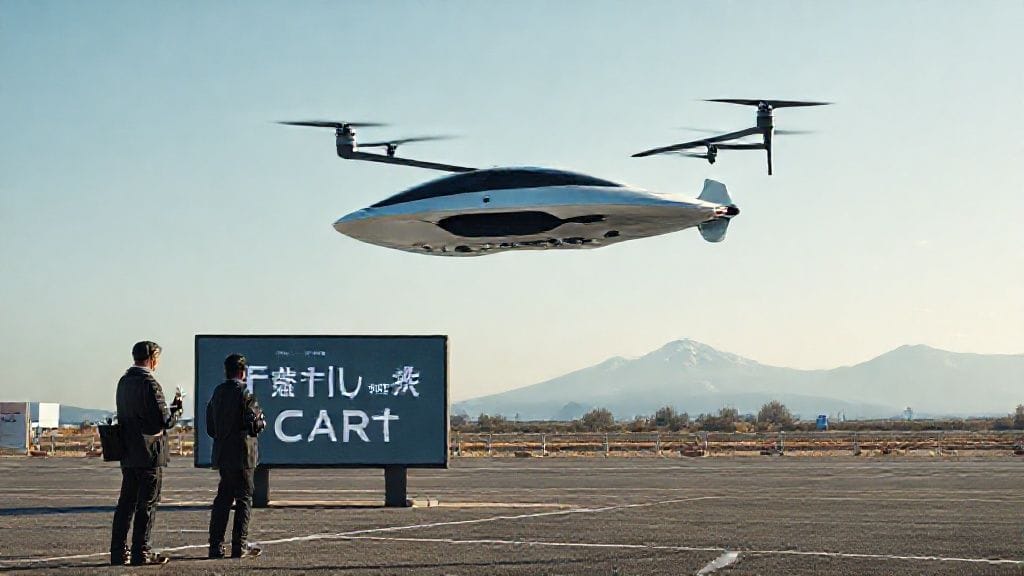
At 8:00 AM local time, with skies clear and a gentle breeze blowing, the countdown began. Yamamoto took the joystick, and the vehicle’s four rotors hummed to life. Slowly, it ascended to about three meters (approximately 10 feet), hovered briefly, and performed a series of controlled maneuvers.
Spectators could barely believe their eyes: a car, resembling the size of a small sedan, floating effortlessly over the field. The test lasted just under five minutes, technically short but endlessly significant. No crashes, no malfunctions—just a perfect, surreal dance in the sky.
7. The Test Flight Narrative: From Ignition to Liftoff
The moment the rotors started, the tension in the air was palpable. Everyone held their breath as the craft shook slightly, gathering the power necessary to pull away from earth’s grip. The sound of the rotors, a rhythmic yet strange beating akin to a giant insect’s wings, filled the morning.
Then, with a gentle lift, a collective cheer broke out. For a fleeting time, the car was no longer tethered to the roads but free among the clouds. The test included basic vertical takeoff, hover, and precise landing. Each movement was proof superb engineering had finally married aerodynamics and automotive design.
8. Public Reaction: Awe, Skepticism, and Global Eyes Watching
News of the successful test flight reverberated swiftly beyond Japanese borders. For aviation buffs and tech enthusiasts worldwide, it was an exhilarating milestone. Yet, not everyone was convinced. Skeptics questioned the practical potential—safety concerns, regulatory complexity, cost, and air traffic management looming as significant hurdles.
Still, the excitement was undeniable. Social media flooded with videos and reflections; the phrase “first flying car test in Japan” trended globally, fueling imaginations about a future where roads might be shared by cars in the air.
9. Media Frenzy and the Narrative of a Technological Renaissance
Within hours, major media outlets such as NHK, BBC, CNN, and Wired were reporting on the test flight. Headlines proclaimed Japan as the “birthplace of the future of transport.” Documentaries and interviews detailed the story, humanizing the technical marvel with accounts of the engineers’ devotion and the intense preparation.
Notably, coverage also contextualized the test within a larger narrative: a world thirsting for breakthrough technologies amid climate crisis, urbanization, and pandemic disruptions.
10. Regulatory Hurdles and the Roadblocks to Ubiquity
Despite the joy surrounding the test, the flying car faced a steep climb towards normalization. How would existing aviation laws adapt to these dual terrestrial-aerial vehicles? What about pilot licensing, traffic control, and collision avoidance?
Japanese aviation authorities cautiously welcomed the innovation but underscored the need for rigorous testing and certification. International standards were, and still are, embryonic at best. Safety protocols needed reimagining entirely.
11. The Fusion of Automotive and Aeronautic Technologies: A Technical Exploration
Technically, the flying car test symbolized the convergence of two disciplines often seen as distinct. The vehicle had to function both as a street-legal car and an aircraft—a feat demanding hybrid engineering approaches.
The SD-03’s rotors could fold compactly for road travel, switching modes seamlessly. Its powertrain balanced electricity for quiet, emission-free motion, while flight controls incorporated autonomous stabilization systems.
Such hybrid engineering required innovation in materials science, battery management, software integration, and mechanical design rarely seen in one machine before.
12. Environmental Implications and Sustainable Futures
Japan’s commitment to reducing carbon emissions gave the flying car an additional layer of significance. The electric propulsion system promised a cleaner alternative to gasoline cars and small aircraft. Reduced surface traffic could ease urban pollution and lower noise levels.
Moreover, by potentially decreasing the need for extensive road infrastructure growth, flying cars raised hopes for more sustainable urban planning, though these promises remained contingent on large-scale adoption and regulatory frameworks.
13. Comparing Global Efforts: Where Japan Stands in the Flying Car Race
While Japan’s test was groundbreaking, numerous countries pursued parallel projects. Silicon Valley startups like Terrafugia, European companies such as PAL-V, and South Korean and Chinese firms have all vied to realize the flying car dream.
Japan distinguished itself by prioritizing safety, lightweight design, and urban usability. Its unique ability to integrate robotics and automotive heritage placed it ahead, at least symbolically, in this growing global competition.
14. Economic Prospects: Market Opportunities and Industrial Shifts
The flying car test represented not just a technological leap but a potential economic paradigm shift. Industries from automobile manufacturing to urban transport infrastructure could be reshaped.
Analysts forecasted a multi-billion dollar market unfolding by 2040, including personal mobility, emergency services, logistics, and tourism. Yet, high entry costs and uncertain regulations tempered exuberance.
15. The Flying Car’s Role in Urban Mobility and Smart Cities
Envisioned within future smart cities, flying cars like the SD-03 could redefine urban mobility. Vertical takeoff and landing capabilities promised to bypass congestion, linking satellites of urban areas seamlessly.
Integrated with AI-driven traffic management, smart grids, and IoT, flying cars could help reduce commute times while enhancing accessibility for remote areas and disabled individuals.
16. Lessons from the First Test: Successes and Shortcomings
The August 2020 test flight was a beacon of success, but not without lessons. Battery endurance was still limited, weather vulnerabilities remained a concern, and legal frameworks lagged.
Yet, these shortcomings stimulated further research rather than diminish the significance of the event. The path from prototype to daily use became clearer as obstacles turned into defined challenges.
17. Public Imagination: The Flying Car as a Cultural Icon
Beyond technology, the first flying car test fed into Japan’s rich tradition of embracing visionary futures—from manga and anime to futuristic urban plans like Tokyo 2050.
The public’s reactions ranged from childlike wonder to serious debates about societal transformations. The flying car quickly became a new symbol of progress and possibility.
18. The Technological Legacy and Inspirations Sparked Worldwide
Japan’s success inspired similar projects globally, accelerating research in hybrid propulsion, AI flight control, and compact design. Universities and startups worldwide cited the test as a landmark achievement.
The flying car became more than a machine; it was a rallying point for global innovation.
19. The Ethical Debate: Safety, Privacy, and Social Equity
As the flying car hovered closer to everyday reality, deeper questions emerged. How would air traffic safety be ensured in crowded skies? Could this technology be accessible beyond the wealthy elite? What privacy risks come with flying vehicles surveilling private spaces?
These ethical dialogues, sparked anew after the test, shaped policy and public sentiment alike.
20. The Road Ahead: From Prototype to Everyday Reality
The first flying car test in Japan was a beginning, not an end. Research continues to evolve shape, hand-in-hand with legislation and cultural acceptance. Manufacturers are exploring autonomous flight to reduce piloting complexity.
The next decade promises exciting iterations, with the hope that flying cars eventually become a common part of life, if not in Japan, then soon elsewhere in the world.
21. Closing Reflections: When Science Fiction Meets Science Fact
August 25, 2020, will remain etched in history not only as a technical milestone but as a celebration of human imagination crossing into reality. The first flying car test proved that the boundary between ground and sky is no longer an obstacle but a bridge.
This event symbolized a world eager not just to move forward but upward—with dreams engineered, tested, and finally achieved.
Conclusion
The first flying car test in Japan was far more than a singular moment of technological daring; it was a powerful narrative about aspiration, innovation, and the relentless human spirit. It encapsulated years of effort, failures, and breakthroughs, culminating in a breathtaking vision of the future realized right before our eyes. This test flight redefined how we think of mobility and offered a glimpse into a future where urban spaces transcend their physical limitations, and the skies become roads of possibility.
Yet, behind the euphoria lay sober challenges—regulatory, environmental, economic, and ethical—that remind us progress is a journey of balance between dreams and responsibility. The flying car is, still, a symbol in motion—a harbinger of a world where science fiction can truly become science fact.
FAQs
Q1: What exactly happened during Japan’s first flying car test?
A1: On August 25, 2020, Japan’s SkyDrive SD-03 took off vertically, hovered, and landed safely in a controlled test flight lasting about five minutes, marking the first successful flight of a flying car in the country.
Q2: Why was Japan a significant player in flying car development?
A2: Japan’s advanced technology sectors, dense urban environments demanding innovative mobility solutions, and strong government and private investment created an ideal incubator for flying car technologies.
Q3: What are the main technical challenges flying cars face?
A3: Challenges include ensuring stable flight in varying weather, power and battery limits, regulatory compliance, transition between driving and flying modes, and safety mechanisms.
Q4: How did the public and media react to the first test?
A4: Public reaction mixed awe and excitement with skepticism. The media embraced the milestone as a sign of human progress and technological renaissance, sparking global attention.
Q5: What environmental benefits could flying cars provide?
A5: Electric flying cars could reduce surface traffic, lower emissions, and potentially decrease noise pollution and infrastructure strain in crowded urban areas.
Q6: What regulatory hurdles must be overcome before flying cars become mainstream?
A6: Comprehensive rules governing pilot licensing, traffic control in airspace, safety standards, and privacy laws need to be developed and harmonized nationally and internationally.
Q7: How does Japan’s flying car effort compare to global competitors?
A7: Japan’s approach emphasizes integration of robotics, safety, and user-friendly design, placing it among the leaders in innovation alongside firms in the US, Europe, South Korea, and China.
Q8: What does the future hold for flying cars beyond this initial test?
A8: Ongoing research aims at autonomous flight, increased battery efficiency, and scalable models, suggesting that flying cars could be part of everyday transport within decades.