Table of Contents
- An Unforgettable Dawn: The Neuralink First Human Implant
- The Visionaries Behind the Breakthrough
- A Century of Brain-Computer Interface Dreams
- The Road to Human Trials: From Lab to Operating Room
- The Nervous Tension of January 28, 2024
- Inside the Surgery: A Symphony of Precision and Innovation
- The Patient’s Perspective: Living on the Frontiers of Science
- Technology at the Edge: What Neuralink’s Implant Entails
- Ethical Whirlwinds: The Debate Over Merging Mind and Machine
- Scientific Validation and Public Skepticism
- The Global Scientific Community Reacts
- Potential Applications: From Medical Miracles to Cognitive Enhancement
- Economic Ripples: Tech Markets and the Race for Neural Interfaces
- The Psychological Impact: Identity and Consciousness in Question
- The Political Arena: Regulation, Control, and Future Legislation
- Culture and Imagination: Neuralink in Art, Literature, and Cinema
- Early Results: Successes, Challenges, and Complications
- Comparing Neuralink to Its Predecessors
- The Future Roadmap: What's Next for Neuralink and Neural Implants?
- Broader Implications: Humanity at a Crossroads
- Conclusion
- FAQs
- External Resource
- Internal Link
1. An Unforgettable Dawn: The Neuralink First Human Implant
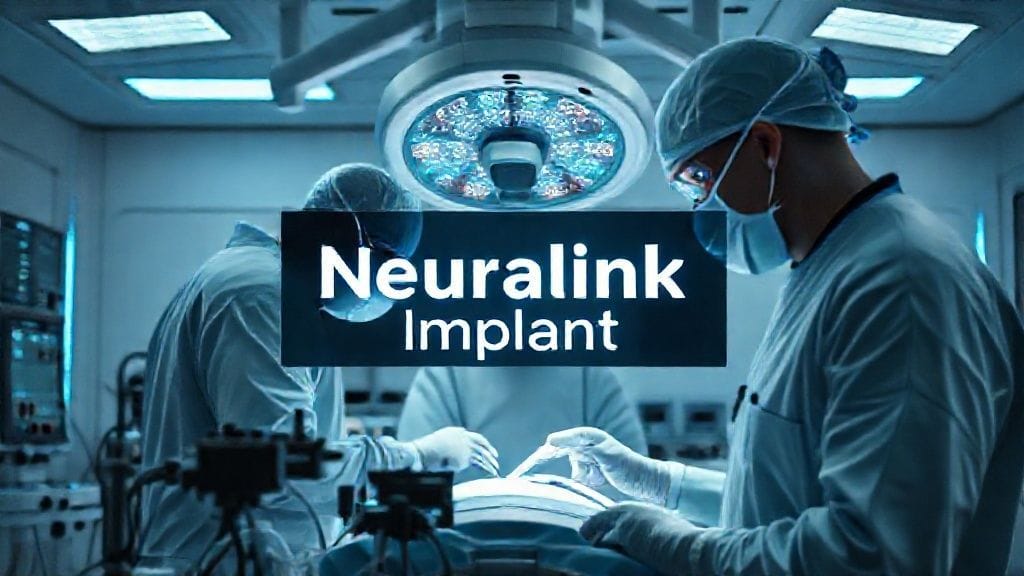
The operating theater was quiet, save for the low hum of machines and the rhythmic beeping of monitors synchronizing with a living, beating heart. It was January 28, 2024—a day destined to mark a crescendo in human technological history. Through state-of-the-art instruments, surgeons gently placed a delicate electronic mesh no thicker than a strand of human hair deep into the cerebral cortex of the first human patient. The Neuralink first human implant was no longer a distant dream whispered in techno-utopian circles; it had become flesh and bone—integrated with flesh and thought.
Outside the sterile walls, the world waited breathlessly. Media flashes, hastily typed headlines, and viral tweets were already swirling with anticipation, curiosity, and a twinge of fear. What exactly did it mean when silicon and neurons spoke in the same language? How far could this miraculous fusion reshape human existence?
This was the moment when science fiction was no longer fiction. It was the dawn of a new conversation about what it meant to be human.
2. The Visionaries Behind the Breakthrough
The journey to this day was less a matter of chance and more the result of relentless visionaries—engineers, neuroscientists, ethicists, and entrepreneurs driven by profound curiosity and a hunger to reshape possibility. Elon Musk’s Neuralink Corporation had vowed to unlock the mysteries of the brain, first to heal, then to enhance.
Musk’s vision was audacious: to create a seamless brain-computer interface (BCI) capable of restoring motor functions to paralyzed patients and ultimately augmenting cognition. But behind the public persona was a team of remarkable minds who toiled for years in hidden labs—calibrating electrodes, miniaturizing complex hardware, and nurturing a symbiotic relationship between biology and technology.
Their mission was simultaneously medical and philosophical: to provide a bridge over the abyss of neurological disorders while redefining the human experience.
3. A Century of Brain-Computer Interface Dreams
Human fascination with interfacing machines and minds traces back over a hundred years. Early 20th-century experiments, such as Hans Berger’s electroencephalogram (EEG) in the 1920s, ignited the age-old quest to unravel and tap into the brain’s electrical symphony.
The 1960s and 70s saw pioneering work in invasive electrocorticography (ECoG) and rudimentary implantable devices. Yet, technology remained constrained and clumsy. It was only in the 21st century, with the rise of computing power and nanotechnology, that ambitious projects dared dream bigger.
Into this lineage stepped Neuralink, blending rapid advances in flexible electrodes, machine learning algorithms, and neurosurgical robotics. The 2024 implant was the crowning jewel of decades of incremental innovation—standing on the shoulders of giants in biomedical engineering and neuroscience.
4. The Road to Human Trials: From Lab to Operating Room
The transition from animal studies to first human implantation was scrutinized and slow. Neuralink’s early experiments on primates had demonstrated remarkable feats: enabling a monkey to control a computer cursor using thought alone stunned scientific observers worldwide.
But the ethical stakes escalated exponentially with humans. Rigorous peer-reviewed studies, regulatory approvals, and ethical committee clearances were painstakingly pursued. Skeptics raised concerns about safety, long-term viability, and potential psychological effects.
Yet, by 2023, with a robust data set and advanced surgical techniques, the stage was set. A patient with quadriplegia, carefully selected and consenting, volunteered to wear the mantle of history. The clinical team rehearsed the operation like a precise choreography—ready to make Neuralink's audacious leap.
5. The Nervous Tension of January 28, 2024
Imagine the charged atmosphere inside the operating room. Surgeons, researchers, engineers, and ethicists stood shoulder to shoulder, unified by a blend of excitement and responsibility. Every motion was deliberate, because this was uncharted territory.
The implant procedure began with locating the exact cortical region responsible for motor control. The Neuralink “thread” device was delicately inserted into the brain tissue—virtually invisible to the naked eye yet monumental in significance. Surgery was not only a physical endeavor but a deeply symbolic act: humanity’s first step toward cognitive fusion with technology.
Behind closed doors, nerves raveled. Would the device function as hoped? Could biology and silicon truly dance together seamlessly?
6. Inside the Surgery: A Symphony of Precision and Innovation
The implant relied on ultra-thin flexible electrode threads designed to minimize immune response. Neurosurgical robots, fine-tuned for submillimeter precision, performed the insertion while the patient was awake—allowing immediate feedback and monitoring of brain signals.
Neuralink’s custom chip, embedded in the skull, began realtime wireless transmission of brain data, interfacing with external devices. It was a silent conversation—neurons firing, electronics recording, algorithms decoding.
This moment was more than a technical marvel; it was the union of human resilience with mechanical ingenuity, poised to redefine the boundaries of disability and communication.
7. The Patient’s Perspective: Living on the Frontiers of Science
For the patient, the experience was profoundly intimate and surreal. Imagine regaining the power to command a cursor, a robotic limb, or even a smartphone, with thought alone after years of paralysis. The implant’s success was not simply technical validation; it was a resurrection of autonomy and agency.
Yet with this empowerment came uncertainty—how would this new technological interface integrate with personal identity? Would the patient perceive this synthetic presence as a part of self or a foreign invader?
These deeply human questions remain central to understanding the Neuralink era.
8. Technology at the Edge: What Neuralink’s Implant Entails
At its core, the Neuralink implant is a marvel of multidisciplinary engineering. Flexible polymer threads embedded with hundreds of electrodes record the action potentials—tiny electric signals—from neurons in real time. These signals are digitized through an onboard chip, the “N1 sensor,” which uses machine learning to interpret neural patterns.
The device integrates wirelessly with external processors, enabling the translation of thought into commands without physical movements. The possibilities seem boundless: restoring motor functions, treating neurological disorders, enabling memory augmentation, or even forging new modes of communication.
However, the technology is still nascent—limited in bandwidth and longevity—but it opened a crack in the door toward a future where mind and machine converge.
9. Ethical Whirlwinds: The Debate Over Merging Mind and Machine
Neuralink’s breakthrough unleashed a maelstrom of ethical debate. Is it morally justifiable to implant devices that read and influence the brain? What about consent, privacy, surveillance risks, and potential misuse?
Critics warned of a techno-oligarchy where cognitive enhancements favor the privileged, exacerbating social inequalities. Others feared psychological harm or loss of free will—if thoughts could be monitored or manipulated.
Proponents argued that the potential to restore lost functions, and ultimately expand human cognition, was too important to ignore. The implant became a symbol of ethical crossroads: a choice between empowering humanity or courting dystopia.
10. Scientific Validation and Public Skepticism
Initial results were met with a mixture of wonder and cautious skepticism. While the technology demonstrably enabled brain-to-machine communication, some neuroscientists questioned the depth of understanding regarding long-term biological responses.
Public perception was equally divided. Enthusiasts saw a revolution akin to the moon landing; skeptics wondered whether this was techno-hype or an early step on a long road.
This tension between awe and skepticism colored much of the media discourse following the implantation.
11. The Global Scientific Community Reacts
Leading neuroscientists and medical institutions worldwide closely watched Neuralink’s progress. Many hailed it as a pivotal moment, drawing parallels with the advent of open-heart surgery or mapping of the human genome.
Some researchers pledged to accelerate complementary work on brain-machine interfaces, while others called for international guidelines on ethical implementation to prevent fragmentation and misuse.
Emerging collaborations, conferences, and publications quickly turned Neuralink’s first human implant into a defining chapter in contemporary neuroscience.
12. Potential Applications: From Medical Miracles to Cognitive Enhancement
The implant’s implications stretched far beyond clinical trials. For people with paralysis, epilepsy, Parkinson’s disease, or depression, such interfaces promised revolutionary treatments.
Longer term, Neuralink hinted at augmented cognition: expanded memory storage, real-time translation, direct internet access, or telepathic communication. Science fiction suddenly felt tangible.
Yet the line between therapy and enhancement blurred, raising profound inquiries about what it means to be naturally human.
13. Economic Ripples: Tech Markets and the Race for Neural Interfaces
The successful human implant sent ripples through global markets. Tech giants, venture capitalists, and biotech firms intensified investments into neural interfaces and related AI technologies.
A new “neurotech” sector began to emerge, promising to reshape industries from healthcare to education, defense to entertainment.
Competition heated. Patents were filed aggressively. Yet, questions about monopolies, data ownership, and equitable access intensified concerns alongside optimism.
14. The Psychological Impact: Identity and Consciousness in Question
At the heart of the Neuralink implant lies a mystery deeper than science—the relationship between mind, consciousness, and identity. Could integrating machine signals alter personality? Would users feel “augmented” or alienated?
Philosophers pondered the implications of hybrid minds. Early patients reported a sense of awe mixed with cognitive dissonance—a new form of embodiment that challenged long-standing preconceptions.
Neuroscience had taken its first step toward decoding the essence of “self.”
15. The Political Arena: Regulation, Control, and Future Legislation
Governments raced to understand and regulate this emergent frontier. Privacy laws struggled to keep pace with technology capable of decoding thoughts. International bodies debated standards and safeguards.
Some viewed Neuralink-like devices as potential national security assets, raising fears of “mind hacking” or espionage.
Balancing innovation with protection became a delicate diplomatic and domestic policy challenge.
16. Culture and Imagination: Neuralink in Art, Literature, and Cinema
Within weeks, Neuralink became a muse for artists and writers. Graphic novels depicted cyborg heroes and dystopian futures, while filmmakers reimagined narratives of power and vulnerability.
Public fascination translated into cultural dialogues about humanity’s future—mixing hope, anxiety, and wonder.
Where previously brain implants were relegated to sci-fi, they now occupied center stage in contemporary cultural consciousness.
17. Early Results: Successes, Challenges, and Complications
The first patient demonstrated an ability to control devices cursorily and communicate basic commands, effectively breaking physical barriers.
However, complications arose: mild immune responses, calibration challenges, and a steep learning curve for software interpretation. The device needed periodic updates and monitoring to maintain efficacy.
These initial hurdles underscored the infancy of this technology and highlighted the need for patience and persistence.
18. Comparing Neuralink to Its Predecessors
Unlike earlier rigid implants, Neuralink’s flexible threads reduced tissue damage and improved data resolution. Compared to non-invasive EEG-based systems, it allowed a richer flow of data with lower latency.
Its wireless design set new standards in user comfort and mobility.
This leap in innovation placed Neuralink on a unique pedestal, poised to inspire future generations of neural interfaces.
19. The Future Roadmap: What's Next for Neuralink and Neural Implants?
Following the first human implant, Neuralink planned larger clinical trials to assess safety across broader cohorts, including patients with diverse neurological disorders.
Research aimed at increasing electrode density, expanding cortical coverage, and integrating feedback loops for bidirectional communication.
Ultimately, Neuralink aspired to pioneer closed-loop brain-machine systems that could not only read but write neural signals—a true digital symbiosis.
20. Broader Implications: Humanity at a Crossroads
Neuralink’s first human implant symbolized more than a scientific milestone. It represented a crossroads where ethical, philosophical, technological, and social vectors intersected.
The event forced humanity to reconsider definitions of disability, cognition, autonomy, and even mortality.
As we navigate this new era, the question is no longer “Can we?” but “How shall we responsibly coexist with our technology?”
Conclusion
The Neuralink first human implant was a moment steeped in audacity, hope, and contemplation. It bridged centuries of scientific endeavor with a glimpse into a profound future—one where the brain’s electrical whispers could dialogue with silicon circuits.
Yet, this is just the opening act. The profound medical promises are shadowed by ethical quandaries. Public fascination blends with skepticism. But as history has often shown, humanity’s capacity for innovation is intertwined with its moral compass.
This singular event invites us to imagine, deliberate, and shape what it truly means to be human in the age of mind-machine convergence.
FAQs
Q1: What is the Neuralink first human implant?
It is the first surgical implantation of Neuralink’s brain-computer interface device in a human subject, allowing direct communication between the brain and external computing devices.
Q2: Why was January 28, 2024, significant?
This date marked the inaugural successful implantation of the Neuralink device in a human patient, a historic milestone in neurotechnology.
Q3: Who was the first patient?
The patient was an individual with quadriplegia who voluntarily participated in the clinical trial to test the device’s safety and efficacy.
Q4: What are the main benefits of the Neuralink implant?
Benefits include restoring lost motor functions, enabling communication for paralyzed patients, and potentially future cognitive enhancements.
Q5: What are the ethical concerns associated with Neuralink?
They include privacy of thoughts, potential misuse or hacking, informed consent, social inequality in access, and impacts on identity and cognition.
Q6: How does Neuralink’s technology differ from older brain implants?
Neuralink uses flexible, fine electrode threads with wireless connectivity, offering higher resolution data and less invasiveness than prior rigid implants.
Q7: What challenges remain after the first implant?
Challenges include immune response, device longevity, signal interpretation accuracy, ethical governance, and scaling for widespread use.
Q8: How does this event impact the future of neurotechnology?
It opens the door to advanced brain-machine interfaces for therapy, enhancement, and new forms of human-machine interaction previously thought impossible.