Table of Contents
- A New Dawn in Aviation: The Hydrogen Plane First Flight
- The Dream of Clean Skies: Challenges and Aspirations
- Early Visions of Hydrogen in Flight
- The Global Race for Green Aviation Technology
- United Kingdom’s Bold Step Into the Future
- Designing the World’s First Hydrogen-Powered Plane
- The Pioneers Behind the Project: Engineers and Visionaries
- The Day of Destiny: September 24, 2020
- A Flight Against Time and Skepticism
- Technical Marvels: How the Hydrogen Plane Works
- Reactions from the Aviation World and Environmentalists
- The Flight’s Impact on UK’s Green Economy Strategy
- Economic and Environmental Stakes of Hydrogen Aviation
- Challenges Still Ahead: Infrastructure and Scalability
- The Global Ripple Effect: Inspiration Across Continents
- Personal Stories: Pilots and Team Members’ Reflections
- The Public’s Awe: Media, Social Media, and Cultural Response
- The Role of Government Policies and Funding
- Comparing Hydrogen Power and Other Green Aviation Alternatives
- What’s Next? The Future Prospects of Hydrogen-Powered Flight
- Lessons Learned from the Historic First Flight
- Beyond Ultra-Clean Aviation: Hydrogen’s Industrial Promise
- Concluding Reflections on Innovation, Risk, and Hope
A New Dawn in Aviation: The Hydrogen Plane First Flight
It was early morning on September 24, 2020, when a small yet revolutionary aircraft stood poised on a quiet airstrip in the United Kingdom. The sky above was a pale blue canvas, pierced by the hopeful rays of the rising sun. A crowd of scientists, engineers, policymakers, journalists, and aviation enthusiasts held their collective breath, eyes fixed on a dream about to take off—literally. This was no ordinary flight; it was the first-ever journey of a hydrogen-powered airplane, an embryonic form of flight destined to alter the future of aviation forever.
Behind the hum of the engines was not the familiar roar of fossil fuels but a whisper of compressed hydrogen, clean and promising, bearing the hopes of cleaner skies and a planet less suffocated by pollution. When the small plane lifted, deft and elegant, into the gentle breeze, the world witnessed not only an inaugural flight but a milestone etched into human ingenuity and climate responsibility. This pioneering moment was more than a technological achievement; it was the crystallization of decades of research, ambition, and the unyielding drive toward sustainability.
Yet, this first flight was also a reminder of the enormity of the challenge before us—a symbol of hope set against the backdrop of an aviation industry critically reliant on carbon-heavy fuels and a planet gasping under the strain of global warming. The hydrogen plane’s maiden voyage was an emotional and scientific turning point that carried with it both the excitement of a breakthrough and the caution of an uncertain journey ahead.
The Dream of Clean Skies: Challenges and Aspirations
For over a century, aviation has enabled humanity to bridge vast distances, shrinking the world in remarkable ways. However, this convenience has come at a steep environmental cost. The aviation sector accounts for around 2-3% of global carbon dioxide emissions, a comparatively small figure but one that is growing rapidly with increasing air travel demand. This growth threatens to undermine global efforts to combat climate change.
The aspiration to develop hydrogen-powered flight is rooted in the urgent need to find energy sources that do not just promise efficiency, but also environmental sustainability. Hydrogen, with its high energy density and clean combustion — water vapor being its only emission — emerges as an attractive alternative fuel. Yet, the path to achieving flight powered solely by hydrogen has been strewn with formidable technological and economic obstacles.
Hydrogen is volatile, requiring careful storage and handling. Producing green hydrogen — derived from renewable energy sources rather than fossil fuels — remains costly and energy-intensive. Aerospace engineering must also grapple with the weight and safety challenges posed by hydrogen fuel storage aboard aircraft. Despite these formidable barriers, the dream persisted, fueled by the global imperative to reduce aviation's carbon footprint and secure air travel’s future viability.
Early Visions of Hydrogen in Flight
The roots of hydrogen-powered flight extend far deeper than the 21st century. Back in the early 20th century, the hydrogen-filled Zeppelin airships symbolized the promise of lighter-than-air travel. However, the tragic fate of the Hindenburg in 1937, where onboard hydrogen caught fire, left an indelible mark on perception and safety concerns.
Through the mid-20th century, hydrogen appeared more as a curious scientific interest rather than an immediate practical fuel. Researchers speculated on its potential for rockets and space flight, but in atmospheric flight, the technological leap was not yet viable. The switch to jet fuel and kerosene entrenched the fossil-fuel-based paradigm deeply within commercial aviation.
The late 20th century witnessed a revival of interest as environmental degradation and energy crises brought alternative fuels into sharp focus. Experimental aircraft started to test hydrogen fuel cells and combustion engines, but these tests rarely moved beyond small prototypes or limited feasibility studies.
The Global Race for Green Aviation Technology
By the early 2000s, the urgency to decarbonize aviation had accelerated innovation worldwide. Governments, private firms, and international consortia invested in exploring cleaner propulsion methods, including biofuels, electric batteries, and hydrogen fuels. While electric-powered planes suited short-range flights, they were limited by battery weight and energy density. Hydrogen promised longer ranges and faster refueling, setting it apart as a promising contender.
Countries such as Germany, France, Japan, and the UK emerged as leaders in pioneering hydrogen aviation technology. Projects ranged from retrofitting existing small aircraft to building wholly new hydrogen-powered designs. The push intertwined scientific pursuits with environmental policy, industry collaboration, and public pressure to reduce emissions.
The United Kingdom, in particular, positioned itself boldly in this arena, determined to become a global hub for clean aviation innovation. With strong government commitment, targeted funding, and academic-industry partnerships, the UK’s hydrogen aviation ambitions gained momentum.
United Kingdom’s Bold Step Into the Future
Amid rising climate concerns, the British government announced a series of initiatives to reduce aviation carbon emissions in line with its net zero carbon emission target by 2050. For the UK, hydrogen’s potential was not only about reducing emissions but also about revitalizing the aerospace sector, securing high-tech jobs, and asserting leadership in emerging sustainable technologies.
Public and private sectors converged to back ambitious projects, including the development of hydrogen planes. One such initiative was the partnership led by ZeroAvia, a startup whose mission was to create zero-emission aircraft powered by hydrogen-electric engines. This collaboration was part of a broader strategy incorporating the UK’s energy transition roadmap, aiming at leveraging its abundant wind and solar energy to produce green hydrogen.
The stage was set for a historic first flight—a moment destined to echo beyond national borders and speed up the worldwide transition to sustainable aviation.
Designing the World’s First Hydrogen-Powered Plane
The plane chosen for this bold experiment was a modified six-seat Piper Malibu, a light aircraft normally powered by petrol engines. Its conversion into a hydrogen-electric hybrid involved replacing its combustion engine with a hydrogen fuel cell system that generates electricity by combining hydrogen with oxygen. The system powers electric motors to drive the aircraft’s propeller.
Engineering this aircraft was a massive feat. Hydrogen storage tanks had to be integrated safely without compromising the aircraft’s center of gravity or increasing weight excessively. The entire propulsion system had to demonstrate reliability and performance while meeting stringent airworthiness standards.
The design process required intensive tests on fuel cells, hydrogen storage under high pressure, power electronics, and integration with existing aviation controls. Engineers and pilots worked hand-in-hand, constantly pushing the envelope of what clean technology could achieve.
The Pioneers Behind the Project: Engineers and Visionaries
Behind the scenes were teams of dedicated engineers, scientists, pilots, and entrepreneurs. Notable figures such as Val Miftakhov, founder and CEO of ZeroAvia, championed the ambition to disrupt conventional aviation. These pioneers combined aerospace expertise with new energy technologies, united by the vision of a cleaner, safer tomorrow.
The team faced both technical challenges and skepticism from established aviation manufacturers. They often worked under tight time frames with limited resources, balancing innovation with the uncompromising demands of flight safety.
Their perseverance reflected a broader generational shift: a group of innovators determined not only to advance technology but to forge a narrative that sustainability and progress are inseparable.
The Day of Destiny: September 24, 2020
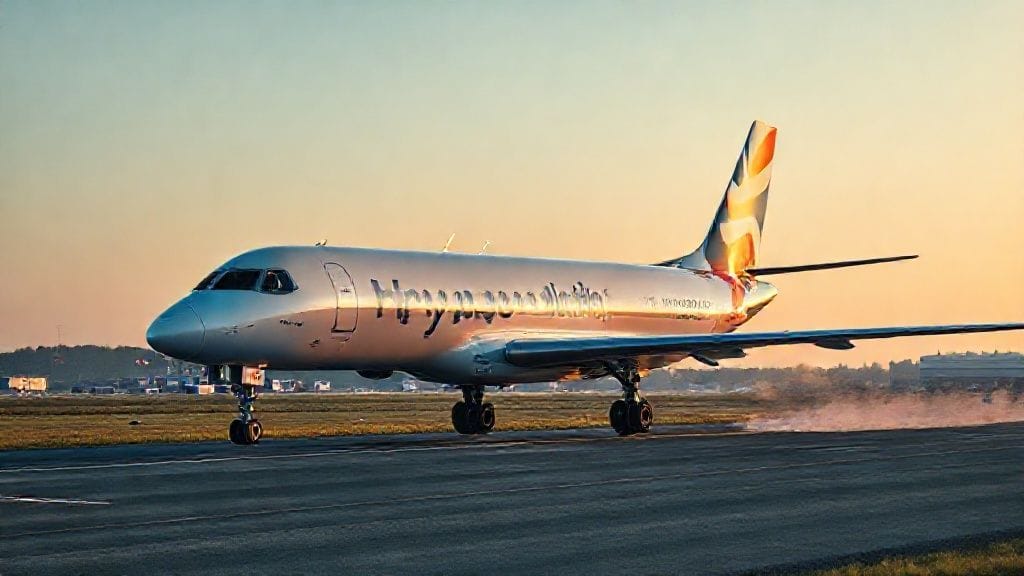
The morning of September 24, 2020, shone bright over Cranfield Airport in Bedfordshire. Reporters, engineers, environmentalists, and government representatives gathered, standing by in reverent anticipation. The aircraft, nicknamed the “Hydrogen Pioneer,” was taxiing to the runway, its sleek fuselage a silent statement of change.
Minutes later, it was airborne, gliding gracefully over the countryside in a flight that lasted approximately 20 minutes. The airplane reached an altitude of nearly 3,000 feet, demonstrating the viability of hydrogen fuel cells for powering commercial-sized aircraft.
The flight was flawless—a perfect blend of human courage and technological achievement. The applause that followed was not just for the successful test but for a hopeful glimpse into aviation’s decarbonized future.
A Flight Against Time and Skepticism
This milestone did not come without a measure of doubt. Critics questioned the practicality of hydrogen aviation, citing cost, infrastructure, and safety concerns. Hydrogen’s volatility recalls the shadow of early airship disasters. Others pointed to the logistical challenges of producing, storing, and distributing green hydrogen on a commercial scale.
Yet, the flight illustrated that these barriers, while daunting, are not insurmountable. It marked a crucial proof of concept, challenging the prevailing belief that fossil fuels were aviation’s only option.
In an industry resistant to radical change, this event signaled a tentative but firm step toward reimagining how planes can fly—cleanly, quietly, and efficiently.
Technical Marvels: How the Hydrogen Plane Works
At the heart of the hydrogen plane’s flight was the fuel cell—the device that converts hydrogen and oxygen into electricity and water vapor in a clean electrochemical reaction. Unlike combustion engines that burn fuel, fuel cells generate power silently, with higher efficiency and zero carbon emissions.
The aircraft carried hydrogen stored in pressurized tanks at about 350 bar, designed to endure rigorous flight conditions. This hydrogen fed the fuel cell, which powered electric motors driving the propeller. The entire propulsion system was controlled via sophisticated power electronics ensuring smooth response and safety redundancies.
This hybrid-electric architecture confers multiple benefits: no combustion emissions, reduced noise pollution, and the potential for flexible energy sourcing depending on future hydrogen availability.
Reactions from the Aviation World and Environmentalists
The aviation industry greeted the flight with a mix of enthusiasm and cautious optimism. Major airliners and manufacturers recognized the significance of the breakthrough but also emphasized the need for further development and certification processes that could take years.
Environmentalists applauded the demonstration as the dawn of a potentially transformative solution to one of the most stubborn problems of pollution—long-haul and regional flight emissions.
“It’s a stunning achievement,” commented one climate scientist. “Hydrogen aviation has long been a dream. This flight proves it’s attainable and accelerates the hope for real change.”
The Flight’s Impact on UK’s Green Economy Strategy
Beyond symbolism, the hydrogen plane’s flight had immediate political and economic repercussions. It bolstered the UK government’s resolve to support hydrogen as part of its industrial decarbonization strategy, fostering partnerships between clean energy sectors and aviation.
Investment in hydrogen infrastructure, from electrolyzers to refueling stations, received renewed vigor. The flight reinforced the UK’s positioning as a leader in zero-emission technologies and inspired new funding initiatives for green innovation and sustainable transport.
Economic and Environmental Stakes of Hydrogen Aviation
Hydrogen-powered aviation promises a paradigm shift. The potential environmental benefits are immense—eliminating carbon dioxide, particulate matter, and soot emissions from planes would substantially improve air quality and combat climate change.
Economically, the sector could spawn new industries, manufacturing jobs, and export opportunities. But to realize this vision, costs must fall dramatically for hydrogen production and fuel cell technologies. Scalable, green hydrogen infrastructure will require massive investment, regulatory harmonization, and international cooperation.
Challenges Still Ahead: Infrastructure and Scalability
The first flight was a vital step, but scaling hydrogen aviation faces numerous challenges. Airports need to be equipped with hydrogen production and refueling facilities. Safety training and certification standards must evolve to address this novel technology.
Furthermore, producing sufficient green hydrogen demands expanding renewable energy generation and optimizing electrolysis technologies.
Only a concerted, systemic effort combining governments, industries, and research institutions can transform scattered experiments into a global aviation revolution.
The Global Ripple Effect: Inspiration Across Continents
News of the UK’s flight radiated worldwide. Similar projects in Germany, the United States, and Japan intensified. International bodies like the International Air Transport Association (IATA) began incorporating hydrogen into their carbon-neutral goals.
The flight became a beacon of possibility, inspiring policymakers and innovators across continents to imagine new energy futures beyond fossil fuels.
Personal Stories: Pilots and Team Members’ Reflections
Behind the headlines were the voices of those who lived this moment. The pilot recalled the surreal sensation of operating an aircraft powered by the “cleanest fuel known,” describing the flight as “both exhilarating and humbling.”
Engineers spoke of the long hours and sacrifices made, of initial failures followed by breakthroughs. Many expressed a sense of deep responsibility—knowing that this was more than a test flight but a message to generations grappling with climate crisis.
The Public’s Awe: Media, Social Media, and Cultural Response
The hydrogen plane’s flight captured imaginations globally, with social media abuzz with images and videos. The narrative of clean, green aviation struck a chord amid rising climate anxiety. Educational outlets capitalized on the event to introduce young audiences to renewable energy and sustainability.
In the cultural sphere, artists and writers found inspiration in the symbolic ascent of the hydroplane, seeing it as a metaphor for human ingenuity rising above worldly challenges.
The Role of Government Policies and Funding
Crucial to the achievement was sustained government support. The UK’s funding programs for research and clean energy innovation were instrumental in enabling ZeroAvia and partner organizations to undertake this venture.
Regulatory frameworks adapted to facilitate testing and certification in this emerging technology domain. Public-private collaborations created a nurturing ecosystem for green aviation endeavors.
Without such strategic backing, the hydrogen plane’s first flight would have remained a distant aspiration.
Comparing Hydrogen Power and Other Green Aviation Alternatives
Hydrogen isn’t the only solution under consideration. Electric batteries, sustainable biofuels, and hybrid engines all make up the evolving landscape of green aviation technologies.
Batteries excel at powering short-haul, low-weight aircraft but struggle with range and capacity for larger planes. Biofuels can directly replace fossil jet fuels but face questions of sustainability and feedstock competition.
Hydrogen uniquely offers high energy density and clean emissions, especially for regional and potentially long-haul flights, thereby carving a distinct and complementary niche.
What’s Next? The Future Prospects of Hydrogen-Powered Flight
The next decade will be decisive. Validation of hydrogen propulsion in larger aircraft, longer flights, and commercial operations is planned. Infrastructure rollout must accelerate, and cost reduction strategies implemented.
Collaborations between airlines, airports, energy companies, and governments will be paramount. With these foundations, hydrogen airplanes may soon take their place in everyday aviation, along with other innovative technologies.
The path is rocky but filled with unparalleled opportunity—a chance to rewrite the story of flight on a healthier planet.
Lessons Learned from the Historic First Flight
This milestone highlighted several crucial lessons: innovation demands courage to surpass conventional wisdom, cross-disciplinary cooperation is vital, and real sustainability must marry technology with policy and finance.
It also emphasized that public communication and storytelling matter, as public trust and enthusiasm are critical for transformational change.
The hydrogen plane’s flight was both a scientific and a human triumph—a beacon for what committed effort and imagination can achieve.
Beyond Ultra-Clean Aviation: Hydrogen’s Industrial Promise
Hydrogen’s promise extends beyond flight. It offers clean energy for maritime transport, heavy industry, heating, and grid balancing. The technology and infrastructure developed for aviation thus serve broader decarbonization goals.
In this sense, the hydrogen plane first flight is not merely an isolated success but a precursor to a fundamental reshaping of energy use across sectors worldwide.
Concluding Reflections on Innovation, Risk, and Hope
The hydrogen plane first flight in the UK was a vivid illustration of how innovation arises from vision paired with resolute action. It revealed the delicate balance of ambition, risk, and hope upon which breakthroughs stand.
As the plane touched back down that morning, it carried more than passengers or cargo; it carried humanity’s aspirations to harmonize progress with preservation—to fly not just higher, but cleaner and wiser.
This flight was the fragile yet firm bridge to a future where the skies tell stories of daring dreams fulfilled and a planet respected.
Conclusion
The historic first flight of a hydrogen-powered airplane on September 24, 2020, in the United Kingdom was an extraordinary leap toward sustainable aviation. It symbolized decades of research, courage, and unrelenting determination in confronting the environmental challenges posed by carbon-heavy aviation fuels.
While the ascent was modest in distance and duration, its implications loom large. The flight opened pathways toward transforming how humans traverse the skies—without the heavy pollution and noise that have long marred the joy of flight. This achievement inspires hope not only for the technology itself but for the capacity of human society to adapt and innovate in the face of existential threats.
Yet, the journey ahead remains demanding. Advancing hydrogen aviation from experimental prototypes to commercial reality requires overcoming infrastructure gaps, cost hurdles, and regulatory challenges. It demands continued cooperation across governments, industries, scientists, and citizens.
Ultimately, the hydrogen plane’s maiden voyage epitomizes what can be accomplished when ambition aligns with responsibility—a breathtaking moment of invention that lifts our collective hopes as surely as the plane lifted off its runway on that crisp September day.
FAQs
1. Why is the hydrogen plane first flight significant?
It represents the first successful use of hydrogen fuel cells to power an aircraft, demonstrating a practical method to achieve zero-emission aviation and reducing the sector’s environmental impact.
2. What challenges does hydrogen aviation face?
Key challenges include safe and efficient hydrogen storage, high costs of green hydrogen production, the need for new refueling infrastructure, and regulatory approvals for commercial use.
3. Who were the main actors behind the hydrogen plane flight?
ZeroAvia, a UK-based startup, alongside government agencies, academic institutions, and aerospace engineers, led the design and operation of the hydrogen-powered aircraft.
4. How does hydrogen fuel cell technology work in aircraft?
It combines hydrogen with oxygen in a fuel cell to produce electricity, which powers electric motors. The only emission is water vapor, making it a clean alternative to fossil fuels.
5. What are the environmental benefits of hydrogen-powered aviation?
Hydrogen flight produces zero carbon dioxide, particulate, or soot emissions, potentially reducing climate change impacts and improving air quality around airports.
6. How does hydrogen aviation compare to other green alternatives?
Compared to batteries and biofuels, hydrogen offers higher energy density and faster refueling times, making it better suited for longer and regional flights.
7. What is the future outlook for hydrogen-powered planes?
With continued investment and technological improvement, hydrogen planes could enter commercial service within the next decade, especially for regional and possibly short-haul flights.
8. How did governments support the first hydrogen plane flight?
Governments provided funding, regulatory support, and research grants to companies like ZeroAvia, facilitating innovation and testing.