Table of Contents
- The Dawn of a New Era on the Red Planet
- Setting the Stage: Humanity’s Quest for Breath Beyond Earth
- The Technological Marvel: Introducing MOXIE
- The Launch and Journey: From Earth to Martian Soil
- Arrival on Mars: The Moment of Truth
- Preparing for the Oxygen Extraction Test
- The First Breath on Mars: MOXIE’s Initial Success
- Challenges and Unexpected Hurdles
- The Science Behind MOXIE: How Oxygen is Made from Martian Atmosphere
- Human Stories Behind the Machine: Engineers and Dreamers
- The Symbolic Weight: What MOXIE Represents for Mankind
- Subsequent Tests: Refining the Technology and Improving Efficiency
- The Global Response: Scientists, Media, and Public Reactions
- MOXIE’s Influence on Space Exploration Policies
- The Long Road Ahead: Building Sustainable Human Presence on Mars
- MOXIE’s Legacy in Future Missions and Terraforming Dreams
- The Environmental and Ethical Dimensions of Extracting Resources on Mars
- Bridging Science Fiction and Reality
- The Cultural Impact: Mars Oxygen Extraction Test in the Arts and Education
- Reflections from Mars: What Breathing Mars Taught Us About Ourselves
The Dawn of a New Era on the Red Planet
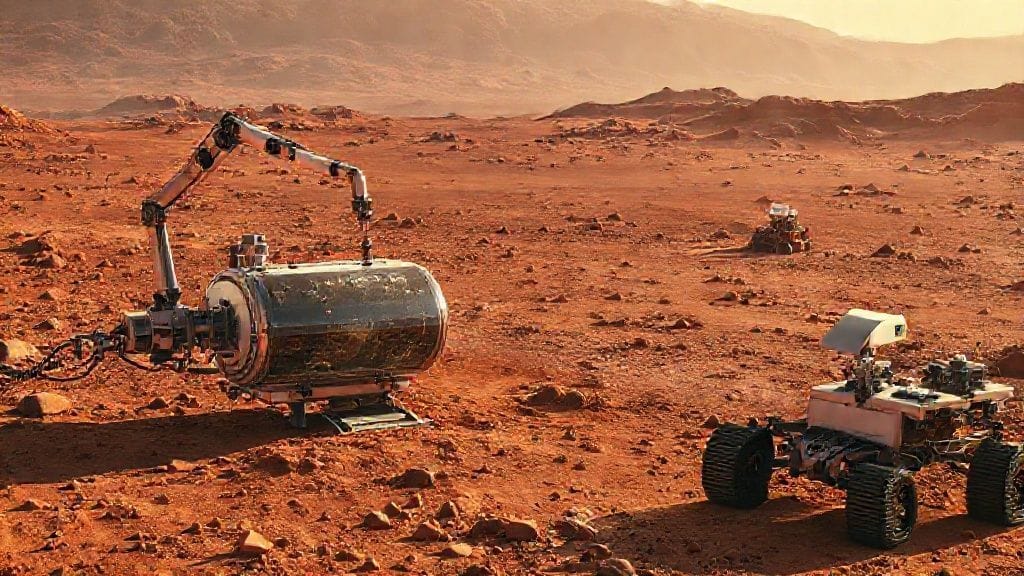
April 20, 2021, was not an ordinary day in the annals of human achievement. Far beyond Earth’s protective cradle, 340 million kilometers away, in the stark, rust-colored plains of Jezero Crater, a mechanical pioneer silently awoke to begin a task shrouded in both immense complexity and historic symbolism. The Mars Oxygen Extraction Test—operated by the ingenious MOXIE experiment aboard NASA’s Perseverance rover—was about to take humanity’s first independent breath on another planet.
Imagine the cold, thin atmosphere of Mars, pressing just 1% of the Earth’s air at sea level, whispering alien gas compositions mostly made of carbon dioxide—all while a compact machine stirs to life, pulling invisible molecules from that alien air to create oxygen. It was more than a scientific feat; it was a profound leap toward transforming Mars from a distant dream into a possible home.
Setting the Stage: Humanity’s Quest for Breath Beyond Earth
The dream to breathe beyond Earth has long captivated humanity’s imagination. For decades, sci-fi narratives depicted astronauts confronting suffocating alien atmospheres, reliant on cumbersome tanks of Earth-breathing air. Yet, reliance on transported oxygen severely limits the duration and scale of human space missions. The solution? Harnessing local resources—a principle known as in-situ resource utilization (ISRU).
Mars, with an atmosphere over 95% carbon dioxide, offers a tantalizing source of oxygen if only we could extract it. The Mars Oxygen Extraction Test was born from this necessity: to examine if oxygen, indispensable for human life and rocketing fuel alike, could be “manufactured” in situ, enabling extended presence and deeper exploration.
This test emerged not in isolation but from decades of visionary research steered by engineers, chemists, and astronauts who recognized the critical bottleneck in interplanetary travel: breathing.
The Technological Marvel: Introducing MOXIE
MOXIE, an acronym for Mars Oxygen In-Situ Resource Utilization Experiment, is a compact yet sophisticated instrument no larger than a car battery. Conceived at the Massachusetts Institute of Technology (MIT) under the leadership of Dr. Michael Hecht, MOXIE embodies the fusion of electrochemical ingenuity and extraterrestrial ambition.
At its core, MOXIE operates as a solid oxide electrolysis system. It intakes Martian air—primarily carbon dioxide (CO₂)—then heats it to a blistering 800°C (nearly 1,500°F). Through electrolysis, CO₂ molecules split into oxygen (O₂) and carbon monoxide (CO). The oxygen is then collected, measured, and “breathed” by the engineering teams back on Earth through data streams.
While small in size, MOXIE represents a pioneering spirit, a technological forerunner meant to pave the way for scaled-up oxygen production units on future missions.
The Launch and Journey: From Earth to Martian Soil
The path from Earth to Mars is always a delicate ballet of precision engineering, timing, and sheer cosmic fortune. Perseverance, carrying MOXIE, blasted off on July 30, 2020, aboard an Atlas V rocket from Cape Canaveral, Florida. The descent and landing on February 18, 2021—through the harrowing “seven minutes of terror”—were a breath-stopping spectacle, watched by millions worldwide.
MOXIE remained dormant during the six-month interplanetary voyage, resting and awaiting its moment buried within the rover’s belly. Its activation on April 20, 2021, was an electrifying milestone bridging the vacuum of space with the promise of human breath beyond our home.
Arrival on Mars: The Moment of Truth
Mars greeted Perseverance’s arrival with dust-strewn landscapes and frozen polar winds whispering in an atmosphere too thin for human lungs. Yet, this barren world was fertile soil for human ingenuity.
After weeks of initial checks and slow unwrapping of scientific instruments, the day arrived when MOXIE would attempt its critical test—transforming the Martian carbon dioxide atmosphere directly into oxygen. The stakes were astronomical: failure would be catastrophic to future mission planning, success would unlock new doors.
The silence on Earth was almost palpable as mission control remotely initiated the experiment, waiting for confirmation that the experiment had even begun functioning.
Preparing for the Oxygen Extraction Test
Days leading up to the test were rife with meticulous preparations. Engineers adjusted MOXIE’s intake valves, calibrated sensors, and programmed the intricate heat cycles necessary for stable operation. Every parameter mattered—from atmospheric pressure to the purity of gases filtered.
Meanwhile, the rover itself had to remain stable and positioned to ensure steady airflow to MOXIE, a task complicated by Mars’ notorious dust storms and temperature fluctuations.
Behind the scenes, scientists balanced nervous anticipation with professional calm; they knew the experiment’s success or failure would resonate for decades.
The First Breath on Mars: MOXIE’s Initial Success
Then, as the clock struck the designated moment, MOXIE began to hum with life. Inside the instrument, carbon dioxide molecules faced their fate—split apart, with oxygen streams collected and counted. The data confirming successful oxygen production streamed back to Earth, triggering cheers and disbelief.
MOXIE generated about 5 grams of oxygen over approximately an hour—the equivalent of a few breaths for a human. It was tiny, almost negligible from a volume perspective, but monumental in terms of demonstrating feasibility.
Mission scientists exulted. NASA Administrator Bill Nelson remarked, “MOXIE’s success is a giant leap in our journey to Mars, showing we can make the air astronauts breathe.”
Challenges and Unexpected Hurdles
Success never means the journey ends. MOXIE faced mechanical wear, temperature-induced stress, and the harsh abrasive effects of Mars dust. Even minor anomalies caused mission teams to re-evaluate strategies and adjust.
On Earth, engineers poured over telemetry data, identifying efficiency gains, potential optimizations, and risks. Mars’ atmosphere contains trace amounts of water and dust particles, both posing threats to delicate internal components.
These challenges underscored how pioneering work on another world requires humility alongside ambition, constant learning alongside victory.
The Science Behind MOXIE: How Oxygen is Made from Martian Atmosphere
At the heart of MOXIE’s “magic” lies solid oxide electrolysis, a process relying on a ceramic electrolyte that conducts oxygen ions at high temperature. Because Mars’ atmosphere is 95% carbon dioxide, when heated and passed over the electrolyte, CO₂ molecules split into O₂ and CO.
This separation uses electricity—power supplied by Perseverance’s onboard nuclear generator. Oxygen, crucial for breathing and rocket fuel combustion, is captured, while carbon monoxide is released back into the atmosphere.
This approach avoids the logistical nightmare of hauling oxygen from Earth, potentially enabling future astronauts to refuel rockets for return trips or construct life support systems on Mars.
Human Stories Behind the Machine: Engineers and Dreamers
Behind MOXIE’s technical success lies a story of human passion, perseverance, and ingenuity. Dr. Michael Hecht, who conceived the experiment in the early 2000s, often recalled the inspiring pressure of turning a lab prototype into a machine operable millions of kilometers away.
Countless engineers, technicians, and scientists worked tirelessly through pandemic lockdowns, global uncertainties, and uncountable tests, each day nurturing a shared dream—the possibility that humans could one day live among Martian deserts.
The MOXIE team became a microcosm of humanity’s best traits: patience, collaboration, and hope.
The Symbolic Weight: What MOXIE Represents for Mankind
MOXIE is arguably the first artificial breath humanity ever took on another planet, a metaphorical and literal inhale of new worlds. It signifies more than technology—it embodies humanity's resilience, curiosity, and willingness to push boundaries.
As Mars was once branded as the “Red Planet,” hostile and unreachable, MOXIE’s success rebrands it as a potential second home, a place where one day, children might play under alien skies brushed with thin whispers of oxygen.
Subsequent Tests: Refining the Technology and Improving Efficiency
MOXIE’s mission continued with regular runs, testing its durability and refining output. Each new test brought fresh data about operational longevity and scalability.
Results indicated the path toward building larger ISRU plants capable of producing kilograms or even tons of oxygen daily, essential for crewed missions or even settlement formation.
The iterative nature of MOXIE’s tests illustrated how scientific progress on Mars unfolds—steady, resilient, deeply methodical.
The Global Response: Scientists, Media, and Public Reactions
Around the globe, news outlets hailed the oxygen generation success as a historic milestone. Scientific communities applauded, discussing detailed implications for interplanetary travel.
Social media buzzed with awe and fascination, inspiring new generations of students and dreamers. NASA’s transparency and extensive media coverage helped connect the public emotionally to this distant and technical achievement.
In classrooms from Tokyo to Toronto, children learned about “breathing Mars,” fueling interest in STEM fields.
MOXIE’s Influence on Space Exploration Policies
MOXIE’s success had immediate ripple effects on space agencies’ planning and policy making. The demonstrated feasibility of ISRU reshaped mission architectures, making crewed Mars ventures more tangible and fiscally credible.
International collaboration discussions intensified. Countries contemplated joint missions leveraging ISRU, blurring competition lines to embrace shared humanity’s quest to explore.
MOXIE proved that exploration is no longer a pipe dream but a pragmatic strategy.
The Long Road Ahead: Building Sustainable Human Presence on Mars
While MOXIE’s success is glorious, it scratches only the surface of Mars colonization challenges. Sustainable life means producing not just oxygen, but water, food, energy, and shelter—all on an alien soil.
Still, oxygen manufacture is a keystone—take the breath away from humankind, and the rest crumbles.
Future missions plan to scale MOXIE’s experiment into fully autonomous factories, potentially tapping other Martian resources like regolith and subsurface ice—echoing Earth’s own industrial revolutions but on foreign terrain.
MOXIE’s Legacy in Future Missions and Terraforming Dreams
Looking beyond the immediate, MOXIE sparks grander dreams: terraforming Mars, slowly transforming its deadly environment into Earth-like habitability.
While terraforming remains speculative, oxygen production on site forms the groundwork. Some envision fleets of MOXIE-style machines spreading across Mars, releasing oxygen and altering atmospheric chemistry over centuries.
Its legacy will be remembered not only as a test but as a pivot point in human destiny.
The Environmental and Ethical Dimensions of Extracting Resources on Mars
But is it right to transform another world for human use? MOXIE’s success revives philosophical and ethical discussions about humanity’s role in preserving extraterrestrial environments.
Would large-scale extraction disrupt unknown Martian ecosystems? Are we repeating colonial patterns beyond Earth?
These questions invite ongoing reflection as technology advances, reminding us that exploration is also stewardship.
Bridging Science Fiction and Reality
What was once purely science fiction—the ability to “breathe” on Mars—has become tangible reality. MOXIE blurs the line between the imagined and the accomplished, making the fantastic plausible.
This blurring fuels imagination, demonstrating how human ingenuity can translate dreams into instruments, and then into lived stories of cosmic adventure.
The Cultural Impact: Mars Oxygen Extraction Test in the Arts and Education
MOXIE’s story has penetrated culture, inspiring artists, filmmakers, and educators. Documentaries, novels, and virtual reality experiences debuted, immersing audiences in the struggle and triumph of breathing on Mars.
Educational curricula now reference MOXIE as a case study in combining science and engineering with interplanetary ambitions, thus nurturing future explorers.
Reflections from Mars: What Breathing Mars Taught Us About Ourselves
Breathing Mars through MOXIE teaches a profound lesson: life depends on delicate balance, and survival in hostile environments requires adaptation, innovation, and cooperation.
It shows that no planet, however distant, is beyond human touch when curiosity leads the way. Yet, it also reminds humanity to respect nature’s fragility—be it Mars or Earth.
In the end, MOXIE whispers a timeless message: with determination, even the air of other worlds can sustain us, but only if we dare to reach and breathe.
Conclusion
The Mars Oxygen Extraction Test was not simply the activation of a machine; it was the inhalation of a new chapter in humanity’s story. In that slender device humming across millions of miles, countless dreams, years of work, hopes, and fears converged into a single, precious breath of oxygen.
MOXIE embodies our species’ relentless pursuit to overcome nature’s limits—transforming the alien and airless Martian atmosphere into life-giving oxygen. It signals a future where Mars is not a barren world viewed through telescopes but a living, breathing frontier.
Yet, with this power comes responsibility: to explore wisely, to build sustainably, to honor not just human ambition but cosmic heritage.
Breathing Mars is a symbol of hope, a witness to perseverance, and a beacon for tomorrow—illustrating that when humanity extends its lungs beyond Earth, it truly begins to become interplanetary.
FAQs
Q1: What exactly is the Mars Oxygen Extraction Test?
A1: It is an experiment conducted by the MOXIE instrument aboard NASA’s Perseverance rover to produce oxygen from the carbon dioxide-rich atmosphere of Mars using solid oxide electrolysis.
Q2: Why is producing oxygen on Mars important?
A2: Oxygen is essential for human respiration and as a component of rocket fuel. Producing it on Mars reduces the need to transport heavy oxygen tanks from Earth, enabling longer and more sustainable missions.
Q3: How much oxygen did MOXIE produce during its first test?
A3: Approximately 5 grams of oxygen, roughly enough for a few breaths of an astronaut, demonstrating the technology’s feasibility.
Q4: What challenges did MOXIE face operating on Mars?
A4: MOXIE contended with extreme temperatures, thin atmosphere, dust contamination, and mechanical stress—all hurdles for machinery working remotely millions of kilometers away.
Q5: Who led the development of MOXIE?
A5: The project was led by Dr. Michael Hecht of the Massachusetts Institute of Technology (MIT), with a diverse team of engineers and scientists.
Q6: How will MOXIE influence future Mars missions?
A6: Its success validates in-situ resource utilization technologies, encouraging the development of larger oxygen production plants essential for crewed missions and possible colonization.
Q7: What ethical questions does oxygen extraction on Mars raise?
A7: It invites debates on planetary protection, ecological impact, and humanity’s responsibilities in altering extraterrestrial environments.
Q8: Where can I learn more about MOXIE and the Mars Oxygen Extraction Test?
A8: Comprehensive details are available on NASA’s official website and the Wikipedia page on MOXIE.