Table of Contents
- The Dawn of Ultra-High Definition: Japan’s Bold Leap into 8K
- The Technological Landscape before 8K: A Prelude to Revolution
- Origins of the 8K Vision: Who Dreamed Beyond HD?
- From Concept to Reality: The Journey of the First Commercial 8K TV
- The Role of NHK and Sharp: Pioneers at the Forefront
- Capturing the Impossible: Challenges in 8K Content Creation
- The 2012 Launch: A Moment Frozen in Time
- The Awe of Consumers: First Reactions and Cultural Impact
- Technical Brilliance: Understanding the 8K Specification and Innovation
- Manufacturing Feats: How Japan Brought 8K into Households
- The Price of Cutting-Edge: Economic Implications and Market Response
- Beyond Resolution: The Pursuit of Perfect Color and Contrast
- Global Response: How Other Nations Viewed Japan’s 8K Initiative
- The Ripple Effect on Broadcasting and Media Industry
- The Cultural Significance of 8K in Japan’s Technological Identity
- Lessons Learned: What Worked and What Didn’t in the 2012 Launch
- The Slow Road to Adoption: 8K’s Struggle in a 4K World
- Today’s Legacy: How the First Commercial 8K TV Shaped Modern Displays
- The Future of Ultra-High Definition: From 8K to What’s Next?
- Ethical and Environmental Considerations of Ultra-HD Technologies
- Personal Stories: Early Users and Industry Insiders Reflect
- Conclusion: The Enduring Spirit of Innovation in Display Technology
- FAQs: Understanding the First Commercial 8K TV
- External Resource
- Internal Link
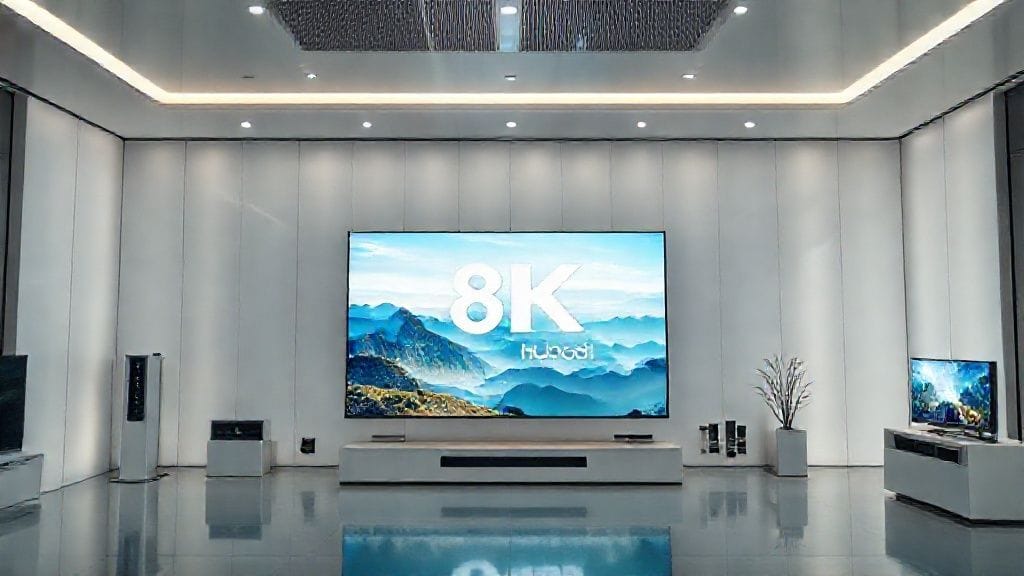
The shimmering glow of the first commercial 8K TV flickered to life in a quiet living room somewhere in Tokyo, 2012. This was not merely a screen lighting up; it was the birth of a new visual frontier. The picture was so vivid, so breath-takingly detailed, it seemed almost a window into reality itself. Spectators, accustomed to the grainy textures of HD and even the emerging 4K standard, were captivated as never before. Every leaf on distant trees, every subtle dew drop, every ripple on a body of water was rendered with astonishing clarity — the kind of clarity that words struggle to capture. But this dazzling display was the culmination of decades of ambition, hardship, and relentless pursuit of perfection in the art of visual technology. Japan, with its rich history of technological innovation, stood at the summit of this new peak, unleashing the world’s first commercial 8K TV and heralding a revolution in home entertainment and broadcasting.
The Dawn of Ultra-High Definition: Japan’s Bold Leap into 8K
While the general public was still acclimating to the crispness of HD and the novelty of 4K, a select group of engineers, scientists, and visionaries in Japan envisioned an image quality far beyond what anyone thought possible. The promise of 8K television was staggering: four times the pixels of 4K and sixteen times that of 1080p Full HD, offering a hyper-realistic viewing experience. But to realize 8K on a commercial scale was no easy feat. It required pushing technology, manufacturing, content creation, and broadcasting to their limits.
This ambition did not arise overnight. Instead, it was rooted in Japan’s unique technological culture, supported by media giants and visionary government policies. In 2012, these efforts coalesced into the world’s first commercial 8K TV, an event as much about national pride as scientific progress.
The Technological Landscape before 8K: A Prelude to Revolution
Before 2012, televisions had undergone a rapid evolution—from bulky cathode ray tubes with fuzzy, low-resolution images to sleek flat panels capable of displaying HD in crisp detail. The market had only recently begun to accept 4K TVs, which promised sharper images and more immersive viewing experiences. Yet, many whispered: what’s next?
The journey to 8K began with incremental steps—better LCD panels, improved screen refresh rates, faster processing chips, and enhanced color capabilities like Wide Color Gamut and High Dynamic Range. But even behind these incremental improvements, engineers dreamed of an image so detailed it could mimic reality itself at a pixel-level resolution.
Origins of the 8K Vision: Who Dreamed Beyond HD?
The conception of 8K dates back to research labs in Japan during the early 2000s, particularly within NHK (Japan Broadcasting Corporation), the country’s public broadcaster. NHK’s Science & Technology Research Laboratories were already advancing 4K broadcasting technologies when the vision for 8K, nicknamed “Super Hi-Vision,” took form. This new standard aimed to push television resolution to cinematic levels — daring to challenge the boundaries of human perception.
This vision wasn’t purely about better images. It was about transforming how stories were told, how culture was experienced, and how technology could inspire awe. The team was inspired by 70mm film quality and wanted to bring that painstaking, subtle beauty into people’s homes.
From Concept to Reality: The Journey of the First Commercial 8K TV
Turning this visionary idea into a commercially viable product was, however, a war of endurance. Battery of trials, failures, and breakthroughs followed. Early prototypes were heavy, expensive, and required special hardware. Issues ranged from producing massive enough data bandwidth to handle 8K signals to designing ultra-high-density LCD panels.
Yet through dogged persistence, innovation blossomed. Collaboration between NHK, Sharp Electronics, and other Japanese technology companies ultimately led to the first commercially available 8K TV unveiled in 2012 — a 85-inch behemoth that dazzled with its 7680 × 4320 pixel resolution.
The Role of NHK and Sharp: Pioneers at the Forefront
NHK’s role extended beyond mere development; it coordinated a whole ecosystem designed to support 8K—from content creation to broadcasting standards. Sharp, renowned for its cutting-edge display technologies, was pivotal in manufacturing the intricate LCD panels capable of housing over 33 million pixels, a feat requiring microscopic precision and advanced fabrication techniques.
Lead engineers often reflected on the unique challenge—the panels had to be not just ultra-high resolution but also lightweight, with high brightness and true color fidelity to truly convince viewers.
Capturing the Impossible: Challenges in 8K Content Creation
The birth of a display capable of 8K resolution was just half the story. To make 8K meaningful, content creators had to grapple with generating 8K footage. Cameras with 8K sensors were scarce, expensive, and unwieldy. Data storage and editing systems struggled under the vast files generated. Filmmakers and broadcasters experimented with new workflows, codecs, and transmission methods.
This was a transformative period for the industry; studios began to see 8K not just as a resolution upgrade but as a new way of storytelling–offering unprecedented immersion and detail.
The 2012 Launch: A Moment Frozen in Time
November 2012 marked the official unveiling of the first commercial 8K TV in Japan. The launch event combined futuristic spectacle with national celebration. Media flooded in to witness the cinematic visuals, reporting on the astonishing sharpness and image depth.
One critic described the experience as “stepping through a portal into another dimension.” Witnesses recall how even the smallest details, like the texture of a person’s skin or the glint of sunlight on a blade of grass, appeared ultra-real.
For Japan, this was a statement of technological leadership—proof of its continued dominance in the electronics and broadcasting sectors.
The Awe of Consumers: First Reactions and Cultural Impact
Yet beyond industry marvel, what mattered most were the viewers. Early adopters were stunned but mixed in reaction—some found the clarity surreal, others struggled with the large screen’s dominance in their living space.
Culturally, the launch resonated deeply. Japan had long been a trailblazer in consumer electronics. The 8K TV symbolized not just progress but a national dream pursued with passion. It sparked conversations on the future of media consumption and redefined expectations around visual quality.
Technical Brilliance: Understanding the 8K Specification and Innovation
To grasp the leap that 8K represented, consider the numbers: 33.2 million pixels in total, resulting in pixel density so fine that the typical viewer could scarcely discern individual points of light from several feet away. It supported a 120 Hz refresh rate, enabling fluid motion with reduced blur.
Innovations were abundant: new video compression algorithms like HEVC (High-Efficiency Video Coding) were essential to transmit 8K content effectively; advanced backlighting systems improved brightness without sacrificing energy efficiency; wider color gamuts and extended dynamic ranges painted images with natural fidelity.
Manufacturing Feats: How Japan Brought 8K into Households
Mass-producing 8K panels was a monumental challenge. Factory lines had to be retrofitted to handle microscopic precision, new testing protocols were devised, and defect rates minimized through automation combined with human craftsmanship.
Japan’s manufacturing culture—where detail and quality reign supreme—proved crucial. It was not just a technological hurdle but a cultural triumph, demonstrating mastery over complexity.
The Price of Cutting-Edge: Economic Implications and Market Response
Despite the technological marvel, the first commercial 8K TVs were prohibitively expensive, often costing tens of thousands of dollars. This price limited access to flagship customers, corporations, and tech enthusiasts.
The market responded cautiously. While aspirational, the 8K TV was not a mass-market product initially. Its price and lack of content presented barriers. Yet manufacturers viewed the launch as an investment in the future—seeding the market for eventual mainstream adoption.
Beyond Resolution: The Pursuit of Perfect Color and Contrast
8K was not just about the number of pixels. It was about creating a living, breathing image. Japan's engineers worked tirelessly to perfect color accuracy and dynamic range, yielding images bursting with lifelike vibrance.
Developments such as OLED technology (organic light-emitting diodes) began blending with 8K aspirations, offering perfect black levels and deep contrast. The result was a picture that transcended technical specifications—an experience evoking an emotional response.
Global Response: How Other Nations Viewed Japan’s 8K Initiative
Internationally, Japan's 8K push was watched with awe and envy. Western manufacturers scrambled to catch up, while broadcasters in countries like South Korea and China began funding their own UHD research.
The launch rekindled a competitive spirit in the global display technology arena, accelerating efforts to develop new standards and compatible devices.
The Ripple Effect on Broadcasting and Media Industry
Broadcasting standards had to evolve in tandem. NHK spearheaded 8K transmissions over satellite and fiber optic networks, demonstrating real-time broadcasting potential.
This pushed broadcasters to innovate on encoding, compression, and transmission protocols. It also highlighted infrastructure gaps, spurring governments and companies worldwide to upgrade.
The Cultural Significance of 8K in Japan’s Technological Identity
Japan has long prided itself on blending tradition and futurism. The 8K TV exemplified this ethos—a reverence for detail and craftsmanship married with relentless innovation.
In Japan, ultra-high definition came to symbolize more than just clarity; it represented precision, attention to nuance, and technological artistry—a mirror of broader national identity.
Lessons Learned: What Worked and What Didn’t in the 2012 Launch
The debut illuminated many insights. Technologically, the promise was undeniable—the dream fulfilled, at least in part. Commercially, the hurdles underscored the need for content availability and infrastructure.
Consumers craved more content and accessible pricing. Manufacturers recognized that technological leadership required patience and consistent ecosystem development.
The Slow Road to Adoption: 8K’s Struggle in a 4K World
While 8K dazzled, the world embraced 4K more readily, given affordability and adequate content availability. For years, 8K remained niche—a symbol of potential more than practicality.
This slow adoption was frustrating yet expected. Technology diffuses not just by superiority but accessibility and ecosystem readiness.
Today’s Legacy: How the First Commercial 8K TV Shaped Modern Displays
Fast forward a decade, 8K has gained footholds in professional fields: medical imaging, design, broadcasting, and a growing consumer base. The groundwork laid by the 2012 launch accelerated development across the board.
Manufacturing techniques and display technologies refined through this effort now influence mainstream products, raising the overall bar for image quality.
The Future of Ultra-High Definition: From 8K to What’s Next?
Even as 8K displays penetrate more markets, eyes already turn to future innovations—16K resolution experiments, holographic displays, and immersive VR/AR.
The journey that began with the first commercial 8K TV was just the opening chapter in humanity’s quest to replicate and enhance reality through technology.
Ethical and Environmental Considerations of Ultra-HD Technologies
Behind the glamour lurk concerns—energy consumption, resource use, and electronic waste pose growing challenges. Balancing innovation with sustainability is an emergent imperative in display technology development.
Japan and other leaders advocate for greener manufacturing and recycling, reminding us progress carries responsibility.
Personal Stories: Early Users and Industry Insiders Reflect
Early adopters recall the excitement mixed with impatience—the difficulty of finding content, adjusting to large screens, and reveling in unprecedented clarity.
Engineers speak of passion and perseverance, the thrill of witnessing pixels come alive beyond expectations—they see their work as a gift to the world.
Conclusion: The Enduring Spirit of Innovation in Display Technology
The first commercial 8K TV was not just a product launch; it was a testament to human vision and resilience. Japan’s daring ambition reshaped the frontier of visual storytelling, inviting audiences to experience reality anew.
Though the path was winding and adoption slow, the 2012 milestone ignited a global passion for ultra-high definition that continues to influence how we see ourselves and our world.
Conclusion
The unveiling of the first commercial 8K TV in Japan in 2012 marked a historic moment—a convergence of artistry, technology, and culture. It embodied the collective dream to transcend existing boundaries and capture reality with unprecedented fidelity. This achievement represented more than just enhanced pixel counts; it resonated with the human desire to connect more deeply with images, stories, and each other.
While 8K adoption has faced obstacles, the spirit of innovation embedded in that first commercial model continues to ripple through the display industry. Through hurdles and triumphs, it reminds us that progress is less a straight line than a sequence of bold leaps, sustained by visionaries willing to explore the extraordinary.
In facing the future—towards even higher definitions and more immersive experiences—the legacy of Japan’s pioneering 8K TV remains a beacon, illuminating the endless quest for visual perfection and the beauty concealed within the smallest details.
FAQs
Q1: What made the first commercial 8K TV in Japan unique compared to previous televisions?
A1: Unlike previous televisions, the first commercial 8K TV showcased a resolution of 7680 × 4320 pixels, making images four times sharper than 4K and sixteen times clearer than Full HD. This allowed unprecedented detail and depth, revolutionizing home viewing.
Q2: Who were the main organizations behind Japan’s 8K TV development?
A2: NHK, Japan’s public broadcaster, and Sharp Electronics were the principal innovators. NHK developed the broadcasting standards and technology, while Sharp manufactured the ultra-high-definition LCD panels.
Q3: Why did it take so long for 8K TVs to become popular after the 2012 launch?
A3: Factors included high costs, lack of abundant 8K content, infrastructure challenges in broadcasting, and the widespread adoption of more affordable 4K TVs. These slowed mainstream 8K adoption despite its technological merits.
Q4: How did the first 8K TV impact Japan’s cultural and technological identity?
A4: The launch reinforced Japan's image as a leader in precision engineering and advanced technology, symbolizing national pride and a commitment to pushing technological boundaries in consumer electronics.
Q5: What were the biggest technical challenges in developing an 8K TV?
A5: Challenges included manufacturing ultra-high-density LCD panels, processing and transmitting enormous data amounts, creating compatible content, and achieving color accuracy and brightness at scale without overwhelming energy consumption.
Q6: How did consumers initially react to the 8K TV's image quality?
A6: Early consumers were often awe-struck by the clarity and detail but sometimes felt overwhelmed by the large screen sizes and limited 8K programming, making it a niche product initially.
Q7: Beyond entertainment, where else has 8K technology found application?
A7: 8K is now used in medical imaging, digital art, precision manufacturing, surveillance, and broadcasting, where extraordinary detail enhances professional accuracy and experience.
Q8: What are the environmental concerns linked to the production and use of 8K TVs?
A8: High energy consumption, manufacturing material requirements, and electronic waste pose challenges. Efforts in sustainable design, recycling programs, and energy-efficient technologies aim to mitigate these impacts.