Table of Contents
- Winter Portents over Fanyang: The Night the Drums Began, 755-12-16
- A Golden Age with Hairline Cracks: The High Tang Before the Storm
- The General from the Frontier: An Lushan’s Rise and the Perils of Favor
- Warnings Unheeded: Court Intrigues, Border Rumors, and the Road to Revolt
- Columns on the Move: From Fanyang to the Central Plain
- Luoyang in Flames: A New Dynasty Proclaimed amid Ashes
- Chang’an Trembles: Tong Pass, Strategy, and a Nation on Edge
- The Flight and the Gallows: Mawei and the Death of a Consort
- Two Thrones, One Empire: Abdication, Suzong, and Divided Authority
- Men of Resolve: Guo Ziyi, Li Guangbi, and the Loyalist Counteroffensive
- Riders from the Steppe: The Uyghurs and the Price of Aid
- Parricide in Luoyang: An Qingxu Moves Against His Father
- The Iron Hand Returns: Shi Siming and the Second Act of Rebellion
- Autumn Recoveries: The Reconquest of Chang’an and Luoyang
- A War of Attrition: Famine, Taxation, and the Vanishing Populace
- North China in Ruins: Cities, Villages, and the Geography of Fear
- The Last Standard: Shi Chaoyi’s Desperation and the War’s End in 763
- When the Roof Collapsed: Tibetans in Chang’an and a Shaken Mandate
- Counting the Cost: Demography, Memory, and the Tang that Emerged
- Aftershocks and Legacies: Eunuchs, Warlords, and the Unraveling of Empire
- Conclusion
- FAQs
- External Resource
- Internal Link
Winter Portents over Fanyang: The Night the Drums Began, 755-12-16
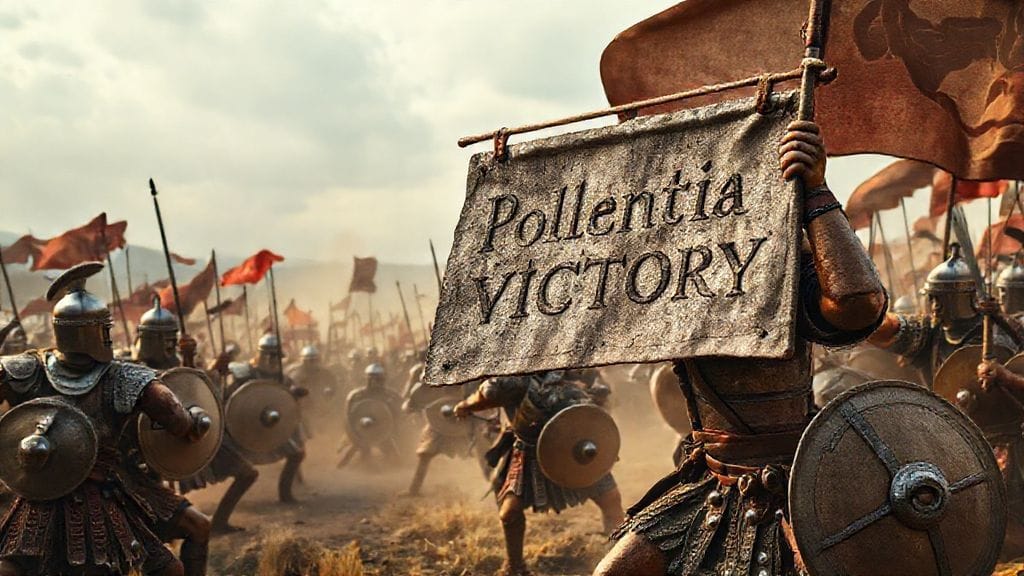
On a frost-bitten night deep in December, the watchtowers of Fanyang beat their drums in a sudden, relentless cadence. Horses snorted clouds of silver into the dark, and runners went from gate to gate, lighting signal fires that turned the sky the color of fresh blood. The date was 755-12-16, and before the city had woken to its ordinary markets, the war had already crossed the threshold: banners were unfurled, proclamations were pinned to walls, and troops who had sworn to guard the frontier began their march southward. People would later speak of that night with a shiver, as though winter itself had torn in two. The an lushan rebellion had begun, and its opening steps sounded like the cracking of the empire’s spine.
There had been unrest before, rumors of coup and counter-coup, but nothing on this scale, nothing so audacious as this frontal challenge to the most dazzling empire of its day. The an lushan rebellion did not arrive with a single shout; it approached in echoing waves, amplified by grievances piled up over years—by the friction of immigrant generals on the steppe frontier, by the sumptuous indulgences of a court that believed its own myths of permanence, by the corrosive rivalries whispered behind lacquered screens. What erupted in Fanyang was at once personal and planetary: the act of a general with too much ambition and too little restraint, and the convulsion of a civilization whose skeleton had been quietly gnawed for decades.
Within hours of the first drums, streets that had been lined with silk and camel trains bristled with spearheads. The ragged breath of conscripts mixed with the iron calm of veterans; provisions were hauled onto carts, wagons creaked, and clerks—pale from sleeplessness—wrote down the names of those who would not return. When the horizon paled, it outlined an army in motion: columns angled south toward the artery of the empire. It was not only a military assault; it was a narrative assault, a claim that the Tang could be unmade. In the cold, people whispered the new name that would haunt their kitchens and fields alike: the an lushan rebellion, the war that would devour the measure of a lifetime.
A Golden Age with Hairline Cracks: The High Tang Before the Storm
In the decades before the first banners of revolt unfurled, the Tang court had cultivated an image so radiant it dazzled its observers. Envoys came from the corners of Asia, poets made the rivers sing, and Chang’an turned its avenues into performance halls for wealth itself. Markets of the Western Capital were catalogs of the world. But this elegant tapestry hid threads that were pulling loose. The state’s equal-field system, the old grid of agrarian fairness, was warping under population pressures and elite accumulation; land slipped from communal patterns into aristocratic pockets. Tax registers thickened with creative evasions; powerful families learned the art of invisibility in the ledgers. The empire’s peripheries—north and northwest—had become a forest of garrisoned power, where jiedushi, regional military commissioners, fused civil and military authority into one clenched fist.
These commissioners, of whom An Lushan became the most famous, were both servants and potential masters of the state. As long as loyalty held, the center’s arrangement was brilliant: frontier threats were met by experienced men, their cohorts drawn from regions they knew intimately. As the center weakened—if it did—the possibility loomed that these men, accustomed to command, might decide the empire was a garment worth tailored to themselves. Meanwhile, the court’s theater grew more ornate. Emperor Xuanzong’s reign had flowed from vigor to indulgence; his treasury collected triumphs and curiosities, his ear grew fond of musicians and courtiers skilled in a softer tongue than the soldiers spoke. Poets like Li Bai drank to the moon; geniuses like Du Fu praised the emperor as though trying to hold back time. The triumph at the edges was seductive; the defeat at Talas in 751 was a quiet bell tolling that even Tang might be mortal. In the shadow of that bell, the an lushan rebellion would find its moment, sharpening its knife on the granite of overconfidence.
The General from the Frontier: An Lushan’s Rise and the Perils of Favor
An Lushan was a frontier creation: part Turkic or Sogdian, part Chinese in his manners when necessary, elastic in his loyalties but magnetic in command. He rose by delivering what the court desired—stability on the rim of the empire—and by making himself indispensable to those whose vanity could be flattered. A practiced performer, he once played the clown before the court, letting his bulk and awkward grace turn the palace into a theater of laughter. The emperor rewarded him; Yang Guifei, the celebrated consort, treated him as a fond curiosity; Yang Guozhong, her cousin and the chancellor, regarded him with a brittle smile that could not conceal envy. An Lushan’s garrisons—Fanyang, Pinglu, Hedong—made a triangle of steel over the northeast, and within that triangle he became an emperor in outline, if not yet in name.
Favor is sweet and dangerous. As his influence grew, so did the fear it inspired. Reports reached the capital, murmuring that the general was training more men than regulation allowed, that supply lines fattened in anticipation of something bigger than defense. But the court was a chorus of conflicting songs. Those who warned of a boiling pot were hushed by those who drank its broth. Xuanzong, aged and tired of remonstrance, kept his affection near and his fear distant. It is astonishing, isn’t it? How often proximity to charm fogs the mind. And so the outline thickened. The an lushan rebellion would one day burst from this border sketch to paint the empire red, but for now, it was a rumor with a heartbeat, a plan rehearsing itself in silence.
Warnings Unheeded: Court Intrigues, Border Rumors, and the Road to Revolt
Courtiers are specialists in the art of delay. Letters describing suspicious troop movements arrived as winter’s chill set in; they were examined, debated, stuffed into sleeves, and re-examined. One could almost hear the shuffle of paper replacing the clank of armor. Yang Guozhong, jealous of An Lushan’s influence in the emperor’s affection, sought to recall and reduce him. In answer, the general sharpened his reply with steel. When events crack open, they sometimes do so along familiar seams: slights become causes, oversight becomes insult, and a letter becomes a casus belli.
The moment the drums began to beat in Fanyang, these intrigues transformed into artillery. The an lushan rebellion did not require a long manifesto to justify itself. It claimed corruption at court, proposed to cleanse the empire, and offered the old trick of rebellion’s rhetoric: that loyalty can only be proven by disloyalty. An Lushan’s proclamations framed his march as a purification, his target the chancellor whom many despised. Yet behind the declarations was a colder arithmetic: the forts and passes were mapped, the supply depots counted, and the road to Luoyang—closer than Chang’an and richer than most kingdoms—became the first prize in a furious race.
Columns on the Move: From Fanyang to the Central Plain
The advance south was both methodical and dramatic. An Lushan’s armies, a patchwork of frontier troops—Khitan, Sogdian, Turk, Chinese—rolled down the corridors of North China like a storm front. Towns that had paid little mind to the court suddenly found themselves weighing their oaths against their survival. Some gates opened for the rebel banners; others shut and prayed. The Grand Canal, ribbons of river and canal that laced the empire together, loomed as both obstacle and prize. Control of the water meant belly and blade—food for the armies, and movement faster than hoofbeats.
Numbers in wartime often distort under the pressure of pride, but thousands became tens of thousands, then became in rumor hundreds of thousands. The defenders scrambled; messages burst like doves from postal stations, their carriers riding the wind. Behind them came families hauling what they could not bear to lose. In these ragged caravans, the an lushan rebellion became more than a headline. It turned into the feel of a child’s hand in a mother’s, into the taste of dust coating the mouth, into the ache of leaving an ancestral grave behind without the rites prescribed by one’s grandparents. The rebellion moved not only across map, but across skin and bone.
Luoyang in Flames: A New Dynasty Proclaimed amid Ashes
Luoyang, the eastern capital, had a splendor of its own—its palaces a double of the Western Capital’s magnificence, its granaries heavy with the harvests of the central plain. The march that reached its gates was a test of wills measured in days not seasons. Once inside, An Lushan performed the ancient ritual of audacity: he took the robes of sovereignty and proclaimed a new dynasty, Yan, one of those old names that still carry thunder. Fires followed proclamations as they so often do; victory’s joy eats quick and burns longer than the parchment it begins on. Scholars were summoned, those who would bend were kept, those who would not were shown the gate or the sword. Officials who had read only poetry now learned the syntax of siege.
In this blaze of triumph, the an lushan rebellion reached its most confident voice. It had taken one capital; the next lay farther west, hidden behind the shield of mountains and passes. Yet the rebels’ foothold was deep. Luoyang was more than symbolic—it was a node in the empire’s nervous system, feeding and feeling for miles. Control Luoyang, and you strangle or irrigate the heartland at will. An Lushan, now Emperor of Yan in his own proclamation, sat in halls where Tang had sat, and gazed down corridors lined with lacquer and history. But this was only the beginning…
Chang’an Trembles: Tong Pass, Strategy, and a Nation on Edge
The road to Chang’an threads through mountains like a dragon’s path. Tong Pass—Tongguan—guards the entrance, a stone jaw that can bite shut if commanded by a skilled hand. Geshu Han, a loyalist general famed for his discipline, commanded the defense. His orders were to hold, hold, and hold again, until strength gathered behind him. But orders drifted in from the capital like leaves in a whirlwind, some urging attack, some caution. Politics is the enemy of strategy; in the council chambers, men fought each other while their soldiers died. When the moment came, the defenders moved too soon, and the rebels too swiftly. The pass fell, and with it, Chang’an felt the cold breath of proximity.
Within the city, panic wore velvet. Courtiers shuffled gold into secret compartments; the less fortunate secured donkeys and hope. The Emperor debated a course history forgives only if the return is glorious: flight. In these weeks, the an lushan rebellion seemed unstoppable not because of its merits alone, but because of Tang’s confusion. The psychological balance of the empire tilted; even the confident found themselves calculating shadows on the walls. In that unstable light, decisions would be made that were colder and more intimate than any official proclamation—decisions that would change the poems of China forever.
The Flight and the Gallows: Mawei and the Death of a Consort
They left Chang’an in a column: the emperor, the beloved Yang Guifei, her powerful cousin Yang Guozhong, attendants, guards, officials, a train so long it seemed to wrap the hills. Dust rose from the caravan like prayer. At Mawei, the army stopped—and the patience of soldiers, who had lost comrades and blamed the court’s corruptions, snapped like a bowstring. A rumor began that Yang Guozhong intended yet another betrayal; his life ended quickly. But the cry did not stop there. The name of Yang Guifei, the woman whose beauty had become a state symbol, passed through the ranks as though drawn by gravity. The emperor, shaking with grief, conceded to their demand. She was led away and strangled near a Buddhist shrine, her body returned wrapped in a cloth. The earth at Mawei remembers, and poets have never forgotten.
It is hard to exaggerate the shock. The an lushan rebellion had turned the empire not only into a battlefield but into a theater; the most dazzling figure in its royal gallery had been pulled from the stage under the harshest lights. Xuanzong held the crown but not its light. In that long night, the way forward would shatter into two paths, neither of them merciful. The court’s flight continued, but the crown’s spirit was already loosening its grip on the old man’s head.
Two Thrones, One Empire: Abdication, Suzong, and Divided Authority
In the wake of Mawei, the empire seemed to move without a center. The crown had fled the capital; the rebels held Luoyang and reached westward. The practicality of survival overtook the romance of permanence. In Sichuan, amidst mountain air that tasted of pine and exile, Xuanzong ceded the throne to the Crown Prince Li Heng, who became Emperor Suzong. The gesture had precedent and yet felt like a confession of age and sorrow. Suddenly the empire had two circles of incense: the old emperor’s presence—a living history—and the new emperor’s authority—sharp, necessary, and impatient.
From his court, Suzong gathered what he could: stalwart generals, desperate provinces, allies by promise or pressure. He had fewer illusions than his father and more appetite for hard bargains. The an lushan rebellion had split the state not only along lines of geography but of generational will. The old Tang had believed itself immortal. The new Tang would survive if it learned to do business with people who did not share its language of silk and ceremony. That meant summoning friends from far fields, their price steep and their manners rough; it meant elevating men who could command loyalty beyond the reach of polite memoranda.
Men of Resolve: Guo Ziyi, Li Guangbi, and the Loyalist Counteroffensive
Guo Ziyi and Li Guangbi became the twin pillars of the counteroffensive, men whose reputations would later swell into legend because their courage had to bridge a chasm. Guo Ziyi was a statesman in armor, his calm a tonic to panicked troops; Li Guangbi, cool and severe, demanded precision and got it. They collected remnants and built them into armies. They trained in the bitter winters of the northwest, where breath crystallizes and resolves likewise. If the early days of the an lushan rebellion had been a demonstration of speed and surprise, the loyalist response became a demonstration of endurance and nerve.
Under these generals, the rebels met a new tempo: careful feints, patient recapture, relentless harassment of supply lines. The loyalists learned from defeat; they learned, too, to lean on unpalatable alliances. Their message to cities in the warpath was simple: hold a little longer; we are coming. That promise was not always kept on time, but when it was, gates opened inward to clasp their hands, and banners new and old flew together for a day of reprieve. The empire began, slowly, to remember how to breathe.
Riders from the Steppe: The Uyghurs and the Price of Aid
The Uyghurs of the steppe were the empire’s neighbors and sometime partners—horse masters whose riders moved like wind-breaking grass, whose khagans understood the arithmetic of power with unsentimental clarity. Suzong sent envoys carrying silk, promises, and marriages—tools as sharp as any spear. The Uyghur cavalry answered, their braids tossing as they smiled at the prospect of loot and leverage. To hire the wind, one must accept its chill. In exchange for their charges on the battlefield, these allies claimed broad rights to trade, to take what victory put within reach, and to marry into imperial bloodlines.
With Uyghur horsemen slamming into rebel flanks, the geometry of the war changed. The an lushan rebellion had sought to monopolize speed; it now had to negotiate with an adversary whose hooves were just as quick. Battles near the capitals ran like script revisions: scenes that had once ended with rebel advantage now bent toward loyalist success. There were costs. Villages in the aftermath endured not only the punishments of rebellion but the appetites of allies whose contracts were honored in both silk and silver. Yet for the empire’s survival, these costs were judged tolerable. The great cities were no longer lost by destiny; they could be seized back by courage and calculation.
Parricide in Luoyang: An Qingxu Moves Against His Father
History is full of sons who inherit their fathers’ enemies more easily than their fathers’ virtues. In Luoyang, a palace lit by lamps that made night behave like day, An Lushan had grown increasingly suspicious and cruel. Illness gnawed at him; rage answered pain’s insults. In 757, his son An Qingxu entered the chamber with the intent that poets avoid describing directly. The blade severed not only a life but a myth. The rebel emperor was dead; his son took the throne of the Yan.
Parricide seldom cleanses. It introduced a new uncertainty into the rebel camp. Loyalty was a sentence that had to be re-spoken; many mouths hesitated. The an lushan rebellion changed tint, darkening into something more brittle. Commanders who had been bound by personal loyalty to An Lushan weighed their options. The schism opened space for the loyalist counteroffensive to breathe deeper and push harder, and for another figure—Shi Siming—to step out of the background’s shadow toward the center of the stage.
The Iron Hand Returns: Shi Siming and the Second Act of Rebellion
Shi Siming had the hard face of a man built for protracted war: patient, ruthless, fluent in the languages of both steppe and city. He had once served alongside An Lushan and owed him much; after An Qingxu’s parricide, Shi Siming owed him nothing. In a fatal dance of alliance and betrayal, he turned his own forces into the engine that would prolong the war by years. He would eventually overwhelm An Qingxu and take command, raising the Yan standard anew, dragging the conflict into a terrible second act that exhaled smoke over already blackened plains.
Under Shi Siming, the an lushan rebellion acquired a colder logic. The oratory was less flamboyant; the iron was the same. Attacks were timed for maximum pressure on loyalist regrouping; the northern plains became a chessboard with fewer pieces and more scorched squares. Cities that had changed hands twice now changed hands a third time; famine that had threatened became fact. Shi Siming’s death at the hands of his son, Shi Chaoyi, would echo the parricide that broke the first rebel court—a family resemblance that would prove fatal to the cause.
Autumn Recoveries: The Reconquest of Chang’an and Luoyang
There are seasons when the earth itself seems to take sides. In 757, with allies at their shoulders and persistence cooling their fever, the loyalists retook Chang’an. The relief was a mist that rose off the streets as citizens emerged from behind shutters to look at their city like a survivor examines a miracle. Guo Ziyi rode through gates that had earlier groaned for the rebels; his presence was both symbol and fact: the Tang had not died. Soon after, Luoyang too was pried from rebel grasp. The capitals, those twin hearts, beat again in the Tang rhythm.
This did not end the war. Rivers run downhill even after you dam them, and rebel currents still rushed across the plains and into Hebei’s fortresses. But the psychological balance shifted decisively. The an lushan rebellion had roared with the strength of inevitability; it now had to grunt with the effort of survival. Families began to creep back to charred foundations, testing the soil with their hands, writing names of the dead onto paper they burned with tears. The empire smiled without showing its teeth; this was victory tempered by memory.
A War of Attrition: Famine, Taxation, and the Vanishing Populace
War’s most ruthless general is not a man but hunger. As the conflict stretched into years, granaries were emptied, fields lay fallow, and irrigation ditches became trenches for children’s games because there were no crops to water. The state, starved for revenue, turned to new methods. The salt monopoly, engineered under Suzong’s ministers such as Liu Yan, drew silver from necessity’s most basic commodity. Caravans that once carried luxuries now carried survival’s units. It was a brilliant, grim innovation that would outlast the war and shape the economy for centuries.
Censuses, those dry portraits of a living people, tell stories in their silences. Before the an lushan rebellion, records spoke of a population above fifty million souls; after, the numbers recorded fell catastrophically. Historians debate the precise math—how much was death, how much flight, how much tax-evasion invisibility—but no arithmetic can soften the lived truth: villages with half their doors never opened again, lineages with their branches charred off, fields surrendered to scrub and thorn. The Tang that would emerge would never again be as dense in the north; its weight would shift southward, toward the wetter, greener paddies beyond the Yangtze.
North China in Ruins: Cities, Villages, and the Geography of Fear
Imagine a map covered in ink where the strokes are not rivers but burn scars. From Hebei to Henan, from the great arteries to the small rural capillaries, the land bore the marks of armies’ footsteps. City walls collapsed and were rebuilt with rubble from their own temples. Statues wore new faces of soot. At night, the countryside learned to move without sound. Families wrapped their possessions in cloth and buried them beneath kitchen floors; children learned secret paths along irrigation canals. When armies approached, smoke rose from fields not as signal but as sacrifice—better to deny the enemy food than to feed their own tombs.
The an lushan rebellion taught North China a lesson it would recite in generations to come: that politics is not an abstraction but a weather pattern you feel on your cheeks when you step outside. Inns that once hosted scholars and traders now tallied soldiers and refugees; dialects mingled in sorrow. Yet in the husks of cities, life insisted on itself. Markets returned, first with weeds in their stalls, then with produce. The will to live is a stubborn barterer; even fear eventually accepts its rate of exchange.
The Last Standard: Shi Chaoyi’s Desperation and the War’s End in 763
Shi Chaoyi, who took the rebel mantle after killing his father Shi Siming, inherited a cause already unwinding. He was capable and resolute, but the engine he drove was out of fuel. Fortresses in Hebei might have remained loyal not to ideals but to the men who commanded them; those men aged, died, or recalculated their chances. Loyalist offensives chipped away; the steppe allies, their contracts fulfilled, looked elsewhere for profit. In the last months, Shi Chaoyi’s proclamations took on the rhythm of a man shouting into the wind, his standards snapping above fewer and fewer faces.
When at last the roof collapsed and the cause could not be stitched together, Shi Chaoyi chose an ending that matched the rebellion’s merciless logic: he took his own life rather than face capture. With that, the an lushan rebellion, which had begun in a blaze of winter drums, ended in a quieter, no less terrible hush. Rebels, loyalists, civilians—so many had been turned into ash and story. The official annals closed the campaign; the people’s memory did not.
When the Roof Collapsed: Tibetans in Chang’an and a Shaken Mandate
Before the wounds had knit, another shock arrived. In 763, Tibetan forces seized Chang’an for a brief, humiliating interlude. The spectacle was worse than a military disaster; it was a ritual affront. Foreign troops trampling through the imperial precincts after the long ache of internal war made the dynasty’s Mandate appear a banner pierced by too many arrows. The court fled again, and the citizens of Chang’an learned the art of endurance anew. The lesson could not be clearer: the world had watched Tang bleed; now the world tested Tang’s pulse.
This occupation did not last, but its imprint did. The an lushan rebellion had already shattered the illusion that the center could steer every wheel; the Tibetan seizure confirmed that even the city that named itself a long peace could be made to swallow humiliation. In response, the court doubled its reliance on forces it could trust—eunuch commanders within the palace, regional warlords without—and that reliance carried its own poisons into the bloodstream of governance.
Counting the Cost: Demography, Memory, and the Tang that Emerged
The visible ruins of war eventually become foundations for new houses. The invisible ruins—numbers in a ledger, names missing at festivals, stuttered genealogies—linger. The census shrinkage after the rebellion, from a recorded height suggesting tens of millions to a drastically lower count, is a haunting statistic and a cautionary tale. Scholars today read these records with a double lens: understanding that tax registers omit the hidden, but also acknowledging that behind every omission lies a story of avoidance born of pain. The demographic center of gravity slid southward, where fields glistened with rice paddies and towns thrummed with trade less haunted by cavalry hoofbeats.
Culturally, the empire’s poetry grew a new bone of sadness. Du Fu’s verses scattered like leaves across the battlefields of memory, catching on the barbed wire of experience; Li Bai’s lyrics, once buoyant, acquired a shadow. Pain deepened the language. Institutions, too, were altered. The equal-field system, already under strain, could not be resuscitated in the north; substitutes and workarounds became permanent. The salt monopoly, born of necessity, turned into a pillar that fed central revenues in a post-crisis order. The an lushan rebellion had re-written statecraft, whether the scribes liked the new characters or not.
Aftershocks and Legacies: Eunuchs, Warlords, and the Unraveling of Empire
Survival can demand bargains that later look like curses. After the rebellion, the court leaned ever more heavily on eunuchs, whose intimate position within palace walls gave them control over imperial communications and, increasingly, armies. Their influence would twist policy and succession; their names would be feared by ministers whose pens could not countermand a general’s sword dispatched with a whispered order. Beyond the capital, jiedushi in Hebei and beyond entrenched themselves as near-sovereigns, their loyalty a matter of negotiation rather than conviction. The empire persisted, yes, but as a quilt of powers stitched together by custom and necessity rather than a single unbroken cloth.
In that patchwork, later discontents found easy seams to pry. The fractioning of authority encouraged local tyrannies, and when new rebellions came—as they did with the late Tang’s lurching toward the Five Dynasties—one could trace their genealogy back to the arrangements normalized after the war begun in 755. It is not exaggeration to say that the an lushan rebellion began a slow unraveling whose threads ran forward for centuries. It taught the bitter lesson that once warlords learn they can survive as empires unto themselves, persuading them to surrender their crowns to an abstract center becomes a work of generations, not years.
Conclusion
The night the drums sounded over Fanyang was the first page of a chapter that would redraw the Chinese world. The an lushan rebellion started as a frontier general’s gamble and widened into a civilizational bruise that touched every household from the Yellow River’s loops to the markets of the Yangtze. We can map its battles, recite its dates, and name its actors, but the truest measure lies in the ordinary lives it re-scripted—the farmers who traded plows for bundles and roads, the shopkeepers who learned to count soldiers as carefully as coins, the poets who rewrote the bounds of sorrow. It turned emperors into exiles and allies into demanding creditors. It reshaped the economy around salt and the bureaucracy around what could be enforced rather than what could be imagined.
In the end, the Tang survived, but it was a different animal—leaner in the north, more dependent on informal power, more suspicious of its own shadows. The rebellion taught that splendor can be a thin patina over frailty, and that political strength must be renewed by discipline rather than flattered by praise. It showed that geography is a protagonist in Chinese history: passes and rivers deciding fates as much as verses and edicts. The prayer of those who rebuilt after 763 was simple and enormous: that their children would inherit a peace not only declared in capitals but lived in kitchens. Whether that prayer was answered depends on which village’s story you read. What the chronicles confirm is this: once named, the an lushan rebellion could never be forgotten. It remains a caution engraved on the empire’s memory, the sound of winter drums echoing in the halls of every state that believes itself immune to the faults of its own success.
FAQs
- When did the An Lushan Rebellion begin?
It began on 755-12-16, when An Lushan launched his uprising from Fanyang in the northeast, setting in motion a war that would last until 763. - Who were the key figures on both sides?
Rebels included An Lushan, his son An Qingxu, and later Shi Siming and Shi Chaoyi. The Tang loyalists featured Emperor Xuanzong, Emperor Suzong, generals Geshu Han, Guo Ziyi, and Li Guangbi, as well as crucial allies like the Uyghurs. - Why did the rebellion happen?
Multiple forces converged: the rise of powerful regional military governors (jiedushi), court factionalism involving figures like Yang Guozhong, strains on the agrarian and tax systems, and An Lushan’s personal ambition. Long-term frontier militarization made a large-scale uprising feasible. - What was the role of the Uyghurs?
They provided decisive cavalry support to the Tang, helping retake Chang’an and Luoyang. In return, they received trade privileges, marital alliances, and opportunities for post-battle plunder, evidencing the steep price of foreign aid. - How devastating was the rebellion?
Profoundly. Recorded populations in tax registers dropped dramatically afterward. While undercounting and flight complicate exact numbers, the war produced mass death, displacement, economic disruption, and a long-term shift of population and wealth toward the south. - Did the Tang dynasty recover?
Yes, but in altered form. The court became more reliant on eunuch commanders and tolerated powerful regional warlords, undermining centralized authority and setting patterns that contributed to later instability. - How did the rebellion end?
After internal fractures—An Lushan’s assassination, Shi Siming’s rise and death, and Shi Chaoyi’s final defeat—the rebel cause collapsed. Shi Chaoyi died by suicide in 763 as loyalist forces reasserted control and the war exhausted itself. - What cultural impacts did it have?
It deepened the tone of Tang literature, especially in the works of Du Fu, and reshaped administrative and fiscal policy, notably with the salt monopoly. The trauma is reflected in poetry and prose that blend mourning with endurance. - What is meant by jiedushi, and why did they matter?
Jiedushi were regional military governors combining civil and military powers. Their rise created a lattice of semi-autonomous strongmen; their entrenched authority made both the an lushan rebellion possible and later governance more fragmented. - Is there a single lesson historians draw from the rebellion?
One enduring lesson is that concentration of military power in regional hands, combined with court factionalism and economic fragility, can turn a brilliant golden age into a theater of catastrophe within a single winter’s night.