Table of Contents
- A River in Autumn: Setting the Stage at Rhyndacus, 1211
- From Empire to Exile: The Rise and Ruin of Theodore Laskaris
- The Latin Conquerors: Henry of Flanders and the Shadow of 1204
- Bithynia in Turmoil: Peoples, Faiths, and a Fractured Landscape
- War Without a Capital: The Birth of the Empire of Nicaea
- Road to the River: Marches, Ambushes, and a Calculated Gamble
- The Morning of Steel: Armies Gathering on the Rhyndacus
- Clash by the Water: How the Battle of the Rhyndacus Unfolded
- Blood and Surrender: Captives, Casualties, and the Human Toll
- Winners Without Peace: The Latin Empire After Victory
- A Defeat that Saved a Dynasty: Nicaea’s Recovery and Resolve
- Diplomacy and Oaths: The Treaty that Followed the Rhyndacus
- Voices from the Chronicles: How Medieval Writers Remembered the Battle
- Everyday Lives in the Shadow of War: Farmers, Monks, and Merchants
- From Riverbank Skirmish to Imperial Turning Point: Strategic Legacies
- Echoes Through Centuries: From Rhyndacus to the Fall and Restoration of Constantinople
- Memory, Myth, and Modern Historians: Interpreting Rhyndacus Today
- Conclusion
- FAQs
- External Resource
- Internal Link
Article Summary: On 15 October 1211, amid the shattered remains of the old Byzantine world, the battle of the rhyndacus set Latin crusader knights against the fledgling Empire of Nicaea along a quiet river in northwestern Anatolia. This article traces how a seemingly local clash over forts and frontier roads became a critical moment in the struggle for the legacy of Constantinople. We follow Theodore I Laskaris, an emperor without a capital, and Henry of Flanders, the cautious but capable Latin ruler, as they maneuver toward confrontation. Through narrative reconstruction, eyewitness echoes, and modern analysis, we explore the military tactics, political stakes, and human suffering that defined the battle of the rhyndacus. The story moves from the dusty roads of Bithynia to the negotiating tables where surrenders, marriages, and oaths redrew borders without a single sword stroke. Along the way, we see how villagers, monks, and merchants lived with the consequences of decisions made by distant rulers. Finally, the article considers how the battle of the rhyndacus, though overshadowed by larger events, helped shape the survival of Nicaea and the fate of the Latin Empire. It argues that this riverbank engagement was both a Latin triumph and the quiet beginning of Latin decline in the Greek East.
A River in Autumn: Setting the Stage at Rhyndacus, 1211
The Rhyndacus River, winding through the rolling hills and fertile plains of northwestern Anatolia, did not look like a place where empires would collide. In mid-October 1211, its banks were already touched by autumn. Poplars and willows leaned over the water, their leaves yellowing, drifting into eddies that would carry them downstream toward the Sea of Marmara. The air was cool in the early mornings, damp with mist that rose from the river’s surface, veiling the world in a pale gray curtain before the sun burned through. Yet beneath this quiet surface, entire political worlds were converging—Latin crusaders from the west and Greek soldiers from the east, both laying claim to the same imperial inheritance.
On one side stood the men of the Latin Empire of Constantinople, formed barely seven years earlier in the violent seizure of the Byzantine capital during the Fourth Crusade in 1204. Many of them were veterans of countless campaigns—knights from Flanders, Champagne, and northern Italy—accustomed to the crash of lances and the weight of mail hauberks. Their ruler, Henry of Flanders, had learned the bitter arithmetic of ruling a patchwork empire on foreign soil. On the other side gathered the forces of Theodore I Laskaris, the man who refused to accept that Byzantium had died with the fall of Constantinople. In the wake of catastrophe, he had crossed these very lands, forging a new power centered on Nicaea and claiming to be the legitimate Roman emperor in exile.
It was along this river, the Rhyndacus, that their ambitions would meet. The battle of the Rhyndacus was not fought for glory alone, but for control over Bithynia—a region that was more than just a stretch of land on a map. It was the hinge between Europe and Asia, between Constantinople and the Anatolian heartlands, the road that connected the shattered Greek communities of the interior with the Latin-dominated coasts. At stake were fortresses, trade routes, and the loyalty of local villages whose inhabitants had already seen too many banners pass by and too many soldiers trample their fields.
On the eve of the battle, the tension in the Latin camp must have been palpable. Campfires glowed along the riverbank, casting flickering orange halos on helmets stacked in neat rows. Horses shifted and snorted, their breath pluming in the cool air as squires brushed dust and dried sweat from their coats. Farther away, Nicaean scouts watched from the tree line, crouching in the undergrowth, counting standards, listening for the echoes of foreign tongues. The night was filled with distant sounds—the clatter of armor, the murmur of Latin prayers, the low, rhythmic chant of Greek soldiers invoking Christ and the saints.
And yet, despite the immediacy of the coming clash, the battle of the Rhyndacus was also the tip of a much larger iceberg of history. To understand why Henry of Flanders and Theodore Laskaris were here at all—why a Latin emperor and a Greek emperor would face each other beside a provincial river instead of amid the marble forums of Constantinople—we must step back several years, into the flames and horrors of 1204, when the old Byzantine order was torn apart and scattered like ashes on the wind.
From Empire to Exile: The Rise and Ruin of Theodore Laskaris
Before he was the beleaguered emperor of Nicaea, Theodore I Laskaris had been a noble of the Byzantine court, a man moving through the polished halls and golden mosaics of Constantinople rather than along muddy rivers and makeshift camps. Born into a prominent family in the late twelfth century, Theodore came of age under the last dynasties of the old Eastern Roman Empire. He married Anna, a daughter of the emperor Alexios III Angelos, entwining his personal fate with that of a decaying yet still magnificent imperial machine.
The Byzantium of Theodore’s youth was an empire fraying at the edges. Powerful aristocratic clans dominated provincial politics, tax revenues slipped, and the once-formidable army was increasingly reliant on mercenaries. To the west loomed the Latin kingdoms and restless crusader states; to the east, the Seljuk Turks probed and pressured the Byzantine frontiers. Yet for all its weaknesses, Constantinople remained the greatest city of Christendom—rich, cosmopolitan, and, as many believed, invincible.
The year 1204 shattered that illusion. The Fourth Crusade, diverted from its original goal of the Holy Land by a tangle of Venetian interests, dynastic disputes, and unpaid debts, turned its weapons against Constantinople itself. In April of that year, after a brutal siege, Latin crusaders stormed the city. Smoke plumes rose from churches and palaces, and the air thickened with the acrid stench of burning wood and melted gilding. Chroniclers describe scenes of shocking sacrilege: horses stabled in sacred spaces, icons torn and trampled, treasures accumulated over centuries carried off in rough crusader hands.
For Theodore Laskaris, this was both a personal and political catastrophe. His father-in-law, Alexios III, fled; the city’s defenders were scattered; and the ancient empire whose prestige had shaped his entire life was reduced overnight to a plundered prize of western knights. Somehow, amid the chaos, Theodore escaped the city. Later accounts suggest that he gathered together a small band of loyal followers and made his way across the Sea of Marmara into Asia Minor, into Bithynia—the same region where the battle of the Rhyndacus would take place seven years later.
Exile can crush a man or strip him down to his essential will. For Theodore, it seems to have done the latter. In the towns and villages of Bithynia, he found others unwilling to accept that the empire was dead: displaced officials, clergy, soldiers, and civilians who had fled the Latin takeover. At first, his position was tenuous. He controlled little more than a cluster of strongholds and had few troops. Yet in the absence of any stronger claimant, and with the old imperial capital in foreign hands, he began to style himself as the defender of Roman continuity.
Nicaea, a city with an illustrious Christian past—the site of the First Ecumenical Council in 325—soon became his center of power. There, amid its stout walls and venerable churches, Theodore forged a new court. Bishops who refused to accept the Latin patriarch in Constantinople rallied to him. Local landowners gradually acknowledged his authority. Sometime around 1206–1208, he assumed the imperial title, becoming Theodore I Laskaris, emperor of the Romans in exile. In a symbolic sense, the empire had moved across the water, transplanting its legitimacy to an Anatolian fortress-city.
But legitimacy alone could not fend off enemies. Theodore was hemmed in on multiple sides: the Latin Empire controlled Constantinople and much of Thrace; in western Anatolia, Latin lords and Venetian interests nibbled at coastal towns; and to the east, the Sultanate of Rum watched warily, ready to exploit any weakness. To survive, Theodore needed not only men and money but also a defining victory—or at least a way to prevent decisive defeat. This calculus would eventually lead him to the banks of the Rhyndacus River in 1211, facing a Latin army that had every reason to believe it could crush him.
The Latin Conquerors: Henry of Flanders and the Shadow of 1204
While Theodore Laskaris was stitching together an empire in refuge, Henry of Flanders was grappling with a very different burden: how to rule a spoils-won kingdom built on shattered marble and lingering resentment. Henry had arrived in the eastern Mediterranean as part of the Fourth Crusade, a younger son of a Flemish noble family, not originally destined for a crown. Yet the sudden collapse of Constantinople and the death or departure of many senior crusaders thrust him into prominence.
In the chaotic months following the sack of 1204, the crusaders and Venetians carved up the Byzantine Empire according to the terms of the so-called Partitio Romaniae, an agreement that parceled out cities, islands, and provinces like pieces on a gaming board. A Latin emperor was chosen—Baldwin of Flanders, Henry’s older brother. But the coronation glory in Hagia Sophia, once the spiritual heart of the Orthodox world, masked a far bleaker reality. The new Latin Empire had overextended itself almost from the outset, claiming lands it lacked the manpower to hold securely.
When Baldwin was captured in 1205 by the Bulgarians at the catastrophic battle of Adrianople and later died in captivity, the fragile new order teetered. Henry, who had shown both bravery and level-headedness in earlier campaigns, was elected as his successor. He became emperor in a city still haunted by the memory of its conquest. Latin churches and institutions rose under his patronage, but the majority of the population remained Greek, nursing anger and humiliation. Henry’s task was twofold: keep his Latin barons in line and prevent the surrounding powers—Bulgarians, Greeks, and Turks—from erasing what the crusade had created.
Unlike some of his fellow crusader lords, Henry of Flanders was not merely a plunderer. Contemporary chroniclers, even some hostile Greek sources, concede that he was comparatively moderate and pragmatic. He curbed excesses where he could, tried to negotiate with Greek elites, and occasionally showed respect for local customs. But his moderation did not mean passivity. He understood that an empire born in violence could be extinguished just as quickly if it appeared weak. Every neighboring Greek polity that claimed to be the “true” Byzantium—whether in Epirus, Trebizond, or Nicaea—posed an existential challenge to his legitimacy.
In Asia Minor, Latin presence was patchier than in Thrace and around Constantinople. A scattering of strongholds, particularly along the coasts and key roads, were held by Latin garrisons. These outposts acted as both defensive bulwarks and bases for expansion deeper into the interior. From the Latin perspective, Theodore Laskaris’s Nicaean regime was an upstart pretender defying the rightful Latin emperor. From the Nicaean perspective, the Latins were foreign occupiers desecrating a sacred inheritance.
By the late 1200s decade, Henry had achieved some notable successes—stabilizing the Balkans front, securing alliances, and winning limited campaigns against rebellious vassals. But Asia Minor remained unsettled. Reports reached Constantinople of Nicaean raids, defections of local Greek lords to Theodore, and fragile Latin positions under pressure. Always the strategist, Henry recognized that he could not allow the Nicaean state to grow unchallenged. A showcase campaign across the Sea of Marmara, aimed at battering Nicaea’s nerve center and securing key fortresses, promised both military benefit and political prestige.
Thus the path that led Henry to the battle of the Rhyndacus began with political calculation as much as with ideology. To secure the Latin Empire, he needed to demonstrate that Latin arms could prevail not only against Bulgarians and rogue barons but also against this determined Greek emperor in exile. The Rhyndacus would be his proving ground.
Bithynia in Turmoil: Peoples, Faiths, and a Fractured Landscape
To understand the peculiar intensity of the battle of the Rhyndacus, one must imagine Bithynia not as an empty battlefield but as a living landscape deeply scarred by recent upheaval. In the early thirteenth century, this region, stretching from the eastern shores of the Sea of Marmara into the interior plateaus, was a crossroads of cultures and faiths. Greek-speaking farmers tilled fields their ancestors had worked for centuries, sowing wheat and barley, tending vineyards and olive groves. Armenian merchants moved goods between inland markets and coastal ports. A few Latin settlers had begun to appear, tied to the new power in Constantinople, while Turkish raiders occasionally slipped across the frontiers from the east.
Villages clustered around small churches, where priests officiated in Greek, chanting familiar liturgies that tied the present to a long Christian past. Monasteries perched on hillsides or nestled in wooded valleys, offering spiritual solace and, at times, physical refuge. These communities had survived earlier wars and invasions, yet nothing in local memory compared to the shock of 1204 and its aftermath. News of the sack of Constantinople traveled here slowly at first—rumors carried by frightened travelers, stories of altars stripped of gold, relics stolen, and the imperial palace violated. For many, the fall of the capital was not just a political disaster but a cosmic dislocation. If the Queen of Cities could fall, what was safe?
Then the armies began to move. Latin detachments dispatched from Constantinople took over strategic towns and forts near the coasts, asserting their claims in the name of Baldwin and then Henry. Some local elites chose cooperation, calculating that accommodation with the new Latin masters was preferable to ruin. Others quietly resisted, sending word to men like Theodore Laskaris who promised the restoration of Greek rule. The result was a patchwork of loyalties. A fortress garrisoned by Latins might sit only a day’s march from a village that housed Nicaean sympathizers or even Nicaean agents.
For ordinary people, this meant a life of constant uncertainty. Harvest time could be interrupted by the sudden appearance of armed riders demanding supplies or conscripting laborers to repair roads and ramparts. Churches could be requisitioned as supply depots. Stories circulated of monasteries looted, either by undisciplined Latin troops or by opportunistic bandits who took advantage of the confusion and were then blamed on the foreigners. Taxes might be claimed twice—once in the name of the Latin emperor in Constantinople, once in the name of Theodore Laskaris in Nicaea. Choosing wrong in this tense environment could mean the difference between survival and execution.
Religious tension deepened the political fractures. The Latin church hierarchy installed in Constantinople insisted on papal supremacy and Latin rites, while the Orthodox clergy, loyal by tradition and theology to their own patriarch and traditions, saw this as an affront to the true faith. In Bithynia, many bishops and monks turned instinctively toward Theodore, whose regime protected Orthodox institutions and framed its struggle as a defense of true Christianity against foreign encroachment. The battle lines that would converge at the Rhyndacus River were thus also confessional lines, even if the daily reality was more messy and pragmatic than any simple “Latins versus Greeks” narrative allows.
By 1211, the people of Bithynia had lived for years under this strain. Children had grown up knowing nothing but confusion—new rulers, new taxes, and the constant fear of war. When both Henry’s Latin army and Theodore’s Nicaean forces began to maneuver in the region, seizing roads and probing frontiers, villagers would once again have seen soldiers on the march, dust clouds on the horizon, and long columns of pack animals groaning under the weight of war. The Rhyndacus, once merely a ribbon of water linking communities, became a line of potential confrontation, a place where all these tensions might erupt into a pitched battle.
War Without a Capital: The Birth of the Empire of Nicaea
The Empire of Nicaea was born out of absence—out of the gaping void left by the loss of Constantinople. It is astonishing, isn’t it, that an empire once defined above all by its capital could continue to claim existence without that city? Yet this is precisely what Theodore Laskaris attempted. To his supporters, Nicaea was not merely a provincial stronghold but the beating heart of a continued Roman polity, the guardian of a tradition that stretched back to Constantine the Great and beyond.
Building such a state demanded a mixture of improvisation and calculated symbolism. Theodore gathered around him displaced officials from the old imperial bureaucracy, men who knew how to keep records, levy taxes, and administer justice. He restored or confirmed the privileges of monasteries and church institutions, ensuring their loyalty. He sought the support of local magnates whose cooperation was essential for controlling the countryside. Like the emperors before him, he held audiences, received petitions, and presided over ceremonies that mimicked the lost splendor of Constantinople’s court, even if the surroundings were more modest.
Crucially, Theodore also secured ecclesiastical backing. In the Byzantine world, imperial and religious legitimacy were intertwined. After the Latins imposed a Latin patriarch in Constantinople, many Orthodox bishops refused to recognize his authority. The Nicaean court became their refuge. Eventually, a new Orthodox patriarch took up residence in Nicaea, transforming the city into not just a political but also a spiritual counter-capital. This move sent a message to all Greek Christians still living under Latin rule: the true church, and thus the true empire, had migrated eastward.
But the Nicaean state, for all its ideological ambition, remained militarily vulnerable. Its territory was fragmented, especially in the early years. From their bases, Latin forces could strike across the Sea of Marmara. Turkish raiders loomed from the interior. Some towns and fortresses changed hands multiple times. Theodore’s armies were composed of a mixture of professional soldiers, local levies, and mercenaries, none of whom he could afford to waste in reckless engagements.
This led to a defensive strategy that combined careful fortification with selective offensives. Rather than attempting to reconquer Constantinople immediately—an impossible dream given his limited resources—Theodore focused on consolidating his hold over western Anatolia, building a compact, defensible core. Control of Bithynia, and especially key river crossings and passes such as those near the Rhyndacus, was central to this effort. If he could deny the Latins a foothold here, he could gradually push them back toward the shore and perhaps one day across the water altogether.
By 1211, Nicaea was no longer a fragile improvisation but a recognized power. Diplomacy with neighboring states, including the Sultanate of Rum, brought temporary truces or alliances of convenience. Marriage politics—an essential Byzantine tool—helped bind potential rivals. Yet Theodore still faced a stark reality: until he could demonstrate that his military could stand toe-to-toe with the Latin knights that had taken Constantinople, his claim to be Rome’s true heir remained incomplete. The battle of the Rhyndacus, in this sense, was not only about territory; it was about testing whether an empire without a capital could confront the empire that held its lost heart.
Road to the River: Marches, Ambushes, and a Calculated Gamble
The road to the Rhyndacus was paved with skirmishes, ambushes, and anxious calculations on both sides. Neither Henry of Flanders nor Theodore Laskaris woke up one morning and simply decided to fight a decisive battle along a remote riverbank. Their armies edged toward one another through moves that, in hindsight, seem to converge almost inevitably on that October clash, but at the time must have felt risky and contingent.
Latin chroniclers describe Henry’s 1211 campaign as a determined effort to bring order to a chaotic frontier. Setting out from Constantinople, likely in late summer or early autumn, his forces crossed the Sea of Marmara in ships that hugged the familiar coasts where Latin garrisons stood watch. Once on Asiatic soil, they began to move inland, linking up with outposts that had long felt exposed and isolated. In each fortified town, Henry’s presence would have been a visible sign that the Latin emperor had not forgotten them.
His army was not enormous, but it was formidable by the standards of the region. It consisted of heavily armored knights and sergeants, infantry drawn from various western traditions, and perhaps some local auxiliaries. Their tactical core was the Latin cavalry charge—a shock weapon that had already broken many armies in Europe and the Levant. Henry knew that in open terrain, with sufficient room to gather speed, his mounted men could pulverize almost any opposition. The challenge lay in drawing the Nicaeans into such a fight on ground of his choosing.
Theodore, for his part, was initially wary of direct confrontation. Only months earlier, in the same turbulent year of 1211, he had fought a desperate and bloody battle against the Seljuk Turks at Antioch on the Meander. That engagement, though ultimately a Nicaean victory, had come at terrible cost. The Sultan Kaykhusraw I was killed, but so were many of Theodore’s own soldiers. His army, though battle-hardened, had been bled. To risk another major campaign so soon, this time against the feared Latin knights, bordered on reckless.
Yet Theodore could not simply allow Henry to roam freely through Bithynia. Each fortress that acknowledged Latin overlordship threatened to unravel years of painstaking Nicaean consolidation. Scouts and spies brought him word of Latin movements: columns marching along river valleys, small detachments probing into contested zones. To do nothing would be to concede the initiative and possibly watch key outposts fall, one by one.
Thus Theodore chose a middle path, shadowing the Latin advance, harassing its fringes, and seeking favorable ground. There are hints in the sources of ambushes along narrow roads, of small clashes near bridges or river fords, of night raids on foraging parties. These actions served a double purpose: they slowed the Latin advance and, perhaps more importantly, tested the morale and capabilities of his own troops against Latin armor and tactics.
Somewhere in these maneuvers, the Rhyndacus River emerged as the gravitational center of the campaign. It was not merely a natural barrier but a logistical artery. Control of its crossings meant control over movement between different sectors of Bithynia. At some point—likely as Henry sought to secure or relieve a specific cluster of forts in the area—the two armies found their movements increasingly constrained. Retreat would have meant loss of face and strategic setback for either side. Negotiation was unlikely; too much ideology and pride had already been invested in the contest between Latin and Nicaean claims.
Henry, who had gained a reputation as cautious yet decisive, seems to have sensed an opportunity. If he could catch Theodore’s forces in the open somewhere near the Rhyndacus, he might deal a crippling blow to Nicaea in Asia Minor, stabilizing his eastern frontier for years to come. Theodore, perhaps hoping to avoid full-scale battle but unwilling to abandon the region, edged closer. The gamble both men were taking grew larger with each passing day of marching, each order given to scouts and captains. The battle of the Rhyndacus was coming into focus, even if its precise hour and outcome remained shrouded in the uncertainties of marching armies and autumn weather.
The Morning of Steel: Armies Gathering on the Rhyndacus
The day of the battle of the Rhyndacus dawned, we must imagine, cold and damp. The river, flowing steadily between its banks, reflected a sky still streaked with predawn gray. In the Latin camp, trumpets and shouted commands broke the quiet. Men stirred from under woolen cloaks, their breath visible in the chill air. Fires that had smoldered through the night were coaxed back into life to reheat porridge or ale. Armourers made last-minute checks, tightening straps, inspecting rivets, making sure every piece of mail and plate would hold under impact.
Henry of Flanders would have risen early, surrounded by his household knights and counselors. Perhaps he stepped outside his tent to gauge the morning, to look toward the lines where his men were gathering. Contemporary warfare manuals emphasize the importance of timing and formation; Henry, experienced now in the arts of battle, would pay close attention to the terrain. He wanted open ground for his cavalry, enough space to launch a decisive charge. Fields near the river, if not too soft from recent rains, offered such possibilities. The river itself was both a shield and a trap: useful for anchoring a flank, deadly if panic drove men into its waters.
Across the way, Theodore’s camp was similarly stirring. For the Nicaeans, the morning must have been edged with apprehension. Many had already faced death earlier that year against the Seljuks; their scars were fresh, their memories vivid. Now they were to meet a different enemy—Latin knights whose exploits had been the stuff of bitter stories ever since the sack of Constantinople. Theodore’s standard, perhaps bearing the imperial double-headed eagle, would be raised high to remind his men who they were fighting for and what was at stake.
The Nicaean army was more mixed than its Latin counterpart. It likely included trained tagmatic troops—the remnants of the Byzantine professional soldiers—as well as thematic levies from the provinces. Light infantry, archers, and perhaps some cavalry drawn from local magnates’ retinues complemented the core. Compared to the Latin host, it was less homogenous in equipment and training, but more accustomed to the varied terrain and the flexible, sometimes evasive tactics necessary for surviving between Latins and Turks.
Before lines formed, there would have been moments of solemnity. Priests and chaplains moved among the ranks, offering blessings. On the Latin side, crucifixes were raised, and prayers in Latin invoked Christ, the Virgin, and saints familiar to western ears. On the Nicaean side, priests in dark robes swung censers of incense, making the sign of the cross over soldiers who knelt briefly in the damp grass. The shared Christian faith of both armies stood in painful contrast to the reality that they were about to kill one another in Christ’s name.
By midmorning, the two forces were likely drawn up in view of one another. Standards fluttered in the breeze. Armor glinted whenever the still pale sun broke through the thinning clouds. Each side tried to project confidence, but the fear that precedes every medieval battle—where outcomes could hinge on a single broken formation or a sudden panic—would have been present in every heartbeat. The Rhyndacus flowed indifferent between them, its water carrying fallen leaves and the reflection of banners about to clash.
Clash by the Water: How the Battle of the Rhyndacus Unfolded
Reconstructing the battle of the Rhyndacus in detail is challenging; the surviving sources are sparse and often partisan. Yet by piecing together what they say, historians sketch a compelling sequence of events: a sudden Latin offensive, a less-than-prepared Nicaean force, and a rapid, crushing victory for Henry of Flanders.
One key element repeated in several accounts is surprise. The Latin army, though its presence in the region was known, seems to have struck the Nicaeans with unexpected speed or at a moment when they were not fully arrayed for battle. Perhaps Theodore’s forces were in the midst of marching, strung out along a road or scattered in smaller detachments near the river’s crossings, when Henry saw his chance. If so, the first cries of alarm in the Nicaean camp might have coincided almost immediately with the sight of Latin banners bearing down on them at speed.
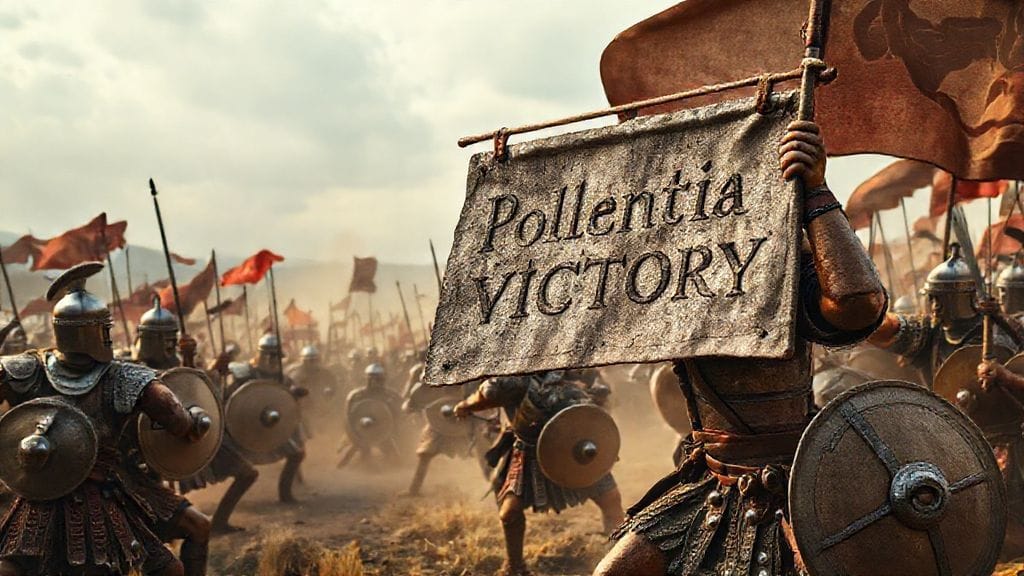
Henry’s knights, encased in mail, lowered their lances and spurred their horses forward. Their formation, honed by years of western campaigns, presented a wall of steel and wood—a bristling spearpoint aimed straight at the heart of the Nicaean line. The thunder of their charge would have drowned out all but the loudest shouts. Horses’ hooves tore up the soil of the river plain, while the glint of metal and the flash of pennons created a terrifying spectacle designed as much to break morale as to break bodies.
Theodore’s men tried to react, but a hasty deployment is every commander’s nightmare. Infantry hurried into ranks, some still fastening armor. Officers bellowed orders to form shields, ready spears, nock arrows. If archers were able to release a volley before impact, it might have slowed the Latin charge marginally, but heavy armor and the momentum of the horses absorbed much punishment. In such moments, the cohesion of the defending line is everything. A single gap, a single group of men who turn and run, can unravel the entire formation.
When the Latin cavalry hit, the collision must have been devastating. Lances shattered upon shields and armor; men were thrown from their feet or flung from saddles. Horses collided, bit, and kicked amid slashing swords. The first ranks of Nicaean infantry bore the brunt, some crushed, others driven backward into their comrades. Even if parts of Theodore’s army fought bravely, the force and suddenness of the assault made organized resistance difficult. Latin chroniclers, eager to exalt their side, speak of Nicaean formations collapsing quickly; Greek sources, more subdued, nonetheless concede that their army was driven back and broken.
At some point in this chaos, Theodore Laskaris himself was drawn into the melee. Medieval emperors were expected, at least symbolically, to share the risks of battle. If he was at the front, trying to rally his men, the swirling chaos around him would have been overwhelming: shouts in multiple languages, the stink of sweat and blood, the screams of wounded horses. Later Nicaean tradition preserved stories of his near capture or death in battle, underscoring how close his empire came to losing not only an army but its sovereign.
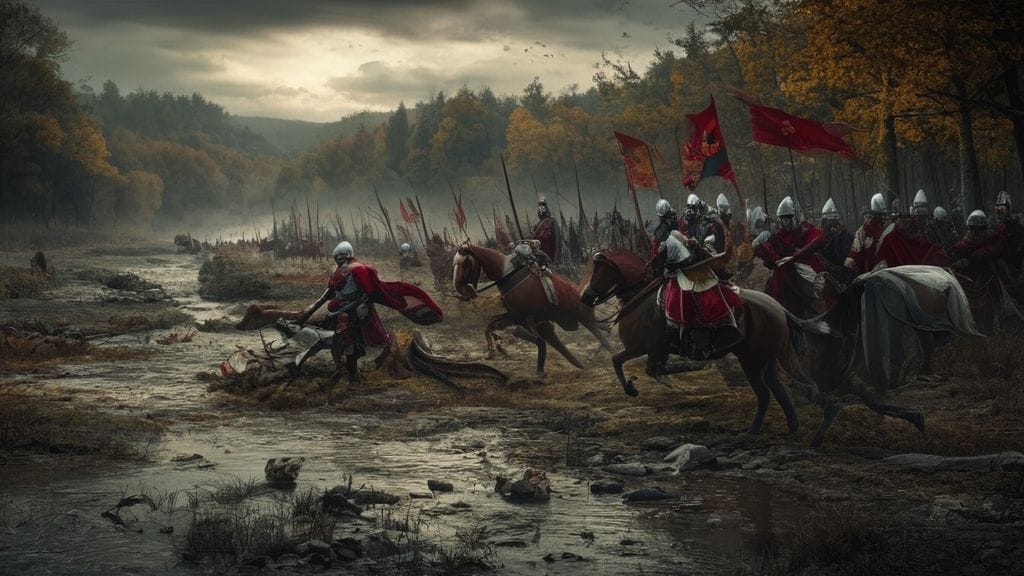
Once the Nicaean line gave way, panic spread. Soldiers who had stood shoulder-to-shoulder minutes earlier now turned to flight, some rushing toward the river, others attempting to escape across the fields or back toward the relative safety of nearby hills. For men weighed down by armor, fleeing across uneven ground was perilous. Latin cavalry, having broken the main line, could now ride down scattered groups almost at leisure. The Rhyndacus, so placid at dawn, might now have been choked with men struggling to cross, some drowning as they were pushed under or dragged down by their equipment.
By afternoon, the outcome was clear. The battle of the Rhyndacus ended with a decisive Latin victory. Nicaean casualties were heavy; many were killed on the field or in the rout, others taken prisoner. Latin losses, though not nonexistent—no battle of this scale was bloodless for the victors—were far lighter. For Henry of Flanders, the day’s events must have vindicated his faith in Latin arms and tactics. For Theodore Laskaris, if he indeed escaped with his life, this defeat was a bitter reminder of how precarious his position remained.
Blood and Surrender: Captives, Casualties, and the Human Toll
Numbers in medieval chronicles are notoriously unreliable, and the battle of the Rhyndacus is no exception. We are not given precise casualty figures; instead, we read of “many” Nicaeans slain, of “innumerable” prisoners, of Latin soldiers returning to camp with “great spoils.” Yet even without exact tallies, the human cost can be imagined in stark terms.
Fields near the river would have been littered with bodies—some Latin, many Nicaean. Dead knights still encased in armor lay where they had fallen, their once-gleaming mail now dulled with mud and blood. Infantrymen, less well protected, bore the more gruesome signs of battle: spear wounds, broken limbs, crushed skulls. Horses, too, lay dying or dead, their large bodies forming obstacles amid the carnage. The cries of the wounded filled the air long after the clang of steel had faded.
For those Nicaeans who survived the initial rout but were captured, a different ordeal began. Captivity in the early thirteenth century was a complex fate. High-ranking nobles and officers, if taken alive, could expect to be ransomed eventually. Their captors treated them as valuable commodities, escorting them under guard but generally protecting them from random violence. Lower-ranking soldiers and common levies had no such prospects. Some might be pressed into forced labor; others were simply executed to prevent future resistance.
Henry of Flanders, by most accounts, was not a wantonly cruel man, but he was also a pragmatist. Allowing too many enemy soldiers to go free risked seeing them back in Theodore’s ranks within months. Making a harsh example of some captives—particularly those from rebellious strongholds—would send a clear message to communities wavering between Latin and Nicaean allegiance. Yet even acts of mercy carried a political weight. Sparing certain nobles, negotiating their release, could open channels of diplomacy and even encourage defections to the Latin side.
Behind these military calculations lay countless private tragedies. Many of the fallen were not anonymous to those around them; they were fathers, sons, brothers, neighbors. News of the defeat and its losses would spread slowly back to villages and towns, carried by stragglers and messengers. A wife waiting anxiously for her husband’s return might hear instead from a passing wounded comrade that he had been cut down near the riverbank. Parents might never know exactly where their sons fell, only that they did not come home from the battle of the Rhyndacus.
The immediate landscape, too, bore the scars. Corpses, if not quickly buried or burned, threatened disease. Local peasants, pressed into service by whichever side now controlled the region, would be ordered to dig mass graves. Priests might be summoned to say prayers over heaps of bodies, some of them enemies, some of them neighbors. The river itself may have carried away not only the dead but also broken shields, splintered lances, and bits of torn clothing—a grim flotsam of battle.
In this sense, the Rhyndacus was more than a line on a map or a footnote in an imperial chronicle. It was a place where human lives were unmade in great numbers, where the abstract struggles of emperors and claims of legitimacy manifested in the most concrete and brutal ways. Though the sources emphasize generals and sovereigns, the true weight of the battle was borne by thousands of nameless men whose stories ended on that autumn day.
Winners Without Peace: The Latin Empire After Victory
In the short term, the battle of the Rhyndacus seemed to be everything Henry of Flanders could have hoped for. He had led a successful expedition into Asia Minor, crushed a major Nicaean field army, and reaffirmed the terrifying effectiveness of Latin heavy cavalry. News of the victory spread quickly back to Constantinople, where Latin clerics and nobles likely celebrated with thanksgiving services and feasts. For a moment, it appeared that the Latin Empire had demonstrated its staying power and dealt a mortal blow to one of its most determined Greek adversaries.
Politically, the victory allowed Henry to reinforce his authority over wavering territories. Fortress commanders and local elites in Bithynia who had been tempted to drift toward Theodore now thought twice. A ruler who could win such a clear triumph had to be respected. Latin garrisons in Asia Minor, who had often felt exposed and under-supported, must have taken heart from the emperor’s personal appearance in their theater of war and his success on their behalf.
Yet behind the celebrations, the fundamental fragility of the Latin Empire remained. Henry had won a battle, but he had not destroyed Nicaea. Theodore still lived; Nicaea’s core territories in western Anatolia remained intact. Moreover, the Latin Empire’s demographic and economic base was shallow. It relied upon a relatively small Latin elite ruling over a much larger Greek population that, at best, tolerated their presence and, at worst, actively resented it. The Latin victory at the Rhyndacus did little to change this underlying reality.
There was also the problem of distance and logistics. Each major campaign in Asia Minor required ships, money, and time—resources the Latin Empire could ill afford to expend indefinitely. Holding and reinforcing far-flung outposts remained an exhausting endeavor. The more the Latins tried to press into Anatolia, the more they risked overextension, leaving themselves vulnerable in Europe to Bulgarian and other regional powers. Henry understood these dynamics. As much as he might have wished to follow up his victory with a sustained offensive, practical considerations soon reasserted themselves.
Moreover, the ideological struggle over legitimacy that underpinned the conflict with Nicaea could not be resolved on a single battlefield. Greek clerics continued to denounce the Latin occupation of Constantinople and to recognize the Nicaean rulers as the rightful emperors. Greek populations in Asia Minor, who might have been intimidated by the Latin victory, were not thereby converted into loyal subjects of Henry. The battle of the Rhyndacus proved that Latin arms remained formidable, but it did not win hearts or erase memories of the sack of 1204.
In the longer view, some modern historians see a subtle irony in the outcome. Henry’s success may have reinforced a dangerous confidence in Latin military superiority, masking deeper structural weaknesses. A chronicler later wrote of the Latin empire around this time that it was “strong in arms but weak in roots” —a poetic way of saying that, like a tree transplanted into thin soil, it looked healthy but could not withstand serious storms. The Rhyndacus, therefore, stands as one of the Latin Empire’s brightest battlefield achievements—and a prelude to its slow, inexorable decline.
A Defeat that Saved a Dynasty: Nicaea’s Recovery and Resolve
For Theodore Laskaris and his fledgling empire, the immediate aftermath of the battle of the Rhyndacus was undeniably bleak. He had lost a significant portion of his field army and suffered a humiliating defeat at the hands of the same Latin knights whose capture of Constantinople he had vowed to avenge. Rumors of his death may even have circulated briefly, as they often did after such chaotic engagements. Yet paradoxically, this defeat helped set the stage for Nicaea’s political consolidation and eventual success.
First, Theodore survived. This simple fact cannot be overstated. In medieval polities, the death or capture of a ruler in battle could spell catastrophic fragmentation. Rival claimants might emerge; foreign powers might pounce. Had Theodore fallen into Latin hands at the Rhyndacus, Henry would have gained a powerful bargaining chip—or perhaps removed the most credible Nicaean leader entirely. Instead, Theodore escaped, wounded in pride but intact in person, and thus capable of rallying what remained of his army and authority.
Second, the very harshness of the defeat appears to have sobered Nicaean political calculations. Theodore realized that frontal confrontations with the Latin cavalry, especially when caught at a disadvantage, were ruinous. His subsequent strategy leaned even more heavily on defensive warfare, diplomatic maneuvering, and selective engagements. The goal was no longer to test Latin strength head-on but to outlast it, to let time, demographics, and geography work in Nicaea’s favor.
Third, and perhaps most intriguingly, the battle of the Rhyndacus opened a diplomatic path that might not have been viable had Nicaea emerged undefeated. The Latins, buoyed by victory, were also more willing to negotiate from a position of strength. Theodore, chastened by defeat, was willing to make concessions. The result was a series of arrangements that, while they curtailed some Nicaean ambitions in the short term, ultimately recognized Nicaea as a legitimate and stable neighbor in Asia Minor—a survival that would prove crucial in the long contest for Byzantine restoration.
Within Nicaea itself, the narrative of Rhyndacus also evolved. While it could not be spun as a triumph, it could be reframed as a trial by fire—another ordeal the exiled empire had endured and survived. Court chroniclers emphasized Theodore’s resilience, his efforts to care for the wounded, his prayers for the dead. They contrasted Latin ruthlessness with Theodore’s piety and steadfastness, recasting the defeat not as evidence of illegitimacy but as a temporary setback in a righteous struggle.
Over time, as Nicaea expanded and consolidated, the memory of Rhyndacus was overshadowed by later victories and achievements. Yet the lessons learned there—about Latin tactics, about the limits of Nicaean resources, and about the importance of diplomacy alongside warfare—remained embedded in Nicaean statecraft. It is no exaggeration to say that without surviving and learning from this defeat, the dynasty of Theodore Laskaris might never have laid the foundations upon which later emperors would rebuild Byzantine power.
Diplomacy and Oaths: The Treaty that Followed the Rhyndacus
After the swords were sheathed and the dead buried, the struggle between Nicaea and the Latin Empire shifted from battlefield to negotiating table. The years following the battle of the Rhyndacus saw a web of agreements that, though humble in tone, would have lasting consequences. Henry of Flanders, now confident in his arms, and Theodore Laskaris, mindful of his recent defeat, both recognized that continuous war in Bithynia would exhaust resources neither side could spare.
The rough outline of the settlement that followed is fairly clear, even if the details are debated. Henry secured recognition of Latin control over certain key fortresses and territories in northwestern Asia Minor. These strongholds solidified Latin influence near the Sea of Marmara and along vital overland routes. Theodore, in turn, retained control over the Nicaean heartland and secured a breathing space in which to rebuild his forces and administration.
Marriage diplomacy played an important role in this process. One of the most notable arrangements involved Theodore’s daughter, who was married into the Latin imperial family—a symbolic gesture that simultaneously acknowledged Latin power and wove Nicaea into the broader web of regional relationships. Such marriages created kinship ties that could temper hostility, or at least make outright extermination politically awkward. They also offered a way to frame the relationship between the two empires not purely in terms of conquest but of negotiated coexistence.
Oaths were sworn, often on relics and sacred texts. Delegations traveled between courts, bearing letters sealed with wax impressions of imperial signets. Monks and bishops, familiar with both sides, sometimes acted as intermediaries. In a world where written treaties were still backed primarily by personal honor and religious fear, these rituals mattered. Breaking such oaths carried not only political but spiritual peril.
For the people of Bithynia, the treaty meant a fragile but welcome respite. Fields could be sown without the constant fear that marching armies would trample the crops. Trade routes, though still risky, became somewhat more reliable. Greek and Latin officials, at least for a time, worked within a more predictable framework. Farmers knew to whom they owed taxes; fortress commanders understood the limits of tolerated aggression.
Yet everyone also knew how precarious such peace could be. Treaties in the medieval eastern Mediterranean were often temporary, easily disrupted by changes of leadership, new alliances, or opportunistic raids. Still, the settlement that followed the battle of the Rhyndacus helped crystallize a reality that would shape the next decades: Nicaea was not going to disappear, and the Latin Empire would have to live with a powerful Greek neighbor in Asia Minor rather than simply bulldozing it.
One later historian summarized this phase succinctly, noting that “victory gave the Latins the right to negotiate, but not the power to erase” —a pithy observation that captures how even a clear battlefield success could be channeled into compromise rather than conquest. In this sense, the diplomacy of the post-Rhyndacus years was as historically significant as the battle itself.
Voices from the Chronicles: How Medieval Writers Remembered the Battle
Our understanding of the battle of the Rhyndacus comes filtered through the pens of chroniclers who wrote with their own agendas, loyalties, and blind spots. To read them is to listen to a chorus of voices, some triumphant, some mournful, all shaped by the ideological battles of their age.
Latin chroniclers, when they mention the engagement, naturally emphasize Henry of Flanders’s skill and bravery. One anonymous western writer describes how “the emperor Henry, trusting in God and the valor of the Franks, fell upon the Greeks with such fury that they could not withstand the onset” —a sentence that compresses the entire battle into a brief, glorious surge of Christian courage and martial prowess. In this narrative, the Rhyndacus becomes one more proof of divine favor resting upon the Latin conquerors of Constantinople.
Greek accounts are fewer and more cautious, but they provide important counterpoints. Later Nicaean or Byzantine historians, such as George Akropolites, writing decades afterward, had to reconcile the fact of defeat with their overarching story of Nicaea’s heroic survival and ultimate triumph. They do not dwell on tactical details, but they acknowledge Theodore’s setback and focus instead on his resilience and piety. The battle is framed as a painful chapter in a longer story that ends not with Latin rule but with the restoration of Constantinople in 1261.
Interestingly, even some Greek sources show a grudging respect for Henry of Flanders. Unlike other Latin rulers who come across in Byzantine writing as crude barbarians or greedy opportunists, Henry is occasionally portrayed as disciplined and capable, a real opponent rather than a mere thug. This nuance underscores that the confrontation at the Rhyndacus was not simply “civilization versus barbarism” from either side’s perspective, but a clash between two sophisticated, if adversarial, polities.
Modern historians, reading these sources with critical eyes, try to tease out facts from rhetoric. They compare narrative inconsistencies, cross-reference dates, and weigh what is omitted as carefully as what is stated. The consensus that emerges is relatively modest: we know the date, the broad location along the Rhyndacus River, the principal commanders, the outcome, and some immediate consequences. Beyond that, much remains conjectural.
Yet the very gaps in the record also tell a story. The battle of the Rhyndacus, though important, did not dominate medieval imaginations the way the sack of Constantinople or the battle of Manzikert did. It appears in chronicles almost like a sharp but brief flash—painful for Nicaea, reassuring for the Latins, but quickly overshadowed by subsequent events. Its relative obscurity today, therefore, mirrors its limited footprint even in the memories of those who lived closer to its time.
Everyday Lives in the Shadow of War: Farmers, Monks, and Merchants
While chronicles celebrate emperors and describe battles in sweeping phrases, most of the people who experienced the aftermath of the battle of the Rhyndacus were not soldiers or rulers but ordinary men and women trying to navigate a world abruptly reshaped around them. To grasp the full meaning of the event, we must imagine their lives.
Consider a small farming village a day’s march from the battlefield. For weeks, rumors of troop movements had passed through: Latin soldiers seen near the river, Nicaean scouts demanding food, talk of a coming clash. The village elders, seasoned by years of unrest, had urged everyone to store grain, hide valuables, and avoid taking sides too openly. When the sounds of distant battle finally reached them—faint clashes, perhaps, carried on the wind—they might have paused in their work, glancing toward the horizon with dread.
In the days that followed, wounded men may have staggered into the village, seeking water and shelter. A local priest, torn between compassion and fear of reprisal, might have tended both Latin and Nicaean wounded in secret, cleaning wounds with whatever herbs and wine he could muster. Some villagers, fearing that sheltering fugitives would bring punishment from the victors, refused help. Others took the risk, guided by Christian charity or personal ties.
Monasteries, too, felt the shockwaves. A community of monks near the Rhyndacus, who had spent years laboring in vineyards and copying manuscripts, perhaps woke one morning to find an imperial courier at their gate, ordering them to pray for the souls of the fallen and send part of their stores to help feed soldiers in garrison. Their quiet contemplation was constantly interrupted by the practical demands of a militarized landscape.
Merchants traveling between Nicaea and the coast saw trade routes tighten and shift. A road that was safe last month might now be deemed too dangerous, patrolled by Latin troops or plagued by bandits who took advantage of the confusion. Some traders adapted quickly, forging new connections with Latin-held towns, learning enough French or Italian to negotiate contracts. Others, fiercely loyal to the Nicaean cause or simply suspicious of foreigners, channeled their business toward markets firmly under Greek control.
Within families, loyalties could divide. A young man might be pressed into service by a Nicaean recruiter, leaving a brother behind who later found work as a translator or clerk for Latin officials. Dinners around hearths could be muted affairs, filled with unspoken tensions about which banner would ultimately prevail. Everyone understood that backing the wrong side too openly could bring ruin if frontiers shifted again.
The battle of the Rhyndacus thus altered lives not only in the immediate moment but in the slow adjustments that followed. A widow who lost her husband there might have to sell a small plot of land to pay debts, changing the economic fabric of her village. A local noble who had quietly supported Theodore might, after the defeat, send a son to Henry’s court in Constantinople as a gesture of submission, intertwining his family’s fate with that of the Latin regime. Years later, these choices would shape who had power, who held land, and which communities prospered or declined.
From Riverbank Skirmish to Imperial Turning Point: Strategic Legacies
When viewed against the vast canvas of Byzantine and medieval Mediterranean history, the battle of the Rhyndacus may seem like a small, localized event. It did not redraw the entire map, nor did it produce the sort of spectacular reversal that later ages romanticize. Yet its strategic legacies were real and enduring.
First, Rhyndacus fixed the rough line between Latin and Nicaean spheres of influence in northwestern Asia Minor for a crucial period. Latin control of certain forts and road junctions, confirmed or reinforced by victory and treaty, created a semi-stable frontier. This gave both sides a degree of predictability. Henry could focus more attention on his European frontiers; Theodore could redirect energy toward consolidating his Anatolian base and dealing with Turkish neighbors.
Second, the battle underscored the continued supremacy of western heavy cavalry in direct open-field engagements. For Nicaean and later Byzantine military thinkers, this was a sobering lesson. It pushed them to refine strategies that avoided such confrontations whenever possible—emphasizing fortified positions, ambushes, and alliances that limited the circumstances under which they would have to face Latin knights on ideal terrain. This tactical realism would inform Nicaean campaigns throughout the thirteenth century.
Third, Rhyndacus played a role in shaping perceptions on both sides. For the Latins, especially those in the West who heard of the battle in fragmentary reports, it confirmed that the empire carved from the ruins of Byzantium was not a mere ephemeral creation. It could win battles, repel challenges, and impose terms. For the Greeks, the same event reinforced the narrative of suffering and resilience: their exiled empire had been humbled, but it had not perished. This dual set of perceptions influenced diplomatic posture, propaganda, and even religious rhetoric for decades.
Finally, the outcome indirectly benefited Nicaea in a way few contemporaries could have foreseen. By reaffirming Latin confidence and arguably encouraging a degree of complacency, it diverted attention from the slow, patient work Nicaea was doing to strengthen its institutions, expand its territory in other directions, and prepare for a long struggle rather than a single decisive showdown. When, later in the century, the Latin Empire faltered and Nicaea advanced, some of the roots of that shift lay in these earlier years of hard-earned lessons and restrained ambition.
Echoes Through Centuries: From Rhyndacus to the Fall and Restoration of Constantinople
The story that began—or at least took a dramatic turn—at the battle of the Rhyndacus did not end on the banks of that Anatolian river. Instead, it echoed forward into some of the most momentous events of the thirteenth century: the slow weakening of Latin rule in Constantinople, the rise of Nicaea as the leading Greek power, and, ultimately, the recapture of the imperial capital in 1261.
In the decades after 1211, the Latin Empire’s early vigor waned. Henry of Flanders, its most capable ruler, died in 1216, and his successors lacked his combination of moderation and military skill. Internal factionalism, financial strain, and pressure from surrounding states eroded Latin authority. The empire shrank like a patch of ice under the sun, losing territories piecemeal even as it clung stubbornly to Constantinople itself.
Nicaea, by contrast, matured. Under Theodore’s successors—most notably John III Vatatzes—the Nicaean state expanded into former Latin and rival Greek-held lands. It developed a more robust administrative structure, fostered economic recovery, and cultivated alliances. The lesson learned at Rhyndacus—that survival required patience, prudence, and selective engagement—bore fruit. Nicaea did not rush headlong against the Latin capital; it encircled it gradually, building strength until the moment was right.
When that moment came in 1261, it was almost anticlimactic compared to the cataclysms of 1204 and 1211. A small Nicaean force under Alexios Strategopoulos seized Constantinople via a surprise attack while much of the Latin garrison was away on campaign. The city, exhausted by decades of Latin rule and economic decline, fell with relatively little fighting. The Nicaean emperor Michael VIII Palaiologos entered the city in triumph, restoring the Byzantine Empire in name, if not in its former glory.
Looking back from that vantage point, the battle of the Rhyndacus assumes a different color. It becomes one of the trials through which the exiled empire passed on its road to restoration—a painful reminder of its vulnerabilities and a spur to more careful, cunning strategy. Without the discipline and realism that defeat imposed, Nicaea might have overreached or shattered in the attempt to recover Constantinople.
At the same time, Rhyndacus marks one of the Latin Empire’s finest military hours, an emblem of what it could achieve when well led and well supplied. The tragedy, from the Latin perspective, is that such moments proved unsustainable. Victories in the field did not translate into lasting structures of governance or deep-rooted legitimacy among the local population. When Latin power finally crumbled in 1261, it did so not because it had never known success, but because success had been sporadic and shallowly anchored.
Thus, the ripples of that autumn battle on the Rhyndacus extended across half a century, touching both the zenith and the nadir of Latin rule in the East and the eclipse and reflowering of Byzantine power. To trace those ripples is to see how events that seem small in the moment—just one battle among many—can form critical links in much larger chains of cause and effect.
Memory, Myth, and Modern Historians: Interpreting Rhyndacus Today
Today, the battle of the Rhyndacus rarely appears in popular histories of the Crusades or Byzantium. Overshadowed by the grand drama of the Fourth Crusade, the siege of Constantinople, and later confrontations between East and West, it survives more as a specialist’s topic than as a household name. Yet modern historians, combing through scattered references and cross-examining sources, have gradually restored some of its importance.
In scholarly debates, the battle is often discussed as part of broader questions: How resilient was the Latin Empire really? How did the Empire of Nicaea manage to survive and eventually thrive under such difficult circumstances? What role did local Anatolian dynamics play in shaping the larger Mediterranean political order? Rhyndacus, with its clear Latin victory and yet ambiguous long-term results, makes a useful case study.
Some historians emphasize its demonstration of Latin military prowess, pointing out that too many narratives of the crusader states focus only on their defeats and neglect their genuine battlefield successes. For them, Henry of Flanders at Rhyndacus represents the Latin East at its most competent. Others underscore the episode’s limited transformative impact, arguing that it reveals the structural constraints under which the Latin Empire labored: victories could be won, but the deep social and economic foundations necessary for lasting dominance were lacking.
On the Nicaean side, Rhyndacus has been reinterpreted as an example of constructive defeat. Rather than viewing it as an embarrassing failure, some modern scholars highlight how it reinforced Nicaea’s turn toward state-building and long-term strategy. As one recent study put it, “the lesson of Rhyndacus lay not in glory but in endurance.” This view dovetails with a larger trend in Byzantine studies that appreciates the empire’s ability to absorb shocks and adapt over centuries.
Local memory in the region itself, now part of modern Turkey, is harder to trace. Place names have changed; communities have shifted. Yet the Rhyndacus River still flows, under a new name, through landscapes that have seen many layers of conquest and settlement. For those who live along its course today, the medieval battle is at best a faint echo, if it is remembered at all. The river has borne too many other stories in the intervening centuries.
In the end, to write about the battle of the Rhyndacus is to participate in the ongoing work of historical imagination—grounded in sources, constrained by evidence, but inevitably reconstructive. We cannot hear the screams of combatants or feel the October chill they felt as they formed up along the riverbanks, but we can piece together enough to see how their choices and fates intersected with the grand currents of their age. And in doing so, we restore a measure of weight and meaning to a battle that risked fading entirely into footnote.
Conclusion
The battle of the Rhyndacus, fought on 15 October 1211 along a quiet Anatolian river, was at once a sharp, localized clash and a revealing microcosm of a much larger struggle. On that autumn day, Latin heavy cavalry, led by Henry of Flanders, shattered a Nicaean army commanded by Theodore I Laskaris, reaffirming the terrifying impact of western arms and securing a short-term political advantage for the Latin Empire. Yet beyond the immediate carnage—the bodies scattered near the water, the prisoners marched away, the villages left to count their dead—the battle’s true significance lay in what it exposed and what it set in motion.
It revealed the fragility of both empires: the Latin regime, dazzling in battle yet shallowly rooted among a largely Greek population; the Nicaean state, ideologically bold but militarily vulnerable, struggling to defend an imperial legacy without its ancient capital. It pushed Theodore to greater realism and discipline, encouraging the defensive and diplomatic strategies that would allow Nicaea to endure, expand, and eventually reclaim Constantinople. It gave Henry his moment of triumph, but could not cure the structural ailments that would, within decades, doom Latin rule in the Queen of Cities.
Most of all, the battle of the Rhyndacus reminds us that history’s turning points are not always the famous sieges or the vast, set-piece engagements that dominate textbooks. Sometimes, they are riverbank encounters whose echoes travel quietly through treaties, memories, and later campaigns, shaping choices far down the line. By listening closely to those echoes—through the voices of chroniclers, the patterns of diplomacy, and the lived experiences of ordinary people—we gain a fuller sense of how empires fall, survive, and rise again. The Rhyndacus, once stained with the blood of two rival Christian armies, stands as a testament to both the destructiveness of human ambition and the surprising resilience of political and cultural traditions that refuse to die.
FAQs
- What was the battle of the Rhyndacus and when did it occur?
The battle of the Rhyndacus was a medieval engagement fought on 15 October 1211 along the Rhyndacus River in northwestern Anatolia. It pitted the Latin Empire of Constantinople, led by Emperor Henry of Flanders, against the Empire of Nicaea, ruled by Theodore I Laskaris. The Latins won a decisive victory, breaking the Nicaean army and capturing many prisoners. - Who were the main leaders involved in the battle?
The key figures were Henry of Flanders, the Latin emperor ruling from Constantinople, and Theodore I Laskaris, the founder and emperor of the Nicaean state in exile. Both men were central to the post-1204 struggle over the Byzantine imperial legacy and faced each other directly at the Rhyndacus. - Why was the battle of the Rhyndacus important?
The battle was important because it temporarily secured Latin positions in northwestern Asia Minor and demonstrated the continued battlefield superiority of Latin heavy cavalry. At the same time, it forced the Nicaean regime to adopt more cautious and long-term strategies, contributing to its survival and eventual success in recovering Constantinople in 1261. - Did the battle end the conflict between the Latin Empire and Nicaea?
No, the battle did not end the conflict. It led to a period of negotiation and relative stabilization, with treaties defining spheres of influence in Bithynia. However, the rivalry between the Latin Empire and Nicaea continued in various forms for decades, ultimately culminating in the Nicaean reconquest of Constantinople. - How well do historians know what happened at the Rhyndacus?
Our knowledge is limited. Contemporary sources give only brief and often partisan accounts, usually emphasizing victory or defeat rather than detailed tactics. Historians rely on these fragments, combined with general knowledge of medieval warfare, to reconstruct a plausible narrative of the battle and its aftermath. - What were the long-term consequences for the Latin Empire?
In the short term, the victory boosted Latin morale and consolidated their hold on parts of Asia Minor. In the long term, however, it did not resolve deeper problems: demographic weakness, financial strain, and lack of local legitimacy. The Latin Empire would continue to decline and eventually lose Constantinople in 1261. - How did the battle affect the Empire of Nicaea?
The Empire of Nicaea suffered a serious military setback, losing many soldiers and some territorial leverage. Nevertheless, Theodore I Laskaris survived, and the state adapted by focusing on defensive strategies, diplomacy, and gradual expansion elsewhere. This resilience laid the groundwork for Nicaea’s later success. - Was religion a major factor in the battle?
Religion formed an important backdrop, as the Latin Empire represented western (Catholic) interests and imposed a Latin church hierarchy in Constantinople, while Nicaea defended the Orthodox tradition in exile. However, the battle itself was driven as much by political control, territory, and imperial legitimacy as by confessional conflict. - Where is the Rhyndacus River today?
The Rhyndacus River flows in what is now northwestern Turkey, under a modern name and within a very different political landscape. While its course has changed in places over the centuries, it still runs through a region that once formed the contested frontier between Latin and Nicaean rule. - How does the battle of the Rhyndacus relate to the restoration of Byzantium in 1261?
The battle is part of the early history of the Empire of Nicaea, the state that would eventually recapture Constantinople. Though a defeat for Nicaea, Rhyndacus taught crucial lessons about Latin strengths and Nicaean vulnerabilities, pushing the exiled empire toward the cautious, long-term strategies that made the 1261 restoration possible.
External Resource
Internal Link
Other Resources
- Encyclopaedia Britannica – general search for the exact subject
- Google Scholar – academic search for the exact subject
- Internet Archive – digital library search for the exact subject