Table of Contents
- A February Morning in London: Setting the Stage for Defiance
- The Making of a Favorite: Robert Devereux at Elizabeth’s Glittering Court
- Ambition and Rivalry: Essex Against the Cecils
- From Triumph to Disgrace: The Irish Campaign That Broke a Career
- House Arrest and Growing Desperation: The Road Toward Conspiracy
- The Circle Tightens: Plotters, Promises, and Secret Meetings
- The Eve of Treason: Nightfall Before the Rising
- 8 February 1601: The City Awakens to the Essex Uprising
- Through the Streets of London: Hopes, Hesitations, and Empty Support
- The Crown Strikes Back: Proclamations, Betrayals, and Flight
- Storming Essex House: The Final Stand by the Thames
- Prisoner in the Tower: Confessions, Blame, and Broken Loyalties
- Trial and Spectacle: Crafting the Official Story of Rebellion
- A Favorite’s Last Morning: The Execution of Robert Devereux
- Elizabeth I’s Wounded Heart: Politics, Regret, and the End of an Era
- Echoes in the City: How London Remembered the Essex Rising
- Power, Patronage, and Fragility: What the Essex Revolt Revealed
- From Villain to Romantic Hero: The Changing Memory of Essex
- Legacy of 1601: Lessons for Monarchy, Rebellion, and Modern Politics
- Conclusion
- FAQs
- External Resource
- Internal Link
Article Summary: On a cold Sunday in February 1601, Robert Devereux, Earl of Essex, led a desperate and ill‑fated march through the streets of London, an episode forever remembered as the robert devereux rebellion. Once the glittering favorite of Queen Elizabeth I, Essex had fallen from grace and convinced himself that only a bold stroke could rescue his honor and influence. This article traces his meteoric rise at court, his catastrophic Irish campaign, and the tangled web of factional politics that pushed him toward treason. It follows the tense hours of 8 February, as Essex tried to rally Londoners, misread the mood of the city, and found himself trapped between loyalty and ambition. We step inside council chambers, private apartments, taverns, and London streets to understand the political fears—of succession, Catholic plots, and foreign invasion—that made such a rebellion thinkable. The narrative then turns to the trial and execution that followed, analyzing how the crown turned a chaotic outburst into a carefully managed lesson in obedience. Yet behind the official story, we uncover guilt, grief, and a queen haunted by the death of a man she had once cherished. Finally, we explore how the robert devereux rebellion has echoed through four centuries of history, from propaganda pamphlets to Romantic poetry, and what it still reveals about the dangers of power, pride, and miscalculation.
A February Morning in London: Setting the Stage for Defiance
On the morning of 8 February 1601, London stirred under a pale, wintry light. Church bells tolled across the city as people made their way along muddy streets to Sunday service, cloaks pulled tight against the chill air that rolled in off the Thames. It was a day that should have unfolded like any other in Queen Elizabeth’s long reign. But at Essex House, the grand riverside mansion belonging to Robert Devereux, second Earl of Essex, servants were already moving with a different urgency. Doors were barred. Weapons were counted. Messengers flew in and out of the courtyard. Within those walls, a handful of gentlemen, soldiers, and idealists were preparing not for worship, but for a gamble against a queen.
The city around them was a restless organism. London in 1601 was a place of packed alehouses and narrow lanes, full of apprentices, merchants, sailors, and refugees from religious wars on the continent. Rumors spread rapidly through its streets—of Spanish ships, of Catholic assassins, of plots in the shadows. The aging Elizabeth I still commanded deep loyalty, but she was also a woman in her late sixties without a named heir. Anxiety thickened the air like coal smoke: What would happen when she died? Who would rule next? In that tense atmosphere, the robert devereux rebellion emerged not as an isolated act of madness, but as a dramatic symptom of a wider fear.
As the sun rose higher, light struck the weathered stone of the city gates and the wooden gallows that stood as grim reminders of royal justice. Men and women passed reminders of old rebellions—the Tower of London, site of so many executions; the monuments to earlier conspirators crushed beneath Tudor power. There had been uprisings before: the Pilgrimage of Grace, the Northern Rebellion, smaller conspiracies plotted in noble houses and smoky taverns. But this one was different. This was no peasant riot or Catholic crusade. It began inside the queen’s own circle, with a man who had once kissed her hand and whispered in her ear—a favorite with access to the very heart of power.
In a sense, the story of that day started years earlier, when a handsome young nobleman first won Elizabeth’s attention. The tension that would culminate in armed men spilling into the Strand had been building in council chambers, in jealous glances across the court, and in the private agonies of a woman who had ruled for four decades. Yet on that winter morning, Londoners noticed only fragments: an unusual number of armed gentlemen near the river; whispered conversations hurriedly ending as strangers approached; a few closed shutters where windows were usually open. Something was coming, but few knew what. And those who did believe they were about to save England from hidden enemies.
Robert Devereux, inside Essex House, was pacing. The rooms around him were hung with rich tapestries, the spoils of favor and war. But the warmth of the fire could not touch the cold knot of dread in his stomach. He had risked everything—his honor, his titles, perhaps his life—on a plan that depended on one fragile thing: the willingness of Londoners to follow him. The robert devereux rebellion was about to step out into the streets, and no one—not Essex, not the queen, not the city itself—could yet know how quickly it would unravel.
The Making of a Favorite: Robert Devereux at Elizabeth’s Glittering Court
To understand why this particular rebellion sent shockwaves through England, one has to go back to the 1580s, when Robert Devereux first appeared at Elizabeth’s court. He arrived in a blaze of charm and confidence, a tall, striking youth with auburn hair and bright, restless eyes. Born in 1565, he had inherited not just the title of Earl of Essex but also a heavy legacy of expectation. His father had been a soldier and courtier; his stepfather, Robert Dudley, Earl of Leicester, was the queen’s longest‑standing favorite. At court, lineage was currency, and Essex’s was golden.
Elizabeth, in her fifties when Essex began to shine, was no ordinary monarch. Her court was a theater, and she its central actor—witty, sharp, and accustomed to bending powerful men around her will. When Essex entered that theater, he played his role to perfection. He flattered her with skill, masked his ambition as chivalry, and threw himself into the cultivated rituals of the court: tilts, masques, poetic exchanges. He called her his “fair and gracious mistress”; she called him “my Robin.” Foreign ambassadors noted their closeness with a mix of amusement and alarm.
The relationship between queen and favorite was always delicate, suspended between genuine affection and political calculation. Essex rose quickly, favored with military commands and prestigious posts. He fought in campaigns in the Netherlands and against Spain, eager to build his reputation as England’s leading soldier. When the English smashed the Spanish fleet at Cadiz in 1596, Essex strode ashore in gleaming armor, a picture of martial glory. Pamphlets celebrated him; poets praised his valor. In a kingdom that still lived in the shadow of the Spanish Armada, such achievements resonated deeply.
Yet every rise at Elizabeth’s court created shadows. For every advancement Essex won, someone else lost influence. The Cecils—William Cecil, Lord Burghley, and later his son Robert Cecil—had long dominated policy and administration. They were meticulous, cautious, and profoundly suspicious of reckless brilliance. Essex embodied everything they distrusted: flamboyance, emotional volatility, a need for public adoration. As he grew closer to the queen, they watched and waited, recording his missteps and gathering quiet allies who resented his swagger.
Essex, for his part, thought of himself as England’s natural champion. The robert devereux rebellion would later be justified, in part, as a defense of the queen against “evil counselors” who were said to mislead her. That rhetoric did not appear out of nowhere. It grew from the years he spent convinced that he, and he alone, truly understood Elizabeth’s interests—that he had a special, almost mystical bond with her. The more he was praised as a hero, the less able he was to accept the mundane compromises of government.
The queen, experienced in managing ambitious men, tried to balance indulgence with restraint. She gave him offices, then rebuked him for arrogance. She accepted his passionate letters, then reminded him, with razor‑sharp words, that she was sovereign and he her servant. Their bond was as much a political instrument as a personal tie. But to Essex, this dynamic increasingly felt like a test he was destined to win. When he passed through London streets, apprentices shouted his name. When he rode in procession, eyes followed him as eagerly as they did the queen’s. The seeds of disaster were being sown in admiration and flattery.
Ambition and Rivalry: Essex Against the Cecils
At the core of the unfolding tragedy was a bitter rivalry: Essex versus the Cecils. It was not simply a clash of personalities; it was a collision of worldviews. Essex imagined a bold, heroic foreign policy—striking at Spain, supporting Protestant causes abroad, and gaining glory through open confrontation. The Cecils believed in negotiation, careful diplomacy, and the preservation of royal finances. Essex wanted banners and thunder; they wanted ledgers and treaties.
Court factions formed around these two poles. Young gallants with a taste for war and honor gravitated to Essex. They saw him as a model of chivalric manhood, the very image of what a nobleman should be. Clerks, administrators, and sober‑minded statesmen tended to side with the Cecils, who ensured the machinery of government functioned. The queen, ever cautious, used this rivalry to keep both sides in check, playing one against the other. But faction is a dangerous fire; it can warm the hand, or burn the house down.
By the late 1590s, the question of succession loomed large. Elizabeth refused publicly to name an heir. Her refusal spurred whispered speculation in corridors and private chambers. James VI of Scotland—Protestant, shrewd, and the son of the executed Mary, Queen of Scots—emerged as the leading candidate in many minds. Robert Cecil quietly opened channels of communication with James, seeking to secure a peaceful accession when the time came. Essex, suspicious and increasingly paranoid, believed Cecil might use the succession to tighten his grip on power, perhaps even threatening England’s Protestant identity.
This was the crucible in which the radical idea of rebellion began, faint and unformed. If “evil counselors” dominated the queen’s ear, how could the realm be saved? Protestant preachers had long wrestled with the question of resisting ungodly rulers or their servants. Writings from a generation before—like John Knox’s denunciations of tyrannical queens—hovered like ghosts in Protestant memory. Essex and his circle did not initially imagine a full‑blown revolt. But they spoke, half‑joking, half‑serious, about “rescuing” the queen from those who darkened her judgment.
Yet for all his suspicion of Cecil, Essex still relied on royal favor. He wanted to be the queen’s savior, not her enemy. He pressed her to trust his plans for war, for alliances, for glory. Each time she hesitated, each time she listened to Cecil rather than him, his resentment deepened. The robert devereux rebellion, when it finally came, would cloak itself in the language of loyalty—of protecting the queen. But beneath that language lay a simpler, rawer truth: Essex could not bear the thought of being eclipsed, of watching his rivals calmly prepare for a future in which he was irrelevant.
The contest was more than political; it was existential. In an age when noble identity was tied to public honor, to be sidelined was a kind of death. Essex felt that threat almost physically. And when opportunity came—in the shape of a new military command in Ireland—he seized it as if it were a final chance to prove himself indispensable.
From Triumph to Disgrace: The Irish Campaign That Broke a Career
In 1599, Essex was appointed Lord Lieutenant of Ireland, tasked with crushing the formidable rebellion led by Hugh O’Neill, Earl of Tyrone. Ireland had long been England’s troubled neighbor, a place of costly campaigns and bloody stalemates. For Essex, the Irish command was both an honor and a trap. He demanded it, seeing in it the opportunity to win spectacular victory and silence his critics. The queen, perhaps hoping to contain his restless energy far from London, agreed.
The campaign went badly almost from the start. Essex departed with great fanfare and an army of around 16,000 men—the largest force ever sent to Ireland. But the logistics were flawed, supplies inadequate, and disease ravaged his troops. Irish terrain and guerrilla tactics frustrated the English. Month after month, Essex failed to deliver the decisive battle that London expected. Costs soared. Letters from the queen grew sharper, less indulgent. She demanded results; he sent excuses and appeals for more support.
The Irish rebel leader O’Neill proved an astute opponent, both militarily and diplomatically. The climax came in September 1599 at a place remembered as the Ford of Bellaclinthe, commonly known as the Ford of the Blackwater, where Essex and O’Neill met not in battle but in a private parley across a river. The details remain murky, but the outcome was plain: Essex agreed to an armistice far more generous than the queen desired, effectively recognizing Tyrone’s strength rather than crushing it. Elizabeth was furious. She felt outmaneuvered, perhaps even betrayed.
Essex, sensing disaster, did the unthinkable. Disobeying the queen’s explicit orders, he abandoned his post in Ireland and raced back to England, arriving unannounced at Nonsuch Palace in September 1599. Still in travel‑stained clothes, he burst into the queen’s private chambers while she was dressing, seeing her without her carefully crafted public facade of hair and paint. It was an intrusion not only into her space but into the central ritual of her rule: the performance of the monarch’s body.
For Elizabeth, this act was a humiliation. For his enemies at court, it was a gift. They painted Essex as reckless, disrespectful, more interested in his own pride than the realm’s welfare. He had failed in Ireland, risked the queen’s dignity, and now returned to demand understanding rather than submit to judgment. The queen ordered him confined under house arrest, his offices stripped, his influence shattered. The man who had once strode through Whitehall like a prince now paced, powerless, in borrowed rooms.
The psychological impact was devastating. The robert devereux rebellion would later be born out of this humiliation. Essex’s identity had been constructed around service, glory, and intimacy with the queen. Now he experienced something like exile, not in a foreign land but in the heart of his own country. Visitors were restricted; letters were monitored. Reports suggest he fell into bouts of melancholy, his temper erupting in sudden storms of anger. The Irish failure had not only weakened England’s position across the sea; it had broken the fragile balance of trust between a queen and her favorite.
House Arrest and Growing Desperation: The Road Toward Conspiracy
Essex’s period of house arrest, largely spent at Essex House on the Strand, was a suspended moment when his fate might still have taken a different course. At first, he pleaded for forgiveness. He wrote abject letters to Elizabeth, professing loyalty and begging her to remember his past services. He appealed to friends at court, hoping they would intercede. But the queen, though not entirely unmoved, remained firm. She could not afford to signal that such disobedience carried no cost.
Slowly, Essex’s mindset shifted. From seeing himself as a penitent servant awaiting pardon, he began to view himself as a wronged man, a victim of plotting enemies. His supporters encouraged this narrative. They spoke of Cecil’s whispering influence, of a court corrupted by self‑interest and cowardice. In such conversations, the story of his fall became less about his own mistakes in Ireland and more about a righteous hero undone by scheming counselors. This narrative was emotionally soothing—and politically dangerous.
Essex’s household, even under guard, became a hub of discontent. Gentlemen who had pinned their fortunes to his star gathered to commiserate. They feared Cecil’s rising power and the growing sense that England’s future—especially the succession—was being arranged without them. Some were younger sons with little land but great expectations. Others were experienced officers now idling without command. They needed Essex restored; their own prospects depended on it.
The queen showed occasional signs of softening, allowing some relaxation of the strict terms of his confinement. But she did not restore him to full favor or office. Each hint of leniency was followed by disappointment. Every rumor of impending pardon that failed to materialize deepened his frustration. The courtly world Essex had once navigated with such ease now felt like a maze designed to mock him.
It is in this period—late 1600 to early 1601—that the robert devereux rebellion began to take shape as more than talk. Meetings at Essex House grew more secretive. Lists of supporters were drawn up. Letters to provincial allies hinted that action might soon be necessary to “secure the realm.” There were discussions about controlling the city gates, seizing the Tower, and capturing the person of the queen or at least surrounding her with Essex‑loyal counselors. The distinction between defending the queen and constraining her blurred in self‑justifying rhetoric.
The line between grievance and conspiracy is thin. In Essex’s mind, he was moving toward a dramatic gesture that would compel Elizabeth to listen, to see that she was misled. In the eyes of the law, he was inching toward treason. And as winter deepened over London, time began to run dangerously short.
The Circle Tightens: Plotters, Promises, and Secret Meetings
By early 1601, the inner circle of conspirators around Essex had coalesced into a recognizable group. Among them were Henry Wriothesley, Earl of Southampton; Sir Christopher Blount; Sir Charles Danvers; Sir Gelli Meyrick; and a number of lesser gentlemen. Each brought his own grievances—debts, lost offices, slights from Cecil’s faction—but they shared a belief that the political balance of England needed to be violently reset.
Their meetings were held in chambers at Essex House or in nearby lodgings, sometimes disguised as social gatherings. Maps of London were consulted, city gates discussed, routes plotted from the Strand to the heart of the city. They spoke of going before the Lord Mayor and aldermen, persuading them that the queen was in danger from traitorous advisers. They imagined apprentices pouring from workshops to join Essex, cheering him as he marched. In their minds, London would rise up like a stage‑managed play, each actor hitting his mark.
But reality seldom follows script. Unknown to them, some of these conversations were reported back to Cecil’s network. The crown was not blind. Spies had long been a feature of Elizabethan governance—Francis Walsingham’s ghost still haunted the corridors of power. The Privy Council watched Essex with wary eyes, debating how far to press him, how much rope to give before tightening the noose. They were reluctant to move too soon; accusations of treason against a former favorite could backfire. Yet they were equally determined not to allow a coup to unfold unchecked.
One of the more revealing episodes occurred at the Globe Theatre. On the eve of the planned uprising, Essex’s supporters paid the Lord Chamberlain’s Men—the acting company associated with William Shakespeare—to perform an old play, “Richard II,” with its explosive scene of a king deposed by a noble rebel. Later observers, like the antiquarian William Camden, would note the curious timing: a drama about a monarch’s overthrow staged just before a real attempt at something similar. Whether the conspirators saw it as a trial run, a piece of propaganda, or simply a dark joke, it underlined their obsession with the imagery of righteous rebellion.
Their plans, however, contained fatal flaws. They overestimated Essex’s popularity with the broader population. Admiration at a distance is not the same as willingness to risk one’s neck. They underestimated the queen’s enduring authority and the city’s instinct for order. And they failed to grasp how rapidly the machinery of royal government could react once the alarm was raised. The robert devereux rebellion was nourished on fantasies of mass support, but those fantasies would evaporate when tested against the cold reality of a winter Sunday in London.
Still, in the closed rooms of Essex House, hope grew. Letters circulated promising support from influential figures; some names were exaggerated, others invented. The conspirators convinced themselves that action, once begun, would create its own momentum. It’s astonishing, isn’t it, how often in history men confuse desire with probability? Essex and his allies did exactly that. And the date—they agreed—would be 8 February 1601.
The Eve of Treason: Nightfall Before the Rising
On the night of 7 February 1601, candles burned late in Essex House. Outside, the Thames flowed silently past, its dark surface broken by the creak of moored boats and the muted clatter of oars. The city’s noise softened into an irregular murmur as taverns emptied and shutters closed. But within the great house, servants carried messages, checked weapons, and prepared horses for the coming day.
Essex moved among his followers, projecting confidence he may not have fully felt. Some testified later that he spoke of rescuing the queen from “traitors” and restoring good government; others recalled a more hesitant, almost wistful tone, as if he sensed the abyss yawning before him. He was no fool; he knew the danger. Yet like many men caught in the momentum of their own decisions, he could no longer see a path back to quiet submission without utter humiliation.
Conspirators arrived one by one, cloaks dusted with the grime of the city, faces set with purpose. Southampton, loyal and intense, pledged himself utterly to Essex’s cause. Blount and Danvers, men seasoned in warfare, inspected the guards and the small but determined cadre of armed supporters sleeping in makeshift quarters. They reviewed the plan once more: in the morning they would gather more allies at Essex House, then march into the city toward Paul’s Cross and the Lord Mayor’s residence, calling on citizens to join them. From there, they would move on to the court, forcing Cecil and his allies from power or securing the queen’s person themselves.
Yet even as they talked, the queen’s counselors were preparing their own moves. Reports of unusual activity at Essex House had reached them. That evening, a decision was made: the next morning, four Privy Councillors—Lord Keeper Egerton, Lord Chief Justice Popham, Lord Admiral Nottingham, and Lord Chief Justice Anderson—would go to Essex House to question the earl and, if necessary, bring him before the council. The confrontation would come sooner than Essex expected.
In bedchambers and closets, where servants whispered and speculated, the events of the morrow seemed almost unimaginable. Could Essex, the queen’s once‑beloved “Robin,” truly raise arms against her council? Would London answer his call? Or would this all end before it began, smothered in negotiation and compromise? History, of course, would provide a brutal answer. But on that cold February night, uncertainty reigned. The robert devereux rebellion still existed only as intention and fear, not yet written in the ink of blood and proclamations.
8 February 1601: The City Awakens to the Essex Uprising
Dawn on Sunday, 8 February 1601, crept over London in shades of gray. Chimneys coughed smoke into the low sky. The bells of parish churches began to ring, calling the faithful to worship. In one corner of the city, though, there was a different kind of summons. At Essex House, armed men gathered in the courtyard. Horses stamped in the chill air; steel glinted as swords were buckled on and pistols checked.
Before Essex could act, the queen moved. The four Privy Councillors arrived at Essex House, escorted by a modest guard, expecting to question the earl. It was a last opportunity—for the crown to assert control with minimal force, and for Essex to submit. The encounter quickly turned tense. Instead of following them peaceably, Essex ordered the doors shut and effectively took the councillors hostage. In that moment, the boundary between seditious talk and open rebellion was crossed irreversibly.
Within the crowded rooms, tempers flared. The councillors demanded release; Essex accused them of conspiring with Cecil to destroy him and endanger the kingdom. Outside, a growing number of armed supporters milled about, uncertain but excited. Hours passed in dispute. Finally, Essex made the fateful choice: he would march into the city, using the captive councillors as proof that the queen was in the grip of “evil counselors” and that he, Essex, came as a savior of the realm.
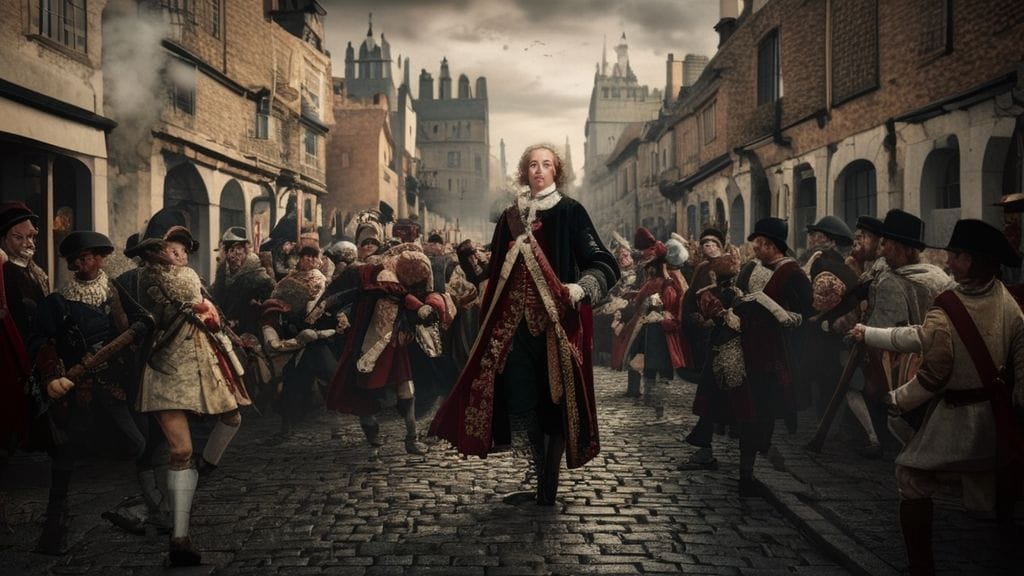
By late morning, the gates of Essex House opened. With drums beating and banners unfurled, Essex and a few hundred followers poured out into the Strand, turning toward the heart of London. Their numbers were not overwhelming, but they projected an air of dramatic purpose. Word raced ahead of them: “Essex! Essex is coming!” Windows opened; faces peered out. Apprentices abandoned chores to watch the spectacle. The sight of a great nobleman riding armed through the streets with his household at his back was something out of an old chronicle—half pageant, half menace.
The city, however, did not respond as Essex had imagined. At key points—where he expected allies to join him in force—few appeared. Doors stayed closed. The Lord Mayor, warned by the crown, ordered the city’s trained bands to mobilize in defense of order. Proclamations went out under the queen’s name, branding Essex a traitor and commanding subjects not to aid him. The robert devereux rebellion, conceived as a sweeping popular rising, began almost immediately to falter.
Still, for several charged hours, London lived in suspense. At Paul’s Cross, where preachers normally thundered sermons, people whispered instead about the armed men passing through the streets. At the Royal Exchange, merchants paused in their dealings, caught between curiosity and fear. Somewhere in Whitehall, Elizabeth received updates on the unfolding crisis, every report a fresh test of her composure and authority. It was a clash not only of steel but of narratives: Essex’s claim to defend the realm versus the queen’s proclamation that she was the target of treason.
Through the Streets of London: Hopes, Hesitations, and Empty Support
As Essex and his party moved deeper into London, the gulf between expectation and reality grew painfully clear. He had counted on the city’s apprentices and craftsmen, many of whom admired him, to seize the moment. But admiration did not translate into organized support. People lined the streets, yes, but most watched in wary silence. A few shouted encouragement; others muttered prayers that the disturbance would pass without bloodshed.
Essex’s followers urged him to push on, to seize key positions before the crown’s forces fully mobilized. But his path was clogged with indecision. Should he head straight for the court, where the queen was heavily guarded but also vulnerable to dramatic appeal? Should he secure the Lord Mayor first, to give his actions a veneer of civic legitimacy? Or should he attempt to control the city gates, to prevent royal reinforcements from entering? Time ticked away as these questions spun around him.
At several points, his party clashed verbally with city officials, who demanded to know on what authority he marched armed through London. Essex insisted that he came to free the queen from conspirators. The officials replied coolly that they recognized only the queen’s written commands, not the word of a disgraced noble. When confronted with royal proclamations denouncing him as a traitor, some of Essex’s tentative sympathizers slipped back into the crowd. The legal and moral ground beneath his feet eroded with every step.
In the swirl of rumor, some Londoners convinced themselves that Spanish forces might exploit the confusion, that Catholic enemies lurked ready to strike if the queen’s government faltered. Fear of foreign invasion, still sharp after the Armada, made many instinctively rally to established authority rather than a maverick lord. The imagery Essex invoked—of rescuing the realm—was too abstract; the threat of chaos was immediate.
By early afternoon, it was clear the rising was not spreading. The robert devereux rebellion, instead of igniting the city, was isolating him in its streets. His men grew tired, hungry, more and more conscious that no great tide of support was coming. Reports reached Essex that his house on the Strand was under attack, that royal forces were moving against his base. If he lost Essex House, he lost his supplies, his family, his last refuge. The bold offensive began to look like a doomed excursion.
Some of his companions urged a desperate strike at the court, arguing that only a symbolic confrontation with the queen could redeem the day. Others cautioned that such a move, with so little backing, would be pure suicide. Essex, vacillating, chose retreat. He turned his horse back toward the Strand, hoping to reach his house before royal troops closed in. The march that had begun with heraldic drama ended in a weary, disorganized withdrawal through the same streets whose people had declined to join him.
The Crown Strikes Back: Proclamations, Betrayals, and Flight
While Essex had been making his way through London, the crown had not been idle. Robert Cecil and the Privy Council moved swiftly to stabilize the situation. Messengers carried proclamations bearing the queen’s authority to all corners of the city and beyond. These documents denounced Essex as a traitor who had “assembled a disorderly and armed company” against the peace of the realm. Copies were read aloud at crossroads and marketplaces; town criers gave voice to the queen’s indignation.
The language of these proclamations mattered. By defining the conflict as a simple case of treason rather than a dispute among counselors, the crown sought to leave no room for ambiguity. This was not a noble attempt to rescue a misled monarchy; it was, in the official telling, naked rebellion. For many, especially those who feared the legal and spiritual consequences of aiding a traitor, the message was decisive. Whatever sympathy they had for Essex’s grievances, they would not risk their lives and souls for him.
Back at Essex House, the situation deteriorated. The captive councillors had, at various points, tried to reason with their captor, to persuade him that he still had a path back to mercy if he surrendered. But as the hours wore on and news of the failed march trickled back, such arguments rang hollow. Elsewhere in the city, some of Essex’s supposed allies never even left their homes, quietly gauging the wind before deciding that caution was the better part of valor.
One of the more painful aspects of the robert devereux rebellion lies in the pattern of expectations and betrayals that laced through it. Essex had trusted that certain great lords would rise for him; they did not. Some, like the Earl of Rutland, wavered at the edge of commitment and then stepped back. Others may never have intended to act at all, their names dragged into the conspiracy more by hopeful gossip than by actual promise. Essex found himself increasingly alone, his cause reduced to a tight knot of die‑hard loyalists.
By late afternoon, the queen’s forces, under the command of Charles Howard, Lord Admiral, and others, moved decisively against Essex House. The streets had shifted from uncertainty to guarded normalcy. Shops cautiously reopened; churchgoers returned home discussing the morning’s disturbances like onlookers to a passing storm. The rebellion, such as it was, had failed to capture the city’s heart. Now, the crown would reclaim its own.
Storming Essex House: The Final Stand by the Thames
As royal troops approached Essex House, those inside prepared for a siege. Barricades were reinforced; musketmen took positions at windows; the gates were secured as best they could. Yet the defenders were tired and demoralized, their earlier bravado eroded by the cold mathematics of numbers and firepower. Essex, standing in the courtyard amid the clatter of hurried preparations, faced the stark reality that the day’s gamble had failed.
The assault on Essex House was not a grand, drawn‑out battle but a series of sharp, decisive encounters. Royal forces surrounded the complex, cutting off escape by land and river. Sir Gelli Meyrick and others directed the defense, trading sporadic gunfire with attackers. The residents of nearby houses watched in tense silence as smoke drifted from shattered windows and shouts echoed along the Strand.
Inside, the captive councillors became a liability rather than an asset. Their presence marked Essex’s defiance in the clearest possible terms. Any claim that he was acting under royal sanction or in the queen’s best interest had evaporated the moment he imprisoned her representatives. Some of his followers urged him to negotiate, using the councillors as bargaining chips for leniency. Others warned that such a tactic would only confirm his guilt in the eyes of the law.
After several tense hours, a parley was arranged. Essex, seeing no hope of relief and fearing a bloody assault that would surely end with his death, began to yield. Promises were made—implied, if not explicit—that surrender would at least spare his life for the time being. He may have clung to a sliver of hope that Elizabeth, remembering their years of closeness, would intervene on his behalf if he placed himself once more at her mercy.
By evening, the defenders laid down their arms. Essex and the key conspirators were taken into custody, their swords removed, their persons searched. A heavy, stunned silence settled over Essex House, broken only by the tramp of soldiers and the sobs of servants who had just watched their world collapse. The robert devereux rebellion, born in confidence and righteous fury, ended in a kind of exhausted anticlimax—no triumphant last charge, no heroic death on the barricades, just the sullen machinery of arrest and confiscation.
Essex was led away under guard, first to the Lord Keeper’s residence and then to the Tower of London. As he crossed the city he had hoped to command, Londoners peered out once more, this time at a prisoner rather than a would‑be savior. The theaters, shops, and churches that had formed the backdrop of his rise and fall stood as impassive witnesses. The next act of the drama would unfold not in the streets, but behind the stone walls of the Tower and the wood‑paneled chambers of a court of law.
Prisoner in the Tower: Confessions, Blame, and Broken Loyalties
The Tower of London, massive and implacable on the river’s edge, had long been the last stop for England’s defeated rebels. When Robert Devereux entered its gates in February 1601, he joined a grim company of dukes, bishops, and traitors whose stories had ended on Tower Green or at nearby execution sites. He knew the place well enough by reputation; he must have felt its weight as a judgment even before examining walls or cells.
Interrogations began swiftly. The council wanted not only to secure convictions but also to map the full extent of the conspiracy. Who had known? Who had participated? Who might still pose a threat? Essex was questioned repeatedly about his motives, his allies, and any foreign connections. Under pressure—legal, psychological, perhaps spiritual—he began to yield names, to downplay his own leadership, to portray the rebellion as the product of misunderstanding and others’ influence.
Some of his followers felt betrayed by the degree to which he shifted blame, hinting that they had pushed him further than he intended to go. Yet from Essex’s perspective, cornered in a cell with his life dangling by a thread, self‑preservation and remorse tangled together. He vacillated between defiant justifications of his actions and pained admissions that he had erred tragically. It was as if the grandeur of the robert devereux rebellion had drained away, leaving behind an ordinary man wrestling with fear and conscience.
Others arrested in connection with the uprising faced similar questioning. Southampton, more steadfast, refused to cast Essex as a mere instrument. Lesser conspirators, hoping for mercy, elaborated on conversations, embellished fears, tried to present themselves as minor players swept up by the charisma of a great lord. The council sifted through these testimonies, extracting a narrative that would serve both legal proceedings and political needs.
Elizabeth herself, though informed in detail, kept a certain distance from the daily grind of interrogation. She had, over her reign, trained herself to balance personal feelings with the cold necessities of rule. Still, contemporary report and later chroniclers suggest that news from the Tower pained her. This was not an anonymous rebel; it was the man who had once bent the knee before her in triumph, whose hand she had clasped in public ceremony, whose private letters had moved her. Each confession, each faltering excuse, highlighted how far he had fallen from those days of favor.
In the Tower’s dim corridors, footsteps echoed. Doors clanged shut. Quilled pens scratched on paper as clerks recorded every word. The rebellion had been brief, but its judicial aftermath would be meticulous. The state was preparing not just to punish but to explain, to teach, to remind every subject that no mantle of past service or royal affection could shield a man who raised arms against the crown.
Trial and Spectacle: Crafting the Official Story of Rebellion
The trials of Robert Devereux and his fellow conspirators were as much public theater as legal process. Essex, as a peer of the realm, was tried before the House of Lords in Westminster Hall, with a jury of noblemen summoned to sit in judgment. The setting was grand and deliberate: high ceilings, watching crowds, armed guards—a space designed to impress upon all who attended the solemnity and power of Tudor justice.
When Essex was brought in, dressed in black, he cut a figure dramatically different from the dashing courtier of a few years earlier. Witnesses noted a mixture of dignity and despair. He bowed to the assembled peers and then listened as the indictment was read, enumerating acts of treason: raising armed men, seizing councillors, attempting to stir up insurrection in the city. The prosecution, guided by figures like Attorney General Sir Edward Coke, presented the rebellion as a clear, premeditated attempt to overthrow the queen’s government.
Essex defended himself with the eloquence that had once charmed Elizabeth. He insisted that his goal had always been to protect the queen from conspirators, to ensure the security of the realm in a time of succession anxiety. He claimed that he had never intended harm to her person, only to remove those who, in his view, misled her. But the law made a sharp distinction: levying war “against the queen in her realm,” whatever the professed motive, was treason. And the facts—that he had marched armed through London and imprisoned royal councillors—were difficult to escape.
Witness after witness came forward, some with obvious reluctance, to describe meetings and statements that cast Essex as the central driving force behind the rebellion. The council’s goal was not only to prove guilt but to isolate it, to prevent the scandal from spreading too far into the political establishment. The narrative they shaped emphasized Essex’s personal ambition and reckless temperament, downplaying any broader ideological or factional dimension. As historian Patrick Collinson later observed, the crown sought to “individualize” the crime, protecting the system by sacrificing the man.
In the end, the verdict was foreordained. The peers found Essex guilty of high treason. Sentence was pronounced in the traditional, horrific terms—hanging, drawing, and quartering—though everyone suspected, and Essex surely hoped, that as a nobleman he might be spared the full barbarity and granted a cleaner death by beheading. The court adjourned, leaving behind a hush in the hall, the weight of a life now officially forfeit.
Other conspirators faced their own trials. Some, like Sir Charles Danvers and Sir Christopher Blount, were condemned and later executed. Southampton, because of his youth and perhaps lingering royal affection, narrowly escaped death, his sentence commuted to life imprisonment. Through these proceedings, the government sent a carefully calibrated message: mercy for a few, severity for the ringleaders, and an unambiguous assertion of the queen’s right to crush any challenge to her authority.
A Favorite’s Last Morning: The Execution of Robert Devereux
Despite petitions for mercy and the queen’s reported bouts of anguish, the decision was made: Robert Devereux, Earl of Essex, would die. Elizabeth hesitated; she delayed signing the death warrant. Some later stories, perhaps apocryphal, spoke of a ring the queen had given Essex in happier times, a token he was supposed to send her if ever he needed absolute forgiveness. In these tales, dramatized in later centuries, the ring never reaches her—intercepted by an enemy, or lost—and so Essex goes to the block unrescued. Whether true or not, the legend captures the tragic imagination of their relationship.
On 25 February 1601, before dawn, Essex was led from his cell in the Tower to the scaffold prepared on the green within the fortress walls. Unlike earlier great traitors who died at Tyburn before the wider public, his execution was kept semi‑private, witnessed mainly by officials and a select audience. The crown may have feared that a more public spectacle could stir sympathy or unrest.
Essex mounted the scaffold with composure that surprised some observers. He addressed the small crowd, confessing his sins and acknowledging the justice of his sentence, according to reports. He asked forgiveness of God, the queen, and those he had wronged. In that moment, the soaring rhetoric of the robert devereux rebellion—the claims of saving the realm—were gone, replaced by the familiar cadences of a condemned man asserting his penitence in hopes of spiritual salvation.
The executioner, sword in hand, waited for the signal. Essex knelt, placing his head on the block. The first blow was poorly aimed; it did not sever the neck. A murmur of distress rippled through the witnesses. It took several strokes to complete the task. The physical clumsiness of the execution, its messy brutality, stood in jarring contrast to the neat, moralized narrative the government wished to project. No matter how carefully verdicts were drafted, death remained a crude and final instrument.
Afterwards, Essex’s head was displayed briefly as proof of the sentence carried out, then removed. His body was buried within the Tower. Outside its walls, London went about its business. For some, the news was a shock; for others, a sad but inevitable conclusion. Elizabeth had executed a man she had once loved, or at least favored, and in doing so reaffirmed the harsh principle at the heart of her rule: the crown could not and would not tolerate armed defiance.
In private, the queen was said to have aged perceptibly in the months that followed. Whether out of personal guilt, political exhaustion, or simple weariness, she seemed diminished. Within two years, she would be dead, and the crown would pass to James VI of Scotland. The rebellion that had sought, in part, to shape the succession had instead become a footnote to it—one more cautionary tale about where unchecked ambition could lead.
Elizabeth I’s Wounded Heart: Politics, Regret, and the End of an Era
In the aftermath of Essex’s death, Elizabeth I confronted the human cost of political necessity. For more than four decades, she had skillfully balanced mercy and severity, rewarding loyalty while punishing defiance. But the execution of Robert Devereux cut closer to the bone. This was not just a rebel; it was a man who had shared her days and nights at court, whose moods and letters had once mattered deeply to her.
Accounts from courtiers and foreign envoys suggest that the queen was profoundly shaken. She spoke less, smiled less, and withdrew more frequently into private contemplation. The court, ever sensitive to the sovereign’s mood, sensed an autumnal chill settling over the aging monarch. “The queen is not what she was,” one observer wrote, noting that the sparkle of her earlier years had dimmed.
The political rationale for executing Essex was clear and, in the stark logic of monarchical power, unassailable. To spare him would have signaled weakness, invited further conspiracies, and undermined the authority she had spent a lifetime building. Yet the personal dimension was harder to justify to herself. The robert devereux rebellion forced Elizabeth to confront the paradox of her rule: she needed favorites to animate her court, to carry out her will, to embody her glory—but those same favorites, intoxicated with closeness to power, could become threats.
In later years, poets and playwrights would cast Elizabeth and Essex as tragic figures locked in a doomed dance of love and power. Contemporary evidence is more complex. Their relationship was rooted in politics as much as emotion, but emotion was certainly there—pride, affection, anger, disappointment, perhaps even a fragmentary echo of romance. The decision to sign Essex’s death warrant thus reverberated not only through the realm but through the queen’s own psyche.
Elizabeth’s final two years were marked by growing physical frailty and psychological fatigue. The long war with Spain dragged on, though in a less intense form. Factional disputes at court continued, but with an increasingly eye toward the future, toward James of Scotland and the shape of the next reign. Elizabeth, who had embodied England’s identity for a generation, became a figure half revered, half mourned in advance—an aging monarch slowly giving way to time.
In that twilight, the memory of Essex hovered like a shadow. Some said she mentioned him in private, regretting that events had spiraled to such an end. Others doubted such sentimental recollections, insisting that a queen’s duty left no room for self‑pity. Either way, the rebellion and execution of 1601 formed part of the emotional backdrop against which Elizabeth’s reign drew to a close. The story of the favorite who rose too high and fell too far became intertwined with the story of a queen who, in defending her authority, paid a price only she fully understood.
Echoes in the City: How London Remembered the Essex Rising
For Londoners, the events of 8 February 1601 and the weeks that followed lodged in memory as a brief but vivid disturbance—a morning when the familiar order of streets and shops trembled for a moment on the edge of something darker. In the immediate aftermath, the city’s leaders worked hard to reassert calm. Sermons were preached reminding congregations of their duty to obey lawful authority. Printed broadsides circulated, recounting the rebellion in lurid but carefully controlled detail.
In taverns and workshops, people retold stories of the day: how Essex had ridden past with his entourage; how the city watch had mustered; how the proclamations had been read at the crossroads. Each retelling added small embellishments—some claimed to have seen the earl’s face up close, others to have overheard defiant or humble words. Memory blurred with rumor, but the central lesson remained: even a great lord could be cast down if he challenged the crown.
At the Globe and other theaters, playwrights absorbed the drama into their work. Although censorship limited direct references to recent political crises, the themes of loyalty, rebellion, and the fall of favorites were in the air. The performance of “Richard II” on the eve of the rising acquired a retrospective aura of prophecy. Later commentators like John Heminges and Henry Condell, in their preface to Shakespeare’s First Folio, would hint at the uneasy relationship between the stage and state power in those years (though they did not mention Essex by name).
The physical spaces of the rebellion—Essex House, the Strand, the Tower—remained unchanged, yet they acquired new layers of meaning. People passing Essex House might lower their voices, recalling the day soldiers had surrounded it. The Tower, always grim, now contained the recent memory of Essex’s death alongside the older ghosts of Thomas More, Anne Boleyn, and others. London, a city that never stopped growing and changing, folded the episode into its long tapestry of rebellions, plagues, fires, and coronations.
In the longer term, the robert devereux rebellion became a reference point, a cautionary example invoked whenever a noble seemed too bold or a faction too defiant. Pamphleteers in the early Stuart period, during crises with Parliament or other discontents, sometimes alluded obliquely to the fate of Essex as a reminder that royal patience had limits. The very brevity of the uprising made it a perfect moral anecdote: ambition unchecked, swiftly punished.
Power, Patronage, and Fragility: What the Essex Revolt Revealed
Beneath the vivid surface of swords, proclamations, and scaffold speeches, the Essex rebellion exposed some deeper structural truths about Elizabethan England. At its core, the crisis was about the fragility of a political system built on personal favor and informal networks as much as on formal institutions. Essex’s rise had been spectacular precisely because the queen’s favor could lift a man so high. His fall, and his attempt to reclaim power by force, revealed how dangerous that same system could become when trust broke down.
The crown’s authority rested on a delicate combination of awe, love, and fear. For decades, Elizabeth had nurtured that authority with brilliant skill. But her reluctance to name a successor created a vacuum into which speculation and anxiety poured. Essex and Cecil, in their different ways, tried to manage that uncertainty—one through bold gestures and appeals to popular support, the other through quiet negotiation with James of Scotland. The robert devereux rebellion can thus be read as a violent symptom of a broader succession crisis, even if the crisis never fully erupted into civil war.
The event also highlighted the role of London as a political actor. Essex believed the city could be turned into a lever to move the state: seize its institutions, its militia, its symbolic spaces, and pressure the queen into dismissing her counselors. He misjudged both the city’s conservatism and the resilience of royal propaganda. When faced with the choice between a familiar, if aging, monarchy and a risky adventure under an embittered noble, London overwhelmingly chose stability. The episode reinforced the lesson that successful rebellion required either overwhelming force or a far deeper base of popular organization than Essex had ever cultivated.
Finally, the rebellion shed light on how the state managed dissent. Rather than respond with indiscriminate terror, Elizabeth’s government opted for targeted punishment and narrative control. Executions were high‑profile but limited; trials were public but choreographed. Official accounts emphasized Essex’s personal flaws, not systemic grievances, allowing the crown to present itself as the injured party rather than a tyrant provoked into overreach. This strategy did not eliminate dissent in England, but it helped channel it into forms less likely to explode into open revolt—petitions, parliamentary speeches, encrypted letters—at least for a time.
From Villain to Romantic Hero: The Changing Memory of Essex
History rarely leaves its subjects in peace. Over the centuries following 1601, Robert Devereux’s image shifted repeatedly, from reckless traitor to tragic romantic hero and back again. In the immediate aftermath, official narratives painted him as a warning: a man gifted with every advantage who squandered it in arrogance and rebellion. Chronicles authorized or tolerated by the crown stressed his ingratitude and rashness. Camden, in his “Annales,” while acknowledging Essex’s bravery, ultimately framed him as a cautionary example of overweening ambition.
As time passed and the passions of the moment cooled, writers began to explore more ambiguous portrayals. The Restoration and eighteenth century, with their own court intrigues and fallen favorites, found in Essex a mirror of their anxieties. Dramatists drew on his story to explore themes of love, betrayal, and the tragedy of misunderstood loyalty. The legend of the ring, in which Elizabeth supposedly awaited a final plea for pardon that never came, crystallized a powerful narrative of lost chances and fatal miscommunication.
The Romantic era seized on Essex even more eagerly. Poets and novelists, attuned to the drama of individual emotion and the conflict between the heart and the state, transformed him into a martyr of feeling—too passionate for the cold calculations of politics, too honor‑driven for the compromises of court. Painters depicted him as a handsome, brooding figure, caught between his devotion to the queen and his own sense of justice. The robert devereux rebellion, stripped of some of its messier details, became a stage for grand speeches and noble suffering.
Modern historians, beginning in the nineteenth and twentieth centuries, pushed back against these romanticized versions. Using state papers, private correspondence, and a more critical eye, they reconstructed the rebellion as a confused, poorly planned affair driven by factional rivalry and personal desperation. Essex emerged not as a purely heroic or villainous figure but as a complicated man: brave yet impulsive, intelligent yet self‑deceiving, sincerely attached to Elizabeth yet unable to accept the limits she placed on him.
Today, scholars tend to see the episode as a case study in early modern political culture—a convergence of honor codes, patronage networks, religious anxieties, and urban dynamics. Yet the old, more theatrical images persist alongside this analysis. Popular biographies and television dramas still return to the scene of the favorite pleading before the aging queen, the ring that does or does not arrive in time, the sword rising and falling on Tower Green. Facts and myths coexist, each answering different human needs: one for explanation, the other for meaning.
Legacy of 1601: Lessons for Monarchy, Rebellion, and Modern Politics
Looking back across more than four centuries, the Essex rebellion of 1601 still speaks with surprising clarity to modern concerns. At one level, it is a specific, time‑bound story: an aging queen, a reckless favorite, a city caught between loyalty and unrest. At another, it illuminates enduring patterns in political life—the dangers of personalizing power, the temptations of heroic self‑image, the complex relationship between elites and the public.
Monarchies and modern governments alike rely on a mixture of institutions and personal relationships. When those personal bonds fray—when a leader feels betrayed by trusted advisers, or a favorite feels unjustly cast aside—the results can be explosive. Essex’s sense of humiliation, his conviction that only he truly understood the realm’s needs, his willingness to override lawful structures in the name of a higher loyalty: these are not unique to his era. They echo in later coups, populist movements, and even corporate boardroom battles.
The robert devereux rebellion also reminds us how fragile “popular support” can be as a political resource. Essex mistook visibility and admiration for committed backing. He believed that because Londoners cheered him in triumphal parades, they would follow him into open conflict. But the calculus of risk is different when applause must become action. Modern movements, whether on the streets or online, often stumble over the same miscalculation—confusing social media enthusiasm or momentary protest crowds with a deep, sustainable base of support capable of withstanding state pressure.
For historians, the rebellion underscores the importance of narrative control. Elizabeth’s government survived in part because it moved quickly to shape how events were understood, issuing proclamations, staging trials, and commissioning or tolerating certain accounts while discouraging others. Today, states, parties, and movements still fight over the stories through which crises are framed—who is defender, who is aggressor, what counts as legitimate dissent versus treasonous revolt.
Finally, the episode invites reflection on the human costs that lie beneath abstract words like “treason,” “security,” and “order.” Essex’s execution was not just a constitutional event; it was the violent end of a human relationship, the silencing of a once‑vibrant presence in court and city. For Elizabeth, for Essex’s family, for his followers, the rebellion left scars that no proclamation could fully heal. Power, in every age, asks its guardians to make decisions whose moral complexity they may never completely resolve.
Conclusion
On that February morning in 1601, when Robert Devereux rode out from his house on the Strand, he believed he could bend history to his will. The city would rise; the queen would listen; his enemies would fall. Instead, within a single day, his hopes disintegrated in the cold air of London’s streets. Arrest, trial, and execution followed, transforming a few hours of chaos into a lasting emblem of the perils of ambition at the edge of a throne.
The robert devereux rebellion was brief, almost shockingly so, yet its reverberations spread far beyond the walls of Essex House or the scaffold on Tower Green. It revealed fault lines in Elizabethan politics—over succession, foreign policy, and the limits of royal favor. It tested the resilience of the Tudor state and found it, for the time being, capable of absorbing even a revolt from within the queen’s inner circle. And it gave later generations a story of drama and pathos through which to think about loyalty, power, and the costs of defiance.
Elizabeth died two years later, passing the crown peacefully to James VI of Scotland, the very outcome Essex had feared might be manipulated by his rivals. In that smooth transition, the rebellion seemed, on one level, pointless—a failed bid to avert a future that came anyway. Yet on another level, it served as a final, dark punctuation mark in the long sentence of the Tudor dynasty, a reminder that even at its height, the glittering court of Gloriana was shadowed by insecurity and fear.
Today, when we read council minutes, trial records, and private letters from 1601, we can trace the contours of the uprising with forensic precision. But beyond the documents, there remains an irreducible human drama: a gifted but volatile man unable to accept loss of influence; a seasoned queen forced to sacrifice a favorite to preserve her realm; a city briefly invited to choose sides and choosing, instead, order over adventure. In that drama lies the enduring fascination of the Essex rebellion—and a mirror, however distant, for our own struggles with power, pride, and the fragile bonds that hold political communities together.
FAQs
- Who was Robert Devereux, Earl of Essex?
Robert Devereux, second Earl of Essex, was a prominent nobleman, soldier, and courtier in the reign of Elizabeth I. Rising rapidly as the queen’s favorite in the 1590s, he gained fame through military exploits against Spain and in the Netherlands, as well as his charismatic presence at court. His ambition, impatience, and rivalry with the powerful Cecil family, however, led to repeated clashes with royal policy and ultimately to his involvement in the 1601 rebellion in London. - What was the main cause of the robert devereux rebellion in 1601?
The rebellion arose from a mix of personal and political causes. Essex felt disgraced after his failed campaign in Ireland and believed he had been undermined by rivals like Robert Cecil. He was deeply anxious about the unresolved question of the succession and convinced that “evil counselors” misled the aging queen. These grievances, combined with his own wounded pride and overestimation of his popularity in London, pushed him toward the desperate decision to march armed through the city in an attempt to force changes at court. - How did the Essex rebellion unfold on 8 February 1601?
On the morning of 8 February, Essex detained four Privy Councillors who had come to question him, effectively crossing the line into open rebellion. He then led several hundred armed supporters from his house on the Strand into the city, hoping to rally Londoners and secure the support of civic authorities. Instead, he met hesitation and resistance; royal proclamations branded him a traitor, and no mass uprising occurred. By afternoon, realizing his plan had failed, he retreated to Essex House, where royal forces surrounded and eventually compelled his surrender. - What happened to Essex and his supporters after the rebellion failed?
Essex and many of his leading allies were arrested and taken to the Tower of London. The government conducted thorough interrogations to uncover the scope of the conspiracy. Essex, tried before his peers, was found guilty of high treason and executed by beheading within the Tower on 25 February 1601. Some of his associates, such as Sir Charles Danvers and Sir Christopher Blount, were also executed. Others, including the Earl of Southampton, had their death sentences commuted to long terms of imprisonment. Lesser participants received fines or were quietly released. - Did Queen Elizabeth regret executing Robert Devereux?
Contemporary accounts and later reports suggest that Elizabeth was deeply troubled by the need to execute Essex, a man she had once greatly favored. She hesitated before signing the death warrant and, after his death, appeared more withdrawn and melancholy. While some later stories—like the tale of a lost ring preventing his pardon—are likely embellished, they reflect a widespread belief that the queen felt personal sorrow alongside political necessity. Whether or not she spoke openly of regret, the episode clearly weighed on her in the final years of her reign. - How did the Essex rebellion affect the succession to the English throne?
The rebellion did not directly alter the succession, which ultimately followed the path quietly prepared by Robert Cecil and others. Two years after the uprising, Elizabeth died, and James VI of Scotland succeeded her peacefully as James I of England, uniting the crowns. If anything, the failure of the Essex revolt strengthened the case for an orderly, negotiated transfer of power, underscoring the dangers of trying to influence the succession through force or extra‑legal pressure. - What lessons do historians draw from the robert devereux rebellion today?
Historians see the rebellion as a revealing case study in the politics of favor, faction, and succession in late Elizabethan England. It demonstrates how personal relationships at court could become flashpoints for wider anxieties and how a charismatic figure like Essex could misread both his own position and the mood of the public. The episode also highlights the Tudor state’s skill in managing crises through targeted repression and narrative control, turning a potentially destabilizing event into a reaffirmation of royal authority. More broadly, it offers insight into how ambition and wounded honor can distort political judgment in any age.
External Resource
Internal Link
Other Resources
- Encyclopaedia Britannica – general search for the exact subject
- Google Scholar – academic search for the exact subject
- Internet Archive – digital library search for the exact subject

