Table of Contents
- The Winter When Hoofbeats Echoed Across Thrace
- From the Shadow of Attila: Who Were the Kutrigur Huns?
- A Shaken Empire: The Byzantine World on the Eve of 559
- Beyond the Danube Frontier: Preparations and Omens of Invasion
- When the Kutrigur Huns Invade Thrace: The Crossing into Roman Lands
- Fire on the March: The Devastation of Thrace
- Panic in the Queen of Cities: Constantinople Confronts Its Fear
- Belisarius Summoned: A Retired General Returns to War
- Skirmishes in the Shadow of the Walls: Strategy, Deception, and Courage
- At the Edge of the Impossible: How a Small Force Faced the Kutrigurs
- Negotiating with the Steppe: Ransom, Gold, and Uneasy Withdrawal
- Lives in the Ashes: Ordinary People of Thrace in the Wake of Invasion
- An Empire Laid Bare: Military and Political Lessons of 559
- Shifting Steppes: Kutrigurs, Utigurs, and the Changing Map of Power
- From Chronicle to Legend: How Later Ages Remembered the Invasion
- Echoes Through Centuries: Why the March on Constantinople Still Matters
- Conclusion
- FAQs
- External Resource
- Internal Link
Article Summary: In the year 559, as winter loosened its grip over the Balkans, the kutrigur huns invade thrace and race toward the very heart of the Byzantine Empire, startling an aging but still formidable imperial state. This article traces the rise of the Kutrigurs from the fractured Hunnic world and sets their audacious incursion against the wider backdrop of Justinian’s overstretched empire. We follow the hoofbeats south of the Danube, through burning Thracian fields and ruined villages, until the riders appear in sight of Constantinople itself, where panic and disbelief ripple along the mighty Theodosian Walls. At the center of the drama stands Belisarius, the celebrated yet sidelined general, recalled from near-obscurity to confront this peril with a handful of men and a great deal of ingenuity. Through narrative detail, analysis, and the voices of contemporary chroniclers, we explore how the moment when the kutrigur huns invade thrace exposed deep military and political weaknesses. We also consider the long-term consequences on Byzantine frontier policy, on the shifting mosaic of steppe powers, and on the memories and myths that formed around this campaign. Ultimately, the story of how the kutrigur huns invade thrace and approach Constantinople becomes a lens through which to see an empire balancing between past triumphs and looming vulnerabilities. But this was only the beginning of a long and uneasy relationship between Byzantium and the restless powers of the Eurasian steppe.
The Winter When Hoofbeats Echoed Across Thrace
The year 559 opened not with fanfare, but with a chill wind curling over the black earth of Thrace. Snow still clung in pockets along the hills and riverbanks. Farmers in scattered villages bent over their meager stores, counting grain, mending tools, whispering old prayers against famine and raiders. They had little reason to suspect that this particular winter would be remembered in chronicles and sermons, and in the wary tales of generations yet unborn. Yet in that season, far beyond their sight, men were tightening girths on shaggy steppe ponies, checking bowstrings, lacing up quivers heavy with arrows. The air above the Danube frontier, thin and sharp, carried the scent of smoke and the tremor of something about to break.
When the Kutrigur Huns invade Thrace in 559, they were not just crossing a river or a line on a map. They were stepping into the heartland of a world that, for two centuries, had called itself Rome. To the east, Constantinople, the New Rome, glittered with domes of gold; to the west, the faded memories of the old empire in Italy and Gaul were flickering back into the imperial orbit through Justinian’s wars. Yet in the Balkans, on the frontier where Latin and Greek met the languages of the steppe, the reality was far more fragile. Watchtowers sagged. Garrison forts stood half-empty. Tax registers recorded more absences than names. It is here, in this tired landscape, that the saga of 559 begins.
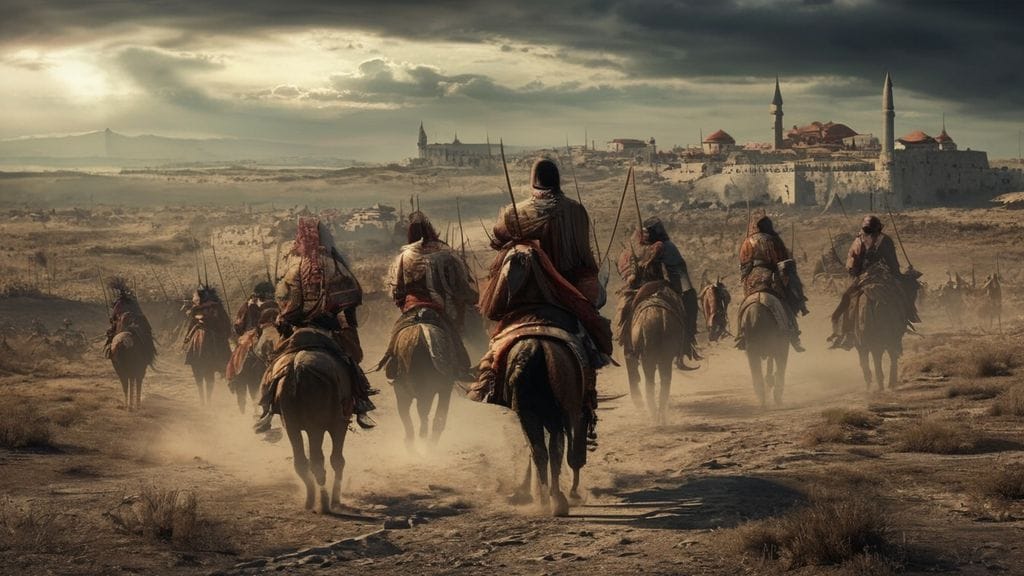
Imagine a Thracian dusk as the snowmelt turns paths into sludge. A shepherd, high on a ridge, hears a low, uneven sound—at first like distant thunder, then like many drums beating out of rhythm. He peers toward the northern horizon. Small smudges of dust swirl against the sky, even in winter’s damp. The sound grows: hooves, dozens, then hundreds, striking frozen ground. The shepherd does not yet know their name, but history will record it with grim clarity: Kutrigurs. The kutrigur huns invade thrace with a speed and daring that no one in Constantinople had anticipated. And insofar as anyone in Thrace is aware, the empire—its officials, its soldiers, its sacred capital—is very far away.
This was a moment when the fabric of imperial prestige, so brilliantly woven by Justinian’s architects and generals, was suddenly tugged at by a force from the steppes. It is astonishing, isn’t it? An empire that could lavish gold on marble basilicas in Ravenna and mosaics in Constantinople now struggled to keep horsemen from riding almost to the city’s own gates. To understand how this came to pass, we must turn north and east, to the shifting, wind-swept domains from which the Kutrigurs had emerged, and back in time, to the long and tangled legacy of Attila’s Huns.
From the Shadow of Attila: Who Were the Kutrigur Huns?
The Kutrigurs were not a sudden apparition galloping out of nowhere. They were heirs to a centuries-long movement of peoples across the vast Eurasian steppe, where grassland stretched almost unbroken from the frontiers of China to the plains of Pannonia. In this world of horizons and herds, power rested on speed, discipline, and the arc of the composite bow. To sit a horse comfortably from childhood meant freedom; to master the bow at full gallop meant dominance. The Romans—calling themselves Byzantines now only in our hindsight—had been hearing these hoofbeats for a long time.
In the fifth century, Attila’s Huns had crashed into the Roman imagination. After Attila’s death in 453, however, his empire shattered almost overnight. The coalition of Hunnic and subject peoples splintered into rival groups, some fading into the Carpathian basin, others pushed back onto the steppe. Among the many fragments, two confederations emerged on the Pontic-Caspian steppe that would matter dearly to the empire in 559: the Kutrigurs and the Utigurs. Their names flicker into our view largely through Byzantine pens, those of chroniclers like Procopius and Agathias, and later through the puzzled remarks of medieval scholars trying to track these elusive peoples.
The Kutrigurs likely occupied territories north of the Black Sea and west of the Don River, though steppe borders were never fixed lines. They were a confederation—an alliance of clans, warrior elites, and subject groups—united as much by opportunity and a shared way of life as by ethnicity in any modern sense. Greek and Latin authors called them “Huns,” a label that had long since become shorthand for mounted raiders from the north and east, regardless of subtle distinctions between tribes. When the sources say the kutrigur huns invade thrace, they are capturing not a neat ethnic category, but a swarming confluence of riders, families, and ambitions that had coalesced under formidable chieftains.
They lived in felt tents, moved with the seasons, followed their herds of horses, sheep, and cattle. Their weapons were well suited to sudden, terrifying war: powerful composite bows of wood, horn, and sinew, short swords or sabers, lances, and lassos. Their warriors, wrapped in furs and leather, with lamellar armor for the wealthier among them, could ride dozens of miles in a day, feint in battle, and melt back into the steppe. To the agrarian villagers of Thrace, whose world was measured in the slow paces of oxen and plows, the Kutrigurs must have seemed almost a different species of humankind.
The politics of the steppe were as fluid as its grasslands. The Kutrigurs’ neighbors and rivals, the Utigurs, occupied lands further east. Some scholars suggest that both groups descended, in part, from the earlier Huns and related tribes who had once terrorized both Roman and Persian frontiers. Their allegiance shifted according to need: sometimes raiding Byzantine territory, sometimes accepting subsidies as allies, sometimes fighting each other at the emperor’s discreet urging. Tribute and diplomacy were tools as sharp as any sword. The line between mercenary and enemy was thin and negotiable.
By the mid-sixth century, a Kutrigur leader known to the Byzantines as Zabergan had come to prominence. His name would be etched into imperial memory with a mixture of fear and grudging respect. Under chieftains like him, Kutrigur society combined harsh discipline with personal charisma. A leader who could promise plunder and pasture, who demonstrated courage in battle and generosity to followers, would draw warriors to his standard. Failure would scatter them as surely as winter winds.
From this harsh, mobile, and competitive world, the decision took shape: to ride south in force, to test the weakness of the imperial frontier, and to gamble that the richest prize of all—Byzantine wealth and prestige—could be seized or at least shaken. That decision would meet an empire already stretched thin.
A Shaken Empire: The Byzantine World on the Eve of 559
When we say the kutrigur huns invade thrace in 559, we must imagine not a static empire waiting passively behind its walls, but a state already reeling from the aftershocks of its own ambitions. Justinian I had ruled since 527, and his reign was a symphony of triumph and catastrophe in equal measure. On the one hand, his generals—Belisarius and Narses chief among them—had reconquered North Africa from the Vandals and much of Italy from the Ostrogoths. His jurists had compiled the Corpus Juris Civilis, a new codification of Roman law. His architects had raised Hagia Sophia, that dazzling dome of light, over the ruins of earlier churches burned in the Nika riots. On paper, the empire shone.
But beneath the gilded surface, the foundations trembled. War was expensive. The Italian campaign especially had eaten into the treasury, demanded men and materiel, and left frontiers elsewhere dangerously under-defended. Worse still, in 541 the so-called Justinianic Plague had swept through the empire, carried perhaps by fleas in grain ships from Egypt. Procopius, in his Wars, spoke with horror of the dead piling up in Constantinople’s streets. Populations plummeted, tax revenues shrank, and entire rural districts were left half-empty. The plague did not simply pass once; it recurred in waves, hollowing out manpower for years.
The Balkans, including Thrace, felt the consequences acutely. With Italy and Persia absorbing so much attention, and with fewer troops available, the Danube frontier could not be maintained at the level earlier emperors had hoped for. Fortresses fell into disrepair. Units were reassigned or disbanded. Some regions relied on local militias, city guards, or even hired barbarian federates to keep raiders at bay. It was a strategy of improvisation rather than confidence.
Internally, Justinian’s regime was centralized and often hard-edged. Heavy taxation, necessary to support armies and building projects, pressed hard on landowners and peasants alike. A series of natural disasters—earthquakes, famines—had compounded the empire’s troubles. The spiritual life of the empire, too, was unsettled. Bitter theological quarrels over the nature of Christ—Chalcedonian orthodoxy versus various Miaphysite positions—divided bishops, monks, and lay communities from Egypt to Syria and beyond. In such a tense climate, the sense of a providentially protected Christian empire sometimes faltered.
In Constantinople, however, daily life still moved to the rhythm of markets, processions, chariot races, and legal petitions. The city’s enormous walls, the Theodosian Walls, stood like a physical manifesto: here is the line that no enemy may cross. They had withstood the Huns of Attila in an earlier age, they had laughed off countless lesser threats, and they were periodically repaired and reinforced. The prevailing assumption—among courtiers, senators, and most citizens—was that so long as those walls held, the empire’s capital was secure, whatever mischief flickered on the frontiers.
Yet the empire’s enemies had eyes and ears too. Reports of thin garrisons, of chaos after the plague, of an emperor ever older and more beset by troubles, drifted to the steppe. Subsidies that had once bought peace or at least contained violence now seemed more negotiable. A daring leader might well ask: If not now, when?
Beyond the Danube Frontier: Preparations and Omens of Invasion
Somewhere in the winter or very early spring of 559, the courtyards of a Kutrigur encampment filled with the creak of saddles and the clatter of weapons. Smiths hammered out arrowheads in glowing forges, sparks swirling into the steppe night. Women packed household goods onto carts; children were bundled in furs; herds were reorganized. This was no mere raid by a few dozen adventurers. This was an organized, multi-pronged incursion, with the potential to carve through the Balkans like a blade.
The chroniclers do not give us a precise council scene, but we can imagine it. Chieftains and elders, hands rough from reins and freezing air, gathered around a central fire. They spoke of imperial neglect, of rich, undefended lands to the south, of captives who had drifted back with tales of Thracian wealth: full granaries, flocks, monasteries with silver candlesticks and jeweled reliquaries. One voice, perhaps Zabergan’s, argued that the time had come to ride as far as the Roman capital itself, to test its resolve and shake gold from its terrified hands.
Information, for the Kutrigurs, came through multiple channels: from traders, from steppe neighbors, from forays and reconnaissance parties. They knew of the Danube’s crossing points, of stretches where Roman patrols had grown sparse. They likely understood that the empire was embroiled in distant conflicts and exhausted by plague. What they could not fully know, of course, was how thin the imperial defense in Thrace truly was. In that sense, the decision to ride south was both calculated and reckless, a high-risk demand for plunder and prestige.
As final preparations were underway, Roman eyes on the frontier would have seen only fragments: a scout noticing distant smoke, a merchant reporting unsettling rumors, perhaps a minor raid probing defenses near a ford or ruined fort. Warnings may have been sent downriver, then overland to provincial governors, then by courier to Constantinople. In the slow machinery of imperial bureaucracy, such echoes of alarm sometimes died in transit, buried under a pile of more immediate concerns. In any case, when the kutrigur huns invade thrace in force, the empire’s response is reactive, not preventive.
On the eve of the invasion, villagers along the northern stretch of Thrace might have sensed something in the air. The roads, usually quiet in late winter, began to see nervous traffic: small groups of travelers hurrying south, local landowners bringing valuables into walled estates, talk in taverns of strange riders across the Danube. Priests might have added extra litanies to their services, invoking saints against “Scythian” raiders, the catch-all term for nomads from the north. Omens, for those inclined to see them, lurked everywhere: a halo around the moon, an unexpected eclipse, the untimely death of an animal. Yet behind the murmurs lay a stubborn hope that the imperial system would hold—as it always had.
When the Kutrigur Huns Invade Thrace: The Crossing into Roman Lands
The actual crossing of the Danube—the ancient river that had so long served as a porous barrier between Rome and the barbarian world—was both physical and symbolic. To say the kutrigur huns invade thrace is to say they breached more than water. Somewhere along its winding course, likely at a point where ice, shallows, and lax Roman supervision converged, the Kutrigur riders made their move.
Picture the scene at dawn. Mist rises from the river, muffling sound. Ahead, the southern bank looms, its line of bare trees black against the brightening sky. The first riders test the water, horses snorting, their breath steaming. Others fan out to find suitable fords. Some accounts suggest that the river’s level was low that season, making the crossing easier, though such details, so crucial to tacticians, are all but invisible in our sources. What we do know is that they succeeded, in numbers large enough to overwhelm local defenders.
Roman watchposts, if manned at all, would have sent frantic signals: smoke by day, fire by night, messengers on horse or on foot racing to the nearest military outpost. A small garrison, perhaps underpaid and undermanned, could do little but fight a delaying action or scatter before the oncoming tide. The Kutrigurs were experts at mobility. Before imperial forces could coalesce, the raiders had already fanned out into Thrace’s interior.
The invading force reportedly divided into several contingents, each aiming at different targets: some driving toward the Balkans’ mountain passes, others toward coastal towns, and one ominous column setting its sights on Constantinople. This multi-pronged advance spread fear and confusion. From one village came tales of burning and slaughter; from another, of captives driven northward with ropes around their necks. Smoke rose in thin pillars along the horizon. For the farmers of Thrace, time collapsed into chaos: one day’s peace replaced by the next day’s terrible surprise.
It was not the first time raiders had struck these lands, but the scale and boldness were new. No longer was Thrace merely a neglected backwater; in 559, the kutrigur huns invade thrace as a deliberate strategy aimed at the empire’s nerve center. The road to Constantinople, worn by centuries of imperial couriers and supply trains, now found itself trampled by horsemen whose allegiance was to the open sky and the promise of loot.
Fire on the March: The Devastation of Thrace
The march of the Kutrigurs through Thrace was not a single sweeping line, easily traced on a modern map. It was a jagged pattern of raids and withdrawals, of sudden appearances and equally sudden disappearances into forests, hills, or ravines. Wherever they went, they left behind a landscape bruised by fire and fear.
Contemporary chroniclers, inclined to dramatize, speak of towns emptied overnight, of churches desecrated, of bodies left unburied in frozen fields. Yet even if we discount exaggeration, the human cost was immense. Villages that had survived previous wars and plagues now faced a new kind of horror: mounted warriors appearing at dawn, surrounding the settlement before anyone could organize a defense. Doors smashed open. Men cut down if they resisted; women and children driven together, assessed like livestock, then bound for the journey north. Those considered weak or unprofitable might be killed outright.
Fires consumed that which could not be carried away. Grain stores were a prime target. To a steppe army, the seizure or destruction of food crippled local resistance and enriched the invaders. Monasteries, often repositories of both spiritual and material wealth, were at particular risk. Their walls, more symbolic than military, offered little resistance to determined raiders. Imagine a small community of monks, accustomed to chanting psalms in the half-light, suddenly confronted with shouting horsemen and the acrid smoke of burning manuscripts.
Along the main roads, refugees began to flow southward, a stream of carts, pack animals, and weary feet. Some sought shelter in walled towns; others pressed on toward Constantinople, carrying with them not only their possessions but also the terrifying news that the countryside behind them had fallen to the enemy. The more the kutrigur huns invade thrace, the more they uprooted the fragile web of local life that sustained the empire’s presence in the region—its tax base, its recruitment pool, its network of loyalties.
We can glimpse one such family, purely as a composite of many. A smallholding farmer named Theodoros, his wife Maria, their three children, an elderly mother. They had survived the plague years with difficulty, burying two infants and a cousin. They had dodged bandits, paid taxes late more than once, hidden a pig or two from avaricious officials. Now, hearing that the raiders had left a neighboring village in ashes, they loaded what they could on a cart: a chest of clothes, a few tools, icons wrapped in cloth, a small bag of coins. As they joined the flood of refugees, they must have wondered if the empire they paid tribute to could or would protect them.
Behind them, the Kutrigurs continued their disruptive dance. They did not seek to occupy Thrace permanently, to garrison its towns or rebuild its farms. Their aim was plunder, captives, and leverage. Every farmstead destroyed, every homestead looted, widened the wound in the imperial body and strengthened their hand when it came time to negotiate. And with each mile they advanced without serious opposition, their confidence grew. Constantinople, once a distant rumor, now loomed as a real and reachable goal.
Panic in the Queen of Cities: Constantinople Confronts Its Fear
News always traveled faster than armies, at least in rumor. By the time the Kutrigurs’ vanguard reached the outskirts of Thrace’s more populated districts, word of their exploits was already whispering through the markets and bathhouses of Constantinople. Some dismissed it as exaggeration—hadn’t the empire repelled worse threats? Others, especially those with relatives in the provinces, listened with a tightening in the chest.
As reports accumulated, the tone changed. Couriers arriving at the capital’s gates brought letters stamped with official seals: villages burned, local garrisons swept aside, raiders heading directly toward the city. In the palace precinct, Justinian’s ministers convened emergency councils. The emperor himself, now in his late fifties, had seen crises before—the Nika revolt that had nearly toppled him, the plague, wars on multiple fronts—but this one had a haunting intimacy: enemy horsemen in the very lands that fed and supplied the capital.
Panic was not instantaneous; it built like a storm. At first, citizens crowded around officials in the forums, demanding information. Shopkeepers exchanged worried glances, but trade continued. Then came more concrete signs: orders to inspect the walls, to open the armories, to muster any available troops. The city’s elite cavalry regiments, the scholae, and any other units still stationed nearby were called up. Conscription lists resurfaced. Men who had thought their days of bearing arms were over suddenly found themselves handed spears and told to report to a section of the wall.
The Theodosian Walls, stretching for several kilometers across the landward side, were in theory impregnable, triple lines of stone and brick with towers, gates, and ditches. In practice, they needed men—trained, disciplined, numerous—to defend them. In 559, many experienced soldiers were absent, serving in far-flung campaigns or simply no longer alive. The city’s defense now depended on a patchwork of regular troops, hastily raised levies, foreign mercenaries, and volunteers, all trying to cohere into a fighting force under immense psychological pressure.
Religious processions wound through the streets as clergy carried icons and relics along the main thoroughfares. Hymns rose over the city’s din, imploring divine protection. People flocked to Hagia Sophia and other churches, lighting candles, weeping, confessing old sins in case the worst came to pass. Yet behind the liturgies, fear gnawed at the city’s heart: what if the walls were not enough this time? What if the kutrigur huns invade thrace only as a prelude to something even more devastating—the sack of Constantinople itself?
Food prices spiked. Those who could afford it stockpiled grain and salted meat. Refugees from Thrace arrived in growing numbers, some maimed, some bereaved, all traumatized. They bore witness to the speed and ferocity of the invasion, to the inability of local authorities to stop it. Their testimony was a mirror held up to the capital’s illusions of safety. The empire had always been more than its capital, but now, for many, the capital was the empire. If Constantinople fell, what would remain?
Belisarius Summoned: A Retired General Returns to War
In this tense atmosphere, one name began to circulate in the corridors of power and in the muttered conversations of soldiers: Belisarius. Once the shining sword of Justinian’s ambition, the man who had ridden into Ravenna in triumph and paraded Vandal kings in chains, Belisarius had, by 559, passed into a semi-retirement tinged with ingratitude. Had he been a lesser figure, he might have vanished quietly from history. But the moment the kutrigur huns invade thrace and approach the walls of Constantinople, Justinian turned once more to his old champion.
Belisarius was no longer young. The campaigns in Persia, Africa, and Italy had taken their toll. His relationships at court were complicated; envy and suspicion had dogged him. Procopius, his secretary and our key source, paints a picture of a man both brilliant and constrained, honored in ceremonies but often marginalized in policy. Yet underneath the weariness still burned a keen strategic mind and a reputation that could stiffen wavering spines.
When the summons came, Belisarius reportedly did not hesitate. He understood the stakes. The defense of the capital was not a matter of prestige alone; it was the defense of his own life’s work, of an empire he had bled and sacrificed to expand and protect. Yet what he received upon reporting for duty was not a grand army but a grim reminder of how far the empire’s resources had been stretched.
According to Procopius and later writers, Belisarius was given a motley force: a handful of regular troops, some palace guards, and whatever veterans and volunteers could be scraped together. Many of his old comitatenses, the mobile field troops that had followed him across continents, were gone. In their place stood men with more courage than training, armed in haste, issued armor that might have been older than their fathers. It was as if a retired champion charioteer had been handed a battered cart and a lame horse, then told to win the race of his life.
Yet Belisarius adapted. He always had. He understood that in facing steppe horsemen like the Kutrigurs, numbers and brute force alone would not suffice. Mobility, deception, and careful use of terrain would matter more. The city’s walls gave him a strong anchor; what he needed now was to prevent the enemy from fully encircling or psychologically overwhelming the capital. He set about training his small force, assigning officers, planning patrols and ambushes. In council, he urged calm—panic was the invader’s ally.
His return to active command carried symbolic weight as well. Word spread among the populace and the troops: Belisarius, conqueror of Vandals and Goths, was once again defending the empire. For many, this was a sign that God had not abandoned them. For the Kutrigurs, when they learned who opposed them, it was a reminder that the empire, even wounded, still possessed sharp claws.
Skirmishes in the Shadow of the Walls: Strategy, Deception, and Courage
The clash between Belisarius and the Kutrigurs did not unfold as a single grand battle before the walls of Constantinople. Instead, it took the form of skirmishes, feints, and psychological maneuvers. The steppe warriors, confident from their successes in Thrace, approached the city expecting to terrorize its defenders into concessions, if not outright collapse. Belisarius aimed to flip that script.
One of the most famous episodes, preserved in Procopius’ narrative, describes how Belisarius used deception to compensate for his numerical inferiority. Knowing that the Kutrigur scouts would be watching, he had his men and civilian volunteers spread out, light many campfires, and ride repeatedly around certain sections of the walls, giving the impression of a much larger force. He formed his troops in such a way that dust and noise exaggerated their apparent numbers. To riders used to reading the battlefield at a glance, such illusions could seed doubt.
Outside the city, in the rolling terrain of Thrace’s coastal plains, ambushes were set. Small detachments of Belisarius’ forces lured Kutrigur bands toward pre-chosen kill zones: narrow defiles, wooded areas, or spots where hidden reserves could charge at a crucial moment. The key was to avoid being caught in the open by massed cavalry, whose arrows and mobility could decimate heavier infantry. Each successful skirmish mattered doubly—reducing the enemy’s strength and, perhaps more importantly, restoring confidence among the imperial troops.
For the city’s inhabitants, the sight of smoke and dust clouds on the horizon carried a charged ambiguity: Was it the enemy advancing, or Belisarius counterattacking? From the walls, men and women peered anxiously, trying to parse movements at distances far beyond their understanding of tactics. Clashes that, in purely military terms, might be considered minor engagements acquired enormous psychological weight. Every rumor of a Kutrigur party routed, every tale of a daring charge by Belisarius’ men, spread like a restorative balm through the neighborhoods and workshops.
Yet this phase of the conflict was not bloodless. When the kutrigur huns invade thrace and stand near Constantinople, they do not simply vanish at the first sign of opposition. Arrows found their mark on both sides. Fallen warriors, Roman and Kutrigur alike, dotted the fields outside the city. The wailing of families whose husbands or sons did not return from hastily organized sorties mingled with the chants inside the churches. One can imagine a widow clutching a spent arrow recovered from the field, its foreign workmanship both a token of her loss and a physical link to the faraway steppe.
Despite the Kutrigurs’ formidable skill, the momentum began to shift. The aura of invincibility that had surrounded them as they ravaged the countryside now met the stubborn reality of a defended imperial capital, led by a commander who understood them. The prospect of storming the massive walls—always more fantasy than plan—seemed less enticing when confronted with determined resistance, diminishing supplies, and the threat of imperial reinforcements arriving from other regions.
At the Edge of the Impossible: How a Small Force Faced the Kutrigurs
The confrontation of 559 was never about raw numbers alone; it was about perception, endurance, and the delicate balance between aggression and caution. When historians today recount that the kutrigur huns invade thrace and come near Constantinople, they often marvel at how a relatively small Byzantine force managed to keep such formidable raiders at bay. The answer lies in a blend of geography, leadership, and the invaders’ own limitations.
Constantinople’s land walls provided a colossal advantage. Even a modest garrison could, with enough will, hold them against a numerically superior enemy lacking heavy siege equipment. The Kutrigurs were masters of mobile warfare, but not of protracted sieges against vast fortifications. Their supply lines, stretched back through devastated Thrace and across the Danube, could not sustain a long investment of the city. Time, in that sense, was on Belisarius’ side, provided he could prevent the enemy from devastating the city’s immediate hinterland or from igniting panic inside the walls.
Belisarius’ tactics also exploited the Kutrigurs’ expectations. They had grown used to imperial forces breaking or fleeing; instead, they were met with calculated resistance. When they probed one section of the defensive perimeter, they found it guarded and resolute; when they attempted to outflank, they ran into ambushes. They remained dangerous, but their aura of unstoppable momentum began to crack. The invaders must have recognized that they were not facing provincial commanders but a strategist of the first rank.
Inside Constantinople, the entire drama took on a moral and spiritual dimension. Preachers framed the unfolding events as a test of divine favor: if the city stood, it was because God, through the intercession of the saints and the wisdom of the emperor and his general, had once again preserved the Christian empire from “Scythian” fury. If it fell—few dared complete that thought. Procopius, though often critical of Justinian in his Secret History, nonetheless underscores in his more official works the almost providential timing of Belisarius’ recall. As one later scholar summarized, “in the hour of the empire’s humiliation, the old champion once more rode to its defense.”
But the Kutrigurs had their own internal calculations. Every day spent near Constantinople without a decisive victory meant more attrition, more risk that other steppe powers or Roman counteroffensives would menace their homelands. They had already gained much plunder in Thrace; they had demonstrated imperial vulnerability. The question before their leaders now was not simply whether they could take Constantinople—likely they could not—but whether continuing to threaten it would yield greater profit or merely greater danger.
Thus the standoff around the city in 559 teetered at the edge of the impossible: an invading cavalry host facing a mighty but under-manned fortress, a legendary general wagering his reputation on a conjuring trick of courage, and an emperor weighing the price of peace against the costs of further war. The resolution would come not solely through arms, but through negotiation.
Negotiating with the Steppe: Ransom, Gold, and Uneasy Withdrawal
The Byzantine Empire had long experience in turning gold into security. Sometimes it paid subsidies to friendly tribes; sometimes it bribed enemy leaders to withdraw or switch sides. In the world of steppe politics, such gifts were not seen as shameful bribes but as recognition of status and power. When the kutrigur huns invade thrace and stand within striking distance of Constantinople, it was almost inevitable that the language of coin and diplomacy would enter the stage.
While Belisarius held the military line, imperial envoys sought channels to the Kutrigur leadership, likely including Zabergan himself. We do not have the minutes of their meetings, but the pattern of similar encounters suggests a familiar choreography. The envoys would emphasize the empire’s capacity to inflict terrible revenge if pressed too far, while also hinting at generous offers if the Kutrigurs chose to withdraw. They might remind the chieftains of rival steppe powers—Utigurs, Slavs, future Turkic confederations—who would gladly exploit any extended absence of so many warriors from their home pastures.
The Kutrigurs, for their part, could negotiate from a position of strength. They had already devastated swathes of Thrace, humiliated local governors, and demonstrated that the empire’s great walls were no longer insulated from steppe raids. They could reasonably demand gold, fine textiles, perhaps official recognition or titles for their leaders. The empire, familiar with such arrangements, weighed the costs. Was it better to spend money now, along with a portion of pride, than to risk a more drawn-out confrontation that might expose deeper weaknesses?
In the end, some form of agreement was reached. The Kutrigurs began to withdraw from the immediate environs of Constantinople, moving back through the scarred Thracian countryside, driving their captives and laden with loot. Their departure was not a ceremonious exit but a gradual loosening of tension. One day, fewer enemy banners were visible from the walls; the next, the horizon seemed emptier still. Refugees who had huddled in the city’s cramped quarters peered out, wondering if it was truly over.
The empire had survived, but at a price. Gold had flowed north. Thrace lay in ruins, its tax base crippled, its people traumatized. The prestige of the Byzantine name had been dented; a nomadic confederation had ridden nearly to the front door of New Rome and walked away not in defeat but in pragmatic withdrawal. Even so, Justinian and his court could frame the outcome as a deliverance: Constantinople had not fallen, the invaders had turned back, Belisarius had proven his worth yet again.
It would be tempting to see this as a simple story of steppe blackmail and imperial appeasement, but the reality was more complex. In paying off the Kutrigurs and encouraging their rivals, including the Utigurs, to attack them, Justinian also played a longer game of divide and rule. Within a few years, the strength of the Kutrigur confederation would be severely eroded by these internecine wars, aided by imperial subsidies to their enemies. The moment when the kutrigur huns invade thrace and threaten Constantinople was both their zenith and the beginning of their decline.
Lives in the Ashes: Ordinary People of Thrace in the Wake of Invasion
Historical narratives often linger on generals, emperors, and treaties, but the real weight of events like the 559 invasion was borne by those whom our sources mention rarely, if at all: the farmers, artisans, clergy, and laborers who inhabited the scarred landscape of Thrace. After the Kutrigur riders withdrew, the silence they left behind was heavy. Villages that had once echoed with the coughing of livestock and the chatter of children now lay eerily still.
For those who survived and remained, the tasks ahead were stark. First came burial. Bodies, some long dead, lay where they had fallen—on roads, in fields, amid the ruins of houses. Christian burial customs demanded care for the dead; so did basic public health. Priests and laypeople together dug graves, recited prayers, marked crosses in the earth. Many families buried loved ones without the comfort of certainty; in the chaos of flight and captivity, who lived and who died had often been impossible to track.
Next came the reckoning with loss of property. Herds had been driven off, grain stolen or burned, tools broken or taken, houses damaged or destroyed. In an agrarian economy, such losses cut deeper than any single bad harvest. Rebuilding required time, resources, and a sense of security—none of which were guaranteed. Imperial officials, where present, might offer limited relief or tax remissions, but the empire’s coffers were not bottomless. In some cases, local landowners took advantage of the crisis to consolidate holdings, absorbing the plots of peasants who could no longer sustain themselves. Social inequality, already pronounced, sharpened further.
The psychological wounds were perhaps the hardest to heal. Children who had cowered under beds while foreign riders thundered past, who had seen their neighbors dragged away or slain, grew up with a different understanding of the world than their parents had enjoyed. Fear of the north, of the open steppe, of “Huns” as a catch-all category of terror, seeped into lullabies and cautionary tales. When, in later decades, Slavic groups and other raiders began to cross the same frontiers, the memories of 559 colored every new report of trouble. To the people of Thrace, the statement that the kutrigur huns invade thrace was not an entry in a chronicle; it was a lived nightmare.
Religion offered some framings, if not easy answers. Sermons interpreted the invasion as chastisement for sins or as a test of faith. Saints’ cults associated with protection in war might have surged in popularity. New churches or shrines could be founded in gratitude for miraculous escapes. At the same time, some may have felt a quiet, gnawing doubt: why had God allowed such suffering, especially among those who could least bear it?
Over time, the landscape itself bore the imprint of the invasion. Some villages were rebuilt on their old sites, their new houses rising over charred foundations. Others were abandoned, their ruins left to be slowly reclaimed by grass and shrubs. Archaeologists today sometimes uncover these layers: ash deposits, arrowheads of steppe design, hurriedly buried hoards of coins and jewelry never retrieved, suggesting owners who did not live to come back. Each find is a mute testament to the human stories occluded by our thin textual record.
An Empire Laid Bare: Military and Political Lessons of 559
The events of 559 were a brutal audit of the Byzantine Empire’s strategic posture in the Balkans. Justinian’s celebrated reconquests had given him dominion over old Roman territories in the west, but they had also exposed the hollowness of some eastern and northern defenses. When the kutrigur huns invade thrace and nearly reach Constantinople, they underscore a simple but uncomfortable fact: no empire, however grand its ideology, can be strong everywhere at once.
In military terms, the invasion highlighted the dangers of neglecting frontier infrastructure. Fortresses and garrisons along the Danube had been allowed to wither; roads and supply depots critical for rapid troop movements had been under-maintained. The empire’s reliance on ad hoc levies and emergency commanders like Belisarius could work in a crisis, but it was not a substitute for a robust standing defense. In the aftermath, efforts were made to repair walls, restaff forts, and reorganize command structures, though these measures would always compete for resources with Justinian’s other priorities.
Politically, the incursion exposed the fragility of imperial prestige among both subjects and foreign powers. To provincial populations already burdened by taxation and doctrinal disputes, the state’s failure to protect them was a bitter blow. Some might question the value of an empire that could raise splendid churches but not prevent their homes from being burned. Among steppe and neighboring peoples, the imperial capital’s near-encirclement signaled that even the great New Rome was not beyond reach. This perception could embolden future raids and demands.
Yet the empire also drew lessons in flexibility. Justinian’s government showed a grim pragmatism in using gold and diplomacy to counter the threat, as well as in playing different steppe groups against one another. The same year that the kutrigur huns invade thrace and menace Constantinople, Justinian’s agents were already at work encouraging the Utigurs to attack the Kutrigurs from the rear, promising them subsidies and favor. This policy, while morally ambiguous, proved effective. Procopius and later writers note that within a short time, the Kutrigur power was battered, many of their warriors slain in wars with the Utigurs, their earlier boldness turned against them.
Another lesson involved leadership. The empire had nearly paid a much higher price for its earlier sidelining of Belisarius. His recall in 559 served as a reminder that talent could not be permanently shelved without cost. At the same time, the episode did not fundamentally reverse the court dynamics that had marginalized him; within a few years, Belisarius would again fade from command, his final years clouded by rumor and, according to some later (and likely embellished) accounts, accusation and disgrace. Still, to many observers, his performance against the Kutrigurs reaffirmed a simple axiom: empires survive as much through the choices of individuals as through the weight of institutions.
Shifting Steppes: Kutrigurs, Utigurs, and the Changing Map of Power
In steppe politics, today’s raider can be tomorrow’s refugee. The story did not end when the kutrigur huns invade thrace and withdraw laden with booty. Behind them, in the zones north of the Black Sea and around the Don, pressures were building that would soon reshape their world. The most immediate factor was the Utigurs, their eastern rivals. Spurred by Byzantine diplomacy and bribery, the Utigurs attacked Kutrigur territories, exploiting the absence of so many warriors on campaign and the strain the Thracian invasion had placed on Kutrigur resources.
The result was devastating. The Kutrigurs, already stretched thin, now had to fight on two fronts: against imperial responses in the south and Utigur assaults in the north and east. Some groups were overwhelmed; others fragmented or fled, joining new confederations or seeking terms with the empire they had so recently raided. Justinian’s strategy of “divide and rule” worked with ruthless efficiency, but it also contributed to the broader volatility of the steppe frontier.
Beyond the immediate contest between Kutrigurs and Utigurs, larger forces were stirring. In the later sixth century, the Avars, a powerful nomadic group perhaps of mixed origins, began to move into central Europe, absorbing or displacing existing steppe populations, including remnants of Hunnic descent. Slightly later still, the emergence of Turkic khaganates in the east would exert additional pressure, sending shockwaves across the steppe belt. The world that had made it possible for the kutrigur huns invade thrace as a coherent, formidable confederation was dissolving into new formations.
For the Byzantine Empire, these shifts presented both dangers and opportunities. New enemies meant new threats; but rivalries between steppe groups also supplied avenues for alliances and subsidies. Diplomats from Constantinople would, in the decades after 559, negotiate with Avar kagans, Slavic leaders, and early Turkic envoys, trying always to ensure that no single power monopolized the frontier. The Kutrigurs, once so feared, receded into the background of this changing geopolitical theater, their name surviving more in chronicles than in contemporary dread.
Yet memory lingers. For generations of Byzantine soldiers and statesmen, the warning was clear: whatever names they bore—Huns, Avars, Slavs, Bulgars, Turks—the horsemen of the north would remain a recurrent and unpredictable factor in imperial security. The drama of 559 became one case study among many in how quickly fortunes could shift when steppes and settled empires collided.
From Chronicle to Legend: How Later Ages Remembered the Invasion
Events like the 559 invasion rarely remain fixed in the exact contours of their original occurrence. As time passes, facts blur, motives become simplified, and heroes or villains grow larger than life. The episode in which the kutrigur huns invade thrace and advance toward Constantinople followed this familiar path from raw experience to remembered story.
Our primary narrative sources, such as Procopius and later chroniclers like Agathias and Theophanes, each wrote with their own agendas and audiences in mind. Procopius, who had earlier celebrated Belisarius’ triumphs, may have seen in 559 a fitting coda to his general’s career: the old hero called back for one last defense of the capital. In emphasizing Belisarius’ tactical brilliance and the empire’s narrow escape, he shaped a story that future writers would amplify. Later chroniclers, writing centuries after the fact, occasionally merged details from different invasions or attributed to the Kutrigurs actions actually undertaken by other groups, folding the specific events of 559 into a broader tapestry of “Scythian” threats.
The ecclesiastical tradition, too, absorbed the story. Homilies might mention the invasion as an example of God’s chastisement followed by mercy. Local hagiographies sometimes incorporated references to raiders from the north whom saints miraculously deterred or protected communities from; while not always explicitly tied to the Kutrigurs, such tales drew on a shared cultural memory of steppe violence. Over time, the general image—barbarian horsemen, pious city, miraculous or heroic salvation—became more important than the precise identity of the 559 invaders.
In popular memory, Belisarius himself drifted toward legend. Medieval romances and later literary works reshaped his story, sometimes casting him as a tragic, unappreciated hero, even as a beggar blinded and reduced to poverty—a narrative likely apocryphal but deeply resonant. Within such tales, his stand against the Kutrigurs could appear as one of many proofs of his unwavering devotion to the empire that failed to reward him adequately. The moral, for many generations, was clear: greatness and gratitude do not always walk hand in hand.
Modern historians, sifting through these layers, try to peel back amplification and anachronism to reach the core events. They note, for instance, that while the phrase “kutrigur huns invade thrace” captures the essence of the incursion, the exact size of the invading force, the precise routes it took, and the detailed sequence of military engagements are all less certain than older narrative histories might suggest. Nevertheless, the broad contours are clear enough to sustain a compelling reconstruction—one that, even in sober academic prose, cannot entirely escape the drama inherent in mounted warriors challenging the capital of the Roman world.
Echoes Through Centuries: Why the March on Constantinople Still Matters
Why, after so many centuries, should we still care that the kutrigur huns invade thrace and threatened Constantinople in the year 559? The answer lies not only in the intrinsic drama of the episode but also in the broader questions it raises about how empires function, falter, and endure.
First, the invasion offers a vivid case study in the relationship between center and periphery. Justinian’s empire, so focused on reclaiming lost western provinces and imposing doctrinal unity, left its Balkan frontier under-protected. The resulting vulnerability allowed a comparatively small, mobile force to wreak outsized havoc. It serves as a reminder that imperial projects, no matter how grand, are constrained by finite resources and competing priorities. Policies that seem sensible—or at least necessary—in one theater can prove disastrous in another.
Second, 559 illustrates the interplay between military power and diplomacy when asymmetrical opponents clash. The Kutrigurs excelled in fast cavalry warfare; the Byzantines excelled in fortification and negotiation. Neither side could entirely annihilate the other; instead, they maneuvered through a mixture of raids, counterattacks, and payments. The outcome—no sack of the capital, but significant devastation and tribute—was a compromise born not of goodwill but of mutual limits. In an era when states still grapple with how to respond to non-state or semi-state actors wielding unconventional forms of power, the logic feels oddly familiar.
Third, the episode forces us to think about resilience. The empire’s response, though belated and imperfect, showed that institutions, leadership, and sheer human determination could transform a looming catastrophe into a survivable crisis. Belisarius’ recall symbolized this capacity, but so did the courage of ordinary soldiers, city officials, and civilians who refused to succumb to panic. Resilience did not erase the suffering in Thrace, but it did prevent the invasion from blossoming into a full-scale collapse.
Finally, the 559 invasion is a window into the experience of borderlands—those zones where cultures, economies, and military systems intersect and overlap. Thrace was neither fully secure nor entirely wild, neither central nor peripheral. It was, instead, a hinge region whose fate profoundly affected both the steppe and the imperial heartland. To focus only on the glittering capital or the nomadic encampment is to miss the story’s deepest implications, which often unfold in such liminal spaces.
In the end, the image that lingers is deceptively simple: a line of riders on a ridgeline north of the city, horses silhouetted against the sky, watching the massive walls of Constantinople in the distance. Behind them, the long roads of Thrace strewn with ash and memory; before them, a fortress they cannot quite conquer. Between those two poles—steppe and city—stretches a story of ambition, fear, negotiation, and survival that still speaks to the fragility and tenacity of human societies.
Conclusion
In the bleak season of 559, the spectacle of the kutrigur huns invade thrace and drawing near to Constantinople compressed centuries of tension between the Eurasian steppe and the Roman world into a single, searing episode. Out of the fractured legacy of Attila’s Huns, the Kutrigurs had risen as a formidable confederation, adept at sudden, devastating assaults. They chose their moment shrewdly, striking a Balkan frontier left dangerously thin by Justinian’s western campaigns, fiscal strains, and the ravages of plague. Their riders burned fields, toppled local authorities, and turned the lives of countless Thracian villagers into a blur of terror and loss.
Yet when they approached the imperial capital, they met not a hollow shell but a desperate, adaptive state anchored by formidable walls and a still-brilliant general. Belisarius, drawn from reluctant retirement, demonstrated once more how leadership and ingenuity can transform inadequate means into effective resistance. Through skirmishes, deception, and the psychological leverage of a defended city, he and his improvised forces checked the advance of the invaders. Diplomacy and gold completed what steel alone could not, persuading the Kutrigurs to withdraw even as imperial agents stoked rivalries that soon tore their power base apart.
The aftermath was less triumphant than instructive. Thrace lay traumatized; imperial prestige was scarred; the steppe frontier was as volatile as ever. Still, the empire had endured, its capital unbreached, its institutions intact enough to absorb the shock and adapt. The invasion of 559 thus stands as both warning and testament: warning that even mighty states can be shaken to their core when peripheral defenses are neglected, testament to the resilience that can emerge when people and leaders accept hard truths and act decisively. In the interplay of hooves and walls, of ash and marble, we glimpse the precarious balance on which the Byzantine world, and perhaps all empires, so often rested.
FAQs
- Who were the Kutrigur Huns?
The Kutrigur Huns were a nomadic confederation active in the sixth century on the Pontic-Caspian steppe north of the Black Sea. Seen by Byzantine writers as descendants or successors of Attila’s Huns, they combined various tribes under powerful chieftains and specialized in fast cavalry warfare and raiding. Their mobility and composite bows made them formidable opponents for settled empires like Byzantium. - Why did the Kutrigur Huns invade Thrace in 559?
They invaded Thrace to exploit the weakened state of the Byzantine Danube frontier and to seize plunder, captives, and political leverage. Justinian’s focus on wars in Italy and other regions, along with the demographic impact of the plague, had left the Balkans under-defended. The Kutrigurs believed they could raid deeply, even threaten Constantinople, and then trade that threat for gold and favorable terms. - How close did the Kutrigur Huns come to capturing Constantinople?
The Kutrigur forces advanced into Thrace and approached the vicinity of Constantinople, causing significant panic in the city. However, they lacked the heavy siege equipment and logistical capacity to mount a full-scale assault on the massive Theodosian Walls. Belisarius’ defensive measures and the city’s fortifications prevented any serious attempt to storm the capital, so it was never in immediate danger of falling. - What role did Belisarius play in the defense against the Kutrigurs?
Belisarius, the famed general of Justinian’s earlier campaigns, was recalled from semi-retirement to organize the capital’s defense. Despite being given only a small and heterogeneous force, he used deception, careful deployment, and targeted skirmishes to create the impression of greater strength and to blunt the Kutrigurs’ advances. His leadership was crucial in stabilizing the situation around Constantinople and buying time for diplomacy to work. - Did the Byzantines defeat the Kutrigur Huns militarily?
The Byzantines did not achieve a decisive battlefield annihilation of the Kutrigurs. Instead, they contained their advance near Constantinople through defensive tactics and then used diplomacy and payments to encourage their withdrawal. Subsequently, Byzantium subsidized the Kutrigurs’ rivals, the Utigurs, leading to devastating inter-tribal conflicts that severely weakened the Kutrigur confederation. - What were the consequences of the 559 invasion for Thrace?
Thrace suffered extensive devastation: villages were destroyed, crops and livestock taken or burned, and many inhabitants killed or enslaved. The region’s economy and demography were badly damaged, undermining its value as a tax and recruitment base for the empire. The social fabric was strained as refugees fled to fortified towns and Constantinople, while survivors faced years of rebuilding amid lingering trauma. - How did the 559 invasion affect Byzantine policy on the northern frontier?
The invasion exposed the dangers of neglecting the Danube frontier and prompted renewed efforts to repair fortifications, restore garrisons, and manage relations with steppe groups more carefully. It reinforced a long-standing Byzantine strategy of playing different nomadic and tribal confederations against one another using subsidies and diplomacy, in order to prevent any single power from dominating the frontier. - What happened to the Kutrigur Huns after the invasion?
After their 559 incursion, the Kutrigurs were attacked by their rivals, the Utigurs, who were encouraged and subsidized by the Byzantine Empire. These conflicts, combined with broader pressures from emerging powers like the Avars and later Turkic groups, fragmented and weakened the Kutrigurs. Over time, they disappeared as a distinct political force, their remnants absorbed into other steppe confederations. - Which primary sources describe the Kutrigur invasion of Thrace?
The invasion is mainly known from Byzantine historians such as Procopius, whose Wars provides a detailed but sometimes partisan account, and later chroniclers like Agathias and Theophanes. These texts, though shaped by their authors’ perspectives and agendas, remain our chief narrative evidence for the events of 559 and the role of Belisarius in defending Constantinople. - Why is the 559 Kutrigur invasion historically significant today?
It is significant because it highlights the vulnerability of even the most imposing empires to rapid, mobile threats from their peripheries, and it showcases how a combination of fortification, leadership, and diplomacy can avert catastrophe. The episode also illuminates the lived experiences of frontier populations, the fluid politics of the Eurasian steppe, and the enduring tensions between imperial centers and their borderlands—issues that resonate far beyond Late Antiquity.
External Resource
Internal Link
Other Resources
- Encyclopaedia Britannica – general search for the exact subject
- Google Scholar – academic search for the exact subject
- Internet Archive – digital library search for the exact subject

