Table of Contents
- A Harbor at Dawn: Cádiz on the Eve of Departure
- A Veteran Admiral Under Suspicion and Strain
- Royal Favor, Royal Doubt: The Crown of Castile in 1502
- Dreams of the Indies: The Grand Design of the Fourth Voyage
- Preparing Four Fragile Ships for an Ocean of Uncertainty
- Crew of Misfits and Loyalists: Who Sailed with Columbus
- Setting Sail from Cádiz: 11 May 1502
- Storms of the Atlantic and the Ghost of Hispaniola
- A Forbidden Island: Rejection at Santo Domingo
- Into the Unknown: Landfalls in the Caribbean Sea
- Along the Coast of Central America: Searching for a Strait
- Shipworms, Hunger, and Mutiny: The Voyage Unravels
- Stranded in Jamaica: A Year of Desperation and Ingenuity
- Rescue, Return, and a Quiet Arrival in Castile
- Political Fallout: How the Fourth Voyage Changed Imperial Strategy
- Indigenous Worlds Upended: The Human Cost Along the Route
- Memory, Myth, and the Afterlife of the Fourth Voyage
- Conclusion
- FAQs
- External Resource
- Internal Link
Article Summary: On 11 May 1502, as four small caravels slipped away from the harbor of Cádiz, few could guess that they were beginning one of the strangest and most troubled expeditions in early Atlantic history: the christopher columbus fourth voyage. This article follows Columbus from the tense quays of the Crown of Castile to the storm-lashed Caribbean, tracing his obsessive search for a western passage to Asia. It dives into the political intrigues that shaped the voyage, the broken promises between monarchs and admiral, and the quiet desperation of crews battling storms, hunger, and doubt. Along Central America’s coasts, the expedition brushed against powerful indigenous societies whose worlds were being permanently altered. We will see how the voyage degenerated into shipwrecks and a long, haunted marooning in Jamaica, and how Columbus returned not as a celebrated conqueror but as an ailing and sidelined veteran. At the same time, the article explores how the christopher columbus fourth voyage shifted Spanish imperial priorities, steering the monarchy toward conquest and colonization rather than elusive sea passages. Throughout, it examines the human cost of ambition, the clash of cosmologies between Europeans and American peoples, and the way this final journey has been remembered, contested, and reinterpreted. In the end, the christopher columbus fourth voyage emerges as a story less of triumph than of reckoning — with oceans, empires, and a man’s own fading illusions.
A Harbor at Dawn: Cádiz on the Eve of Departure
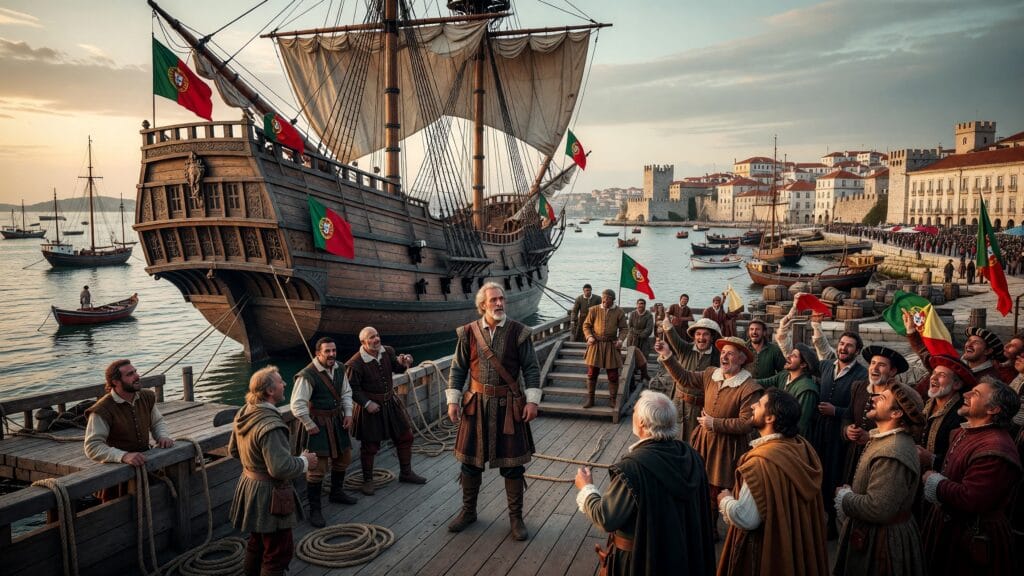
Before the sun fully rose on 11 May 1502, the harbor of Cádiz was already alive with sound. Ropes creaked and snapped taut as sailors hauled on lines; barrels thudded onto planks; masts groaned; gulls screamed overhead. The tang of tar and salt mingled with the reek of fish, sweat, and wet wood. Out beyond the quays, four caravels rocked restlessly at anchor, their hulls dark against the early light. On their decks, men moved like silhouettes: loading casks of water and wine, arranging weapons, stowing provisions. The christopher columbus fourth voyage was about to begin, though no one called it that yet; it was simply the next expedition, another throw of the dice in a young maritime empire’s great gamble.
The city itself was a fitting stage. Cádiz, perched on its narrow spit of land in the Crown of Castile, felt like the edge of the known world. Here, the Atlantic opened out, wide and indifferent, swallowing ships and men with equal ease. But it was also a place of new confidence and mounting ambition. Less than a decade earlier, in 1492, news of Columbus’s first crossing had spread through ports like this with an electric thrill. Since then, more fleets had departed, more islands had been named, more indigenous peoples encountered, more treasure promised. Cádiz was no longer just a military and trading harbor of the Andalusian coast; it was a colossal doorway, half real, half imagined, to lands that seemed to sit just beyond the crest of the ocean’s curve.
Yet behind the noise of preparation was a note of anxiety. Stories had circulated about Columbus’s third voyage: how he had struggled to control settlers on Hispaniola, how accusations of misrule had reached Spain, how royal officials had arrested him and sent him back in chains. Some sailors, leaning against bales of salted meat or watching from the wharves, whispered that this admiral — once greeted as a hero — had fallen from grace. Others, lured by the chance of gold or simple wages, cared less about his reputation than about the pay promised by the accountants of the Casa de la Contratación. For many, this departure from Cádiz was a chance to escape poverty or legal trouble on land; the ocean, for all its terrors, at least held the possibility of transformation.
In the half-light, families clustered near the water’s edge. Wives murmured last instructions or blessings, trying to keep their voices steady. Children clung to the rough cloth of their fathers’ sleeves. A mother pressed a wooden rosary into her son’s palm, closing his fingers around it as though that gesture alone might carry him safely across the sea. The bells of distant churches had not yet begun their morning peal, but prayers already floated through the harbor air in low, urgent tones.
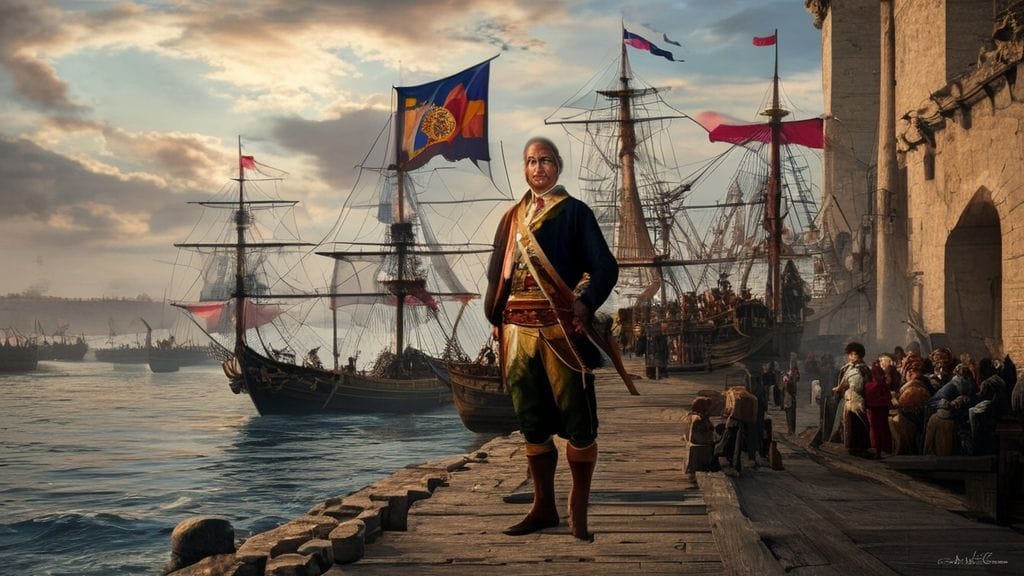
Somewhere amid this bustle stood an older figure in worn but dignified clothes, his white hair escaping from beneath a cap, his eyes narrowed against the light reflected off the water. He was about fifty-one, aged prematurely by hardships at sea and battles on land, his body familiar with storms and disease. This was Christopher Columbus — Cristóbal Colón to the people of Castile — the man whose very name had become entangled with the ocean’s western mystery. On this day he would board once more, leading four vessels into waters that had already given him wealth, power, disgrace, and pain. The christopher columbus fourth voyage would be his final attempt to bend reality toward his lifelong dream: a direct route to the riches of Asia, found not by traveling east as others did, but by persisting west.
A Veteran Admiral Under Suspicion and Strain
To understand the tension of that morning in Cádiz, one must understand the man who commanded those caravels — who he had been, and who he was by 1502. Christopher Columbus had once moved through the royal court of Castile like a comet, drawing curious eyes and whispered prophecies. After the first voyage returned in 1493 with tales of islands and peoples never before seen by Europeans, he strode into Barcelona, paraded in curious clothes, and was granted audiences with Ferdinand and Isabella. Chroniclers compared him to heroes of antiquity; some clerics wondered aloud whether God had chosen him as an instrument of prophecy, fulfilling strange biblical verses that spoke of islands in the sea and the ends of the Earth.
But by the time of the christopher columbus fourth voyage, those days of pure adulation were long gone. The second voyage had revealed the roughness of reality: settlers hungry for quick wealth, indigenous resistance, and the stubborn refusal of Hispaniola’s gold to match the fevered expectations of Europe. The third voyage brought new discoveries — including the coast of what we now call South America — but it also brought legal and political disaster. Accused of cruelty, corruption, and incompetence, Columbus had been replaced as governor. In 1500, the royal envoy Francisco de Bobadilla had arrived in Hispaniola with broad powers, ordering the arrest of Columbus and his brothers. Shackled, the admiral was sent back across the Atlantic.
It is astonishing, isn’t it, how swiftly a hero can become a suspect? When Columbus landed at Cádiz in chains, word spread rapidly. At first, the spectacle humiliated him. But as he made his way through the streets, people were shocked. Whatever they thought of his rule in the Indies, the sight of the discoverer of new lands in irons seemed an affront. Isabella herself, according to later accounts, was moved to tears on hearing of it. Within months, the admiral’s shackles were removed, his titles formally restored — but his authority was permanently dented. He would never again be trusted as governor.
The fourth voyage, then, emerged not from triumph, but from a mix of pleading and calculation. Columbus bombarded the crown with petitions, letters, and arguments. He insisted that, despite past setbacks, he still possessed knowledge no one else in Europe had: routes, winds, and currents that could turn the Atlantic from a terrifying barrier into a navigable bridge. He promised to find what Portuguese explorers along Africa’s coast had not yet fully secured: a quick path to Asia’s spices, silks, and precious stones.
Yet, behind the words, Columbus was already showing signs of age and strain. The years at sea, the storms weathered, the tropical diseases endured — all had carved themselves into his body. He suffered from bouts of gout, from fevers, and from sudden, debilitating pains that some historians now suspect may have been linked to reactive arthritis or another chronic condition. On the christopher columbus fourth voyage, he would at times be too ill to stand steadily on deck. But in Cádiz that morning, he wrapped his failing body in the posture of command, because that was what the voyage needed: not a broken veteran, but an admiral ready once again to challenge the Atlantic.
Suspicion shadowed him, though. Royal ministers worried that Columbus, if left with too much power, would revive claims that interfered with the crown’s direct control of the Indies. Other navigators, especially those emerging from the ranks of younger, bolder pilots, resented the privileges still granted to a foreign-born admiral whose theories about Asia seemed increasingly questionable. And observers across Europe watched to see whether Columbus’s latest expedition would restore his fading reputation or confirm his decline.
Royal Favor, Royal Doubt: The Crown of Castile in 1502
While Columbus paced the decks and quays of Cádiz, another drama unfolded hundreds of kilometers away in the royal palaces of Castile. In 1502, the Catholic Monarchs — Ferdinand of Aragon and Isabella of Castile — ruled a kingdom greatly changed from the one that had first funded his venture a decade earlier. The conquest of Granada in 1492 had ended centuries of Muslim political rule on the Iberian Peninsula. A centralized state was taking firmer shape, its bureaucracy thickening, its fiscal needs growing. Wars in Italy, rivalries with France, and negotiations with Portugal all pressed on the royal treasury and on the monarchs’ attention.
In this context, voyages across the Atlantic were not romantic escapades but instruments of statecraft. The Indies — still vaguely defined, still poorly mapped — represented both promise and problem. The promise was clear: resources, lands for colonization, potential converts, and, above all, a hypothetical route to Asia that would cut around Portuguese influence. The problem was equally clear: unruly settlers, contested claims, slow returns on investment, and the difficulty of controlling a space so large with tools so crude. The crown needed commanders like Columbus, experienced at sea and convinced of their own mission; but it also needed to curb them.
Thus, the royal instructions given for the christopher columbus fourth voyage were a careful balancing act. Columbus was authorized to sail west, but he was forbidden to touch Hispaniola except in case of dire emergency. This was more than a logistical note; it was a political statement. Hispaniola, site of the earliest European settlements and of Columbus’s previous governance, was now firmly under the authority of Nicolás de Ovando, a royal appointee. The admiral, once viceroy and governor, was effectively exiled from the very colony he had helped found.
The monarchs also tightly defined the expedition’s purpose. Columbus was to search for a strait, a passage that might connect the Atlantic to what he believed were the borders of Asia. If such a passage could be found, Castile would gain a route that bypassed both Portuguese-claimed waters along Africa and overland trade networks that had long been controlled by Islamic and Italian intermediaries. The stakes were enormous. This was not just about geography; it was about breaking and remaking the entire map of global commerce.
Yet behind the careful legal language of royal decrees were private doubts. Some court advisers likely wondered whether Columbus, with his stubborn insistence that he had already reached the outskirts of Asia on earlier voyages, was still the right man for this task. His geography clashed with emerging evidence: new landmasses, new stretches of coastline, and an unsettling possibility that these western lands might be something else entirely — not Asia, but a “New World.” The crown, however, was not yet ready to abandon the older framework. For now, Columbus’s vision and royal policy still overlapped enough to justify sending him out again, though this time with tighter reins.
Dreams of the Indies: The Grand Design of the Fourth Voyage
In Columbus’s own mind, the christopher columbus fourth voyage was not an act of desperation but a culmination. For years, he had been convinced that the lands he’d seen — the Caribbean islands, the coasts glimpsed on earlier journeys — fringed the outskirts of Asia. The great riches of Cathay (China), the fabled island of Cipango (Japan), the markets of India: these, he believed, waited just beyond the next headland or behind the next cluster of islands. To his critics, this sounded increasingly like delusion; to Columbus, it was coherent logic supported by selected classical authorities and by his own stubborn interpretation of experience.
His plan, as he explained it in letters and petitions, was ingenious in its simplicity: sail west-southwest from Spain, avoid entanglements with previous colonies, and strike the coasts further south than before. There, somewhere in the tangle of newly found shores, he expected to find an opening — a channel, a gulf, some kind of strait that would plunge through the land and emerge in the “Indian Sea.” Once he had this waterway, the route to Asia would be open to Spain, and his original vision, which had seemed to falter, would be redeemed in spectacular fashion.
Columbus’s religious imagination fed this plan as much as his reading of maps. He was not content to be merely a navigator; he saw himself as an instrument of providence. In a letter later written about this period, he quoted the prophet Isaiah as if the words referred to his mission: “Islands shall wait for his law.” The discovery of lands across the ocean, to him, was not an accident of winds and courage but part of a divine timetable. The fourth voyage would, he hoped, prove that God had chosen him correctly — and that all the humiliations he had suffered were temporary tests.
Not everyone around him shared this intensity, but they felt its heat. His son Hernando, who accompanied him, would later describe his father’s passion with a mixture of filial admiration and quiet unease. Pilots and sailors knew that an admiral who believed himself chosen by God might be bold in storms, but he might also drive them into dangers that a less possessed captain would avoid. Nevertheless, the promise of reward was there: if a strait were found, if Asia’s riches were approached from the west, the fame and wealth flowing to those present on this voyage could eclipse what earlier crews had earned.
But this was only the beginning of the story. Ambition, divine certainty, geopolitical strategy — all these would soon collide with the brutal realities of wind, current, disease, and human limits once the small fleet left the safe contours of the Spanish coast.
Preparing Four Fragile Ships for an Ocean of Uncertainty
The four vessels chosen for the voyage were not majestic war galleons, but relatively small caravels and naos: agile, shallow-drafted ships well suited for coasting along unfamiliar shores and entering rivers, but vulnerable in great storms. Their names — the Capitana (the flagship), the Santiago de Palos, the Gallega, and the Vizcaína — would become, for the men who sailed them, floating worlds. Each ship carried the essentials for survival: salted meat, dried legumes, hardtack, barrels of fresh water and wine, olive oil, vinegar, tools, nails, spare rope, timber, and weapons ranging from crossbows to falconets.
Life on board would be cramped and perilous. The number of men is debated by scholars, but estimates often range between 130 and 150 across the four ships. They slept on the open deck or in low, dark spaces below, where air turned hot and foul. Rats moved freely through stores, and insects nested in the wood. Hygiene, as we would define it, was nearly impossible. Yet for these sailors, many of whom had served on earlier crossings, such discomforts were part of the expected price of oceanic labor.
Provisions were calculated with brutal pragmatism. Too little food and water, and men would starve if storms or contrary winds delayed them; too much, and the ships would wallow, slow and dangerously heavy. The planners in Cádiz, influenced by previous voyages and the perils recorded in logbooks, threaded the needle as best they could. Still, everyone knew that once the last European shore disappeared beyond the horizon, they would be at the mercy of miscalculation as much as of weather.
The cargo also included items of negotiation and conquest: glass beads, bells, red cloth, metal tools, and other “trifles” meant as gifts or trade for indigenous societies, along with more ominous cargo such as chains and shackles. The empire-in-the-making was learning that soft power — displays of wonder, manufactured marvels from Europe — could open doors. But it was also learning that force, or at least the visible promise of it, could hold those doors open longer.
Maps and charts aboard the ships were a patchwork of experience and conjecture. There were portolan charts of the European and African coasts, imaginative sketches of the Caribbean based on earlier expeditions, and mental maps carried in the heads of experienced pilots. Columbus himself would steer using a blend of recorded information and personal conviction, sometimes adjusting reported latitudes or distances to better match the world he believed existed rather than the one they actually sailed through. This tension between map and reality would haunt the christopher columbus fourth voyage from its first open Atlantic days to its last desperate landfalls.
Crew of Misfits and Loyalists: Who Sailed with Columbus
The men who climbed the gangways in Cádiz came from many corners of the Iberian Peninsula. There were hardened mariners from Andalusian ports, Basque sailors accustomed to the harsh Bay of Biscay, and pilots who had already crossed the Atlantic at least once before. Some knew Columbus personally and had served under him; others joined simply because a contract and a chance at pay — or loot — outweighed the miseries they expected.
Among them were notable figures. Columbus’s younger son, Hernando, still in his early teens, would accompany his father and later write an important biography, preserving many details of the voyage. Bartholomew Columbus, the admiral’s brother, joined as a key lieutenant, seasoned by years of colonial struggle. There were also royal officials tasked with oversight, ensuring that the admiral’s actions did not drift too far from the crown’s stated aims.
But the crew also contained men whose motives were murkier. Some were running from debts or legal trouble. On earlier voyages, the Indies had attracted not just idealists and adventurers but also those the authorities were happy to see leave: petty criminals, violent men whose rough skills might be more useful abroad than at home, and ambitious minor nobles frustrated by limited prospects on a crowded continent. The fourth voyage was no different. In the cramped decks and rigging, alongside skilled pilots and craftspeople, moved men who saw the journey less as an exploration and more as a risky criminal opportunity, if circumstances allowed.
This mixture of loyalty and suspicion meant that discipline would always be fragile. Columbus’s authority as admiral gave him formal power, but the memory of his fall from governorship lingered. Some sailors may have secretly believed that, if disaster struck, the crown would view complaints against the admiral with sympathy. Seeds of mutiny lay dormant in such thoughts, ready to sprout in the harsh soils of hunger, fear, or disappointment.
Religious belief threaded through the crew’s mindset. Priests and friars were fewer on this voyage than on earlier colonizing trips, but prayers were frequent. Before departure, masses had been said for safety. On board, men crossed themselves during storms, clutched amulets, whispered appeals to saints. The ocean was not merely physical; it was a spiritual arena, where demons might dwell in tempests and God’s will manifest in sudden calms or miraculous deliverances. For Columbus, this spiritual lens was constant. For the average sailor, it was a last comfort when the night seemed endless and the swells towered black around them.
Setting Sail from Cádiz: 11 May 1502
The moment of departure fused ceremony with chaos. As the morning advanced on 11 May 1502, orders rang out from ship to ship. Lines were cast off, sails unfurled with a snap that echoed off stone quays. The caravels crept away from their moorings, oars occasionally deployed to maneuver through the crowded harbor. On the decks, men waved to the shrinking figures on shore; on land, some families tried to follow along the waterfront, walking as far as the streets allowed before the ships pulled beyond reach.
Columbus stood on the flagship, the Capitana, watching Cádiz recede. To one side, he saw the narrow tongue of land curve away; to the other, the open sea. Somewhere in the swirl of his thoughts were memories of earlier departures: the anxious gamble of 1492 from Palos, the grander, better-funded second voyage, the troubled third. This fourth departure felt different. He carried more experience now, more scars, more doubts from others. But he also carried a sharpened sense of urgency. Time — political, bodily, and perhaps cosmic — was running out.
As the fleet gained the open Atlantic, the wind filled the canvas. The coast of Spain became a hazy line and then vanished altogether. Crews settled into routine: watches assigned, hammocks slung where possible, cooking fires carefully managed in their metal braseros to reduce the risk of fire. Each man was given his ration of food and drink, and the pulse of shipboard life began.
Outwardly, this might have looked like just another westward crossing by a realm now used to the idea. But the stakes were higher than the salt-stung faces and weathered hulls suggested. If Columbus failed, his standing at court would collapse irretrievably; rivals would point to the voyage as proof that he was a relic of an earlier, more naive phase of oceanic exploration. If he succeeded — if he found a genuine strait leading to Asia — he would rewrite maps and reassert his claim to be the visionary architect of Spain’s ocean empire.
The christopher columbus fourth voyage, as the ships slipped over the Atlantic swells, thus bore not only the cargo and crew but the precarious weight of a man’s reputation and of an empire’s strategic hopes. The horizon ahead, empty and unbroken, was a silent judge to whom all these plans were now submitted.
Storms of the Atlantic and the Ghost of Hispaniola
The first leg of the crossing followed a familiar pattern. The fleet took advantage of trade winds that, by then, Columbus and other pilots knew reasonably well. The air grew warmer; flying fish occasionally skittered across the waves; birds appeared and vanished in patterns that old sailors read like shifting script. Days blurred into routines of labor and boredom, broken by the sudden drama of squalls or the rare sighting of another vessel.
Yet the Atlantic, seemingly calm, would soon reveal its capacity for violence. Approaching the Caribbean, signs of changing weather gathered. The sky thickened in strange ways; the wind carried a latent menace. Columbus, drawing on his accumulated experience, became convinced that a severe storm — perhaps a hurricane, though Europeans lacked that precise word — was imminent. He ordered changes in course, sought safer waters, and, above all, directed his fleet toward Hispaniola, the very island he had been instructed to avoid except in dire necessity.
This moment encapsulated the tension between royal orders and maritime reality. Facing what he believed to be an enormous storm, Columbus judged the danger to his fleet and to human lives as overriding the steadier logic of politics. In his own retrospective accounts, he would later frame this as both professional prudence and divine insight, claiming that God had given him special warning. But to Nicolás de Ovando, the crown’s appointed governor on Hispaniola, this sudden appearance of the admiral’s fleet — at a time when Ovando was preparing to send his own ships home laden with colonial wealth — seemed awkward, perhaps even threatening.
The storm hit with devastating force. Ships in the region were torn apart, men drowned in their dozens or hundreds. One returning fleet was largely destroyed, scattering treasure and bodies across the sea. Columbus’s own caravels, though battered, survived. Later admirers would point to this as evidence of his almost prophetic seamanship; critics would suggest that chance and cautious positioning played as large a role as any special insight. Either way, the encounter underscored how thin the line was between survival and annihilation on these voyages. The christopher columbus fourth voyage could easily have ended in this first Caribbean tempest, its legacy reduced to a few lines in court records and a lost set of names on a rotting crew list.
But it did not end. It staggered onward, forced to navigate not only between coral reefs and unknown islands, but between political hostility and natural fury. When the winds finally eased, Columbus faced his next problem: he and his men needed fresh supplies and repairs — and yet the governor of Hispaniola was wary of giving them either.
A Forbidden Island: Rejection at Santo Domingo
When the fourth voyage approached Hispaniola, Columbus sent envoys requesting permission to enter Santo Domingo’s harbor and shelter his ships. Ovando refused. Official reasons were given — concerns about overcrowding, adherence to royal orders — but underneath lay a mix of personal resentment and political calculation. Ovando did not want the former governor, with his complicated web of rights and privileges, meddling in a colony that Madrid now wanted firmly under direct royal control.
The refusal was more than a personal insult; it endangered lives. The storm had scattered fleets and torn rigging. Men were exhausted, some injured. Ships needed fresh water and timber. To stand off from the harbor, knowing supplies lay within reach but forbidden, must have felt like a deliberate cruelty to those on deck. For Columbus, it confirmed what he already suspected: that at least some royal officers preferred seeing him weakened or humiliated.
Hernando would later write about his father’s bitterness in this episode, describing it in tones that hovered between outrage and resigned sorrow. That Columbus disobeyed the spirit of his orders by coming near Hispaniola at all he presented as simple necessity, a captain’s duty. That Ovando refused him sanctuary he framed as ingratitude and blindness. Modern historians, reading between the lines of these accounts and Spanish administrative correspondence, see here the growing fracture between an aging discoverer and a younger imperial bureaucracy.
Cut off from safe harbor, Columbus had no choice but to push on, once the worst of the storm had passed, toward the still-uncertain territories further west and south. The christopher columbus fourth voyage was thus thrust deeper into the unknown not by purely geographic curiosity, but by a mixture of human rivalry, legal stricture, and institutional jealousy. The ocean, indifferent, awaited them all the same.
Into the Unknown: Landfalls in the Caribbean Sea
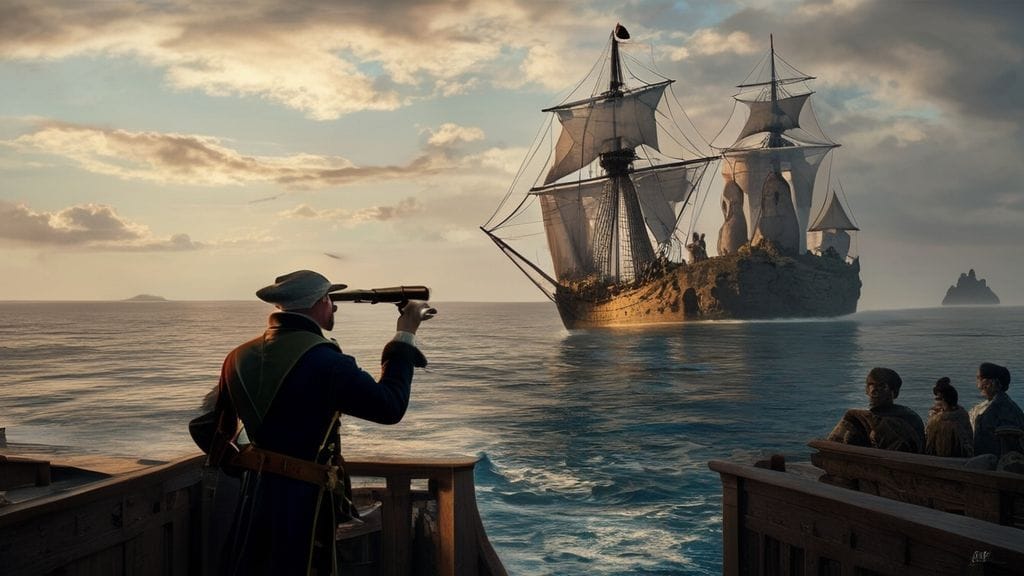
Leaving Hispaniola’s contested shores behind, the fleet threaded its way among islands that Europeans had begun to call the Indies. They passed along Jamaica, skirted Cuba, and slipped into waters that, though charted in outline, still held countless surprises. At each landfall — coves, river mouths, beaches lined with palm and mangrove — the crews encountered indigenous communities whose lives had, over the past decade, been increasingly disrupted by European arrival.
On earlier voyages, Columbus had met Taíno and other Arawak-speaking peoples whose societies were organized around complex kinship networks, with agriculture, fishing, and trade sustaining vibrant cultures. By 1502, disease, violence, forced labor, and social disruption had already begun to tear at these worlds. Villages that once welcomed strangers now approached European ships with caution or outright hostility. Rumors of Spanish brutality had traveled faster than any caravel.
Even so, human curiosity persisted on both sides. Some indigenous leaders came out in canoes, bringing food or trade goods, seeking to understand these strange bearded arrivals in floating wooden structures. The Spanish offered beads, bells, and cloth; they also displayed steel weapons and gunpowder in ways calculated to impress. Misunderstandings abounded. What for a European was a small trinket might have deep symbolic meaning for a local community; what for a Caribbean society was a gesture of hospitality might, to a nervous Spanish captain, look like an attack.
These early stops provided the fleet with crucial water and food, but they also deepened Columbus’s conviction that wealth and power lay just beyond, if only he could find the right channel, the right path. Reports from indigenous informants — filtered through translation and cultural misinterpretation — spoke of great lands and powerful chiefs to the south and west. Gold objects, worn as ornaments or embossed into ritual items, suggested that somewhere upstream, somewhere inland, lay sources richer than any yet found. The christopher columbus fourth voyage pressed on, driven by this mosaic of hints and half-glimpsed possibilities.
Along the Coast of Central America: Searching for a Strait
By late 1502, Columbus’s fleet began to follow a long, sinuous coastline that would later be known as part of Central America: the shores of what are now Honduras, Nicaragua, Costa Rica, and Panama. To the Spaniards, this coast was confusing, with currents, reefs, and erratic winds complicating navigation. Dense forests came down almost to the water’s edge in many places. Rivers, some wide and brown, others narrow and swift, cut through the green wall and spilled into the sea.
For Columbus, these rivers and bays were potential clues. He probed them, hoping one might open into a wide channel that cut through the landmass. On modern maps we know no such strait exists there, but working from scraps of classical geography and his own truncated sense of the world’s size, Columbus remained convinced that Asia’s coasts must lie just beyond. Each river mouth entered and then abandoned left a bitter aftertaste of disappointment.
Contact with indigenous peoples along this coast complicated matters further. Here, societies were often more politically stratified and militarily organized than the island communities initially encountered in 1492. Canoes carried warriors with painted bodies and bows; trade networks connected communities across land and sea routes. Gold was more visible in ornaments and regalia, hinting at mines or trading partners inland. Conflict and trade were never far apart. Some encounters ended peacefully, with exchanges of goods and gestures of goodwill. Others erupted into quick, brutal clashes when misunderstandings or distrust boiled over.
The climate was unforgiving. Torrential rains drenched the ships and men, rotting sails and spoiling provisions. Insects tormented the crews. Brackish water fostered disease. Many sailors fell ill with fevers and dysentery; some died and were buried quickly, their bodies consigned to the sea. The christopher columbus fourth voyage, which had left Cádiz with hope and ceremony, now felt less like a righteous mission and more like a battle for mere survival along a hostile shore.
Yet Columbus persisted. He sailed as far as the area later called Veragua, in present-day Panama, convinced he was near lands described in earlier stories and hints: rich in gold, proximate to the great Asian mainland. At one point he wrote that he believed himself near the Ganges River, so thoroughly did he fit new observations into old maps. “I have reached the place where the Earthly Paradise is located,” he claimed in one letter, an assertion that reveals the mingling of geography, theology, and stubborn self-justification at the heart of his thinking.
Shipworms, Hunger, and Mutiny: The Voyage Unravels
The longer the fleet lingered along the Central American coast, the more its material foundations crumbled. The warm tropical waters teemed with shipworms — marine mollusks that bored into wooden hulls, turning solid planks into honeycombed, leaking shells. Caravels built for the relatively cooler Atlantic and Mediterranean were not prepared for this assault. Day by day, unnoticed beneath the waterline at first, the fleet was being eaten alive.
As leaks spread and deepened, sailors manned pumps constantly, straining to keep the holds from filling. Repairs at sea were crude: ropes wrapped around hulls, attempts to plug holes from within with cloth and resin. When possible, the ships were beached or careened, tilted on their sides so that men could scramble over the exposed planks with hammers and tar. But the damage mounted faster than their repairs could hold.
Provisions dwindled. Spoiled food bred illness. Fresh water had to be drawn from rivers whose banks might hide hostile forces. The men, already on edge, began to grumble openly. Had the admiral led them into a dead end? Was this coast truly part of Asia, as he insisted, or something else entirely? Younger pilots, less bound to Columbus’s old certainties, began to suspect that they were facing a new oceanic reality, one in which the admiral’s authority over the meaning of discovery was slipping.
Episodes of defiance broke out. Some men refused to obey certain orders or plotted to abandon the expedition’s goals and seek easier pickings elsewhere: perhaps raiding poorly defended native settlements or attempting to reach established colonies on their own. Columbus responded as he often did when challenged: with a mix of stern punishment, appeals to divine sanction, and impassioned speeches about honor, reward, and the sacred nature of their mission. For some, these words still carried weight. For others, they rang hollow against the pounding surf and the gnawing pain of hunger.
The weather turned against them as well. Sudden squalls battered the weakened ships; currents thwarted attempts to round certain headlands. Finally, the damage inflicted by shipworms and storms reached a breaking point. The fleet’s capacity for movement shrank with every new leak. Decisions about the expedition’s grand goals gave way to a narrower calculus: where, and how, could they simply survive?
Stranded in Jamaica: A Year of Desperation and Ingenuity
By mid-1503, two of the four ships — the Capitana and the Santiago de Palos — had become unseaworthy. Columbus, forced by necessity, turned reluctantly toward Jamaica. Reaching its northern coast, he ran the decaying caravels aground and beached them, lashing them together to create a makeshift fortress-like encampment. The christopher columbus fourth voyage, in a sense, ended here: not with a triumphant return through some imagined Asian strait, but with a stranded flotilla perched awkwardly on the shallow shore of an island that had not been part of the original plan.
The year that followed was one of the strangest episodes in early Atlantic history. Around the beached ships, a precarious community formed: part camp, part prison, part floating village stuck on land. Columbus, ill and often confined to a sheltered part of the vessel, remained the nominal leader. His brother Bartholomew and other captains tried to maintain order among the restless, increasingly desperate men.
Relations with the island’s indigenous people became crucial. At first, local communities provided food — cassava, fish, fruits — in exchange for European goods and the promise of peaceful coexistence. But as months dragged on and the Spaniards’ demands persisted, tension rose. The Jamaicans saw that the stranded foreigners were more dependent than powerful. Some groups reduced the supplies they brought; murmurs of outright refusal grew.
Here, Columbus’s blend of calculation and theatrical religiosity reached a notorious moment. Armed with an almanac that predicted a lunar eclipse, he warned local leaders that his God would show displeasure if they did not continue to provide food. When the eclipse darkened the moon as foretold, the Spaniards dramatized it as divine wrath, then mercy when supplies resumed. The episode, recounted later by Hernando and echoed by Bartolomé de las Casas in his own writings, has often been cited as a striking example of how European knowledge of celestial events could be used as a psychological weapon. Yet it also reveals a deep imbalance: a people stranded and powerless resorting to cosmic theater to secure bread.
At the same time, a daring mission was launched to seek rescue. A small group, including the trusted pilot Diego Méndez, set out in canoes, attempting to cross the treacherous straits between Jamaica and Hispaniola. Their journey, perilous and exhausting, eventually succeeded. Ovando, the same governor who had earlier refused Columbus shelter, now faced the fact that the admiral and dozens of his men were marooned. Months passed before a rescue could be organized, delayed by political hesitations and other colonial priorities. Meanwhile, back on the beached ships, morale sank. Some sailors mutinied, trying to seize control or escape on their own; others grew sick and died, their bodies buried hastily on the nearby shore.
The Jamaica episode stripped away many of the grand narratives surrounding Columbus. Here he was not a triumphant discoverer but a shipwrecked commander, bargaining for food, watching his authority erode among hungry, fractious men. And yet, even in this humbling extremity, the structures of early empire revealed themselves: negotiation, violence, theatrical displays of faith, the use of indigenous labor and resources, and the slow but relentless push of Spanish presence into once-independent societies.
Rescue, Return, and a Quiet Arrival in Castile
When relief finally came in 1504, it did not arrive as a grand fleet sent in Columbus’s honor, but as a more modest operation: a ship dispatched reluctantly, almost grudgingly, by Ovando. The stranded crews were ferried off Jamaica, many weakened by disease and hunger, their clothes tattered, their spirits dulled by long waiting. The christopher columbus fourth voyage, once envisioned as a swift and glorious path to Asia’s threshold, ended in this piecemeal extraction.
The return to Spain lacked the splendor of earlier homecomings. No triumphant parades through Barcelona or Seville greeted the admiral. Instead, Columbus arrived in a kingdom already preoccupied with other concerns. Isabella, the queen who had first believed in him and signed the documents funding his initial crossing, was in failing health. Within months, she would be dead, plunging the monarchy into a new phase of dynastic uncertainty. Wars and negotiations in Europe consumed attention and coin. The Indies, while still important, were part of a broader, more tangled tapestry of royal priorities.
Columbus — older, ill, embittered — made his way to court to plead once more for recognition of his rights and for the rewards he believed were due to him and his heirs. He presented his account of the fourth voyage as evidence not of failure, but of perseverance under extraordinary adversity, stressing how close he believed he had come to the Asian mainland. In letters, he poured out both resentment and piety, invoking God as witness to his trials and as guarantor of the justice he still expected.
The crown, now increasingly guided by cautious administrators and heirs with different visions, responded with a mix of courtesy, partial concessions, and studied delay. Some financial compensation was provided; some titles were acknowledged. But the sweeping powers once granted to Columbus in the famous Capitulations of Santa Fe were not restored. The age of private admiral-governors ruling vast territories in their own names was receding. In its place, a more bureaucratic empire, with viceroys and royal councils, was emerging.
In 1506, Christopher Columbus died in Valladolid, far from the roar of the ocean and the heat of Caribbean shores. The fourth voyage, his last great gamble, had not delivered the cathartic vindication he sought. Yet it had carried him to coasts and through experiences that would slowly reshape Europe’s understanding of the western world. The quiet of his final days contrasted sharply with the storms — literal and political — that had accompanied his departure from Cádiz just four years earlier.
Political Fallout: How the Fourth Voyage Changed Imperial Strategy
Measured against its declared goal — to find a strait to Asia — the christopher columbus fourth voyage was a failure. No such passage was found; the lands and seas traversed turned out to be part of a continent and a coastline far more complex than Columbus’s mental maps allowed. But empires do not learn only from successes. They also, often more profoundly, learn from failures, adapting their strategies in response to what went wrong.
Spanish policymakers, sifting through reports, logs, and testimonies, began to grasp that whatever lay beyond the Atlantic was not easily folded into older conceptions of Asia. The repeated disappointment of not finding direct access to the Indian Ocean, combined with mounting evidence of vast new lands, slowly pushed the crown toward a different emphasis: instead of searching for straits, they would consolidate and expand territories already reached. Conquest and colonization — planting settlements, extracting resources, imposing systems of tribute and labor — took precedence over the still-tempting but elusive quest for sea passages.
The fourth voyage also highlighted the risks of over-relying on a single figure whose personal rights and interpretations could conflict with the crown’s evolving priorities. Columbus had been both indispensable and problematic: indispensable as the initiator of the Atlantic crossings, problematic as a political actor with his own agenda and a stubborn attachment to outdated geographic theories. After his death, Spanish authorities increasingly favored a more impersonal, institutional control of the Indies through councils and appointed viceroys, such as those later governing New Spain and Peru.
Furthermore, the voyage’s encounters along Central America’s coasts whetted Spanish appetites for gold-rich regions inland. While Columbus himself never led large inland campaigns there, the information gathered — snippets about rich chiefdoms and trading networks — would later inform expeditions by others. In this sense, the fourth voyage functioned as a reconnaissance in depth, probing coasts and societies that would, within a few generations, find themselves facing large-scale conquest.
Diplomatically, the lack of an Asian strait accessible to Spain meant that competition with Portugal along Africa’s routes remained intense, until new developments — most dramatically, Magellan’s circumnavigation — altered the calculus. But long before that, the shadow of the christopher columbus fourth voyage hung over debates at court: a reminder of the limits of one man’s vision and of the ocean’s stubborn refusal to conform to imperial blueprints.
Indigenous Worlds Upended: The Human Cost Along the Route
Amid the drama of storms, shipwrecks, and courtly intrigues, it is easy to lose sight of those for whom the voyages were not episodes in a European career but cataclysmic ruptures in daily life. The peoples encountered during the fourth voyage — on Caribbean islands and along Central American coasts — were already living through the aftershocks of earlier contacts. The arrival of Columbus’s final expedition compounded existing disruptions.
European diseases, introduced in the 1490s, had begun to spread with horrific efficiency in some regions. Smallpox, measles, and other infections tore through communities with no prior exposure, killing leaders and commoners alike, fracturing social and political continuity. Even where epidemic waves had not yet fully penetrated, the rumor of death and change traveled in advance. Communities facing Columbus’s ships in 1502–1504 thus did so in a context of mounting demographic and psychological pressure.
Economic systems were also destabilized. Existing trade routes — canoe-borne exchanges of salt, cotton, ceramics, cacao, and ritual items — had to adjust to the sudden appearance of new goods and demands. European metal tools and weapons offered practical advantages, but they also created new dependencies and inequalities. Chiefs who could secure a supply of iron blades or glass trinkets might bolster their status; those who could not might see their authority questioned. The Spaniards, often without fully understanding the internal politics of the societies they met, played into and exploited these dynamics.
Violence, both spectacular and mundane, accompanied this process. Skirmishes along the Central American coasts left dead and wounded on both sides. Captives were sometimes taken and forced to act as guides or translators, their knowledge instrumentalized under duress. Even when outright battle was avoided, the mere presence of demanding, armed foreigners strained local food supplies and social norms of hospitality. One can imagine the quiet conversations around indigenous hearths after Europeans had left a village: anxious debates about what had just happened, what these men wanted, and what might come next.
One later chronicler, Bartolomé de las Casas, who knew some of the participants and read many of the documents, would write with bitter clarity about the suffering of native peoples in the wake of Spanish expansion. Although his most famous condemnations focus on events in Hispaniola and other islands, his broader verdict covers the entire pattern of conquest and exploitation that expeditions like the fourth voyage advanced. In his words, the Spanish in the Indies often behaved “as ravening wolves against gentle lambs,” a phrase that captures the profound asymmetry of power and the predatory character of much colonial activity.
The christopher columbus fourth voyage, then, was not merely an episode in European maritime history. It was a chapter in the unmaking and remaking of indigenous worlds — a process marked by loss, adaptation, resistance, and creativity. Along the coasts that Columbus traced in hope of finding Asia, communities would soon face waves of conquest that turned what had been brief, tense encounters into enduring subjugation.
Memory, Myth, and the Afterlife of the Fourth Voyage
In the centuries after Columbus’s death, his voyages were recounted, reimagined, and contested in countless ways. Schoolbooks, chronicles, national myths, and later political debates all mined his story for meaning. Yet among his expeditions, the fourth voyage often remained in the shadows, overshadowed by the famous first crossing of 1492 and, to a lesser degree, by the second voyage’s massive colonizing fleet.
Where it did surface, the christopher columbus fourth voyage tended to be framed in one of two ways. Some writers, especially those sympathetic to Columbus, portrayed it as a heroic final stand: an aging admiral refusing to abandon his vision despite illness, betrayal, and misfortune. In this rendition, the storms, shipwrecks, and marooning in Jamaica became tests of character that he endured with saintly perseverance, vindicating his role as a chosen discoverer even if worldly success eluded him.
Other interpreters emphasized its failures and delusions. They pointed out Columbus’s stubborn refusal to admit that he had not reached Asia, his misreadings of geography, and the human cost of his decisions on his crew and on indigenous communities. In this reading, the fourth voyage becomes a cautionary tale about the dangers of obsession and the limits of individual genius in the face of complex realities. The stranded ships on Jamaica’s shore symbolized not triumph, but the wreckage of a flawed vision.
Modern scholarship, drawing on a broader range of sources — including indigenous perspectives where they can be reconstructed, archaeological evidence, and careful readings of logbooks and letters — offers a more nuanced view. Historians such as Felipe Fernández-Armesto and others have placed the voyage within the wider patterns of early modern exploration: as part of the gradual European realization that the Atlantic world was more than a detour to Asia, and as a key stage in the violent entanglement of continents. Columbus appears neither as pure hero nor as cartoonish villain, but as a complex, often deeply troubling figure: brave and cruel, visionary and blinkered, a man shaped by his time and yet impactful far beyond it.
Public memory of the fourth voyage has also shifted in response to contemporary debates about colonialism, indigenous rights, and historical commemoration. As statues and holidays dedicated to Columbus have been challenged, the focus has often been on 1492. But understanding the fourth voyage — with its mixture of failure, suffering, and persistent colonial pressure — adds depth to those debates. It reminds us that the story of European expansion was not a straight line of progress, but a tangle of missteps, tragedies, improvisations, and recalibrations.
In this sense, the beached caravels of Jamaica, the futile searches along Panama’s coast, and the tense negotiations in Cádiz’s harbor all belong not merely to the past, but to an ongoing conversation about how we narrate the origins of our interconnected, unequal world.
Conclusion
On that May morning in 1502, when four caravels eased away from Cádiz and turned their bows toward the open Atlantic, few could have predicted the strange arc their journey would trace. The christopher columbus fourth voyage began as a grand design: to carve a western path to Asia, to complete the conceptual circuit first sketched in 1492, and to restore an aging admiral’s fading luster. It ended instead with shipworms gnawing through hulls, men bargaining for food on a foreign shore, and Columbus himself returning quietly to a kingdom where his voice carried less and less weight.
Yet within that apparent failure lay tectonic shifts. The voyage probed coasts and societies that would later become central theaters of Spanish colonization. It exposed the limits of individual authority in the face of an increasingly bureaucratized empire, nudging the Crown of Castile toward more centralized mechanisms of control. It deepened, often brutally, the disruptions already rippling through indigenous worlds across the Caribbean and Central America. And it contributed, however indirectly, to the slow European recognition that what lay across the Atlantic was not the edge of Asia, but something altogether different.
For Columbus himself, the fourth voyage was a crucible in which his religious fervor, geographic convictions, and personal pride were tested against storms, mutiny, and political marginalization. The image of the admiral, ill and stranded on Jamaica, conjuring a lunar eclipse to secure food, stands as a haunting counterpoint to the triumphant landfall of 1492. It is here, perhaps, that his historical significance becomes clearest: not as a one-dimensional discoverer, but as a deeply conflicted participant in the birth of an age of oceanic empire.
Looking back from our own time, when the legacies of conquest are still painfully visible, the christopher columbus fourth voyage invites reflection rather than simple celebration or condemnation. It asks us to consider how ambition, faith, and greed intertwine; how empires learn from their mistakes as much as from their victories; and how the decisions of a handful of men on creaking wooden ships reshaped the destinies of millions. The caravels that left Cádiz in 1502 have long since rotted away, but the world they helped bring into being — interconnected, contested, and haunted by unequal exchanges — endures.
FAQs
- What was the main objective of Christopher Columbus’s fourth voyage?
The primary goal of the christopher columbus fourth voyage was to find a western sea passage to Asia. Columbus believed that by sailing further along the coasts south and west of the Caribbean islands, he could locate a strait or channel connecting the Atlantic to what he thought was the Indian Ocean. This would give the Crown of Castile a direct maritime route to Asian trade, bypassing Portuguese control along Africa. - When and from where did the fourth voyage depart?
The fourth voyage departed on 11 May 1502 from the port of Cádiz, in the Crown of Castile. Four ships — the Capitana, the Santiago de Palos, the Gallega, and the Vizcaína — formed the small fleet that carried Columbus and his crew across the Atlantic. - Which areas did Columbus explore during his fourth voyage?
During the christopher columbus fourth voyage, the fleet sailed through the Caribbean and then along the northern coasts of what are now Honduras, Nicaragua, Costa Rica, and Panama. Columbus and his men entered numerous bays and rivers, searching for a strait and making contact with a variety of indigenous societies along Central America’s shoreline. - Why did Columbus and his crew end up stranded in Jamaica?
The ships suffered severe damage from shipworms and storms, particularly while coasting along Central America. Two of the vessels became unseaworthy, forcing Columbus to beach them on Jamaica’s northern shore in 1503. There they remained for about a year, surviving through negotiated supplies from local communities and waiting for a rescue that eventually came from Hispaniola. - Did Columbus succeed in finding a passage to Asia on this voyage?
No. Despite his conviction that he was close to the Asian mainland, Columbus did not find a strait linking the Atlantic to the Indian Ocean. Modern geography confirms that no such natural passage exists in the region he explored. His failure contributed to the gradual realization in Europe that the lands west of the Atlantic were part of a separate continent, not simply the outskirts of Asia. - How did the Spanish crown view the results of the fourth voyage?
The crown acknowledged the hardships and some of the geographic information gained, but it regarded the expedition as falling short of its central objective. Politically, the voyage reinforced the monarchy’s decision to limit Columbus’s direct governing power and to move toward more centralized, bureaucratic control over the Indies through royal officials rather than semi-independent admirals. - What impact did the fourth voyage have on indigenous peoples?
The voyage intensified contact along parts of the Caribbean and Central American coasts, adding to existing disruptions caused by earlier expeditions. Indigenous communities faced new demands for food and labor, exposure to European diseases, and, in some cases, violent clashes. The information gathered during the christopher columbus fourth voyage later facilitated deeper incursions and conquests by other Spanish expeditions. - How is the fourth voyage remembered today by historians?
Historians see the fourth voyage as a pivotal but deeply troubled expedition. It is valued for the geographic knowledge it produced about Central America and as a window into the transition from discovery to empire-building. At the same time, scholars emphasize its human costs and the way it illustrates Columbus’s increasing disconnect from emerging realities about the New World. - Did Columbus’s health affect the course of the fourth voyage?
Yes. Columbus was in poor health during the voyage, suffering from chronic pains and episodes of severe illness. His condition limited his physical presence on deck at times and added strain to command decisions made under extreme pressure. Nonetheless, he remained mentally engaged, directing strategy and negotiations even when confined to sheltered parts of his flagship. - Why is the fourth voyage less well known than the first?
The first voyage of 1492 has long been mythologized as the moment of “discovery” in many European and American narratives, overshadowing later expeditions. The christopher columbus fourth voyage, by contrast, lacked a single dramatic success: it brought no great treasure, found no new continent in a way easily celebrated, and ended in shipwreck and political anticlimax. As a result, it has often been neglected in popular memory, even though it was crucial in shaping imperial strategies and indigenous experiences.
External Resource
Internal Link
Other Resources
- Encyclopaedia Britannica – general search for the exact subject
- Google Scholar – academic search for the exact subject
- Internet Archive – digital library search for the exact subject