Table of Contents
- Steam on a Winter Morning: The Day the Ludwig Railway Opens
- Bavaria Before the Rails: Roads, Caravans, and the Limits of Distance
- Dreamers of Iron: Early German Visions of the Railway
- Nuremberg Meets the Future: Planning the Line to Fürth
- From Workshops to Rails: Building the Ludwig Railway
- The English Machine: How the Adler Came to Bavaria
- 7 December 1835: When the Ludwig Railway Opens to a Watching World
- Passengers, Tickets, and Fears: First Encounters with Speed
- Horses, Carters, and Guilds: Winners and Losers of the New Age
- A City Transformed: Nuremberg’s Streets, Markets, and Skylines
- Politics on the Tracks: Bavarian Power and German Unity
- From Curiosity to Network: How a Short Line Changed Long-Distance Travel
- Smoke, Soot, and Wonder: Daily Life Around the Early Railway
- Voices from the Platform: Diaries, Letters, and Eyewitness Tales
- Engineers, Merchants, and Monarchs: The People Behind the Line
- Myths, Accidents, and Regulations: Learning to Live with the Machine
- From Ludwig Railway to German Rail Empire
- Remembering 1835: Heritage, Memory, and the Modern Visitor
- Conclusion
- FAQs
- External Resource
- Internal Link
Article Summary: On a frosty December day in 1835, when the Ludwig railway opens between Nuremberg and Fürth, Bavaria steps into the age of steam and Germany’s railway era begins. This article traces the world that existed before the first locomotive whistle, from slow caravans and guild-protected roads to daring financiers and foreign engineers. It follows the planning and construction of the short but revolutionary line, the arrival of the English-built Adler locomotive, and the unfolding drama when the Ludwig railway opens before crowds of anxious, astonished onlookers. Along the way, it explores how commerce, politics, and everyday life in Nuremberg were transformed by twenty minutes of iron speed. Merchants recalculated distance, workers feared displacement, and statesmen glimpsed a new map of power running along steel rails. Through stories, letters, and contemporary accounts, the article evokes the emotional texture of those first journeys and the social questions they raised. Finally, it shows how the modest Nuremberg–Fürth route grew into a symbol and precursor of the vast German rail network, and why the moment when the Ludwig railway opens still echoes in debates about technology, progress, and human adaptation.
Steam on a Winter Morning: The Day the Ludwig Railway Opens
On the morning of 7 December 1835, Nuremberg woke beneath a pale winter sky, the kind that dims colors and sharpens sounds. Smoke rose from kitchen chimneys, horses stamped and snorted in frosty courtyards, and traders pushed their carts toward the market square as they had done for generations. Yet on this particular day, a rumor hum traveled through the narrow streets: the Ludwig railway opens. The phrase itself felt foreign to many Nurembergers, half-German, half-miracle. A “railway” of iron, on which a fire-breathing machine would pull carriages faster than a galloping horse? Some shook their heads, others smiled skeptically, but almost everyone felt compelled to see it.
Outside the city walls, between Nuremberg and the nearby town of Fürth, the new tracks lay like a pair of dark scars across the landscape—straight, unyielding, cutting through fields that had been plowed in crooked, human lines for centuries. At one end stood the proud new station building in Nuremberg, still smelling of fresh paint and new timber, its decorative façade signaling that this was not merely a warehouse of goods, but a gateway to a different future. As the hour approached, crowds pressed toward the station yard: artisans in thick coats, well-dressed merchants, curious peasants, and children half-hidden behind their elders’ legs.
They had heard many stories in the preceding months. Some claimed that cows would stop giving milk once the locomotive passed; others insisted that hens would refuse to lay or that the iron wheels would set the countryside ablaze. There were whispers that when the ludwig railway opens, hearts might fail at such unnatural speed. Yet the authorities stood firm in their assurances, and the investors spoke in measured, confident tones about efficiency, modernity, and profits. On this December day, argument gave way to spectacle.
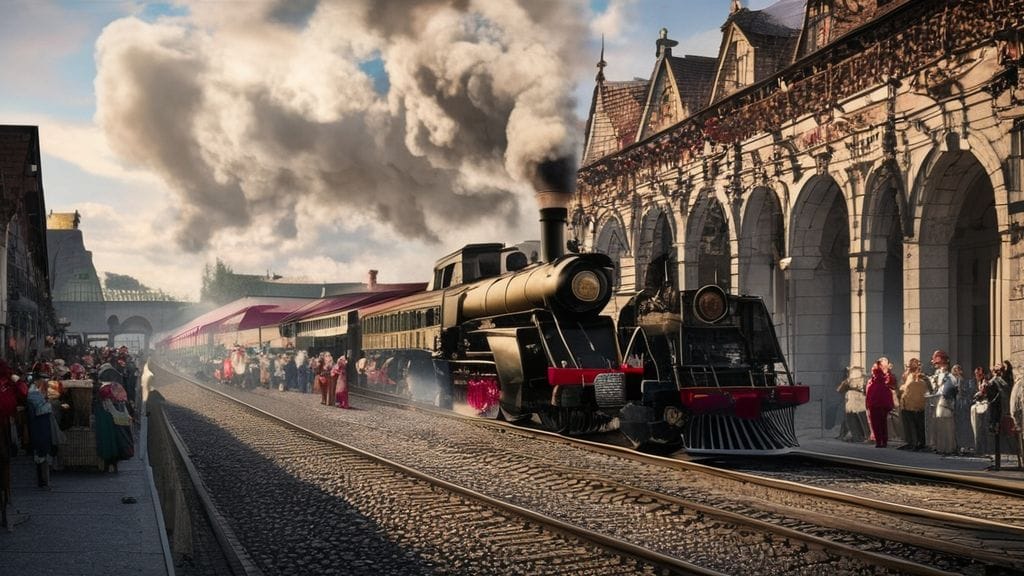
Then, from the direction of the engine shed, came a sound that Nuremberg had never heard before: a chuffing, rhythmic exhalation, like a giant breathing in short, impatient bursts. The Adler, the English-built locomotive that would draw the first train, rolled slowly into view, trailing steam like ghostly banners. Painted in dark, handsome colors, with polished metal fittings and a tall smokestack, it seemed less a machine than some new kind of animal—tamed, perhaps, but not entirely domesticated. Its presence made the fact that the ludwig railway opens feel suddenly, almost shockingly real.
The crowd, which moments earlier had been a murmuring mass, fell abruptly quiet. A few of the braver children cheered; a woman near the front clutched her shawl tight, her knuckles whitening. Local dignitaries stepped forward, speeches were made, a blessing was pronounced. King Ludwig I himself was not present, but his name and authority were invoked repeatedly, entwining royal prestige with industrial daring. And then came the moment that would be recounted for decades: the signal flag rose, the whistle shrieked, and the Adler began to move.
Slowly at first, like a beast testing its strength, the locomotive pulled the line of carriages out of the station. Those on the platform watched the wheels grip the rails, astonished that so much weight could glide so smoothly. In a matter of seconds, the train gathered speed, and the people aboard—mostly officials and invited guests on that very first journey—felt the city slide past them in a blur of stone and timber. What would once have been a long, jolting ride in a carriage became a voyage of less than half an hour. As the ludwig railway opens, the mental map of Bavaria begins to shift: what is far can now be near, and time itself can be compressed by steam and steel.
But this was only the beginning. The short stretch between Nuremberg and Fürth measured barely six kilometers, yet it would become a testing ground for the social, economic, and political implications of the railway age. The winter air that morning carried the scent of coal smoke and hope, but also the bitter tang of anxiety. For behind the cheering crowd stood others—carters, stable owners, small innkeepers—who looked on with guarded faces, aware that each puff of steam from the Adler might be a breath taken from their own livelihoods. To understand what truly changed when the ludwig railway opens, we must first step back into the world as it had been before the rails were laid.
Bavaria Before the Rails: Roads, Caravans, and the Limits of Distance
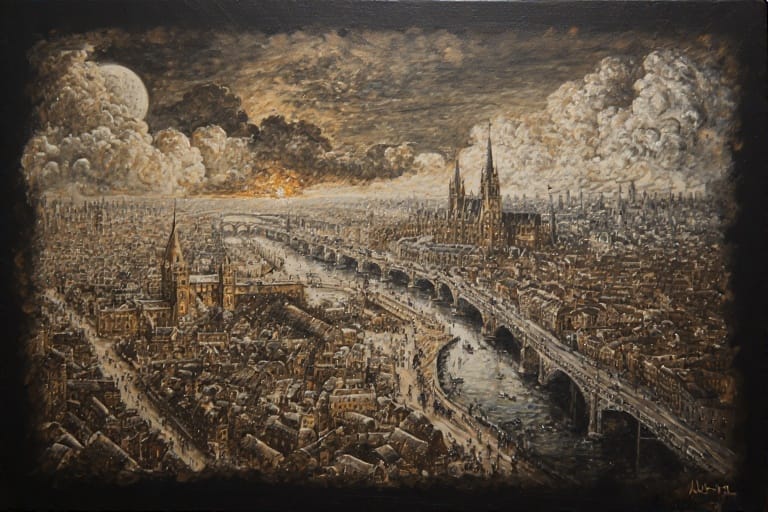
In the early nineteenth century, the Kingdom of Bavaria was a land of roads rather than rails, of horse-drawn carriages, river barges, and the slow, seasonal rhythms of trade. Nuremberg, with its proud medieval walls and towers, had long been a commercial center, lying on routes that connected northern Europe with the Danube and the Italian states. Yet the distances between Bavarian towns were measured less in kilometers than in days and nights, and an extra day of rain or snow might mean lost profits and spoiled goods.
Coaches rattled along dirt and cobblestone roads, their wheels striking every rut and stone. In summer, dust rose in choking clouds; in winter, wheels bogged down in snow and mud. A traveler from Nuremberg to Munich might expect a journey of thirty to thirty-five hours, broken by overnight stays in inns where the odors of horses, tobacco, and cramped human bodies mingled. It was a world in which the phrase “speed of a horse” set the upper limit of ordinary imagination. The very idea that one might travel at thirty or forty kilometers per hour seemed, to many, as fanciful as flying.
Commerce adapted to these limits. Merchants planned their deliveries around weather patterns and the agricultural calendar. Grain arrived slowly, cloth made its way by stages, and letters could take days to traverse distances we now cross in under an hour. The state, too, moved at this tempo. Edicts traveled by courier; inspectors visited towns by carriage. News of a royal birth, an uprising, or a treaty took time to spread, and that very delay shaped politics. Authority, like trade, moved at the speed of hooves and human legs.
In this pre-railway Bavaria, guilds and traditional trades guarded their privileges fiercely. Carters, coachmen, innkeepers, blacksmiths, wheelwrights, and stable-masters formed a web of professions that tied the economy to the horse. They repaired harnesses, shoed animals, mended wagons, and rented out teams for short and long distances alike. Every journey created work for dozens of hands, and every delay—so frustrating to passengers—meant more meals at roadside inns, more nights in town, more coins spent on stabling and repairs.
Nuremberg itself, despite being forward-looking in many respects, carried the weight of its medieval past. The city walls that protected it in times of war now limited expansion and channeled traffic through a handful of gates. Carts queued at these chokepoints, paying tolls and waiting their turn to pass. Inside, narrow streets twisted between buildings, making it difficult for larger carriages to maneuver. Noise was constant: iron-rimmed wheels, the clatter of hooves, the shouts of drivers, the creaking of axles. To many residents, this was simply what a city sounded like.
Yet by the 1820s, cracks had begun to appear in this world. The Industrial Revolution, already advanced in Britain, had begun to ripple across the continent. Canals and improved roads had slightly accelerated trade, and steam power—first harnessed in mines and factories—suggested new ways of organizing labor and production. Bavarian leaders watched developments abroad with a mixture of admiration and unease. Some urged caution, fearing that too-rapid change would bring social unrest. Others argued that without modernization, Bavaria would fall hopelessly behind its rivals.
It was in this context that stories of English railways reached Nuremberg. Newspaper articles described steam locomotives thundering between Liverpool and Manchester, hauling not only goods but paying passengers at unprecedented speeds. Pamphlets and letters circulated among merchants and engineers, full of statistics and vivid descriptions. According to one contemporary account of the British line, a train “traversed a space of thirty miles in little more than one hour,” a figure that left many German readers astonished. If such feats were possible elsewhere, might they not be attempted on Bavarian soil as well?
Dreamers of Iron: Early German Visions of the Railway
Long before the Ludwig railway opens in 1835, visionaries in the German-speaking lands had begun to imagine iron roads reshaping their fragmented political landscape. At the start of the century, Germany was not a unified nation but a patchwork of kingdoms, duchies, free cities, and principalities, their borders crisscrossed by customs barriers and competing legal frameworks. Travel between them was slow and often expensive, hampered not only by poor infrastructure but by bureaucracy. It is no accident that some of the earliest German enthusiasts for railways were not romantic poets or philosophers, but pragmatic merchants.
One of the most influential figures was Friedrich List, the economist who would later become known as a passionate advocate of rail transport. In the 1820s and early 1830s, List argued that a dense railway network could bind the German states together economically, laying the groundwork for political unity. “Railways,” he wrote in one widely cited text, “are the nerves and sinews of a nation; through them flow the streams of commerce and national life.” This kind of language resonated with forward-thinking Bavarians, even as it worried conservatives who feared the erosion of local autonomy.
Closer to Nuremberg, smaller-scale dreamers took up the idea. Among them was Johann Wilhelm Spaeth, a Nuremberg merchant whose keen interest in British industrial methods led him to study the newly opened Liverpool and Manchester Railway. Spaeth and likeminded colleagues pored over technical drawings and travel accounts, trying to imagine what such a technology might look like if transplanted to Franconian soil. They calculated potential freight volumes, ticket prices, and maintenance costs, converting miles into kilometers and British pounds into guilders.
At first, many of these ideas were dismissed as speculative fantasies. Local engineers questioned whether existing German metallurgy could produce the necessary rails, boilers, and wheels at acceptable quality. Landowners worried about expropriation, noise, and disruption to their estates. Clergy expressed concern that excessive speed might endanger the human body or represent a kind of hubris. Yet slowly, as more reports from Britain arrived, as French and Belgian projects dotted the map, skepticism weakened.
Within the city council of Nuremberg, debates were heated. Some aldermen saw in the proposed railway a chance to revive the city’s declining commercial primacy by linking it more tightly to regional trade routes. Others feared the financial risk, pointing to the limited distance between Nuremberg and Fürth—barely six kilometers—as evidence that any railway there would be more spectacle than sound investment. Why build such an elaborate system, they asked, for a journey that a horse-drawn carriage could complete in under an hour?
The answer, argued proponents, lay not only in this one line but in what it symbolized and could enable. A short route could serve as an experiment, testing public reaction, technical viability, and financial returns. If successful, it might spur further lines crisscrossing Bavaria and beyond. Thus, by the early 1830s, the idea crystallized: begin with a modest stretch between Nuremberg and Fürth, demonstrate its effectiveness, and build from there. This was how the story would unfold, and why decades later historians would look back and say that when the Ludwig railway opens, it does more than connect two towns; it opens a path for a whole country.
Cleverly, the project’s early champions sought to frame the venture as both modern and rooted in Bavarian pride. By naming the line after King Ludwig I, they paid homage to the monarch and wrapped the risky enterprise in royal prestige. The “Ludwigs-Eisenbahn-Gesellschaft” (Ludwig Railway Company) was formed as a joint-stock company in 1833, a relatively novel financial vehicle in Germany. Citizens were invited to purchase shares, thus tying their fortunes to the success of the rails. This spread both the costs and the hopes of the project across a broad swath of society.
Nuremberg Meets the Future: Planning the Line to Fürth
Once the decision was made, abstract dreams had to be translated into tangible, iron-bound reality. The stretch between Nuremberg and Fürth might be short, but it traversed a complex social and physical landscape: fields, footpaths, property lines, and the expectations of those who lived along the proposed route. Surveyors walked the ground with measuring rods and chains, marking out possible alignments. Maps were drawn and redrawn in dusty offices, every curve and gradient sparking questions. A gentle slope was essential; the English example had shown that locomotives could tackle inclines, but not without cost in fuel and mechanical strain.
Negotiations with landowners were delicate. Some saw opportunity in proximity to the railway, imagining increased value for their adjacent plots. Others feared division of their fields, disturbance to livestock, or the loss of long-established rights of way. Compensation was offered, but money alone could not always soothe the sense of violation some felt when an ancient landscape was crossed by such uncompromising straight lines. Behind the scenes, lawyers worked alongside engineers, drafting contracts in a language that mingled legal formalities with technical jargon.
Within Nuremberg, the planning forced a confrontation between the city’s medieval fabric and industrial ambitions. Where should the terminus be located? Too far outside the walls, and the railway would be inconvenient and symbolically marginal. Too close, and it would strain existing streets and public spaces. The solution was a station just outside the city’s moat, at the so-called Plärrer area, connected to the gates by new approaches. Even here, arguments flared: merchants pressed for easy access to warehouses, while residents worried about noise and dirt.
As plans solidified, the project also moved into the public imagination. Local newspapers described the expected benefits but did not shy away from airing doubts. Satirists drew cartoons of puffing locomotives chasing terrified cows across Franconian fields. Preachers debated whether the “steam horse” violated divine order or merely represented humanity’s ongoing effort to cultivate creation. At tavern tables, men argued over whether the railway would lower the price of grain or simply enrich investors. Women, whose voices are less often recorded, surely speculated in their own circles about what it would mean if husbands, sons, and goods could travel faster and farther than ever before.
Yet despite resistance and ridicule, the momentum proved irresistible. By late 1834 and early 1835, groundwork had commenced, and the idea that the ludwig railway opens in the near future shifted from fantasy to looming fact. As stakes were driven into the ground and stones laid for the station, the project ceased to be just an argument among elites. It became a daily reality for laborers, masons, carpenters—many of whom had never before worked on something explicitly labeled “modern.”
From Workshops to Rails: Building the Ludwig Railway
The construction itself was a feat of organization and adaptation, all the more impressive because Bavaria had little direct experience with such projects. There were no existing railways to copy within the kingdom, no local cadre of engineers who had already laid hundreds of kilometers of track. Instead, knowledge had to be imported, interpreted, and reshaped.
Local workshops, accustomed to producing wagon wheels, tools, and small machines, now found themselves manufacturing components for a strange new system. Iron rails, ordered from factories in the Rhineland and abroad, arrived by cart. Sleepers—stout wooden beams—were cut and treated to resist rot. Laborers dug shallow beds, spread gravel ballast, and then carefully positioned the sleepers and rails, measuring and re-measuring to maintain gauge. Every meter laid was a small triumph of precision over uneven ground.
The workforce was a mixture of skills and backgrounds. Traditional craftsmen worked alongside unskilled day laborers hired from the surrounding countryside. Supervisors had to translate drawings and measurements into tasks comprehensible to men who had never seen a locomotive, let alone imagined one rolling over the structures they were building. Mistakes were inevitable: rails laid slightly out of line, joints inadequately supported, embankments not compacted enough. Each error provided a lesson, corrected at some cost in time and money.
Finances, always a concern, threatened to derail progress more than once. Share subscriptions came in, but not as quickly as enthusiasts had hoped. Some prospective investors hesitated, wary of committing funds to a project that might be remembered as a costly curiosity. Rumors circulated that the line would never be finished, that the English had tricked the Germans into adopting a technology ill-suited to their soil and climate. Yet the board of the Ludwig Railway Company persisted, juggling credit, appealing to civic pride, and invoking the name of King Ludwig to reassure the cautious.
On the ground, the line slowly took shape. From Nuremberg, the rails extended westward, crossing flat fields through which peasants had walked and carted produce for centuries. To the untrained eye, it might have seemed like little more than a pair of iron bands, low and unremarkable. But those who had seen the English drawings knew that these rails were not passive. They were prepared to carry forces and speeds that would, in a few months, reconfigure the meaning of that landscape. When the day came that the Ludwig railway opens, every sleeper laid and spike driven would be tested not only by metal wheels, but by the weight of expectation.
The English Machine: How the Adler Came to Bavaria
If the rails and stations of the Ludwig Railway were born in Bavarian fields and workshops, the beating heart of the project—the locomotive—came from across the Channel. In the 1830s, Britain was the uncontested leader in railway technology, its engineers and ironworks producing engines that seemed almost magical to foreign observers. It was to Britain that the directors of the Ludwig Railway Company turned when they needed a machine capable of pulling trains on their new line.
They placed an order with the firm of George and Robert Stephenson, pioneers whose names were already legendary. The locomotive that would later be called Adler (“Eagle”) was designed as a typical English engine of its day, with a tall, narrow boiler, large driving wheels, and a tender to carry coal and water. Its journey to Bavaria was an odyssey in itself: disassembled into manageable parts, shipped across the North Sea, transported inland by barge and wagon, and finally delivered in crates and bundles to Nuremberg. There, in a hastily prepared workshop, began the delicate process of reassembly.
English mechanics accompanied the Adler, working alongside German craftsmen whose skills would determine whether the foreign marvel would come to life. Instructions had to be translated and reinterpreted; measuring systems converted; tools improvised or adapted. It was a moment of intense cross-cultural collaboration that went largely unremarked in official accounts but was crucial to the project’s success. As bolts were tightened and rods connected, the abstract idea that the ludwig railway opens soon took on tangible form in rivets and pipes.
When at last the engine stood on its own wheels, gleaming with fresh paint and polished brass, it looked both outlandish and oddly familiar. Its basic elements—firebox, boiler, pistons, wheels—could be understood by anyone with some mechanical experience. Yet the way these parts worked together, transforming fire and water into motion, defied easy intuition. The first time the Adler’s boiler was fired in Nuremberg, crowds gathered outside the shed, drawn by the hiss and rumble from within.
Tests were cautious at first. The locomotive crept along short stretches of track, its performance watched anxiously. Engineers checked for leaks and listened for troubling noises; they adjusted weights, tightened joints, and recalibrated valves. More than once, a fault forced them to halt, vent steam, and return the machine to the workshop. To those who believed that the railway was a foreign intrusion, each problem seemed proof that such marvels belonged in England, not in Franconia. To believers, every successful trial, every smooth wheeled rotation, signaled that Nuremberg was on the cusp of a new age.
Gradually, confidence grew. The Adler hauled test wagons, then full carriages, along longer and longer distances. Observers standing beside the track felt the rush of displaced air, heard the labored breathing of the pistons, smelled the tang of hot oil and coal smoke. It is astonishing, isn’t it, how quickly humans can become accustomed to the once-unthinkable? Within weeks, the sight of a steaming locomotive at the edge of Nuremberg, though still remarkable, no longer seemed purely fantastical. It seemed workable, even inevitable. And that set the stage for the moment when, to official fanfare and public wonder, the Ludwig railway opens for paying passengers.
7 December 1835: When the Ludwig Railway Opens to a Watching World
The inauguration day of the Ludwig Railway has become a staple of German industrial lore, but its details still bear retelling, if only to restore some of the uncertainty and tension that official commemorations tend to smooth over. It was cold, and that mattered. Cold metal shrinks, steam condenses more readily, and any mechanical failure in front of a large, skeptical crowd would have been humiliating. Thus, from the earliest hours, engineers and stokers worked to bring the Adler to life, cautiously heating the boiler, testing pressures, and eyeing gauges.
Outside, Nuremberg joined the ritual. Flags and garlands decorated public buildings. Musicians tuned their instruments. At the station, a platform had been erected from which dignitaries could address the crowd. Officials in their finest uniforms mingled with businessmen in black coats, while ordinary citizens craned their necks for a view. Travelers from nearby towns had arrived early, some in their own carriages, others on foot, determined to say in years to come that they had been present when the Ludwig railway opens for the first time.
The ceremony followed a well-choreographed script. Speeches praised King Ludwig I for his enlightened support and expressed pious hopes that the railway would strengthen Bavaria’s economy and honor. A clergyman offered a blessing, invoking divine protection over the machine and its passengers, as if to reconcile the raw industrial power of the locomotive with the moral order of the community. Contemporary reports describe applause, though surely not all hands clapped with equal enthusiasm. Some eyes lingered on the Adler’s moving rods and spinning wheels with a mechanic’s appreciation; others flicked toward the horses tethered near the station, as if silently comparing futures.
At last, the moment came for the first official departure. The train consisted of the Adler, its tender, and a series of carriages—some open, some covered—prepared to carry dignitaries, shareholders, and a limited number of paying passengers. Seats had been assigned, and disputes over precedence no doubt yielded bitter grumbles. After all, to be among the very first riders carried symbolic weight; it hinted at one’s place in the hierarchy of the new age. When the whistle shrieked and the engine jolted into motion, more than one person aboard must have felt a flutter of fear.
Yet as the train cleared the station and accelerated, another sensation took hold: exhilaration. The city fell away behind them with unprecedented speed. Houses and barns that would normally pass in a slow procession blurred together. The rails hummed beneath the wheels, a new kind of sound in the Franconian countryside. Passengers gripped seat rails and each other’s arms, laughing, shouting, or simply staring ahead in stunned silence. “It was as though one were flying low over the earth,” recalled one early rider in a letter, struggling to capture the interplay of speed and proximity.
Back at the station and along the line, spectators watched the train’s progress. Some waved hats or handkerchiefs; others stood rigid, uncertainty etched on their faces. There were reports of horses shying away, of dogs barking madly, of farm animals staring with uncomprehending eyes. But there were no accidents that day, no derailments or catastrophic failures. The carefully prepared track held, the Adler performed as intended, and the train rolled triumphantly into Fürth about ten minutes after departure, depending on which source one reads. What mattered was less the exact duration than the impression: a journey that had taken a carriage perhaps forty minutes or more had been reduced to a fraction of that.
The return trip cemented the day as a success. Word spread quickly through Nuremberg and Fürth: it works. The machine is real, and it can be ridden. When the Ludwig railway opens on that December day, it thus does something subtle but profound: it shifts the boundary of the believable. What had been the stuff of heated argument becomes, within a single morning, an accomplished fact that must be incorporated into daily life, whether one welcomes it or not.
Passengers, Tickets, and Fears: First Encounters with Speed
In the weeks after the opening, the Ludwig Railway settled into a rhythm of scheduled journeys. Timetables advertised departures between Nuremberg and Fürth, and locals began to integrate the new mode of transport into their routines, cautiously at first. Ticket offices sold different classes of passage, mirroring the social divisions of the time: the wealthy and respectable in enclosed, upholstered carriages; the less affluent on simpler benches, sometimes in open cars where winter’s cold bit hard. Even within this short line, hierarchy traveled with the passengers, reminding them that the future would not erase old distinctions overnight.
Many first-time riders approached the experience with a mixture of curiosity and dread. Rumors persisted that the human body might not withstand such velocity, that lungs could fail, or the brain be shaken loose by the rapid movement. Physicians were drawn into the debate, some reassuring, others cautionary. Before boarding, passengers inspected the locomotive closely, as if trying to gauge whether its mass and metal could truly be trusted. Some carried religious amulets or murmured prayers; others affected a show of bravado that thinly veiled their unease.
Yet for all the anxiety, people came. Merchants needed to reach markets faster, students traveled between town and city, families visited relatives. A round-trip journey that once consumed most of a day could now be compressed into a morning or afternoon. Time, which had long been spent on the road, became available for other activities. The very idea of a “day trip” by rail, so mundane to us, emerged here in embryonic form. When the Ludwig railway opens not just ceremonially but in regular service, it opens as well a new way of thinking about what one might plausibly do in a single day.
Not everyone could quickly reconcile themselves to the mechanical environment of the train. The smells—coal smoke, hot metal, oiled wood—were unfamiliar. The regular clanking of wheels over rail joints, the oscillation of the carriage body, the whine of wind through cracks in the doors—all these could feel disorienting. Some passengers reported headaches or nausea; others simply found the noise exhilarating. Children, according to several later recollections, were among the quickest to embrace the novelty, leaning out of windows despite stern adult warnings and screaming with glee at the rush of air.
For those watching from the sidelines, each passing train was a reminder that the world was changing. Carters saw their old clients vanish into the railway station, goods loaded onto freight wagons instead of their carts. Farmers near the line learned to anticipate the regular thunder of the Adler and later engines, adjusting their work to avoid spooking their animals. Even the concept of punctuality shifted. Trains left and arrived at set times, and those who missed them had to wait for the next scheduled departure. This was different from negotiating with a carriage driver, who might agree to leave a little earlier or later for the right price. The machine, and the system behind it, made time more rigid, more measured.
Horses, Carters, and Guilds: Winners and Losers of the New Age
Technological revolutions rarely distribute their benefits evenly, and the short line between Nuremberg and Fürth was no exception. For every passenger thrilled by speed, there was a coachman or carter who saw only the end of a way of life. Before the arrival of the railway, horse-drawn vehicles had dominated the route, transporting not only people but mail and freight. Inns along the road offered stables, food, and beds for travelers making the modest but significant trek between the two towns.
With the railway in operation, the number of passengers willing to endure the bumps and delays of a carriage dropped dramatically. Why spend nearly an hour jolting along a road, exposed to weather and mud, when a smooth, predictable train ride cost a comparable price and took a fraction of the time? The economics were brutal. Within months, some small carriers reported steep declines in business. Anecdotes from the period mention carters standing at the edges of the station yard, watching trains depart with a mixture of resentment and resignation.
Guilds, which for centuries had regulated entry into trades and protected members’ interests, found themselves powerless against the iron road. No rule of apprenticeship could limit who might become a railway shareholder or clerk. The skills that mattered now—engineering, mechanics, scheduling—fell outside the jurisdiction of the old craft organizations. Some tried to petition authorities for protection or compensation, arguing that the state should not sanction such direct competition with established trades. Their pleas carried moral weight but little practical effect. The logic of efficiency and progress had taken hold among policymakers.
Yet even in this period of displacement, there were forms of adaptation. Some coachmen found work with the railway itself, their knowledge of routes, schedules, and passenger needs repurposed in the new system. Blacksmiths, once chiefly occupied with horseshoes and wagon fittings, turned their skills toward metalwork for rails, wheels, and signaling equipment. Innkeepers near the station saw new opportunities: travelers now required waiting rooms, refreshments between trains, and lodging if they missed a departure. The content of their work changed, but the underlying principle—catering to the needs of those on the move—remained.
Still, no narrative of smooth transition can erase the losses. For many smaller operators, there was simply no place in the new order. Their horses fell idle, their wagons rotted, their children were encouraged to seek other trades. The resentments generated in this process became part of the social texture of early railway history, even if official commemorations were disinclined to mention them. When we say, with historical hindsight, that the Ludwig railway opens a new era, we should remember that for some, it also closed a chapter of rural and small-urban life that had persisted for generations.
A City Transformed: Nuremberg’s Streets, Markets, and Skylines
The impact of the Ludwig Railway radiated outward from the tracks, changing Nuremberg in ways both visible and subtle. Physically, the city’s silhouette remained dominated by its medieval fortifications and church spires, but now a new structure claimed attention just beyond the moat: the station. With its mix of functional and decorative architecture, it announced itself as a gateway, a place where people and goods flowed in and out at an unprecedented rate. Slowly, the areas around it began to reconfigure.
Roads were improved to facilitate access, and new businesses sprang up: inns catering specifically to railway passengers, warehouses for goods arriving by train, workshops specializing in repairs of carriages and wagons used to move freight between the station and city markets. The traditional center of Nuremberg, clustered around its historic squares, did not wither, but it was no longer the sole gravitational core. Commerce now had a second heart, pulsing with the arrivals and departures of trains.
Markets were reshaped by the new speed of transport. Perishable goods—fruits, vegetables, dairy—could be brought from surrounding areas more quickly and reliably. This would matter even more when the rail network extended further, but even the short line to Fürth had an effect. Traders began to think in terms of connections: if something could reach Fürth rapidly, and from there be relayed onward by road or, eventually, other rails, then the effective supply area for Nuremberg’s markets expanded. Prices and availability fluctuated in new patterns, tied not only to harvests and weather but to timetables and locomotive reliability.
Socially, the station became a new kind of public space, mixing classes and occupations in ways that traditional Nuremberg venues rarely did. On its platforms, wealthy merchants stood alongside artisans, peasants, and travelers from distant regions. Everyone waiting for a train was subject, in principle, to the same schedule and the same abstract rules of ticketing and carriage allocation. True, money could buy more comfort and privacy, but the railway nonetheless imposed a degree of standardization on experience that was unfamiliar. The simple act of consulting a timetable—a printed chart indifferent to social status—hinted at a shift toward a more rule-governed, impersonal modernity.
Within households, too, the presence of the railway made itself felt. Journeys that would once have been rare and carefully planned became slightly more frequent. A son apprenticed in Fürth might now visit more often; a merchant might make a same-day round trip instead of staying overnight. Letters could be carried by train as part of an evolving postal system, altering the tempo of communication. Over time, people adjusted their expectations: news that took days began to seem slow, and delays that would once have been unremarkable became aggravating. The city’s internal sense of time, in other words, was gradually recalibrated by the regular pulse of the departing and arriving trains.
Politics on the Tracks: Bavarian Power and German Unity
Beyond city walls and station yards, the Ludwig Railway carried political implications that contemporaries quickly grasped. In the 1830s, Bavaria occupied a delicate position within the German Confederation: a substantial kingdom, yet overshadowed by Prussia and Austria. Adopting cutting-edge industrial technology offered a way to project modernity and compete symbolically with more powerful neighbors.
When politicians and pamphleteers spoke about the Nuremberg–Fürth line, they often did so in grandiose terms. Some framed it as the first step in a Bavarian network that would knit together the kingdom’s disparate regions—from Franconia in the north to the Alpine foothills in the south. Others, influenced by thinkers like Friedrich List, imagined the Ludwig Railway as one link in a future chain connecting the Main and Danube rivers, tying southern Germany more tightly into European trade. In this vision, when the Ludwig railway opens, it also opens a route for political influence: whoever controls the rails can channel economic flows and, indirectly, loyalties.
Not everyone welcomed this potential. Local princes and municipal elites worried that railways might erode their authority, making it easier for ideas and people to cross borders. A seditious pamphlet, once slowed by customs posts and poor roads, could now travel quickly. Troops could be moved with greater speed—a boon to central authorities but a threat to those who cherished local autonomy. Some conservative voices, citing events in Britain and France, warned that industrialization and rapid transport might foment class conflict and urban unrest. In their eyes, the hiss of a steam engine could be heard as a prelude to the clamor of revolution.
King Ludwig I himself embodied the ambivalence of the age. A patron of the arts and architecture, he loved beauty and historical continuity, yet he also recognized the necessity of economic modernization. By lending his name to the railway, he signaled royal endorsement without fully relinquishing his preference for aesthetic over mechanical wonders. The line bore his title, but the day-to-day work of making it function lay with bourgeois shareholders, foreign engineers, and local administrators, all part of a rising middle-class culture of enterprise.
In the longer run, the modest success of the Nuremberg–Fürth line helped sway Bavarian authorities in favor of more ambitious projects, including the Ludwig Canal and other rail links. It also contributed to a broader German conversation about infrastructure as a tool of nation-building. Later observers, looking back from the vantage point of a unified Germany in the 1870s, would treat early projects like this as precursors to the national rail grid that would help bind Prussia, Bavaria, and the smaller states into a single political entity. One could say, with only mild exaggeration, that the day the Ludwig railway opens, the tracks of German unity gain their first Bavarian meters.
From Curiosity to Network: How a Short Line Changed Long-Distance Travel
At first glance, the Nuremberg–Fürth route might seem too short to matter much beyond its immediate surroundings. Yet history often turns on small experiments whose full significance only becomes clear later. The line proved several crucial points: that a railway could be built and operated on German soil; that passengers would ride it; that investors could earn returns; and that political authorities could manage the social frictions it generated.
These lessons did not remain confined to Franconia. Engineers and officials from other German states visited, took measurements, interviewed staff, and rode the trains themselves. Reports circulated through bureaucratic and commercial networks, blending technical detail with evocative description. One Prussian observer noted the “order and punctuality” of operations, hinting that such methods might serve as a model. An Austrian visitor, by contrast, expressed skepticism about whether the hilly terrain of his homeland could be tamed so easily. Debate flourished, but it was increasingly grounded in concrete experience rather than conjecture.
As more lines were proposed—in Saxony, Prussia, Baden, and elsewhere—the Nuremberg–Fürth example served as a reference point. Cost estimates cited its construction figures; passenger projections referenced its ridership. Its timetable, primitive by later standards, nonetheless demonstrated how regular services could be structured. In this sense, the moment when the Ludwig railway opens marks not just an isolated achievement but the birth of a template. Others would refine and expand it, but the core idea—that rails, locomotives, stations, and schedules could be woven into a system—had been publicly validated.
With each new line, the meaning of distance in central Europe changed. Journeys that once required days could be completed in hours; the concept of a “long trip” shifted. Cities that had previously been loosely connected through itinerant trade networks found themselves bound together by timetables and through-tickets. The Nuremberg–Fürth line, despite its brevity, contributed to this transformation by showing that even short connections could feed into larger structures. When later, trunk lines linked Nuremberg to Munich, Berlin, and beyond, that first six-kilometer stretch became, in effect, part of a chain stretching across the continent.
Smoke, Soot, and Wonder: Daily Life Around the Early Railway
Once the initial excitement faded, the Ludwig Railway settled into the background of everyday life—yet it remained a conspicuous presence, shaping senses and routines. Children in the neighborhoods near the tracks learned to tell the time by the passing of trains, long before every household possessed a reliable clock. Farmers arranged their work so that plowing or harvesting near the line did not coincide with scheduled departures, both to avoid frightening animals and to satisfy their own curiosity at seeing the locomotive thunder by.
The sounds of the railway became part of Nuremberg’s acoustic landscape: whistles piercing the air, the rhythmic clatter of wheels on rails, the distant hum like an approaching storm. On foggy mornings, a train might emerge from a gray veil, its front lantern glowing dimly, like a ghostly carriage drawn by invisible horses. On clear evenings, sparks from the chimney traced orange arcs against the darkening sky, to the delight of some and the horror of others who worried about fire.
For workers employed by the railway, daily life meant long shifts in an environment unlike traditional workshops. Engine drivers and stokers labored in intense heat, shoveling coal, monitoring water levels, and listening intently to the machine’s breathing. Trackmen walked the line, inspecting rails and sleepers for damage, clearing debris, and braving all weathers. Clerks managed tickets and freight manifests, learning to think in terms of train numbers and departure times instead of merely origin and destination. A new occupational culture, with its own slang, hierarchies, and camaraderie, took root along the six kilometers of track.
Residents nearby discovered that convenience came with trade-offs. Coal smoke drifted over fields and into open windows, blackening laundry and leaving a fine grit on surfaces. The noise could be disruptive, especially at dawn or late evening. Some people complained to local authorities, arguing that the benefits did not justify the nuisances they endured. Others shrugged, accepting the irritations as the price of progress. Over time, many simply grew used to the presence of the railway, the way one grows used to a river’s constant murmur or a church bell’s regular chime.
Yet even as familiarity bred a degree of indifference, moments of wonder persisted. A child seeing the Adler up close for the first time; a peasant riding the train after years of watching it from afar; a visitor from a distant region stepping off the carriage at Nuremberg station—each encounter carried a charge of astonishment. Modernity rarely descends uniformly; it arrives in flashes, concentrated in certain sites and experiences. The stretch of track between Nuremberg and Fürth, in the years after the Ludwig railway opens, functioned as precisely such a site, where the old and new world overlapped and negotiated daily.
Voices from the Platform: Diaries, Letters, and Eyewitness Tales
Fortunately for historians, the early years of the Ludwig Railway left behind a trail of personal testimonies. Though not as numerous as we might wish, they offer glimpses of how individuals processed the experience of the new technology. A Nuremberg merchant wrote to his brother in 1836, expressing both excitement and calculation: “I have ridden now three times to Fürth by the steam carriage. The journey is swift and, I must admit, rather agreeable. If I can make two such trips in the time once needed for one, I may visit more clients and increase my takings.” Commerce, for him, was the measure of the machine.
A different tone emerges in the diary of a young woman from Fürth, who described her first journey with a mixture of fear and liberation. “I trembled as we began to move,” she noted, “for Mother had said that no Christian was meant to fly so fast along the earth. But soon the air against my face and the view of our fields rushing past filled me with such strange joy that I forgot to be afraid. It was as if the world stretched out before us, beckoning.” For her, the railway opened not only physical distance but a sense of personal possibility.
Local clergymen, too, recorded their reactions. One pastor near Nuremberg observed in a sermon that “the steam engine, like the printing press, is an instrument whose moral character depends upon its use.” As cited in a later compilation of Franconian sermons, he exhorted his flock to “embrace its benefits without succumbing to greed or restlessness.” Such comments reflect a broader clerical attempt to domesticate industrial progress within Christian ethical frameworks, neither endorsing nor condemning the machine outright but seeking to guide its social effects.
Travelers from abroad sometimes visited the line as a curiosity. An English tourist, proud to see his country’s technology on German soil, wrote approvingly that “the Bavarians have acquitted themselves well in adopting our system; their short road is well constructed, and the engine, though of English manufacture, is ably handled by local men.” His somewhat patronizing tone reminds us that technology, in this era, also carried national prestige.
These voices, taken together, reveal the plural meanings of that moment when the Ludwig railway opens. For some, it meant profit; for others, fear; for still others, a subtle but enduring expansion of what life might hold. They also show that history is never simply the story of machines and rulers. It is a mosaic of individual encounters—jealous coachmen, awestruck children, cautious mothers, ambitious merchants—each interpreting the railway through their own experiences and hopes.
Engineers, Merchants, and Monarchs: The People Behind the Line
Behind every triumph of technology stand individuals whose energy, vision, and stubbornness transform ideas into rails and schedules. The Ludwig Railway was no exception. Its story cannot be told without acknowledging the roles played by a small group of merchants, engineers, and officials who championed the project long before the first whistle blew.
Among the merchants, Johann Wilhelm Spaeth stands out. He and his associates did the unglamorous work of drafting proposals, persuading skeptical investors, and traveling to England to study existing railways. They risked capital and reputations, arguing that the benefits would justify the outlay. Their efforts were not purely altruistic—profit was a clear motive—but they nonetheless exposed themselves to ridicule and financial loss if the project failed. When the Ludwig railway opens successfully in December 1835, it vindicates their calculations and their courage.
Engineers, many of them influenced by or directly trained under British models, translated plans into hardware. They made decisions about track gauge, rail type, and station design that would shape daily operations. In an era before formal engineering degrees were widespread in Germany, many learned by doing, combining theoretical reading with practical tinkering. The English technicians who came with the Adler played a significant role, but they did not work in isolation. Local craftsmen absorbed their methods, adapted them, and in some cases improved upon them under German conditions.
Above this technical and commercial stratum stood political authorities, from King Ludwig I down to municipal councilors. Without their permission and occasional support, the line could not have been built. Royal endorsement lent legitimacy; municipal cooperation smoothed land acquisition and local regulation. Yet these figures, for all their importance, were somewhat removed from the daily grind of construction and operation. They signed decrees and attended ceremonies; others hammered spikes and shoveled coal.
This layered human story reminds us that the day the Ludwig railway opens is not an impersonal event. It is the culmination of countless conversations, calculations, and compromises. It is also the beginning of new careers. Young men who started work as track laborers or assistants in 1835 might, within a decade, become supervisors or stationmasters on an expanding network. Children who watched the Adler with wide eyes might later become engineers or administrators, their imaginations fired by that first encounter with steam and speed.
Myths, Accidents, and Regulations: Learning to Live with the Machine
No new technology enters society without generating myths and mishaps, and the Ludwig Railway quickly accumulated both. Early rumors insisted that trains would cause cows to miscarry, that sparks would routinely ignite fields, or that the repeated passage of heavy engines would somehow drain vitality from the soil. Over time, most of these fears proved unfounded or exaggerated, but they influenced how people behaved. Farmers sometimes kept livestock away from the line during scheduled trains, and parents warned children not to play too near the rails, invoking both real dangers and imagined ones.
Accidents did occur, though on a smaller scale than those that would later darken railway history. Minor derailments, caused by track defects or debris on the line, startled passengers and prompted investigations. On at least one occasion, a passenger reportedly fell—or jumped—in panic from a moving carriage, sustaining injuries. Such incidents underscored the need for clear rules: about boarding and alighting, about speed limits in certain zones, about maintenance standards.
Authorities responded by developing a small but growing body of regulations, some based on British precedents, others improvised. Signals—flags by day, lamps by night—were introduced to manage train movements. Inspections of rolling stock and track became routine. Conductors were empowered to enforce order among passengers, who might otherwise open doors or lean out windows dangerously. In this regulatory process, the railway helped pioneer forms of bureaucratic control that would later permeate other domains of life.
Interestingly, some myths about the railway contained kernels of truth, albeit in distorted form. While trains did not sterilize fields or drive all animals mad, the noise and vibration did affect nearby environments. Birds altered nesting patterns; pathways were rerouted; human settlements leaned toward or away from the tracks depending on attitudes. The line thus acted as both a literal and metaphorical boundary, around which new habits and stories clustered. The act of learning to live with the machine was not just a matter of safety; it was a cultural negotiation, a process of deciding what the railway meant and how much space it would occupy in the shared mental landscape.
From Ludwig Railway to German Rail Empire
By the time mid-century approached, the modest Nuremberg–Fürth line had been joined by an expanding web of rails that stretched across German lands. Larger and faster locomotives supplanted the Adler, and Nuremberg’s station became one node among many in a network linking major cities and small towns. The Ludwig Railway Company, once a daring pioneer, found itself operating a line that now seemed almost quaint in its brevity, even as it remained commercially useful.
Historians looking back have often drawn a straight line from that first inauguration day to the dense rail grids that later enabled Prussian military mobilization and unified markets. There is some justice in this narrative, though it risks oversimplification. Still, the symbolism is powerful: when the Ludwig railway opens, it does so in a Germany that does not yet exist as a nation; by the time the century ends, rails will have helped create that nation, not only by moving soldiers and coal, but by fostering shared experiences of time and space.
Industrial centers such as the Ruhr, Saxony, and Silesia grew in part because railways could bring raw materials in and send finished products out. Rural areas were drawn into national and international trade. Political leaders learned to think in terms of transport corridors and chokepoints, integrating rail planning into diplomacy and military strategy. The Nuremberg–Fürth line, preserved and celebrated in later years, became a kind of origin myth, cited in textbooks and speeches as the place where it all began—never mind that other early experiments elsewhere also claimed firsts of various kinds.
In this sense, the story of the Ludwig Railway is not only local history; it is part of a broader tale about how Europe—and, indeed, the world—entered the age of mass mobility. The short stretch of track that once seemed so audacious now reads as a prologue to global railways cutting through mountains, deserts, and cities. Yet its intimacy, its human scale, remains instructive. It reminds us that behind every vast infrastructure lie small beginnings: one line between two neighboring towns, one chilly morning when an iron engine first pulled a handful of carriages into motion.
Remembering 1835: Heritage, Memory, and the Modern Visitor
Today, visitors to Nuremberg encounter a city layered with histories: medieval trade, Reformation conflicts, twentieth-century horrors, and postwar renewal. Amid these weighty narratives, the story of the Ludwig Railway might seem modest. Yet it still claims space in museums, plaques, and occasional reenactments. A replica of the Adler, meticulously crafted, sometimes steams along short demonstration tracks, offering tourists a sanitized taste of nineteenth-century railway travel.
These commemorations reflect not only interest in technology, but a fascination with thresholds—the moments when societies cross from one order to another. Standing beside a replica locomotive, modern observers can easily forget the anxieties and conflicts that accompanied the original’s debut. The soot has been cleaned away; the noise is muted; the disruptions to traditional trades relegated to footnotes. What remains is a distilled sense of wonder: the idea that there was a time when riding a train, however short the journey, felt like stepping into the future.
Historians and curators sometimes push against this simplification, striving to present a fuller picture. Exhibits describe not only the machinery but the lives it altered—for better and for worse. They show timetables, tickets, workers’ tools, and personal letters. One museum label quotes a skeptical farmer who wrote that “the iron road will bring much noise and little advantage to us.” Another presents stock certificates from the Ludwig Railway Company, evidence of the financial underpinnings without which the line would never have been built. These artifacts anchor the romance of steam in the realities of capital, labor, and contested progress.
For the modern visitor, used to high-speed trains and global air travel, the original six-kilometer route can feel almost laughably short. Yet walking along its path—or tracing it on a map—reveals how revolutionary that small distance once was. It shortened not only the physical journey between Nuremberg and Fürth, but the conceptual distance between Bavaria and the industrial vanguard of Europe. It turned the abstract phrase “railway” into a concrete experience for thousands of ordinary people. And each time a guide explains that this was “Germany’s first passenger railway,” they are, implicitly, inviting listeners to imagine a morning in December 1835 when nothing like this had ever happened before.
Conclusion
On that cold day when the Ludwig railway opens between Nuremberg and Fürth, Bavaria steps over a threshold whose importance only later generations would fully grasp. A short line of track in a modest landscape becomes the stage for a drama about speed, power, and social change. The Adler’s first journey compresses time and space, tilting the balance between tradition and innovation. Merchants, workers, peasants, officials, and children all confront the same unsettling fact: the world can move faster than a horse.
In the months and years that follow, the railway’s promise and costs unfold together. Commerce accelerates; new jobs appear even as old trades decline; cities reorganize themselves around stations and timetables. Politicians and thinkers glimpse in the rails a tool for reshaping economies and, eventually, entire nations. Myths arise, accidents occur, regulations take form. Gradually, what was once a marvel becomes mundane, integrated into the background hum of daily life.
Yet if we strip away our familiarity with trains and try to see the Ludwig Railway as its first witnesses did, we recover some of the awe and unease that accompanied its arrival. We notice the courage of those who boarded the inaugural train, the skepticism of those who stayed behind, the hard labor of those who built and maintained the line in winter fog and summer heat. We recognize that history’s “firsts” are rarely clean breaks, but complex negotiations between old habits and new possibilities.
Today, when high-speed lines cross Europe in hours and jet aircraft circle the globe in a day, the six kilometers between Nuremberg and Fürth might seem insignificant. But they were, in their time, a decisive experiment—a proof that steam, steel, and human will could conspire to redraw the map of everyday life. To remember the moment when the Ludwig railway opens is to remember that technological revolutions start somewhere specific, with particular people, on a particular morning when the whistle sounds and the wheels begin to turn.
FAQs
- Why is the Ludwig Railway considered significant in German history?
The Ludwig Railway between Nuremberg and Fürth, opened in 1835, is widely regarded as the first successful passenger railway on German soil. Though only about six kilometers long, it demonstrated that steam-powered rail transport could work in the German states, attract passengers, and earn profits. Its success encouraged further railway projects, influencing economic development, political integration, and the eventual creation of a dense national rail network. - What was special about the opening day on 7 December 1835?
The inauguration on 7 December 1835 marked the first official public journey of a steam-powered passenger train in Germany. Crowds gathered in Nuremberg to witness the English-built locomotive Adler pull carriages to Fürth, compressing a journey that normally took much longer into a matter of minutes. The day combined ceremony, religious blessing, technical risk, and public spectacle, symbolizing Bavaria’s entry into the railway age. - Who built and operated the Ludwig Railway?
The line was built and operated by the Ludwigs-Eisenbahn-Gesellschaft (Ludwig Railway Company), a joint-stock company based in Nuremberg. Local merchants and investors provided capital, while engineers drew heavily on British designs and expertise. The locomotive Adler was built by George and Robert Stephenson’s firm in England and assembled in Nuremberg with the help of English and German mechanics. - How did the Ludwig Railway affect traditional transport workers?
The railway quickly reduced demand for short-distance horse-drawn passenger services between Nuremberg and Fürth. Coachmen, carters, and some innkeepers along the old road lost customers, and many had to change trades or seek work with the railway. While some blacksmiths and transport workers successfully adapted, others faced hardship, making the line an early example of how technological change can displace established livelihoods. - Was there opposition or fear about the new railway?
Yes. Before and after the opening, people voiced fears that high speeds might harm human health, disturb livestock, or damage the land. Some religious and conservative voices worried that rapid travel and industrialization would undermine social order. Myths circulated about animals panicking and fields being ruined. Over time, as accidents remained rare and benefits became clear, most of these fears subsided, though resentment persisted among those whose trades were harmed. - How fast did the Adler and the Ludwig Railway trains travel?
On the Nuremberg–Fürth line, typical speeds were around 25 to 35 kilometers per hour, depending on the load and conditions. For passengers used to horse-drawn carriages, this felt astonishingly fast, sometimes described as “flying over the earth.” Even though by modern standards it was modest, the speed fundamentally changed perceptions of distance and time between the two towns. - Did the Ludwig Railway directly lead to German unification?
Not directly, but it played a part in broader processes that contributed to unification. The line helped prove the viability of railways, encouraging the spread of networks that knitted together the economies of the German states. Thinkers like Friedrich List saw railways as tools of national integration, and later political leaders used them for trade and military mobilization. In that sense, the Ludwig Railway can be seen as an early step on the path toward a unified German state. - Can visitors today still see anything related to the original Ludwig Railway?
Yes, elements of the original route and related heritage are preserved in and around Nuremberg and Fürth. Museums display replicas of the Adler locomotive, original documents, tools, and models of the early line. Commemorative plaques and historical markers note key sites, and occasional reenactments or heritage rides evoke the spirit of 1835, though in a much safer and cleaner form than the original experience.
External Resource
Internal Link
Other Resources
- Encyclopaedia Britannica – general search for the exact subject
- Google Scholar – academic search for the exact subject
- Internet Archive – digital library search for the exact subject