Table of Contents
- A Frontier on the Brink: Gaul Before 448
- The Man Called the Last Roman: Origins of Flavius Aetius
- The Salian Franks and the Restless Shores of the North Sea
- Imperial Crisis and Barbarian Opportunity
- Toward Vicus Helena: Seeds of a Campaign
- War-Room of a Dying Empire: Aetius Plans His Strike
- Steel and Oaths: The Roman Army and Its Allies
- The March to Vicus Helena: Landscapes of Suspense
- Vicus Helena: A Forgotten Village Caught in World History
- Clash at Dawn: How Aetius Defeats Salian Franks
- Blood, Dust, and Silence: Human Voices from the Battlefield
- After the Storm: Political Settlements and Shifting Loyalties
- From Foe to Foederati: The Salian Franks Inside the Empire
- Aetius Between Barbarians and Emperors
- The Long Shadow of Vicus Helena on Gaul’s Future
- From Local Skirmish to World Turning: Memory of 448
- Conclusion
- FAQs
- External Resource
- Internal Link
Article Summary: In 448, on a misty corner of northern Gaul, the Roman general Flavius Aetius met the Salian Franks in battle near a modest settlement remembered as Vicus Helena. This article follows the long road to that clash, tracing how imperial weakness, frontier anxiety, and ambitious warlords combined to make the moment when aetius defeats salian franks a hinge in the history of Gaul. We explore the turbulent world of the fifth century: a crumbling Western Empire, restless barbarian peoples, and a landscape where loyalty was as fragile as a treaty parchment. Through narrative reconstruction, political analysis, and human-scale storytelling, the battle emerges not as an isolated skirmish, but as a decisive act of imperial stage‑management. The victory gave Aetius breathing room, shaped the status of the Franks as future allies, and prepared the chessboard for later confrontations, including the more famous struggle against Attila. Yet behind the military triumph lay displaced villagers, changing identities, and the quiet birth of a new Frankish Gaul. By following the threads from Vicus Helena into the later rise of the Merovingians, we see how an episode where Aetius defeats Salian Franks helped transform former enemies into heirs to Roman power. In doing so, the article shows how a single victory on a damp northern battlefield could resonate through centuries of European history.
A Frontier on the Brink: Gaul Before 448
The story of 448 does not begin on the battlefield, but along fields and riverbanks, in Roman villas and crumbling frontier forts scattered across Gaul. Imagine the northern provinces of the Western Roman Empire at the middle of the fifth century: a vast patchwork of fertile plains, damp forests, and battered towns, stretching from the Atlantic coast to the Rhine. Once, these lands had been the undeniable heartland of Roman civilization in the West. Merchants thronged through Lutetia and Lugdunum, villas bloomed with mosaics along the Loire, and the Rhine frontier gleamed with the disciplined lines of legionary camps. By the time Aetius marched toward Vicus Helena, that vision was already fading like an old fresco rubbed thin by time.
The frontiers had broken in 406, when a torrent of Vandals, Sueves, and Alans had flooded across a frozen Rhine. In the decades that followed, Gaul became a laboratory of disaster and improvisation. Generals crowned themselves emperors, barbarian groups were settled as federate allies, and Roman elites bargained for survival more than for glory. Settlements were sacked, then rebuilt in humbler forms; abandoned fields grew over with scrub; roads that once carried tax revenues and official couriers now saw the boots of warbands and refugees.
In the north, along the Channel coast and the lower Rhine, Roman control had always relied on a fragile balance of force and diplomacy. The shore was lined with forts of the so‑called litus Saxonicum, the “Saxon Shore,” originally conceived to repel seaborne raiders. Yet as imperial authority waned, those same raiders, along with Franks and other Germanic peoples, were increasingly invited in as mercenaries or tolerated as settlers. The line that once divided “Roman” from “barbarian” blurred into an uneven gradient: Latin-speaking landowners married into Germanic families, and young men from the Rhine tribes enlisted in Roman units, swearing loyalty to an emperor they would never see.
By 448, northern Gaul was, in effect, a contested liminal zone. To the imperial bureaucracy in Ravenna and the aristocrats in southern Gaul, it was a stubbornly necessary frontier, a buffer against deeper catastrophe. To the peoples along the Rhine—the Salian Franks among them—it was a tempting field of expansion, where Roman weakness offered opportunity. It was precisely in this unstable environment that the episode remembered as aetius defeats salian franks would unfold, an event that would dramatize the struggle over who truly owned this wounded but still precious territory.
Farmers in remote hamlets along the Somme or the Scheldt might have heard rumors of shifting allegiances: this Frankish chieftain now in Roman service, that Roman general accused of betrayal, the emperor in distant Italy besieged by court intrigues. Yet their own concerns were more prosaic—whether this year’s harvest of grain would be seized by tax collectors, by soldiers, or by raiders. Whenever an armed column approached, whether bearing Roman standards or barbarian banners, doors were barred, livestock concealed, and families hovered between hope and dread. The frontier on the brink was not just a place where armies maneuvered; it was where ordinary people watched the old world teeter and did not yet know what might replace it.
The Man Called the Last Roman: Origins of Flavius Aetius
Into this disordered landscape stepped Flavius Aetius, a man whose life read like a chronicle of the empire’s own contradictions. Born around 390, probably in Durostorum on the Danube or perhaps in Italy, Aetius was the son of a Roman officer of barbarian origin—Gaudentius, a man reported to have been of Scythian or Gothic stock. His mother was likely a noblewoman of Italian senatorial lineage. In his veins, then, flowed both Roman aristocratic prestige and the martial, frontier ethos of the empire’s periphery. It is astonishing, isn’t it, that someone so hybrid would later come to symbolize the “last Roman” general of the West?
As a youth, Aetius was sent as a hostage to the court of Alaric’s Goths and later to that of the Huns, a formative experience that would mark him for life. In the camps beyond the Danube, he learned the language and tactics of the steppe, rode with mounted archers, and saw up close the politics of tribal kingship. The future champion of Roman Gaul thus spent his formative years not in the lecture halls of Rome, but in the tents of peoples who had long been the empire’s adversaries. This dual education—Roman administration on one hand, barbarian warfare on the other—would make Aetius uniquely suited to rule a crumbling world built on negotiated violence.
By the 420s and 430s, Aetius had risen to prominence in the service of the Western court, which by then had retreated to Ravenna’s marsh‑protected safety. His career was marked by ruthless decisiveness. He fought civil wars against rival generals, secured and lost favor with emperors, and repeatedly used Hunnic allied contingents as his personal power base, calling in their dreaded cavalry to break his enemies. “He was,” as one modern historian has put it, “the broker of barbarian power within the Roman system,” a man as comfortable at a Roman council table as in a Hun war council.
To the troubled provinces of Gaul, Aetius first came as both a savior and a threat. He fought the Visigoths, negotiated with Burgundians, suppressed Bagaudae peasant rebels, and tried to stitch back the tattered fabric of imperial authority. Each intervention left a complicated legacy: towns might be freed from one oppressor but placed under the shadow of another. Yet through it all, Aetius accumulated prestige as the indispensable man, the one general who still seemed able to win battles, secure treaties, and hold the Western Empire together even as it steadily lost provinces.
By 448, when aetius defeats salian franks at Vicus Helena, he had already earned his reputation as “patricius” and de facto master of soldierly affairs. He was not yet the hero of the later Battle of the Catalaunian Plains against Attila, but the path to that fame ran directly through the muddy landscape of northern Gaul. There, Aetius would have to do what he had done so often elsewhere: punish disobedient allies, reassure fearful provincials, and put on a demonstration, both to enemies and friends, that Rome—through him—still had teeth.
The Salian Franks and the Restless Shores of the North Sea
The Salian Franks were not newcomers to Roman attention. For generations they had hovered along the lower Rhine and the North Sea coasts, a loose confederation of small tribes bound more by war traditions and kinship than by centralized state structures. Roman authors in earlier centuries had spoken of the Franks as fearsome raiders, especially skilled in riverine and coastal warfare. They were, in a sense, the pirates and frontier bandits of their age, though increasingly, they also became Rome’s hired swords.
By the early fifth century, some groups of Salian Franks had already been settled as foederati—federate allies—within Roman territory, notably in the region of Toxandria (roughly modern Belgian and Dutch Limburg and North Brabant). In exchange for land and a degree of autonomy, they supplied troops and guarded vulnerable stretches of the frontier. The arrangement was precarious; it rested on mutual perception of benefit. As long as Rome seemed strong enough to enforce contracts and as long as Frankish leaders gained from Roman gifts and stipends, the alliance held. But as chaos rippled through Gaul, the calculus shifted.
We know only fragments about the internal life of the Salian Franks. Archaeological finds reveal weapon‑rich graves, brooches, and belts that suggest a warrior aristocracy keen on displaying status. There is evidence of Roman goods among them—glassware, coins, fine ceramics—hinting at a dense network of trade, plunder, or diplomatic gift exchange. Their chiefs, including figures later remembered with semi‑legendary names like Chlodio, navigated between two worlds: the kinship‑based politics of their warbands and the ceremonious, bureaucratic sphere of Roman diplomacy.
Along the windswept shores near the Scheldt estuary, longships hauled up onto mudflats, Franks would gather to divide spoils and decide on new ventures inland. Some expeditions might simply be seasonal raids into Roman territory; others became migration movements, with families and livestock trailing behind spear‑bearing warriors. Roman garrisons, increasingly under‑manned and poorly supplied, struggled to patrol every road and river.
For the Franks, the crisis of the Western Empire presented opportunity. They could press deeper into Gaul, capturing land and subjects in a political vacuum. But they also risked overstepping and drawing the full wrath of an imperial general determined to re‑assert control. In 448, with tensions flaring around Vicus Helena, that line would be tested. The episode in which aetius defeats salian franks was not merely a punitive campaign; it was a moment when the competing visions of the frontier—Roman overlordship versus Frankish appropriation—collided in open battle.
Among the rank-and-file Franks, the motives were likely a blend of hunger, hope, and habit. Young warriors sought glory and plunder to establish their reputation. Clan elders wanted land security for their descendants. Many had already served under Roman banners and knew the empire’s strengths and weaknesses. More than a few likely spoke passable Latin or had worn an imperial cloak as auxiliaries. They knew that if they pushed too far, a man like Aetius might come. The question was whether, in 448, they believed he still could.
Imperial Crisis and Barbarian Opportunity
At the center of this drama loomed the Western Roman Empire in the age of Emperor Valentinian III. On paper, Rome still possessed immense prestige, a legal system binding millions, a Christian church woven into everyday life, and an imperial court capable of issuing resounding decrees. In reality, by the mid‑fifth century, imperial power in the West was a brittle shell. Tax revenues shrank as provinces were lost or devastated, and the army increasingly depended on federate contingents, mercenaries, and the private followings of ambitious generals.
The court at Ravenna was a stage for competing factions: high‑born courtiers, churchmen, provincial aristocrats seeking favor, and, above all, military strongmen vying to become kingmakers. Aetius was one such strongman, offset by figures like the magister militum Bonifacius earlier in his career, and later by Ricimer. Decisions about Gaul’s fate emerged not from a confident central state but from precarious bargains among these elites. When news reached Italy that the Salian Franks were testing the boundaries in northern Gaul, it was not simply a border incident—it was a test of Aetius himself.
Imperial ideology still demanded that disobedient federate peoples be chastised. The Roman worldview, even in its twilight, insisted that the emperor’s authority was universal under God, and that all peoples inside the frontier owed him obedience. Christian bishops in Gaul, who often served as intermediaries between local communities and imperial authorities, would have framed Frankish encroachments as both a political offense and a quasi‑moral one, a violation of oaths and God‑protected order.
Meanwhile, barbarian leaders across the West were acutely attuned to imperial weakness. Visigoths in Aquitaine pressed for more land, Burgundians in the Rhône valley maneuvered for autonomy, and in Spain and Africa, Vandals carved out kingdoms. The Salian Franks watched and learned. If others could transform from clients to kings, why not them? The only obstacle in northern Gaul was the man who still commanded Roman and allied troops with enough competence to make defiance costly.
That is why the episode in which aetius defeats salian franks at Vicus Helena should be seen as part of a larger pattern. Each time the empire allowed a federate group to go unpunished, its prestige eroded. Each time it asserted itself successfully, it bought a few more years of hesitant obedience. The stakes were not just the fate of one village or one region of Gaul; they were the credibility of Rome’s remaining claim to be the arbiter of power in the West.
For Aetius personally, the crisis was also an opportunity. Victories in Gaul strengthened his hand at court, allowing him to present himself as irreplaceable. He needed to show Valentinian III and the empress Galla Placidia that he alone could keep the frontier from collapsing. In this sense, the Frankish challenge near Vicus Helena came at an almost theatrical moment: a stage on which Aetius could reenact Rome’s old role as disciplinarian of the barbarians, even as he himself relied on barbarian allies to do it.
Toward Vicus Helena: Seeds of a Campaign
The specific spark that led Roman and Salian Frankish forces toward Vicus Helena in 448 is partially hidden by time, but the outlines can be reconstructed. Frankish groups, under a leader often identified with the shadowy Chlodio, had been pushing southward from their bases near the lower Rhine, extending their influence into Roman Belgica. Some settlements openly came under Frankish control; others paid tribute or offered hostages. Roman‑held towns reported harassment along roads, raids on outlying estates, and pressure on local garrisons.
Vicus Helena itself remains elusive in our sources, likely a modest settlement—perhaps a village, perhaps a small way station. Scholars have debated its precise location, with suggestions placing it somewhere in northern Gaul, maybe in the region between Arras and the coast, in an area where Roman and Frankish spheres of influence mingled. Its name, evoking the Empress Helena, mother of Constantine, hints at a Roman past of respectable piety and imperial association. By the 440s, however, Vicus Helena was not a place of pilgrimage but a frontier community nervously watching the horizon.
Reports of Frankish encroachment reached Aetius, who at the time was engaged in juggling multiple crises. Some accounts suggest that he had already intervened in northern Gaul earlier in the decade, forcing the Franks back beyond certain boundaries. Yet the ink on treaties dried quickly in this age, and opportunistic chiefs were always tempted to test whether Roman resolve had weakened. In 448, the test went too far. Aetius, angered by what he perceived as treachery or at least unacceptable overreach, determined on a direct campaign.
He could not ignore the affront. To do so would not only embolden the Franks, but also send a dangerous signal to other federate peoples and provincial elites. So preparations began: messengers sped along the roads, summoning troops from garrisons in Gaul and perhaps even from Italy. Allied contingents—some Gothic, some Hun, some drawn from other Germanic groups under Roman service—were called to muster. Commanders pored over maps, such as they were, plotting routes through territory as shaped by rumor and memory as by direct control.
As the Roman column began its northward movement, a shadow preceded it. Word spread among rural communities: Aetius is coming. For some, this brought relief—they had suffered under Frankish raids and hoped for protection. For others, especially those who had recently struck quiet bargains with local Frankish leaders, it brought anxiety. Would their accommodation be seen as disloyalty? Would the approaching Roman troops demand supplies, billets, and services that poor villages could scarcely afford?
The Salian Franks, too, were forced into decisions. Confronting Aetius in open battle was risky; they knew his reputation and the comparative organization of Roman forces. Yet retreat meant loss of face and influence. They could not simply melt away without acknowledging defeat. Thus, like so many confrontations on Rome’s late frontiers, the approach to Vicus Helena was a dance of reluctance and necessity. The Franks may have chosen ground they believed advantageous, hoping to offset Roman discipline with local knowledge and tactical surprise. Aetius, for his part, would have been calculating where best to leverage his cavalry, his experience, and the fear his name inspired.
War-Room of a Dying Empire: Aetius Plans His Strike
We must imagine Aetius not only as a warrior on horseback, but as a strategist hunched over a wax tablet or rough map in a smoky tent. The war‑room of a dying empire was far from the marble halls of earlier centuries. It was improvised, pragmatic, and conducted under severe constraints. Aetius knew he could not squander men; the Western Empire lacked the population and resources to replace large losses easily. Every engagement had to be weighed like a chess move, counting not only immediate gains but long‑term positioning.
To confront the Salian Franks near Vicus Helena, he had to consider terrain—marshes, rivers, and open fields; the supply lines feeding his army; and the morale of troops drawn from multiple ethnic groups. Many of his men had fought under him in past campaigns; they trusted his leadership, but they also understood the thin line between survival and catastrophe. The general likely held councils with senior officers and allied chieftains, bargaining over roles, spoils, and risks.
Tactically, Aetius had several advantages. He knew how to deploy both heavy infantry in the old Roman manner and mobile cavalry modeled on Hunnic and other steppe traditions. By 448, late Roman armies were a patchwork of units: remnants of legions, seasoned comitatenses field troops, and numerous allied warbands. Aetius would attempt to knit this patchwork into a coherent strike force, using discipline and the fear of Roman punitive action as glue.
He likely planned to draw the Franks into a fight on ground where he could maneuver effectively. Frankish strengths lay in their fierce, often frontal assaults and their familiarity with wooded and marshy terrain. They were formidable in close‑quarters melee but less practiced in coordinated operations against a well‑led, multi‑arm force. Aetius might have sought a battlefield where his cavalry could sweep flanks and where his infantry could hold firm under the initial shock.
There were political calculations, too. Aetius needed not just to win, but to win in a way that allowed him to reshape the relationship with the Salian Franks afterward. Total annihilation was neither likely nor necessarily desirable. Dead enemies cannot pay tribute or serve as future buffers. The war‑room discussions almost certainly touched on demands he might impose after victory: hostages from leading families, clarified frontier lines, and perhaps fresh commitments of Frankish warriors for imperial campaigns elsewhere.
Here we see the layered nature of the event where aetius defeats salian franks. On the surface, it was a battlefield decision. Beneath that, it was an exercise in frontier governance through violence. And beneath that still, it was Aetius’ attempt to write his own legacy as the man who could keep the edifice of the West standing a little longer, even as its foundations rotted.
Steel and Oaths: The Roman Army and Its Allies
To understand what happened at Vicus Helena, we must look closely at the men who followed Aetius into battle. The Roman army of 448 was not the professional, standardized force of earlier centuries, yet it remained a formidable instrument in skilled hands. It was, above all, an army bound by oaths: to the emperor, to the general, to comrades. Its cohesion was as much spiritual as organizational, anchored in rituals, shared hardship, and the stories officers told their men about Rome and her destiny.
Many soldiers in Aetius’ ranks were veterans of other Gaulish campaigns. They had faced Visigoths in the south and Burgundians in the east. Their shields and helmets bore the dents of prior clashes, their bodies the scars of frostbite and blade. Alongside them marched federate troops: Huns famed for their archery and horsemanship, Goths wielding long swords, and perhaps even other Frankish groups aligned with Rome. Each contingent brought not only fighting skill but its own culture: different songs at night, different gods or saints invoked before battle, different notions of honor and shame.
Late Roman equipment reflected a mix of traditions. Many soldiers wore mail or scale armor, though not all; helmets with cheek guards protected seasoned faces. Spears, spathae (long swords), and oval shields remained common among infantry, while cavalry units bore composite bows, lances, and sometimes small round shields. Standards marked each unit: dragons, crosses, and older motifs from legionary history fluttered in the northern winds.
Yet the army was more than metal. It was also an administrative network: scribes counting rations, quartermasters locating grain and fodder, clerics trailing the force to hear confessions and bless the banners. A bishop or priest might have traveled with Aetius’ host, offering both spiritual comfort and political advice. In an age when Christianity had become the empire’s dominant faith, the army was increasingly framed as the earthly arm of divine order.
On the eve of battle, Aetius likely addressed his men in a speech that mixed sternness with reassurance. He would have reminded them of their victories, of the shame of yielding Roman soil to unruly federates, and of the rewards and promotions that awaited those who distinguished themselves. For federate allies, he might have emphasized plunder, honor, and the chance to prove loyalty in the eyes of Rome and its God.
The result was a force that, while smaller and less uniform than earlier imperial armies, still retained a potent core of discipline. This is what would matter at Vicus Helena: when the first Frankish charge broke upon their lines, the question was whether the late Roman army’s blend of steel and oaths could still withstand the storm.
The March to Vicus Helena: Landscapes of Suspense
The final days of the march toward Vicus Helena must have been thick with tension. The countryside bore the marks of uncertainty: farms standing half‑abandoned, hastily fortified churches, cattle driven into forest clearings for concealment. At crossroads, villagers watched the dust rising from the Roman column and tried to guess whether this army represented deliverance or merely another form of devastation.
Roman scouts probed ahead, skirting woodlines where Frankish skirmishers might lurk. Smoke on the horizon could mean anything: a burned barn, a signal fire, a village sacked. The roads—where they still existed—were broken by years of neglect. Men slipped in mud, carts groaned under the weight of provisions. Supply officers fretted over how long their grain stores would last if the campaign dragged on.
Among the rank and file, rumors flourished. Some claimed that the Salian Franks had assembled an enormous warband, swollen by allies from across the Rhine. Others whispered that certain federate contingents in Aetius’ army might switch sides mid‑battle. Late Roman warfare was as much about psychology as numbers; uncertainty could wound morale more deeply than any spear.
At night, campfires dotted the fields like fragile constellations brought down to earth. Hunnic horsemen told tales of battles on the steppe; Roman veterans recounted earlier campaigns and the harsh justice Aetius had meted out to deserters. Quietly, some men made their peace with God, confessing sins to camp priests or muttering prayers learned from their mothers. They did not know whether tomorrow or the next day would bring the clash. They only knew that they had marched a long way to find it.
Meanwhile, the Salian Franks maneuvered in their own fashion. Their scouts shadowed the Roman column, counting standards, gauging its pace. Frankish chiefs argued over how and where to meet Aetius: in an ambush along a narrow road, in the sheltering embrace of woods, or on more open ground where a decisive outcome might be reached quickly. Each choice carried its own risks for men whose families and possessions were not far behind, depending on the warriors’ success for security.
As the distance between the two forces shrank, the landscape itself became a participant in the unfolding drama. Marshy fields threatened to bog down cavalry, while low rises offered vantage points for archers. Somewhere amid these fields, near the unassuming settlement of Vicus Helena, the lines of march and countermarch would converge. The moment toward which Aetius and the Salian Frankish leaders had been moving—whether they fully understood its significance or not—was almost at hand.
Vicus Helena: A Forgotten Village Caught in World History
Vicus Helena, if we peel back the layers of time, would not have looked like the stage of a grand epic. It was likely a modest cluster of houses and workshops, perhaps organized along a fragment of old Roman road. A small shrine or church may have anchored its spiritual life, while nearby fields and pastures sustained its inhabitants. Children would have played along ditches, women drawn water from wells, and local elders gossiped about tax collectors and bad harvests.
Yet by the 440s, even this humble community had been pulled into larger currents. Frankish warriors might already have passed through, demanding supplies or “gifts.” Roman tax officials, where they still functioned, would have pressed for grain and labor, citing edicts in the emperor’s name. Perhaps a local landowner, of Gallo‑Roman stock, tried to mediate between armed men and frightened peasants, pointing to old charters and pleading for moderation.
When scouts from both sides realized that Vicus Helena lay near a likely point of engagement, the village’s fate was sealed. Roman officers saw it as a landmark, a reference in their situational maps. Frankish leaders may have seen it as potential plunder or as a shield behind which to position their non‑combatants. For the villagers themselves, the appearance of two converging armies must have felt like a nightmare made real.
Some fled in the days before the battle, driving animals before them, heading toward woods or larger towns in search of safety. Others hid valuables—tools, coins, precious family relics—beneath floors or in hastily dug pits. A few may have chosen to stay, too old or too attached to leave, hoping that their humble status would spare them from the worst. In earlier times, the approach of a Roman army might have been reassuring; now, with the empire weakened and discipline sometimes frayed, it was at best an ambiguous omen.
On the eve of the battle, Vicus Helena would have been transformed. Houses were requisitioned as makeshift headquarters, barns as stables or storage depots. Wells were drawn down to slake the thirst of hundreds of men and animals. The once quiet lanes now echoed with the clatter of armor, the braying of mules, and the sharp commands of officers. Somewhere in the village, under a roof that had once sheltered ordinary domestic life, Aetius might have met with his lieutenants and finalized his plans.
The irony is sharp: a place named for Helena, associated with pious memory and the Christianized empire of Constantine, became the incidental theater for the brutal work of holding that empire together. The battle that would soon unfold there, in which aetius defeats salian franks, would not be remembered in detail by most chroniclers. Yet its consequences would ripple far beyond the village’s modest horizon.
Clash at Dawn: How Aetius Defeats Salian Franks
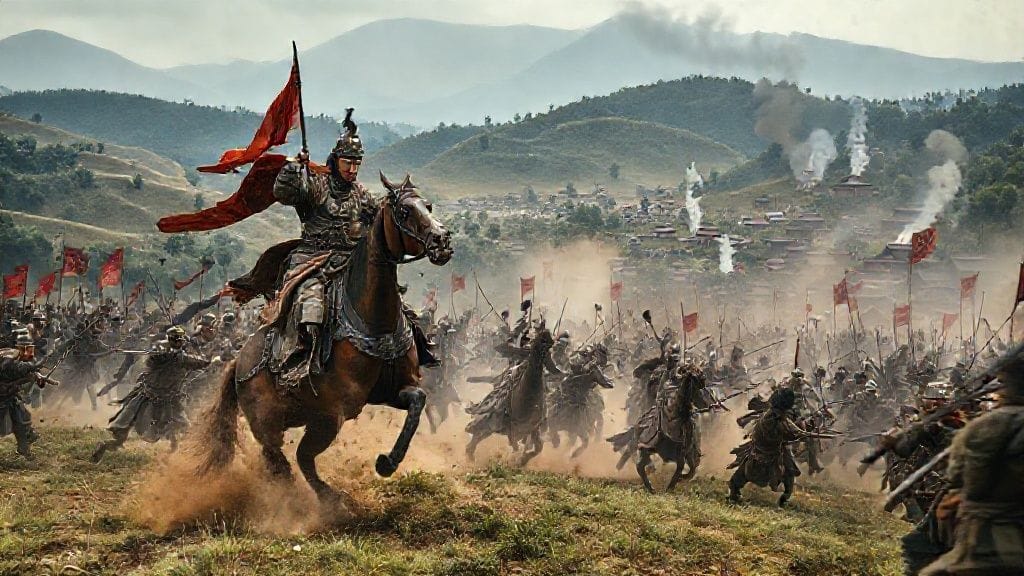
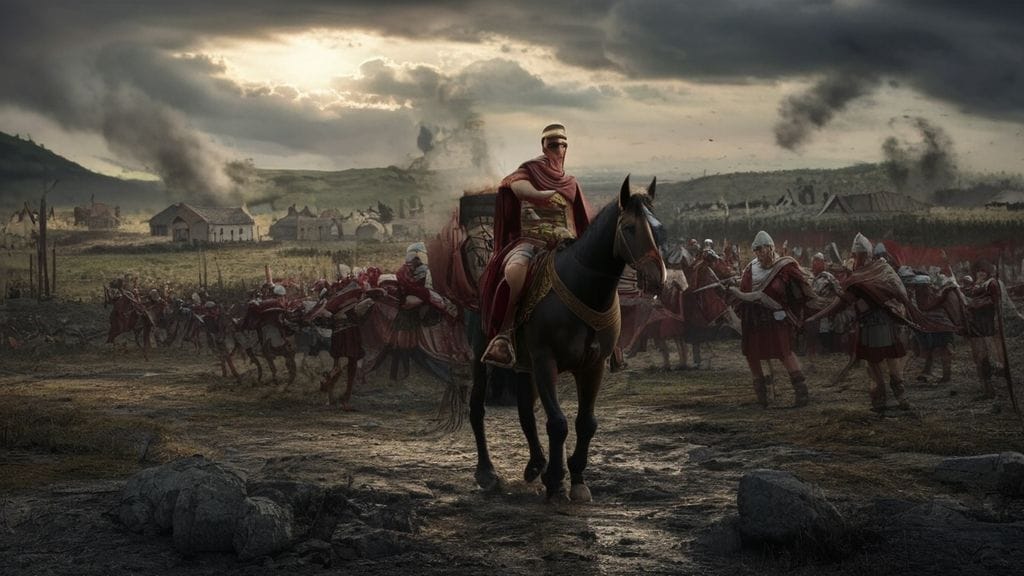
At first light, the mists over the fields near Vicus Helena began to thin, revealing the two forces taking shape. On one side stood Aetius’ composite army: Roman regulars forming the backbone of the line, flanked by allied contingents of cavalry and light troops. Standards rose above the formations, catching the pale sun: crosses, imperial emblems, and perhaps older, pagan symbols that had stubbornly persisted. Officers walked the ranks, exchanging last words with their men, tightening a strap here, adjusting a helmet there.
Across the field, the Salian Franks assembled in looser order. Clusters of warriors grouped around their chiefs, shields painted in bright colors, spears and heavy throwing axes in hand. They were less formally arrayed than their Roman opponents, but no less fierce. Their families, camp followers, and baggage may have waited in the rear, listening for the first clash that would decide their immediate fate.
The opening moves were cautious. Skirmishers and archers moved forward, testing each side’s nerve. Aetius, drawing on his experience with steppe tactics, likely sent out cavalry probes, seeking to feel out the Frankish flanks. The Franks responded with javelins and bold counter‑charges, trying to disrupt any over‑extension. For a time, the field rang with the sounds of small‑scale, swirling combat, neither side yet fully committed.
Then the main engagement began. According to later reconstructions by historians—drawing on fragmentary hints from chroniclers like Prosper of Aquitaine and later narrative traditions—Aetius anchored his line on relatively firm ground, minimizing the risk of being pushed into marsh or ditch. The Frankish leaders, eager to break Roman resolve in a single, thunderous assault, ordered a general advance. With war cries and the beating of shields, the Frankish infantry surged forward.
The impact, when it came, was brutal. Frankish warriors crashed against the Roman line, hacking and thrusting, seeking to break open a gap. Some Roman units may have buckled under the strain, but training and the presence of veteran officers helped steady them. Horn blasts and shouted commands rippled through the ranks. Where the Franks pressed hardest, Aetius is said to have committed his reserves, reinforcing faltering sections and counterattacking where enemy momentum slowed.
The key to the outcome lay on the flanks. While Frankish infantry concentrated on punching through the center, Aetius unleashed his cavalry on the wings. Hunnic horse archers, allied Gothic riders, and Roman cavalry units wheeled out and around the Frankish line, loosing arrows and then closing with lances and swords. The Franks, more comfortable in head‑on clashes than in fluid, multi‑directional fighting, struggled to respond. Small groups turned to face the new threat, only to expose their comrades to enfilading blows.
For a time, the battle hung in the balance. In the thick of the melee, individual acts of courage and desperation played out unseen by any chronicler. A young Roman recruit, seeing his centurion fall, might have stepped forward to hold the standard aloft. A Frankish warrior, finding himself isolated amid enemies, could have fought on in a frenzy until cut down. Yet, slowly, the pattern shifted. As the cavalry pressure on the flanks intensified, the Frankish line began to fray.
Aetius, from a vantage point slightly behind the front, read the signs. The moment had come to press for a decision. He signaled a general advance, urging his infantry forward while cavalry units sought to encircle chunks of the Frankish host. Panic, once it started, was contagious. Some Frankish warriors tried to fight their way out; others began to fall back in disorder toward their rear lines, only to find paths blocked by their own baggage and non‑combatants.
By mid‑day, the outcome was clear. The field near Vicus Helena was strewn with bodies, blood mingling with the damp soil. Organized Frankish resistance collapsed into pockets of stubborn defense and scattered flight. Aetius had won. In this clash at dawn and its bloody hours, aetius defeats salian franks decisively enough to reassert Roman authority, without driving them to the point of existential desperation.
The cost, however, was real. Roman and allied dead lay beside their Frankish counterparts. Officers whom Aetius had long relied upon fell in the fighting, and entire families on the Frankish side were shattered. The village of Vicus Helena had become a charnel ground, its fields bearing silent witness to the empire’s violent attempt at self‑preservation.
Blood, Dust, and Silence: Human Voices from the Battlefield
When the shouting faded and the last organized resistance ended, a different kind of sound took hold over Vicus Helena’s fields: the moans of the wounded, the crackle of small fires, the low murmur of men searching for comrades among the dead. Victories in late antiquity were not clean, and even for those who emerged on the winning side, the immediate aftermath could be harrowing.
Imagining the scene, we can conjure a Roman infantryman sitting heavily on his shield, hands trembling, staring at blood spattered across his tunic—unsure if it was his own. A Hunnic horseman might walk among fallen enemies, stripping usable equipment, expression unreadable, already turning the day’s horror into a tale to be told in distant camps. A Frankish survivor, dragging himself away with a wounded leg, would be thinking not of imperial politics but of how to find his kin and avoid Roman patrols in the coming days.
Villagers from Vicus Helena crept back, cautiously, once it was clear the main fighting had ended. The sight that greeted them must have seared their memories: familiar fields churned into mud by hooves and boots, corpses in foreign armor, and sometimes the still form of a neighbor caught in the wrong place at the wrong time. Churchmen, if present, would have hastened to perform last rites where possible, especially for baptized Romans, but in practice, the dead of both sides often shared the same hasty graves.
Aetius himself would have ridden through this landscape, taking stock. His staff officers reported casualty figures, captured standards, and the status of prominent enemy leaders. Decisions had to be made quickly: which prisoners to keep, which to ransom or release as messengers, which enemy bodies to identify and treat with a degree of respect, signaling a willingness to negotiate. Even in victory, he could not forget that the frontier needed managing, not just conquering.
Among the Roman soldiers, emotions were mixed. Pride at having prevailed rubbed against grief and exhaustion. Some looted what they could from fallen Franks, adding to their modest wealth. Others, especially those who had seen too many such fields, simply wanted to be done with northern campaigns forever, to secure some quiet posting in a less contested province. Yet the logic of empire and patronage networks meant they would likely be called again, sooner or later, to march and fight on some other troubled border.
For the Salian Franks, the memory of this day would be bitter but instructive. Tales of the battle—how aetius defeats salian franks at Vicus Helena through superior tactics and coordination—would be repeated around future firesides, not simply as laments but as lessons. They would analyze where they had erred, how Roman cavalry had turned the tide, and what would be necessary if they ever hoped to confront imperial forces on more equal terms again.
In the quiet hours after the carrion birds had begun their grim work, the battlefield settled into its long afterlife in memory and soil. Shards of weaponry and bits of armor would remain buried for centuries, archaeological testimonies to a clash only faintly remembered in written chronicles. But for those who walked away in 448, the images of blood, dust, and sudden silence would never entirely fade.
After the Storm: Political Settlements and Shifting Loyalties
Military victory was only the first step; the more delicate work lay in crafting an aftermath that served Roman interests. In the weeks following the battle, Aetius moved swiftly to translate his battlefield success into political capital. Envoys were dispatched to surviving Frankish leaders, bearing terms that were firm but not wholly uncompromising. The message was clear: the Salian Franks would be allowed to remain as federates, but under stricter conditions, reaffirming Roman overlordship.
Hostages were almost certainly demanded—sons or close kin of Frankish chieftains sent to live under Roman supervision, a human guarantee of future compliance. Tribute might have been required, whether in the form of grain, livestock, or warriors for Roman campaigns elsewhere. Frontier lines were redrawn, or at least restated, with a renewed insistence that certain territories remained firmly under imperial authority.
Aetius’ position in Gaul was strengthened. Local Gallo‑Roman aristocrats, who had watched the Frankish advance with mounting dread, now saw in him a protector. Bishops wrote letters of thanks, extolling the restoration of order. One can almost hear, in the rhetorical flourishes of contemporary ecclesiastical writers, the relief at seeing Roman arms prevail, however temporarily, over what they often termed “barbarian audacity.” In this sense, as one historian has noted, “Aetius’ victory at Vicus Helena shored up not only frontiers but faith in the empire’s remaining capacity to act.”
Yet behind the celebrations, complexities remained. The Franks were not exterminated; they remained a potent presence along the lower Rhine and beyond. Their leaders, chastened but not destroyed, recalibrated their strategies. Some may have concluded that closer cooperation with Rome, at least for a time, was the wiser course. Others would have quietly nurtured a desire for future revenge, waiting for a moment when imperial attention was elsewhere.
Inside the Roman system, the victory bolstered Aetius’ standing at court. Reports sent to Ravenna and later to Rome would highlight his success, perhaps downplaying the extent to which he relied on non‑Roman troops. Valentinian III, whose own authority depended heavily on Aetius’ military competence, could bask vicariously in the glow of success. For a fragile regime, the narrative of “Aetius defeats Salian Franks and restores peace to Gaul” was invaluable propaganda.
But the loyalties reshaped in 448 were, like so many in this era, provisional. Federate leaders still weighed every Roman command against their local interests; Gallo‑Roman aristocrats still maintained back channels to barbarian chiefs in case imperial protection faltered again. The frontier had been stabilized, not healed. Still, for a few years, northern Gaul enjoyed a relative lull in large‑scale conflict, a breathing space in which the seeds of future political arrangements could quietly grow.
From Foe to Foederati: The Salian Franks Inside the Empire
One of the most significant consequences of Vicus Helena was the further integration of the Salian Franks into the Roman imperial framework. Even before 448, they had occupied an ambiguous position—both outsiders and insiders, raiders and guardians. Aetius’ victory, paradoxically, accelerated the transformation of these former foes into indispensable foederati, partners in maintaining a semblance of order in Gaul.
The new agreements likely formalized Frankish settlement in specific regions, granting them land in return for military service. Over time, this arrangement shifted the local balance of power. Roman landowners found themselves sharing the countryside with Frankish chieftains whose authority rested on warbands rather than senatorial titles. Intermarriage between Gallo‑Roman and Frankish elites became more common, knitting together social networks that transcended ethnic labels.
Within the Frankish communities themselves, the experience of defeat and subsequent accommodation shaped their political evolution. To operate effectively as federates, they needed more centralized leadership, capable of negotiating with imperial officials and enforcing agreements. This tendency contributed, in the longer run, to the emergence of stronger Frankish royal authority—most famously under the Merovingian dynasty in the later fifth and sixth centuries.
Christianity played a quiet but persistent role in this transformation. While the Salian Franks at mid‑century were not yet predominantly Christian, contact with Roman bishops and communities exposed them to the new faith’s symbols and institutions. Some Frankish leaders may have recognized the political advantages of aligning with the religion of the empire, even if mass conversion would come later. Churches rebuilt or newly established in frontier regions often stood near Frankish settlements, visual reminders of a Roman religious and cultural presence that outlived direct political control.
From the Roman perspective, using former enemies as frontier defenders was a pragmatic if risky strategy. It allowed the empire to stretch its limited resources, placing the burden of local defense on federate shoulders. But it also empowered these groups, giving them weapons, experience, and legitimacy. The story in which aetius defeats salian franks, therefore, does not end with their submission; it continues in their gradual assumption of roles once held by Roman officials and commanders.
Over a few generations, the memory of being chastised at Vicus Helena turned into a chapter in Frankish political lore. It taught them that direct confrontation with a strong Roman general was dangerous, but also that, as the empire weakened further, opportunities would arise to move from client status to rulership. When, later in the century, Frankish rulers expanded deeper into Gaul and founded their own kingdoms, they did so with an acute sense of both the risks and the rewards that came from challenging Rome. Vicus Helena had been both a wound and a lesson.
Aetius Between Barbarians and Emperors
The battle near Vicus Helena illuminates not only Frankish and local Gaulish history, but also the peculiar position Aetius occupied in the Western Empire. He stood between worlds, balancing the demands of emperors with the expectations of barbarian allies and the fears of provincial elites. His victory in 448 reinforced his image as the indispensable mediator of all these competing interests.
At court, his success was a double‑edged sword. On the one hand, it proved his worth yet again, strengthening his grasp on the office of magister militum. On the other, it made him appear all the more threatening to those who worried about military over‑mighty subjects. Courtiers and perhaps even Valentinian III himself must have wondered whether an empire that needed Aetius so desperately was truly secure. In the background loomed the recurring Roman fear: that a general with too much glory might decide to turn his troops on the imperial palace.
On the frontiers and among federate peoples, Aetius’ reputation was equally paradoxical. He was feared as a formidable commander who, as at Vicus Helena, could punish defiance harshly. Yet he was also respected as a negotiator who understood the realities of their world, who could be bargained with and who kept his word when treaties were made. Aetius, after all, had spent part of his youth as a hostage among such peoples; he spoke their political language as well as their tongues.
Historians have sometimes portrayed him as the last great Roman general in the West, citing not only his victory over the Salian Franks but also his later, more famous role in the defeat of Attila the Hun at the Catalaunian Plains in 451. The two events are connected. The stabilization of Gaul’s northern frontier in 448 provided a platform from which Aetius could organize broader coalitions in the years that followed. If he had failed against the Franks, his ability to mobilize support against Attila might have been fatally compromised.
And yet, for all his success, Aetius could not halt the deeper structural decline of the Western Empire. Provinces continued to slip away, internal rivalries festered, and barbarian kingdoms hardened from temporary arrangements into enduring political realities. His own fate would be tragic: in 454, Valentinian III personally murdered Aetius in a paranoid act of court intrigue, eliminating the man who had done the most to keep the West intact. As the sixth‑century historian Jordanes later remarked, the emperor “cut off his right hand with his left.”
When we look back at the episode where aetius defeats salian franks, therefore, we see an emblematic moment in the career of a man who fought tirelessly for an order that no longer had the strength to fully sustain itself. Aetius could win battles, secure treaties, and even beat back Attila, but he could not conjure new tax revenues, restore political unity, or reverse centuries of demographic and military shifts. He was a brilliant manager of decline, not its reverser.
The Long Shadow of Vicus Helena on Gaul’s Future
It might be tempting to see the battle of Vicus Helena as a minor episode, overshadowed by the flashier dramas of Attila’s invasions and the later deposition of Romulus Augustulus in 476. Yet for Gaul, and especially for the regions of northern Gaul that would one day form the core of the Frankish kingdom, the events of 448 cast a long shadow.
In the immediate term, the reaffirmation of Roman authority created a pause in large‑scale turmoil, allowing local economies to stabilize and elites to adjust to the altered balance of powers. Gallo‑Roman aristocrats used this period to restructure their estates, sometimes partnering with Frankish chiefs, sometimes relying on imperial officials to enforce their rights. Urban centers, though diminished, remained nodes of administration and Christian worship, binding the countryside into fragile regional networks.
In the longer run, the integration of the Salian Franks as federates set a precedent for their successors. When, in the late fifth century, a Frankish leader named Clovis emerged as a dominant figure, he was building on decades of accumulated experience in dealing with Roman structures. His famous conversion to Catholic Christianity and subsequent campaigns in Gaul made more sense in a context where Franks had already been part of the imperial story—as foes, as subjects, and as allies—since the days when Aetius defeated their ancestors at Vicus Helena.
The cultural impact was equally significant. Northern Gaul evolved into a zone of hybrid identity, where Latin and Germanic languages intermingled, Roman law codes coexisted with customary Frankish practices, and Christian bishops shepherded flocks that included both old provincial families and newly settled warriors. Archaeological layers from this period show continuity alongside change: Roman‑style villas fell into disrepair or were repurposed, while new burial customs and artifacts associated with the Franks increasingly appeared in the soil.
One could argue that the event in which aetius defeats salian franks delayed—but did not prevent—the eventual transfer of power in Gaul from Roman to Frankish hands. By keeping the frontier under imperial influence in the mid‑fifth century, Aetius ensured that when this transfer finally occurred, it did so in a context of prolonged interaction rather than abrupt replacement. The Franks who rose to rule in the sixth century did so not as complete outsiders, but as heirs—however distant—to a political and religious order they had long observed from within.
Thus, the long shadow of Vicus Helena falls across the entire transformation of Gaul into medieval Francia. It reminds us that the making of new kingdoms was not a simple matter of invasion and conquest, but a delicate, often violent, negotiation staged over decades. In that negotiation, 448 stands as a decisive line drawn by Aetius—one that the Franks, for a time, were forced to respect, even as they quietly prepared for the day when no Roman general could draw such lines again.
From Local Skirmish to World Turning: Memory of 448
Curiously, despite its significance, the battle of Vicus Helena never acquired the mythic weight of other late Roman clashes. Ancient and medieval chroniclers mention it only briefly, if at all, and no sweeping epic poem immortalizes the day when aetius defeats salian franks on northern soil. This silence is itself a historical clue, telling us something about how societies choose which events to remember and which to let fade.
For contemporaries, Vicus Helena may have been just one more episode in a long chain of frontier conflicts. Gaul in the fifth century saw numerous skirmishes, sieges, and treaties, each of which felt urgent to those involved. The grand narratives that later historians built—Rome versus the Huns, the “fall” of the Western Empire, the rise of barbarian kingdoms—tended to eclipse smaller, albeit crucial, engagements. Yet, as modern scholarship increasingly emphasizes, the texture of historical transformation is often woven from precisely such discreet threads.
In the Frankish memory, the battle likely lived on more vividly, at least for a few generations. Oral traditions among the Salians may have included laments for the warriors who fell at Vicus Helena, stories of heroic last stands, and reflections on the cunning of Aetius. Over time, these tales could have blended into broader narratives about Frankish fortunes, overshadowed by more recent victories and defeats. By the time the Merovingian kings were commissioning their own histories, such as Gregory of Tours’ sixth‑century works, the focus had shifted to later episodes more directly related to their dynasty.
For Gaulish churchmen and Romanized elites, the battle’s memory may have been folded into sermons and letters as an example of God’s providence working through imperial arms. A bishop might have pointed to how divine favor allowed Aetius to chastise the proud Franks, urging his flock to remain loyal to both empire and church. Yet as imperial structures withered, the rhetorical power of such examples waned, and local saints and miracles filled the imaginative space once occupied by imperial triumphs.
Modern historians, armed with comparative analysis and a broader view of late antiquity, have begun to re‑evaluate such episodes. As one scholar has observed, “The small wars of the fifth century, though often sparsely attested, were laboratories in which new political configurations emerged.” Vicus Helena is one such laboratory, its experiment conducted in blood and mud, its results visible in the subsequent trajectories of both Aetius and the Salian Franks.
When we trace the line from that obscure northern village in 448 to the coronation of Charlemagne in 800, or to the formation of modern France, we are reminded that world‑turning processes often hinge on relatively modest events. A negotiation after a battle, the granting of land to defeated foes, the placement of a few elite hostages—all can shape the political DNA of future centuries. The story of how Aetius defeats Salian Franks at Vicus Helena, therefore, deserves a place not just in specialized scholarly debates, but in the broader narrative of how the Roman world became medieval Europe.
Conclusion
Seen from the distance of more than fifteen centuries, the battle of Vicus Helena in 448 appears at once small and immense. Small, because it involved a limited stretch of northern Gaul, a single Roman general, and one branch of the Frankish peoples; immense, because it encapsulated the dilemmas and dynamics of a world in transition. In the hours of combat that decided whether aetius defeats salian franks or they humbled him, a whole model of imperial frontier governance was put to the test.
Aetius emerged victorious, reaffirming Roman authority and temporarily stabilizing a fragile border. His success demonstrated that even in its twilight, the Western Empire could still project disciplined military power and manipulate the loyalties of federate peoples. The Salian Franks, chastened but not destroyed, were drawn more tightly into the imperial orbit, laying foundations for their eventual reemergence as rulers of Gaul under a different guise.
The village of Vicus Helena, now largely lost to geography and archaeology, thus occupies a significant place in the silent architecture of European history. Its fields saw the collision of Roman administrative rationality, barbarian ambition, and the stubborn resilience of local communities caught between them. The blood spilled there in 448 did not decide the “fall of Rome,” but it did help shape the subsequent balance of power in northern Gaul.
Above all, the episode reminds us that history is not only forged in famous sieges or coronation halls. It is also made in unnamed farmsteads and forgotten crossroads, where generals like Aetius and chiefs of the Salians gamble their people’s futures, and where ordinary men and women pick up the pieces afterward. To recover and retell the story of how Aetius defeats Salian Franks at Vicus Helena is to acknowledge the complexity and contingency of the late antique world—a world whose legacies still underlie our own political and cultural landscapes.
FAQs
- Where was Vicus Helena located?
Vicus Helena’s exact location is uncertain, but most scholars place it in northern Gaul, likely in the region of modern northern France or Belgian Flanders, near former Roman roads and frontier zones where Roman and Salian Frankish spheres overlapped. - Who were the Salian Franks?
The Salian Franks were a branch of the wider Frankish group, settled along the lower Rhine and North Sea coasts. Initially known as raiders and frontier tribes, they became Roman federate allies and eventually formed the core population of the early Frankish kingdoms that dominated Gaul in the sixth century. - Why did Aetius fight the Salian Franks in 448?
Aetius confronted the Salian Franks because they were pushing deeper into Roman Gaul and challenging imperial authority. As magister militum, he needed to reassert Roman control, deter other federate groups from similar defiance, and strengthen his own political standing at court by demonstrating that he could still enforce the empire’s will on the frontier. - How did Aetius win the battle at Vicus Helena?
Aetius combined disciplined Roman infantry with effective use of allied cavalry, including Hunnic and other mounted units, to counter the Frankish frontal assaults. By holding firm in the center and attacking the flanks, he gradually broke Frankish cohesion and turned the battle in his favor, leading to a decisive Roman victory. - What were the consequences of the battle for the Salian Franks?
The Salian Franks suffered a significant defeat, but they were not annihilated. Instead, they were drawn more tightly into the Roman federate system, accepting renewed terms of settlement and service. Over time, this integration helped them gain experience, legitimacy, and territorial footholds that later underpinned the rise of the Frankish kingdoms in Gaul. - How did the battle affect Aetius’ career?
The victory at Vicus Helena strengthened Aetius’ reputation as the indispensable defender of the Western Empire’s frontiers. It reinforced his authority in Gaul and at the imperial court, contributing to his ability to assemble coalitions and confront even greater threats, such as Attila the Hun at the Catalaunian Plains in 451. - Is the battle of Vicus Helena well documented in ancient sources?
No, the battle is only sparsely mentioned in surviving texts, such as brief notices in late antique chronicles. Much of what we say about it today is reconstructed from these references, combined with broader knowledge of Aetius’ campaigns, Frankish expansion, and the political context of fifth‑century Gaul. - Why is this battle important for the history of France?
The battle marked a key moment in the evolving relationship between Roman authorities and the Salian Franks in northern Gaul. By enforcing Roman supremacy yet confirming Frankish settlement, it helped set the stage for the Franks’ eventual emergence as rulers of the region, making it an important, if often overlooked, step in the long formation of medieval and modern France. - How does this event relate to the fall of the Western Roman Empire?
Vicus Helena illustrates both the remaining strengths and deep weaknesses of the Western Empire. Aetius could still win battles and manage federate peoples, but he was doing so with dwindling resources and amid mounting internal tensions. The battle delayed further fragmentation in Gaul, but it could not reverse the long‑term trajectory toward the empire’s collapse in the late fifth century. - What role did religion play in the conflict?
Christianity shaped the ideological framework in which Roman leaders like Aetius understood their actions: defending a Christian empire against disobedient federates. Bishops likely interpreted the victory as a sign of divine favor. For the largely pagan or only partially Christianized Salian Franks, however, religion was a more peripheral factor, though their increasing exposure to Christian communities would matter in later generations.
External Resource
Internal Link
Other Resources
- Encyclopaedia Britannica – general search for the exact subject
- Google Scholar – academic search for the exact subject
- Internet Archive – digital library search for the exact subject