Table of Contents
- The Dawn of a New Era: Setting the Stage for a Royal Union
- The Meeting of Two Souls: Victoria and Albert’s First Encounters
- Whispers in the Palace: Early Courtship and Growing Affection
- A Royal Proposal: Courage, Conviction, and Hope
- Preparations for a Ceremony: The Wedding Plans and Public Anticipation
- The Wedding Day: 10 February 1840 and Its Grand Splendor
- A Queen’s Choice: The Significance of Prince Albert in Victoria’s Life
- Political Ripples: The Marriage’s Impact on Britain and Europe
- Public Reaction: Jubilation, Skepticism, and the Power of Media
- Behind Palace Walls: The Intimate Life of Victoria and Albert
- A Partnership of Influence: Albert’s Role in Government and Reform
- Challenges to the Marriage: Court Intrigues and Personal Trials
- The Birth of an Era: The Royal Family Expands
- Legacy of Love: How the Union Shaped Victorian Values
- Tragedy and Triumph: Albert’s Death and Victoria’s Devotion
- A Queen’s Enduring Influence: Reflections on the Marriage’s Historical Impact
Article Summary: The story of queen victoria marries prince albert is not merely about a royal wedding; it is the saga of a powerful union that defined an era. This article unpacks the emotional depth, political implications, and personal dynamics surrounding their 1840 marriage in London. Tracing from their first meeting to the grandeur of their wedding day, we explore the intertwining of their lives and the profound effects their partnership had on British society and politics. Yet behind the celebrations and public fascination lay an intimate story of devotion and partnership that shaped the Victorian age. With detailed narratives and vivid historical context, this article conveys why queen victoria marries prince albert remains a defining moment in history, reverberating across centuries.
The Dawn of a New Era: Setting the Stage for a Royal Union
In the humid chill of early 19th century London, a young queen ascended the British throne under considerable expectation and scrutiny. Queen Victoria, only eighteen years old by the time she met Prince Albert, was thrust into the immense spotlight of monarchy and empire. Her reign promised not only continuity but a new chapter marked by personal vigor and public responsibility. However, beneath the pomp of regality, the queen’s private life remained the subject of speculation and anticipation. It was this intricate blend of public duty and personal longing that framed the historic moment when queen victoria marries prince albert.
The early Victorian era bore the tension of change. Britain was grappling with rapid industrialization, expanding its empire while confronting social upheaval within. The monarchy had to represent stability amidst transformation, with the monarch’s personal life often an emblem of national health and promise. Queen Victoria’s early years on the throne, marked by intense loneliness and rigid protocols, left a palpable gap—a human vulnerability that years of formal education at Kensington Palace had scarcely prepared her to bridge.
Prince Albert of Saxe-Coburg and Gotha entered this scene not as a mere consort, but as a figure simultaneously foreign and familiarly European. His family ties ran deep across Europe’s royal houses, weaving connections that were as much political assets as they were personal identities. This relationship, when it blossomed, was destined to be more than a marriage of convenience; it was the genesis of a powerful personal and political partnership.
Yet this was only the beginning… The story threads of their meeting and courtship reveal the emotional landscapes that would define their shared future and affect a nation waiting to witness a royal marriage unlike any before.
The Meeting of Two Souls: Victoria and Albert’s First Encounters
Queen Victoria’s first meeting with Prince Albert was marked by a mixture of formality and instinctive connection. Introduced in 1836 when Victoria was still early in her reign, Albert was her cousin, but a welcome breath of fresh air in a court filled with rigid expectations. Their introduction took place at Kensington Palace, where the young queen found in Albert a congenial and intelligent companion.
The initial impression was vital. Victoria was a monarch known for her strong personality, and Albert a prince known for his calm manner and progressive ideas. It’s astonishing, isn’t it, how two such seemingly different figures found common ground? Albert’s gentle and respectful demeanor deeply impressed Victoria, and his apparent understanding of the demands she faced created a spark of admiration.
During this early period, they began to correspond regularly, exchanging letters filled with subtle flattery but also sincere thoughts on politics, art, and philosophy. The queen found in Albert a partner who not only understood the weight of the crown but also respected her individuality and intellect. This meeting was the folding of two lives that would intertwine in powerful ways, deeply influencing the personal and public spheres of British life.
Whispers in the Palace: Early Courtship and Growing Affection
The court soon buzzed with rumors that Queen Victoria and Prince Albert were more than friends and cousins. Their courtship, conducted with royal propriety but growing intensity, was both a private joy and a public curiosity. Victoria’s diaries from this time suggest a growing affection that transcended political convenience or familial obligation.
Yet behind the celebrations lay intricate challenges. Royal marriages of the time were often dictated by dynastic priorities and alliances, not by affection. Victoria’s choice to consider Albert seriously marked a shift. He was neither from the powerful British aristocracy nor a diplomatic tool sought by the government; instead, he was chosen for love and mutual respect.
Social conventions dictated much of their interactions: chaperoned meetings, formal dinners, and subtle public displays of attention. Despite this, there were stolen conversations and private moments that deepened their bond. Victoria once described Albert as “the best and dearest of men,” signaling the depth of her feeling amid a strict royal environment.
Their growing closeness was met with a mixture of approval and apprehension from court officials and political advisors. Some worried that Albert’s influence on the queen might upset existing power structures; others simply feared the unknown. Nonetheless, the queen’s determination to marry Prince Albert grew steadily, her private writings offering glimpses of hope and nervous excitement that only the most personal of affairs can evoke.
A Royal Proposal: Courage, Conviction, and Hope
When Victoria expressed her desire to marry Albert, it was a decision that reflected not just emotional connection but political courage. On 15 October 1839, Albert, unsure but hopeful, accepted Victoria’s proposal of marriage. Their union symbolized a partnership of equals, a union rooted in love as much as duty.
The announcement caused ripples throughout London and Europe. It was a decision celebrated by the public who admired the queen’s strength and conviction, yet also scrutinized by political circles warning of potential entanglements. Albert’s German origins raised doubts in a court that was often wary of foreign influence. Yet Victoria, steadfast in her choice, declared unequivocally that Albert would be more than a husband – he would be her closest advisor and partner.
Victoria’s resolve reflected a queen embracing modernity. She had the audacity to marry for love despite prevailing expectations and political pressures. At a time when royal marriages were largely strategic, the phrase “queen victoria marries prince albert” carried a revolutionary undertone.
On the eve of the wedding, the court fluttered with anticipation but also tempered anxiety. Albert himself had mixed emotions—hopeful for the future, conscious of the heavy burdens ahead. Victoria, ever the young monarch, prepared herself with a mixture of excitement and solemnity, aware that her marriage would rock the very foundations of royal protocol.
Preparations for a Ceremony: The Wedding Plans and Public Anticipation
The preparations for the wedding were marked by meticulous care and a palpable national excitement. Buckingham Palace was adorned with lavish decorations, and streets were lined with banners celebrating the union. Yet the queen was intimately involved in every detail, from the selection of her wedding dress to the guest list that balanced royal relatives and political dignitaries.
The wedding dress itself was a marvel: designed by William Dyce and elaborately embroidered with orange blossoms, a symbol of fertility and purity. This choice would set a precedent for future royal brides. Fashion magazines and newspapers across Britain followed the preparations with avid interest, helping to ignite public enthusiasm.
London’s populace eagerly awaited the event. Public celebrations were planned, and the atmosphere was charged with an electric mixture of hope and curiosity. It was as if the entire kingdom was holding its breath, preparing to witness the moment when queen victoria marries prince albert—a phrase that had come to symbolize new beginnings and royal romance.
The wedding day’s guests included an array of European nobility and British aristocrats. The Church of St James’s Palace, itself steeped in history, was the chosen venue, lending an intimate yet regal setting to the event. Behind this public spectacle lay weeks of coordination, political negotiations, and a subtle dance of kinds ensuring that tradition and romance could co-exist harmoniously.
The Wedding Day: 10 February 1840 and Its Grand Splendor
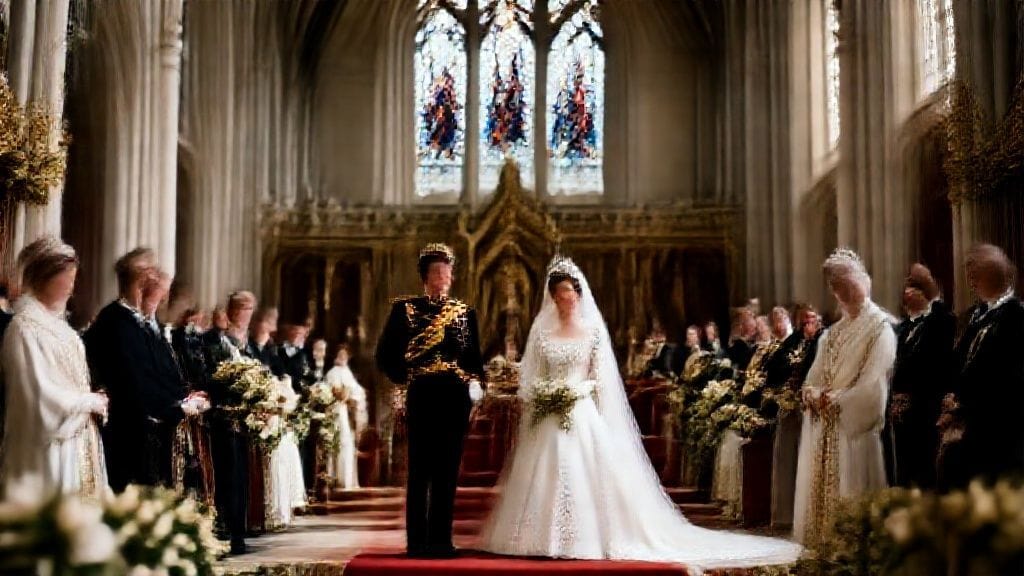
The morning of 10 February 1840 dawned cold but clear, setting the stage for one of the most celebrated royal weddings in British history. Queen Victoria, resplendent in her white gown, made her way quietly yet confidently to the chapel, accompanied by her mother, the Duchess of Kent. The atmosphere was thick with expectation, the buzz of a city eager to witness history in the making.
The ceremony was a delicate blend of solemnity and joy. As Victoria and Albert exchanged vows, their personal devotion was palpable even amidst the grandeur. The queen’s voice, steady but tender, declared a promise of love and partnership that would outlast the customary duties of sovereign and spouse.
The significance of the event extended far beyond the ceremony itself. It was a public declaration that the queen’s reign would be shaped by a powerful marital alliance—not one forced or political, but chosen and heartfelt. Newspaper accounts from the day noted the “radiance of affection” that surrounded the royal couple, and this narrative was embraced by both the court and the common people.
The celebrations that followed were grand, with banquets and balls marking the start of a new chapter. Yet Victoria and Albert’s own reflections were quieter, more intimate. They had sealed a bond that promised to transform the monarchy from a distant institution to a symbol of personal devotion and shared strength. The day marked the beginning of a lifelong partnership, one that would influence every corner of British life and governance.
A Queen’s Choice: The Significance of Prince Albert in Victoria’s Life
Prince Albert was not merely a consort; he became the queen’s closest confidante and adviser. Their relationship, forged in love and respect, deeply affected how Victoria wielded her power. The phrase queen victoria marries prince albert encapsulates this unparalleled fusion of personal affection and political alliance.
Albert’s influence extended into the queen’s decisions on government, education, and social reform. He was a tireless advocate for progress, encouraging Victoria to embrace modernization without forsaking tradition. The queen’s dependence on Albert’s counsel was rare for a monarch but demonstrated their unique partnership.
Victoria’s letters reveal a woman who trusted Albert implicitly, finding in him both strength and solace amidst the pressures of monarchy. Their partnership, built on mutual admiration, set new standards for royal marriages and reshaped notions of the monarchy’s role within society. Albert’s stature in the public eye rose as well—not just a prince by marriage, but a pivotal force behind the political and cultural life of Victorian Britain.
Political Ripples: The Marriage’s Impact on Britain and Europe
The union between Queen Victoria and Prince Albert carried profound political consequences. Europe’s intricate web of royal families meant that their marriage had international implications. Albert’s German heritage brought Britain closer to continental affairs, fostering diplomatic ties and fresh perspectives that would influence British foreign policy for decades.
Domestically, the marriage helped stabilize the monarchy’s image at a time when republican sentiments simmered beneath the surface. Albert’s involvement in reform movements—railways, arts, industry—enhanced the crown’s relevance to everyday citizens. Their partnership symbolized a modern monarchy willing to adapt and serve the nation beyond ceremonial functions.
Indeed, numerous historians note how the marriage marked a turning point in Britain’s constitutional monarchy. As historian A.N. Wilson observed, “The marriage of Queen Victoria and Prince Albert was the cornerstone of an era that melded personal passion with political pragmatism.” Their collaboration helped suppress factions within government, supported social progress, and maintained the monarchy’s dignity during turbulent times.
Public Reaction: Jubilation, Skepticism, and the Power of Media
The British public’s response to the royal marriage was a complex tapestry of celebration and doubt. On the one hand, the wedding was embraced as a fairy-tale union, replete with romance and hope for national renewal. Crowds thronged the streets, and newspapers chronicled the event with soaring enthusiasm that painted Albert as the ideal prince consort.
Yet skepticism persisted in some quarters. Critics questioned Albert’s foreign origins and his potential to influence governmental affairs behind the scenes. Political opponents feared that the foreign prince would bring undue influence from continental monarchies, diluting British sovereignty.
The emerging power of print media played a pivotal role. Illustrated magazines, pamphlets, and newspapers amplified both adulation and criticism. Queen Victoria herself was adept at utilizing press for favorable coverage but remained cautious of rumor and backlash. It’s important to note how this early marriage was a media event, setting templates for future royal communications and public relations.
Behind Palace Walls: The Intimate Life of Victoria and Albert
Beyond public adoration and political intrigue, the marriage of Queen Victoria and Prince Albert was a deeply personal and affectionate partnership. Their private correspondence reveals moments of tenderness, shared humor, and the very human struggles of married life under the gaze of empire.
Their daily routines included not only governance but shared interests in music, arts, architecture, and philosophy. Albert’s passion for innovation found a kindred spirit in Victoria, who encouraged his pursuits and supported his efforts to modernize the royal household and public institutions.
Yet the pressures of monarchy weighed heavily. The couple coped with bouts of illness, loneliness during royal travels, and the constant challenge of balancing public duties with private desires. They raised nine children together, weaving family life tightly with their royal responsibilities.
It was within Buckingham Palace’s walls that their emotional bond flourished, sustaining them through political storms and personal tragedies alike. This dimension of their marriage underscores why queen victoria marries prince albert remains not just a historic event, but a profoundly human story.
A Partnership of Influence: Albert’s Role in Government and Reform
Prince Albert’s role extended beyond that of a supportive spouse; he became a fulcrum of reform and intellectual leadership. His advocacy for education, scientific advancement, and cultural institutions permeated Victorian society. He championed the Great Exhibition of 1851, an unprecedented celebration of industrial progress and international cooperation, which Victoria wholeheartedly endorsed.
Known for his pragmatic and progressive views, Albert regularly engaged with ministers and politicians, advising the queen and influencing policy decisions. This involvement was not always welcomed by the political establishment, yet his earnest dedication shifted the dynamics within the monarchy and government.
Albert’s impact is evident in numerous reforms, from improving conditions in factories to promoting arts and sciences. Their partnership exemplified a monarchy committed to social responsibility, with queen victoria marries prince albert symbolizing a transformative alliance between personal affection and public service.
Challenges to the Marriage: Court Intrigues and Personal Trials
No union, even one as strong as Victoria and Albert’s, was immune to challenges. The royal household was rife with intrigue, opposition, and the constant eyes of the press. Some courtiers resented Albert’s influence, seeing him as an outsider upsetting established hierarchies.
The queen herself faced personal trials, including the loss of her close friend and the pressures of navigating conflicting political factions. Albert’s unwavering support proved crucial during these turbulent times, though their intense closeness was sometimes criticized as exclusive or overly dependent.
The couple also endured public tragedies, including the loss of children in infancy and illnesses that shadowed their years together. These hardships deepened their emotional bond but illustrated the vulnerabilities behind regal appearances. Throughout, their resilience highlighted a marriage rooted not only in duty but genuine love and mutual reliance.
The Birth of an Era: The Royal Family Expands
Following their marriage, Victoria and Albert’s family quickly grew, bringing new dynamics to their lives and the monarchy. Their nine children were raised with affection and strict Victorian values, each destined for marriages that reinforced political alliances across Europe.
Their child-rearing practices reflected their beliefs in morality, education, and duty. Victoria’s extensive diaries reveal a mother deeply invested in her children’s development and their roles as future leaders. Albert’s influence was equally significant, emphasizing scientific learning and enlightened upbringing.
This expansion of the royal family helped humanize the monarchy, making it more relatable to the public. Portraits and reports of the growing family life were eagerly received by a nation hungry for connection with their sovereigns. It also ensured a legacy that moved beyond Victoria and Albert’s personal lives into a broader dynastic influence.
Legacy of Love: How the Union Shaped Victorian Values
The marriage of queen victoria marries prince albert became emblematic of Victorian ideals—duty, morality, progress, and family values. Their relationship set a cultural tone that permeated British society, influencing everything from art and literature to social reform and etiquette.
Victoria’s embodiment of the devoted wife and mother, alongside Albert’s patronage of the arts and sciences, established a template for public and private virtue. Their union conveyed the message that a monarch could be both powerful and relatable, inspiring generations to come.
The couple’s efforts in philanthropy and education helped mold Victorian society’s attention to social welfare and incremental progress. Their marriage symbolized not only romantic devotion but also a striving for harmony between tradition and innovation, shaping the moral fabric of their time.
Tragedy and Triumph: Albert’s Death and Victoria’s Devotion
Their partnership was irrevocably altered by Albert’s untimely death in 1861. The nation mourned deeply, but none more so than Queen Victoria, whose public and private lives were shattered. The phrase queen victoria marries prince albert took on a far more poignant meaning as the queen entered decades of mourning.
Victoria’s grief was profound and prolonged. She withdrew from public life, wearing black and living in seclusion. Yet, behind this sorrow was the enduring influence of Albert’s memory, which shaped her reign profoundly. She continued to champion many causes they had shared, ensuring Albert’s vision lived on.
It’s a testament to the depth of their relationship that Victoria’s devotion remained unwavering. Though she faced criticism for her withdrawal, historians recognize her grief as deeply human and reflective of a powerful partnership interrupted but never erased. Their love story remained a beacon in a changing world.
A Queen’s Enduring Influence: Reflections on the Marriage’s Historical Impact
The story of queen victoria marries prince albert is more than the retelling of a royal wedding; it is the narrative of a pivotal alliance that defined an era. Their marriage reshaped the British monarchy, transforming it into a symbol of love, partnership, and modern leadership.
Victoria and Albert’s relationship influenced governance, culture, and societal values, leaving a legacy that lasts into the present. They balanced personal affection with public duty, demonstrating that true leadership often requires both. Their story remains a vivid chapter in the history of monarchy, inspiring reflections on power, love, and resilience.
As historians continue to study their lives, it’s clear that the union of Victoria and Albert stands as a timeless example of how marriage can transcend its social function to become a profound force for change. Queen victoria marries prince albert is not just a phrase, but a symbol of the deep human narratives interwoven with the history of nations.
Conclusion
Queen Victoria’s marriage to Prince Albert was a defining moment in British history that blended romance with political acumen. Their union created a foundation for a modern monarchy that resonated across Europe and echoed through the Victorian age. The emotional depth, shared ambitions, and enduring partnership of Victoria and Albert transformed not only their personal lives but also the fate of a nation grappling with rapid change. In navigating challenges, public scrutiny, and private sorrow, their marriage emerged as an emblem of devotion and reform. Ultimately, the story of queen victoria marries prince albert is one of love’s profound power to shape history, proving that even in the most regal settings, humanity endures.
FAQs
- Why was the marriage of Queen Victoria and Prince Albert significant?
The marriage was significant because it united personal love with political partnership, transforming the monarchy into a symbol of modern leadership and influencing British society’s values and reforms. - How did Prince Albert influence Queen Victoria’s reign?
Prince Albert served as Victoria’s closest adviser, influencing political decisions, promoting social reforms, and supporting cultural and scientific advancements during the Victorian era. - What challenges did their marriage face?
They faced challenges such as court opposition to Albert’s influence, political skepticism, personal tragedies including the death of children, and the pressures of public scrutiny and royal duty. - How did the public react to their marriage?
The public celebrated the marriage with enthusiasm, viewing it as a romantic and hopeful moment, though some critics expressed concern about Albert’s foreign origins and political role. - What was Queen Victoria’s life like after Albert’s death?
Victoria mourned deeply, withdrawing from public life for years and wearing black as a sign of her grief, though she continued to honor Albert’s legacy through her reign and public service.
External Resource
Internal Link
Other Resources
- Encyclopaedia Britannica – general search for the exact subject
- Google Scholar – academic search for the exact subject
- Internet Archive – digital library search for the exact subject