Table of Contents
- On the Eve of a Bloody Summer: Europe Before Valea Albă
- Stephen the Great and Mehmed the Conqueror: Two Wills of Iron
- Moldavia on the Edge: Land, Faith, and Fear of Encirclement
- The Ottoman Colossus Marches North
- Summoning a Nation: Stephen’s Call to Arms
- The Road to the Field of White: Geography and Strategy of Valea Albă
- Dawn of July 26, 1476: The Battle Lines Form
- Steel, Smoke, and Silence: The Opening Clashes
- Crisis at Midday: When the Moldavian Line Began to Break
- Retreat into the Forests: How Moldavia Survived Defeat
- After the Storm: The Siege of Suceava and the Ottoman Withdrawal
- Blood and Memory: Casualties, Trauma, and Local Legends
- Between Cross and Crescent: Diplomatic Shockwaves Across Europe
- From Chronicle to Myth: How Valea Albă Entered Romanian Memory
- Faith, Propaganda, and Politics: The Uses of a Defeat
- Reading the Sources: What We Know and What We Guess
- Comparison and Legacy: Valea Albă Among Europe’s Great Battles
- Conclusion
- FAQs
- External Resource
- Internal Link
Article Summary: The battle of valea alba, fought on July 26, 1476, in Moldavia, was one of the most dramatic confrontations between Christian frontier resilience and the expanding Ottoman Empire. In this article, we follow Stephen the Great and Mehmed the Conqueror as they collide on a narrow plateau near Războieni, amid forests and ravines thick with fear and determination. The narrative traces the buildup to war, the brutal, confused fighting on the “White Valley,” and the desperate Moldavian retreat into fortresses and woods. We explore how the battle of valea alba, although technically a defeat for Stephen, became a moral and political victory that helped halt Ottoman penetration deep into Eastern Europe. The article delves into the human cost of the battle, from peasants pulled from their fields to Janissaries marching far from home, revealing how trauma turned into legend. We also examine the sources and chronicles that shape our understanding of the battle of valea alba, balancing hagiographic patriotism with Ottoman and Western records. Finally, we assess the wider legacy of the battle of valea alba in European diplomacy, religious identity, and national memory, showing why this blood-soaked valley still echoes through the history of Romania and the Balkans.
On the Eve of a Bloody Summer: Europe Before Valea Albă
The story of the battle of Valea Albă begins long before soldiers raised their banners over the Moldavian hills in July 1476. It begins in the simmering anxiety of a continent that had watched Constantinople fall, one stunned whisper at a time, and now felt the Ottoman drumbeat approaching through mountain passes and river valleys. The mid-fifteenth century was an age in which frontiers were less lines on a map than zones of nervous compromise, where Latin Christendom, Orthodox principalities, and the Islamic empire of the sultans touched and tested one another.
In 1453, Mehmed II, soon to be called “the Conqueror,” had seized Constantinople and turned the shrunken shell of the Byzantine Empire into the thriving capital of a new imperial project. His cannon had shattered the walls that had survived a thousand years of sieges. Europe understood, in a way it never would forget, that old defenses could no longer be trusted. The Danube, the Carpathians, and the Black Sea coast might slow the Ottomans, but they would not stop them if the sultan’s will remained fixed on expansion.
To the north of the Ottoman heartlands lay a patchwork of principalities and kingdoms: Hungary under King Matthias Corvinus, Wallachia shifting between independence and vassalage, Poland-Lithuania stretching its long arm southward, and Moldavia—small, rugged, but strategically crucial. Moldavia guarded approaches to Poland and the Baltic trade routes, while its ports on the Black Sea had once been gateways for Genoese commerce. Whoever controlled Moldavia could threaten Poland’s southern flank, harass Hungarian communications, and influence the delicate balance of power across southeastern Europe.
By 1476, the Ottoman advance had broken much of the old order in the Balkans. Serbia was largely subdued. Bosnia had fallen. Wallachia had been bloodied and bent. Hungary and Venice were struggling to hold their positions in face of Ottoman pressure. The notion that a relatively small principality like Moldavia could stand alone sounded, in many royal courts, like a tragic illusion. Yet that is precisely what Stephen III of Moldavia intended to do.
Economic and religious currents fed the crisis. The Ottomans sought not just conquest, but control of trade: grain, timber, salt, furs, and slaves that moved along river and sea routes that threaded through Moldavia’s territory. Meanwhile, Moldavia—Orthodox in faith, Latin in some diplomatic forms, and wedged between Catholic Poland and Muslim Ottoman domains—embodied the liminal identity of the frontier. Its princes wore crosses, but also calculated tribute. They sent embassies to Rome and Buda, then to Constantinople, always trying to survive between giants.
It’s astonishing, isn’t it, that such a seemingly marginal land could become the focal point of a clash between two rulers whose reputations filled Europe with equal parts admiration and dread. Yet in 1475 at Vaslui, Stephen had already proved he was no local provincial prince; he had inflicted one of the worst defeats the Ottoman armies had ever suffered in Europe. In doing so, he both enraged Mehmed and drew the gaze of Christendom upon this rugged principality. The next year, the reckoning would arrive in the White Valley—Valea Albă.
Stephen the Great and Mehmed the Conqueror: Two Wills of Iron
Every great battle is, in some sense, a collision of personalities as much as armies. The battle of valea alba brought together two men whose lives had already altered the course of their regions: Stephen III, later called “the Great and Holy” in Romanian tradition, and Mehmed II, whose very epithet—“the Conqueror”—still suggests urgency and relentless purpose.
Stephen had ascended the Moldavian throne in 1457, in a principality torn by dynastic struggles and external pressures. His early reign was a series of campaigns—against internal rivals, against Polish encroachments, against Wallachian pretenders—and these conflicts trained him in the harsh mathematics of survival. He learned that Moldavia’s security lay not in mere submission to a single overlord, but in a delicate juggle of oaths and alliances. At times he paid tribute to the Ottomans; at other moments, he leaned on Poland or Hungary. Yet for all his shifting diplomacy, his personal core remained fixed: Moldavia must endure, autonomous and intact.
Chroniclers depict Stephen as both pious and ruthless. He was said to fast before campaigns, to fund monasteries and churches after victories, to see himself as a defender of Orthodoxy. At the same time, he could be merciless toward traitors and invaders. One Moldavian chronicle later praises him in unvarnished terms: “He was a man of war, strong in battle, never fleeing before the enemy.” Historians today warn that such phrases are deliberate constructs, meant to fashion a heroic legacy, but they also reflect how contemporaries felt: that with Stephen, Moldavia had, at last, a prince who was more than just a pawn.
Far to the south, Mehmed II reigned from Istanbul, heir to a dynasty that had steadily advanced through Anatolia and the Balkans. By 1476, he had ruled for more than two decades, and his record read like a catalog of conquests: Constantinople, Trebizond, much of Serbia and Bosnia, coastal strongholds in the Aegean and Black Sea. Mehmed envisioned his empire not merely as a regional power but as a universal monarchy, heir to Roman imperial traditions. He sponsored scholars, artists, and architects; he rationalized administration; he integrated pious foundations into the machinery of state. Yet his empire’s heartbeat was its army, and its language of persuasion was often steel and fire.
The relationship between Stephen and Mehmed had once been, if not cordial, then at least functional. Moldavia had, for a period, paid tribute to the sultan, acknowledging Ottoman suzerainty while preserving internal autonomy. This arrangement suited Mehmed; a pliant buffer-state was less costly than outright annexation. But things changed when Stephen refused to fully submit and, in 1475, confronted a large Ottoman force at Vaslui—also known as Podul Înalt—and won a stunning victory.
European observers were electrified. Pope Sixtus IV hailed Stephen as verus athleta Christi, a true champion of Christ. Letters circulated through Italian and Central European courts speaking of the unimaginable—an Ottoman army shattered and driven back by a small principality. But behind the celebrations, shrewder minds knew what this meant: Mehmed would not let such an affront pass. The defeat at Vaslui was a personal insult to the sultan and a strategic danger, encouraging other frontier lords to dream of defiance.
Thus, by the spring of 1476, the stage was set for a new campaign. Mehmed would lead the army himself, not to merely chastise Stephen, but to grind Moldavia into obedience or annihilation. Stephen, aware of the storm gathering to the south, gathered his boyars, clergy, and commons and prepared for the trial that would define his reign. Two strong wills, forged in war and ambition, were now on a collision course that would erupt at Valea Albă.
Moldavia on the Edge: Land, Faith, and Fear of Encirclement
To understand why the battle of valea alba mattered so deeply, one must grasp what Moldavia was in the late fifteenth century: fragile, fiercely proud, and sitting astride routes coveted by every neighboring power. It was not a flat land easily traversed; instead, Moldavia offered a mosaic of hills, forests, river valleys, and scattered plains. The Carpathian foothills to the west gave way to more open fields in the east, and from north to south ran a series of rivers—Siret, Prut, and Dniester—that shaped settlement, trade, and defense.
The population was overwhelmingly rural. Peasants tilled narrow strips of land, herded livestock, and paid dues in produce, labor, and coin to local boyars and the princely court. Towns existed—Suceava, Iași, Bacău, and several fortress-towns—but they were modest by Western European standards. Yet in this landscape, fortifications mattered enormously. Hilltop castles, earthwork defenses, and fortified monasteries formed the skeleton of Moldavia’s resistance to invasions. Stephen had been methodically strengthening them, aware that his country’s survival might one day depend on their stubborn endurance.
Religiously, Moldavia followed the Orthodox rite, its clergy tied by culture and language to the broader Eastern Christian world, but politically wary of direct subordination to Constantinople, now under Ottoman rule. This duality—Orthodox piety intertwined with political independence—gave Stephen a powerful rhetorical tool. When he rallied his people against the Ottomans, he spoke not only of defending their homes but also of defending their faith, their churches, their way of worship. Peasants who might otherwise have hesitated to risk their lives for a distant princely court now heard the struggle framed as a holy obligation.
Yet religion alone could not stave off fear. Moldavians knew what had befallen their southern neighbors. Tales of towns seized and populations displaced or enslaved circulated along trade routes. The grim reality of Ottoman raiding parties—burnt villages, abducted youths destined for slavery or for the Janissary corps—was never far from memory. At the same time, Moldavia’s northern and western neighbors, Poland and Hungary, were not disinterested saints. They had their own designs on Moldavian lands and ports. When those crowns pledged to help Stephen, Moldavians had to wonder: help at what price?
Politically, Stephen navigated a treacherous diplomacy. His agreements with Poland and Hungary were meant to secure support in times of Ottoman aggression, yet such promises were fragile, subject to shifting priorities in Kraków and Buda. In 1476, Hungary was preoccupied with its own conflicts and frontier defenses. Poland, though formally linked to Stephen, hesitated to commit large forces deep into Moldavian territory. Once again, geography was destiny: Moldavia was vital enough to interest great powers, but not vital enough for them to risk everything in its defense.
This perception of impending encirclement sharpened Moldavian resolve. When word spread that the sultan himself was marching north, calling in contingents from various vassal states, Stephen understood that this would not be a mere border raid. It would be an attempt to break Moldavia’s capacity to resist forever. Under such shadow, every field, every forest path, every village became charged with a new, grim significance. The country was bracing itself—not for a battle, but for a trial of existence.
The Ottoman Colossus Marches North
In the summer of 1476, the Ottoman Empire stirred like a waking beast. Orders were sent from Istanbul through a well-organized chain of command: provincial governors, vassal rulers, and military administrators received instructions to raise troops, gather supplies, and assemble at designated rendezvous points. The machinery of conquest, refined over decades of campaigns in the Balkans and Anatolia, turned its attention toward Moldavia.
Contemporary estimates of Mehmed’s army vary wildly, as they so often do in medieval chronicles. Some Western reports, eager to magnify Stephen’s heroism, speak of “100,000 Turks” or more, numbers that modern historians treat with skepticism. Yet even if such figures are inflated, the qualitative strength of Mehmed’s host is beyond question. It likely included a core of elite Janissaries—infantry trained in firearms and disciplined close combat—alongside sipahi cavalry, provincial levies, and auxiliary troops drawn from Ottoman vassals, perhaps including contingents from Wallachia and the Crimean Tatars.
Logistics were the unseen sinews of this army. Grain, fodder, gunpowder, siege equipment, and coin had to move in step with the sultan’s advance. Bridges were secured, river crossings prepared, and supply depots established. The Ottomans had long practice in such operations; their campaigns into Hungary and the Balkans had taught them where to ford, where to rest, where to avoid disease-ridden lowlands. They also relied on scouts and spies—some of them renegades or disaffected nobles from neighboring lands—to provide intelligence on Moldavian terrain and defenses.
For the men marching in Mehmed’s ranks, Moldavia was another foreign land added to a long list of alien landscapes they had entered at their sultan’s command. Some saw the campaign as a path to plunder and advancement; others accepted it as duty. Many would have been born in distant corners of the empire, never hearing of Moldavia until told they were going to pacify an insolent prince who had dared defy the Padishah. Their steps traced a line northward that, if fully extended, could one day reach the heartlands of Poland and perhaps beyond.
Along the route, villages heard rumors and then confirmation: the sultan’s army was coming. For Christian communities in the path of the host, fear of requisitioning and looting was immediate. For Ottoman subjects, there was also a sense of imperial pride—another campaign, another assertion that their empire’s expansion remained unstoppable. After the blow at Vaslui, Mehmed needed a decisive answer, not only to restore military prestige but also to demonstrate to his own subjects that the imperial project still surged forward.
As the army approached Moldavia’s borders, advance detachments probed river crossings. There were skirmishes, scorched villages, and defensive ambushes by Moldavian light troops. Yet Stephen could not afford to expend too many of his men in minor actions; he needed them for the main confrontation he knew was coming. He fell back, trading space for time, drawing the Ottoman host deeper into a land of rough tracks and uncertain supplies, hoping that distance from their own bases would become a subtle ally to Moldavia.
But this was only the beginning. Mehmed’s banners had not yet appeared on the horizon of Valea Albă, and Stephen still had choices to make about where, and how, to stake everything on one desperate stand.
Summoning a Nation: Stephen’s Call to Arms
While Mehmed’s legions advanced, Stephen the Great moved through his principality with a different kind of urgency. He knew that the battle of valea alba would not be won by professional soldiers alone. Moldavia could not field an army to match the Ottomans man for man or coin for coin. Its greatest strength lay in its people’s willingness to fight for familiar soil and sacred shrines.
Stephen summoned his boyars—the noble landowners who provided cavalry and household retainers. Their loyalty was never taken for granted. In many principalities of the region, nobles could be tempted by Ottoman favor, foreign pensions, or the possibility of securing their estates under a new overlord. Stephen combined fear and inspiration. He could punish treason brutally, but he also knew how to speak of common destiny. In council halls and on open fields, he reminded them that if Moldavia fell, no boyar estate, no grand house, no local privilege would mean anything. All would be subject to a distant power whose whims were enforced by foreign officers and tax collectors.
He also called on the commons. Local assemblies were told that every able-bodied man must prepare. Peasants brought from their homes not only their courage, but whatever arms they had: spears, axes, hunting bows, and, in some cases, more modern weapons provided by the princely arsenal. Stephen’s previous campaigns, including the triumph at Vaslui, had given the population a living example that resistance was not futile. They had, once, thrown back the might of the sultan’s forces. Could they not do it again?
Priests and monks played a crucial role in this mobilization. Churches and monasteries became sites of blessing for banners and men alike. Liturgies invoked divine protection over the land, casting the looming struggle as one between Christian Moldavia and the Islamic empire. This was not merely propaganda; it was a shared spiritual language that made sense of fear. Before marching, some soldiers confessed, took communion, and knelt before icons of Christ, the Virgin, and local saints, seeking intercession for what they knew might be their last day on earth.
Stephen’s immediate military reforms focused on maximizing his advantages. He relied heavily on mobility, local knowledge of terrain, and a mix of cavalry and infantry suited to ambush and sudden strikes. He could not outgun the Ottoman artillery, but he could make it difficult for them to deploy it effectively in broken ground and forested ravines. He probably counted on allied or mercenary contingents as well, though these were limited in number. Promised aid from neighboring powers was slow, half-hearted, or entangled in other conflicts. In the end, Moldavia would stand largely alone.
On the eve of the final march toward Valea Albă, Stephen’s camp was a place of anxious resolve. Fires burned; armor was checked and repaired; horses were groomed and fed with what grain could be spared. Older veterans whispered to younger men about the terror and triumph at Vaslui. Some families must have been present in the camp as sutlers, cooks, and support, watching husbands, fathers, and sons preparing to stake their lives on the prince’s promise that sacrifice now would preserve the country’s future.
Yet beneath all the oratory and ritual, a grim realism persisted. Stephen knew that this time was different. Mehmed himself was coming. The Ottomans would not underestimate Moldavia again. To meet such a force in open battle was to risk annihilation. But to retreat constantly, to abandon the heartlands without a fight, would be to signal weakness and invite further incursions. Somewhere between reckless courage and paralytic caution, Stephen had to find his line. He chose to draw it in a place that would soon be drenched in blood—the plateau near a small village called Războieni, in a valley that local memory would call “White”: Valea Albă.
The Road to the Field of White: Geography and Strategy of Valea Albă
Why Valea Albă? Why this particular strip of land on which to confront a numerically superior, battle-hardened Ottoman host? The choice was not arbitrary. The story of the battle of valea alba is also a story of geography, of how a prince sought to turn the lay of his land into an equalizer against imperial might.
Valea Albă—literally “White Valley”—was not a place of great cities or famous fortresses. It was a plateau area near Războieni, framed by forested hills and intersected by ravines and small streams. The “whiteness” of the valley has been attributed variously to the color of the soil, chalk deposits, or perhaps, as later memory insisted, to the bones that would one day lie there. For Stephen, what mattered was not its poetic resonance, but its tactical characteristics.
The ground at Valea Albă narrowed the space in which a large army could easily deploy. Forests and uneven terrain constrained the full use of Ottoman cavalry. The approach roads could be harassed, the flanks threatened from wooded heights. In an ideal interpretation, Stephen might have hoped that such a battlefield would mitigate the Ottomans’ advantages in numbers and heavy troops, and prevent their artillery from achieving its full destructive potential.
Some historians suggest that Stephen also counted on fatigue and supply strain. By the time Mehmed’s army reached Valea Albă, it had already marched deep into Moldavian territory, over rivers and rough country, facing a scorched-earth strategy in places where Moldavian authorities had evacuated grain and livestock. If the sultan’s host was short on provisions or suffering from disease, their fighting spirit might be blunted. A well-prepared, locally supplied Moldavian army might then strike more effectively.
Yet not all scholars agree that Valea Albă was an ideal choice. Some argue that Stephen was forced into this position, that Ottoman maneuvering and pressure made it impossible to retreat further without abandoning key regions and fortresses prematurely. Modern military analysis suggests that the terrain, while providing some constraints on the Ottomans, did not fully neutralize their advantages. The valley was still wide enough in parts for Mehmed to bring significant force to bear.
What we can say with reasonable confidence is that Stephen chose—or accepted—Valea Albă as the place where he would try to repeat the miracle of Vaslui: to crush a larger Ottoman force through clever use of landscape and fierce, concentrated counterattacks. He arranged his army accordingly, placing infantry and archers in positions where they could hold chokepoints, deploying cavalry on flanks ready to exploit any Ottoman disarray, and perhaps preparing reserves to plug gaps or launch decisive charges.
Local villagers, even if not present on the battlefield itself, would have felt the weight of fate descending upon their fields. The names of the streams and wooded slopes that surrounded Valea Albă may have been known only to a small community then, but by the evening of July 26, 1476, those same features would be indelibly inscribed in the blood-soaked memory of the land.
Dawn of July 26, 1476: The Battle Lines Form
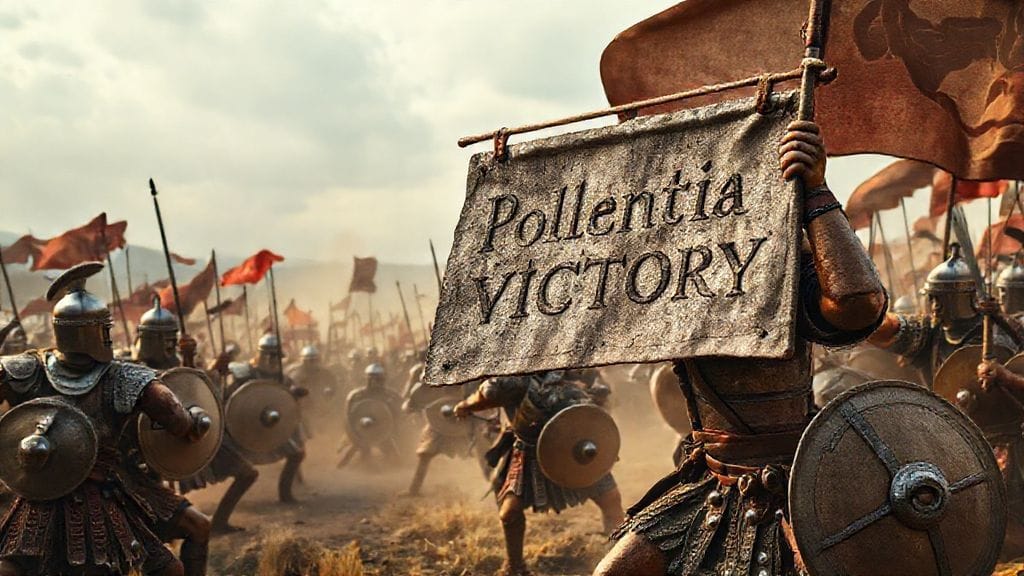
On the morning of July 26, 1476, as the mist lifted over the Moldavian earth, two armies stared at each other across the ground that would soon be their shared graveyard. The battle of valea alba was about to begin. The sun rose on banners of different faiths but similarly grim purpose. Trumpets and drums, neighing horses and murmured prayers mingled into a soundscape that, for those present, must have felt like the overture to Judgment Day.
Stephen’s army took its positions first, having chosen the ground. Moldavian infantry formed the core of the line, with spearmen and archers placed to meet the first Ottoman shocks. Some units likely used improvised field fortifications—ditches, wooden palisades, or wagons—to strengthen their stance. On the flanks, Moldavian cavalry waited, lighter and more agile than many Ottoman sipahis, hoping to exploit any disorder in the enemy ranks. Stephen himself was probably positioned where he could be seen by as many of his men as possible, yet still retain the ability to signal orders through messengers and banners.
Across the field, the Ottoman host moved with practiced coordination. The Janissaries, the sultan’s elite infantry, advanced in disciplined formations, supported by units bearing firearms and by artillery crews positioning their guns on any slightly raised ground they could find. Sipahi cavalry, armored and mounted on powerful horses, took their stations on the wings. Behind and around them, provincial levies and auxiliary troops filled in the spaces, a sea of spears, bows, and swords under the overarching gaze of Mehmed’s command staff.
For many Moldavian soldiers, this would have been the first time they saw the full majesty of an imperial Ottoman army. The rows of Janissaries clad in uniform garb, the gleam of armor, the orderly deployment, the rhythmic roll of Turkish drums—all of this must have communicated a message even before a shot was fired: here was the machine that had toppled cities older than Moldavia itself, that had broken kingdoms, that considered itself the scourge and arbiter of the age.
Yet fear was not the only emotion in the Moldavian ranks. There was anger, too, and pride. These were fields where their ancestors had worked, valleys where they had hunted and herded, forests in which their children played. The idea of yielding them to a distant sultan whose language and laws they did not know stirred a stubborn, almost desperate defiance. Many must have prayed silently under their breath, fingers brushing talismans and crosses, while staring at the advancing banners of the crescent.
At Stephen’s signal, messengers galloped along the lines, conveying final instructions. Arrows were knocked, gunpowder checked, swords loosened in scabbards. On the Ottoman side, standard-bearers hoisted tall flags emblazoned with Quranic verses and imperial symbols. For Mehmed, this was both a military engagement and a political theater. Victory here would restore the aura challenged at Vaslui; defeat would be unimaginable.
As the sun climbed higher, the distance between the armies shrank. A moment came—a silence thick with anticipation—before the first wave surged forward and the valley’s name, Valea Albă, began to earn its darker interpretation.
Steel, Smoke, and Silence: The Opening Clashes
The first contact at Valea Albă came with a roar and a shudder. Ottoman artillery, once in position, let loose. Cannonballs tore into the Moldavian front lines and any fortifications Stephen’s men had hastily erected. The thud of impact, the splintering of wood, and the screams of men caught in the blast heralded the new age of gunpowder warfare—a force that no amount of courage could simply shrug off.
Under this bombardment, Moldavian archers and crossbowmen responded, sending arrows and bolts in arcing volleys toward the advancing enemy. The early exchanges were deadly but inconclusive. Clouds of dust and smoke began to hang over parts of the field, obscuring visibility. Officers on both sides struggled to maintain control, shouting orders that were sometimes lost in the chaos of noise.
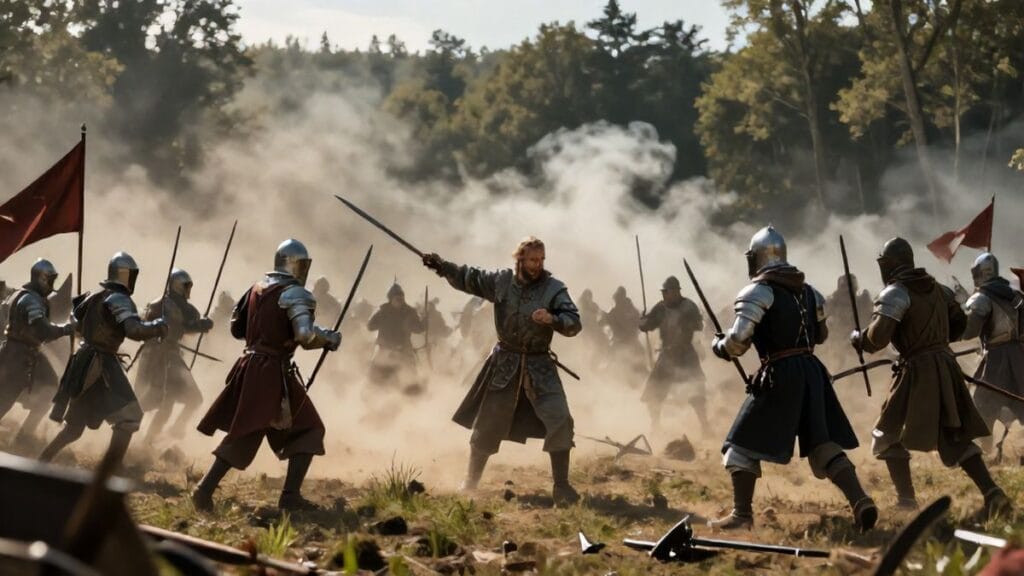
Then came the infantry clash. Ottoman forward units pressed into the Moldavian center, testing its resilience. The Janissaries advanced in disciplined ranks, shields and matchlocks coordinated, while provincial infantry followed behind. Moldavian spearmen braced for impact. The first shock must have felt like being hit by a living wall. Men went down, trampled by comrades or driven into the earth by the weight of bodies and weapons pushing from both directions.
Close combat in this era was intimate and horrific. Swords clanged on helmets, axes bit into mail, and spears found ribcages with terrible precision. The sound was a cacophony of metal, flesh, and voices—no longer the ordered cadence of drums and trumpets, but the ragged, incoherent cries of men locked in fear and fury. For every carefully drawn battle plan, there came a moment when survival depended not on princes or generals, but on the individual soldier’s instinct to kill or be killed.
On the flanks, Moldavian cavalry units sought to disrupt the Ottoman wings. They darted in and out, loosing arrows or engaging in brief charges before withdrawing. In some sectors, they found openings, causing confusion among less disciplined auxiliary troops. Stephen likely hoped that such localized successes would ripple into wider disorder, as they had at Vaslui. But Mehmed’s command experience and the solidity of his core units made this harder to achieve.
As the battle wore on, dust and smoke thickened. Officers struggled to see the whole field. Messengers rode into areas that had already shifted hands, sometimes never returning. In such conditions, rumors spread faster than facts. A unit might hear that another part of the line had collapsed, and panic could follow, even if the news was false or exaggerated. Conversely, pockets of resistance might continue fighting, unaware that their flanks had already been turned.
And yet, in these early phases, Stephen’s line held. Moldavian infantry, reinforced at critical points, refused to break. The terrain did help; Ottoman cavalry could not fully envelop the Moldavian position as easily as on more open ground. For a tense span of hours, it seemed possible that the story of Vaslui might repeat itself—that a smaller, determined army on home ground could blunt and even repel the sultan’s might. But the Ottoman host had come better prepared this time, and Mehmed was a commander who learned from his mistakes.
Crisis at Midday: When the Moldavian Line Began to Break
As the sun climbed toward its zenith, the balance at Valea Albă began to tip. What had started as a stubborn defense turned, inch by bloody inch, into a struggle against exhaustion and numerical overload. The battle of valea alba was entering its most critical phase.
Several factors converged. Ottoman reserves, still relatively fresh, were thrown into sectors where the fighting had been fiercest. Janissaries pushed again and again at the Moldavian center, their discipline uncompromised by the chaos around them. On at least one flank, Ottoman cavalry began to find paths around wooded obstacles, pressuring Moldavian wings that were already strained by earlier engagements.
Meanwhile, Moldavian casualties mounted. Unlike the Ottomans, Stephen did not have endless reserves to commit. Each fallen soldier was a precious loss—a peasant whose fields would lie unplowed, a boyar’s retainer whose absence weakened a noble household, a veteran whose experience could not be replaced. As wounds multiplied and fatigue set in, even the bravest units could not indefinitely sustain the pace of combat demanded by their situation.
Contemporary accounts, though sparse and sometimes colored by later legend, agree that the turning point came when gaps opened in the Moldavian lines under relentless pressure. In one sector, an Ottoman thrust managed to break through a weakened portion of the defense. Once a breach appeared, it acted like a tear in fabric, widening as more Ottoman troops poured into the opening. Moldavian officers rushed to plug the gap, committing their remaining reserves, but coordination under such stress was incredibly difficult.
Stephen himself may have ridden to threatened points, visible to his men, rallying them with words and presence. Chroniclers later imagined him in almost epic terms: sword in hand, cloak torn, face smeared with dust and blood, refusing to abandon the field. Whether precisely accurate or not, such imagery speaks to his known character; it is hard to imagine him detached from the struggle at such a decisive moment.
Once parts of the Moldavian formation began to crumble, panic rippled outward. Soldiers fighting at the front suddenly found their flanks exposed. Confusion intensified as dust, smoke, and the crush of bodies made it nearly impossible to distinguish friend from foe at a distance. Shouts to “hold” competed with terrified cries to “fall back.” In medieval warfare, morale could shift in an instant. An army that had fought valiantly for hours might, upon sensing impending encirclement, collapse into rout.
Yet the Moldavian collapse at Valea Albă was not an immediate, total shattering. There were pockets of resistance, small clusters of men who fought on, buying time for others to withdraw. Some boyars and their household troops made desperate stands, sacrificing themselves to slow the Ottoman advance. These moments of localized heroism—often later magnified in oral tradition—formed the moral core of how Moldavia would remember the battle, even as the larger outcome turned against them.
By early afternoon, however, it was clear: Stephen could no longer hold the field without risking catastrophic annihilation of his entire fighting force. The hard decision loomed—a ruler’s choice between glorious last stand and strategic retreat. He chose the latter, though “retreat” hardly captures the chaos and terror of what followed.
Retreat into the Forests: How Moldavia Survived Defeat
Defeat on the battlefield need not mean the end of a nation. The aftermath of the battle of valea alba offers a stark illustration of this truth. As Stephen’s line gave way, the survival of Moldavia hinged on whether its forces could disengage, scatter, and regroup behind fortifications and in the sheltering woods. The terrain that had not fully saved them at Valea Albă now became their refuge.
Stephen ordered a withdrawal. For many units, this meant a desperate, fighting retreat—turning intermittently to hold off pursuers, then plunging back into the cover of forest paths and ravines. The knowledge of local topography that had failed to deliver decisive victory on the plateau now became a precious asset. Men who had grown up hunting and herding in these lands knew which tracks led to rivers, which to fortified monasteries, which to the great stronghold of Suceava.
The Ottomans pursued, but pursuit in rough country is a perilous endeavor. Fatigue, distance from supply bases, and the risk of ambush all argued for caution. Mehmed’s army had won the field, but it was still deep in enemy territory, and Stephen’s forces, though battered, were not destroyed. Ottoman commanders had to consider whether pressing too aggressively could overextend their lines, making them vulnerable if Moldavian remnants, reinforced perhaps by local militias, struck back from multiple directions.
Stephen himself retreated toward key fortresses. He understood that Moldavia’s defense now depended on static, fortified resistance combined with scorched-earth tactics. Villages along potential Ottoman lines of advance were emptied or burned, supplies removed or destroyed. The countryside was to be turned into a wasteland that could not easily feed an occupying host. Surviving troops garrisoned castles, while others melted into forest bands that could harass Ottoman detachments.
In this phase, the human cost was immeasurable. Wounded soldiers crawled or were carried by comrades to safety, some dying along the way. Families searching for sons and husbands encountered only rumors and the shocking silence of abandoned camps. For peasants whose homes lay in the path of retreating Moldavian forces or advancing Ottomans, the choice was wrenching: flee with what they could carry, or remain and hope to survive the storm by submission or concealment.
Yet despite the agony, the retreat achieved its central goal: it preserved the Moldavian state’s core leadership and a significant portion of its fighting men. Mehmed could claim the victory at Valea Albă, but he had not cut off the head of Moldavia. Stephen still lived; his fortresses still stood; his people, though shaken, remained on their land. In the fragile calculus of frontier survival, this meant that the struggle was far from over.
After the Storm: The Siege of Suceava and the Ottoman Withdrawal
After the field at Valea Albă fell silent, Mehmed faced a crucial question: how far to push his advantage. The logical next step was to strike at Moldavia’s key fortresses, especially Suceava, the principality’s main stronghold and a symbol of its political heart. Here, the battle of valea alba flowed into a broader campaign of sieges and maneuver that would ultimately decide whether Moldavia was to be crushed or merely chastised.
Ottoman forces moved toward Suceava, encountering scorched earth and sporadic resistance. The Moldavian policy of denying resources to the invaders began to bear fruit. Food grew scarce; local hostility made foraging dangerous. Disease, the constant ally of defenders in pre-modern campaigns, likely began to erode Ottoman ranks, though precise records of casualties are scarce.
At Suceava, Stephen had prepared well. The fortress, with its thick walls and strategic position, was provisioned and garrisoned. Siege warfare was a different contest than open battle. Here, the advantages of Mehmed’s larger army and artillery were offset by distance from secure supply lines and the resilience of stone and earth. The Ottomans could bombard and assault, but each such effort cost men and materiel. Time, too, was working against them, as news of the protracted campaign filtered to neighboring powers who might yet be emboldened to act.
We have reports that the siege was stubbornly resisted, and that Stephen, even while wounded and reeling from defeat in the field, coordinated the defense and continued to inspire his followers. In one oft-quoted Romanian tradition, the ruler is said to have vowed to build churches and monasteries for every major victory; after Valea Albă, however, he reputedly commissioned a church in memory of the fallen, acknowledging the bitter price paid. Whether this specific vow is strictly factual or partly hagiographic, it captures the mood of a nation refusing to see defeat as the end of its story.
Ultimately, Mehmed chose to withdraw. The reasons were multiple. Supply problems weighed heavily; an army cannot feed itself on courage alone. The threat of intervention by Hungary or other powers could not be ignored. Moreover, the Ottomans had achieved a form of punitive success: they had defeated Stephen in pitched battle, demonstrated their continued strength, and inflicted serious damage. But annexing Moldavia outright or imposing a stable occupation would have required a far more extensive and prolonged campaign, one that might have overstretched the empire’s resources at a time when other fronts also demanded attention.
Thus, sometime after the battle and subsequent siege operations, the Ottoman host began its long march southward. They left behind burned fields, shattered villages, and a haunted valley filled with unburied or hastily interred dead. Yet they did not leave behind an occupied Moldavia. Stephen remained on his throne. His principality, though wounded and subjected anew to the grim calculus of tribute and negotiation, had survived the greatest peril it had yet faced.
In strategic terms, the 1476 campaign was, for Mehmed, a mixed outcome: a tactical victory at Valea Albă, but a failure to bring Moldavia into full submission. For Stephen, it was the inverse: a military defeat that nonetheless resulted in the preservation of his realm. Such paradoxes are common in frontier history, where the lines between victory and defeat blur under the pressure of long-term survival.
Blood and Memory: Casualties, Trauma, and Local Legends
Numbers evade us. One of the enduring frustrations of studying the battle of valea alba is the lack of reliable figures for casualties. Medieval chroniclers often favored symbolism over precision, describing the battlefield as a “sea of blood” or insisting that “no one could count the fallen.” Modern historians offer cautious estimates, suggesting that thousands perished on both sides. For a small principality like Moldavia, even a few thousand dead represented a staggering demographic and economic blow.
Behind those numbers, however uncertain, lie individual stories. Imagine the Moldavian peasant pulled from his fields only weeks before, now lying shattered by a cannon blast, or the Janissary who had marched from distant Anatolia to die in a valley whose name he never learned to pronounce. Families in Moldavian villages waited for news that often came as silence. Wives looked toward the road each evening, scanning for familiar figures; children asked questions mothers could not answer.
The dead did not all receive proper burials. In the immediate aftermath, armies rarely had time or resources to inter all the fallen with dignity. Some bodies were burned; others left to decay or be scavenged by animals. Later generations, finding bones in fields or near streams, wove them into local legends: this skull belonged to a hero who had killed ten men before falling; that rusted sword was once wielded by a great boyar whose name, though forgotten, deserved remembrance.
Places around Războieni acquired reputations as haunted or sacred. Villagers told stories of ghostly armies seen on certain nights, of cries heard in the wind, of strange lights over fields where, long ago, the “White Valley” had turned crimson. Such tales are common in regions marked by intense violence; they provide a way to live with the unseen dead, to acknowledge their presence even when formal markers—tombs, monuments, written memorials—are missing.
The trauma of 1476 extended beyond immediate grief. A generation of men was scarred, physically and psychologically. Surviving veterans carried wounds and nightmares. Some turned inward, finding solace in religious devotion. Others may have succumbed to bitterness or violence, their experiences on the battlefield making it harder to return to the rhythms of rural life. For the principality as a whole, the losses meant a reduced capacity to farm, to trade, to field armies in subsequent years.
Out of this suffering, however, arose a powerful impulse to commemorate. One of the most enduring memorials is the church at Războieni (once Războieni-Războieni), built by Stephen in the late 1470s. Inscribed on its walls, in Church Slavonic, is a text that reads in part like a roll of lamentation, mentioning those who fell “for the country and for the Christian faith.” This inscription, one of our primary sources, stands as both a document and a monument—a ruler’s attempt to fix memory in stone so that future generations would know that a great price had been paid on that soil.
In this sense, the valley’s whiteness came to signify more than bones or chalk. It suggested a kind of blank page on which the story of sacrifice could be written and rewritten. Each retelling, whether in chronicles, liturgical commemorations, or village tales, added another layer to the palimpsest of Valea Albă’s memory.
Between Cross and Crescent: Diplomatic Shockwaves Across Europe
News of the battle of valea alba and the 1476 campaign traveled along the same routes as merchants and envoys, carried by terrified refugees, itinerant clerics, and official ambassadors. In Buda, Kraków, Venice, and Rome, rulers and cardinals tried to make sense of what had happened in this distant, rugged land between the Carpathians and the Black Sea.
From the perspective of many Western courts, the essential facts were these: Stephen the Great, the same prince who had dealt the Ottomans a stunning defeat at Vaslui, had now been beaten in open battle by the sultan himself, yet somehow his principality still stood. This ambiguous outcome complicated simple narratives of heroism and catastrophe. It suggested both that the Ottoman advance remained formidable and that determined local resistance, even when defeated tactically, could still frustrate the empire’s grand designs.
Hungary, under King Matthias Corvinus, watched closely. Matthias had long positioned himself as a bulwark against the Ottomans, yet his resources were finite, and his kingdom faced threats on multiple fronts. A Moldavia that survived as a semi-independent buffer was preferable to a Moldavia absorbed into the Ottoman sphere. At the same time, Matthias was wary of Stephen’s growing prestige, which could complicate Hungarian influence in the region. His policies vacillated between support and pressure, a reflection of the complex mix of fear and opportunity that defined frontier diplomacy.
Poland, formally linked to Moldavia through vassalage arrangements, also had to reassess. Could it rely on Stephen as a capable guardian of its southern approach, or would his weakened principality become a liability requiring more direct intervention? The answer, as so often in such matters, was a muddled compromise: occasional support, rhetorical solidarity, and a continual weighing of costs and benefits. Meanwhile, Polish elites absorbed the moral lesson that the Ottoman power, though checked at times, remained a looming presence.
In Rome, the papacy received reports that mingled alarm with admiration. A papal source might describe Stephen as still a defender of Christendom, even in defeat. Yet there was no great crusade forthcoming. The late fifteenth century had already seen too many calls for Holy War dissipate in the face of intra-European rivalries. The Italian states were engrossed in their own rivalries; France, England, and the Holy Roman Empire had other preoccupations. Moldavia’s plight was tragic, worthy of sermons and letters, but not of massive armies marching in its defense.
For the Ottoman Empire, the diplomatic impact was subtler. Mehmed could claim victory: his armies had beaten Stephen in battle, marched deep into Moldavia, and demonstrated their operational capacity. This message was not lost on other Balkan vassals and border rulers, who saw in the 1476 campaign a reaffirmation that defiance carried high costs. Yet the fact that Mehmed had not fully subjugated Moldavia also signaled limits. Empires, too, have constraints—logistical, political, human—and the Moldavian theater had exposed some of these.
In the long run, the 1476 campaign contributed to a broader pattern: the consolidation of a contested frontier between Ottoman domains and Central-Eastern European powers. Moldavia would continue to pay tribute and navigate the shifting winds of diplomacy, but its survival as a distinct polity would influence how later generations understood the balance between cross and crescent in this part of the world. The valley where so many had died became not just a local tragedy but a symbol embedded in the larger chessboard of European politics.
From Chronicle to Myth: How Valea Albă Entered Romanian Memory
History does not live only in documents. It also lives in the stories a people tell about themselves. The battle of valea alba, though a defeat in immediate military terms, became over centuries a cornerstone of Romanian—and particularly Moldavian—historical consciousness. This transformation from event to emblem offers a fascinating glimpse into how societies turn pain into narrative.
In the decades following 1476, Moldavian chronicles, many written under the patronage of Stephen and his successors, framed the battle within a larger story of righteous struggle. They depicted Stephen as a God-fearing ruler forced to defend his land and faith against overwhelming odds. The defeat, while acknowledged, was wrapped in the language of martyrdom and sacrifice. One later chronicler observed that “though he was beaten, he did not lose heart, for God preserved his reign and country.” Such lines reveal the careful balancing act of admitting failure while asserting moral victory.
The church at Războieni played a key role in fixing this memory. Its dedicatory inscription, carved into stone, lists the names—or at least the social categories—of those who fell in the battle, linking them explicitly to the defense of the country and the Christian faith. Here, the fallen are not anonymous; they are part of a sacred roll call, commemorated in liturgical services and local pilgrimages. For generations, worshipers who entered that church did so under the gaze of words that bound them to the dead of 1476.
As centuries passed, oral traditions embroidered the story further. Songs and folktales magnified Stephen’s heroism and the suffering of the Moldavian soldiers. In some versions, angels are said to have wept over the valley; in others, strange omens preceded the battle, warning those wise enough to read them. These narrative additions did not aim at strict factual accuracy; they sought instead to convey emotional truth—the sense that this battle had been a climactic test of the nation’s soul.
By the nineteenth century, as modern Romanian nationalism emerged, the battle of valea alba and Stephen’s entire reign were reinterpreted through a new lens. Romantic historians and poets portrayed Stephen as a proto-national hero, defender not only of Orthodoxy but of a Romanian nation barely articulated in his own time. School textbooks, popular histories, and patriotic literature wove Valea Albă together with other moments of resistance into a continuous thread of struggle for independence and dignity.
This process, while powerful, also simplified the past. Complex diplomatic maneuvers, opportunistic alliances, and the harsh realities of tribute and compromise receded into the background, overshadowed by scenes of glorious resistance. Mehmed became less a historically nuanced figure and more a symbol of “the enemy.” The Ottoman Empire, in turn, was reduced to a faceless oppressor. It is a familiar pattern in nation-building narratives: nuance yields to clarity, and heroes and villains stand in sharper relief.
Yet even within such stylization, the core memory retained something essential: a small principality had stood up to a great empire and, though beaten in one terrible battle, had not been erased. In this way, Valea Albă became not just a site of mourning but a wellspring of resilience—a reminder that survival itself can be a form of victory.
Faith, Propaganda, and Politics: The Uses of a Defeat
If history is a weapon, then the battle of valea alba proved a remarkably versatile blade. From the late fifteenth century onward, rulers, priests, and later nationalist leaders used the battle’s memory to serve a variety of purposes, some noble, some more pragmatic.
Stephen himself seems to have understood the value of narrative control. Commissioning churches and monasteries after major battles—both victories and defeats—allowed him to shape the story while the wounds were still fresh. At Războieni, the message inscribed on the walls framed the fallen as martyrs and the struggle as just. This was faith, certainly, but it was also early statecraft. A principality reeling from losses needed a story that made sense of sacrifice and reinforced loyalty to the ruling house.
Over time, the church calendar and local commemorations ensured that Valea Albă was not forgotten. Annual remembrances, sermons, and prayers for the dead provided opportunities for clergy to draw moral lessons: steadfastness in adversity, the vanity of earthly power, the duty to defend faith and homeland. In these contexts, the Ottomans served as a convenient “other,” a foil against which Christian virtue could be contrasted. But behind the pulpit, politics lurked. A populace that internalized such stories was more likely to endure hardships, pay taxes, and answer future calls to arms.
Later rulers in Moldavia and neighboring principalities could invoke Stephen’s example—both his victory at Vaslui and his endurance after Valea Albă—to legitimize their own policies. A prince contemplating resistance to Ottoman demands might remind his subjects that their ancestors had once stood against the sultan’s armies. Conversely, a more cautious ruler could emphasize that even Stephen, the great warrior, had sometimes paid tribute and reached accommodations, suggesting that compromise did not negate bravery.
In modern times, especially during the nineteenth and twentieth centuries, Romanian leaders and intellectuals employed Valea Albă in constructing a national narrative that emphasized continuity of struggle. Schoolchildren learned that their forebears had defended Europe’s eastern gate; monuments and literature echoed this trope. In periods of tension with neighboring powers—whether Ottoman, Russian, or others—the image of Stephen at Valea Albă could be revived as a rallying symbol.
It is important to note, however, that such uses of the past can obscure as much as they illuminate. Historians today emphasize the importance of disentangling the real 1476 campaign from later ideological overlays. As one modern scholar has noted, “We must learn to see Stephen not only as a saint of the nation, but as a late medieval prince, working within the harsh constraints and possibilities of his time.” This call for nuance does not diminish the emotional power of Valea Albă; it enriches it by placing the battle within a realistic context of decision-making, trade-offs, and human frailty.
In the end, the uses of this defeat remind us that history is never merely what happened. It is also what later generations choose to remember, celebrate, or lament—and how they wield those memories in the ongoing negotiations of identity and power.
Reading the Sources: What We Know and What We Guess
Reconstructing the battle of valea alba is like piecing together a tapestry from fragments, some faded, some re-dyed by later hands. Historians work with a mix of local chronicles, foreign reports, archaeological evidence, and inscriptions such as the one at Războieni. Each source offers a window, but no single window reveals the entire room.
Moldavian chronicles, compiled over the late fifteenth and sixteenth centuries, are among our primary narrative sources. They offer details about Stephen’s reign, key campaigns, and his characterization as a defender of the faith. Yet these texts were often written under princely patronage and shaped by religious sensibilities. Their goal was not impartial reporting but edification and legitimation. When they describe Valea Albă, they focus less on tactical minutiae and more on moral framing: the courage of Moldavian troops, the enormity of the Ottoman onslaught, and God’s ultimate mercy in preserving the principality.
Ottoman sources, such as chronicles from the courtly tradition, provide another angle. They understandably emphasize Mehmed’s leadership and the victory in open battle, sometimes downplaying difficulties in supply and the incomplete nature of the conquest. These texts can help us estimate the scale of the Ottoman army, its composition, and the strategic goals of the campaign, but they, too, operate within conventions of praise and imperial ideology. Admitting too many setbacks or logistical strains would have undermined the image of the sultan as God’s favored ruler.
Foreign reports from Italian, Hungarian, or Polish observers are valuable yet problematic. They often rely on second-hand information, sometimes months old, gathered from merchants or envoys who themselves had partial knowledge. Such writers had their own agendas—seeking to alarm Western courts into aiding the anti-Ottoman cause, or alternatively, to reassure them that the situation was under control. For example, an Italian letter might dramatically inflate Ottoman numbers to emphasize the need for a crusade, while a Hungarian report might highlight Stephen’s resilience to underscore the utility of supporting Moldavia as a buffer state.
Inscriptions and material remains provide a firmer footing in some respects. The Războieni church inscription is a contemporary or near-contemporary source that explicitly links the battle and the dead to Stephen’s building of the church. Archaeological finds—such as weapons, armor fragments, and human remains in the region—offer corroborating evidence for the scale and nature of the fighting. Combined with topographic studies of the battlefield area, such evidence allows historians to propose plausible reconstructions of troop movements and key phases of the engagement.
Modern scholarship, drawing on all these materials, has produced increasingly nuanced accounts. Some historians emphasize the continuity between Vaslui and Valea Albă, seeing the latter as a hard-fought sequel in which the Ottomans adapted and, this time, prevailed. Others focus on the campaign as a whole, arguing that the ultimate Ottoman withdrawal makes the term “defeat” too simple for Moldavia’s experience. As historian Ioan-Aurel Pop has suggested in a broader reflection on medieval Eastern Europe, “Victory and defeat on the frontier must be judged not only by the fate of a single day, but by the endurance of communities over generations.”
Still, uncertainties remain. We do not know exact numbers, precise casualty figures, or full orders of battle. Some tactical details will likely never be recovered. Yet, in a way, this uncertainty mirrors the experience of those who lived through 1476. They, too, only saw part of the field, heard only fragments of the full story. In reconstructing Valea Albă, we join them, peering through the fog of war and time, doing our best to discern shapes and motives in the half-light.
Comparison and Legacy: Valea Albă Among Europe’s Great Battles
Where does the battle of valea alba stand in the vast panorama of European warfare? It lacks the grand notoriety of Agincourt, the seismic political consequences of Hastings, or the scale of later confrontations like Lepanto or Vienna. Yet within the history of Eastern Europe and the Ottoman-Christian frontier, it occupies a distinctive, resonant place.
In military terms, Valea Albă can be compared to other “last stand yet survival” engagements on the periphery of great empires. Like the battles of Kosovo (1389) or Nicopolis (1396), it became enmeshed in narratives of sacrifice and identity. Unlike those battles, however, Valea Albă did not mark the end of an independent polity. Moldavia endured as a semi-autonomous principality, maintaining its institutions and rulers for centuries afterward, even under the pressure of tribute and external interference.
Strategically, the 1476 campaign resembled a test rather than a final verdict. The Ottomans demonstrated their ability to project power deep into Moldavia, to defeat its army in the field, and to threaten its core fortresses. Yet they did not—or could not—cement their triumph in full annexation. This pattern would replicate in other frontier regions where geography, logistics, and resilient local elites combined to slow or redirect imperial expansion. In this sense, Valea Albă belongs to a class of battles that illustrate empire’s limits as much as its reach.
Politically and culturally, the legacy of Valea Albă has been long and layered. In Romanian historical consciousness, it stands alongside Vaslui as a defining moment of Stephen the Great’s reign, contributing to his canonization, both literally (in the Orthodox Church) and figuratively (in national historiography). The battle reinforced the image of Moldavia as a bulwark, a smaller realm that nonetheless played a role in containing Ottoman ambitions toward Central and Northern Europe.
Beyond Romania, Valea Albă is less widely known but still features in specialized historiography of the Ottoman frontiers. Scholars interested in Mehmed II’s reign see it as part of the late-phase campaigns that tested how far his empire could extend in the north. It also provides a case study in how smaller states could complicate imperial strategy through a combination of tactical resistance, fortified defense, and scorched-earth withdrawal.
Perhaps the most enduring aspect of the battle’s legacy, however, lies not in strategic charts or national myths, but in what it reveals about the human condition on contested borders. Valea Albă was, at one level, a clash between two rulers and their armies. At another, it was the eruption of long-simmering tensions over land, faith, and power, experienced by ordinary people whose names we will never know. Their courage and suffering shaped the future in ways they could not have foreseen. By attending to their story, we acknowledge that history is not just about victors and vanquished, but about communities that endure, remember, and find meaning in even the darkest valleys.
Conclusion
On a summer day in 1476, in a narrow valley of Moldavia, the ambitions of an empire and the stubborn will of a small principality collided. The battle of valea alba ended with the Moldavian army driven from the field, its dead strewn across the soil, its ruler forced to retreat into forests and fortresses. Yet that was not the end of the story. Mehmed the Conqueror, despite his tactical victory, did not eradicate Moldavia. Stephen the Great, though bloodied, preserved his throne and his people’s political existence.
In the centuries since, this paradoxical outcome—a defeat that safeguarded survival—has made Valea Albă a powerful symbol. It embodies the precariousness of frontier life, where triumph and catastrophe are never far apart, and where the measure of success lies not only in winning battles but in enduring as a community. Through chronicles, churches, and folklore, Moldavians and later Romanians transformed the valley’s trauma into a narrative of sacrifice, resilience, and faith.
Historians today, weighing sources and stripping away some layers of patriotic embellishment, still find in Valea Albă a compelling case study of medieval warfare and statecraft. It reminds us that great battles are not just about tactics and numbers; they are about choices made under duress, about leaders calculating risks, about common people thrust into the currents of grand politics. The battle of valea alba, viewed with both empathy and critical distance, offers a lens onto how small states navigate between empires, how memories are forged in blood, and how a landscape once stained red can become, in the long light of history, a testament to a people’s will to survive.
FAQs
- What was the Battle of Valea Albă?
The Battle of Valea Albă was a major engagement fought on July 26, 1476, in Moldavia between the forces of Stephen III of Moldavia (Stephen the Great) and the Ottoman army led by Sultan Mehmed II (Mehmed the Conqueror). It ended with an Ottoman tactical victory, but Moldavia itself was not conquered. - Why did the Battle of Valea Albă happen?
The battle occurred because Stephen had previously inflicted a heavy defeat on the Ottomans at Vaslui in 1475 and resisted full Ottoman control. Mehmed II launched the 1476 campaign to punish Moldavia, restore imperial prestige, and attempt to bring the principality securely under Ottoman influence. - Where exactly was the Battle of Valea Albă fought?
The battle took place near the village of Războieni, in what is now northeastern Romania. The area, known as Valea Albă (“White Valley”), consists of plateau terrain framed by forests and ravines, which Stephen chose in hopes of offsetting Ottoman numerical superiority. - Who won the Battle of Valea Albă?
In strictly military terms, the Ottomans won: they broke the Moldavian lines and forced Stephen to retreat. However, the broader campaign outcome was mixed, as Mehmed’s army eventually withdrew without annexing Moldavia or deposing Stephen, so Moldavia survived as an autonomous principality. - How large were the armies at Valea Albă?
Exact numbers are unknown. Contemporary sources often exaggerate, claiming figures of 100,000 or more for the Ottomans, which modern historians view as inflated. The Ottoman army certainly outnumbered the Moldavians, but precise troop strengths remain a matter of scholarly estimation and debate. - What were the consequences of the battle for Moldavia?
Moldavia suffered heavy casualties and widespread devastation in the surrounding countryside. Stephen’s military capacity was reduced, and he continued to face Ottoman pressure. However, his principality remained intact, and he preserved enough strength to maintain a degree of autonomy through careful diplomacy and fortified defense. - How is Stephen the Great remembered in relation to the battle?
Stephen is remembered as a heroic ruler who defended Moldavia against overwhelming odds. Even though he lost at Valea Albă, later chronicles and national narratives portray him as a martyr-like figure whose sacrifices, including in this defeat, helped secure Moldavia’s survival. In Romanian tradition, he is revered as “Ștefan cel Mare și Sfânt” (Stephen the Great and Holy). - What role did religion play in the battle?
Religion played a major ideological role. Stephen framed the conflict as a defense of Orthodox Christianity against an expanding Muslim empire, and clergy helped mobilize the population. The Ottomans, in turn, fought under banners of Islam. This religious framing shaped both contemporary motivations and later memories of the battle. - Are there memorials or sites related to the Battle of Valea Albă today?
Yes. The most famous is the church at Războieni, built by Stephen after the campaign, which includes an inscription commemorating those who fell in the battle. The region around Războieni remains a place of historical interest, with local traditions and monuments recalling the events of 1476. - Why is the Battle of Valea Albă important today?
The battle is important as a key episode in the history of Romanian lands and the Ottoman-European frontier. It illustrates how small states navigated between great powers, how warfare and diplomacy intertwined, and how collective memory turns even defeat into a source of identity and resilience. It continues to be studied by historians and remembered in Romanian cultural and religious life.
External Resource
Internal Link
Other Resources
- Encyclopaedia Britannica – general search for the exact subject
- Google Scholar – academic search for the exact subject
- Internet Archive – digital library search for the exact subject