Table of Contents
- A Winter of Portents: Constantinople on the Eve of Revolt
- Thomas the Slav: From Obscure Soldier to Would‑Be Emperor
- A Fractured Empire: Iconoclasm, Civil War, and the Road to 821
- Usurper and Pretender: The Coronation of Thomas and His Oath to the Caliph
- Marching on the Queen of Cities: The Long Approach to Constantinople
- First Glimpse of the Walls: The Siege of Constantinople 821 Begins
- Inside the Capital: Emperor Michael II, Fear, and Calculated Resolve
- Armies of Many Tongues: The Multinational Coalition of Thomas the Slav
- Fire on the Waves: Naval Battles and the Failure to Control the Bosporus
- Hunger, Rumor, and Prayer: Daily Life in Besieged Constantinople
- Diplomacy and Espionage: Letters, Bribes, and Broken Oaths
- The Turning of the Tide: Field Battles and the Crumbling Rebel Front
- The Fall of Thomas: Capture, Mutilation, and Public Spectacle
- An Empire Scarred: Political and Social Consequences of the Rebellion
- Memory, Legend, and the Historians: How Thomas the Slav Was Remembered
- Conclusion
- FAQs
- External Resource
- Internal Link
Article Summary: In the winter of 821–822, the Byzantine Empire was torn apart by one of the most dangerous uprisings in its long history, when the general Thomas the Slav rose against Emperor Michael II and carried his banners to the very gates of Constantinople. This article follows the siege of constantinople 821 from its roots in decades of religious tension, military discontent, and disputed successions to its brutal, intimate human consequences. Moving chronologically, it explores the life of Thomas, his unlikely alliance with the Abbasid Caliphate, and his attempt to present himself as a champion of the poor and the wronged. Within the capital, we witness the fear, hunger, and stubborn resilience of citizens sheltered behind the Theodosian Walls while a multinational rebel host encamps outside. The narrative examines the political gambles of Michael II, the naval clashes on the Bosporus, and the slow erosion of Thomas’s coalition. Alongside the drama of siege operations, it analyzes the ideological and social fractures that made such a revolt possible, and the propaganda that later shaped how the story was told. By the end, the siege of constantinople 821 stands revealed not just as a failed bid for the throne, but as a turning point that shaped imperial governance, military loyalty, and religious policy for generations. The article closes by reflecting on how later historians, both medieval and modern, wrestled with the ambiguous figure of Thomas the Slav: rebel, traitor, and in some eyes, tragic hero.
A Winter of Portents: Constantinople on the Eve of Revolt
Snow had begun to fall along the Marmara coast when rumors first reached the taverns and workshops of Constantinople: a general in the Anatolic countryside, a man called Thomas, was gathering troops and swearing that he carried the true will of the people. In a city accustomed to conspiracies, the whispers might have been ignored, yet this time the tone felt different—more urgent, edged with fear. The citizens of the Queen of Cities had learned, through bitter experience, that a soldier’s revolt in the provinces could, in a matter of weeks, become a crisis at the very gates. The air itself seemed heavy with omens. Monks in shadowed cloisters argued in hushed voices about icons and heresy; merchants in the markets complained of new taxes and corrupt officials; veterans leaned on their walking sticks and muttered that emperors rose and fell faster than they could remember. It was against this tense backdrop that the siege of constantinople 821 would soon unfold, a drama of ambition and survival played out beneath the towering Theodosian Walls.
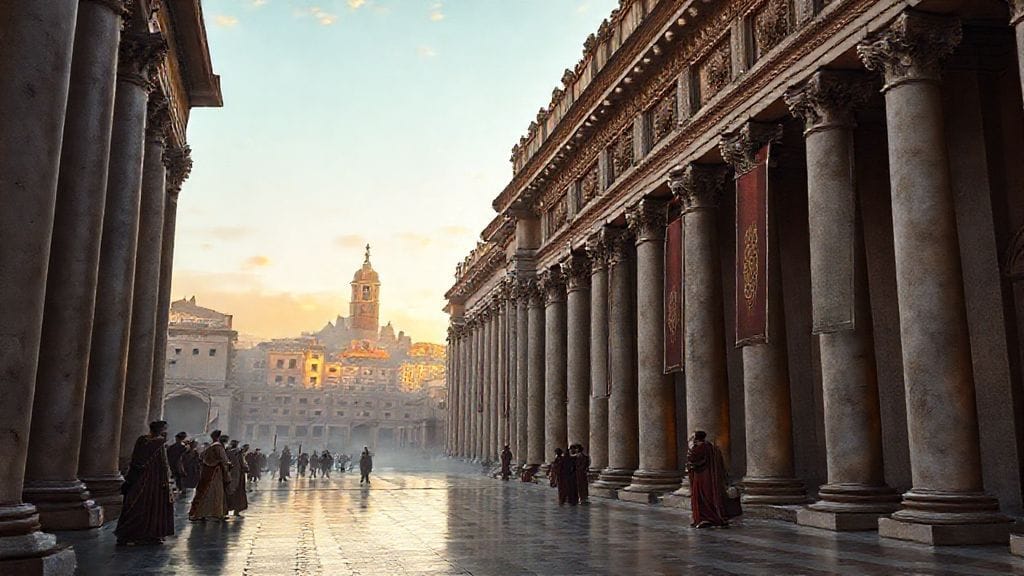
At first, daily life went on. The harbor of the Golden Horn bustled with ships unloading grain from the Black Sea and spices from far ports. Children chased each other between the colonnades of the Forum of Constantine. In the Hippodrome, charioteers of the Blues and Greens rehearsed for races that might never be run, while in the Great Palace, the newly crowned Emperor Michael II walked corridors lined with mosaics that shimmered like frozen sunlight. Yet under the thin veneer of normality, the city was divided. The scars of earlier conflicts—over the veneration of icons, over rival claimants to the throne—had not healed. Factions distrusted one another; provincial soldiers billeted in the capital eyed the urban populace with suspicion. When news came that Thomas the Slav had been proclaimed emperor by his troops, nobody could quite claim surprise. The only question was how far he would go, and how long the city would hold.
The story of the siege of constantinople 821 cannot be understood without grasping the broader climate of unease. The empire had survived a century of pressure on all sides: Arab raids from the east, Bulgar power rising in the Balkans, and internal schisms over images of Christ and the saints. Economic strains deepened grievances, especially in the Anatolic themes—military districts that were both shield and sword for the empire. There, among farmers who also bore arms, resentment simmered toward imperial bureaucrats in Constantinople who seemed distant, arrogant, and detached from the hardships of the frontier. Thomas’s revolt was born out of this soil. When he raised his standard, many saw not just an ambitious general, but a vessel for their collective anger. That anger was soon to be carried to the heart of Byzantine power.
Thus, as 821 dawned, Constantinople was a city waiting for something to happen. Priests preached repentance from their pulpits; some spoke of divine punishment looming if the emperors continued to meddle in theology. Traders debated rumors of alliances between Thomas and the Muslim powers across the frontier, and nervously counted their coins. Our sources hint at a pervasive sense of dread, though colored by the bravado of a city that had never been taken by storm. The walls had stood against Avars and Persians, Ulfilas and Arabs; why should they fall now to a rebel who styled himself emperor but had never worn the purple in the palace? Yet beneath this proud confidence lay an unspoken fear: what if the danger came not from foreign invaders, but from their own fellow Romans, their own armies turned against them? That, in essence, is what made the siege of constantinople 821 so terrifying. It was not simply a war; it was a civil war, a brother’s hand raised against brother, faith turned against faith.
Thomas the Slav: From Obscure Soldier to Would‑Be Emperor
To the chroniclers of later centuries, Thomas the Slav appeared almost from nowhere: a rebel general emerging from the mists of Anatolia, leading a flood of troops toward the capital. Yet his path to that moment was long and tangled. Born, it seems, in the borderlands of the empire—some say in the Pontic region, others in the Balkan provinces—Thomas belonged to the class of men whose fate was shaped by the imperial army. His epithet, “the Slav,” suggests non-Greek origins, marking him in elite eyes as a man partly outside the traditional Constantinopolitan aristocracy. He may have grown up in a village that heard both Greek and Slavic tongues, where the empire was not an abstract idea but the uniform of the tax collector and the officer.
As a young recruit, Thomas would have learned quickly that the Byzantine army, though formidable, was riven by cliques and patronage. Advancement depended not merely on bravery in the field, but on aligning oneself with the right patrons. In the chaos of the late eighth and early ninth centuries—with repeated coups and counter-coups—ambitious men gambled their fortunes on one claimant to the throne after another. Some modern historians suspect that Thomas had already tasted rebellion decades earlier, perhaps as a follower of an earlier usurper who rose against Emperor Constantine VI. If so, he carried into middle age not only military experience, but the memory of failure and exile. Such a past would make his eventual bid for power all the more desperate and all the more determined.
By the time Michael II seized the throne in 820—after orchestrating the assassination of his former comrade, Emperor Leo V—the empire’s officer corps was deeply unsettled. Thomas, then a seasoned commander in the Anatolic themes, must have watched closely. The new emperor, a capable but plodding soldier from the Amorian faction, promised stability yet bore the stain of regicide. For some, that stain was intolerable; for others, it was an opportunity. Thomas chose the latter path. When he finally rebelled in late 820 or early 821, he cast his cause not simply as a grab for power, but as a righteous avenging of Leo V, whose violent death in the palace chapel had shocked the pious. In doing so, he turned the moral ambiguity of Michael’s accession into fuel for his own revolt.
Thomas’s gift was not only military skill, but charisma. The sources, hostile though they are, admit that he could speak to soldiers and peasants in a language they understood. He promised relief from heavy taxation, justice against corrupt officials, and perhaps even a softening of the religious strife that had torn apart communities. In a world where emperors were often distant figures glimpsed only on ceremonial occasions, Thomas appeared as a man of the camps and the fields, a commander who shared the hardships of his troops. This ability to craft a populist image—however sincere or theatrical—was vital when he set his sights on Constantinople itself. For to challenge the capital, he needed more than military power; he needed a story that made his revolt seem not treason, but salvation.
A Fractured Empire: Iconoclasm, Civil War, and the Road to 821
The siege of constantinople 821 was the product of a world already cracked along multiple fault lines. Since the early eighth century, the empire had been consumed by the iconoclast controversy: a deep theological and political divide over the veneration of icons. Emperors like Leo III and Constantine V had championed the destruction or removal of religious images, arguing that such practices violated the commandment against idolatry and provoked divine wrath. Their opponents—monks, many bishops, and ordinary believers—insisted that icons were windows to the divine, not idols, and that attacking them meant attacking the mystery of the Incarnation itself. This wasn’t a mere academic quarrel. Monasteries were looted, opponents were exiled, and imperial authority tangled itself in the most intimate pieties of everyday life.
By the time Michael II took power, the empire was weary of fighting over images but had not resolved the issue. He adopted a cautious iconoclast stance, alienating fervent iconophiles without fully satisfying hardline iconoclasts. In this context, any challenger to the throne could play on religious emotions, presenting himself as a defender of the true faith—whatever “true” might mean to his audience. Thomas the Slav, according to some later accounts, promised toleration to iconophiles and courted the support of monks. Whether this was his genuine conviction or merely opportunistic rhetoric, it added a powerful moral color to his rebellion and gave spiritual language to what was also a social revolt.
Alongside religious conflict came the constant strain of frontier warfare. The Arab-Byzantine frontier in Anatolia was a belt of devastation and resilience, where towns were raided, crops trampled, and villages emptied, only to be rebuilt and raided again. The themes—military-administrative districts—were supposed to manage this pressure by settling soldier-farmers on the land, but over time, land consolidation and corruption gnawed at this system. The men who flocked to Thomas’s banners came in part from these regions, bearing long grievances. In their eyes, Constantinople was a distant city of gold and ceremony that demanded taxes, levies, and obedience but failed to comprehend the ravages of life on the edge of the empire.
Political instability wrapped itself around these tensions. The assassination of Leo V in the palace church on Christmas Day 820, with Michael II emerging as the principal beneficiary, shocked contemporaries. Even in a court accustomed to intrigue, the killing of an emperor at prayer felt like sacrilege. Thomas capitalized on that horror. As one modern scholar has noted, drawing on sources like Theophanes Continuatus, Thomas “clothed his ambition in the garments of righteous vengeance,” claiming to avenge Leo and restore justice. This fusion of personal ambition, religious grievance, and frontier discontent created the storm that would break over Constantinople in 821.
Usurper and Pretender: The Coronation of Thomas and His Oath to the Caliph
For a revolt to become a bid for the throne, it needed ritual as much as it needed armies. Somewhere in the east—sources differ as to the exact location—Thomas staged his own imperial coronation. In a makeshift ceremony, amid the banners of the Anatolic troops, he donned the imperial purple and was hailed as basileus by his soldiers. The absence of the patriarch of Constantinople did not deter him; another bishop, more compliant or more desperate, performed the rites. With this act, Thomas passed an invisible threshold: no longer merely a rebel general, he was now, in his own eyes and those of his followers, the legitimate emperor. Yet legitimacy in Byzantium was never a purely internal matter. The empire was locked in a permanent dance of war and diplomacy with the Muslim caliphate, and Thomas understood that his rebellion would attract foreign interest.
It is here that the story takes a startling turn. The chroniclers record that Thomas sought recognition from the Abbasid Caliph al-Ma’mun, swearing an oath that shocked many contemporaries. In return for military aid or at least for the caliph’s friendly neutrality, he is said to have promised tribute and perhaps even territorial concessions. To the fiercely proud Roman identity of the Byzantines, the idea of a would-be emperor bending the knee to the caliph was nearly unthinkable. Michael II’s propagandists seized on this detail, painting Thomas not just as a traitor, but as a man willing to sell the empire itself to its greatest rival. Whether Thomas truly intended such concessions, or merely uttered exaggerated promises to secure support, the stain of that oath would cling to his memory forever.
The paradox of Thomas’s position is striking. He claimed to fight for justice within the empire, to release its subjects from oppression, and perhaps to restore a more pious order, yet he bargained with the very power that for a century had raided its borderlands and captured its cities. This tension would haunt his cause. To his troops, mostly drawn from Anatolia and the Balkans, what mattered was that he paid and fed them, that he promised a better future. To the elites in Constantinople, the image of Thomas the Slav kneeling before the caliph was a powerful symbol of treachery. It hardened resolve within the capital and gave Michael II a potent rhetorical weapon. The siege of constantinople 821 would thus not only be a clash of armies, but a clash of political narratives about loyalty, faith, and the meaning of Roman identity.
Yet from Thomas’s perspective, the oath was a grim necessity. He knew that to take Constantinople he would have to overcome not just its walls, but its fleet, the defenders’ advantages in supply, and the weight of its sacred prestige. The Abbasid state, embroiled in its own internal problems but still formidable, was the only external power capable of tilting the balance. Alliances of convenience between Christian and Muslim powers were not unheard of in the medieval Mediterranean, but they were always fraught. Thomas gambled that if he could win the throne quickly, he might later renegotiate or evade the promises made in desperation. Destiny, however, had other plans.
Marching on the Queen of Cities: The Long Approach to Constantinople
Once crowned by his followers and recognized—at least in some fashion—by the caliph, Thomas began to move. The march toward Constantinople was not a single, straight advance, but a campaign of gathering forces and forcing submissions. Towns in western Anatolia opened their gates, either out of sympathy or fear. Governors weighed their options, measuring the distant, uncertain protection promised by Michael II against the immediate presence of the rebel army on their horizon. Many chose prudence, at least outwardly, and offered oaths to Thomas. Others resisted and paid the price in siege, plunder, or execution. The imperial government, stretched thin and still consolidating after Michael’s coup, could not respond quickly everywhere at once.
As the rebel host expanded, it became something more than an army. It was a wandering city of tents and wagons, accompanied by camp followers, merchants seeking profit, priests and monks seeking influence, and refugees who saw in Thomas’s movement a chance to escape their local oppressors. The roads of Asia Minor rang with the tramp of boots and the creak of carts. At night, campfires dotted the hillsides like constellations brought to earth. Thomas held councils of war with his officers, some loyal out of conviction, others merely out of fear or ambition. In these tense gatherings, the ultimate goal was never in doubt: to stand before the walls of Constantinople and make the empire itself decide between two emperors.
Crossing into Thrace, Thomas’s forces drew nearer to the city whose name had framed their dreams and nightmares alike. The countryside there had known war often; fields bore the scars of earlier Bulgar raids. Yet the sight of this new host stirred a different kind of terror among the villagers: this was not an external enemy, but their own countrymen, now bound to a rival banner. Stories spread of Thomas’s proclamations promising tax relief and redress of wrongs. Some peasants greeted the troops with offerings of bread and wine, hedging their bets. Others hid in forests and marshes, unwilling to trust any armed men. The very ambiguity of Thomas’s status—part liberator, part invader—gave the march an uneasy, haunted character.
Meanwhile, in the capital, scouts and messengers brought daily updates of the rebel’s progress. Michael II ordered troops to shadow the march, to harass stragglers, but he was careful not to risk a decisive battle too far from the walls that favored his defense. He needed time—to solidify support among the factions of the capital, to ensure that the fleet remained loyal, and to prepare supplies for a siege that might last months. The approach of Thomas’s army therefore unfolded against a second, invisible campaign of political maneuvering within Constantinople itself, a campaign just as crucial as anything happening in the fields of Thrace.
First Glimpse of the Walls: The Siege of Constantinople 821 Begins
There is a moment, recorded only in the silence between the lines of our sources, that must have carried immense emotional weight: the instant when Thomas’s army first saw the skyline of Constantinople rising before them. The triple lines of the Theodosian Walls, with their towers and battlements; the great dome of Hagia Sophia shimmering in the distance; the dense cluster of palaces, forums, and churches spilling down toward the Golden Horn—all these would have made clear the enormity of the task ahead. For the men who had marched so far, the sight must have produced both awe and dread. They had come to challenge not just an emperor, but the city that embodied the Roman world.
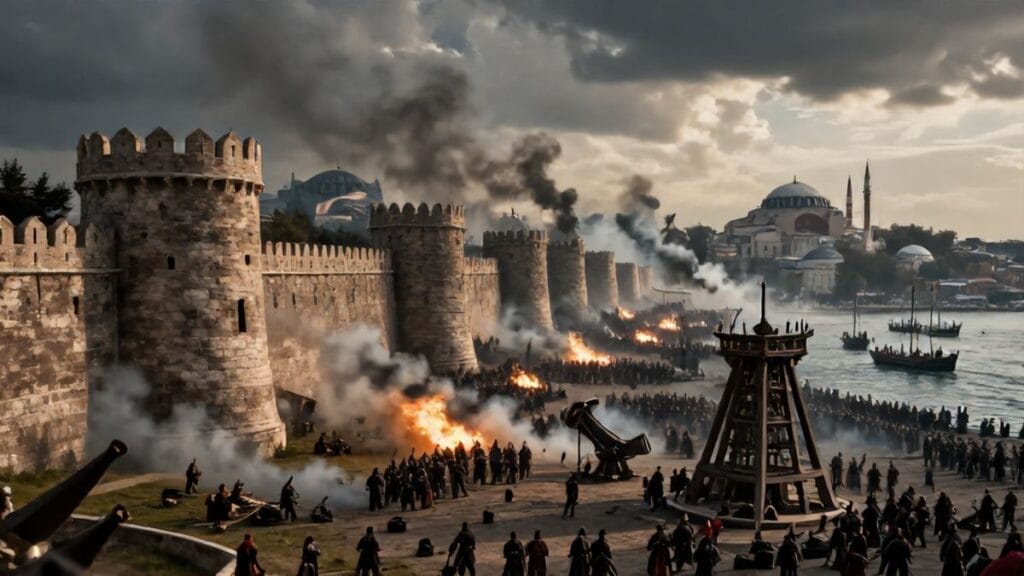
The siege of constantinople 821 began with the familiar rituals of encirclement. Thomas’s forces established camps along the landward approaches, probing the defenses, measuring distances, and testing the response of the garrison. Siege engines were constructed: battering rams, wooden towers, perhaps even primitive forms of artillery. Yet from the outset, Thomas faced a problem that had defeated so many enemies before him: Constantinople was as much a maritime fortress as a land one. The city’s control of the Golden Horn and the Bosporus allowed it to receive supplies and reinforcements by sea, rendering a purely land-based blockade insufficient. To truly strangle the capital, Thomas needed the fleet—or at least a fleet of his own.
Initial clashes were likely small-scale, probing attacks against outlying works and attempts to provoke sorties from the defenders. Arrows and stones flew back and forth; insults and taunts echoed along the moat. Chroniclers describe moments when Thomas’s troops came close enough to hear the prayers and hymns carried from the city’s churches, while inside, citizens crowding the battlements could see the banners of the rebel host fluttering in the wind. The psychological pressure worked both ways. For those within the walls, the knowledge that so many imperial troops had gone over to Thomas was deeply unsettling. For the besiegers, the endless, unbroken stone before them symbolized a barrier not only of architecture, but of divine protection. The city’s long history of survival in previous sieges weighed heavily on every mind.
Yet Thomas could not draw back. Having brought his army to the gates, he had committed himself to a test of will and endurance. He may have hoped that his very presence, with such overwhelming force, would prompt factions inside the city to overthrow Michael II and open the gates. That had happened before in Byzantine history; the walls that seemed so solid could be undone by intrigue from within. In the first weeks of the siege, envoys moved between camp and city, carrying letters, offers, and veiled threats. Thomas promised pardon and reward to any who joined him; Michael warned of divine judgment against rebels. As the stalemate stretched on, it became clear that neither side would yield easily. The siege of constantinople 821 was entering its long, grinding phase.
Inside the Capital: Emperor Michael II, Fear, and Calculated Resolve
While Thomas’s banners fluttered outside, the life of the empire narrowed to the space within Constantinople’s walls. In the Great Palace, Michael II grappled not only with military strategy but with the fragile loyalty of those around him. He had not come to the throne through peaceful succession, but through murder. Many in the bureaucracy and the church had accepted him only because there was no immediate alternative and because the machinery of government had to continue. Now, with a rival emperor camped before the gates, those same officials weighed the odds once more. Some may have secretly opened channels to Thomas, hoping to be on the winning side regardless of the outcome.
Michael, however, was not without strengths. A soldier of humble background, he understood the importance of the army and the fleet. He moved swiftly to secure the loyalty of the navy, whose ships in the Golden Horn and the Bosporus would prove decisive. He distributed donatives—cash payments—to key units, promised promotions, and perhaps most importantly, framed Thomas’s revolt as a direct threat to the sacred city itself. By portraying the siege not merely as a civil war but as an attempt, aided by Muslims, to subjugate Constantinople, he rallied patriotic sentiment. In sermons and public proclamations, the patriarch and bishops echoed this line, painting the defenders as guardians of Orthodoxy and Roman order against a traitor beholden to the caliph.
Within the city, fear and faith intertwined. Citizens flocked to churches, especially to Hagia Sophia, where special services were held to implore divine protection. Processions wound through the streets, bearing relics and icons to the walls. Even in a time of iconoclastic policy, the spiritual power of images could not be completely suppressed; in moments of mortal danger, doctrine bent to necessity. Old men recalled earlier sieges when miraculous events—a sudden storm, the outbreak of disease in the enemy camp—had saved the city. Parents told these stories to their children as reassurance that Constantinople was under the Virgin’s mantle. Yet alongside such pious hope, practical measures were taken: grain stores were inventoried, wells checked, defensive positions reinforced. The city prepared to endure.
Michael walked the ramparts, or at least, he was later said to have done so. The image of the emperor inspecting fortifications, speaking to soldiers, and appearing in public ceremonies was vital. In an empire where the ruler was semi-sacred, the mere sight of him in armor, under the shadow of the cross-bearing labarum, sent a message: the basileus remained in control. The siege of constantinople 821 would not be decided by brute force alone; it would also be shaped by such performances of authority. Every gesture, every imperial procession, every liturgy celebrated in the emperor’s presence was part of the capital’s defense, binding its residents together in a shared sense of purpose against the rebel outside.
Armies of Many Tongues: The Multinational Coalition of Thomas the Slav
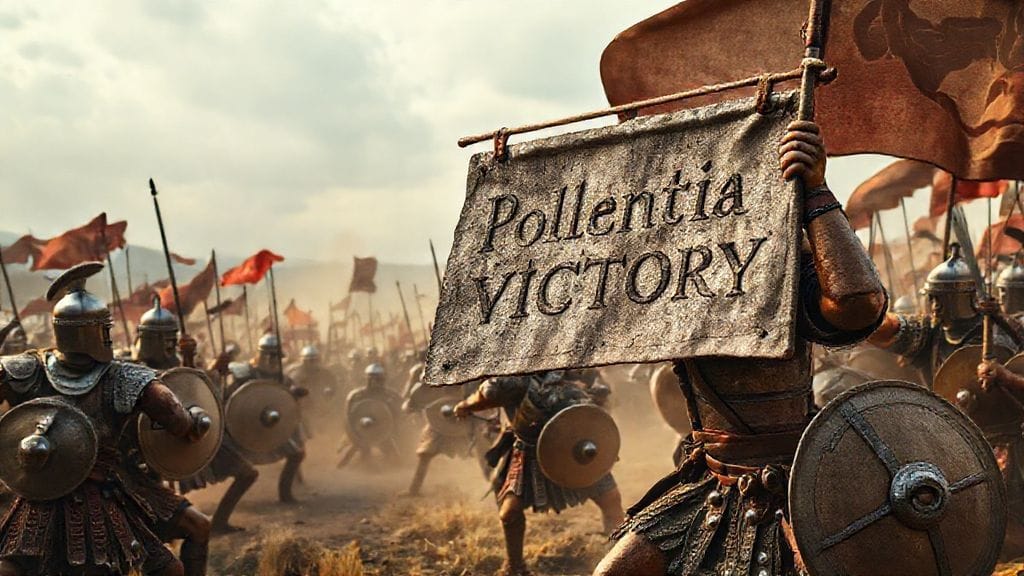
Outside the walls, Thomas commanded not a homogeneous Roman army, but a coalition of peoples. From the Anatolic themes came Greek-speaking soldier-farmers hardened by frontier life. From the Slavic settlements of the Balkans came warriors whose ancestors had once been enemies of the empire, now enrolled as allies or subjects but never entirely assimilated. Some Armenian contingents marched under their own lords, bringing with them a proud tradition of mountain warfare. Our sources even suggest the presence of “Saracens”—Muslim troops—sent or encouraged by the Abbasids in fulfillment of Thomas’s oath to the caliph. This polyglot host embodied both the empire’s reach and its fragility.
The camp must have been a din of languages: Greek commands shouted over Slavic curses, Armenian prayers, and Arabic battle chants. Cultural misunderstandings, rivalries, and jealousies simmered beneath the surface. Thomas’s challenge was to weld this diversity into a single fighting force focused on the walls ahead. To achieve this, he offered different things to different groups. To Anatolic Romans, he promised a just emperor closer to their own class and concerns. To Slavs and Armenians, he dangled the prospect of greater autonomy, plunder, and perhaps even titles within a restructured empire. To Muslim allies, he offered tribute and influence at the highest level of Byzantine power. Holding so many threads in his hands, Thomas walked a constant tightrope.
Yet diversity also brought advantages. The array of fighting styles—heavy infantry, light cavalry, archers from different traditions—gave Thomas tactical flexibility. In skirmishes around the walls, these troops tested the defenders, looking for weak spots. Slavic light troops raided into the surrounding countryside to cut off local supplies, while Arab auxiliaries may have brought expertise in siege engineering learned from their own long wars against Byzantine fortresses. At night, the fires of this vast, shifting army flickered across the plain, a ring of restless light around the dark mass of the city. To those watching from the battlements, it must have seemed as though the entire world had come to lay claim to Constantinople.
Still, the very size and heterogeneity of the rebel army posed a logistical nightmare. Feeding so many men and animals required constant foraging and requisitioning, which in turn bred resentment among local villagers and could spark conflict within the ranks. Discipline must have sometimes faltered; drunkenness, brawls, and desertions are inevitable in any prolonged siege. Thomas’s authority, though real, was always under pressure from the centrifugal forces of regional and ethnic loyalty. The longer the siege dragged on without decisive success, the more these tensions would erode the glue holding his army together.
Fire on the Waves: Naval Battles and the Failure to Control the Bosporus
No account of the siege of constantinople 821 can ignore the water. The city’s genius lay in part in its geographical position: a triangle of land bounded by the Golden Horn, the Bosporus, and the Sea of Marmara. Whoever controlled the sea lanes could ensure the flow of supplies and reinforcements into the capital. Michael II, recognizing this, bent every effort to keep the navy loyal and active. Thomas, for all his skill, never quite achieved maritime dominance, and this failure would prove fatal to his cause.
Early in the siege, Thomas attempted to bring the imperial fleet over to his side, counting on dissatisfaction among sailors and officers. Some squadrons did defect, swelling his naval strength. There were moments when it seemed possible that the rebel might contest the Golden Horn seriously. Yet Michael’s agents moved just as swiftly, distributing money, honors, and promises to key naval commanders. The famed dromons—Byzantine warships with their low hulls and fearsome prows—remained, for the most part, under imperial control. They patrolled the straits, guarded convoys of grain ships, and struck at any rebel vessels that ventured too close.
At least one major naval engagement took place, likely in 822, in the waters near the Bosporus. The accounts, filtered through imperial propaganda, describe the rebels’ ships as poorly handled and unfamiliar with the local currents, while the loyalist fleet used its knowledge of the straits to devastating effect. Greek fire, the empire’s closely guarded incendiary weapon, may have played a role, turning rebel vessels into floating pyres. Flames leapt across the waves, black smoke coiled into the sky, and men flung themselves into the water only to find that the sea itself burned. Whether or not every detail is accurate, the essence is clear: Thomas failed to break the naval ring around the city.
This failure had immediate consequences for the siege. As long as grain and other supplies could reach Constantinople by sea, the defenders’ endurance clock ran far longer than that of the besiegers. Starvation, a classic weapon of siege warfare, could not easily be deployed by Thomas. His own army, dependent on what it could gather from the land, faced increasing shortages as the months passed. Worse, the moral impact of naval defeat undermined his image as a destined victor. To lay siege to “New Rome” and yet fail to rule the surrounding waters was to tempt unfavorable comparisons with earlier enemies who had likewise been repelled.
In a broader sense, the naval stalemate revealed a structural truth about the empire: its unity depended not only on armies marching along roads, but on the maritime arteries that linked capital and provinces. Michael II’s success in holding the fleet underscored his grasp of this reality. Thomas, though he could marshal diverse land forces and win local victories, could not build a navy from scratch in time. The waves continued to beat against the seawalls of Constantinople, indifferent to his ambitions.
Hunger, Rumor, and Prayer: Daily Life in Besieged Constantinople
For the ordinary inhabitants of Constantinople, the siege of constantinople 821 was not a series of grand strategic decisions, but a succession of daily hardships. Food prices climbed as merchants began to hoard grain or sell at inflated rates, despite official edicts trying to keep prices down. Women queued at bakeries, clutching small bags of coins, anxiously watching the dwindling sacks of flour. Fishermen continued to cast their nets in the Golden Horn, but rumors spread that the besiegers might attempt daring raids to disrupt even this modest source of sustenance. In cramped tenements and aristocratic villas alike, people measured out their remaining stores with increasing care.
Rumors, like rats, multiplied in times of siege. Some claimed that Thomas had secret supporters inside the city ready to open the gates; others insisted that angelic apparitions had been seen atop the walls, guaranteeing divine protection. News of skirmishes and naval battles arrived filtered through imperial proclamation or the gossip of soldiers on leave. Each new story was interpreted according to the listener’s hopes and fears. A minor victory by the defenders might be magnified in popular telling, while setbacks were minimized or attributed to temporary divine displeasure. Human beings everywhere, then as now, needed to believe that their suffering had meaning and that endurance would lead to deliverance.
Religious life intensified under this strain. Processions carrying relics—the bones of saints, fragments of the True Cross—wound through the streets, often ending at the walls themselves. Priests chanted litanies, calling on God to “deliver Thy city from the hands of those who hate us.” Some chroniclers report that a special, perhaps hastily rehabilitated, reverence for icons returned in these desperate days, as even those who had supported iconoclast policies found themselves kneeling before images of Christ and the Virgin. Doctrine trembled before fear. The emotional power of these rites bound the population together, even as individual households faced the gnawing uncertainty of how long their food and their courage would last.
Children experienced the siege as a mixture of terror and grim fascination. They watched from rooftops as fires flared in the rebel camp at night, listened to the distant clang of armor and the calls of sentries, and learned to interpret the expressions on their parents’ faces for clues about the unseen events beyond the walls. For some, this would be the formative memory of their lives: the time when the empire itself seemed to hang by a thread, and when the colossal walls that framed their city revealed both their vulnerability and their strength.
Diplomacy and Espionage: Letters, Bribes, and Broken Oaths
War in Byzantium was never purely a matter of arms. Letters could be as deadly as spears, and gold as persuasive as any general. While the siege of constantinople 821 dragged on, an invisible war unfolded between the camp of Thomas and the palace of Michael. Both sides sought to win over wavering commanders, to undermine morale in the opposing ranks, and to reshape the political landscape beyond the immediate battlefield. Messengers slipped through lines by night, carrying promises, threats, and secret instructions. Spies posed as deserters or merchants, collecting information on troop movements and internal divisions.
Michael II, secure within the city, could draw on the imperial treasury to fund a campaign of bribery. He targeted especially those provincial magnates and theme commanders whose allegiance to Thomas seemed lukewarm or based merely on expediency. A well-timed offer of pardon, rank, and money could weaken the rebel coalition from within. Thomas, lacking such deep coffers, had to rely more on charisma and ideological appeal. He portrayed himself, in letters circulated to distant bishops and governors, as a restorer of justice confronting a usurper and murderer. In a clever inversion, he tried to make Michael’s charge of treason boomerang back upon the emperor himself.
But the cracks in Thomas’s camp deepened as time passed without decisive victory. Some allies, especially those drawn from non-Roman populations, began to question how much longer they should endure for a cause that seemed increasingly stalled. Reports of minor defeats or of successful sorties by the defenders sapped confidence. In this atmosphere, Michael’s offers of clemency gained traction. One by one, small groups deserted or withheld full support, leaving Thomas increasingly dependent on his core Anatolic followers. Oaths sworn in the flush of early enthusiasm were broken in the cold calculations of a protracted siege.
Diplomacy also extended beyond the immediate conflict. The Bulgar ruler Omurtag, ever alert to Byzantine weakness, watched events with interest. Michael II wrote to him, seeking to forestall an alliance between Bulgars and Thomas. In a striking twist, Omurtag agreed to support the legitimate emperor, seeing more advantage in a stable neighbor than in a rebel whose victory might unleash unpredictable changes. The prospect of Bulgar troops attacking Thomas from the rear added yet another shadow to the rebel camp. In this wider diplomatic chessboard, Thomas gradually found himself outmaneuvered, his options narrowing even as his army still ringed the city.
The Turning of the Tide: Field Battles and the Crumbling Rebel Front
Every siege reaches a tipping point when one side recognizes, perhaps dimly at first, that time no longer works in its favor. For Thomas, that moment came when Michael II, bolstered by shifting alliances and internal defections in the rebel camp, dared to move from defense to offense. Instead of remaining perpetually behind the walls, the emperor led or dispatched loyalist forces to engage the rebels in the field beyond Constantinople’s immediate environs. The defenders’ aim was clear: to shatter the unity of Thomas’s army, break its supply lines, and compel it to retreat from the city it had failed to take by storm or intrigue.
Sources describe one significant engagement in Thrace where imperial troops, perhaps reinforced by Bulgar auxiliaries, collided with a major contingent of Thomas’s forces. The battle was hard-fought, dust and blood thick in the air, as men who spoke the same language—or who had once been comrades under the same banner—now faced each other across the field as enemies. Chroniclers, writing from the victor’s perspective, naturally emphasize Michael’s courage and the valor of the loyalists. They recount how rebel lines wavered, how some contingents broke and ran, and how the once-mighty host that had ringed Constantinople began to lose its coherence.
The psychological impact of these setbacks was immense. Soldiers who had camped for months before the impregnable walls, hoping for a miraculous breakthrough, now saw their comrades cut down in open battle. The city behind them remained unconquered; the fields around them grew increasingly hostile; the prospect of reinforcements from the east or support from the caliph receded into myth. Desertions accelerated. Commanders weighed their options and, in some cases, chose to save themselves by abandoning the cause they had once embraced with fiery oaths. Each such defection weakened Thomas’s capacity not only to fight, but to impose discipline on those who remained.
Eventually, the ring around Constantinople loosened. Rebel camps were pulled back, not as part of a careful strategic redeployment, but under pressure and in disarray. The siege of constantinople 821, which had once seemed poised to topple a newly crowned emperor, now appeared more and more as a doomed venture stubbornly clinging to life. Yet Thomas did not surrender. Instead, he sought to regroup, to find a new base of operations, and to continue the war in the provinces. What had begun as a dramatic march on the capital was devolving into a desperate, wandering struggle for survival.
The Fall of Thomas: Capture, Mutilation, and Public Spectacle
The end came not with a glorious last stand before the city walls, but with the grim, almost inevitable unraveling of Thomas’s position. Pushed away from Constantinople, harried by loyalist and allied Bulgar forces, he withdrew to fortified positions in Asia Minor, perhaps hoping to outlast Michael II or to find some new opening for revolt. Instead, he found himself increasingly isolated. Allies slipped away; supplies ran short; the aura of invincibility that had once surrounded his name had long since vanished.
In one final, decisive confrontation—accounts differ on the exact location—Thomas was defeated and captured. The moment of his seizure must have been charged with emotion: here was the man who had dared to encircle the Queen of Cities, now bound and disarmed. Protocol and politics dictated what came next. Emperors could not afford to be merciful to such a rival; yet they also understood the theatrical power of punishment. Thomas was not quietly executed in some remote prison. Instead, he was brought, under heavy guard, back to the city that had defied him.
In Constantinople, his fate became a public lesson. Before a gathered crowd—soldiers, officials, and ordinary citizens—Thomas was subjected to mutilation, the standard imperial punishment to render a rival incapable of future rule. His right hand, which had signed decrees and held a sword in battle, was cut off. Blinding, another common practice, may also have been performed, though accounts vary. Finally, the battered rebel was executed, perhaps by beheading, his corpse displayed as proof that the danger had truly passed. The spectacle served to reassure the population and to warn any who might dream of following in his footsteps.
Such scenes were not merely acts of cruelty but of political communication. In a world without newspapers or mass media, the body of Thomas—the once self-proclaimed emperor now reduced to a mutilated corpse—was itself a kind of text, legible to all who saw it. It proclaimed that the established order had survived, that God had vindicated the legitimate ruler, and that rebellion, no matter how sweeping, could end only in humiliation. Yet it also testified, silently, to the profound fear that had gripped the regime. Only an enemy taken deeply seriously needed to be so thoroughly, publicly erased.
An Empire Scarred: Political and Social Consequences of the Rebellion
The crushing of Thomas’s revolt did not simply reset the empire to its previous state. The siege of constantinople 821 and the subsequent campaigns left scars across society and politics that would shape Byzantine history for decades. In the immediate aftermath, Michael II emerged more secure but also more cautious. He had stared into the abyss of civil war and survived, yet the cost had been heavy: devastated provinces, depleted treasuries, and a climate of suspicion toward the very military elites on whom emperors depended.
One consequence was a renewed emphasis on controlling the themes and their commanders. The Anatolic districts that had supplied Thomas with so many troops became objects of wary scrutiny. Michael and his successors sought to balance the power of provincial generals, rotating them more frequently, limiting the accumulation of multiple commands in one hand, and relying increasingly on palace-based units or foreign mercenaries less tied to local interests. This gradual shift would, over time, alter the character of the Byzantine army, making it both more centralized and, in some respects, more detached from the rural society it was meant to defend.
Socially, the revolt revealed a deep reservoir of popular discontent. Tax reform and administrative measures followed, some aimed sincerely at alleviating burdens, others primarily at shoring up imperial authority. The memory of how quickly a charismatic leader could mobilize resentment against the capital made administrators more attentive—at least for a time—to the grievances of soldier-farmers and provincial communities. Yet these reforms were uneven and often undercut by ongoing fiscal needs, especially as the empire continued to face external threats on multiple frontiers.
Religiously, the outcome of the revolt strengthened the hand of those who favored a more pragmatic, less extreme approach to iconoclasm. Michael’s regime, though maintaining iconoclast policies, gradually allowed for some softening at the level of practice. The role that icons and relics had played in rallying the city during the siege could not be entirely ignored. As one modern historian has observed, interpreting chronicles like that of Genesios, “the lived piety of the people proved more enduring than the dogmatic zeal of theologians.” Over the next generation, the stage was quietly being set for the eventual restoration of icons in 843, the so‑called Triumph of Orthodoxy, though that lay beyond Michael’s reign.
Above all, the rebellion etched into the political psyche a renewed conviction that legitimacy mattered. Michael II, stained by regicide, had nearly lost his throne to a challenger who claimed moral superiority. Future emperors would be more careful about the rituals of accession, the handling of rivals, and the cultivation of a narrative that presented their rule as orderly, divinely sanctioned, and beneficial. The specter of Thomas the Slav—this near-successful usurper who had once encircled Constantinople—hovered as a warning: power seized brutally and without broad consent might invite an even greater violence in response.
Memory, Legend, and the Historians: How Thomas the Slav Was Remembered
In the centuries after his death, Thomas the Slav did not vanish from memory. He lived on in chronicles, sermons, and the whispered tales of soldiers and monks. Yet the image that emerged was far from uniform. Imperial historians, writing under the authority of later emperors who traced their legitimacy through Michael II, naturally portrayed Thomas as a villain: a traitor who allied with the Muslim enemy, violated oaths, and plunged the empire into needless suffering. Works like Theophanes Continuatus and the chronicle of Genesios—our principal narrative sources—lean heavily on this interpretation, often emphasizing celestial omens that presaged Thomas’s downfall, as if to underline divine disapproval.
And yet, beneath the layers of propaganda, other notes can be heard. Some accounts mention, almost grudgingly, his popularity among soldiers and common people, his charisma, and the earnestness of his promises of justice. Later tradition in some regions preserved a more ambivalent memory, seeing him as a tragic figure who challenged a corrupt order and paid the price. Modern historians, reading these sources critically, have tried to reconstruct the man behind the myth. They point out that many accusations—especially those concerning his oath to the caliph—come from hostile pens with every reason to blacken his name. While not exonerating him of ambition or brutality, they suggest that Thomas also embodied genuine social and religious grievances that Michael’s regime failed fully to address.
The siege of constantinople 821 thus becomes, in the hands of modern scholars, more than a story of “good emperor versus bad usurper.” It appears as a window into the tensions of ninth‑century Byzantine society, where issues of class, region, faith, and imperial ideology intersected. As historian Warren Treadgold has argued, civil wars in Byzantium were often symptomatic of deeper structural shifts; they were not isolated aberrations but part of the empire’s ongoing process of adaptation. Thomas’s revolt fits this pattern, marking the end of one phase of military-political relationships and the beginning of another, more controlled but also more brittle, order.
In popular imagination, of course, nuance rarely survives. To many who heard his story in later generations, Thomas was either monster or martyr. The imperial capital, proud of its survival, preferred the former image. In some distant villages, where memory of tax collectors and local oppressors lingered longer than the splendors of Constantinople, the latter image may have held more appeal. Today, as we sift through the fragmentary narrative left to us, we stand somewhere between these poles, recognizing in Thomas the Slav neither a pure hero nor a mere villain, but a human being navigating a treacherous world, whose bid for greatness reshaped the empire even in failure.
Conclusion
The siege of constantinople 821 stands as one of those pivotal moments when the Byzantine Empire might have taken a very different path. A powerful general, borne up by real grievances and extraordinary ambition, marched the armies of the provinces to the gates of the Queen of Cities, encircled it by land, and challenged a newly enthroned emperor whose own legitimacy was deeply contested. For months, the fate of the empire hung in the balance, as campfires burned on the plains of Thrace and prayers rose unceasingly from Hagia Sophia. That the city did not fall was the result not only of its mighty walls, but of the skillful use of naval power, diplomacy, propaganda, and the stubborn resilience of its inhabitants.
Yet the true meaning of the siege goes beyond the simple fact of Michael II’s survival and Thomas’s defeat. It revealed the profound tensions at the heart of ninth‑century Byzantium: between capital and provinces, army and bureaucracy, frontier hardships and metropolitan ceremony, iconoclast doctrine and popular piety. Thomas’s revolt magnified these fractures, forcing the imperial system to confront its vulnerabilities. In its aftermath, emperors tightened their control over military elites, cautiously adjusted religious policy, and paid closer attention—if inconsistently—to the burdens on provincial society. The empire that emerged from this ordeal was shaken but still capable of renewal, laying foundations for the revival of the ninth and tenth centuries.
For the people who lived through it, the siege of constantinople 821 was not an abstract turning point but an experience of fear, hunger, hope, and loss. Children watched the horizon for signs of battle; soldiers wrestled with divided loyalties; monks debated whether suffering was a punishment for sin or a test of faith. Thomas himself ended not in triumph but in mutilation and death, his body displayed as a warning even as his name lingered, unsettled, in the chronicles. Looking back, we see in his rise and fall the drama of a society struggling to reconcile ideals of divine order with the harsh realities of political violence. It is astonishing, isn’t it, how a single winter of siege can illuminate so much about an empire’s soul?
FAQs
- Who was Thomas the Slav?
Thomas the Slav was a Byzantine general of probable Slavic origin who, in 820–821, led a massive revolt against Emperor Michael II. Drawing on widespread discontent in the Anatolic themes and claiming to avenge the murdered Emperor Leo V, he was proclaimed emperor by his troops and mounted a serious challenge to the ruling regime. - What caused the siege of Constantinople in 821?
The siege of constantinople 821 was caused by Thomas’s attempt to overthrow Michael II and seize the imperial throne. Long‑standing grievances over taxation, military service, religious conflict (especially the iconoclast controversy), and Michael’s controversial accession through regicide all combined to create a climate in which Thomas’s revolt could gain massive support. - How close did Thomas come to capturing Constantinople?
Thomas came dangerously close in political terms: he encircled the city by land, attracted broad support from provincial armies, and for a time seemed poised to force a change of regime. Militarily, however, he never managed to breach the Theodosian Walls or gain full control of the sea, and these failures ultimately doomed the siege. - What role did the navy play in the outcome?
The imperial navy’s loyalty to Michael II was crucial. By holding the Bosporus and the Golden Horn, the loyalist fleet ensured that supplies could continue to reach Constantinople by sea and prevented Thomas from enforcing a complete blockade. Naval victories, possibly involving the use of Greek fire, also damaged rebel morale and limited Thomas’s operational options. - Did Thomas really ally with the Abbasid Caliphate?
Contemporary and later Byzantine sources state that Thomas sought recognition from the Abbasid Caliph al‑Ma’mun, swearing an oath of obedience in exchange for support. While the exact terms and sincerity of this alliance are debated by modern historians, it is clear that imperial propagandists used the episode to portray Thomas as a traitor willing to subordinate the empire to a Muslim ruler. - How did the siege affect ordinary people in Constantinople?
For ordinary citizens, the siege brought rising food prices, uncertainty, and fear. Daily life revolved around securing provisions, participating in religious processions and prayers for deliverance, and following often confusing reports of battles outside the walls. While the city never reached the acute starvation seen in some medieval sieges, the psychological strain was deep and long‑lasting. - What happened to Thomas the Slav after his defeat?
After suffering defeats in the field and losing support, Thomas was captured and brought to Constantinople. There he was publicly mutilated—losing at least his right hand, and possibly being blinded—and then executed. His body was displayed to demonstrate the finality of the imperial victory and to deter future rebellions. - What were the long‑term consequences of the rebellion?
The rebellion led to tighter imperial control over provincial military commanders, adjustments in tax and administrative policies, and a more cautious approach to religious enforcement under an officially iconoclast regime. It also reinforced the importance of the navy and underscored how fragile imperial legitimacy could be when succession was tainted by violence. - How reliable are our sources for these events?
Our main sources, such as Theophanes Continuatus and Genesios, were written under regimes that had every reason to justify Michael II and vilify Thomas. They provide invaluable detail but must be read critically, with awareness of their polemical aims. Modern historians cross‑compare these narratives with other evidence, including later chronicles and administrative texts, to build a more balanced picture. - Why does the siege of constantinople 821 matter today?
The siege matters because it illustrates how internal divisions—religious, social, and political—can bring even a powerful state to the brink of self‑destruction. It offers a vivid case study in the dynamics of civil war, the use of propaganda and ritual in politics, and the resilience of institutions like Constantinople’s walls and fleet. In tracing its story, we gain insight into how empires survive crises—or fail to—and how the memories of such crises shape their future paths.
External Resource
Internal Link
Other Resources
- Encyclopaedia Britannica – general search for the exact subject
- Google Scholar – academic search for the exact subject
- Internet Archive – digital library search for the exact subject