Table of Contents
- A Winter Morning in 1018: The Fall of a Kingdom
- From Frontier Prince to Emperor: The Early Life of Basil II
- Bulgaria Ascendant: The Rise of a Balkan Power
- The First Clash: Basil II and the Disaster at Trajan’s Gate
- Revenge Forged in Iron: Rebuilding a Broken Empire
- Tsar Samuel and the Bulgarian Resistance
- The Road to Kleidion: Strategy, Spies, and Stalemate
- The Battle of Kleidion, 1014: A Day of Blinding and Legend
- After Samuel: Fragmenting Leadership and Relentless Campaigns
- The Final Submissions: Fortresses, Oaths, and the Year 1018
- Administering Victory: Themes, Taxes, and the Soft Edge of Empire
- Faith, Patriarchs, and the Orthodox World Reordered
- Life Under the Double-Headed Eagle: Everyday Consequences for Bulgarians
- Empire at its Zenith: How the Conquest Reshaped Byzantium
- Enemies at the Gate: The Bulgarian Frontier and New Threats
- Myth-Making and Memory: Basil the Bulgar-Slayer
- Echoes Through the Centuries: Bulgarian Identity After 1018
- Historians, Debates, and the Moral Weight of Victory
- Conclusion
- FAQs
- External Resource
- Internal Link
Article Summary: The story of the basil ii conquest of bulgaria is one of relentless will, bitter resistance, and the reordering of an entire region. This article follows the arc from Basil’s uncertain youth and early defeats to his methodical campaigns that ended with the formal submission of Bulgarian nobles in 1018. It explores the rise of the Bulgarian state, the defiance of Tsar Samuel, and the brutal spectacle of Kleidion, where legend says thousands of prisoners were blinded. Yet the narrative goes beyond battlefields, tracing how administration, faith, and daily life were reshaped under Byzantine rule. Through a cinematic, documentarian lens, it examines how the basil ii conquest of bulgaria created both an imperial high point and deep scars in Bulgarian memory. The text also looks at how later generations fashioned the image of “Basil the Bulgar-Slayer,” questioning where history ends and myth begins. Ultimately, the basil ii conquest of bulgaria emerges not just as a military triumph, but as a pivotal turning point in the medieval Balkans. It is a story of power and survival whose consequences echoed long after the banners were furled and the swords were sheathed.
A Winter Morning in 1018: The Fall of a Kingdom
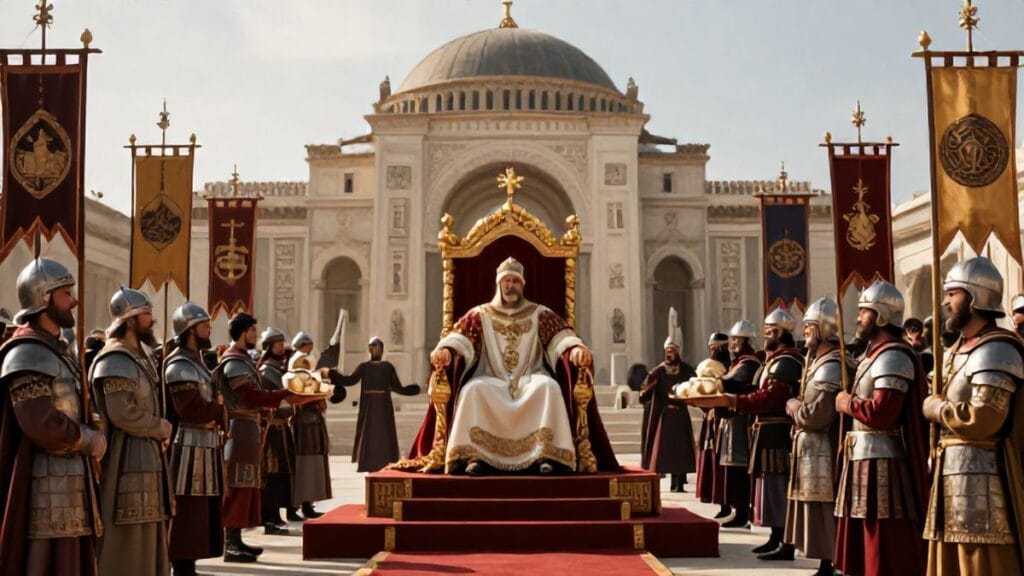
Snow still clung to the ridges above the Vardar valley when the riders approached, their horses’ breath turning to mist in the cold air. They came not as raiders but as supplicants, the once-proud nobles of a kingdom that had outlasted empires. Now, in the year 1018, they picked their way down muddy roads toward the imperial camp of Basil II, the man whose name would be forever tied to the basil ii conquest of bulgaria. In the dawn light, the purple banners of Byzantium fluttered, heavy with gold thread, while scarred veterans from a dozen campaigns watched the Bulgarians approach in wary silence.
Inside a tent whose silk walls muffled the winter wind, an emperor in his sixties—short, thickset, with a soldier’s bearing and a face weathered by half a century of war—waited. This was Basil II, Basileus of the Romans, heir to Constantine and Justinian, the man the chroniclers would later call Boulgaroktonos, the Bulgar-Slayer. His armor lay within reach, but today he wore the robes of ceremony, not of battle. The conquest that had consumed his adult life was almost complete. One by one, Bulgarian boyars, local chiefs, and fortress commanders had bent the knee or been swept aside. Today’s delegation was large, prestigious, and tellingly tired. The long game was over.
The tent flap opened. Bulgarian nobles entered, their heavy cloaks still crusted with frost. Behind them came priests, carrying icons, relics, and the fragile weight of a people’s hope. They bowed low before Basil, offering keys to their fortresses and oaths of loyalty in a halting mixture of Greek and Slavonic. For them, this moment was an ending: the eclipse of the First Bulgarian Empire, which had once rivaled Constantinople itself. For Basil, it was the culmination of decades of grinding warfare, intrigue, and deliberate statecraft—the final chord in a symphony of conquest that had begun before most of these men were born.
This was the basil ii conquest of bulgaria in its starkest human form: not only battlefields and sieges, but also scenes of fraught submission, of choices made between annihilation and survival under new masters. Behind the formal words lay years of campaigns through mountain passes, midnight assaults on hilltop towns, and quiet bribes sent to wavering chieftains. The emperor did not shout; he barely spoke. He simply accepted what he had long pursued: the integration of the Bulgarian lands into the Byzantine world. It’s astonishing, isn’t it, that such a monumental shift in Balkan history could be sealed not with a climactic battle, but with a soft murmur of oaths inside a wind-tossed tent?
But this was only the beginning of our story. To understand how this winter morning in 1018 was possible, we must travel back decades—to a different Basil, to a different Bulgaria, to an empire unsure of itself and to a frontier that would become the stage for one of the most consequential struggles of the medieval age. The basil ii conquest of bulgaria was not merely the work of a few victorious years; it was the result of intertwined destinies of two states that had spent centuries as enemies, neighbors, imitators, and rivals.
From Frontier Prince to Emperor: The Early Life of Basil II
Long before he became the scourge of Bulgarian armies, Basil was a nervous young prince in a treacherous court. Born in 958, grandson of Constantine VII and son of Romanos II, he entered a Constantinople that was dazzling yet dangerous. The city was a world unto itself: mosaic-studded churches, bustling harbors, and marble palaces whose corridors echoed with whispered conspiracies. When his father died unexpectedly in 963, Basil was still a child, more pawn than player in the deadly contests for power that followed.
For nearly two decades, real control over the empire rested in the hands of powerful generals and ambitious ministers. First came Nikephoros II Phokas, then John I Tzimiskes—brilliant commanders who led victorious campaigns against Arabs in the East and Bulgarians in the Balkans, all while keeping the young Basil carefully sidelined. The boy who would one day orchestrate the basil ii conquest of bulgaria learned his first lessons not on the battlefield but in the constrained role of a figurehead emperor. He watched as palace guards shifted allegiance, as icons were paraded to justify coups, and as his own position oscillated between marginalization and symbolic importance.
He was, by most physical accounts, unremarkable: short, stocky, with large eyes and a serious expression. But behind that face burned a ferocious determination. Once he reached adulthood and began to take the reins of power, Basil showed an intense distrust of the aristocracy and a relentless focus on military affairs. The great landowning families that had tried to dominate him soon discovered that the quiet prince was willing to exile, confiscate, and sometimes blind those who plotted against him. His early reign was haunted by rebellions—none more dangerous than that of Bardas Skleros and Bardas Phokas, magnates who commanded vast private armies. Crushing these uprisings taught Basil a hard truth: to survive as emperor, he had to be not just a ruler, but a soldier-emperor, always ready for the next threat.
Those internal conflicts shaped the man who would later turn his gaze westward, toward the Bulgarian frontier. Constantine Porphyrogenitus, Basil’s learned grandfather, had once written a handbook on ruling an empire, detailing the delicate game of managing Balkan tribes and Bulgarian princes. Basil’s education was not in books but in scars and campaigns. By the time he had secured his throne in the 980s and 990s, he had forged himself into something new: an emperor whose identity was inseparable from warfare. The basil ii conquest of bulgaria would become the defining stage on which his harsh, uncompromising style would be fully revealed.
Bulgaria Ascendant: The Rise of a Balkan Power
While Basil grew up under the gilded ceilings of Constantinople, Bulgaria emerged as a formidable power to the northwest. Its roots stretched back to the late 7th century, when Turkic Bulgars and Slavic tribes forged a new state in the Balkans, pressing hard against the overextended Byzantine frontier. By the reign of Khan Krum in the early 9th century, Bulgarian armies were strong enough to threaten Constantinople itself. Later rulers, like Boris I and Simeon the Great, turned this once-pagan warrior kingdom into a Christian, literate empire with its own cultural gravity.
In the 860s, Bulgaria embraced Christianity, initially tugged between Rome and Constantinople but gradually aligning under the Orthodox umbrella. The arrival of the disciples of Cyril and Methodius led to the spread of the Slavonic liturgy and the development of Bulgarian literacy. Under Tsar Simeon (893–927), Bulgaria reached a golden age: its territory stretched from the Black Sea to the Adriatic, its cultural life burned bright with monasteries, scholars, and a court that dreamed of imperial status. Simeon even took the title “Emperor of the Bulgarians and Romans,” directly challenging Byzantine claims to Roman universality. The Balkans had become a chessboard with two kings eyeing each other uneasily.
Yet no golden age is permanent. After Simeon’s death, Bulgaria entered a period of internal weaknesses and mounting pressure. Byzantine diplomacy exploited dynastic disputes; Magyar raids ravaged borderlands; and the empire slowly clawed back lost ground. By the late 10th century, the once-mighty Bulgarian heartland around Preslav and Pliska faltered under renewed Byzantine offensives. It seemed, for a moment, that the Bulgarian state might crumble completely.
But history rarely moves in straight lines. In the western, mountainous regions—especially around Ohrid and the rugged lands of Macedonia—a new resistance emerged. This “Western Bulgarian Empire,” sometimes called the “Empire of Samuel,” would prove to be a far more resilient opponent than Constantinople expected. It was this reconstituted, defiant Bulgaria that Basil II would face—an enemy born not from the flat plains of the old capitals, but from the mist-shrouded valleys and granite ridges of the western Balkans. The basil ii conquest of bulgaria, then, was not the easy picking of a collapsing state; it was a long struggle against a kingdom that had already been tempered in the fire of near-destruction.
The First Clash: Basil II and the Disaster at Trajan’s Gate
When Basil first marched against Bulgaria in person, he did not look like the invincible conqueror later chronicles describe. The year was 986, and the emperor—still relatively young, eager to prove himself—led a campaign aimed at striking into the heart of Bulgarian resistance. His immediate goal was the fortress of Sredets, modern-day Sofia, a crucial node in the routes crossing the Balkans. If he could break through there, the western Bulgarian lands would be exposed.
But Basil underestimated both terrain and enemy. The Bulgarians, led by the capable and fiercely determined commander Samuel (who had not yet taken the royal title), refused a direct confrontation on flat ground. Instead, they shadowed the Byzantine army, harrying supply lines, cutting off foragers, and letting the rough country itself fight on their side. The siege of Sredets bogged down. Provisions dwindled. Discontent rose in the imperial camp. Facing the prospect of encirclement or starvation, Basil ordered a retreat—through the narrow defile known as Trajan’s Gate.
What happened next became a dark legend in Byzantine memory. As Basil’s forces wound through the pass, Bulgarian troops attacked from the heights, hurling rocks, arrows, and spears down upon the packed columns. Panic spread. Wagons overturned, cavalry units broke formation, and the proud imperial army dissolved into chaos. Many nobles and officers were killed; precious equipment and banners were lost or captured. Basil himself barely escaped with his life, fleeing toward Constantinople with a handful of loyal guards. The route at Trajan’s Gate, in which a reigning emperor nearly perished in flight, was a humiliation the chroniclers would not soon forget.
This early catastrophe left a deep mark on Basil II. It taught him to respect the Bulgarian command and their intimate knowledge of the land. More personally, it ignited within him a cold, sustained fury. Modern historian John Haldon notes that Basil’s long Bulgarian campaigns had as much to do with personal resolve as with strategic necessity, a point that fits well with the emperor’s unbending character. The basil ii conquest of bulgaria would not be achieved with a single grand stroke. It would be, as Trajan’s Gate painfully demonstrated, a war of attrition fought pass by pass, river by river, village by village.
Revenge Forged in Iron: Rebuilding a Broken Empire
In the wake of Trajan’s Gate, Basil II turned inward—not in retreat, but in grim preparation. He had seen what defeat looked like; he would not accept it as his legacy. The next decade did not bring an immediate rematch with Bulgaria. Instead, Basil made the empire itself his battlefield. He crushed lingering aristocratic revolts, confiscated estates from overmighty nobles, and channeled wealth into the army. His approach to rule was austere, almost monastic. Courtly splendor did not interest him; soldiers and siege engines did.
He reformed the payment of troops, ensuring that his tagmata—the professional core units of the army—were loyal to the throne, not to provincial magnates. New contingents of heavy infantry and specialized archers were recruited from Asia Minor. Perhaps most crucially, Basil continued to cultivate the fearsome Varangian Guard, foreign warriors (many from Scandinavia and the Rus’ lands) who served as his personal bodyguard. These towering axe-wielders would stand near him in countless battles against Bulgarians in the years ahead.
During this time, Bulgaria did not stand still. Samuel expanded his power across the western Balkans, raiding deep into Thessaly and even threatening the Peloponnese. The two states were locked in a simmering, undeclared war, probing each other’s frontiers. But Basil, now scarred by experience, refused to be rushed. He cleared his eastern flank with decisive campaigns against foes such as the Fatimids and local rebels, securing the Anatolian heartlands that supplied his armies. Only when he was certain that his empire was no longer internally vulnerable did he fully renew his focus on the Balkans.
By the mid-990s and into the early 1000s, Basil began a series of annual campaigns into Bulgarian territory, advancing methodically rather than dramatically. Villages were fortified or razed; local elites were courted or coerced. Each year’s gains might look small on a map, but together they formed the tightening noose that would define the basil ii conquest of bulgaria. Basil was wagering on endurance: that his empire’s deeper resources, combined with his own refusal to be deflected by setbacks, would eventually wear down even the most stubborn mountain kingdom.
Tsar Samuel and the Bulgarian Resistance
On the other side of this grinding conflict stood Tsar Samuel, one of the most remarkable and tragic figures of medieval Balkan history. Emerging from a powerful noble family—often called the Cometopuli—Samuel rose amid the chaos of the late 10th century, when Byzantine pressure and internal strife fractured the old Bulgarian order. Alongside his brothers, he took control of western strongholds and gradually established a new power center around Ohrid and Prespa, far from the now-lost traditional capitals in the northeast.
Samuel did not inherit a secure throne; he carved one out in the harsh stone of the Macedonian mountains. In the 970s and 980s, he skillfully exploited Byzantine internal turmoil, raiding deep into imperial territory. His campaigns reached as far as Thessaly and even the Peloponnese, capturing cities, livestock, and prisoners. At his height, Samuel’s realm stretched over much of today’s North Macedonia, western Bulgaria, parts of northern Greece, Albania, and Serbia. He established Ohrid as a key religious and cultural center, with an independent patriarchate and a vibrant monastic life that helped sustain Bulgarian identity.
To Samuel, the war was not simply about territory—it was about survival. The memory of the earlier Bulgarian Empire’s losses, the fall of Preslav, and the threat of assimilation into Byzantine structures haunted his generation. Each campaign against Basil II was an attempt to keep alive an independent Bulgarian polity, to prevent his people from disappearing into the imperial yawning maw. He was no mere bandit king; he was a ruler with a sense of historical mission.
Yet Samuel’s strengths contained his vulnerabilities. His reliance on hit-and-run tactics and mountainous strongholds allowed him to evade decisive defeat, but it also limited his ability to protect lower-lying regions from Basil’s steady advances. His realm was more a network of fortified islands in a sea of contested territory than a continuous, well-administered state. As the years passed, the strain told. Still, before the basil ii conquest of bulgaria could be completed, Basil would have to break Samuel—morally, militarily, and symbolically. Their confrontation was not a single duel, but a long, bitter rivalry played out in skirmishes, raids, and sieges across an entire generation.
The Road to Kleidion: Strategy, Spies, and Stalemate
By the early 11th century, the war between Byzantium and Bulgaria had settled into a brutal equilibrium. Basil campaigned almost every year, moving troops through Thrace, Macedonia, and Thessaly, capturing fortresses, settling garrisons, and deporting populations deemed unreliable. Samuel responded with rapid counterattacks, trying to retake lost strongholds or to strike at poorly defended regions behind Basil’s main forces. Neither side could yet claim final victory.
The geography of the Balkans shaped every decision. Mountain ranges, narrow passes, and river valleys created natural choke points. Control of a single gorge could mean safe passage—or catastrophic ambush—for an entire army. Both Basil and Samuel understood this deeply. As a result, their campaigns became contests of information: who knew the landscape better, who could deploy scouts more effectively, who could persuade local guides or spies to switch loyalties. Bribes and promises moved as quietly as night raiders across the lines.
Basil’s approach was increasingly systematic. He focused on isolating Bulgarian strongholds from one another, cutting communication lines, and denying Samuel safe havens. He captured key cities such as Skopje and methodically dismantled the defensive network that had shielded the Bulgarian heartlands. Samuel, for his part, tried to avoid large pitched battles, preferring to let attrition and the land itself wear down the imperial troops. But such a strategy required unbroken stamina and the ability to shift forces quickly—a capacity that began to fray under the relentless pressure of Basil’s annual offensives.
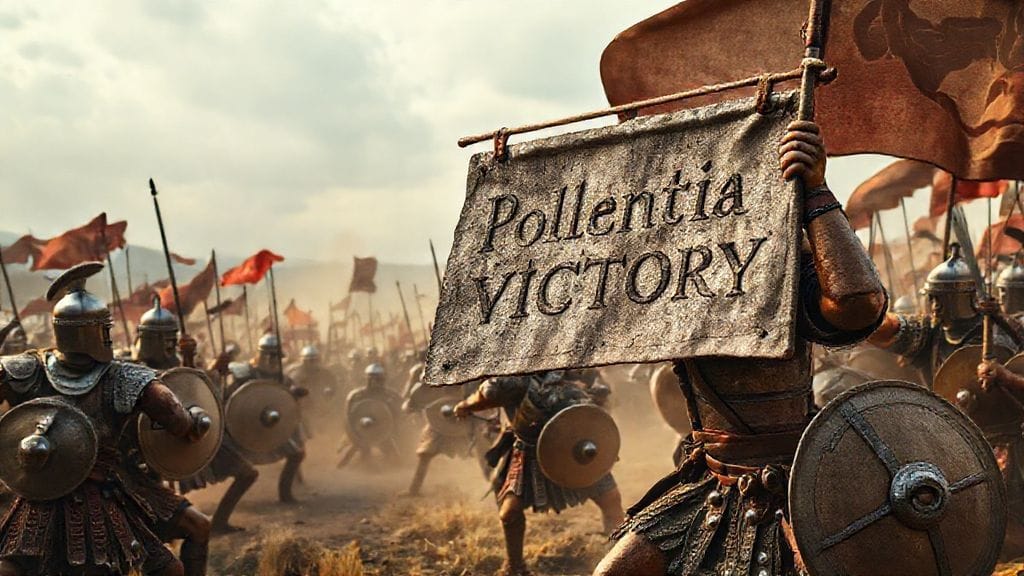
By 1014, the war had reached a critical stage. Samuel, now an older man but still fiercely committed, decided to attempt a decisive defensive stand. He fortified the passes near the village of Kleidion (or Belasitsa) in the Struma valley, constructing wooden palisades, earthworks, and traps to block Basil’s army from advancing deeper into Bulgarian territory. If he could halt the imperial advance there, he might buy time to reorganize his realm and perhaps open new diplomatic possibilities. Basil, in contrast, saw in Kleidion an opportunity to crush Bulgarian resistance in a single, shattering blow. The stage was set for the most infamous day in the entire basil ii conquest of bulgaria.
The Battle of Kleidion, 1014: A Day of Blinding and Legend
The morning of July 29, 1014, fell hot and heavy on the hills above the Struma River. Basil’s army, weary from its approach, found its path blocked by a formidable line of Bulgarian fortifications. Wooden palisades bristled along the slopes, reinforced by ditches and earthworks. Behind them, Samuel’s troops waited with bows, spears, and the grim determination of men defending their last shield-wall. For days, the Byzantines hurled themselves against these defenses, only to be repelled with bloody losses.
Basil, however, was not merely a brute-force commander. He sent one of his trusted generals, Nikephoros Xiphias, on a bold flanking maneuver. Leading a picked force of troops, Xiphias slipped through mountain paths guided by local knowledge—whether willingly given or bought remains unclear—and descended behind the Bulgarian positions. At the crucial moment, while Basil maintained pressure from the front, Xiphias’s men crashed into the Bulgarian rear. The well-prepared defensive line suddenly found itself assaulted from two sides.
Panic spread. The narrow terrain that had once favored the defenders now became a trap. Many Bulgarian soldiers were cut down; many more tried to flee, only to be cut off or to throw down their arms in surrender. According to the Byzantine chronicler John Skylitzes, Basil’s forces captured an astonishing 14,000 to 15,000 prisoners that day—numbers that modern historians debate but which still suggest a staggering defeat. Samuel himself barely escaped, carried away from the battlefield, stunned and heartbroken, by loyal retainers.
What followed cemented Basil’s fearsome reputation for all time. Skylitzes, echoed by later sources, claims that Basil ordered the prisoners divided into groups of one hundred. In each group, ninety-nine men were blinded, and one was left one-eyed to lead the others back to their ruler. Imagine the sight: columns of mutilated men stumbling over rocky ground, guided by their half-sighted comrades, making their way back to a king who had gambled everything on this defensive stand. When Samuel saw the returning survivors—if the story is accurate—he is said to have collapsed in horror and died two days later, his heart broken by the scale of the loss.
Some modern scholars question the exact numbers; perhaps fewer prisoners were taken, perhaps the blinding was less systematic. Yet even if details are inflated, the core truth remains: Basil chose a punishment meant to break not just an army, but a people’s will to resist. The basil ii conquest of bulgaria acquired, at Kleidion, a brutal theatricality—violence as message. “Basil the Bulgar-Slayer” was not simply a name bestowed by later storytellers; it was a persona shaped in the furnace of such acts. The victory at Kleidion did not end the war—Bulgarian resistance continued under Samuel’s successors—but it shattered its backbone.
After Samuel: Fragmenting Leadership and Relentless Campaigns
Samuel’s death in 1014 opened a dangerous void at the heart of the Bulgarian state. His successors, most notably his son Gavril Radomir and later his cousin Ivan Vladislav, inherited not only a kingdom under existential threat but also the psychological burden of Kleidion. The once-unified determination that had held Samuel’s realm together began to splinter under stress and suspicion. Internal rivalries, simmering beneath the surface for years, broke into the open.
Basil, ever the opportunist when it came to enemy weakness, pressed his advantage with unrelenting vigor. Year after year, he marched into Bulgarian territory, besieging towns, capturing fortresses, and offering favorable terms to local leaders willing to defect. Some Bulgarian nobles, calculating that further resistance would only bring more devastation, began to accept Byzantine titles and lands in exchange for loyalty. Others continued to fight, leading to sharp, regionalized pockets of resistance rather than a single, coordinated front.
In this phase of the basil ii conquest of bulgaria, diplomacy and coercion went hand in hand. Basil recognized that military victories had to be followed by political integration if they were to be lasting. He sent letters, gifts, and threats to regional chieftains, promising them a place in the imperial order—so long as they abandoned hopes of an independent Bulgarian throne. Some agreed, surrendering cities or opening their gates at night to imperial forces. Others refused and paid with their lives and lands.
Ivan Vladislav, who took the throne after Gavril Radomir was murdered (likely by Vladislav himself, in a grim sign of internal decay), briefly revived Bulgarian resistance. He repelled some Byzantine advances and even tried to negotiate with neighboring powers. But in 1018, during the siege of Dyrrhachium on the Adriatic coast, Ivan Vladislav was killed in battle. With his death, the last serious hope of a unified Bulgarian counteroffensive vanished. What remained were isolated strongholds and exhausted leaders, facing an emperor who would not rest until their banners were lowered.
The Final Submissions: Fortresses, Oaths, and the Year 1018
The year 1018, which forms the formal endpoint of the basil ii conquest of bulgaria, did not begin with fanfare. It unfolded as the last act of a long, increasingly one-sided drama. With Ivan Vladislav dead, his widow Maria and their sons faced a stark choice: continue a war they were almost certain to lose, or negotiate with Basil II. The emperor, encamped in the Balkans and still moving with his army from one strategic point to another, made it clear that he was prepared to accept their submission—and to grant them honorable treatment as Byzantine nobility.
One by one, Bulgarian fortresses capitulated. Cities such as Ohrid, once a proud capital and patriarchal seat, opened their gates to imperial administrators. Maria and her children surrendered, receiving lands and titles. Other magnates followed suit, some traveling personally to Basil’s camp, others sending envoys carrying keys and formal declarations of loyalty. Each submission was a small ceremony; together they formed the quiet, relentless cascade that marked the end of the First Bulgarian Empire.
The winter scene we imagined at the beginning—nobles trudging through frost to Basil’s tent—is rooted in these real processes of negotiated surrender. The emperor, though capable of terrible severity, understood that mercy, too, could be a weapon. He allowed many Bulgarian leaders to retain their estates under imperial authority. He refrained from wholesale massacres or mass deportations that might have sparked fresh waves of rebellion. Instead, he sought to turn former enemies into pillars of a new, broader Byzantine order encompassing the Bulgarian lands.
In symbolic terms, 1018 was the moment when the double-headed eagle of Byzantium unfurled its wings fully over the Balkans. The Bulgarian imperial title disappeared; the territory that had once formed the core of a rival state was now reorganized into Byzantine themes—military-administrative districts answerable to Constantinople. The basil ii conquest of bulgaria, long a brutal, grinding contest, ended not with utter devastation but with a careful folding of a conquered people into an imperial structure. Yet behind the imperial decrees and celebratory processions, deep currents of loss, resentment, and adaptation swirled among the Bulgarians themselves.
Administering Victory: Themes, Taxes, and the Soft Edge of Empire
Conquest is one thing; administration is another. Basil II understood that if his victory over Bulgaria was to endure, it had to be translated into a stable mode of governance. Rather than ruling the newly conquered territories as devastated provinces under constant military occupation, he adopted a more nuanced approach, combining imperial control with a degree of local autonomy.
The Bulgarian lands were reorganized into several themes, including the themes of Bulgaria, Sirmium, and Paristrion. These were headed by Byzantine military governors (strategoi), but Basil allowed a significant number of local elites to retain positions of influence. Former Bulgarian boyars received imperial titles such as patrikios or protospatharios, bridging the gap between their old status and the new imperial hierarchy. In this way, the political energy that had once fueled resistance was partially redirected into service of the empire.
Taxation was a delicate issue. Basil, often portrayed as a penny-pinching ruler, maintained rigorous control over imperial finances. Yet in the Bulgarian territories, he initially showed restraint. In many cases, he allowed traditional tax structures and landholding patterns to persist, avoiding sudden, disruptive reforms that might have provoked rebellion. Over time, Byzantine land laws and fiscal systems would reshape property relations, but Basil’s first priority was stability, not immediate extraction.
This relatively pragmatic policy helps explain why, after 1018, the region did not erupt in widespread revolt. The basil ii conquest of bulgaria had been harsh, but the post-conquest order was not constructed solely on terror. In allowing Bulgarian church structures to survive in an adjusted form, permitting local elites a share of power, and refraining from overt cultural suppression, Basil laid the groundwork for a complex coexistence. The empire extended its legal and administrative framework over new lands, yet in many villages, daily life continued with a familiar rhythm—fields plowed, markets held, marriages arranged—albeit under new banners fluttering from the fortresses above.
Faith, Patriarchs, and the Orthodox World Reordered
Religion lay at the heart of both Bulgarian and Byzantine identity, and no conquest could be complete without addressing the question of the church. Before 1018, Bulgaria had its own autocephalous patriarchate, recognized at various moments by Constantinople. This ecclesiastical independence was more than a spiritual matter; it was a declaration that Bulgaria stood as a Christian empire in its own right, not as a mere client of the “Roman” emperor in New Rome.
After Basil’s conquest, the Bulgarian patriarchate at Ohrid could not continue in its existing form. Yet here again, Basil favored adaptation over simple destruction. The patriarchate was downgraded to an archbishopric, but crucially it remained autocephalous—self-governing—under the aegis of the Constantinopolitan patriarchate. The Archbishopric of Ohrid thus became a kind of compromise institution: no longer the head of a fully independent Bulgarian church, yet not simply another provincial see either.
This decision had profound implications. It signaled to the Bulgarian clergy and faithful that their traditions, language in liturgy, and local saints would not be erased. The Slavonic liturgy continued to be used widely; monastic communities, though now under imperial oversight, retained a measure of autonomy. The transition from a Bulgarian to a Byzantine political order was thereby softened by a continuity of religious practice. The basil ii conquest of bulgaria, though forged with steel, was ultimately cemented with incense and chant.
Within the broader Orthodox world, this reordering confirmed Constantinople’s primacy over the Balkans. The empire could now present itself not only as the political heir of Rome but as the undisputed spiritual center of Eastern Christendom from the Aegean to the Danube. Still, beneath this façade of unity, identity markers persisted. Bulgarian believers prayed to Christ and the Theotokos in ways remarkably similar to their Byzantine neighbors; yet they did so conscious of a distinct lineage, of kings and patriarchs who had once stood as equals rather than subjects.
Life Under the Double-Headed Eagle: Everyday Consequences for Bulgarians
For peasants in the valleys of the Struma, the Iskar, and the Vardar, the basil ii conquest of bulgaria was not an abstract geopolitical event. It unfolded in small, intimate disruptions: the arrival of a new tax collector, the replacement of a local garrison, the appearance of Greek-speaking officials in market towns. Yet for many, especially those far from major fortresses, change came slowly—more a gradual shift in the language of authority than a sudden rupture in daily tasks.
Fields still needed to be tilled; flocks still required grazing. The village assemblies that had long governed local disputes continued to meet under trees or in the shadow of churches. But when land disputes escalated, they were now appealed to imperial judges versed in Roman law. Over time, this introduced new legal concepts and procedures into Bulgarian society. Contracts, wills, and property records increasingly bore the stamp of Byzantine legal formulas, fusing local custom with imperial jurisprudence.
In the towns, the impact was more visible. Byzantine coinage, adorned with imperial portraits and religious imagery, circulated more widely. Trade routes linking the Aegean to the Danube grew safer under unified rule, allowing merchants to move goods more freely. Some Bulgarian artisans and traders prospered, learning Greek to better navigate the imperial bureaucracy and market networks. Others resented the growing presence of outsiders and the subtle erosion of their traditional privileges.
Culturally, a complex negotiation unfolded. Greek became the language of administration and high culture, while Old Church Slavonic remained that of liturgy and everyday devotion. Bilingualism expanded among elites, creating a class that could serve as intermediaries between local populations and Constantinopolitan authorities. Intermarriage between Bulgarian nobles and Byzantine families slowly wove personal ties across the former frontier. Yet memories of war, blinding, and defeat did not vanish. In village songs and monastic chronicles, the old kings and battles were preserved—muted by fear at times, but never entirely silenced.
Empire at its Zenith: How the Conquest Reshaped Byzantium
For the Byzantine Empire, the annexation of Bulgaria represented more than just a territorial gain. It marked the apex of Middle Byzantine power, a moment when the empire’s frontiers stretched in a broad arc from southern Italy across the Balkans, through Asia Minor, and deep into the Caucasus. With the Bulgarian threat neutralized, Constantinople no longer faced a major rival in the European hinterland. The Danube frontier, once a desperate line of defense, now lay securely under imperial oversight.
The conquest brought significant resources into imperial hands. Bulgarian lands were fertile, rich in grain, livestock, and manpower. New recruits from the Balkans swelled the imperial armies, many serving in frontier garrisons or in campaigns further afield. The tax revenues from these territories helped fill the imperial treasury, enabling Basil and his successors to maintain a professional standing army—a rarity in medieval Europe.
Politically, Basil’s success strengthened the imperial ideology of universal rule. Emperors could now more credibly claim that the “Roman” empire embraced the civilized Christian oikoumene of the Eastern Mediterranean. One can see this confidence in court ceremonial, in art, and in the writings of contemporary intellectuals. Psellos, writing slightly later, would look back on Basil’s reign as an era of military rigor and restored imperial prestige, even as he criticized the emperor’s personal harshness. The basil ii conquest of bulgaria thus became a key reference point in Byzantine self-understanding: proof that disciplined leadership and steadfast policy could reverse earlier losses and reassert dominance.
Yet there was a shadow to this brilliance. Basil poured enormous energy into maintaining direct, personal control over administration and the army. He left no strong institutional mechanisms to manage the expanded empire once he died in 1025. Subsequent emperors inherited a vast, powerful state but lacked Basil’s disciplined temperament. Over the next decades, the gains in Bulgaria would be slowly undermined by internal mismanagement, court intrigues, and new external threats. Still, for a brief, shining generation, Constantinople stood astride the Balkans as an unchallenged hegemon—and it was the conquest of Bulgaria that made this possible.
Enemies at the Gate: The Bulgarian Frontier and New Threats
While Basil had focused relentlessly on Bulgaria, the wider geopolitical landscape was shifting. In the west, Latin powers in southern Italy and Venice watched Byzantine advances with a mixture of respect and apprehension. In the north, the Hungarian kingdom grew in strength, eyeing the same Danubian plains that now flew imperial banners. In the east, Seljuk Turkish tribes were beginning to probe the edges of the Anatolian plateau, though their full force would not be felt until after Basil’s death.
The incorporation of Bulgaria altered the empire’s defensive geometry. The Danube became once more a strategic frontier, patrolled by imperial forces and fortified towns. This brought Byzantium into more direct contact—and eventually conflict—with northern powers, including the emerging principalities of the Rus’ and the steadily consolidating Kingdom of Hungary. The Balkans, now unified under Byzantine rule, served both as a buffer and as a corridor, channeling invasions and trade alike.
In the short term, the basil ii conquest of bulgaria improved imperial security. Raids from the north could be more effectively monitored and repelled from a position of strength. But in the long term, the push of Hungary and the restless energy of nomadic groups on the steppe, such as the Pechenegs, created new pressures on the empire’s northern flank. The very wealth and strategic depth gained from Bulgaria attracted predatory interest. When later emperors proved less capable than Basil, those new frontiers would become fault lines.
For now, though, in the decades immediately following 1018, the Balkans experienced a relative lull in large-scale warfare. This lull allowed for limited economic and cultural integration. Trade routes flourished, and imperial authority remained respected, if sometimes resented. It would be another century before a new, resurgent Bulgarian state would emerge to challenge Byzantine rule, proving that conquest, however triumphant, rarely closes a chapter forever.
Myth-Making and Memory: Basil the Bulgar-Slayer
As the decades turned into centuries, Basil II’s image took on a life of its own. In Byzantine chronicles and later popular memory, he became less a man and more a symbol: the hard, uncompromising emperor who broke the Bulgarians and restored Roman glory. The sobriquet “Bulgar-Slayer” (Boulgaroktonos) crystallized this mythic persona. The blinding at Kleidion, in particular, was retold again and again, each retelling sharpening Basil’s silhouette as a figure of almost inhuman severity.
Yet even in Byzantine sources, there is complexity. Michael Psellos, a philosopher-statesman writing in the 11th century, admired Basil’s military accomplishments but criticized his lack of refinement and intellectual interests. To Psellos, Basil was like an iron statue of Ares, impressive but ungraceful. This ambivalence hints at a broader tension: the empire needed heroes of conquest, yet it also prided itself on culture, theology, and law. Basil, in many ways, represented one half of the Byzantine ideal turned up to an extreme.
In Bulgarian memory, the story was, unsurprisingly, very different. The basil ii conquest of bulgaria was remembered not as a necessary reordering but as a national catastrophe inflicted by a ruthless invader. Chronicles and later folklore preserved the names of Samuel, Gavril Radomir, and later rebels as martyrs and champions. The blinding of prisoners at Kleidion became a paradigm of foreign cruelty. Even when, centuries later, Bulgarians found themselves under Ottoman rule, memories of Byzantine domination lingered alongside newer traumas, creating a layered, often contentious historical consciousness.
Modern historians have tried to peel back these layers, separating fact from legend. They debate, for instance, whether Basil personally ordered every detail of the blinding, or whether its scale was exaggerated for dramatic effect by chroniclers seeking a neat moral narrative. Some emphasize the strategic logic behind Basil’s policies; others focus on the human cost and the cruelty of his methods. In this interplay of perspectives, Basil II emerges once more as both conqueror and cautionary figure, his legacy shaped as much by memory as by the events themselves.
Echoes Through the Centuries: Bulgarian Identity After 1018
The fall of the First Bulgarian Empire did not mean the end of the Bulgarian people. Identities in the medieval Balkans were resilient, woven from threads of language, faith, custom, and shared memory that could survive political eclipse. Under Byzantine rule, Bulgarian communities preserved their sense of difference, sometimes quietly, sometimes in open defiance.
Monasteries became key repositories of this memory. In scriptoria tucked away in mountain valleys, monks copied older texts, recorded local saints’ lives, and compiled chronicles that kept alive the stories of Simeon, Samuel, and the great battles against the Byzantines. The Archbishopric of Ohrid played a significant role as well, navigating its ambiguous position within the Byzantine church while nurturing a distinct spiritual tradition that spoke in the familiar cadences of Slavonic. Even as Greek influence grew in urban centers, village churches echoed with chants and prayers that carried a specifically Bulgarian echo.
Over time, resistance took new forms. In the late 11th and 12th centuries, revolts erupted in different parts of the former Bulgarian lands, sometimes linked to broader unrest against unpopular imperial policies. The most famous of these culminated in the uprising of the Asen and Peter brothers in 1185, which led to the establishment of the Second Bulgarian Empire. When that new Bulgarian state emerged, it drew explicitly on the legacy of the first empire that Basil had conquered. Medieval charters and royal narratives invoked the memory of Simeon and Samuel, framing the new kingdom as a restoration rather than an innovation.
Thus, the basil ii conquest of bulgaria became a foundational trauma that later generations transformed into a source of identity and purpose. Defeat, paradoxically, helped galvanize a shared historical consciousness. The story of falling under Byzantine rule and later rising again gave Bulgarian national narratives a dramatic arc spanning centuries. Even in modern times, 1018 and the Battle of Kleidion still surface in discussions of national history, reminding us that medieval events continue to cast long shadows over present-day understandings of self and other in the Balkans.
Historians, Debates, and the Moral Weight of Victory
Today, the basil ii conquest of bulgaria sits at the intersection of several historiographical debates. Was Basil II a visionary strategist who secured his empire’s frontiers through necessary, if harsh, measures? Or was he an exemplar of the destructive potential of unchecked military power, blind to the long-term consequences of his brutality? The answer, most historians would say, lies somewhere between these poles.
Some scholars, such as those working in the tradition of 20th-century Byzantine studies, emphasize Basil’s role in reinforcing central authority and stabilizing the empire after a period of aristocratic overreach. They point to the relative peace and prosperity that followed his reign, at least for a time, as evidence that his policies had merit. Others, more attuned to the voices of subject peoples and to the cultural costs of conquest, stress the trauma inflicted on Bulgaria and the limited ability of imperial structures to truly integrate conquered identities without periodic explosions of resistance.
Modern Bulgarian historians, naturally, approach Basil with suspicion or outright hostility, seeing in him the architect of national subjugation. Yet even in Bulgarian scholarship, there is recognition of his formidable qualities as a leader and the complex ways in which Byzantine rule influenced Bulgarian culture, law, and religion. The relationship was never simply one of oppressor and oppressed; it was also one of borrowing, adaptation, and mutual shaping. As Dimitri Obolensky argued in his influential concept of the “Byzantine Commonwealth,” the empire and its neighbors often occupied a shared cultural space, even when their political relations were antagonistic.
Ultimately, the moral weight of Basil’s victory cannot be neatly categorized. It brought an era of acute warfare to a close, at least temporarily, and created conditions for economic and cultural development under a unified political authority. It also entailed acts of extreme violence, the suppression of a sovereign kingdom, and the imposition of external rule over a people who had their own imperial dreams. The historian’s task is not to render a final verdict, but to hold these truths together: to see Basil II as both state-builder and destroyer, both guarantor of order and source of suffering.
Conclusion
Standing at the end of this long narrative, one can look back at 1018 and see it not as a simple ending, but as a pivot point in the history of southeastern Europe. The basil ii conquest of bulgaria brought to a close the independent life of a powerful medieval state that had once challenged Constantinople for dominance. In its place, a new imperial geography arose, with the Byzantine eagle spreading its wings over mountains and rivers that had previously flown the banners of Samuel and his forebears.
The journey to that moment was anything but inevitable. It wound through the childhood anxieties of a prince-turned-emperor, the defiant rise of a mountain kingdom, the clang of steel at Trajan’s Gate and Kleidion, and the quieter, more insidious battles of diplomacy and assimilation that followed. It revealed Basil II as a figure of iron determination—ascetic, relentless, at times terrifying—whose name would be etched in both glory and infamy. It also brought forth the heroism and suffering of countless unnamed Bulgarians who fought, fled, submitted, or endured.
In the aftermath, Byzantine administration, Orthodox faith, and local traditions intermingled to create a complex tapestry of life under empire. Bulgarian identity, far from being extinguished, adapted and endured, eventually reasserting itself in new political forms. The conquest reshaped Byzantium too, expanding its reach while sowing the seeds of future overextension. Today, the story resonates not only as a tale of medieval warfare but as a reminder of how power, memory, and identity intertwine across the centuries.
Perhaps that is the enduring lesson of Basil II and Bulgaria: that victories are never purely military, defeats never entirely final, and the legacies of both conquerors and conquered persist long after the last fortresses fall silent and the snow has melted from the high passes.
FAQs
- Who was Basil II?
Basil II was Byzantine emperor from 976 to 1025, a long-reigning ruler known for his military focus, frugal lifestyle, and iron grip on imperial power. He spent much of his reign in the field, campaigning against internal rebels, Arabs, and above all Bulgarians, and is widely regarded as one of Byzantium’s most effective soldier-emperors. - What is meant by the basil ii conquest of bulgaria?
The basil ii conquest of bulgaria refers to the long series of campaigns, political maneuvers, and administrative reforms by which Basil II brought the First Bulgarian Empire under Byzantine control, culminating in the formal submission of Bulgarian nobles and territories in 1018. - What happened at the Battle of Kleidion in 1014?
At Kleidion, Basil II’s forces outflanked and destroyed a major Bulgarian defensive position in the Struma valley, capturing thousands of prisoners. According to Byzantine sources, Basil ordered most of them blinded, sending them back to Tsar Samuel, who supposedly died of shock shortly afterward. The battle was a turning point that severely weakened Bulgarian resistance. - Did Basil II completely destroy Bulgarian culture?
No. While he abolished the independent Bulgarian monarchy and integrated Bulgarian lands into the Byzantine Empire, he allowed many local elites to retain some status, preserved an autocephalous church at Ohrid, and tolerated the continued use of Slavonic in liturgy. Bulgarian culture and identity survived and later contributed to the rise of the Second Bulgarian Empire. - Why was Bulgaria such an important target for Byzantium?
Bulgaria controlled key routes across the Balkans and had long been a powerful rival state capable of threatening Constantinople and imperial holdings in Greece. Bringing Bulgaria under control secured the empire’s European hinterland, increased tax revenues and manpower, and reinforced Byzantium’s claim to imperial supremacy in the Orthodox world. - How did ordinary Bulgarians experience the conquest?
Most ordinary Bulgarians experienced the conquest through local changes: new garrisons, different tax collectors, and the gradual appearance of Greek-speaking officials and legal practices. While warfare and reprisals caused suffering, especially near front lines and strategic fortresses, many aspects of daily rural life—agriculture, village assemblies, and parish worship—continued with adaptations under the new imperial framework. - What happened to the Bulgarian church after 1018?
The independent Bulgarian patriarchate was demoted to the rank of archbishopric, centered in Ohrid, but remained autocephalous. This meant it kept a degree of self-governance while being integrated into the Byzantine ecclesiastical hierarchy, helping maintain a distinct Bulgarian religious identity under imperial rule. - Is the story of Basil blinding 14,000 Bulgarians true?
The blinding is reported by key Byzantine chroniclers such as John Skylitzes, who claim that Basil blinded about 14,000–15,000 prisoners after Kleidion. Modern historians debate the exact numbers and whether the account was exaggerated, but most accept that some large-scale blinding occurred, contributing to Basil’s fearsome reputation. - How long did Byzantine rule over Bulgaria last after 1018?
Byzantine control over the core Bulgarian territories lasted for roughly 150–170 years, though it was periodically challenged by local revolts and external pressures. The Second Bulgarian Empire emerged after the uprising of Asen and Peter in 1185, eventually reestablishing Bulgarian political independence. - Why is Basil II important today?
Basil II remains significant as a symbol of medieval imperial power, a focal point in both Byzantine and Bulgarian historical memory, and a case study in how conquest reshapes societies. His reign illustrates the possibilities and costs of highly militarized rule and continues to inform debates about empire, identity, and historical memory in southeastern Europe.
External Resource
Internal Link
Other Resources
- Encyclopaedia Britannica – general search for the exact subject
- Google Scholar – academic search for the exact subject
- Internet Archive – digital library search for the exact subject