Table of Contents
- Dawn over Nottinghamshire: Setting the Stage for a Final War of the Roses Battle
- From Bosworth to Rebellion: The Fragile Throne of Henry VII
- A Pretender Called King: Lambert Simnel and the Shadows of York
- Margaret of Burgundy and the Exiled Yorkists: A Court of Plots
- Mustering an Invasion: Irish Lords, German Mercenaries, and English Malcontents
- The Road to East Stoke: Marches, Miscalculations, and Missed Chances
- The Morning of 16 June 1487: Terrain, Weather, and the Men Who Waited
- Lines Drawn on the Ridge: Armies, Weapons, and Commanders at Stoke Field
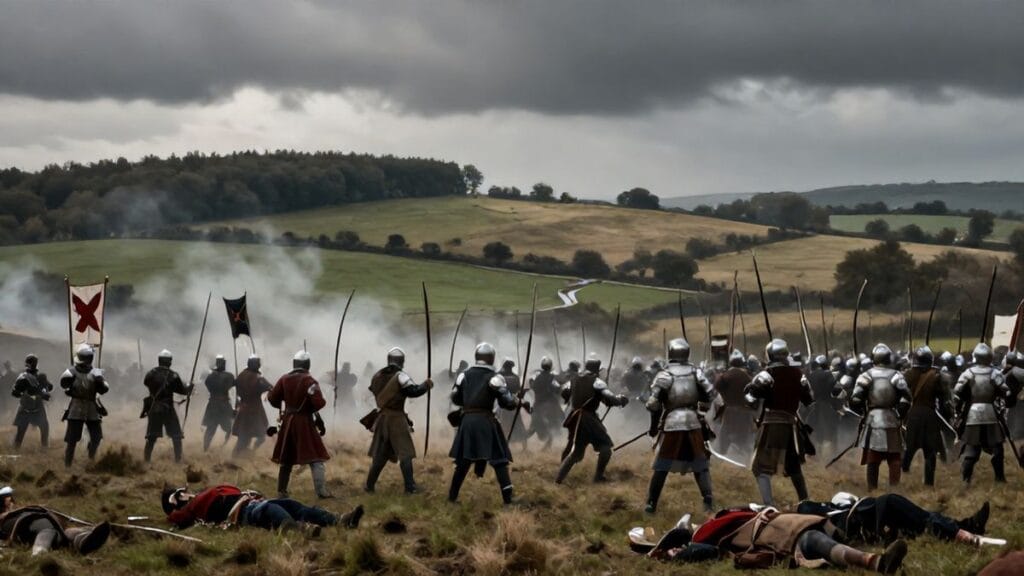
- The Battle of Stoke Field Unleashed: Arrows, Gunpowder, and the Clash of Lines
- Collapse on the Cliff Edge: Rout, Slaughter, and the Fate of the Yorkist Leaders
- Aftermath in the Fields: Corpses, Captives, and a Child “King” Spared
- Henry VII Consolidates Power: Clemency, Punishment, and Propaganda
- Lives of the Common Soldiers: Irish Kerns, English Archers, and the Human Cost
- The Battle of Stoke Field in the Long Arc of the Wars of the Roses
- Local Memories and Lost Voices: East Stoke in the Shadow of 1487
- Archaeology and Evidence: What the Ground Still Whispers
- Myths, Misnamings, and Historical Debates about Stoke Field
- Conclusion
- FAQs
- External Resource
- Internal Link
Article Summary: On 16 June 1487, the quiet fields near East Stoke in Nottinghamshire became the stage for the last pitched engagement of the Wars of the Roses: the battle of stoke field. This article traces the fragile beginnings of Henry VII’s Tudor rule and the Yorkist resentment that fueled a daring invasion fronted by the child impostor Lambert Simnel. It explores the political intrigues of Margaret of Burgundy and the exiled Yorkist elite, the recruitment of Irish soldiers and German mercenaries, and the slow, tense march that brought two visions of England into collision on a windy ridge above the River Trent. Through cinematic narrative, we follow commanders, common soldiers, and local villagers as the battle of stoke field unfolds in arrow storms, cannon smoke, and brutal hand-to-hand combat along the cliffs. The consequences rippled far beyond the bloodied slopes: Henry’s regime hardened, the remaining Yorkist leadership was shattered, and dynastic civil war, at last, began to ebb. Yet the memory of the battle of stoke field was long overshadowed by Bosworth, leaving a quieter, more uneasy legacy in the surrounding countryside. Drawing on chronicles, later scholarship, and archaeological hints, this account restores the drama and pathos of a confrontation often described as the true full stop to the Wars of the Roses. In doing so, it reveals how the battle of stoke field was not only a military victory but a crucible in which the early Tudor state was tempered.
Dawn over Nottinghamshire: Setting the Stage for a Final War of the Roses Battle
The morning of 16 June 1487 broke over East Stoke, Nottinghamshire, with a deceptive serenity. Low mist clung to the folds of the land, softening hedgerows and muffling the distant sound of marching feet. To most of England, this would have been just another summer day, another harvest approaching, another Sunday soon to be heard through church bells and murmured prayers. Yet along the ridge above the River Trent, where fields sloped dangerously down toward the water and the village clustered around its church, England’s long season of dynastic bloodshed was moving toward a final, ferocious crescendo: the battle of stoke field.
By then, the Wars of the Roses had dragged on, in fits and starts, for over three decades. Generations had come of age in a kingdom where kings could be toppled on the strength of a single campaign, where noble houses remembered insults more fiercely than they cherished treaties, and where allegiance could be as transient as the weather. The names “Lancaster” and “York” had become banners under which grievances, ambitions, and ancient feuds marched. Yet, after Richard III’s defeat and death at Bosworth in 1485, many believed the matter settled. Henry Tudor, a man whose claim to the throne had been tenuous at best, had raised his standard, triumphed, and married Elizabeth of York. Symbolically, red rose and white were united in his new emblem; in practice, the wounds of civil strife were far from healed.
In this world of uncertainty, rumors were weapons as sharp as any sword. Whispers spread through taverns and churches that the true Yorkist heir lived, hidden away or imprisoned, waiting to be restored. The north of England, long a stronghold of Yorkist loyalty, smoldered with discontent at what some saw as a Welsh upstart occupying the throne. Among foreign courts—especially that of Margaret of Burgundy, sister to two dead Yorkist kings—the fall of Richard III was not the end but an intolerable affront begging for redress.
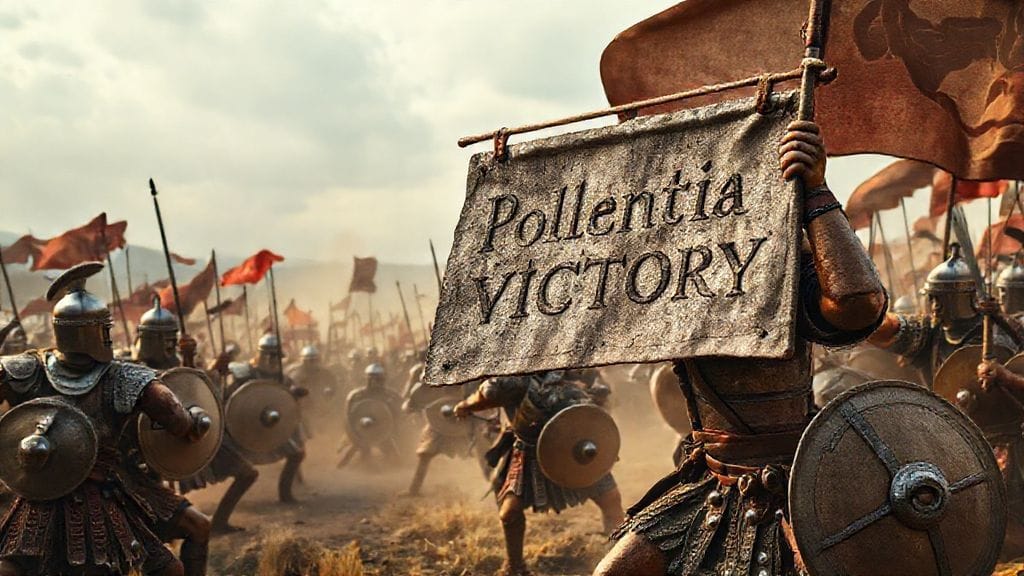
So on that June morning, Henry VII’s soldiers, hardened veterans of Bosworth and smaller clashes since, stood in ordered ranks, ringed by banners fluttering in the breeze, their pikes angled like a stand of metal reeds along the high ground. Facing them, drawn up on a slightly lower position along the ridge’s reverse slope, were the remnants of a daring invasion force: Irish kerns in their light tunics, German Landsknechte in distinctive slashed garments, and grim-faced English Yorkists who had wagered everything on one last battle. Between them lay not simply the field of East Stoke, but the question of whether the new Tudor monarchy would survive its infancy.
The ground itself would matter. The undulating landscape, the steep drop toward the Trent, the narrow lanes threading through cornfields and enclosures—all of this would shape the struggle to come. In later centuries, local lore would talk of “Red Gutter,” a ravine where fleeing men were cut down in such numbers that the brook there ran thick with blood. Whether exaggerated or not, the story captures a brute truth: this was not a gentleman’s war fought at arm’s length. It was a vicious, close-quarters encounter in which pride, legitimacy, and fear drove men to fight long past the point where hope should have failed.
From that dawn onward, the battle of stoke field would be remembered—when it was remembered at all—as the last pitched battle of the Wars of the Roses, the moment when the Yorkist cause finally broke against the hard stone of Tudor determination. Yet in 1487, nothing was yet certain. In the early light, knights adjusted their harness, archers flexed bowstrings, and Irish warriors fingered their long knives. A boy, dressed as a king he was not, waited to see whether his borrowed crown would hold or shatter. And England, already weary from years of upheaval, once again edged toward catastrophe.
From Bosworth to Rebellion: The Fragile Throne of Henry VII
To understand how East Stoke became a battlefield, one must step back to a different field, two years earlier, near Bosworth in Leicestershire. On 22 August 1485, Henry Tudor—an exile with a modest army stiffened by French mercenaries and disaffected English lords—faced King Richard III. Richard’s death in that battle, his crown allegedly found in a thornbush and placed upon Henry’s head, has long commanded the greater share of popular memory. Bosworth seemed decisive, dramatic, and clean. Yet real power is rarely secured in a single stroke.
Henry’s claim to the throne was, in legal terms, fragile. His Lancastrian blood passed through his mother, Margaret Beaufort, whose lineage stemmed from a legitimized but once-bastard branch of John of Gaunt’s descendants. His victory at Bosworth owed much to last-minute betrayals—Thomas, Lord Stanley, and his brother William turning their forces at a critical moment against Richard. A king who relies on the timing of others’ treachery to rise knows, in his bones, how precarious loyalty can be.
Upon becoming Henry VII, he set about the urgent work of shoring up his position. He secured his coronation before Parliament met, ensuring that his royal authority seemed to precede any legislative recognition. He carefully dated his reign from the day before Bosworth, theoretically making those who had fought for Richard traitors from the outset. He married Elizabeth of York, daughter of Edward IV, hoping that the union of York and Lancaster would silence grumbling. Yet resentment does not bow to heraldic symbolism quite so easily.
Many Yorkist nobles remained in place, outwardly reconciled but inwardly enraged at the loss of their dominance. The north, having benefited under the patronage of Richard III—who had ruled there as Duke of Gloucester before his accession—felt ignored and even punished. The death of the charismatic Richard left a void that memories quickly filled with heroic exaggeration. To some, Henry Tudor was not a reconciler but a usurper who had overturned the rightful chain of succession.
Henry understood that his vulnerability lay particularly in questions of dynastic legitimacy. Edward IV’s sons—the so‑called Princes in the Tower—had disappeared under Richard’s rule, their fates uncertain but their symbolic power undimmed. Rumors persisted that one or even both of them had survived. Other Yorkist claimants, such as the young Earl of Warwick, languished in Henry’s custody. These living or potentially living heirs were like lit fuses running into the powder magazine of English politics.
In those first couple of years, Henry’s government pursued a careful policy of firmness laced with occasional clemency. Some former supporters of Richard were forgiven and restored; others were watched closely, their estates encumbered with bonds and recognizances to ensure obedience. But the more he tightened financial controls over the nobility, the more he bred resentment. The crown’s need for security collided with the old feudal expectation that great lords should command their own followings without constant royal interference.
Thus by 1487, the kingdom was at once outwardly pacified and inwardly tense. Bosworth had changed the face of the monarchy, but it had not resolved the central conflict: who, in blood and law, truly owned the crown of England. It is in this fraught atmosphere that the figure of Lambert Simnel appeared—a small, unremarkable boy onto whose shoulders would be placed the entire weight of a resurgent Yorkist conspiracy, culminating in the thunder and carnage of the battle of stoke field.
A Pretender Called King: Lambert Simnel and the Shadows of York
The boy at the center of the 1487 crisis was, by all credible accounts, no prince at all. He was known to history as Lambert Simnel, though even his precise origins remain a little hazy. Most sources describe him as the son of a humble tradesman—perhaps a carpenter or an organ-maker—from Oxford or its environs. What made him remarkable was not his birth but his malleability. In a world hungry for a Yorkist savior, his youth and ready obedience were assets.
The key figure in shaping Simnel’s destiny was a priest and schoolmaster named Richard Symonds. Symonds, evidently a passionate Yorkist, may have initially considered passing the boy off as Richard, Duke of York, one of the vanished princes. But that story would have been difficult to sustain at a time when rumor and counter‑rumor about the princes’ fate were already ferocious. Instead, Symonds chose a different identity: that of Edward, Earl of Warwick, the young son of George, Duke of Clarence, and nephew of both Edward IV and Richard III.
The real Earl of Warwick was alive but imprisoned in the Tower of London under Henry VII’s watchful eye. The boy was known to be of limited intellect, often described as feeble-minded. Few had seen him in years. In this fog of absence, a counterfeit Earl of Warwick had room to grow. Symonds taught Simnel the appropriate manners and bearing of a noble youth, schooled him in courtly speech, and then began to circulate the story that the true Warwick had escaped royal custody.
Once the masquerade began, it quickly attracted serious interest. Yorkist sympathizers were desperate for a living symbol around which they could rally. The boy’s lack of personal history became a blank canvas. Those who wished to believe saw in him the surviving branch of the House of York, unjustly disinherited and yearning for restoration. Those who knew better—seasoned plotters and exiled nobles—were not so naïve, but they saw in Simnel a convenient banner. He was, in effect, a human flag of rebellion, disposable but necessary.
The conspiracy soon grew far beyond the ambitions of a single disaffected priest. The story of the escaped Warwick crossed the Channel to the court of Margaret of Burgundy, sister to Edward IV and Richard III. In her nephew’s name—real or pretended—she found a cause. Before long, the boy Simnel would be dressed in royal garments, paraded at foreign courts, and eventually crowned in Dublin as “King Edward VI.” His path to that makeshift throne would lead directly, step by deliberate step, to the bloody encounter at East Stoke.
For Henry VII, the emergence of this pretender was both infuriating and perilous. He responded with a shrewd public demonstration: having the genuine Earl of Warwick paraded in London to discredit the claim that he had escaped. But in politics, truth is rarely enough. In distant Ireland and at the court in Mechelen, where Margaret of Burgundy held sway, few saw the real Warwick. They saw instead opportunity, and in opportunity they saw power. As the chronicler Polydore Vergil later wrote, the boy Simnel “was taken up of certeine principall persons of the nobility, not so much for the love of him as for the hatred of the king.” That hatred would soon be armed.
Margaret of Burgundy and the Exiled Yorkists: A Court of Plots
If the battle of stoke field was the final roar of the Wars of the Roses, then Margaret of Burgundy was one of the last great voices of defiance behind it. Widowed Duchess of Burgundy and sister to two Yorkist kings, she had watched from across the Channel as the house of York was humbled, its heirs killed, imprisoned, or cast adrift. To her, Henry VII’s victory at Bosworth was not a mere shift in English politics; it was the usurpation of her family’s rightful inheritance.
Her court became a gathering point for Yorkist exiles: lords who had lost lands, soldiers who had lost their patron, and ambitious men who saw in her patronage a way back into relevance. Among them were figures who would soon stride onto the battlefield at East Stoke—most notably John de la Pole, Earl of Lincoln. Once favored by Richard III, and perhaps even considered his preferred successor, Lincoln had submitted outwardly to Henry VII after Bosworth. Inwardly, however, he seethed.
Margaret supplied more than moral support. She had access to money and to the military resources of the Burgundian and German principalities. Through her, the conspirators obtained the services of seasoned mercenaries, commanded by the experienced Captain Martin Schwartz, a hardened professional soldier of fortune. These men were no sentimental Yorkist partisans; they were fighters for hire, but well-drilled, disciplined, and formidable.
The duchess also understood the power of symbolism. For a rebellion to succeed, it needed more than swords—it needed a story. The tale of the escaped Earl of Warwick, embodied in the boy Lambert Simnel, offered exactly that. Margaret reportedly welcomed the boy warmly, embraced him as kin, and treated him with the honors due a royal nephew. Whether she truly believed the fiction or merely found it useful is a question we cannot definitively answer. In a sense, it did not matter. Her court’s acceptance of Simnel as “Edward VI” gave the conspiracy a gloss of legitimacy.
Lincoln threw his lot in with this plan, as did other discontented gentlemen. The rebellion that coalesced around them was not a spontaneous outburst but a carefully nurtured project, rooted in years of grievance and exile. They sought allies where Henry was weakest—in Ireland, where the Yorkist name carried enormous prestige thanks to the popular memory of Edward IV’s reign and the earlier patronage of Richard, Duke of York.
As these discussions unfolded in dimly lit chambers and garden walks along the Scheldt, the conspirators plotted an invasion that would bypass Henry’s secure southern ports, rely on Irish support, and strike into the heart of England before the king could fully respond. It was a bold plan, some would say reckless. But after the reversals of Bosworth and the tightening grip of Tudor authority, boldness was all the remaining Yorkists had left.
Mustering an Invasion: Irish Lords, German Mercenaries, and English Malcontents
The next act of the drama shifted to Ireland, where the web of alliances, rivalries, and local power structures created fertile ground for rebellion. The English crown’s control over Ireland was, in the late fifteenth century, partial at best. The Pale around Dublin recognized royal authority, but beyond it Gaelic chieftains and powerful Anglo-Irish families acted largely as semi‑independent rulers.
One such magnate, Gerald FitzGerald, Earl of Kildare, had long-standing Yorkist sympathies. Under Edward IV, the FitzGeralds had prospered, and their loyalty to the white rose lineage was deep. When the Yorkist conspirators brought Lambert Simnel to Ireland, presenting him as the Earl of Warwick and rightful king, they found a willing audience among those who resented Tudor interference. Dublin, in particular, became the stage for a symbolic act that brazenly challenged Henry VII’s authority: the coronation of a boy-king.
In May 1487, within the walls of Christchurch Cathedral, Lambert Simnel was crowned “King Edward VI of England.” The ceremony, replete with church ritual and the trappings of legitimacy, was deliberately provocative. A local account later emphasized the enthusiasm of the city’s leaders and many noble families, who saw this as a chance to restore the Yorkist order and, not incidentally, to reassert their own autonomy. That Simnel was a pretender seemed of secondary importance. What mattered was that he stood as a vessel for their hopes.
The Irish contribution to the coming campaign was not merely political. Kildare and other lords provided soldiers—lightly armed kerns and more heavily armed gallowglasses. The kerns, in particular, were famed for their ferocity and speed, but they fought with minimal armor, often bare‑legged, relying on agility and courage more than protection. It was a style of warfare that had evolved for raids and skirmishes, not necessarily for standing toe‑to‑toe in an English field against massed billmen and archers.
To this Irish core, the conspirators added the professional muscle of Martin Schwartz’s German mercenaries, equipped with pikes, halberds, and breastplates. These soldiers brought the new tactics of continental warfare, honed in the swirling conflicts of the Holy Roman Empire. Together with English Yorkist gentlemen and their retainers—among them Thomas Broughton of Lancashire and Sir Thomas FitzGerald—the invading force took shape as a diverse, multilingual army united only by a common enemy and a precarious cause.
They sailed from Ireland in late spring, landing in the northwest of England, traditionally sympathetic ground for the Yorkist cause. Their route would take them across Lancashire and Yorkshire, gathering what support they could, before turning south and east, hoping to outmaneuver Henry’s mustering royal host. It was a gamble, relying on speed, surprise, and the hope that English malcontents would flock to their banner as they advanced.
Yet the response along their march was cooler than they had imagined. The north was wary; memories of past devastations and failed uprisings lingered. Some local gentry hesitated, judging that Henry VII had already proven too strong at Bosworth to be easily toppled. Others lacked the appetite for another round of civil war. As the rebel army trudged through market towns and across moors, their numbers did not swell as dramatically as Lincoln must have hoped.
Nevertheless, they pressed on. Their confidence lay in the belief that Henry’s throne was brittle and that, once tested in battle, it might shatter. What none of them yet knew was that Henry had been faster, more efficient, and more determined in his preparations than they had anticipated. The converging lines of march would meet on a patch of Nottinghamshire farmland that, until then, had known only the quiet rhythms of plow and harvest.
The Road to East Stoke: Marches, Miscalculations, and Missed Chances
As the rebel column moved deeper into England, its leaders wrestled with the unforgiving arithmetic of rebellion: every day on the road cost money, eroded supplies, and risked desertion. The army’s cohesion rested partly on promises—that local Yorkists would join, that Henry’s support would crumble, that their foreign mercenaries would be paid from the spoils of victory. Each unfulfilled promise gnawed at the fragile confidence keeping the enterprise together.
They entered Yorkshire, a region once deeply loyal to Richard III. Yet even here, the response was tepid. Memories of Richard’s benign rule clashed with the harsh recollection of previous Yorkist defeats. Prominent local magnates, who might once have rallied to the white rose, now watched and waited, unwilling to risk everything on what might prove a doomed gamble. The shadow of Bosworth still lay heavy: many who had fought for Richard had died or been ruined; those who survived were in no hurry to wager their remaining fortunes.
Henry VII, meanwhile, had not been idle. He moved rapidly to concentrate forces, calling loyal lords to his side and mobilizing both his personal household troops and broader levies. The lessons of Bosworth had sharpened his instinct for speed and control. Intelligence about the rebels’ progress flowed into his councils: reports from local officials, intercepted messages, and the wary observations of townsmen fearful of looting by either army.
By early June, the two forces were groping toward one another through the English midlands, like boxers circling, each trying to choose the decisive ground for a blow. The rebel leaders—Lincoln most of all—faced a stark choice. They could turn aside, attempt to melt away into sympathetic regions, or seek negotiation. To do so, however, would be to admit weakness. Instead, they chose the harder path: to press on and seek battle before attrition and disillusionment sapped their strength entirely.
The approach to East Stoke appears, in hindsight, almost inevitable, yet it was built on a chain of smaller decisions. Lincoln steered his army toward the Trent valley, perhaps aiming to slip between royal forces or to find a defensible position where his disciplined mercenaries could show their worth. The geography there offered both danger and opportunity—rising ground along the south bank of the river, broken by ravines and steep slopes, with lanes and hedges that could funnel movement and disrupt formations.
Henry’s scouts, however, were doing their work. They tracked the invaders’ shift toward Nottinghamshire and guided the royal host to intercept. The king himself marched at the head, aware that allowing this rebellion to linger would only invite further enemies. By uniting forces from the south and midlands, he soon had an army that dwarfed the rebel host in size, if not in sheer professional experience.
Somewhere along these roads, in farmhouses commandeered as temporary headquarters, maps—or what passed for maps—were spread on tables. Men argued late into the night over where to stand and fight, who to trust with the vanguard, whether to risk the king’s person near the front lines. The cold facts were that the rebels had come too far to retreat honorably, and Henry had come too far to allow them to slip away. East Stoke, a quiet village by the Trent, lay directly in the path of this collision.
The Morning of 16 June 1487: Terrain, Weather, and the Men Who Waited
On the morning of the battle, East Stoke was still, in many ways, an ordinary village. Its church of St. Oswald stood solid and calm, as it had for generations, its tower a watchful presence over the surrounding fields. The River Trent flowed past, broad and patient, as if indifferent to the human turmoil gathering nearby. Farmers and villagers, caught between fear and curiosity, watched as thousands of armed men spread out along the ridges and lanes they knew so well.
The terrain played a silent but decisive role. The rebel army took position along a ridge to the southeast of the village, near a feature now often associated with the battle: the steep ground that drops down toward the river, fractured by gullies and ravines. This high ground offered initial advantages. From there, archers and handgunners could fire downhill; the approach from the royal side required ascending slopes under fire. Yet the very steepness that made the ridge defensible also made it deadly in retreat. Once committed, any rout would become a slaughter.
Weather, as far as records suggest, was fair—typical of an English June day, perhaps with a light wind moving across the fields, rattling banners and carrying the faint clang of armor. Conditions were dry enough for artillery and archery to be effective, the ground firm underfoot. There would be no muddy quagmire to swallow feet as at some earlier medieval battles; instead, the killing would be clean, fast, and merciless.
In the rebel lines, the mood must have been a grim mixture of hope and dread. The Irish kerns, many of whom had never fought in such a large-scale English engagement, clustered around their chiefs, gripping javelins and swords. The German mercenaries checked their pikes and powder, speaking in harsh, unfamiliar accents. English Yorkist gentlemen walked the ranks, promising rewards, reminding their followers of past Yorkist glories, invoking the names of Edward IV and Richard III as if calling ghosts to their aid.
At the heart of it all, Lambert Simnel—the boy who had been crowned in Dublin—likely stood under guard, more symbol than commander. By one account, he was kept well behind the lines during the battle, his role not to fight but to exist, to remain the living emblem around which the rebellion could claim legitimacy. One imagines him peering out, perhaps from a slight rise or from behind a knot of armed men, trying to comprehend the thunder he had helped unleash.
On the royal side, Henry VII’s forces arrayed themselves with more confidence. They outnumbered the rebels by perhaps two to one, though precise figures are elusive. English archers, still among the finest in Europe, moved into position. Billmen checked the long, hook-bladed weapons that had broken so many knights before them. Artillerymen sighted their small field guns, crude but frightening. The king’s household troops—men who had stood with him at Bosworth—formed a core of hardened veterans.
Among Henry’s commanders were men who had already proved their worth in war: John de Vere, Earl of Oxford, in effect the king’s principal field commander; Jasper Tudor, Duke of Bedford; and others whose loyalty had been purchased, tested, or coerced over the past two years. They understood that this was not merely another skirmish. Lose here, and the Tudor regime might unravel. Win, and the last serious Yorkist challenge could be broken.
Before the first arrow flew, before the first drumbeat signaled advance, there was a hush—the peculiar stillness that often precedes battle, as if the world itself holds its breath. Men looked to their banners, to their neighbors, to the sky. Some muttered prayers; others spat on their palms and tightened their grips. For the villagers of East Stoke, soon to find their fields churned and bloodied, it must have seemed like watching a storm roll in, knowing there was nowhere to hide.
Lines Drawn on the Ridge: Armies, Weapons, and Commanders at Stoke Field
Reconstructing the exact deployment of forces at the battle of stoke field is a challenge that has tested historians for generations. Contemporary chroniclers were more interested in outcomes than precise battlefield diagrams, yet enough clues survive to sketch the essentials. The rebel army, under the overall leadership of John de la Pole, Earl of Lincoln, and sharing high command with Sir Thomas Broughton and Martin Schwartz, formed a compact force along the ridge. Their front line blended Irish and German contingents, backed by English Yorkist men-at-arms and gentry.
Lincoln likely understood that his survival depended on making the most of his professional troops. Schwartz’s mercenaries, veterans of brutal continental wars, would form the backbone, perhaps in the center, where their pikes and discipline could resist frontal assaults. The Irish kerns, agile but lightly equipped, may have stretched along the flanks, ready to harry and exploit any weakness. Behind and among them stood English knights and esquires—men with something intensely personal at stake, their lives and estates staked on the day’s outcome.
On the royal side, Henry entrusted tactical control largely to the Earl of Oxford, the same commander who had led his vanguard to such effect at Bosworth. Oxford arranged the royal host in traditional “battles” or divisions, each with archers to the fore and billmen or spearmen behind. The English longbow, though slowly yielding its primacy to gunpowder and pike, remained a fearsome weapon. At relatively close ranges, volleys of arrows could tear ragged holes in enemy lines, disrupt formations, and sap morale before hand-to-hand clashes began.
Firearms, too, played a role, though not yet decisive. Handgunners and small artillery pieces—falconets and other light cannon—were present on both sides, contributing shock and noise. The crack of gunfire and the boom of guns would have echoed across the Trent valley, mingling with shouted commands and the deep thrum of drumbeats. Men still carried swords and axes forged in the old style, but they fought under a dawning sky of powder smoke.
Henry’s own position on the field has been much discussed. While some accounts suggest he stayed relatively far to the rear, mindful of his critical importance, the very presence of the king near the battle inspired his soldiers. At Bosworth he had risked much; at Stoke, he could ill afford such gambles. Still, he was close enough to feel the day’s danger and to know, as the noises rose and fell, whether his reign would endure.
Lincoln, by contrast, seems to have led from nearer the front. A nobleman of high rank and proud lineage, he had thrown away a comfortable, if diminished, position under Henry in favor of a desperate bid for the crown. Pride and conviction drew him toward the thick of action. For him, there was no safe retreat, no agreeable compromise awaiting him in defeat.
The armies that faced one another that morning embodied two different futures. The royal host represented an emerging centralized Tudor state, increasingly reliant on professional royal service, careful financial control, and a king determined never again to be at the mercy of overmighty subjects. The rebel force stood for an older, more fractured England, where great families and regional loyalties could still dream of remaking kings. The field of East Stoke, with its hedges, slopes, and treacherous ravines, would decide which vision prevailed.
The Battle of Stoke Field Unleashed: Arrows, Gunpowder, and the Clash of Lines
When the first arrows flew, they transformed anxious waiting into chaos. Royal archers, moving forward under Oxford’s orders, loosed volleys at the rebel line. The air filled with the deadly hiss of shafts, their iron heads whirring toward the ridge. Irish kerns, lacking heavy armor, were especially vulnerable. Many fell with little more than a shouted curse or a brief cry, cut down before they had a chance to close.
The rebel leaders could not simply endure this punishment. Under covering fire from their own archers and handgunners, they began to advance downhill to engage the royal host and disrupt its missile fire. This brought Schwartz’s mercenaries and the best of the Yorkist troops into closer range. The clash that followed was brutal: pike against bill, sword against axe, the jarring impact of steel on steel and on flesh.
Accounts of the battle emphasize its ferocity and duration. Unlike some medieval engagements that were decided in a matter of minutes by a single charge or collapse of morale, the battle of stoke field dragged on for hours. One near‑contemporary observer wrote that the “fighting was cruel and deadly, for they would not flee, but rather chose to die in battle.” If the numbers favoring Henry were clear, the resolve of the rebels was equally undeniable.
At closer quarters, the advantages of the royal host slowly asserted themselves. Their archers, having blunted the initial rebel advance, continued to pick at exposed flanks. Royal billmen, more numerous and better supported, pushed and hacked, seeking to break the rebel line. The German pike blocks, while formidable, found themselves pressured from multiple angles, their neat formations strained by the uneven ground and the weight of numbers bearing down on them.
Smoke from arquebuses and small cannon drifted across the fields, stinging eyes, obscuring banners. Commands were shouted and sometimes lost in the din. In the crush, personal valor or cowardice took on immediate significance. A single man holding his ground at a critical moment might keep a line from buckling; another’s sudden flight could open a gap others would exploit.
The Irish troops fought with great courage but suffered terribly. Lightly armored, they were ill‑suited for prolonged stand‑up combat against better-protected English troops with polearms. Many reportedly closed in to use their long knives, a fighting style more suited to ambushes and swift raids than to grinding, attritional collision. The ground was soon slick with blood, littered with broken arrows and discarded equipment.
Yet, for a time, it was not obvious which side would prevail. Henry’s soldiers, despite their numbers, faced experienced mercenaries and desperate men who understood this was their last real chance. Somewhere in the melée, Lincoln urged his troops on, Saber flashing, voice growing hoarse. Schwartz, the hardened German captain, is said to have fought bravely in the thickest press, refusing to yield ground even as casualties mounted around him.
As midday approached, the scales finally began to tip. Weariness set in, especially among the rebels, whose march from the northwest had left them less rested than the royal host. Key officers fell—among them Schwartz, whose death must have sent a shudder through his men. Once their captain was down, the cohesion of the mercenary blocks faltered. The Irish kerns, already battered, began to give way at the flanks.
In that kind of close-run battle, the moment a line breaks can be devastatingly swift. A wobble becomes a gap; a gap becomes a flood. Henry’s troops, sensing their advantage, pressed harder, driving the rebels back toward the ridge and the treacherous slopes beyond. The battle of stoke field, which had for hours been a grim, grinding contest, lurched suddenly toward catastrophe—for one side at least.
Collapse on the Cliff Edge: Rout, Slaughter, and the Fate of the Yorkist Leaders
When the rebel line finally broke, it did so under the worst possible conditions. Pushed back along the ridge, with the River Trent and steep ravines at their rear, the Yorkist army had no easy avenue of withdrawal. What had been a defensive advantage now became a deadly trap. Men tried to hold, to reform ranks, but panic is contagious. Once a critical mass of soldiers turned to run, discipline evaporated.
The rout that followed etched itself into local memory. Fleeing men stumbled down the steep slopes toward the river, their flight choked by hedges, gullies, and ditches. Royal troops pursued, cutting down stragglers, ignoring pleas for mercy in the heat of bloodlust and long-nursed resentment. It was here, according to later tradition, that the ravine known as “Red Gutter” earned its name, supposedly running red with the blood of those who tried to escape.
For the rebel leaders, the collapse spelled doom. John de la Pole, Earl of Lincoln, fought on until he was killed in the chaos. His body, once clad in the rich trappings of high nobility, was found among the heaps of the dead. With him died the most credible remaining Yorkist claimant of full royal blood. Sir Thomas Broughton likewise perished, as did many lesser gentry who had cast their lot with the rebellion.
Martin Schwartz, already mortally wounded in the closing stages of the main clash, lay among his dead German mercenaries, whose discipline had carried them to the bitter end. They had fought as professionals and died as such, their contracts payable now only in remembrance. Irish losses were catastrophic. Many kerns, slowed by exhaustion and the unfamiliar terrain, were cut down before they could reach the comparative safety of the riverbank.
The slaughter did not end with the main pursuit. Once the immediate heat of battle cooled, royal troops scoured the fields, lanes, and thickets for survivors. Some rebels, throwing down weapons, tried to surrender. While some were spared for interrogation or ransom, many others were killed on the spot. The brutality reflected not only battlefield rage but a harsh political calculation: Henry VII needed this rising to be not just defeated but annihilated as a serious threat.
And what of Lambert Simnel, the boy around whom the entire enterprise had been woven? He was captured alive. Accounts suggest he may have been seized while trying to slip away in the company of his guardians or that he was discovered among the rear elements of the rebel force. That Henry’s men recognized him and did not immediately kill him tells us something about how the king intended to handle the narrative that would follow.
As the sun declined, the fields around East Stoke were left to the grim business of aftermath. Wounded men cried out for water, for priests, for mothers who would never hear them. The stench of blood began to rise in the warm air. Local villagers, cautiously emerging from hiding, confronted a landscape transformed into a charnel house. For them, the battle of stoke field was not an abstraction of dynastic politics but the immediate reality of corpses to be buried and land to be cleansed.
The numbers tell a stark story. Rebel casualties were likely in the thousands, with many contemporary estimates putting their dead at between 4,000 and 5,000—a devastating proportion of their already modest force. Royal losses, while not insignificant, were far lighter. The disparity underscored the extent of the rout, and it also served Henry’s purposes in demonstrating the price of resistance.
Aftermath in the Fields: Corpses, Captives, and a Child “King” Spared
In the hours and days after the fighting, East Stoke and its environs bore witness to the slow, methodical work that follows sudden, concentrated violence. Bodies had to be gathered, stripped, identified when possible, and buried. In some cases, mass graves were dug; in others, local churchyards received an unusual influx of the dead. The weight of so many corpses posed not only a spiritual but a practical problem. Decay was swift in June warmth, and disease a constant fear.
Royal officers and clerks moved among the wounded and the corpses, seeking notable figures. The dead Earl of Lincoln was identified and his fate reported back to the king. Other Yorkist gentry were likewise noted, their deaths both an end to individual stories and a line drawn through potential future plots. A few high-ranking captives were taken alive for questioning and, in some cases, eventual execution. Interrogations would have probed the channels of money, communication, and foreign support that had sustained the rebellion.
Lambert Simnel, remarkably, was neither executed nor maimed. Henry VII, ever conscious of image and symbolism, recognized in the captured boy an opportunity. Rather than present himself as a bloodthirsty tyrant, he could show magnanimity. According to Polydore Vergil, Henry, “when he had learned the whole matter, took pity upon the child, and, setting aside indignation, bestowed pardon upon him.” Simnel was put to work first in the royal kitchens as a turnspit and later—so the story goes—promoted to the more comfortable role of falconer.
This handling of Simnel served multiple purposes. It emphasized that the real threat lay not in the boy but in those who had manipulated him. It allowed Henry to appear merciful while still standing firm against rebellion. And it subtly mocked the pretensions of his adversaries: their would‑be king reduced to a servant at the Tudor court, his grand coronation in Dublin turned into a cautionary anecdote. It is astonishing, isn’t it, how the same child who had worn a crown in Christchurch Cathedral now turned spits and tended hawks in the household of the man he had been used to dethrone.
For the local community, life had to resume. Crops still needed tending; livestock still required care. Yet the ground itself had changed. Fields trampled by thousands of feet, scarred by pits and hastily filled graves, would bear the memory of the battle long after the last wounded man died or recovered. Parish records, where they survive, hint at an unusual clustering of burials in the weeks after the fight. Oral traditions, passed down through families, spoke of ancestors who had scavenged armor from the fields or who had helped drag bodies to burial sites.
The royal administration moved quickly to reassert authority. Oaths were renewed, suspected sympathizers scrutinized. Nobles and lesser gentry who had hesitated to support Henry before Stoke now saw the price of equivocation. The broken rebel force left few organized enemies in its wake; what remained was an undercurrent of bitterness and fear, less visible but no less real.
Henry VII Consolidates Power: Clemency, Punishment, and Propaganda
Victory at East Stoke gave Henry VII what Bosworth had started but not finished: the credible claim that his rule was no passing accident of fortune but a tested and enduring reality. Yet he understood that killing enemies on the field was only one part of consolidating power. The story told afterward—through proclamations, sermons, and careful selective mercy—could either inflame further resistance or dampen it.
In the immediate aftermath, Henry balanced clemency with calculated severity. High-profile conspirators who had survived were executed, reinforcing the message that treason of this magnitude would not be forgiven. Others, especially lesser participants or those whose involvement was ambiguous, were fined, bound by recognizances, or otherwise drawn into a web of financial dependence on the crown. This use of legal instruments to control the nobility would become a hallmark of his reign.
At the same time, he ensured that the narrative of the rebellion’s folly was widely broadcast. Preachers were encouraged to denounce the uprising as not only treasonous but foolish—built on the obvious lie of a counterfeit king. The survival of the real Earl of Warwick in the Tower could now be used to ridicule those who had fought for his alleged escape. Henry’s treatment of Lambert Simnel, so public and theatrical, sent a powerful signal. The pretender’s survival as a lowly servant made clear that Henry felt secure enough to spare him.
Diplomatically, the king also moved to address the sources of foreign support for the Yorkists. Margaret of Burgundy remained implacable, but Henry applied pressure through trade restrictions and alliances with other European powers, trying to isolate her court and reduce its capacity to fund further mischief. In time, his patience would be tested again by another, more dangerous pretender—Perkin Warbeck—but the lesson of Stoke would shape his responses.
Within England, Henry increasingly styled himself not just as a victor in civil war but as the restorer of peace and good governance. The battle of stoke field, portrayed as the last spasm of an old, destructive politics, could be framed as the necessary prelude to a new era of order. Official chronicles, often commissioned or influenced by the regime, underscored how decisively the rebels had been crushed, how little popular support they had found, and how wisely the king had acted.
This is not to say that the country immediately healed. The scars of decades of conflict ran deep. But Stoke allowed Henry to tighten financial screws on the nobility, expand the reach of royal justice, and cultivate a new image of kingship less dependent on martial display and more on bureaucratic competence. His court became, in time, a place where careful accountants and legal minds held as much sway as swaggering captains. In that sense, the clang of weapons along the Trent gave way to the quieter, relentless scratch of quills in Westminster.
Lives of the Common Soldiers: Irish Kerns, English Archers, and the Human Cost
Grand narratives of dynastic struggle can easily eclipse the individuals whose bodies and lives made them possible. The battle of stoke field was, in its essence, a mass encounter of ordinary men, many of whom had little understanding of the intricate claims and counterclaims that set them against one another. They came for pay, for duty to their lords, for fear of punishment, for the thrill of arms, or simply because they had no choice.
The Irish kerns, who suffered so heavily on the rebel side, are a case in point. These light infantrymen, drawn from Gaelic and Anglo‑Irish communities, had traditions of service to local lords and chieftains. For them, travel to England as part of a grand Yorkist crusade might have seemed both opportunity and obligation. Many were young, hardened by skirmishing in the Irish countryside but unacquainted with the massed effectiveness of English archery and the sheer weight of a royal host.
English archers on Henry’s side might, in another year, have been their neighbors in some border town, but fate set them facing one another. These archers had grown up training with the longbow, a weapon that required years of practice to wield effectively. The constant pull against heavy draw weights shaped their bodies, broadening shoulders and strengthening backs. At Stoke, the discipline born of that long training translated into deadly efficiency. They could hardly have failed to notice the lightly protected Irish they were mowing down; some may have felt pity later, but in the moment, professional instinct and fear governed their actions.
Among the billmen and men‑at‑arms, experiences varied. Some had fought at Bosworth or in the retinues of great lords during earlier phases of the Wars of the Roses. Others were relatively new to such large-scale combat. Letters and chronicles from the period, sparse as they are, occasionally hint at what these men endured: the terror of waiting under fire, the deafening uproar of advance, the intimate horror of hand-to-hand killing where faces are only a few feet apart.
For those who survived, the consequences could be mixed. Royal soldiers might receive small rewards, praise, or at least the sense of having backed the winning side. Rebel survivors, if captured and spared, faced fines, loss of property, or the stigma of treason. Many would carry physical scars: lamed limbs, missing fingers, chronic pain that no one yet had the means to treat. Others bore psychological wounds, though no language then existed to describe what we would now call trauma.
Local villagers, too, paid a price. Even if they had not taken up arms, their homes might be commandeered, their food taken, their fields trampled. After the armies moved on, they were left to bury the dead and cope with the lingering smell of corruption. Children who saw the aftermath might grow up with vivid memories of mutilated bodies and wounded men begging for water at their doors. Such experiences, passed down in stories, subtly shaped local identity. Centuries later, antiquarians collecting folklore around East Stoke would note persistent tales of ghostly soldiers and haunted gullies, echoing that long-ago day of slaughter.
The Battle of Stoke Field in the Long Arc of the Wars of the Roses
To place the battle of stoke field properly in English history, it must be seen not as an isolated event but as the final punctuation mark in a convoluted, bloody sentence that began decades earlier. The Wars of the Roses had seen kings made and unmade: Henry VI deposed and restored, Edward IV exiled and triumphant, Richard III rising from protector to monarch amid scandal and suspicion. Bosworth had seemed, at first glance, to provide a satisfying narrative climax: the tyrant Richard slain, the virtuous Henry Tudor raised up, the warring roses symbolically united.
Yet dynastic conflicts rarely end cleanly. Stoke was the necessary coda, the fierce aftershock following the main quake. It demonstrated that the Yorkist cause retained not only nostalgic support but serious capacity for armed resistance, drawing on Irish power bases and continental resources. In defeating this challenge, Henry VII moved the country one significant step closer to genuine internal stability. The great age of baronial private warfare that had characterized much of the fifteenth century was ebbing.
Historian Charles Ross once remarked that “Bosworth was the end of a reign; Stoke was the end of an era.” The distinction matters. Bosworth removed a king. Stoke extinguished, in practical terms, the hope that the House of York could return in arms to seize the crown. There would be later pretenders, to be sure—Perkin Warbeck most notably—but they lacked the combination of serious blood claims, organized internal support, and military backing that had made Simnel’s rising so dangerous.
Moreover, Stoke hardened Henry VII’s resolve to reshape the relationship between crown and nobility. The memory of Yorkist armies called out by powerful subjects lingered like a warning. In the decades that followed, Henry and, later, his son Henry VIII would work methodically to curb the military independence of the magnates, reduce their ability to raise private armies, and draw power into the hands of the monarchy and its trusted servants.
In that sense, the blood spilled near East Stoke helped usher in the distinctly Tudor style of kingship: wary, centralized, bureaucratic, and increasingly absolute. The colorful, often chaotic feudal politics of the fifteenth century gave way to a more tightly managed order. It would bring its own forms of violence and oppression, but it was, for a time, less prone to the kind of open civil wars that had convulsed the country in the era of the roses.
Local Memories and Lost Voices: East Stoke in the Shadow of 1487
For the people of East Stoke and the surrounding parishes, 16 June 1487 was not history in the abstract. It was an intrusion: a vast, violent drama imposed on their quiet corner of Nottinghamshire. In the weeks and months after the battle, they had to navigate the new reality of being remembered—if at all—only as a footnote in the story of kings. Yet among themselves, they preserved different kinds of memory, more intimate and immediate.
Parish registers from the late fifteenth century are fragmentary, but where they survive, they hint at shifts: an unusual cluster of burials, records of alms given to wounded strangers, notes of damage to church property. Archaeological finds in the area—arrowheads, buckles, fragments of armor—suggest that for decades, even centuries, locals occasionally turned up relics when plowing or digging foundations. Each find would have sparked recollections: “This, my father said, was from the day the great battle was fought here.”
Oral tradition, carried in conversations by hearth and in fields, seems to have clung particularly to the features of the landscape most associated with the slaughter. The ravine dubbed “Red Gutter” is one such example. While the exact origin of the name is debated, the persistence of the story—that blood once flowed there in torrents—speaks to a communal need to mark and explain the horror of that day. Children warned away from the gully might be told of soldiers tumbling down the slopes, cut down by pursuers, their bodies piling in the narrow space.
Over time, as national memory focused overwhelmingly on Bosworth, Stoke’s prominence faded. Guidebooks and chronicles of later centuries devoted more space to Richard III’s dramatic death than to the less glamorous, if equally significant, fighting near the Trent. Yet in the local imagination, the battle remained very real. Nineteenth‑century antiquarians visiting the area recorded stories gleaned from elderly residents, tales of spectral armies seen on misty mornings, of strange lights on the ridge, of faint sounds like clashing metal carried on the wind.
These stories, while impossible to verify, remind us that history is as much about how events are remembered as about what precisely occurred. The battle of stoke field lived on in East Stoke not as a neat line in a history book but as a cluster of half-remembered warnings, rumors, and folk tales anchored in the land. The voices of the villagers who watched armies gather, who hid in barns while arrows flew, who helped bury the nameless dead—those voices are lost to the archive. But they echo faintly in the landscape itself and in the stubborn survival of local names and legends.
Archaeology and Evidence: What the Ground Still Whispers
Although written sources provide the skeletal framework of what happened in 1487, the ground around East Stoke continues to offer small, tangible confirmations—and occasional surprises—about the battle of stoke field. Archaeological work, both formal and accidental, has yielded a mosaic of evidence: isolated finds of weapon fragments, musket balls, arrowheads, and human remains that bear the unmistakable signs of violent death.
Metal detectorists, sometimes working in cooperation with professional archaeologists, have located items that likely belonged to soldiers on both sides: buckles, harness fittings, sections of armor plates, and coins dropped or lost amid the chaos. Clusters of such finds help refine our understanding of troop movements and the probable extent of the fighting. For instance, concentrations of artifacts near the ridge and along certain gullies lend support to traditional accounts of where the fiercest pursuit and killing occurred.
Occasional discoveries of human bones, often unmarked by formal burial rites, suggest hurried interments or later disturbances of graves. Forensic examination of such remains—where it has been possible—shows weapon trauma consistent with late medieval combat: skulls fractured by heavy blows, ribs pierced by narrow blades, limbs broken in falls or under trampling feet. These silent witnesses confirm, in stark physical terms, the ferocity described in the chronicles.
Landscape archaeology also plays a role. By analyzing field boundaries, hedgerows, and soil patterns, researchers can approximate the contours of the land as it existed in the fifteenth century. While agriculture and development have altered some features, the overall shape of the ridge and the relationship between village, fields, and river remain recognizable. This allows historians to test hypotheses about how troops might have deployed, where artillery could have been positioned, and how the terrain influenced the rout.
One of the challenges in interpreting the evidence is the relative lack of large, clearly defined mass graves of the kind found at some other medieval battle sites. This may be due to later agricultural disturbance, smaller burial pits spread over a wider area, or differences in how the dead were handled. It may also reflect the fact that many local men were not combatants; a significant portion of the dead were outsiders, buried hastily and without the markers that would have preserved their resting places in community memory.
Nevertheless, every find, however modest, contributes to a richer, more grounded understanding of that June day. Objects that once lay in the grip of frightened or resolute hands now rest in museum drawers, catalogued and studied. In this way, the ground of East Stoke continues to whisper its story, complementing and sometimes challenging the narratives passed down in ink.
Myths, Misnamings, and Historical Debates about Stoke Field
Despite its significance, the battle of stoke field has long lived in the shadow of Bosworth, both in popular imagination and in some historical writing. This relative obscurity has allowed myths and misunderstandings to grow, and it has also spurred debate among scholars about how the battle should be interpreted and remembered.
One recurring misconception involves the status of Stoke as the “last battle of the Wars of the Roses.” While it is widely and reasonably regarded as the last pitched battle in that dynastic conflict, some later skirmishes and rebellions have occasionally been folded into the same narrative. Purists argue over definitions: must a battle be of a certain size or involve specific claimants to count? Yet, in a practical sense, Stoke effectively ended the era in which rival branches of the royal house fielded full-scale armies against one another.
Another area of debate concerns the scale of the fighting and the precise numbers involved. Contemporary chroniclers tended to exaggerate, especially in casualty figures, either to emphasize the king’s triumph or to dramatize the rebels’ tragic courage. Modern historians, cross‑referencing musters, pay records, and demographic realities, generally favor more moderate estimates. Still, disagreements remain over whether the rebel army was closer to 8,000 or 10,000 strong and how large the royal host truly was.
The figure of Lambert Simnel also invites ongoing discussion. Some earlier writers portrayed him as a pathetic puppet, entirely ignorant of the scheme in which he was entangled. More recent interpretations allow him a sliver of agency, recognizing that even a child can, over time, come to identify with a role imposed on him. Yet the consensus remains that he was fundamentally a tool wielded by others—an impression reinforced by his subsequent, relatively unremarkable life as a royal servant.
Historians additionally debate the motivations and calculations of major players like John de la Pole and Margaret of Burgundy. Was Lincoln driven more by personal ambition or by a principled belief in Yorkist legitimacy? Did Margaret truly accept Simnel as her nephew, or did she knowingly support a useful fiction? Primary sources are ambiguous, laced with political spin. As with much medieval politics, certainty is elusive, and interpretation requires reading between the lines of partisan accounts.
Finally, there is the question of memory and naming. Why has Stoke remained so much less famous than Bosworth? Part of the answer lies in narrative simplicity: the death of a reigning king on the battlefield is a more dramatic hook than the crushing of a rebellion fronted by a pretender. Part lies in Tudor propaganda, which understandably invested more heavily in celebrating Henry’s initial victory than in revisiting the uncomfortable fact that his rule was seriously challenged two years later. Modern scholars such as Christine Carpenter and S.B. Chrimes have worked to redress this imbalance, emphasizing Stoke’s importance as the true conclusion to the Roses era.
What emerges from these debates is not a picture of confusion but of richness. The battle of stoke field is not a closed case, filed and forgotten. It remains a living subject of inquiry, its meaning reshaped as new evidence comes to light and as historians ask fresh questions about power, legitimacy, and the lived experience of civil war.
Conclusion
On a summer’s day in 1487, in fields that had previously known only the steady labor of peasants and the turn of the seasons, England’s long dynastic agony reached its last great convulsion. The battle of stoke field was more than a clash of arms; it was a referendum, conducted in blood, on whether the new Tudor order would stand. In the screams and struggles along the Trent ridge, a generation of Yorkist hope died, and with it the realistic prospect of returning to the old landscape of rival royal houses battering one another for the crown.
For Henry VII, the victory transformed anxiety into authority. It allowed him to tighten his grasp on the reins of power, to shape a monarchy that relied less on the feudal clout of great lords and more on centralized institutions, financial controls, and carefully managed justice. The boy who had been crowned in Dublin became a symbolic servant in his court, a living emblem of both the dangers of rebellion and the security of Henry’s rule. Yet this transition came at a cost measured in thousands of lives, in widows and orphans and scarred survivors scattered from Ireland to the English shires.
For the people of East Stoke and Nottinghamshire, the battle’s significance was neither abstract nor grand. It meant disrupted harvests, marked graves, and stories passed down that turned the landscape itself into a memorial. They lived with the memory of that day even as the wider nation slowly forgot, turning its gaze instead to the more theatrically satisfying scene at Bosworth. Only in more recent times has Stoke begun to reclaim its rightful place in the story of how civil war finally waned in late medieval England.
Looking back across the centuries, the battle invites reflection on the nature of legitimacy and the price of political change. That so many were willing to fight and die behind a boy who was not what he claimed—or what others claimed he was—speaks to the potency of symbols in an age without mass media but rich in rumor. That Henry, for all his misgivings, chose to spare that boy shows an early Tudor instinct for narrative control as much as mercy.
Today, walking the quiet fields around East Stoke, it is hard to imagine the roar of gunpowder, the hiss of arrows, the desperate cries of men tumbling into ravines. Yet beneath the soil, and in the pages of chronicles and the debates of historians, the echo of that day endures. Stoke Field stands as a reminder that history’s great turning points often occur far from palaces and parliaments, in ordinary places briefly made extraordinary by the choices and convictions of those who fought there.
FAQs
- Was the Battle of Stoke Field really the last battle of the Wars of the Roses?
Most historians consider the Battle of Stoke Field, fought on 16 June 1487, to be the last pitched battle of the Wars of the Roses. While there were later rebellions and smaller engagements, none matched Stoke in scale or in its direct connection to rival royal claims between York and Tudor. - Who led the rebel army at Stoke Field?
The rebel army was led primarily by John de la Pole, Earl of Lincoln, a prominent Yorkist with a strong claim to the throne as a nephew of Edward IV and Richard III. He was supported by Captain Martin Schwartz, who commanded the German mercenaries, and by various Irish and English Yorkist lords, including Thomas Broughton. - What role did Lambert Simnel play in the rebellion?
Lambert Simnel was a boy of humble birth who was trained and presented as Edward, Earl of Warwick, a Yorkist heir imprisoned in the Tower. He served as the figurehead of the rebellion, crowned “King Edward VI” in Dublin to lend legitimacy to the uprising. He did not command troops in battle but functioned as the symbolic focus of the Yorkist cause. - How did Henry VII treat Lambert Simnel after the battle?
Instead of executing Simnel, Henry VII chose to spare him, treating him as a misled child rather than a true instigator. Simnel was put to work in the royal kitchens as a turnspit and later became a falconer. This leniency allowed Henry to appear merciful and to ridicule the rebellion by reducing its supposed king to a household servant. - How many people died at the Battle of Stoke Field?
Exact numbers are uncertain, but contemporary and later estimates suggest that several thousand rebels were killed, perhaps between 4,000 and 5,000, reflecting the severity of the rout when their line collapsed. Royal casualties were significantly lower, though still substantial. The imbalance underscores how decisively the rebel force was destroyed. - What was the importance of Irish and German troops in the battle?
Irish kerns and German mercenaries formed the backbone of the invading Yorkist army. The Irish provided numbers and fierce light infantry, while the German Landsknechte under Martin Schwartz brought professional discipline and powerful pike formations. Their presence illustrates the international dimension of the conflict, with foreign courts and forces intervening in England’s dynastic struggles. - Why is Stoke Field less famous than Bosworth?
Bosworth has captured the popular imagination because it saw the death of a reigning king, Richard III, and the dramatic founding of the Tudor dynasty. Stoke, though crucial in consolidating Tudor power, involved the defeat of a pretender rather than a crowned monarch. Tudor propaganda and later storytelling tended to emphasize Bosworth as the decisive moment, leaving Stoke comparatively overshadowed. - What happened to the real Earl of Warwick during this time?
The real Edward, Earl of Warwick, remained a prisoner in the Tower of London throughout the Simnel affair. Henry VII even displayed him publicly in London to discredit the claim that he had escaped. Warwick was later executed in 1499 after being implicated—fairly or not—in further Yorkist plots, partly to satisfy Spanish concerns before the marriage of Catherine of Aragon to Prince Arthur. - Can you visit the Battlefield of Stoke Field today?
Yes, the area around East Stoke in Nottinghamshire is accessible, and while it remains largely agricultural land, there are interpretive signs and local markers indicating key locations associated with the battle. Visitors can walk the approximate ridge lines and gullies where the fighting and subsequent rout took place, though much of the original landscape has been softened by centuries of farming. - How did the Battle of Stoke Field change Henry VII’s rule?
The victory at Stoke convinced Henry VII that serious Yorkist resistance could still emerge and that he needed tighter control over the nobility and the realm. In its aftermath, he expanded the use of financial bonds and recognizances to ensure noble loyalty, increased surveillance of potential dissidents, and intensified efforts to curb private armies. These policies helped define the increasingly centralized, bureaucratic nature of Tudor monarchy.
External Resource
Internal Link
Other Resources
- Encyclopaedia Britannica – general search for the exact subject
- Google Scholar – academic search for the exact subject
- Internet Archive – digital library search for the exact subject