Table of Contents
- Rome in Winter: A City Waiting for a Pope
- From Roman Noble to Monk: The Early Life of Boniface
- An Empire in Turmoil: The Mediterranean World Before 607
- The Long Shadow of Gregory the Great
- Vacancy and Uncertainty: The Interregnum Before Boniface III
- The Day Boniface III Was Elected Pope in Rome
- Imperial Favor and Byzantine Politics
- A City Under Siege by Famine, Plague, and Fear
- The Weight of a Title: Struggle Over “Universal Bishop”
- Decrees, Councils, and the Reform of Papal Elections
- Boniface III and the Patriarchs of the East
- Clergy, People, and Power: Rome’s Social Fabric in 607
- Whispers in the Palaces: Aristocrats, Factions, and Intrigue
- A Short Pontificate with Long Shadows
- Death, Burial, and the Making of a Quiet Legacy
- How Later Centuries Remembered Boniface III
- The Election of 607 and the Evolution of the Papacy
- Echoes in Modern Church Governance
- Conclusion
- FAQs
- External Resource
- Internal Link
Article Summary: On 19 February 607, in a Rome haunted by famine, disease, and imperial interference, boniface iii elected pope marked a turning point that would quietly reshape the medieval papacy. This article follows the life of the man behind the name—Roman noble, monk, and imperial envoy—set against the collapsing framework of the late Roman world and the ambitions of Constantinople. We trace the months of anxious vacancy before his election, the role of the Byzantine emperor Phocas, and the bitter conflicts over titles like “universal bishop” that concealed deep struggles for authority between East and West. Though his pontificate lasted only about nine months, Boniface III issued reforms that changed how popes were chosen and how Rome related to imperial power. We delve into the social and political realities on the streets of Rome, from senators’ palaces to crumbling tenements and crowded churches. We also explore how later generations, often overlooking him, nonetheless built on the structures he helped to set in place. By the end, the election of Boniface III appears not as a marginal curiosity but as a moment when a fragile city and a fragile church negotiated survival—and in doing so, shaped the future of the papacy.
Rome in Winter: A City Waiting for a Pope
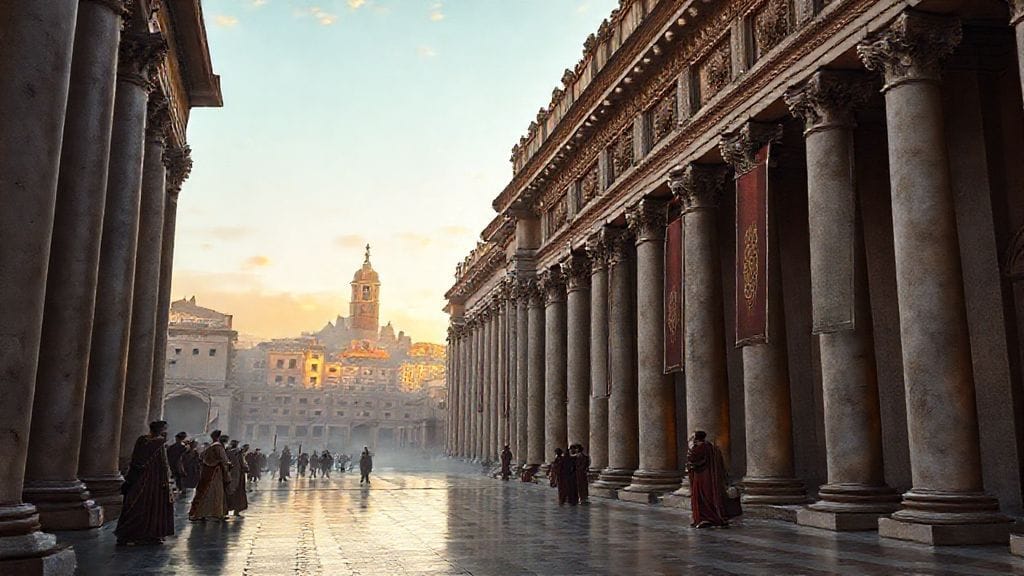
On a damp February morning in the year 607, Rome did not look like the eternal city of triumphal arches and glittering marbles that tourists would later imagine. Smoke hung low over the Tiber; the great aqueducts, once the pride of the imperial capital, lay cracked and broken in many places. Grain ships from Africa and Sicily, once so regular that the populace had timed their lives by them, came sporadically now, and sometimes not at all. Between the ruined temples and half-abandoned forums, small clusters of people moved toward the churches, murmuring rumors as tangible as the chill in the air. Somewhere within this decaying, uneasy city, the clergy were gathering. Rome, the city that had ruled an empire, was about to choose a new bishop. On that day, boniface iii elected pope was not yet a phrase of history books; it was an anxious hope in the minds of priests and laypeople, a necessary step to restore a sense of order in a world slipping steadily into fragmentation.
The papal throne, the cathedra of the bishop of Rome, had stood empty for months. The previous pope, Sabinian, had died in 606 after a contentious and unpopular reign. The city’s Christians felt abandoned; processions were quieter, alms scarcer, and above all there was no clear voice to negotiate with the emperor in distant Constantinople or with the Lombard dukes pressing from the north. News traveled slowly, carried by merchants, soldiers, and priests. It was said that the emperor Phocas himself was watching the unfolding succession in Rome with a keen and suspicious eye. In the mind of every Roman, whether cleric in the Lateran or beggar outside St. Peter’s, one question hovered like mist above the city’s seven hills: who would lead them now?
This was not merely a devotional concern. The bishop of Rome had become, over the past generations, something more than a spiritual shepherd. In the wake of crumbling imperial administration, he was landlord, grain distributor, judge, and sometimes diplomat. When boniface iii elected pope would finally become a reality, it would decide who managed vast estates in Sicily that still fed part of the city, who interceded with the emperor for tax relief, who wrote to distant bishops as the acknowledged elder among them. In every parish, as lamps burned low before icons and reliquaries, names were spoken in tense conversation. Among them, one name came up with growing frequency: Boniface, son of a Roman noble house, monk, and former envoy to Constantinople. Many remembered that he had once represented Pope Gregory the Great at the imperial court, a man capable of speaking both the language of emperors and the language of monks.
Yet behind the quiet conversations lay fear. The last decades had taught Romans that papal elections could be dangerous. Factions within the clergy, backed by aristocratic families, could turn preference into violence. Imperial agents could appear suddenly, bringing decrees that upset the delicate balance of local custom. Most of all, the memory of Gregory the Great, who had died in 604, loomed over everything. Any new pope would inevitably be measured against that giant; and as people crossed themselves under the grey Roman sky, many wondered who would be reckless—or brave—enough to sit in Gregory’s shadow.
From Roman Noble to Monk: The Early Life of Boniface
Boniface was not born to obscurity. Sources, frustratingly terse as they often are for this period, tell us that he was the son of a Roman named John and belonged to a respectable, perhaps senatorial, family. That meant more than wealth. It meant growing up in houses built with the leftovers of republican villas and imperial mansions, where faded frescoes still hinted at Jupiter and Venus, even as Christian icons now hung over doorways. As a boy, he would have walked across paving stones cut centuries earlier for consuls and generals, past statues that no longer quite matched the beliefs of the people who hurried by them.
Education in such a household leaned heavily on tradition. Boniface would have learned Latin rhetoric, perhaps reading fragments of Cicero and Virgil, alongside the Psalms and the letters of Paul. Rome in the late sixth century was a palimpsest: Christian bishops presided over liturgies in basilicas that had once hosted imperial audiences; noble children memorized pagan poets to sharpen their tongues, then recited creeds to shape their souls. To become, as he later would, a monk and a church official did not mean rejecting that heritage. It meant layering a new identity over an ancient foundation.
At some point—historians can only guess whether in youth or early adulthood—Boniface entered the clergy. Perhaps it was the influence of a relative already serving at the Lateran, or a personal piety stirred by the processions of Gregory the Great in times of plague. It is astonishing, isn’t it, how often disaster drives vocation? The city had been ravaged by waves of disease, one of which had carried off Pope Pelagius II in 590. In those grim days, as bodies piled up and incense mixed with the smell of hurried burials, a young Boniface may have felt the pull of a life devoted to prayer and service.
Whatever the precise path, we know that he eventually took monastic vows and joined the circle of clerics around Gregory. From this vantage point, Boniface watched firsthand as Gregory tried to steer Rome through the dual storms of Lombard aggression and Byzantine neglect. He listened to letters dictated to bishops in Gaul and Spain, learned the complex etiquette of church diplomacy, and absorbed a deep sense of the bishop’s duty to both rich and poor. These years were his apprenticeship, the quiet, long preparation behind the later moment when boniface iii elected pope would become more than private speculation.
An Empire in Turmoil: The Mediterranean World Before 607
To understand the significance of February 19, 607, one must widen the lens beyond the city walls. The Roman Empire still existed, at least in name. Its capital, however, lay far to the east in Constantinople, not on the banks of the Tiber. Latin and Greek still bound elites across the Mediterranean, but the unity of old had frayed into suspicion and rivalry. In Italy, the Lombards—Germanic newcomers who had carved their way into the peninsula since the 560s—held large swathes of territory. Their kings in Pavia and their dukes in cities like Spoleto and Benevento eyed the remnants of Byzantine Italy with a mix of hostility and opportunism.
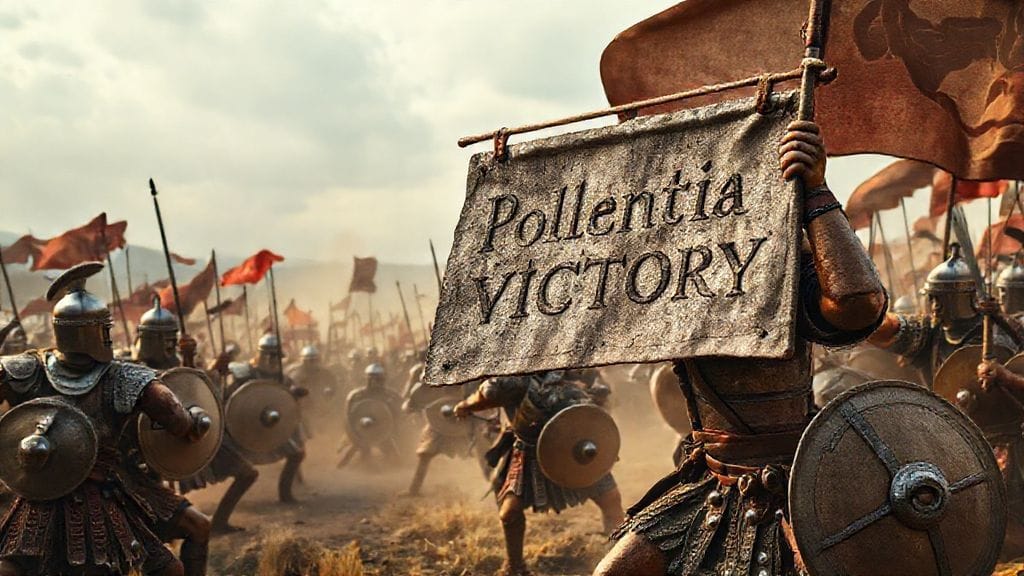
The emperor at this time was Phocas, who had seized power in 602 in a violent coup, overthrowing and killing Emperor Maurice. His reign began with blood and continued under the shadow of insecurity. Rebellions flared along the frontiers; the powerful empire of the Persians under Khosrow II took advantage of the chaos to push deep into Roman lands in the East. Constantinople, the city of emperors, stood ringed by enemies and riven by court conspiracies. Phocas relied heavily on displays of piety and on the visible support of the church to legitimize his rule.
Rome, once the undisputed center of the world, had become a provincial city, technically subject to the emperor but practically dependent on the distant Exarch of Ravenna. The exarch, a kind of viceroy, held military and civil authority, but his resources were often stretched thin. In everyday matters, it was the bishop of Rome who dealt with famine, negotiated with Lombard dukes, and administered charitable distributions. Yet this did not mean the emperor had relinquished his claim to influence. Every papal election required imperial confirmation; a pope could not be consecrated without a formal assent from Constantinople.
In this uncertain world, the church itself was divided along doctrinal and political lines. The bishop of Constantinople increasingly claimed a role as “Ecumenical Patriarch,” a title that raised Roman eyebrows. In the West, bishops in places like Milan, Ravenna, and even the still half-pagan countryside sometimes regarded Rome more as an elder brother than a sovereign father. Gregory the Great had fought hard to assert Roman primacy not by blunt commands but through tireless correspondence, pastoral care, and moral authority. After his death, that authority needed a new bearer. When boniface iii elected pope would finally be proclaimed, it would not only answer Rome’s needs but also send a signal, subtle yet profound, to Constantinople and to the distant provinces: the Roman see remained alive.
The Long Shadow of Gregory the Great
Gregory I, called “the Great” by later ages, had reshaped the very idea of what it meant to be pope. A former prefect of the city turned monk, he had reluctantly accepted election in 590 during a time of plague. Over the next fourteen years, he wrote hundreds of letters, reformed church administration, sponsored missions to convert the Anglo-Saxons in Britain, and organized Rome’s defense against both hunger and the Lombards. His Dialogues, a collection of miracle stories and saintly lives, painted a vision of a Christian Italy under the protection of holy men and God’s providence.
It was Gregory who first sent Boniface eastward as a papal apocrisiarius, or envoy, to the imperial court. That posting was both honor and trial. Boniface would have had to navigate the brilliance and brutality of Constantinople: its great cathedral of Hagia Sophia, its courtly intrigues, its constant whisper of plots. He would have stood in crowded halls before imperial officials who measured every word for political implications. To serve as Rome’s eyes and voice in such a place required not only fluency in Greek but a supple understanding of human ambition.
Gregory’s memory, therefore, was not abstract for Boniface; it was personal. He had watched the older man agonize over letters when famine reports reached Rome, had seen him balance firmness with gentleness in correspondence with wayward bishops. Gregory’s insistence that the title “universal bishop” was dangerous—an arrogant term that should not be used even by the bishop of Rome—left a deep mark. He believed, as a famous letter of his shows, that to claim such a title was to insult the dignity of all bishops and to risk pride before God. Later, when currents shifted and the phrase would be subtly reinterpreted, Boniface would find himself at the center of that delicate evolution.
Yet Gregory’s greatness also set a fearful standard. How could anyone follow a man who had almost single-handedly held together the Italian church and articulated a vision of Christian rulership that echoed for centuries? The brief pontificate of Sabinian after him, marked by harshness in grain distribution and accusations of avarice, had shown how quickly popular favor could turn. In such a context, every candidate for the papacy hesitated. To accept the election was, in a sense, to agree to be haunted. The day boniface iii elected pope would be proclaimed was also the day he stepped into this immense, unforgiving shadow.
Vacancy and Uncertainty: The Interregnum Before Boniface III
Pope Sabinian died in early 606, and with his death Rome entered a season of uncertainty that dragged on for months. The process of choosing a pope, though not yet as formalized as in later centuries, already involved several layers of consent. The clergy of Rome—priests, deacons, and senior officials—had to agree on a candidate. The laity, especially prominent families and landowners, expected to be heard, if not directly then through pressure and persuasion. And over all this hovered the requirement of imperial confirmation. A name might be acclaimed at the Lateran, but until a message traveled to Constantinople and a reply came back, the new pope was not fully consecrated.
This interregnum was not a neutral pause. Every delay left the church’s administration half-paralyzed. Certain decisions required a pope; certain disputes demanded his judgment. The distribution of the patrimony of St. Peter—church lands and resources—continued, but without the central guiding hand it risked falling into confusion or favoritism. In the streets, where bread and alms were the concrete face of Christianity, people quickly sensed this. When prices rose or charitable distributions faltered, it was easy to blame the vacuum at the top, or the factions maneuvering within it.
Factions there certainly were. Rome’s aristocratic families, though diminished from the dazzling ranks of the old senatorial elite, still wielded influence. They owned estates in the surrounding countryside, commanded dependents, and could rally support for clerics tied to their households. Some preferred candidates with a history of cooperation with the Byzantines, believing imperial favor ensured stability. Others wanted a man more independent, someone in the mold of Gregory who could negotiate from a position of moral strength rather than submission. Rumors circulated of letters sent quietly to the exarch in Ravenna and to the palace in Constantinople, praising this or that contender.
In this tense atmosphere, the figure of Boniface emerged not as a fiery partisan but as a compromise forged through respect. His years in Constantinople under Gregory had earned him a certain credibility both with Roman clergy and with imperial officials. He was known to be a monk, a man of discipline and prayer, yet he spoke the language of diplomacy. As the months passed after Sabinian’s death, more and more voices whispered the same thought: perhaps Boniface was the bridge the city needed. By the time winter tightened its grip in early 607, the stage was set. The cry of boniface iii elected pope, when it finally rose, would be the outcome of countless small calculations, memories, and fears.
The Day Boniface III Was Elected Pope in Rome
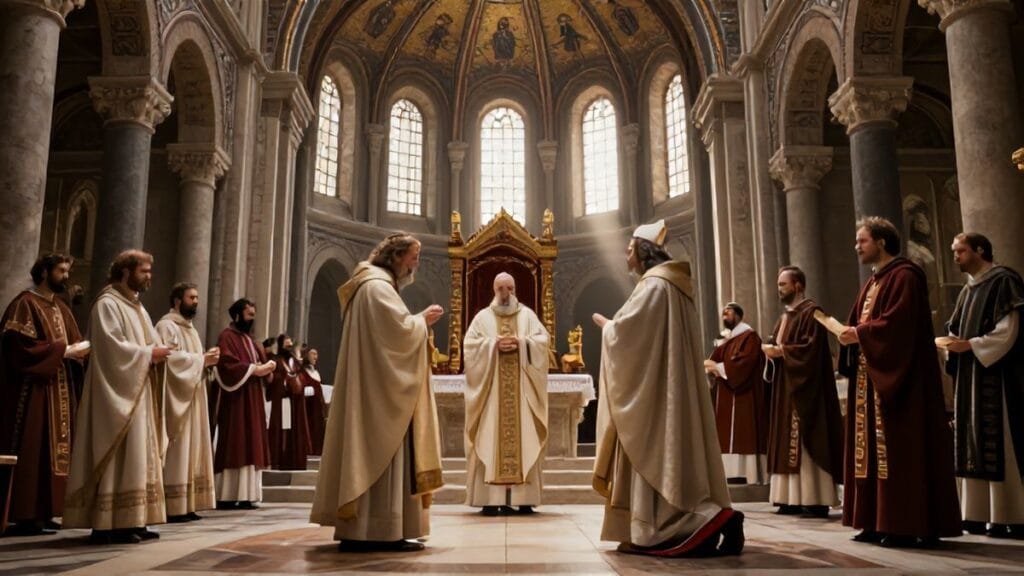
February 19, 607, dawned like many winter days in Rome: grey, damp, with a cold that seeped into stone and bone alike. But inside the basilicas and halls where the clergy gathered, the air buzzed with a more electric chill. Today, the talk went, there would be a decision. Not everyone knew the details, but enough had heard that the leading clergy had converged on a consensus. Boniface, former envoy of Gregory, respected monk, son of John, was their choice. The phrase “boniface iii elected pope” does not capture the trembling mixture of relief and anxiety felt by those present. In an age before ballots and printed decrees, election was not a silent, bureaucratic act; it was voiced, shouted, prayed into being.
The exact ceremony is lost to time, but the patterns of other elections give us a sense. The clergy assembled, perhaps in the Lateran or a major basilica like St. Peter’s. Names were proposed. Supporters stood and spoke, testifying to the candidate’s virtues. Boniface’s long service as apocrisiarius in Constantinople would have been emphasized: he knew the emperor’s court, understood its language and mood, and had, under Gregory, earned imperial respect. Others probably pointed to his monastic life, his reputation for humility. Someone, perhaps, recalled how he had once returned from the East bringing not only letters but practical help for a city in distress.
At some point, the murmurs coalesced into acclamation. Voices rose, calling his name: “Bonifatius papa! Boniface, bishop of Rome!” It might have been in Latin, or mixed with Greek phrases for the benefit of Eastern clerics and envoys. Outside, word spread with remarkable speed for a city without printing presses or telephones. Sellers in the forum paused their haggling to listen to boys racing past with the news. Slaves in aristocratic houses repeated it under their breath. In poor quarters, where hope often came packaged as rumor, people crossed themselves and asked each other: would this new pope be kind?
Yet even as the cry of boniface iii elected pope echoed through sacred spaces, everyone knew the ritual was incomplete. Messages had to be dispatched to Constantinople. Imperial confirmation, a legacy of centuries of intertwined church and state, was still required before consecration. This was where Boniface’s biography intersected neatly with political necessity. Phocas, the emperor, needed legitimacy; Rome needed a recognized bishop. Boniface, known at court, could serve as the bridge. The Roman clergy, by choosing a figure acceptable to both sides, were trying to shield their city from the worst dangers of imperial displeasure or local conflict.
Boniface himself, if we trust later tradition, did not greet the news with unmitigated joy. The weight of the office, especially after Gregory, was terrifying. Medieval chroniclers loved to imagine reluctant popes weeping or fleeing, only to be dragged back by the insistent faithful, and while such tales are often embellished, there is a truth in the sense of dread. To become bishop of Rome in 607 was not to win a crown; it was to shoulder a cross made of politics and poverty, heresy and hunger. On that February day, as he accepted the election, Boniface stepped into a role that demanded both saintly patience and worldly shrewdness.
Imperial Favor and Byzantine Politics
If the clergy of Rome chose Boniface, the emperor Phocas effectively sealed the choice. The relationship between Boniface and Phocas illuminates the tangled thread binding Rome to Constantinople. Years earlier, as Gregory’s envoy, Boniface had lived within the very orbit of Phocas’s rise. He had seen how the old emperor Maurice fell, how the new regime needed to present itself as defender of orthodoxy against chaos. Phocas, lacking the noble pedigree and military accolades of his predecessors, leaned heavily on religious symbolism. Coins and decrees emphasized his piety; churches received gifts meant as public displays of imperial devotion.
In this context, confirming boniface iii elected pope was an opportunity for Phocas to show Roman solidarity without ceding actual control. Boniface, unlike a more stridently independent candidate, promised cooperation. Indeed, one of the most consequential acts of Boniface’s pontificate would be made possible only because he could call upon imperial power. At some point during his short reign, he persuaded Phocas to issue a decree recognizing the Roman see as “the head of all the churches.” This was a carefully calibrated phrase, aimed in part at countering the claims of the Patriarch of Constantinople to universal jurisdiction.
Here, politics and theology intertwined. Gregory the Great had fiercely opposed the title “Ecumenical Patriarch” when it was used by the bishop of Constantinople, seeing it as a dangerous concentration of power. Boniface, while retaining Gregory’s suspicion of inflated titles, used the emperor’s need for legitimacy to nudge the balance of prestige back toward Rome. Phocas, for his part, gained a symbolic alliance with the old capital and its revered apostolic heritage. “The decree of Phocas” would be cited in later centuries by those defending papal primacy. Yet at the time, it likely felt more like a tactical maneuver than the unveiling of an eternal doctrine.
We catch a glimpse here of the subtlety with which Boniface operated. He did not try to throw off imperial influence altogether; that would have been suicidal in a city so dependent on Byzantine protection. Instead, he positioned Rome as the elder see deserving of honor, while acknowledging the emperor’s practical authority. It was a delicate line, walked in a world where messengers could take weeks to travel between the two cities, and misunderstandings could explode into schism. Boniface’s skill lay in turning his personal history—his years as an envoy—into a resource for his short tenure as pope.
A City Under Siege by Famine, Plague, and Fear
While letters crossed the sea and imperial confirmations were negotiated, life in Rome ground on with a stubborn, weary rhythm. The city’s population had shrunk drastically from the days when one million souls thronged its streets. Estimates for the early seventh century range anywhere from thirty to one hundred thousand inhabitants, huddled in neighborhoods clustered around the Tiber and the major basilicas. Vast stretches of the old imperial city lay in semi-ruin, their stones cannibalized for new constructions, their baths and theaters silent.
Food was a constant worry. Italy’s internal production had been battered by decades of war and Lombard incursions. The church’s estates in Sicily and southern Italy formed a lifeline; grain from these lands, organized through a complex network of officials, was shipped to Rome and distributed as part of the traditional annona and Christian charity. As pope, Boniface would be responsible for overseeing this fragile system, juggling logistical challenges with moral obligations. A failed harvest in Sicily or a pirate raid on a grain convoy could translate, within weeks, into panic in Roman markets.
Plague, too, remained a living memory. Though the most catastrophic waves of the Justinianic Plague had passed, after decimating populations throughout the Mediterranean in the mid-sixth century, outbreaks still flared. Gregory’s famous procession in 590, when he led prayers through the city to beg an end to the pestilence, was still discussed by older residents. Boniface, formed by the generation shaped in the aftermath of that terror, understood how quickly disease could unravel social order. In such a context, the presence of a stable, charitable, and visible pope mattered deeply. The cry of boniface iii elected pope meant, for many, not only a theological affirmation but the hope that someone would organize relief when the next crisis struck.
Fear seeped in from beyond the walls as well. The Lombards did not constantly besiege Rome, but their proximity haunted it. Travelers from the north brought stories of shifting alliances, of dukes whose interests did not align neatly with Pavia, of raids on towns and monasteries. The exarch in Ravenna might send troops or demands or both, each letter a reminder that Rome was a pawn in larger imperial games. Boniface had to govern not an isolated sacred city but a vulnerable, hungry, exposed community living at the crossroads of competing powers.
The Weight of a Title: Struggle Over “Universal Bishop”
Titles in this age were more than ornaments; they were claims about reality. Among the most contentious was the phrase “universal bishop.” Gregory the Great had written vehemently against its use, especially when the patriarch of Constantinople applied it to himself. In one letter, Gregory argued that whoever arrogantly claimed such a title was, in effect, exalting himself above his fellow-bishops and endangering the unity of the church. He insisted that Peter had received a unique primacy, but that no single bishop should call himself universal in a way that obliterated the honor of others.
By the time of Boniface’s election, the dust from these earlier debates had not fully settled. The patriarch in Constantinople still employed lofty language about his role, anchored in the city’s status as the imperial capital. Rome, lacking political power but rich in apostolic tradition, pushed back not with armies but with rhetoric and negotiated decrees. The famous act of Phocas, recognizing Rome as “head of all the churches,” was Boniface’s careful response. He did not spray the term “universal bishop” across his letters like a banner of conquest; rather, he inched forward, using imperial support to reaffirm Roman primacy without provoking open schism.
Here, the historian must be cautious. Later centuries, embroiled in sharper conflicts between popes and emperors, would look back and either glorify or vilify this moment, using it as ammunition in their own arguments. A twelfth-century chronicler might treat Phocas’s decree as a decisive revelation of papal supremacy, while an Orthodox theologian centuries later might dismiss it as a political maneuver by a usurper emperor. The truth, likely, lies between. Boniface saw that in a fractured empire, clarity of leadership within the church could act as a stabilizing force. His actions, therefore, were not abstract power grabs but attempts to find a structure that could hold communities together.
Still, the idea that a single bishop might stand, in some profound sense, as first among all others was gaining traction, and Rome was the obvious candidate for that role. The memory of Peter and Paul, the martyr-apostles, lay inscribed in Rome’s very soil. Pilgrims visited their tombs; bishops from afar wrote to the Roman see seeking advice and confirmation. When boniface iii elected pope took up this inheritance, he did so knowing that every gesture would be scrutinized by allies and rivals alike. In his hands, the weight of titles trembled, not yet the heavy coronation of later papal monarchy, but already more than the modest collegiality of earlier centuries.
Decrees, Councils, and the Reform of Papal Elections
Remarkably, for a pontificate that lasted only about nine months, Boniface III left behind reforms of lasting importance. Chief among them was his intervention in the very process that had brought him to the papal throne. The chaos and factionalism that often accompanied papal successions had convinced many within the church that clearer rules were needed. Boniface responded by convening a council in Rome and issuing decrees aimed at bringing order to elections.
One key provision, reported by later sources such as the Liber Pontificalis, stipulated that no steps toward the election of a new pope were to be taken until three days after the burial of his predecessor. This might sound like a small procedural adjustment, but its implications were deeply human. It created a buffer of mourning and reflection before political maneuvering could begin. In a city where candidates and their backers might otherwise rush to press their advantage the moment a pope died, the enforced pause echoed a kind of liturgical wisdom: death demanded stillness before decision.
Another aspect of Boniface’s reform concerned the relative roles of clergy and laity. While the exact wording is debated, the thrust of his measures was to affirm that the initiative in choosing a new pope lay primarily with the clergy of Rome, particularly its senior priests and deacons, while still acknowledging the confirmatory voice of the laity and the emperor. He sought to reduce the risk of secular magnates imposing their favourites or of mobs dictating outcomes through raw noise. In the centuries to come, these early attempts at codifying procedure would provide a foundation for more elaborate electoral rules, eventually leading to the creation of the College of Cardinals and the closed conclave.
In other words, boniface iii elected pope did not simply accept the mechanics that elevated him; he scrutinized them. His reforms suggest a man who had seen, perhaps from the inside, how dangerous and destabilizing papal vacancies could be. He tried, in the brief span allotted to him, to ensure that future popes would be chosen with a little more order, a little less chaos. Modern canonists looking back often cite his measures as one of the earliest clear moves toward a regulated, canonical papal election process. It is a reminder that sometimes, those who rule for only a short while focus their efforts on the rules themselves, aware that they will outlast any particular occupant of the throne.
Boniface III and the Patriarchs of the East
Even as he tended to internal reforms, Boniface could not ignore the wider network of relationships that shaped the Christian world. The patriarchs of Alexandria, Antioch, Constantinople, and Jerusalem—each rooted in ancient apostolic traditions—remained vital centers of theology and administration. However, the seventh century was not kind to them. Battles over Christological doctrine, especially the aftermath of the Council of Chalcedon in 451, had fractured communities. Some regions clung to non-Chalcedonian positions, rejecting the council’s definitions concerning the two natures of Christ. Political control shifted as Persian and, soon after Boniface’s death, Arab forces advanced.
In this fragile mosaic, Rome’s voice mattered, but it was not omnipotent. Correspondence between Rome and the eastern patriarchs, while not fully preserved from Boniface’s time, likely continued along patterns established by Gregory. Gregory had written both stern admonitions and gentle exhortations, balancing doctrinal clarity with pastoral concern. Boniface inherited those files, that memory, and the awareness that every letter sent eastward could either soothe a wound or deepen a rift.
His securing of Phocas’s recognition of Roman headship over the churches had, inevitably, an impact on these patriarchs. While Phocas’s decree was primarily aimed at Constantinople’s bishop, its rhetorical scope touched all. To bishops in Alexandria or Antioch, struggling under imperial pressure and local divisions, the announcement that Rome was “head” might have felt distant, an abstraction compared to the daily threat of soldiers at their doors. To the patriarch in Constantinople, however, it was a direct challenge to any implication that his title of “Ecumenical Patriarch” conferred unilateral authority.
Yet Boniface did not pursue an aggressive campaign of domination. He had neither the time nor the resources. Instead, he placed another small stone in the arch spanning East and West, an arch that would later crack under the pressures of cultural divergence and political hostility. Historians such as Walter Ullmann have noted that Boniface’s tenure shows the papacy experimenting with the language of juridical supremacy, but still embedded in an older, more collegial, and theologically centered view of the episcopate. The election of 607 thus appears not as a revolution but as an incremental shift along a long, complex trajectory.
Clergy, People, and Power: Rome’s Social Fabric in 607
To understand how Boniface governed, one must descend from the rarefied heights of imperial decrees to the busy, uneven streets of Rome itself. The city’s clergy formed a diverse body: there were presbyters attached to titular churches (the ancient “titles” that later cardinals would inherit), deacons responsible for charitable works and administration, monks who spent their days in prayer and copying manuscripts, and lay officials who managed the patrimony of St. Peter. Many of these men came from Roman families, tethered by kinship to senatorial houses whose fortunes rose and fell with the tides of politics.
The people they served were equally varied. Former slaves who had gained their freedom (freedmen) formed a significant portion of the urban population, living in cramped insulae or in repurposed sections of grander edifices. Artisans—bakers, smiths, weavers, stonemasons—kept the city functioning despite decaying infrastructure. Peasants from the surrounding countryside came in search of work or charity; some stayed, swelling the ranks of the poor. Women, largely absent from the formal record, nonetheless played crucial roles as heads of households, market vendors, and, in the case of noble widows, as patrons of churches and monasteries.
Boniface’s task was to preside over this complex human tapestry. When the bells (or more often, wooden clappers) summoned the faithful to Mass, he celebrated liturgy at the great basilicas, especially St. Peter’s and the Lateran. There, his homilies—if any survive in fragments—would have intertwined Scripture with immediate realities: exhortations to repentance in times of scarcity, calls for unity amid rumors of Lombard aggression, reminders that almsgiving was not optional but essential. The phrase boniface iii elected pope, heard months earlier in excitement, now settled into the steady rhythm of address: “Our pope Boniface has decreed…”; “The blessed Boniface orders…”
In administrative matters, he relied on a network of deacons and notaries. Charters documented the transfer of land, the maintenance of churches, the donation of funds for candles, incense, and offerings to the poor. Some of these notaries likely came from the same social stratum as Boniface himself—educated, literate Romans whose families still cherished half-faded ancestral busts in inner courtyards. Through them, the pope’s will translated into acts that shaped daily life: a repaired roof here, a stipend for a presbyter there, a shipment of grain rerouted to a neighborhood in special need.
Whispers in the Palaces: Aristocrats, Factions, and Intrigue
Behind the visible structures of churches and charities, politics played out in drawing rooms lit by oil lamps and warmed by whispered alliances. The old Roman aristocracy had not vanished entirely. Families whose ancestors had sat in the senate now adapted to a world where imperial offices were rare and precarious, and where association with the church provided both dignity and influence. Some donated land to monasteries or churches, securing spiritual benefits and social prestige. Others placed younger sons in the clergy, effectively extending their family’s reach into the ecclesiastical hierarchy.
These families formed factions, subtle yet persistent. Support for a particular theological position could overlap with loyalty to a certain house. Backing a candidate for a bishopric might also mean securing patronage channels for one’s clients. Boniface, as pope, had to navigate these waters carefully. He could not simply ignore aristocratic expectations; he needed their resources and their networks, especially when negotiating with the exarch or the Lombards. But he could not become their puppet either, lest the moral authority of his office be undermined.
It is in these corridors of influence that the story of boniface iii elected pope acquires a human texture. One can imagine a gathering in a dim atrium, a senator’s grandson recounting how Boniface had once interceded for his cousin in Constantinople, another guest remarking on the new pope’s austere habits, all the while calculating how this character might affect their interests. Letters from this period, though sparse, hint at such dynamics when bishops from other Italian cities praise or complain about Roman interventions in local matters. Every appointment Boniface made—to a key church, to a prestigious diaconate—tilted the balance of power slightly among these factions.
Yet, intriguingly, there is no record of major riots or violent contestations during his short reign, unlike some later papal successions. This suggests that Boniface’s blend of monastic reserve and aristocratic background allowed him to maintain a degree of equilibrium. Or perhaps it was simply that circumstances—famine threats, Lombard anxieties, imperial unpredictability—focused minds on survival more than on internal squabbles. Either way, his pontificate unfolded in an atmosphere of sotto voce maneuver more than open confrontation.
A Short Pontificate with Long Shadows
From his election in February 607 to his death in November of the same year, Boniface III reigned for only about nine months. In purely chronological terms, this is a blink of an eye in the long history of the papacy. Many popes before and after enjoyed longer tenures, leaving behind more visible monuments: churches built, synods convoked, controversies addressed in extensive correspondence. Yet Boniface’s brief time in office cast long shadows, precisely because he focused on structural issues—like electoral reform and Rome’s relationship with the empire—that would shape the institution long after his name faded into relative obscurity.
During these months, the people of Rome would have gradually adjusted to his presence. The initial news—boniface iii elected pope—shifted into routines: the sight of him processing through the streets in liturgical vestments, the sound of his voice during solemn masses, the occasional public audience where petitioners presented their pleas. Diplomatically, he continued—and recalibrated—the dialogue with Constantinople, securing the emperor’s affirmation of Roman primacy. Administratively, he issued the decrees on papal elections that would echo down the centuries.
There is a poignant irony in this. The man who did so much to regulate the transition from one pope to the next did not live long enough to witness how his rules might play out at the end of his own life. His death, when it came, would test whether the three-day pause and clerical precedence he had mandated could withstand the pressures of grief and ambition. In a sense, his entire legacy hung on the behavior of others at the moment when he could no longer guide it.
Modern historiography, and especially critical studies of the papacy’s institutional development, has increasingly recognized Boniface III’s role in this story. Scholars like Jeffrey Richards have pointed out that his pontificate forms a hinge between the charismatic, almost ad hoc leadership of figures like Gregory and the more legally grounded, self-conscious papal monarchy of the later Middle Ages. His life, once examined attentively, reveals the mechanisms by which the church adapted to a disintegrating empire: through procedural clarity, negotiated prestige, and the persistent weaving of local and universal concerns.
Death, Burial, and the Making of a Quiet Legacy
On November 12, 607, Boniface III died. The causes are unrecorded; disease, age, and exhaustion all offer plausible explanations in a world where life expectancy was short and the strains of office severe. His passing would have been marked by solemn liturgies, the chanting of psalms, the swinging of censers. Clergy and laity alike gathered to commend his soul to God, to remember his deeds, and perhaps to ponder anxiously what the next election would bring.
He was buried, according to the Liber Pontificalis, in the old Basilica of St. Peter, near the tomb of the apostle whose successor he had briefly been. This burial place mattered. To lie near Peter was both an honor and a theological statement: the pope, even in death, remained united to the fisherman from Galilee upon whom Christ had said he would build his church. Pilgrims visiting St. Peter’s in later centuries, walking amid sarcophagi and inscriptions, would pass Boniface’s resting place, often without knowing the particularities of his story, yet implicitly acknowledging his place in the chain of succession.
In the immediate aftermath, the new electoral rules faced their first trial. Did the clergy observe the three-day period of quiet before gathering to choose his successor? The records suggest that his successor, Boniface IV, was not consecrated until the following year, 608, after the usual round of imperial confirmations and political maneuvers. If so, then Boniface III’s concern for regulated transition may actually have contributed to a smoother, if still protracted, process. The people of Rome, accustomed to seeing pontificates cut short by death and papal thrones left empty for months, nonetheless had to adjust again to uncertainty.
Over time, Boniface’s name receded into the background of history. Rhetoric and chronicles lavished more attention on grander figures, on dramatic confrontations with emperors, on councils that defined doctrinal orthodoxy. Yet his quiet legacy persisted in the way elections were conducted, in the language used to speak of Rome’s primacy, and in the enduring memory—faint but traceable—of a pope who sought order in an age defined by disintegration. The dry phrase boniface iii elected pope, when read with historical sensitivity, becomes a doorway into that world of fragile institutions and determined, if modest, reforms.
How Later Centuries Remembered Boniface III
Medieval memory is a curious thing. Some figures loom larger in retrospect than they ever did in life, while others, influential in their own moment, vanish into the footnotes. Boniface III straddles these categories. In official lists of popes, he appears without fanfare, a name among many. Liturgical calendars in some regions marked his feast with modest observances. The Liber Pontificalis devoted a relatively short notice to him, emphasizing his Roman origin, his decrees on election, and his burial near Peter.
Yet when theological and polemical debates over papal primacy erupted in the later Middle Ages, especially in confrontations with Eastern churches or with secular rulers, scholars leafing through ancient documents rediscovered the decree of Phocas. In treatises defending the Roman see’s claims, they cited that imperial recognition of Rome as “head” of all the churches as a kind of anchor point. Boniface’s name resurfaced there, not for his personality or pastoral deeds, but as the pope who had secured that crucial line from a Byzantine emperor.
On the other hand, Eastern Christian writers, especially after the bitterness of the Great Schism of 1054, sometimes cast a suspicious eye on Boniface and Phocas. Since Phocas was widely regarded as a usurper and tyrant—even in Byzantine sources like Theophylact Simocatta—the fact that he had issued a decree in favor of Rome made it easy for critics to dismiss the document’s authority. In their telling, Boniface’s appeal to such a ruler looked less like pious diplomacy and more like opportunistic alliance with a disreputable power. Here again, the simple event of boniface iii elected pope became a token in a much later, and very different, game.
Modern historians, seeking a more balanced view, have tended to strip away some of these partisan layers. They recognize that Boniface operated within constraints not of his choosing: a dependent Rome, a volatile empire, a fractured ecclesiastical landscape. His actions, including the securing of Phocas’s decree, were pragmatic responses to those conditions. By reading him against his context rather than through the lens of later controversies, a richer, more humane portrait emerges—a portrait of a man trying, with limited tools and time, to steady an institution that would ultimately outlive the empire that overshadowed it.
The Election of 607 and the Evolution of the Papacy
Placed along the long arc of papal history, the election of 607 stands at a subtle but significant bend. Before Boniface III, the papacy had already accumulated considerable moral and administrative authority, especially under figures like Leo the Great and Gregory. Yet it remained closely intertwined with imperial structures. Popes were often former civil administrators; their election and consecration required not only local acclamation but imperial assent. The bishop of Rome was important—often vitally so—but still one power among several.
After Boniface, and the gradual reception of his reforms, the papacy moved, step by small step, toward a more autonomous institutional identity. The emphasis on clerical primacy in elections anticipated the later formation of a distinct electoral college. The assertion of Roman headship, grounded in both apostolic tradition and imperial recognition, laid conceptual groundwork for the more robust claims of the Gregorian Reform in the eleventh century. In that later era, figures like Pope Gregory VII would stand almost defiantly against emperors, invoking principles that had gestated in part during the more cautious maneuverings of men like Boniface.
None of this was inevitable. The seventh century could easily have seen Rome’s see reduced to provincial status, overshadowed permanently by Constantinople or fragmented among regional power centers. That it did not happen owes something to the continual, persistent work of popes who insisted on Rome’s unique role, not only with grand gestures but also with the patient shaping of procedures and expectations. When we say boniface iii elected pope today, we are invoking not just an event but a step in the evolution of a global institution.
In this sense, Boniface’s pontificate is a lesson in how historical change often occurs. Great transformations rarely arrive fully formed; they emerge from accumulations of small, context-driven decisions. A three-day pause before elections, a carefully worded decree from a nervous emperor, the choice of a particular envoy as bishop—all these details become, over time, the ingredients of something larger. The papacy that would crown Charlemagne, confront emperors, and influence kingdoms across Europe rests in part on foundations laid in more obscure, precarious days like those of 607.
Echoes in Modern Church Governance
The story of Boniface III does not end in the seventh century. It echoes, faintly but discernibly, in modern practices of church governance. When cardinals enter a conclave today, sequestered from the world as they choose a new pope, their actions are framed by centuries of evolving electoral law. The insistence that the election be conducted primarily by clerics, shielded from direct secular imposition, can trace one thread of its genealogy back to Boniface’s reform. The idea that death must be clearly marked and mourned before succession begins also resonates in the rituals of papal funerals and the period of sede vacante.
Similarly, contemporary discussions of the pope’s role as “supreme pastor” of the universal church often implicitly rely on historical claims about Roman primacy that reach back to moments like Phocas’s decree. Catholic theologians today do not base their understanding of papal authority solely on imperial documents, of course; Scripture, early church tradition, and ecumenical councils loom larger. But the symbolic weight of those early recognitions, negotiated by figures such as Boniface, still informs the narrative the church tells about itself.
Ecumenical dialogues between Catholics and Orthodox Christians also feel the ripple of this history. When they debate the interpretation of ancient titles, the meaning of “first among equals,” and the appropriate scope of papal intervention in other churches, they are, in part, revisiting arguments that first took shape in the late sixth and early seventh centuries. The controversy over “universal bishop,” Gregory’s protests, and Boniface’s calibrated use of imperial support form part of the shared, contested memory that each side brings to the table.
Thus, the event described so briefly—boniface iii elected pope, Rome, 607-02-19—turns out to be woven into the fabric of contemporary ecclesial life. It reminds us that institutions as venerable as the papacy are not timeless monoliths but historical bodies, shaped by decisions made in specific times and places, by people whose names we sometimes almost forget.
Conclusion
On that February day in 607, when the clergy of Rome raised their voices and the streets quietly absorbed the news that Boniface III had been elected pope, neither they nor he could have foreseen how historians more than a millennium later would parse their actions. They acted in the immediacy of their needs: a city to feed, a church to steady, an empire to appease and influence. Boniface, formed by the grandeur and decay of late Roman culture, by monastic discipline, and by diplomatic service in Constantinople, stepped into the papal office not as a visionary revolutionary but as a careful steward.
His reign was short, almost fragile in its brevity, yet he concentrated his efforts on matters that would outlast him: the ordering of elections, the clarification of Rome’s primacy, the quiet weaving of relationships between clergy, laity, aristocrats, and emperors. The phrase boniface iii elected pope, repeated in chronicle lists and modern catalogues, thus hides a story of negotiation, anxiety, and hope. It was not a coronation surrounded by unambiguous triumph, but a sober assumption of responsibility in a world fraying at the edges.
In the end, Boniface III belongs to that large company of historical figures whose greatness lies not in spectacular deeds but in faithful attention to structures and relationships. His life invites us to look more closely at the thresholds of history—those moments of transition when old orders crumble and new forms emerge, often without fanfare. Rome in 607 was such a threshold, suspended between imperial past and medieval future, between Eastern dominance and Western resilience. In that suspended space, a monk-diplomat became pope, and with measured steps helped guide the papacy along its long, winding journey through the centuries.
FAQs
- Who was Boniface III before he became pope?
Boniface III was a Roman by birth, the son of a man named John, probably from a noble family. He became a monk and served in the Roman clergy, eventually acting as apocrisiarius, or papal envoy, to the imperial court in Constantinople under Pope Gregory the Great. This diplomatic experience and his reputation for piety made him an attractive candidate when the papal throne fell vacant after the death of Pope Sabinian. - When and how was Boniface III elected pope?
Boniface III was elected pope in Rome on 19 February 607, after a months-long interregnum that followed the death of Pope Sabinian in 606. The clergy of Rome, with input from influential lay families, reached a consensus around him, in part because of his experience in Constantinople and his monastic character. As was customary, his election required confirmation from the Byzantine emperor, Phocas, before he could be fully consecrated. - Why is Boniface III considered historically significant despite his short reign?
Although his pontificate lasted only about nine months, Boniface III introduced important reforms and secured a key imperial decree. He convened a council that regulated papal elections, including a requirement that three days elapse after a pope’s burial before initiating a new election and that the Roman clergy hold primary responsibility for choosing the new pope. He also obtained a decree from Emperor Phocas recognizing the Roman see as the “head of all the churches,” an act with long-term implications for the development of papal primacy. - What was the relationship between Boniface III and the Byzantine Empire?
Boniface III maintained a cooperative yet cautious relationship with the Byzantine Empire. His earlier service as envoy to Constantinople meant he knew the imperial court and its politics well. As pope, he relied on imperial confirmation for his own office and used his connections to persuade Emperor Phocas to issue a decree affirming Rome’s primacy. This relationship exemplified the complex balance between Roman ecclesiastical authority and Byzantine political power in the early seventh century. - How did Boniface III’s reforms affect later papal elections?
Boniface III’s reforms provided one of the earliest attempts to codify the process of papal elections. By insisting on a period of mourning before an election and emphasizing the central role of the Roman clergy, he helped to reduce the likelihood of hasty, faction-driven successions. Over subsequent centuries, these principles evolved into more elaborate canonical rules, culminating in the establishment of the College of Cardinals and the closed conclave system used today. - What was the broader historical context when Boniface III became pope?
Boniface III became pope at a time of significant turmoil. The Byzantine Empire was ruled by Emperor Phocas, who had seized power by force and faced external threats from the Persians and internal instability. Italy was fragmented, with Lombard rulers controlling large regions and the Byzantine exarch in Ravenna struggling to maintain authority. Rome itself was impoverished, partially depopulated, and vulnerable, relying on the papacy to organize food supplies, charity, and diplomacy. - Where was Boniface III buried, and how was he remembered?
Boniface III was buried in the old Basilica of St. Peter in Rome, near the tomb of the apostle Peter. While he never became one of the most celebrated popes, he was remembered in official papal lists and liturgical calendars, and his decrees—especially concerning papal elections—continued to influence church governance. Later theological and historical debates about papal primacy often mentioned his name in connection with the imperial decree of Phocas recognizing Rome’s preeminence. - Did Boniface III change the doctrine of the church regarding papal authority?
Boniface III did not introduce new doctrine but acted within the existing framework of belief about the special role of the Roman see. His achievement was more juridical and political than doctrinal: he secured explicit imperial recognition of Rome’s primacy and issued procedural reforms for elections. These acts contributed to the gradual, historical development of papal authority rather than constituting a sudden doctrinal shift.
External Resource
Internal Link
Other Resources
- Encyclopaedia Britannica – general search for the exact subject
- Google Scholar – academic search for the exact subject
- Internet Archive – digital library search for the exact subject