Table of Contents
- A February Morning That Changed a Kingdom
- A Princess in an Age of Anxiety: Britain Before 1952
- Heir in Waiting: Elizabeth’s Childhood Under the Shadow of the Crown
- From Wartime Auxiliary to Postwar Symbol: Forging a Public Image
- The Royal Tour that Became a Turning Point
- News in the Trees: The Moment Elizabeth Became Queen
- The Long Journey Home: Mourning, Duty, and First Decisions
- “The Queen Will Be Known as Elizabeth”: Rituals of Proclamation
- Family Grief and Private Conflict Behind the Public Mask
- Britain in Transition: Empire, Commonwealth, and a Young Sovereign
- A New Reign in a New Media Age
- Commonwealth Reactions: Loyalty, Skepticism, and Hope
- Church, Constitution, and the Sacred Burden of Kingship
- Women, Power, and the Image of a Female Monarch
- Setting the Tone of a Reign: Early Choices and First Crises
- Memory, Myth, and the Long Shadow of 1952
- Conclusion
- FAQs
- External Resource
- Internal Link
Article Summary: On 6 February 1952, in the filtered sunlight of a Kenyan forest, a young woman learned that she was now Queen of the United Kingdom and head of a vast Commonwealth. This article traces the story of Elizabeth II’s accession from the fragile postwar landscape of Britain to the intimate, almost accidental circumstances in which the Crown passed to her. It explores how elizabeth ii accession unfolded against a backdrop of imperial decline, Cold War tension, and profound social change, turning a reserved princess into a global symbol. Moving chronologically, it follows her from childhood to wartime service, then through the fateful royal tour that ended in sudden bereavement and national mourning. The narrative examines political and constitutional dimensions—prime ministers, palace courtiers, and dominion leaders—alongside the private emotions of a young wife and mother abruptly transformed into monarch. It considers how the media, especially newsreels and early television, shaped public perceptions of elizabeth ii accession as both a solemn ritual and a hopeful new beginning. Finally, it reflects on the long legacy of that moment, tracing how decisions made in the first days and months of the reign echoed across decades, and how the memory of elizabeth ii accession became foundational to Britain’s modern royal story.
A February Morning That Changed a Kingdom
The air at Treetops, the rustic game lodge in the Kenyan highlands, was thin and bright on the morning of 6 February 1952. Below the stilted wooden structure, elephants moved like shadows across the salt lick, and the forest shimmered with the sound of insects. Inside, Princess Elizabeth, aged twenty-five and thousands of miles from London, thought she was still a daughter, a wife, and a dutiful heir. By the time that day ended, she would be Queen. It is here, in this strange juxtaposition of colonial safari romance and sudden, devastating news, that the story of elizabeth ii accession truly begins.
In London, King George VI had retired early the evening before. He was still convalescing after a serious lung operation the previous year; his gait was slow, his face drew easily with fatigue. Yet he insisted that his eldest daughter continue the tour he had planned across the Commonwealth, a journey meant to reassure distant subjects that the Crown remained a living presence. While Elizabeth rose to the crisp Kenyan morning, the King died in his sleep at Sandringham, his country estate in Norfolk. There was no dramatic deathbed scene, no last words. A servant, entering his bedroom with the morning tea tray, found the monarch lifeless, his book fallen to the floor.
Across Britain, the news moved like a cold wind through the streets. But for some hours, the new Queen remained blissfully unaware, moving through the forest canopy on a treetop walkway, watching rhinoceros and waterbuck, writing notes about the birds she had seen. The disorienting contrast between her serenity and the storm building in London would become one of the enduring images in the mythology of the reign. A reign that began, quite literally, above the ground—“She went up a tree a Princess and came down a Queen,” a hotel guest later remarked—felt from the outset both dreamlike and inevitable.
Yet behind this cinematic moment lay a tangle of political rituals, constitutional necessities, and private sorrows. Elizabeth II’s accession was not simply a sequence of legal steps, nor merely a personal tragedy for a family losing a beloved father. It was a hinge in the history of twentieth-century Britain: the passing of an era of war and empire into a more uncertain age of welfare states, Cold War divisions, and declining imperial power. To understand that February morning is to understand a world poised between past and future, looking anxiously to a young woman for continuity amid change.
A Princess in an Age of Anxiety: Britain Before 1952
When elizabeth ii accession took place, Britain was a country that had won a war but lost much of its confidence. Seven years had passed since V-E Day, yet rationing still gnawed at daily life; bread had only recently come off the ration, and meat remained scarce. Bomb sites scarred London like open wounds, and the skyline, once punctuated by church spires and factory chimneys, was increasingly defined by cranes and scaffolding as the city rebuilt itself. The Empire, once painted in red across a third of the globe, was unraveling. India had gone in 1947, followed by the division and bloodshed of Partition. Nationalist movements in Africa, the Middle East, and Southeast Asia pressed against the brittle structures of colonial authority.
Politically, Britain stood in the chill of the early Cold War. The Soviet Union had tested an atomic bomb in 1949; the Korean War raged. The Attlee government, which had created the National Health Service and nationalized key industries, was grappling with debt, shortages, and international strain. The Conservative leader, Winston Churchill—once the defiant voice of wartime resilience—was returning to power just as the King’s health declined. There was a palpable sense that the nation was living through the closing chapter of a great story, uncertain of what might follow.
In such times, the monarchy carried a symbolic weight out of proportion to its formal constitutional role. George VI had been a reluctant but ultimately respected king: shy, plagued by a stammer, yet steadfast during the Blitz. He embodied, for many Britons, the ideal of a quiet, dutiful hero. But his reign was also linked irrevocably to sacrifice and sorrow: wartime separations, the abdication crisis, rationing, loss. As observers later noted, the nation seemed to crave not only stability but renewal, a fresh image to project onto the changing world. Into this atmosphere of fatigue and anticipation stepped Princess Elizabeth, whose eventual accession would have to bridge the gap between a fading empire and a redefined Commonwealth.
Heir in Waiting: Elizabeth’s Childhood Under the Shadow of the Crown
Elizabeth Alexandra Mary Windsor was never supposed to be Queen—not at first. Born on 21 April 1926, she was the daughter of the Duke and Duchess of York, a younger son and his wife, consigned by birth order to a life of supporting roles. Her early childhood was sheltered, modest by royal standards, spent in a townhouse on Piccadilly and at the family’s country home, Royal Lodge in Windsor Great Park. Yet even in these supposedly ordinary royal surroundings, duty seeped in from the edges. Courtiers remarked on the young princess’s seriousness; a cousin remembered that “Lilibet”, as she was called, “always seemed to know that something was expected of her.”
The seismic event that changed everything came in December 1936, when Elizabeth was ten. Her uncle, King Edward VIII, abdicated the throne in order to marry Wallis Simpson, an American divorcee. In an instant, the shy Duke of York became King George VI, and his elder daughter transformed from royal child into heir presumptive. The abdication crisis left scars across the Windsor family. George VI, who never sought the crown, saw his life rearranged by his brother’s decision; Elizabeth watched as her parents’ private anxiety collided with public expectation. Even as she played with her corgi and doted on her younger sister, Princess Margaret, Elizabeth’s world narrowed around the idea of her future role.
Her education reflected this new reality. Unlike many European heirs destined for military academies or leading universities, Elizabeth was privately tutored at home. Her governess, Marion Crawford, emphasized history and constitutional practice, arranging weekly lessons with the Vice-Provost of Eton College, Henry Marten. Under his guidance, Elizabeth pored over the workings of Parliament, the limits of the Crown, the precedents of her predecessors. Later, Marten recalled that she asked “intelligent and unexpected questions,” a sign that the young princess was already grappling with the complexities of the role that had been thrust upon her.
As Europe darkened in the late 1930s, Elizabeth’s sense of destiny sharpened. On the eve of war in 1939, newspapers published photographs of the thirteen-year-old princess in a sailor-collared blouse, waving shyly from the balcony of Buckingham Palace. She was already a symbol, whether she wanted to be or not: the future, standing beside the King and Queen who would, within months, refuse to leave London during the Blitz. The weight of that symbolism would only grow, culminating years later in the somber urgency of elizabeth ii accession.
From Wartime Auxiliary to Postwar Symbol: Forging a Public Image
World War II was Elizabeth’s crucible. At the age of fourteen, she made her first public radio broadcast on the BBC’s “Children’s Hour,” addressing evacuated children scattered across the British countryside and overseas. Her voice, clear and slightly formal, carried a careful hope: “We know, every one of us, that in the end all will be well.” Many listeners, huddled around crackling sets, heard in that voice a kind of fragile promise that something of their world would endure.
As the war intensified, Elizabeth’s public role expanded. She appeared in uniform as a Girl Guide, joined her parents on morale-boosting visits to bombed neighborhoods, and cultivated an image of steady composure that belied her youth. Toward the end of the war, at eighteen, she insisted on more active participation. The government relented, and in 1945 she joined the Auxiliary Territorial Service (ATS), training as a driver and mechanic. Photographs of the heir to the throne in greasy overalls, sleeves rolled up as she leaned into the engine of a truck, were potent propaganda. They suggested that the monarchy, too, could get its hands dirty; that the future Queen understood the smell of petrol and sweat.
These experiences did more than burnish her public image; they taught Elizabeth about the machinery of state in the broadest sense. She saw factories turning out munitions, towns leveled by bombing, families shattered by telegrams bearing bad news. Her wartime service tied her personally to the shared sacrifices of her generation. This connection would be one of the reasons many Britons, later facing the sobering reality of elizabeth ii accession, felt instinctive loyalty to her. She was not some remote figure from a bygone age, but a woman who had queued for rationed goods and dimmed her lights during air raids.
In the immediate postwar years, Elizabeth’s visibility grew. She undertook her first solo public engagements, opened hospitals, visited universities, and represented the Crown on overseas trips. The 1947 royal tour of South Africa revealed both her stamina and the tensions inherent in her position. She traveled thousands of miles by train, waving from platforms to crowds of white settlers and Black South Africans kept largely at a distance under segregationist policies. On that tour, the turning of a young woman into a global symbol became unmistakable, even as it hinted at the contradictions that would follow her into power.
In Cape Town that same year, on her twenty-first birthday, Elizabeth delivered a broadcast that would later be quoted repeatedly in accounts of elizabeth ii accession. “I declare before you all,” she said, “that my whole life, whether it be long or short, shall be devoted to your service.” It was a promise uttered without certainty about what the future held, but with an almost austere sincerity. When the crown finally fell upon her head in 1952, those words would be recalled by ministers and subjects alike as evidence that she had accepted her fate long before it arrived.
The Royal Tour that Became a Turning Point
By early 1952, the worsening health of King George VI was an open secret inside the palace and an uneasy rumor outside it. He had survived surgery to remove part of his lung; his once-robust frame had thinned noticeably. Photographs from the period show him pale, his eyes shadowed, his hands sometimes trembling. Yet he was determined that the Commonwealth tour planned for the new year should go ahead. Officially, the King himself was to undertake a six-continent journey to reaffirm ties with member states. In practice, as his doctors grew more alarmed, the plan shifted: Princess Elizabeth and her husband, Philip, Duke of Edinburgh, would go in his stead.
The itinerary was ambitious: Kenya, Ceylon (now Sri Lanka), Australia, New Zealand. The symbolism was clear. The future Queen would be seen not merely as heir to a British throne but as a figurehead for a community of nations. The death of the old Empire was already visible; India’s independence had set a precedent that could not be reversed. But the Commonwealth—the looser association that replaced imperial hierarchies with nominal partnership—needed a face. Elizabeth’s youth, poise, and wartime credentials made her an ideal candidate.
On 31 January 1952, the Princess and Philip said goodbye to the King at London Airport. It was a bleak winter morning. Newsreel cameras captured the scene: George VI, in an overcoat and hat, walking slowly but determinedly alongside the plane. He smiled, shook Philip’s hand, and kissed his eldest daughter on both cheeks. Few watching suspected that it would be their last meeting. Later accounts suggest that court insiders feared as much, but the culture of the time shrouded such anxieties in euphemisms. The King was “resting,” “recovering,” “needing to preserve his strength.”
The royal couple flew first to Nairobi, then traveled to Sagana Lodge, a rustic house gifted to Elizabeth as a wedding present by the Kenyan government. From there, on 5 February, they drove to Treetops, the celebrated game lodge built into a giant fig tree overlooking a waterhole. The journey was meant to be a fleeting adventure, a pause of wonder amid the grind of official duties. The journals of those present describe Elizabeth with binoculars in hand, cataloging each animal she saw, noting in particular her delight at the great elephants that moved silently through the dusk.
That night, as her father slept in Norfolk, Elizabeth signed the visitors’ book at Treetops and settled into bed. The next day, in the filtered light between branches, the story of elizabeth ii accession would be set in motion—not in the formal halls of Westminster or the echoing spaces of a cathedral, but in the fragile wooden rooms of a lodge suspended between earth and sky.
News in the Trees: The Moment Elizabeth Became Queen
In constitutional terms, elizabeth ii accession happened at the instant of her father’s death. “The King is dead, long live the Queen,” as the old formula goes: no interregnum, no gap in sovereignty. In practice, that transformation unfolded over several strange, disjointed hours in rural Kenya, carried by telegrams, telephone lines, and the urgent whispers of aides.
In the early morning of 6 February 1952, sandringham staff discovered that King George VI had died. The news set off a carefully scripted chain reaction: senior ministers informed, privy councillors alerted, palace officials mobilized. The Prime Minister, Winston Churchill, was woken with the news. In his memoir, he later admitted to a heavy sense of foreboding. He had come to admire George VI, and now a young woman, the age of some of his grandchildren, would be his sovereign. Yet even as London began preparing for mourning rituals and constitutional formalities, there remained a gap in the circle: the Queen herself did not yet know she was Queen.
In Kenya, the Princess started the day oblivious. She and Philip spent the morning photographing animals, recording their sightings in a notebook. Among the royal party was Martin Charteris, her private secretary, who had stayed behind at Sagana Lodge to manage correspondence. There, a message awaited him: urgent instructions to contact the Governor of Kenya. Within minutes, the shock was clear. The King was dead. The heir had become sovereign. But she was in the forest, hours away, without direct communication.
What followed was a scramble that blended colonial logistics with constitutional urgency. Charteris and local officials arranged for cars to rush up the winding roads toward Treetops. They reached the lodge to find that Elizabeth and Philip had already returned to Sagana for lunch. The news had to be carried back. Accounts differ on exactly who told her and in which words; such moments are rarely recorded with precision. One widely cited version has Philip taking his wife aside into the garden, telling her quietly, allowing the weight of the information to sink in privately before the machinery of state surrounded her.
Observers remarked that Elizabeth did not cry, at least not in front of them. She went pale, asked a few practical questions about what needed to be done, and withdrew briefly. When she emerged, those present felt that the air around her had changed. She seemed older, one recalled, “as though the crown had already settled on her head.” In that instant, elizabeth ii accession moved from abstract possibility to lived reality. The trees, the insects, the distant murmur of Kenyan villages—all were witnesses to a private moment that altered the lives of millions.
Within hours, plans were underway to get the new Queen back to Britain. The rest of the tour was canceled; messages flashed to Ceylon, Australia, and New Zealand announcing that their expected visitor would not arrive. Elizabeth sent a personal letter to her hosts in Kenya, expressing gratitude and regret. Yet even as she attended to such courtesies, her thoughts, by her own later admission, turned again and again to Norfolk: to a father whose body was now being prepared for lying-in-state; to a family plunged into grief; to a role she had long known was coming but had never truly believed would arrive so soon.
The Long Journey Home: Mourning, Duty, and First Decisions
The flight home was a study in compressed emotion. The British Overseas Airways Corporation plane that carried Elizabeth II and the Duke of Edinburgh from Entebbe to London was hastily repainted in the royal standard’s colors; newsreel footage would later show it descending through grey English skies to a somber reception. On board, elizabeth ii accession moved from shock to practicalities. The most symbolic decision confronted her almost immediately: what regnal name would she choose?
There was precedent for monarchs selecting a name distinct from their given one. Her grandfather, born Prince George, Duke of York, had reigned as George V; her great-grandfather, christened Albert, chose to be Edward VII. Elizabeth, however, declined such distancing. When asked under the cramped ceilings of the airplane cabin under what name she wished to reign, she replied simply: “Elizabeth, of course.” It was a small statement, but meaningful. In keeping her own name, she signaled continuity between her private identity and her public role—an indivisibility that would define her reign.
As the plane touched down at London Airport on 7 February, the scene was the inverse of her departure just days before. Then, she had been a daughter waving goodbye to an ailing father; now she was a Queen returning to a nation in mourning. On the tarmac waited Churchill, still thick-set and imposing despite his age, along with senior ministers and court officials. The cameras caught a brief, almost awkward moment when Churchill bowed deeply to the young woman stepping off the plane. The gesture, automatic and ceremonial, nonetheless crystallized the changed order: the lion of wartime Britain now swore fealty to a monarch born in the year of the General Strike.
From the airport, the new Queen traveled to Clarence House, her London residence, where she greeted her mother, now Queen Elizabeth the Queen Mother, and her sister, Princess Margaret. Behind closed doors, there were tears. The family had not yet had time to process George VI’s death before being propelled into a vortex of public obligation. But the schedule left little room for private grief. The first meeting of the Accession Council was already being arranged; proclamations had to be drafted; black-edged announcements sent to governments throughout the Commonwealth.
In these hours, elizabeth ii accession moved from the emotional to the administrative. Courtiers presented briefing papers; the Queen signed documents, listened to advice, absorbed condolences. Those around her later marveled at her composure. Yet the pace and structure of events also served to shield her from the full force of her loss. Mourning, in the upper echelons of British society, had always been choreographed—Victorian widows in black crepe, formal periods of seclusion. For Elizabeth, that choreography was now overlaid with centuries-old royal custom. To be Queen meant that grief itself was a performance, to be measured out in appearances and gestures visible to a watching nation.
“The Queen Will Be Known as Elizabeth”: Rituals of Proclamation
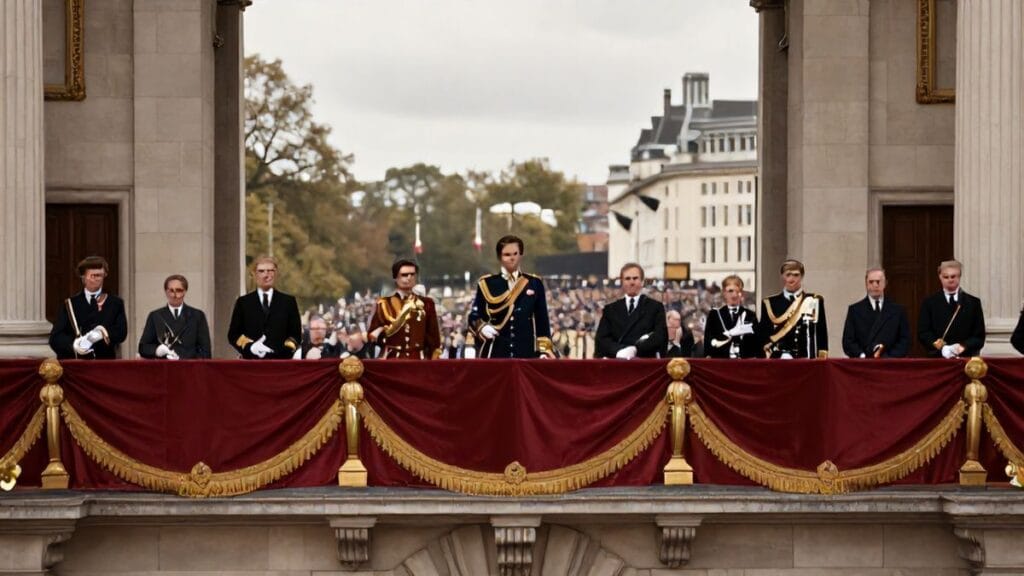
On 8 February 1952, in the crimson-and-gold chambers of St James’s Palace, the Accession Council convened. This ancient body, composed of Privy Councillors, the Lord Mayor of London, and other dignitaries, exists for a single critical function: to formally proclaim a new sovereign. The room was crowded, the atmosphere thick with black mourning clothes and the rustle of papers. On the walls, portraits of earlier monarchs gazed down—George III, Victoria, Edward VII—reminders that this moment, though emotionally raw, was part of a long, ritualized continuum.
The Queen did not attend the first part of the meeting. The Council first read and agreed upon the text of the proclamation, acknowledging the death of George VI and the fact that his daughter had succeeded him by law at the very instant of his passing. Then Elizabeth entered, wearing black but without veil, and took a seat in a carved chair placed on a raised dais. Her right hand rested lightly on the table before her; her face, as surviving photographs and newsreels show, was composed but distant, as though she were both present and somewhere else entirely.
She delivered a brief speech, one that would become one of the foundational texts of elizabeth ii accession. In it, she spoke of the “loss which is so deeply felt by the entire nation” and referred to the heavy responsibilities that had now fallen upon her. “I shall always work, as my father did throughout his reign,” she declared, “to uphold constitutional government and to advance the happiness and prosperity of my peoples.” The plural—“peoples”—struck many listeners. It gestured toward the multi-national, multi-racial composition of the Commonwealth, even as the realities of colonial rule still held fast in many territories.
After the speech, the formalities continued. The Clerk of the Council read out the oath relating to the security of the Church of Scotland, which the Queen signed. Then, in cities across Britain and throughout the Commonwealth, heralds and officials appeared on balconies and at town halls to read proclamations aloud. In London, the Garter King of Arms, wearing an embroidered tabard and feathered hat, stepped out onto the balcony of St James’s Palace and declared: “Whereas it has pleased Almighty God to call to His mercy our late Sovereign Lord, King George VI… the Queen will be known as Elizabeth the Second.”
The words carried particular resonance in Scotland, where there had never been an Elizabeth I; some nationalists would later vandalize new postboxes bearing the “E II R” cipher in protest. But at the moment of proclamation, such controversies were distant. Crowds gathered in Trafalgar Square and on the steps of civic buildings from Cardiff to Glasgow, listening in damp winter air as the news was read. The ancient formula “God Save The Queen” rang out across a country still stunned by the suddenness of its King’s death.
Through it all, the person at the center of elizabeth ii accession maintained a carefully controlled distance. She was visible but not open, present but not accessible. The early days of her reign set a template: the monarch as symbol, absorbing the projections and anxieties of millions while revealing only the smallest fraction of her own inner life.
Family Grief and Private Conflict Behind the Public Mask
Behind the veils and black crepe, the Windsor family confronted a more intimate reckoning. For the Queen Mother, George VI’s death was the shattering end of a partnership built on mutual dependence. She had bolstered his confidence during the abdication crisis, stood beside him under the bombs of the Blitz, and watched with quiet pride as he grew into a role he had never wanted. Now, almost overnight, she shifted from Queen Consort to Queen Mother, her very title a reminder that the focus had passed to a younger generation.
Princess Margaret, at twenty-one, lost not only a father but a protector. The new Queen’s younger sister had long occupied a more frivolous, socially daring space in the royal ecosystem. There were whispered romances, late-night jazz clubs, a flair for fashion that contrasted with Elizabeth’s careful conservatism. George VI, though sometimes exasperated, adored his younger daughter. His death brought her life under the intensified scrutiny that accompanies any royal “spare,” a dynamic that would sow seeds of later conflict.
For Elizabeth herself, the personal and the public collided with force. She was a young mother—her son Charles was just three, her daughter Anne an infant—not yet long settled into married life. The prospect of a few years as heir before the crown descended had seemed plausible, perhaps even likely. Now, in the narrow corridors of Buckingham Palace and the echoing spaces of Windsor, she walked a line between eldest daughter in mourning and sovereign at the center of a constitutional order. Anecdotes from ladies-in-waiting describe her slipping into a side chapel at Windsor to pray alone, then emerging moments later to shake hands with foreign dignitaries.
Philip, Duke of Edinburgh, faced his own dislocation. A naval officer by training and temperament, he had hoped to continue his career, perhaps advancing through the ranks of the Royal Navy. Elizabeth’s accession effectively ended that ambition. Many of the decisions made in these early days—where the family would live, how their children would be educated, which surname (if any) the royal house would adopt—became sources of tension. The Queen, guided heavily by her grandmother Queen Mary and by Churchill’s government, opted for continuity: the house would remain Windsor, the children’s upbringing thoroughly royal. Philip chafed at times under these constraints, but the logic behind them was clear. In the fragile moment of elizabeth ii accession, any sign of radical change within the monarchy’s inner circle might have unnerved a nation already reeling from upheaval.
Family life, then, became another facet of statecraft. The image of a young Queen, dutiful husband at her side and small children waiting in the nursery, provided a stabilizing narrative for the public. Yet behind closed doors, the emotional adjustment to loss and obligation was far messier, full of unspoken resentments, compromises, and the quiet resilience that would become Elizabeth’s hallmark.
Britain in Transition: Empire, Commonwealth, and a Young Sovereign
The constitutional reality of elizabeth ii accession stretched far beyond the British Isles. When she became Queen, Elizabeth did so not only of the United Kingdom but of a patchwork of dominions and realms: Canada, Australia, New Zealand, South Africa (still within the Commonwealth then), Pakistan, and Ceylon among them. In each, her accession required local recognition—parliamentary motions, public proclamations, updated coinage and portraits. The machinery of constitutional monarchy, exported in an earlier age as part of imperial governance, whirred into synchronized motion across continents.
Yet this apparent unity disguised profound divergence. In India, which had become a republic within the Commonwealth in 1950, Elizabeth was not sovereign, but “Head of the Commonwealth,” a role invented for her father and defined more by sentiment than by law. In African colonies like Kenya, from which she had just returned, nationalist movements were gathering strength; within months, the Mau Mau uprising would break into open conflict with the colonial administration. It was historically ironic that elizabeth ii accession, so often remembered in the setting of a Kenyan forest, occurred in a territory that would, within little more than a decade, cast off British rule.
At home, the transformation from Empire to Commonwealth was far from emotionally complete. Many Britons still spoke of “our Empire” with a kind of proprietary melancholy. Churchill himself, though pragmatic about the independence of India, remained attached to the language of imperial grandeur. For him and others, the young Queen offered a means of rebranding continuity. Instead of ruling over a vast territorial empire, she would embody the looser fellowship of independent states—some monarchies, some republics—linked by shared history, language, and institutions.
This redefinition was not without its critics. Anti-colonial leaders saw in the monarchy a symbol of past domination, even as they sometimes courted Elizabeth’s personal support or approval. In the Caribbean, in West Africa, in Southeast Asia, people watched newsreels of her accession with a mixture of fascination and distance. These images belonged simultaneously to their world and to someone else’s. When, in 1953, the Queen would later visit newly independent nations, her presence was treated both as an honor and as a reminder of complicated legacies.
The significance of elizabeth ii accession, then, cannot be confined to Westminster Abbey or Buckingham Palace. It was an event in Nairobi and Delhi, in Ottawa and Sydney, in Kingston and Accra. For some, it signaled the last gasp of an imperial order; for others, it marked the birth of a Commonwealth that might, in time, stand as a voluntary community of equal nations. For the woman at its center, it meant navigating a terrain in which her role was simultaneously exalted and constrained, global and yet, in some places, profoundly contested.
A New Reign in a New Media Age
If Queen Victoria’s accession had been carried to her subjects by horse-borne messengers and printed broadsheets, and George VI’s by radio, elizabeth ii accession unfolded in a world on the cusp of the television era. Newsreel companies rushed footage of the King’s last public appearances into cinemas, often splicing them with hastily shot scenes of black-draped flags and solemn crowds outside Buckingham Palace. Radio carried the news into living rooms, churches, and factories. Within hours of the announcement, BBC announcers switched to a hushed tone and classical music filled the airwaves.
The public, many of whom had come to feel an almost personal connection with the royal family during the war, responded with a mixture of grief and curiosity. Letters poured into newspapers, some recalling George VI’s broadcasts during the Blitz, others speculating about the new Queen’s capacity to shoulder the burden. “She has about her something grave beyond her years,” observed one correspondent in The Times, “and yet also a freshness which the country will not willingly surrender.” Historians later have cited such letters as early evidence of how quickly elizabeth ii accession began to interweave national self-perception with the persona of a young woman few had ever met in person.
Television, still in its infancy in 1952, would not fully shape public perceptions until the coronation the following year. But its potential was already evident. Palace officials and government advisers debated how much of the Queen’s life should be visible. Should her first Christmas broadcast be televised as well as transmitted by radio? To what extent should cameras be allowed inside sacred or private spaces? The balancing act between tradition and transparency began at the very moment of accession, as courtiers considered which rituals should remain shrouded in mystery and which could be offered up as spectacle.
One of the most striking aspects of this media transition was the emergence of a more intimate visual language. Photographs of the Queen with her young children, of her returning from Kenya with a simple string of pearls around her neck and tired lines under her eyes, invited viewers to see her not only as monarch but as human being. Yet this intimacy was carefully stage-managed. The palace understood that the success of elizabeth ii accession depended, in part, on maintaining a sense of distance, of mystique. The Queen had to be simultaneously familiar and unapproachable, her life an open book whose most important pages were forever glued shut.
Commonwealth Reactions: Loyalty, Skepticism, and Hope
While church bells tolled in London and flags dipped at half-mast, the news of King George VI’s death and elizabeth ii accession echoed through the Commonwealth with varied resonance. In Canada, where the monarchy remained a central part of national identity, newspapers published solemn editorials mourning the King who had stood beside them in war. The Canadian Prime Minister, Louis St. Laurent, described the new Queen as “one whose life has already been a model of dignity and service,” signaling continuity and respect.
In Australia and New Zealand, the reaction mixed tradition with a budding sense of autonomy. Both countries had fought under the Union Jack in World War II, but their political consciousness was shifting. The Australian Prime Minister, Robert Menzies, an ardent monarchist, spoke lyrically of his loyalty to the Crown; for him, elizabeth ii accession was an opportunity to reaffirm ties that some feared were fraying. New Zealanders, too, lined up to sign condolence books and listened attentively to broadcasts from London. Yet beneath the surface, debates were already emerging about the future of constitutional ties.
In South Asia and Africa, the picture was more complex. In India, now a republic, the news was treated with respectful distance. Editorials in major newspapers noted the passing of George VI as the end of an era in which British monarchs had been symbols of both authority and subjugation. Some writers expressed cautious admiration for Elizabeth, recalling her 1947 pledge of lifelong service, but they placed her firmly in the sphere of foreign affairs rather than domestic relevance. In Pakistan and Ceylon, where she remained Queen, parliamentary statements combined formal loyalty with growing assertions of local sovereignty.
In Africa and the Caribbean, people gathered around radios in colonial cities, plantation townships, and mission schools to hear of elizabeth ii accession. The resonance of “God Save The Queen” varied sharply. To colonial administrators and many settler communities, the new monarch represented stability and a familiar order. To nationalists, trade unionists, and intellectuals pushing against the frameworks of empire, she was a paradox: a young woman inheriting an ancient system that they hoped to dismantle or fundamentally alter.
This plurality of reactions underscores a central truth: elizabeth ii accession was never a singular event experienced in the same way across the globe. It was instead a prism, refracting different histories, grievances, loyalties, and aspirations. The Queen herself, aware of this diversity, would later make the Commonwealth a central focus of her work, traveling relentlessly, shaking countless hands, and delivering speeches that emphasized common bonds while steering clear of political controversy. But in 1952, all of that lay ahead. For now, the new monarch was a distant figure on newsreels, her face framed by a black hat, her eyes betraying little of the private calculations demanded by a world in which her very presence could inspire both affection and ambivalence.
Church, Constitution, and the Sacred Burden of Kingship
Amid the mourning and the flurry of constitutional procedures, there was another layer to elizabeth ii accession: the spiritual and religious dimension. As sovereign, Elizabeth II became Supreme Governor of the Church of England, a title freighted with centuries of contested authority. In practice, the role was more symbolic than doctrinal; the Archbishop of Canterbury remained the Church’s leading ecclesiastical authority. Yet the monarchy’s entanglement with the Church was not mere ornament. The coronation oath, administered months after accession, would bind the Queen to uphold the Protestant faith and the established church.
In February 1952, church leaders framed the transition in explicitly sacred terms. Sermons across the country invoked the continuity of God’s providence, likening the passing of one monarch and the rise of another to biblical patterns of kingship. The Archbishop of Canterbury, Geoffrey Fisher, wrote that the late King had “walked humbly with his God,” and expressed confidence that his daughter would do likewise. In cathedral choirs and village parishes, special services blended grief for George VI with prayers for Elizabeth, asking that she be granted wisdom and strength “in the great office to which she is called.”
For the Queen, who had been raised in a tradition of quiet, unshowy Anglican piety, these religious dimensions were not abstractions. She had spoken, even as a girl, of feeling that her eventual role would be “in God’s hands.” The intertwining of sacred language with constitutional duty created a moral framework within which she interpreted her responsibilities. As one later biographer noted, “She did not think of her life as her own from the moment of her accession.” Such a perspective imbued the seemingly dry mechanics of state—signing bills, receiving ministers, reading red boxes of government papers—with a sense of vocation.
The constitutional settlement that underpinned elizabeth ii accession was itself the product of centuries of conflict between Parliament and Crown. By 1952, the monarch’s powers were, in theory, tightly circumscribed: she reigned but did not rule, acted on ministerial advice, and played the role of impartial arbiter above party politics. Yet this very restraint granted her a unique type of influence. Prime ministers came and went; governments fell; parties split and realigned. The Queen, whose tenure could stretch for decades, offered continuity and a private forum in which leaders could speak freely.
In the early days of her reign, Churchill and others recognized this potential and sought to shape it. Churchill, steeped in history, reportedly advised her on the pitfalls of becoming too familiar with any one minister, cautioning that she must “keep your own counsel” and never allow personal preference to show. Elizabeth listened carefully. The pattern of weekly audiences with the Prime Minister, which began in these initial weeks after accession, would continue unbroken for the rest of her life. In them, the religious sense of duty and the constitutional role as “dignified part” of the state, as Walter Bagehot once put it, merged into a single, quiet practice of listening, advising, and warning behind closed doors.
Women, Power, and the Image of a Female Monarch
In a world still largely governed by men, the arrival of a young woman on the throne carried particular resonance. Britain had known queens before—Mary I, Elizabeth I, Anne, and Victoria—but in 1952, the social landscape of gender was markedly different. Women had gained the vote on equal terms with men only in 1928; during the war, they had entered factories and military auxiliaries in unprecedented numbers, only to be pushed back toward domestic roles afterward. The image of a female sovereign thus intersected with ongoing debates about women’s place in public life.
Public reaction to this dimension of elizabeth ii accession was mostly positive, filtered through the flattering, sometimes patronizing lens of mid-century media. Newspapers praised her “feminine grace” and “youthful beauty,” emphasizing qualities that made her seem both exceptional and reassuringly conventional. Magazine spreads dwelt on her clothes, her hairstyle, her motherhood. Yet even as journalists reduced her to fashion details, they also recognized that her position challenged assumptions about leadership. Here was a woman whose authority surpassed that of any male politician.
The Queen herself seemed uninterested in framing her role in explicitly feminist terms. She embraced traditional concepts of duty, service, and obedience to constitutional norms. Yet her very existence as a widely respected female head of state had a subtle, cumulative effect. Girls growing up in Britain and across the Commonwealth could look to the newsreels and see a woman receiving ambassadors, inspecting troops, and presiding over solemn ceremonies. In time, this quiet visibility would contribute to a broader cultural acceptance of women in positions of authority.
At the same time, gender expectations shaped how the Queen navigated her private and public identities. Her marriage to Philip was subject to speculation and scrutiny: would he be “the head of the family”? Who would lead in their domestic life when she outranked him so completely in the public sphere? The compromises they reached—Philip managing estates, organizing family life, carving out roles in fields like conservation and sport—were not only personal but symbolic. They modeled, however imperfectly, a partnership in which a woman’s professional preeminence did not preclude marital harmony.
Historians looking back on elizabeth ii accession have noted these tensions with increasing interest. As one scholar wrote, “She reigned in an age that asked women to be both dutiful housewives and independent citizens, and she embodied both demands in a single, highly stylized figure.” That stylization—the hats, the handbags, the carefully modulated voice—sometimes obscured the underlying fact of female sovereignty. Yet beneath the layers of ritual and costume, the simple reality remained: from 1952 onward, Britain’s head of state was a woman, and that mattered more than anyone, perhaps including the Queen herself, fully acknowledged at the time.
Setting the Tone of a Reign: Early Choices and First Crises
The days and months following elizabeth ii accession laid down patterns that would persist for decades. Some of these were symbolic choices; others emerged from how she handled early challenges. One of the most significant decisions concerned where the royal household would be based. Until 1952, Elizabeth and Philip had made Clarence House their primary London residence, a relatively intimate space compared to the sprawling Buckingham Palace. There was a brief discussion about whether they might remain there while using the palace principally for official functions. Tradition, and the counsel of older courtiers, prevailed. The Queen moved into Buckingham Palace, accepting its drafty corridors and institutional atmosphere as part of the price of monarchy.
Her relationship with Churchill in these early months became a template for dealings with future prime ministers. They were separated by more than half a century in age and by sharply contrasting life experiences, yet they developed a surprisingly warm rapport. Churchill, sentimental about the monarchy, once confessed that he found the young Queen “enchanting.” She, for her part, appreciated his historical knowledge and rhetorical flair. In their weekly audiences, he guided her through the immediate challenges of the postwar world: the Korean War armistice talks, economic strains, the delicate balancing act of Anglo-American relations. At the same time, he was careful to emphasize her constitutional neutrality, ensuring that elizabeth ii accession did not become entangled with partisan agendas.
There were, inevitably, missteps and controversies. Within her own household, the question of the royal surname caused turmoil. Philip wished his children to bear his family name, Mountbatten; Churchill and Queen Mary insisted on preserving the House of Windsor, established during World War I to replace the Germanic “Saxe-Coburg and Gotha.” In 1952, the Cabinet advised that the royal house remain Windsor, effectively sidelining Philip. The Queen, still new to her office and mindful of her grandmother’s authority, acquiesced. The decision strained her marriage and highlighted the extent to which even family matters could become matters of state.
Externally, the first serious crisis that tested the new reign was not of her making: the Suez Crisis of 1956, when a later Prime Minister, Anthony Eden, sought to reassert British control over the Suez Canal in Egypt. Yet the groundwork for how she would respond to such crises was laid in the early years: a steadfast commitment to remain above the fray, to act as a symbol of continuity even when the government’s actions proved deeply divisive. This approach, too, was part of the legacy of elizabeth ii accession. From the outset, she chose the path of quiet, consistent presence rather than dramatic intervention.
Domestically, the early 1950s were years of slow economic recovery and gradual social change. The Festival of Britain in 1951 had attempted to lift spirits; the coming coronation would do the same, with more pomp. Many historians argue that the sense of optimism associated with the coronation bled backward in memory into the accession itself, retroactively coloring recollections of those grey February days with a hint of springtime promise. In reality, the atmosphere immediately after George VI’s death was more muted, a mixture of sorrow and cautious anticipation. The Queen’s own choices—her calm demeanor, her adherence to precedent, her refusal to make herself the story—helped manage that transition in a way that felt, to many, reassuringly undramatic.
Memory, Myth, and the Long Shadow of 1952
As the decades passed and Elizabeth II’s reign lengthened, the memory of her accession took on a quasi-mythic quality. Certain images solidified into canonical scenes: the farewell at London Airport, the treetop lodge in Kenya, the bowed head of Churchill on the tarmac, the proclamation from the balcony of St James’s Palace. These snapshots, endlessly reproduced in documentaries and biographies, turned elizabeth ii accession into both a historical event and a kind of founding legend for late twentieth-century British monarchy.
Yet like all legends, this one simplified as it solidified. The complexities of empire and decolonization, the varied reactions across the Commonwealth, the tensions within the royal family—these often receded behind a narrative of noble duty serenely assumed. Popular accounts tended to emphasize the romance of “the young Queen,” the poignancy of personal sacrifice, and the eventual success of her long reign. The historian David Cannadine has noted that modern monarchy relies heavily on such “invention of tradition,” crafting stories that connect present realities with a selectively remembered past.
There were, however, critical voices. Republican commentators pointed out that elizabeth ii accession, like any hereditary succession, involved no element of democratic choice. Some questioned the relevance of monarchy in an age of welfare states and mass politics. Others highlighted the lingering imperial symbolism that clung to the Crown, even as former colonies became independent nations. These critiques did not derail the institution, but they added texture to public debate, reminding citizens that the monarchy’s continuity depended as much on consent and cultural habit as on legal statutes.
For the Queen herself, the anniversary of her accession remained a bittersweet date. Unlike jubilees or coronation commemorations, which could be celebrated with processions and thanksgiving services, 6 February was, for her, first and foremost the day her father died. She traditionally spent it in private reflection, often at Sandringham, walking the same grounds where George VI had taken his last breaths. The personal grief at the heart of elizabeth ii accession never entirely faded; it simply sank beneath the layers of public meaning that others attached to that day.
When Elizabeth II eventually passed away in 2022, seventy years after her accession, commentators drew direct lines back to 1952. They spoke of a reign that had encompassed decolonization, the Cold War, the rise of the European Union and its unraveling, technological revolutions, and profound shifts in social norms. The girl who had become Queen in a treetop lodge had outlasted nearly everyone who had shaped her early years. In eulogies and retrospectives, the story of elizabeth ii accession was retold once more, now as the opening chapter of a completed narrative. Its power lay not only in what happened on that February day but in everything that followed, in the way a single moment of transformation rippled outward across time.
Conclusion
Elizabeth II’s accession on 6 February 1952 stands as one of the most quietly dramatic turning points in modern British history. It did not involve revolution or popular uprising, but the death of a tired, conscientious king and the sudden elevation of his young daughter amid the branches of a Kenyan forest. From that almost surreal beginning, elizabeth ii accession unfolded through carefully choreographed rituals in London, proclamations in distant capitals, and the complex inner workings of a family absorbing both grief and responsibility. It came at a time when Britain was still rationing bread, dismantling its empire, and searching for a new place in a polarized world, asking a twenty-five-year-old woman to carry the weight of continuity.
The significance of those first days lies not only in their immediate political or constitutional effects but in the patterns they established. Elizabeth’s choices—keeping her own name, embracing the inheritance of the House of Windsor, maintaining strict political neutrality, and grounding her role in a sense of religious and moral duty—set the tone for a reign that would outlast empires and ideologies. The global dimension of elizabeth ii accession, touching Canada and Kenya, Australia and Pakistan, revealed the extent to which the British Crown had become both less powerful and more symbolically far-reaching than ever before, a paradox the new Queen learned to navigate with instinctive caution.
Over time, the accession became part of a national mythos, remembered as the moment when a war-weary country entrusted its future image to a young woman in pearls and black crepe. Yet beneath the myth, the reality remains textured and human: a daughter learning of her father’s death far from home; a wife comforting a husband whose career would never be what he had imagined; a constitutional monarchy adjusting itself, yet again, to the demands of a new era. To trace the story from that February morning in 1952 to the long, reflective view taken at the end of her life is to see how a single, ostensibly routine act of succession can shape the moral and emotional landscape of a nation for generations.
FAQs
- When did Elizabeth II officially accede to the throne?
Elizabeth II acceded to the throne on 6 February 1952, at the exact moment of her father King George VI’s death at Sandringham in Norfolk, although the news reached her only hours later while she was in Kenya. - Where was Elizabeth II when she became Queen?
She was in Kenya, then a British colony, staying at the Treetops game lodge near Nyeri as part of a Commonwealth tour. She learned of her father’s death and her new status as Queen after returning to nearby Sagana Lodge. - How old was Elizabeth II at the time of her accession?
Elizabeth II was 25 years old when she acceded to the throne, a young mother of two children and only a few years into her marriage to Philip, Duke of Edinburgh. - Did Elizabeth II choose a different regnal name?
No. Asked what name she wished to reign under, she replied simply “Elizabeth, of course,” becoming Elizabeth II in continuity with the Tudor Elizabeth I who had ruled centuries earlier. - How did the British public react to her accession?
The British public responded with a mixture of deep grief for George VI and cautious hope in the young Queen. Many people had followed her wartime service and early public life, and they saw in her a symbol of renewal after years of hardship. - What was the international and Commonwealth reaction to her accession?
Across the Commonwealth, her accession was marked by official proclamations and public mourning, but reactions varied. Dominions like Canada and Australia affirmed strong loyalty, while newly independent or nationalist-leaning territories viewed her with a mix of respect, distance, and, in some cases, skepticism tied to imperial history. - What is the difference between accession and coronation?
Accession is the moment the new monarch becomes sovereign, which occurs immediately upon the previous monarch’s death. The coronation is a later religious and ceremonial event—Elizabeth II’s coronation took place more than a year after her accession, on 2 June 1953. - Did Elizabeth II’s accession change the British Empire?
Her accession did not itself cause structural changes, but it coincided with and symbolized an ongoing transformation: the British Empire was giving way to a looser Commonwealth of independent nations, with the Queen serving as a unifying figure rather than an imperial ruler. - How did her accession affect her personal life?
Accession abruptly ended any prospect of a relatively private existence. Elizabeth and Philip moved from Clarence House to Buckingham Palace, Philip’s naval career effectively ceased, and their family life was thereafter shaped by the demands of monarchy. - Why is Elizabeth II’s accession considered historically significant?
It marked the beginning of a reign that would become one of the longest in history, spanning decolonization, the Cold War, social revolutions, and technological change. The circumstances of elizabeth ii accession—its timing, global reach, and the youth of the new Queen—made it a key moment in the transition from an imperial Britain to a modern, post-imperial state.
External Resource
Internal Link
Other Resources
- Encyclopaedia Britannica – general search for the exact subject
- Google Scholar – academic search for the exact subject
- Internet Archive – digital library search for the exact subject