Table of Contents
- A Morning in May: The Day a Child Became King
- A Kingdom on Edge: France before the Boy King
- The House of Bourbon and the Weight of a Crown
- Birth of the Sun: Early Years of Louis-Dieudonné
- Illness, Fear, and Education: Forging a Royal Temperament
- Death in the Louvre: The Final Hours of Louis XIII
- When louis xiv becomes king of france: The Moment of Accession
- Anne of Austria and Cardinal Mazarin: A Hidden Regency
- A Crown in Crisis: The Fronde and the Education of a Monarch
- The Young King and His Kingdom: Everyday Life in 1640s France
- Faith, Ritual, and the Sacred Body of the King
- From Child to Sun King: Memory of 1643 in Louis XIV’s Imagination
- Reforming the Realm: How a Child-King Reshaped Government
- The Human Cost: Peasants, Soldiers, and the Weight of Absolutism
- France and Europe Watch: Diplomacy in the Wake of a Child’s Accession
- Versailles as Answer: Architecture, Power, and the Memory of Insecurity
- Myths, Memoirs, and Paintings: How the Accession Was Remembered
- The Long Echo of a Short Day: Legacies of 14 May 1643
- Conclusion
- FAQs
- External Resource
- Internal Link
Article Summary: On 14 May 1643, in a France exhausted by war and internal tension, louis xiv becomes king of france at the age of four years and eight months, transforming a fragile dynasty into the seed of an absolute monarchy. This article follows that single day outward through time, exploring the anxieties of a kingdom that discovered its new sovereign could barely walk, let alone rule. From the declining health of Louis XIII and the hopes pinned on the boy known as Louis-Dieudonné, to the political maneuvers of Anne of Austria and Cardinal Mazarin, we trace how this child’s accession shaped both court intrigue and the lives of ordinary peasants. We see how the Fronde, civil war, and noble rebellion burned the memory of insecurity into the young king’s mind, later driving him to centralize power and build Versailles as a fortress of prestige. Along the way, the narrative examines religious rituals, royal symbolism, and the emotional world of a widow-queen guarding her son against enemies seen and unseen. Over decades, the simple fact that louis xiv becomes king of france so young would justify a new kind of kingship—more theatrical, more disciplined, and more controlling. The story reveals the human costs as much as the glittering façade, showing how that May morning in 1643 rippled down through European diplomacy and everyday French village life. In the end, when historians speak of the Sun King, they are still speaking about the consequences of one child’s accession on one precarious spring day.
A Morning in May: The Day a Child Became King
Paris awoke on 14 May 1643 under a sky that could not decide between spring and storm. The air hung heavy above the Louvre palace, thick with incense from hastily said masses and the metallic scent of fear. Inside the dimly lit royal apartments, wax candles sputtered in tall brass candlesticks, casting unsteady halos on tapestries that had watched kings die before. Courtiers whispered in the corridors, shoes muffled against worn stone, as messengers came and went with faces ashen and lips tight. France, weary from years of war and famine, held its breath.
In a bed draped with darkened velvet, Louis XIII, King of France and Navarre, lay dying. His body, long tormented by illness, had finally surrendered. Priests had come and gone; confessions had been made; political instructions whispered to ministers and family. The king who had ruled since childhood himself was about to leave behind another child. In a nearby room, under the care of nurses and attendants, a boy not yet five years old played in a world still half made of toys and half made of ceremony. He was Louis-Dieudonné—Louis, the God-given—born after twenty-three years of royal infertility. Within hours, this child would be master of a kingdom of some twenty million souls, commander of embattled armies, symbolic father of a restless nobility. The moment when louis xiv becomes king of france would be at once quiet, almost banal, and epoch-making.
When the end came for Louis XIII, it came almost gently. The chronicle-writers tell us that around noon, the king’s breathing grew shallow, his words fewer. A priest murmured prayers; a physician listened, helpless, for a heartbeat he could not save. Outside the chamber, guards stiffened as a page rushed by. Then, behind the heavy door, a silence fell that everyone understood. It was broken only by the formula that would echo down the centuries: “Le roi est mort, vive le roi!”—“The king is dead, long live the king!” That cry was not a poetic invention; it was a political necessity. It signaled that there would be no gap, not one single instant, between sovereigns. In the very heartbeat that Louis XIII’s life ended, louis xiv becomes king of france, by law and by custom, even if he could not yet read the documents that proclaimed it.
For the child, there was no thunderclap revelation. A nurse, perhaps with trembling hands, adjusted his clothing; an usher opened doors normally closed to such small feet. Yet beyond those doors, the world was changing. Envoys would write to distant courts that France was now ruled by a boy. Generals on the frontiers of Flanders, Italy, and Germany would receive messengers bearing the news that the authority under which they fought now rested on the fragile shoulders of a toddler. Merchants in Lyon and peasants in Auvergne would hear rumors that the king was “not yet even of school age.” To many, it must have felt as if the kingdom had stepped onto a narrow bridge over an abyss.
But this was only the beginning. The child-king’s accession was not a fairy-tale coronation but the opening move in a complex drama of regency, war, rebellion, and transformation. That morning in May, when louis xiv becomes king of france, would be remembered in portraits dripping with gold leaf, in the pages of diplomats’ reports, in the uneasy dreams of a widow-queen, and in the distant anger of provincial nobles who saw a chance to assert their old privileges. In the hush after Louis XIII’s last breath, France entered not simply a new reign, but a new way of imagining power itself.
A Kingdom on Edge: France before the Boy King
To understand why the accession of a child provoked such tension, one must step back into the France that Louis XIII was leaving behind. It was a realm enlarged in territory but bruised in spirit, a kingdom rising on the European stage even as many of its people sank into poverty. For nearly a generation, France had been enmeshed in the Thirty Years’ War, an apparently endless conflict of religion, dynastic rivalry, and state ambition that bled Germany white and tested every European monarchy. Under the stern hand of Cardinal Richelieu, Louis XIII’s chief minister, France had intervened decisively against the Habsburg powers of Spain and the Holy Roman Empire. Victories had come, but at a cost measured in taxes, conscripts, and ruined fields.
By 1643, the French state was more centralized than it had ever been. Royal intendants traveled through the provinces to oversee justice, finance, and military levies. Parlements—regional high courts dominated by elites—grumbled but often submitted. Noble governors chafed under the tight reins of Paris. Yet this centralization was not felt as order by everyone. To a peasant watching his last sons marched away to war or a small-town merchant facing new imposts, it felt like a distant machine grinding relentlessly onward. Louis XIII’s France was a place of suspicion and surveillance, where the mailed fist of the crown was never too far from those who dared contest its authority.
Add to this the scars of past religious conflict. Though the worst horrors of the French Wars of Religion were decades behind, the shadow of Catholic–Protestant violence still haunted the collective imagination. Royal policy sought unity under Catholicism, yet pockets of Protestant communities, especially in the southwest, remained wary. Memories of besieged cities like La Rochelle lingered; the idea that civil war might return was never entirely banished. In such a setting, stability at the top of the political hierarchy was not a luxury but a fragile necessity.
Economically, the kingdom was a patchwork. Certain regions—Île-de-France, parts of Normandy, and some wine-producing areas—could prosper in good years. Others, battered by military requisitions, bad harvests, and epidemic disease, teetered on the edge of famine. In the early 1640s, plague still flared sporadically, carrying away entire villages. The crown required more money than ever, yet the means to extract it were crude: indirect taxes on salt (the hated gabelle), on wine, on everyday transactions. Tax farmers grew rich as they squeezed the countryside; local revolts against fiscal agents remained a recurrent, if contained, phenomenon.
At the heart of this precarious construction sat Louis XIII—aloof, devout, often melancholy. He had brought France to a new level of international power, but he had not healed its internal wounds. His own marriage to Anne of Austria produced heirs only very late, after years of whispered speculation about divine punishment and marital coldness. The birth of Louis-Dieudonné in 1638, followed by his brother Philippe in 1640, seemed a near-miracle. Yet the relief of having an heir did not void the deeper uncertainty: would the kingdom survive another minority, another stretch in which an underage king meant factions battling in his name?
People still remembered. Between 1610 and the declaration of Louis XIII’s majority in 1614, France had already gone through a regency under his mother, Marie de’ Medici—a tumultuous time marked by noble unrest and the jockeying of favorites. Go back further, and the late sixteenth century offered the grim example of Charles IX, a minor whose reign was scarred by the St. Bartholomew’s Day massacre, and of Henry III, assassinated after years of religious civil war. The very idea that louis xiv becomes king of france as a little boy therefore evoked both legal continuity and historical danger. It was as if history were testing France once again: could a kingdom so often fractured by minorities and regencies endure another one without tearing itself apart?
The House of Bourbon and the Weight of a Crown
The crown that would soon rest symbolically on the young Louis’s head had been centuries in the making, but the Bourbon dynasty that wore it was still relatively new. In 1589, when Henry of Navarre—Henry IV—had inherited the throne amid religious war, the Bourbons had seemed a daring gamble for France’s future. Henry IV’s assassination in 1610 plunged the kingdom once more into uncertainty, leaving his nine-year-old son, Louis XIII, as king. France survived that minority, but the memory of it remained a caution. Now, in 1643, the Bourbons were testing their luck again: another king dying while his heir still needed help to climb onto a chair.
The royal family carried more than jewels and titles; it shouldered a complex mythology. The king of France was no mere secular ruler. He was the “Most Christian King,” believed to be endowed with a sacred touch that could heal the disease of scrofula—the “king’s evil.” At his coronation, an elaborate ritual in Reims Cathedral prepared him to be both political sovereign and quasi-priestly figure. The dynasty traced its legitimacy through an unbroken chain—at least in official telling—back to the ancient Merovingians and Capetians. In practice, succession had been shaped by civil wars, usurpations, and assassinations, but the story told and retold at court insisted on continuity and divine sanction.
For the Bourbons, maintaining that sense of legitimacy mattered intensely. Louis XIII, though personally pious, had waged war against fellow Catholics when reason of state demanded it. He had authorized harsh policies against Protestants while also asserting his rights against the Pope when royal sovereignty seemed threatened. Such a balancing act could be sustained while a grown man, a seasoned warrior-king, sat on the throne. What would happen when a small boy—who could barely sign his own name—became the focus of this religious-political theater?
Within the royal bloodline itself, rivals lurked just out of view. Princes of the blood, cadet branches of the Bourbon house, and ancient noble families with Plantagenet or Valois memories still coursing in their veins all watched the central royal line carefully. A child king, protected—or controlled—by a foreign-born mother and an Italian minister, would appear vulnerable to any who dreamed of increased influence. Royal law was clear: the crown passed undivided to the eldest surviving son. Yet law and practice had not always aligned perfectly in France’s troubled history. Behind the façade of dynastic serenity, sharp eyes measured opportunity.
The very language of royal instruction revealed the burden awaiting Louis. On his deathbed, Louis XIII dictated a political testament, a document blending paternal advice and legal framework. In it, he attempted to bind the future: establish a regency council, limit his wife’s power, and ensure the continuation of his policies. The fact that such a testament was necessary shows how conscious he was of the dangers of a minority. The crown was a weight that would rest on the boy’s head even before it touched his hair. When historians later wrote that louis xiv becomes king of france “already encircled by expectations,” they captured the essence of that moment: the monarchy itself seemed to press down on a child.
Birth of the Sun: Early Years of Louis-Dieudonné
Five years earlier, no one in the palace corridors could have imagined such a scene. For over two decades, Louis XIII and Anne of Austria had lived under a cloud of infertility. Jests, cruel or anxious, circulated in the salons of Paris and the embassies of Europe: would France become a dynastic dead end? Would a distant cousin inherit? In 1638, the announcement that the queen was finally pregnant seemed like a divine reprieve. Preachers seized on it as a sign that God favored the kingdom anew. When the child was born on 5 September that year, he was given a name heavy with meaning: Louis-Dieudonné—Louis, God-Given.
The ceremony of his baptism and early presentation to the court already revealed the fusion of politics and emotion that would shape his life. Courtiers wept openly, not only from joy but from a sense of relief: the specter of succession crisis had been pushed aside. Chroniclers describe the infant as robust, though prone to illness, and pampered by a mother who saw in him both her personal vindication and the fragile guarantee of her status. Anne of Austria, a Habsburg by birth, had lived decades in a foreign court where she sometimes felt isolated, even humiliated. The birth of her son altered her position overnight. Now she was not merely queen consort; she was the mother of France’s future.
The world of early seventeenth-century royal childhood was at once luxurious and precarious. Rooms thick with velvet and brocade could be bitterly cold. Doctors bled and purged, often doing more harm than good. Smallpox, measles, and a host of unnamed fevers hovered constantly at the nursery door. At least one serious childhood illness nearly carried the young Louis off, leaving his attendants and mother terrified. Anne, as a result, clung to him with a possessive affection that would later shape politics. She did not easily forget how close she had come to losing him—and with him, her own security.
Yet even from his earliest years, the child was less a private person than a public presence. Carefully staged appearances before courtiers, visits to important religious shrines, the formal presentation of foreign ambassadors in his presence: all these served to accustom both the child and the kingdom to his future role. When louis xiv becomes king of france in 1643, he is not an unknown creature suddenly dragged into the light; he is already a small sun around whom the court has begun to orbit. Painters produced miniature portraits; poets composed verses celebrating his precocious dignity. The boy absorbed, perhaps unconsciously, the idea that eyes were always upon him.
There were toys, of course—a small wooden sword, miniature armor, little carriages. But play blended into instruction. Tutors introduced him to basic notions of geography and history through games. Ceremonial rehearsals taught him to bow, to receive homage, to maintain a posture of composed attention beyond his years. If he cried or fidgeted at the wrong instant, attendants quickly corrected him. Childhood—spontaneous, private, and unobserved—was a luxury reserved for lesser children. For the heir to the throne, even laughter had a script.
Illness, Fear, and Education: Forging a Royal Temperament
The years before 1643 were marked by episodes of frailty that deepened the aura of anxiety around the young prince. Physicians diagnosed “fevers” with ominous tones; prayers were ordered throughout the kingdom whenever the heir fell seriously ill. In a society where infant and child mortality remained painfully high, even among the upper classes, no one could be fully confident that this precious life would endure. Each crisis knit mother and son closer together, while also reminding the political elite how fragile the line of succession truly was.
Yet out of this climate of vulnerability grew a particular style of education. The men and women who formed the young prince’s mind understood that he might inherit the throne sooner rather than later. They emphasized not only letters but comportment, not only prayer but performance. He was taught to read the signs of deference in others, to endure long ceremonies in stiff clothing, to accept the physical exhaustion that came with constant observation. The discipline of the body—standing still, controlling one’s gestures—was a lesson in the discipline of the will.
Intellectually, the foundation was laid for a king who would later pride himself on hard work. Even as a small child, Louis was introduced to the idea that kingship was a labor, not merely an honor. He heard, in simplified form, about councils, edicts, and the management of war. Stories of his grandfather Henry IV, the charismatic warrior-king, were told to inspire courage and magnanimity. At the same time, the piety of Louis XIII and the guidance of confessors taught him that a king must answer to God as well as to history.
This blend of fear, instruction, and ceremony did something subtle but profound: it made the boy see himself as indispensable yet perpetually threatened. Later in life, Louis XIV would reflect that “the state is myself,” a phrase often quoted, perhaps apocryphal, but capturing his mental universe. The seeds of that conviction were planted when he was a child who had almost died, a boy whose nurse and mother watched him as if the fate of the realm were wrapped in his blanket. When at last louis xiv becomes king of france in 1643, he does so not as an ordinary child but as a carefully prepared vessel of dynastic hope and anxious expectation.
A witness later recalled—and the memoirist Saint-Simon would echo the story—that even as a boy, Louis seemed to sense that he must act the part of king-in-waiting. He accepted homage with a grave nod, tolerated the kisses of rough-bearded generals with visible effort, and listened in silence as grown men addressed him with flowery titles. It’s astonishing, isn’t it, to picture this scene: a child whose feet barely reached the floor, receiving from the lips of battle-hardened soldiers expressions of loyalty unto death. In those moments, play and power were indistinguishable; they were rehearsals for a drama soon to turn very real.
Death in the Louvre: The Final Hours of Louis XIII
By early May 1643, it was clear that Louis XIII would not recover. His face, already thin, had grown gaunt; his body, once hardened by hunting and campaign, wasted away under the twin assaults of disease and medical intervention. The Louvre, usually a hive of activity, took on the muffled atmosphere of a cloister. Tapestries were drawn over windows to keep out drafts, creating a perpetual twilight in the royal bedchamber. The king’s confessor, Père Ségneri, and other clerics kept near-constant vigil.
Louis XIII had never been a demonstrative man, yet in his final days he showed a careful concern for the future that he would no longer share. He summoned ministers, among them the Italian-born Cardinal Mazarin, Richelieu’s successor. He spoke with them in low tones about war plans, finances, and the treatment of allies. He left instructions that his policies be continued, that the Habsburgs remain checked, that the crown’s authority not be weakened by faction. More controversially, he drafted a will that set out a regency council, seeking to limit the power of his wife, Anne of Austria, whom he did not fully trust.
The queen moved through this space of impending loss with an air of controlled distress. She had long endured a cold, politically strained marriage. Yet she understood that with her husband’s death, her own position would shift dramatically: from tolerated consort to essential regent-mother. The line between grief and anticipation was thin. Persons close to the scene later wrote of her weeping by the king’s bed; others observed her discreetly sounding out nobles and judges, preparing to contest the limits Louis XIII tried to place on her authority.
Meanwhile, courtiers began to position themselves, literally and metaphorically. Some lingered near the royal chamber in hopes of being among the first to know when the end came. Others found reasons to visit Anne, Mazarin, or key members of the royal household. Every gesture, every word might be noticed and remembered—either rewarded under the coming regime or punished as a sign of disloyalty to the departing one. The palace was a stage crowded with actors whispering lines that might decide their future.
On the morning of 14 May, the king’s breathing grew labored. Physicians spoke in the language of humors and vapors, but their faces betrayed their pessimism. Priests prepared for the last rites; servants wept openly in corners or pressed handkerchiefs to their eyes in formal displays of sorrow. In another wing of the palace, the young Louis was kept away from the most distressing sights, but he could not be shielded from the atmosphere. Children, even royal ones, sense when adults move differently, speak more softly, pray more fervently. The boy who would soon wear his father’s crown moved through corridors thick with whispered prayers and unspoken calculations.
Then, sometime around midday, it was over. The king’s chest rose no more; his pulse vanished beneath a physician’s trembling fingers. A sign passed from one official to another, then through the palace in a wave of solemn understanding. Rituals drilled over centuries sprang into action. A great officer of the crown prepared to make the announcement. The phrase “Louis XIII is dead” could not be spoken without its mirror: “Long live the king.” At that very instant, without waiting for coronations or oaths, louis xiv becomes king of france in the eyes of law and tradition. The body on the bed was now a royal corpse to be embalmed; the child in the next room had, without moving, stepped into the storm center of European politics.
When louis xiv becomes king of france: The Moment of Accession
Accession in the French monarchy was a paradoxical event: at once instantaneous and drawn out, invisible and highly theatrical. Legally, the principle was clear and ruthlessly simple: “The king never dies in France.” The second one monarch’s heart stopped, sovereignty was understood to pass, whole and undivided, to his heir. There was no interregnum, no vacancy at the top of the state. Thus, when Louis XIII exhaled his final breath, louis xiv becomes king of france precisely in that unmeasured moment—no trumpets or fanfares required.
Yet human beings need signs, and power needs performance. Very soon after the king’s death was confirmed, great officers of the crown prepared to proclaim the new sovereign. According to custom, in the courtyard or main hall, with guards assembled and courtiers watching, an official voice rang out: “The king is dead; long live the king!” One name slipped into silence; another was spoken in its place. The same syllables—Louis of France—now carried a different weight. On paper, royal documents would henceforth be dated “in the first year of our reign.”
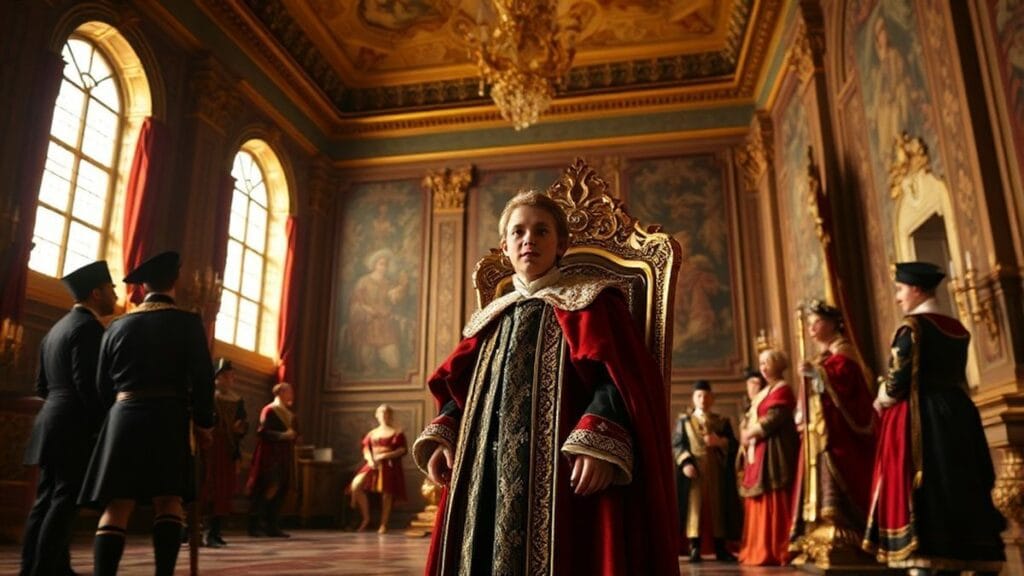
Inside the palace, the transformation was more intimate and yet equally profound. The child who had been “Monsieur le Dauphin,” the heir apparent, would now be addressed as “His Majesty.” Servants bowed lower; even familiar attendants adopted new titles. He was probably brought to see his father’s body, not only as a gesture of farewell but as a lesson in the seriousness of his new role. Death and succession faced each other across that bed: the old king laid out with ritual dignity, the new king still small enough to be led by the hand.
Anne of Austria understood that this precise moment of transition was her opportunity. As soon as louis xiv becomes king of france, she too enters a new identity: that of queen regent. The will of Louis XIII sought to share power with a regency council, consciously limiting his widow’s authority. Anne, however, refused to accept such constraints. Within hours of her husband’s passing, she would move decisively to rally key nobles, approach the Parlement of Paris, and have the dead king’s will annulled. The child’s accession, in other words, was the legal event that opened the door to her political coup.
To contemporaries, the sight of the little king making his first formal appearances must have been both touching and unsettling. Writers describe him dressed in rich but carefully arranged garments, instructed where to stand, when to lift his hat, how to acknowledge applause. He could not comprehend the complex web of treaties, taxes, and military obligations now attached to his person, but he could feel the gravity of the gazes that fastened on him. In the eyes of old generals as they bent their knees before him, he saw something like hope mixed with doubt. Could such small hands really hold a kingdom?
Yet behind the celebrations, a darker awareness lurked. France was at war: only days after louis xiv becomes king of france, French troops would win a spectacular victory at the Battle of Rocroi under the young Duke of Enghien (later the Grand Condé), shattering the myth of Spanish invincibility. The triumph would be ascribed to the new reign, an auspicious sign. But every victory increased expectations, and every expectation added to the pressure already bearing down on the boy. The crown that seemed to glitter so brightly on that May afternoon was, in truth, forged from both gold and iron.
Anne of Austria and Cardinal Mazarin: A Hidden Regency
In the wake of the accession, France did not fall into chaos. That it did not was due in large part to the political skill of two figures who understood that the throne’s occupant was too young to defend himself: Anne of Austria and Cardinal Jules Mazarin. Their partnership would shape the early reign, their choices guided both by love and by raw calculation.
Anne of Austria had long been underestimated. A foreigner by birth, pious, often sidelined by Richelieu and Louis XIII, she had been treated as an ornament more than a force. Yet she had learned in silence. She knew the factions at court, the jealousies of the Parlement of Paris, the ambitions of princes of the blood. She also knew that her primary weapon was the image of the child whose hand she held. When louis xiv becomes king of france, she appears publicly not only as grieving widow but as the indispensable guardian of the national future.
One of her first moves was to appeal to the Parlement of Paris, that powerful judicial body with roots in medieval times. In a carefully orchestrated session known as a “lit de justice,” she brought the young king to the Parlement’s great hall, where he was seated on a raised dais as magistrates in red robes bowed before him. There, in the child’s name, she requested—and obtained—the annulment of the restrictive clauses in Louis XIII’s will. The gesture was brilliant: by using the image of the boy-king and invoking the ancient rights of the realm, she turned potential institutional opposition into support for her regency.
At her side stood Mazarin, the Italian-born cardinal who had been Richelieu’s protégé. Elegant, perceptive, and deeply versed in European diplomacy, Mazarin saw in the new reign both peril and opportunity. He recognized that the moment when louis xiv becomes king of france could also be the moment when old aristocratic forces tried to reverse decades of centralization. To prevent that, he worked tirelessly to maintain continuity in foreign policy and to manage the dangerous egos at court. Critics would later accuse him of avarice and self-promotion; admirers would praise his skill in steering France through storms.
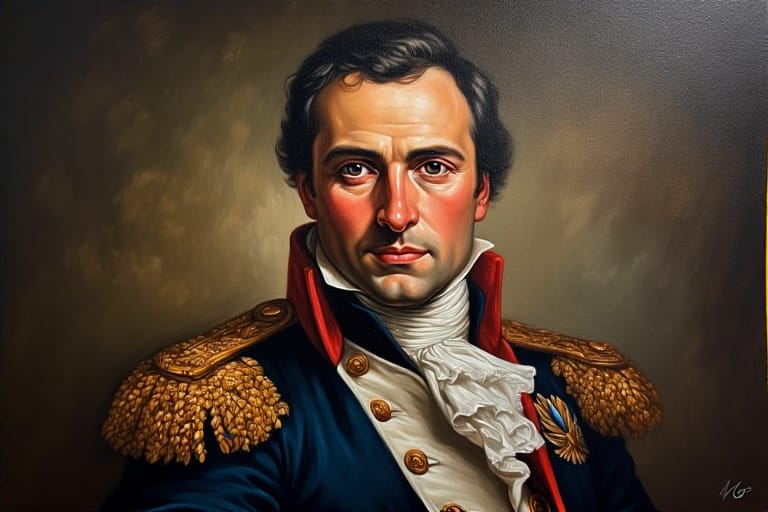
The regency was, in theory, about protecting a child. In practice, it was a knife’s edge. Every policy—raising taxes, continuing the war, rewarding allies—could inflame opposition. Anne and Mazarin had to speak to different audiences at once: reassure nobles that their honor was respected, reassure commoners that justice still existed, reassure allies that France remained reliable. They deployed the image of the child-king strategically. Portraits circulated showing Louis in miniature armor, or gazing upward with pious seriousness, a symbol of continuity and divine favor. Even his illnesses were exploited: prayers for his recovery became public rituals of loyalty to the monarchy itself.
Yet behind the scenes, tension simmered. Some nobles resented the influence of a foreign queen and an “Italian adventurer.” Some magistrates feared that the monarchy, under cover of a child’s innocence, would press even harder against their traditional privileges. The regency, however skillfully managed, could not forever hide the underlying conflict between a centralizing state and a society still structured by corporate rights and local autonomies. It was only a matter of time before these tensions erupted—in part, ironically, because the monarchy had survived the accession so smoothly.
A Crown in Crisis: The Fronde and the Education of a Monarch
The years that followed the accession were not simply a gentle interlude of tutelage and growth. They were a cauldron, and from that boiling mixture of war, fiscal strain, and noble ambition emerged a formative trauma for the young king: the Fronde. Between 1648 and 1653, France experienced a series of rebellions—first by magistrates and elites in Paris, then by great nobles and provincial leaders—that shook the regency to its core. The child who had been carried into the Parlement as a symbol of harmony was now forced to flee a hostile capital in the dead of night.
The Fronde began over legal and fiscal grievances: the Parlement of Paris objected to new financial measures, claiming to defend the “ancient liberties” of the realm against arbitrary rule. Pamphlets, the mazarinades, circulated mocking Mazarin and questioning the regent’s policies. But quickly, what started as a quarrel over taxes and prerogatives evolved into a broader crisis of authority. Princes like Condé, whose victory at Rocroi had seemed to augur a golden future, now rebelled when their demands were not met. Local strongmen in the provinces seized the chance to assert their autonomy.
At the center of this turmoil stood a boy and his mother. When parisian crowds grew threatening, Anne ordered the royal family to slip out of the city before dawn. One famous anecdote, later recounted by memoirist the Duc de Saint-Simon, described how soldiers found the young Louis asleep in a cold bed in the Palais-Royal, hastily dressing him so he could be carried away unnoticed. The child who once seemed the beloved focus of national hopes now experienced his own subject city as an enemy. The memory dug deep: years later, as an adult, Louis XIV would refuse to live in Paris, preferring the controlled environment of Versailles.
The Fronde taught brutal lessons. Louis saw nobles who had sworn loyalty draw their swords against the crown. He watched parliamentarians who had once bowed before him now set limits on his government. He heard, perhaps through closed doors, the bitter disputes between his mother and Mazarin, the desperate calculations of ministers trying to buy off rebel leaders or outmaneuver them. The notion that the king’s authority was natural and universally accepted shattered before his eyes. If he were to rule effectively one day, he could not rely on affection alone.
By the time the Fronde finally burned out, leaving exhaustion and bitterness in its wake, the boy was entering adolescence, but his experiences were those of a veteran. The countryside had suffered, households had split, old friendships had turned into vendettas. For Louis, the lesson was stark: dispersing power invited chaos; depending on too many intermediaries invited betrayal. When later he would centralize authority, weaken the high nobility’s political independence, and insist on rigorous court etiquette, he was, in a sense, answering the question posed the day louis xiv becomes king of france: how to ensure that a monarchy dependent on a single fragile body could nonetheless control a vast, turbulent society?
Historians have argued over the precise impact of the Fronde on the adult king’s psychology, but one interpretation remains compelling. As one modern scholar put it, “The child’s night escape from his capital became the adult’s refusal ever again to allow Paris to hold his sleep hostage.” The echoes of that crisis reverberate through his later choices: the move to Versailles, the insistence that high nobles live at court where he could watch them, the suspicion of independent power bases. To understand the glittering world of the Sun King, one must see the frightened child awakening in a cold, dark room, hurried out of his own palace by nervous guards.
The Young King and His Kingdom: Everyday Life in 1640s France
While the drama of regency and rebellion played out in palaces and council chambers, most of Louis XIV’s subjects lived lives that intersected with their monarch only in imagination and taxation. When louis xiv becomes king of france, the kingdom he inherits is still overwhelmingly rural. Perhaps 80 to 85 percent of the population lives in villages and small towns, tied to the rhythms of sowing and harvest, prayer and market days.
In a peasant household, the news of the king’s accession might arrive weeks or months late, borne by a traveling merchant, a priest’s sermon, or an official proclamation read aloud in the village square. The reaction would mix curiosity and resignation. A new king might mean new taxes, new wars—or perhaps nothing would change at all. Life was measured in bread prices and weather more than in the ages of distant rulers. Yet rituals mattered: bells tolled, masses were said for the soul of the dead king and in honor of the living one. In this way, even the poorest peasants were woven, however thinly, into the fabric of the monarchy.
Urban life offered a different perspective. Paris, already a city of several hundred thousand inhabitants, buzzed with rumor on that May day in 1643. Artisans, students, clerks, and beggars all had opinions about the boy-king and his regent mother. Taverns and workshops became spaces where news of Rocroi, of court intrigues, and of tax edicts mingled in often heated conversation. Provincial cities like Lyon, Bordeaux, and Toulouse each had their own elites—magistrates, merchants, bishops—who responded to the accession with calculations of advantage and concern. Would the regency favor their city? Would provincial privileges be respected?
Religion permeated daily life. The announcement that the king had died and that his son now reigned was accompanied by calls to prayer, not only in grand cathedrals but in village chapels where rough-hewn benches creaked under the weight of entire communities. The notion that kingship was sacred, that the king’s body somehow stood between heaven and earth, may have seemed abstract, but it showed up concretely in processions, in votive candles lit for the king’s health, in prayers said during childbirth or illness asking God to preserve both family and monarch. When louis xiv becomes king of france, unknown faces in distant parishes speak his name with a mixture of awe and distance, as if invoking a protective but unreachable saint.
For soldiers on campaign, the accession meant a new set of banners and, occasionally, bonus distributions of pay in the king’s name. Commanders used the change of reign as a moment to exhort troops, promising glory and spoils under the new sovereign. At Rocroi, fought just five days after Louis XIII’s death, French soldiers went into battle under the command of the young Duke of Enghien, but with the legitimacy of the fresh reign behind them. Their victory, crushing a famed Spanish tercio, became part of the legend: the kingdom’s enemies would say that even when ruled by a child, France could not be cowed.
Yet if one asked an ordinary subject to describe the new king, most would respond with myth more than fact. They might have seen a woodcut print or a crude painting, showing a cherubic face beneath an overlarge crown. They would hear, perhaps, that he was unusually serious, or that he had recovered miraculously from illness, signs of divine favor. In this way, the reality of the four-year-old Louis—his shyness, his outbursts, his small triumphs in learning to write—disappeared beneath a thick layer of stories. The child became an emblem, a name on coins and decrees, a figure in sermons. The gulf between the lived experience of the boy and the imagined figure of the king was vast, yet that gap was precisely what allowed the monarchy to function.
Faith, Ritual, and the Sacred Body of the King
In seventeenth-century France, politics did not exist in a secular vacuum. When louis xiv becomes king of france, he steps into a role dense with religious symbolism. The king was not a priest, but his body and actions were woven into the spiritual life of the realm. He alone, according to age-old belief, could perform the healing ritual known as the “king’s touch.” On specific feast days, crowds of the sick would gather, and the monarch would touch each afflicted person while the clergy intoned, “The king touches you, God heals you.” For a child barely out of infancy, such expectations were almost unimaginable.
The formal consecration of the king, the coronation at Reims, would come later, in 1654, when Louis was old enough to undergo the long, complex ritual. But even before that, his daily life included religious instruction and ceremony. He was taught that his authority came from God, that he was accountable to divine judgment, and that his first duty was to defend and promote the Catholic faith. His mother, deeply pious, surrounded him with devotions, pilgrimages, and chaplains. The boy’s image was carried in processions, prayed for in monasteries, invoked on saints’ days.
In cathedrals and parish churches alike, the announcement that “our lord the king Louis XIV” had ascended the throne gave priests the opportunity to preach on obedience, hierarchy, and divine providence. Sermons compared him to biblical kings: Solomon, David, Josiah. They urged the faithful to support the monarchy as the instrument through which God ordered the temporal world. One Jesuit preacher, according to a later collection of sermons, declared that “as the sun illuminates the heavens, so will this child-king, by God’s grace, one day illuminate France.” The metaphor would later cling to Louis as the “Sun King,” a retrospective label that drew power from such early religious rhetoric.
Yet rituals also exposed fragility. The need to pray publicly for the king’s health reminded everyone that the state’s continuity depended on a single body. If that body fell ill, what then? In a sense, every Te Deum of thanksgiving, every mass for the king’s protection, was also an acknowledgment of political vulnerability. When louis xiv becomes king of france as a tiny child, the nervous intensity of such prayers increases. The physical weakness of the sovereign body sharpens the spiritual drama: will God preserve this living symbol of the realm, or allow disaster?
The interplay between sacred and political roles was not lost on contemporaries. Some devout Catholics worried that the monarchy’s exalted status bordered on idolatry; others saw in it a providential guarantee of order. For the boy himself, raised in this fusion of devotion and deference, it became almost impossible to separate personal identity from sacred vocation. He was not just Louis, a child with fears and desires; he was le roi, a presence expected to mediate between God and people. The psychological weight of that expectation, placed on him from the moment of accession, helps explain the intensity with which the adult king would later embrace ceremonial, work, and moral discipline as the pillars of his rule.
From Child to Sun King: Memory of 1643 in Louis XIV’s Imagination
As the decades passed, the day of his accession took on an almost mythical status in Louis XIV’s own mind. He grew up surrounded by reminders of his “miraculous” birth, his early illnesses, and the sudden ascent to kingship when he was too young to understand it. Courtiers flattered him with tales of how the entire kingdom rejoiced when louis xiv becomes king of france, transforming that anxious moment into a story of universal acclaim. Memory, reshaped by power and time, turned fear into destiny.
By the time he began to rule personally in 1661, after Mazarin’s death, Louis had come to see the early years of his reign as a period of apprenticeship in suffering. He had watched his mother struggle against hostile nobles and judges; he had endured the humiliations of the Fronde; he had felt the uncertainty that came from being a king in name but not in fact. When he began to exercise power directly, he did so with the conviction that he must never again allow such disorder. The timid child of 1643 had become a man determined to embody majesty so completely that rebellion would seem not only dangerous but sacrilegious.
Artists and writers helped him inscribe this reinterpretation of his youth into the public imagination. Court painter Charles Le Brun produced allegorical images showing Louis as Apollo, the sun driving away darkness. Poets such as Jean Racine and Nicolas Boileau praised the king’s wisdom and strength, sometimes likening his early trials to those of Hercules in infancy. The vulnerable moment when louis xiv becomes king of france as a small boy was retroactively cast as the first step in a providential journey toward glory. Difficulties and humiliations were rebranded as tests that had purified his character.
Yet hints of the original insecurity remained. Louis’s insistence on controlling access to his person, on imposing elaborate court rituals, on deciding matters large and small himself, betrays not only pride but a deep-seated need to prevent the kind of chaos he had seen as a child. Memoirist the Duc de Saint-Simon, who was often critical of the king, nonetheless recognized this dimension when he wrote that “His Majesty never forgot that he had once been made to flee his own capital.” The Sun King’s blazing self-presentation thus contained, at its core, the memory of a frightened child-king awakened in the dark.
His own statements sometimes reveal the echo. In one oft-cited reflection, Louis noted that “from my earliest youth I understood that kings are made for the public.” That “earliest youth” was not a neutral time; it was the period when louis xiv becomes king of france while barely able to hold a quill, and yet finds himself on display in front of parlements, in processions, at official receptions. The long shadow of that early exposure to public gaze helps explain why he later made spectacle—ballets, ceremonies, architecture—into tools of governance. He had been formed in the crucible of being seen.
Reforming the Realm: How a Child-King Reshaped Government
The paradox of Louis XIV’s reign is that the king who came to the throne as a helpless child would later preside over one of the most centralized and disciplined monarchies in European history. The line from that May day in 1643 to the edicts and reforms of the 1660s and 1670s is not straight, but it is traceable. When louis xiv becomes king of france, the state apparatus is already substantial; by the time he has ruled for several decades, it will have become an intricate machine whose workings reach into every province.
Under the regency, Anne and Mazarin continued and extended the policies of Richelieu: strengthening royal intendants, curbing the independent power of governors, and consolidating fiscal administration. These moves, contested during the Fronde, proved enduring. When Louis began to rule personally, he did not dismantle this administrative framework; he perfected it. Councils were reorganized so that the most important decisions flowed through a small group of trusted ministers—such as Colbert in finance and Louvois in war—under the king’s direct supervision.
Louis’s work habits became legendary. He rose early, attended mass, then plunged into a schedule packed with councils and audiences. He read reports, annotated memoranda, and interrogated ministers on the details of provincial affairs. The boy who once could not sign his name without a guiding hand now signed edicts that touched everything from river improvements to the regulation of guilds. The memory of how easily things had nearly spun out of control during his minority may have driven him to this relentless oversight. If he left too much to others, could he trust that loyalty and discipline would hold?
Legal reforms and the imposition of royal justice further cemented central authority. The great legal compilation known as the Ordonnance civile of 1667 (or Civil Ordinance of Saint-Germain) standardized procedures in civil courts, while other ordinances addressed criminal law and commerce. Though these measures emerged later in the reign, their underlying logic—bringing disparate local customs under a more uniform royal framework—echoed concerns that had arisen when louis xiv becomes king of france and the regency had to navigate a patchwork of competing jurisdictions.
Taxation, always the sorest point between crown and people, was rationalized to some extent but rarely lightened. Colbert sought to increase efficiency, combat corruption, and promote economic development through protectionist measures and state-sponsored industries. Yet for many peasants, the royal reforms meant little more than a more regular, and more intrusive, collection of dues. The monarchy that had once seemed fragile now appeared inescapable. Its agents—intendants, tax farmers, military recruiters—penetrated ever deeper into rural life.
From a distance, this transformation might look like a purely structural evolution, the product of long-term trends in state-building. But at its heart were the choices of a man who had known, in childhood, what it meant for royal authority to be contested. It is not a coincidence that Louis showed little interest in sharing power with representative bodies. The Estates-General—the traditional assembly of clergy, nobility, and commoners—was never called during his long reign. The Parlement of Paris, once bold enough to challenge royal edicts, was domesticated, its role reduced to registering laws rather than debating them. The personal history that began when louis xiv becomes king of france as a vulnerable child thus left its mark on the institutional shape of the French state.
The Human Cost: Peasants, Soldiers, and the Weight of Absolutism
For all the brilliance associated with Louis XIV’s reign, the path from that May day in 1643 to the heights of Versailles was paved with human sacrifice. When louis xiv becomes king of france, the kingdom is already groaning under the strain of prolonged war. Under his great generals—Turenne, Condé (when loyal), later Luxembourg—France would fight almost continuously across its borders: against Spain, the Dutch Republic, the Empire, and various coalitions. Victory brought territories and prestige, but each campaign meant fresh levies of men and money.
Peasant communities bore the brunt. Military recruitment drained their youth; requisitions emptied their barns. In bad years, when harvests failed or armies passed through, hungry villages melted into bands of vagrants wandering the countryside. Reports sent to intendant offices spoke of “deserted parishes, houses without roofs, fields lying fallow.” Even as royal ordinances proclaimed the benevolence of the monarch, reality in many districts was closer to slow devastation. The line from the child’s accession to the peasant’s suffering may seem indirect, but it runs through the choices of a monarchy determined to assert itself in Europe.
Soldiers, too, paid a high price. The royal armies swelled to sizes unprecedented in French history—hundreds of thousands under arms at peak moments. Many were conscripts or pressed men; others were mercenaries drawn by pay and plunder. Of those who left their villages to serve “the king’s cause,” a significant proportion never returned. They died not only in battle but from disease, exposure, and neglect. A kingdom that had once trembled over the health of a single royal child now expended the lives of countless anonymous youths to secure its borders and its king’s glory.
City dwellers felt the weight more in coin than in blood. New taxes on consumption, on trade, on property pressed against the limits of what urban populations could bear. Periodic uprisings—small “frondes” of tax riots—were suppressed with force. The crown justified these exactions with appeals to necessity and honor. The enemies of France, it was said, would exploit any sign of weakness; therefore, the sacrifices demanded were framed as patriotic. Yet for a widow trying to feed her children or a craftsman unable to pay the new imposts, such rhetoric offered little comfort.
Morally, the monarchy wrapped these burdens in a language of paternal care. Louis saw himself as shepherd of his people, responsible before God for their souls and bodies. He sometimes intervened personally to correct abuses, to grant relief after disasters, to support public works like canals and hospitals. But the scale of the suffering created by his wars and fiscal policies far exceeded the capacity of such gestures to repair. The image of the father-king, so carefully cultivated from the day louis xiv becomes king of france as an adorable child in portraits, sat uneasily alongside the harsh experiences of many of his subjects.
In this contrast lies a deeper truth about absolutism. It was both a dream of order and a mechanism of extraction. The same centralization that allowed the state to protect and promote certain interests also allowed it to mobilize resources for destructive ends. The little boy of 1643, whose body seemed almost too slight for his ceremonial robes, would grow into a monarch whose reach extended into the most intimate corners of his subjects’ lives—commanding their faith, their labor, their very blood.
France and Europe Watch: Diplomacy in the Wake of a Child’s Accession
When news reached foreign courts that louis xiv becomes king of france as a toddler, reactions mixed relief, curiosity, and calculation. France’s enemies, particularly Spain and the Holy Roman Empire, had spent years battling the formidable combination of Louis XIII and his ministers. A child-king and a regency might mean weakness, a chance to press territorial claims or demand favorable peace terms. Ambassadors wrote home with assessments of Anne of Austria’s character, of Mazarin’s skill, of factional alignments in Paris.
The irony was not lost on observers: Anne, herself a Spanish Habsburg princess by birth, now presided over a regency committed to continuing war against her own family’s realms. Would blood or raison d’état prevail? For a time, some foreign diplomats hoped that maternal sentiment might soften France’s stance. But Mazarin, following Richelieu’s path, and Anne, aware that any sign of softness could be read domestically as betrayal, maintained pressure. The stunning victory at Rocroi in May 1643 signaled that France under a child-king would not be an easy adversary.
Within a few years, diplomacy turned from pure conflict toward negotiation. The Peace of Westphalia in 1648, ending much of the Thirty Years’ War, established France as a major guarantor of the new European order. Later, the Treaty of the Pyrenees in 1659, ending the war with Spain, sealed territorial gains and arranged a royal marriage: Louis XIV would wed Maria Theresa, daughter of the Spanish king. This union, conceived in the shadow of his early accession, would later provide pretexts for further wars of succession and expansion.
From London to Vienna, from Stockholm to Rome, the figure of the young Louis fascinated and concerned. As he grew older, reports shifted in tone: initial comments on his physical health and demeanor gave way to analyses of his political character. One Venetian ambassador, in a dispatch often cited by historians, described him in adolescence as “serious beyond his years, attentive to affairs, yet still watched closely by his mother and the cardinal.” The moment in 1643 when louis xiv becomes king of france, though it passed quickly, had created a long diplomatic horizon in which other monarchs and ministers tried to predict what kind of adult ruler would emerge from such a precarious beginning.
European politics in this era was, in many ways, a family drama played out across borders. Dynastic marriages, inheritances, and personal relationships among royals shaped treaties and wars. The fact that Louis had become king as a child made him a particularly attractive and dangerous piece on this chessboard. Could he be married into another house to cement alliances? Could his minority be exploited to press claims? Would the internal strains of regency make France more flexible or more aggressive abroad? The answers unfolded over decades, but the questions were born on that May day when a boy, barely taller than a sword, inherited one of the largest and most ambitious kingdoms in Europe.
Versailles as Answer: Architecture, Power, and the Memory of Insecurity
Among the most visible legacies of Louis XIV’s early accession is a place: the palace of Versailles. At first glance, Versailles seems far removed from the tense corridors of the Louvre in 1643. It is a world of glittering mirrors, endless gardens, and controlled vistas. Yet look deeper, and you can see in its stones and geometry a response to the anxieties of the regency and the Fronde, to the vulnerability that marked the years when louis xiv becomes king of france.
The decision to transform his father’s modest hunting lodge at Versailles into the seat of court and government was not merely aesthetic. Paris had shown itself dangerous: its crowds could be roused, its parlement could defy, its memory of having once frightened a child-king could not be erased. Versailles, by contrast, was open countryside, a blank canvas upon which control could be inscribed. Here, the king could design not only buildings but behavior, not only gardens but hierarchies.
The architecture itself expressed order radiating from a single point. At the center: the royal bedchamber, with its ceremonial rising and retiring—lever and coucher—open to select courtiers. Corridors and antechambers carefully regulated access, ensuring that proximity to the king became both a privilege and a form of surveillance. High nobles, once semi-autonomous in their provincial strongholds, now spent much of the year at court, competing for the honor of holding a candlestick or presenting the royal shirt. Through ritual, Louis turned former rivals into supplicants.
Versailles was thus an architectural answer to a political question first posed when louis xiv becomes king of france as a powerless child: how can a monarch ensure that the forces capable of challenging him are always under his watchful gaze? By concentrating the nobility at court, he reduced their ability to build independent bases of military or fiscal power in the provinces. By making court life intoxicating—filled with entertainments, favors, and the subtle rewards of royal attention—he coaxed them into complicity.
The palace also projected a message outward. Foreign ambassadors entering the glittering Hall of Mirrors understood that they were in the presence of a state that had mastered spectacle as a tool of dominance. The sheer scale and cost of Versailles signaled that France’s monarchy, once tested by minority and rebellion, now possessed the resources and confidence to reimagine its own environment. As historian Norbert Elias argued in his classic study of court society, the palace was both a stage and a workshop for fashioning an absolutist political culture.
In the gardens, designed by André Le Nôtre, nature itself was subjected to royal order: trees trimmed into geometric shapes, water forced into precise fountains, perspectives laid out to draw the eye toward statues glorifying the king. The boy who had once been carried hurriedly through dark, narrow corridors now strolled along vast, sunlit alleys where everything seemed to obey his will. Behind the beauty lay a memory: the world does not naturally arrange itself so harmoniously; it must be bent, by labor and discipline, into alignment with the monarch’s desires.
Myths, Memoirs, and Paintings: How the Accession Was Remembered
The story of how louis xiv becomes king of france did not remain fixed. Over time, it was retold, reimagined, and repurposed by different voices—royal propagandists, skeptical memoirists, later historians. Each version revealed as much about the storyteller as about the event itself.
Official imagery presented the accession as almost seamless. Engravings showed allegorical figures—France, Victory, Religion—presenting the crown to a serene child under the approving gaze of heaven. Later paintings might depict Louis XIII, in a moment of paternal tenderness, blessing his son’s head as light streams in from a celestial source. The anxieties, the conflicts over the regency, the near civil war that followed were airbrushed out. What remained was a narrative of providence: God took one king and gave another, ensuring continuity and favor.
Memoirists like the Duc de Saint-Simon, writing near the end of Louis’s life and into the Regency that followed, offered a more complex image. Saint-Simon, though younger than the king, collected stories from older courtiers, blending sharp observation with palace gossip. He painted the young Louis as serious, watchful, even a bit suspicious—a temperament shaped by early exposure to intrigue. In his sprawling Mémoires, he uses scattered anecdotes about the child-king to explain the adult’s later behaviors: his dislike of Paris, his theatricality at court, his reluctance to empower others.
Foreign observers, too, left traces. The letters of Madame de Motteville, a lady-in-waiting to Anne of Austria, combine domestic detail with political insight. She describes, with understated emotion, the scene of the widowed queen sitting beside her son, teaching him to sign documents, instructing him in how to receive ambassadors, maintaining an image of composure even as the kingdom roiled. In one passage, she notes that “His Majesty, still too young to comprehend the weight that rested on his brow, yet already knew that all eyes turned toward him.” Her words offer a poignant glimpse of the human reality behind the stylized portraits.
Over the eighteenth and nineteenth centuries, as attitudes toward monarchy shifted, the day louis xiv becomes king of france acquired new meanings. Enlightenment critics of absolutism emphasized the absurdity of entrusting so much power to hereditary accident, citing the boy-king as an example of how irrational the system could be. Romantic writers, by contrast, sometimes dwelt on the pathos of the child burdened with a crown. In the age of revolutions, the entire notion of a divinely sanctioned child-king came to seem a relic of a vanished world, inspiring both nostalgia and scorn.
Modern historians, armed with archives and a taste for nuance, have tried to strip away the layers of myth without losing sight of the event’s symbolic resonance. For instance, historian René Pillorget, in his work on seventeenth-century France, highlights how the early accession crystallized pre-existing tensions between crown and elites, while also offering a rallying point for national identity. The day itself, he suggests, matters less for what occurred in the rooms of the Louvre than for how it became a hinge, connecting one style of monarchy to another.
The Long Echo of a Short Day: Legacies of 14 May 1643
Looking back from the vantage point of Louis XIV’s death in 1715, the morning when louis xiv becomes king of france might seem a mere footnote in a vast chronicle of wars, palaces, and policies. Yet the echoes of that short day stretch far. It set in motion the regency that would confront the Fronde, shaping the king’s mistrust of intermediary powers. It created a context in which the monarchy, to protect a vulnerable child, concentrated authority more tightly than before, laying groundwork for later absolutism.
The psychological legacy is equally important. The boy who knew kingship first as a heavy garment draped over shoulders too small to bear it would grow into a man who inhabited the role with unparalleled intensity. His insistence that everything pass through his hands, his fusion of personal glory with the state’s destiny, his refusal to share formal power with estates or parlements—all can be traced, at least in part, to memories and stories from his childhood. The moment when louis xiv becomes king of france was not only a constitutional fact; it was a formative narrative he told himself as justification for his later choices.
For France as a whole, the accession was one step along a path that would lead, eventually, to revolution. The centralized state that Louis XIV helped forge proved durable enough to outlast him, but brittle enough that, in time, its rigid hierarchies and fiscal demands provoked a cataclysm. Eighteenth-century critics of royal power, looking back, saw the child-king as emblematic of a system that treated subjects as minors needing paternal guidance, even when that guidance ignored their suffering. Ironically, the very notion of an all-powerful, all-knowing monarch, steadily constructed from the day a four-year-old boy inherited the throne, helped generate the counter-idea that sovereignty should reside in the nation instead.
Beyond France, the image of Louis XIV’s long reign, beginning in such frailty and ending in such grandeur, influenced other rulers. Peter the Great in Russia, Frederick the Great in Prussia, and many lesser princes studied the French example: its military reforms, its court culture, its administrative centralization. They drew lessons, sometimes imitating, sometimes reacting against what they saw. The child whose accession had once made Europe wonder whether France would falter thus became, in adult life, a model—if sometimes a cautionary one—for monarchical ambition elsewhere.
And at the human level, behind the abstractions of “state” and “monarchy,” there remains the abiding image of a mother and son in a darkened palace. Anne of Austria, her mourning still fresh, must guide a boy through ceremonies that both console and exploit him. Louis, sensing more than understanding, steps into a role that will determine not only his fate but that of millions. It is a scene at once intimate and enormous. As a single date—14 May 1643—recedes into the past, this fusion of private sorrow and public transformation remains its most enduring imprint.
Conclusion
On that spring day in 1643, when louis xiv becomes king of france at the age of four, the event seemed to many contemporaries both frightening and strangely familiar. France had weathered minorities before; it would, they hoped, weather this one as well. Yet what unfolded from that moment was not merely a repetition of old patterns but a transformation. The regency of Anne of Austria and Mazarin, the crucible of the Fronde, the steady growth of royal administration—all converged to produce a new kind of monarchy, one that would find its fullest expression in the adult reign of the Sun King.
The story is at once political and deeply human. It is about a dynasty struggling to secure its line, about ministers maneuvering to protect their influence, about nobles testing the boundaries of obedience and rebellion. It is also about a child whose earliest memories are entangled with death, ceremony, and flight from danger. The decisions he would later make—to centralize power, to build Versailles, to govern through spectacle and relentless labor—cannot be understood without that background of childhood vulnerability.
For the millions of subjects who rarely saw their king, the accession meant little at first beyond new names in prayers and on coins. Over time, however, the long reign that began in that cramped bedchamber reshaped virtually every aspect of French life: law, taxation, warfare, culture, and even the layout of the landscape. The monarchy emerged more imposing than ever, but also more demanding, more intrusive. The early fragility of royal power had been answered with an architecture of control whose weight would eventually strain the society that supported it.
In the end, the significance of 14 May 1643 lies not only in the fact that the crown moved from one head to another, but in how that transfer forced a kingdom to confront its own structures of authority and belief. The figure of the child-king, at once powerless and sovereign, exposed the paradox at the heart of hereditary monarchy. From that paradox, Louis XIV and his ministers fashioned a system remarkable for its brilliance and its hardness. Its legacy, for good and ill, still invites reflection whenever we consider how a single life, beginning in such unlikely circumstances, can redirect the course of a nation’s history.
FAQs
- How old was Louis XIV when he became king of France?
Louis XIV was four years and eight months old when he became king of France on 14 May 1643, immediately upon the death of his father, Louis XIII. - Did Louis XIV actually rule France as a child?
No. Although he was legally king from 1643, real power during his childhood was exercised by his mother, Anne of Austria, as regent, and by Cardinal Mazarin as chief minister. Louis began to rule personally only in 1661, after Mazarin’s death. - Why was Louis XIV’s minority considered dangerous for France?
France was already engaged in major wars and faced internal tensions over taxation and noble privilege. A child-king raised fears of factional struggles, weak central authority, and a possible return to the civil conflicts that had scarred earlier royal minorities. - What was the Fronde and how did it affect the young king?
The Fronde was a series of rebellions (1648–1653) by magistrates and nobles against the crown’s policies. Louis XIV, still a boy, was forced to flee Paris and experienced firsthand the threat of rebellion, shaping his later determination to centralize power and distrust independent elites. - How did Louis XIV’s early accession influence his later absolutist rule?
His childhood, marked by regency politics and the Fronde, convinced him that divided authority invited chaos. As an adult, he concentrated decision-making in his own hands, curtailed the political role of parlements and estates, and used court ritual at Versailles to control the nobility. - Where was Louis XIV when his father died?
He was in the Louvre palace in Paris, in a separate apartment from his dying father. When Louis XIII died there on 14 May 1643, the young Louis, still in the same complex, became king instantly by law and custom. - When was Louis XIV’s formal coronation held?
Louis XIV’s coronation took place in Reims Cathedral on 7 June 1654, more than a decade after he technically became king, once he was old enough to undergo the full rites and assume a more active political presence. - How did ordinary people in France learn that Louis XIV had become king?
News spread through official proclamations read in town squares, parish sermons, and word of mouth carried by travelers and merchants. In rural areas, it could take weeks or months for the news to arrive. - Did Louis XIV’s accession immediately change France’s foreign policy?
No. Under the regency, Anne of Austria and Mazarin largely continued the policies of Louis XIII and Richelieu, keeping France engaged in the Thirty Years’ War and in conflict with Spain until peace treaties in 1648 and 1659. - Why is Louis XIV often called the “Sun King”?
The nickname “Sun King” reflects the imagery of Louis XIV as a central, radiant source of light and order, akin to the sun in the cosmos. This symbolism, developed especially later in his reign, grew out of court culture, artistic propaganda, and the religious rhetoric that had accompanied his life from childhood.
External Resource
Internal Link
Other Resources
- Encyclopaedia Britannica – general search for the exact subject
- Google Scholar – academic search for the exact subject
- Internet Archive – digital library search for the exact subject