The 1755 Lisbon Tsunami: When Nature Shook Europe’s Faith
Table of Contents
- Introduction
- The Earthquake That Shattered Lisbon
- The Deadly Tsunami Strikes
- Fires and Widespread Destruction
- Political, Cultural, and Philosophical Reactions
- Legacy and Modern Disaster Preparedness
- Conclusion
- External Resources
Introduction
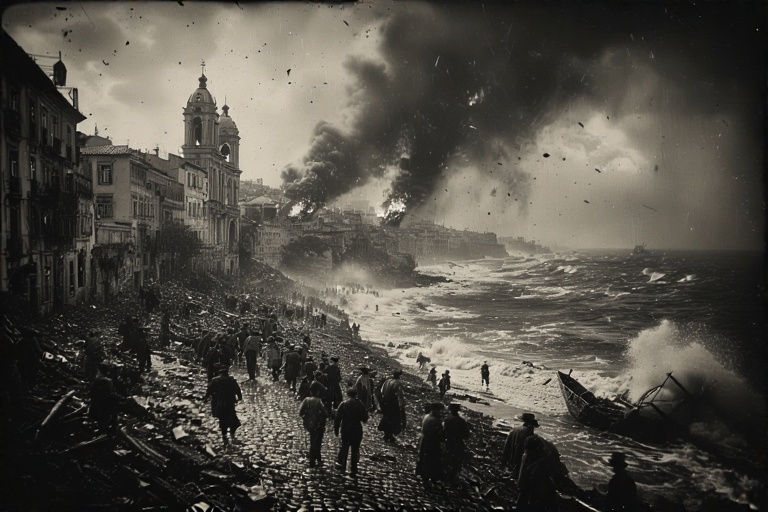
On the morning of November 1, 1755, as Lisbon’s citizens celebrated All Saints’ Day, a massive earthquake struck the city, followed by a catastrophic tsunami and uncontrollable fires. This triple disaster left up to 50,000 people dead, destroyed two-thirds of the city, and forever altered the history of Portugal and Europe.
The Earthquake That Shattered Lisbon
At approximately 9:40 AM, a powerful earthquake, estimated between 8.5 to 9.0 magnitude, struck just off the Portuguese coast. It lasted several minutes and leveled buildings, including churches filled with worshippers.
✔️ The quake’s epicenter lay in the Atlantic Ocean, about 200 km southwest of Lisbon.
✔️ Seismic shocks were felt across Spain, North Africa, and as far as Scandinavia.
✔️ Thousands were trapped under collapsed buildings.
The Deadly Tsunami Strikes
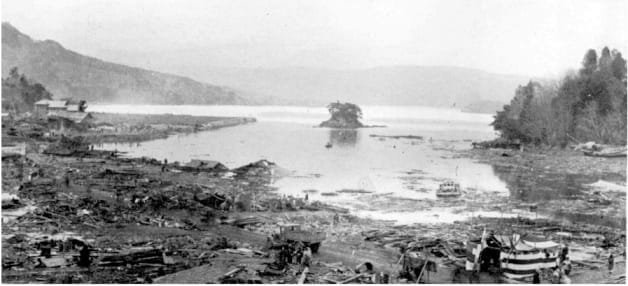
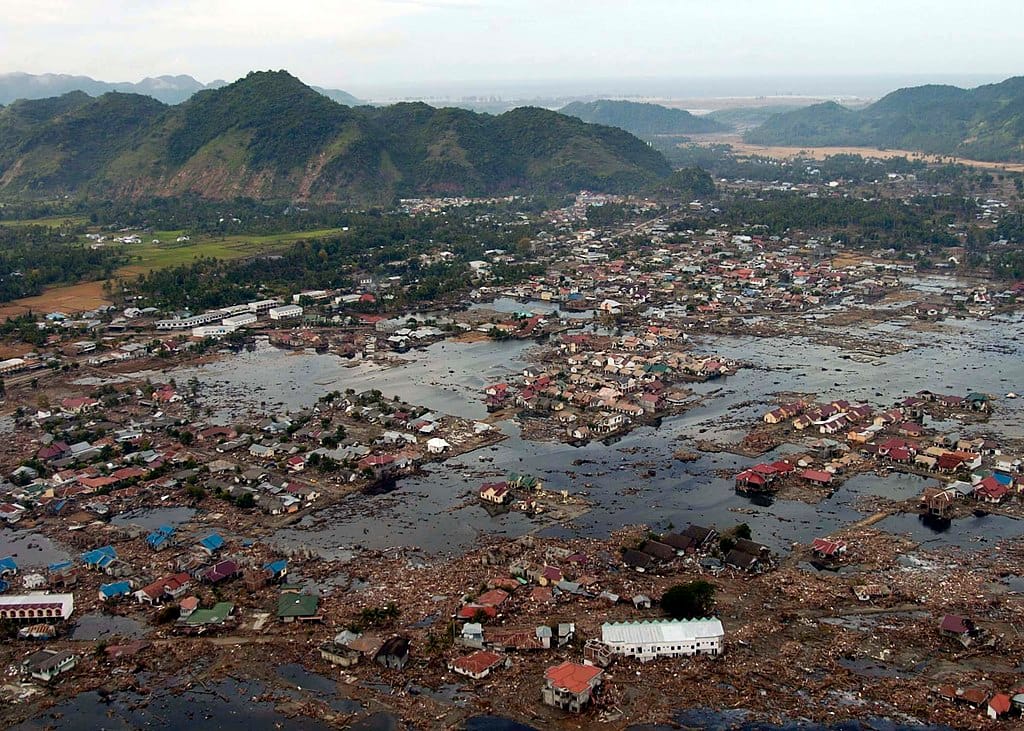
Roughly 30 to 40 minutes later, the sea receded, and then towering waves—up to 20 meters high—crashed into Lisbon’s shores. The tsunami swept away the port, warehouses, churches, and thousands of people, adding to the death toll.
🔹 Coastal cities such as Cádiz (Spain) and Mogador (Morocco) were also hit.
🔹 The tsunami reached the Caribbean and South America, showing the event’s massive scale.
Fires and Widespread Destruction
As if the earthquake and tsunami weren’t enough, fires broke out across Lisbon, sparked by candles, cooking fires, and overturned stoves. With water sources destroyed and chaos reigning, the city burned for five days.
✔️ Iconic landmarks like the Royal Ribeira Palace were lost.
✔️ Entire neighborhoods were reduced to ash.
✔️ Looting and social unrest followed in the aftermath.
Political, Cultural, and Philosophical Reactions
The disaster deeply shook Enlightenment thinkers like Voltaire, who questioned how such evil could exist in a divinely ordered world. His poem “Poème sur le désastre de Lisbonne” criticized religious fatalism.
✔️ The Marquis of Pombal, Portugal’s prime minister, led rapid reconstruction efforts.
✔️ New seismic building codes were introduced—revolutionary for their time.
✔️ The event influenced emerging fields like seismology and urban planning.
Legacy and Modern Disaster Preparedness
Today, the 1755 Lisbon tsunami is seen as one of the earliest examples of a natural disaster’s global implications. It spurred the development of:
⚠️ Early tsunami and earthquake science in Europe
⚠️ Risk assessment and disaster response systems
⚠️ A shift toward secular humanism in philosophical thought
Conclusion
The Lisbon Tsunami of 1755 was more than just a catastrophe—it was a transformative moment in European history. It changed the way cities were built, how societies understood nature, and how governments responded to crises. Its lessons echo through time, reminding us that even in disaster, progress and resilience can emerge.