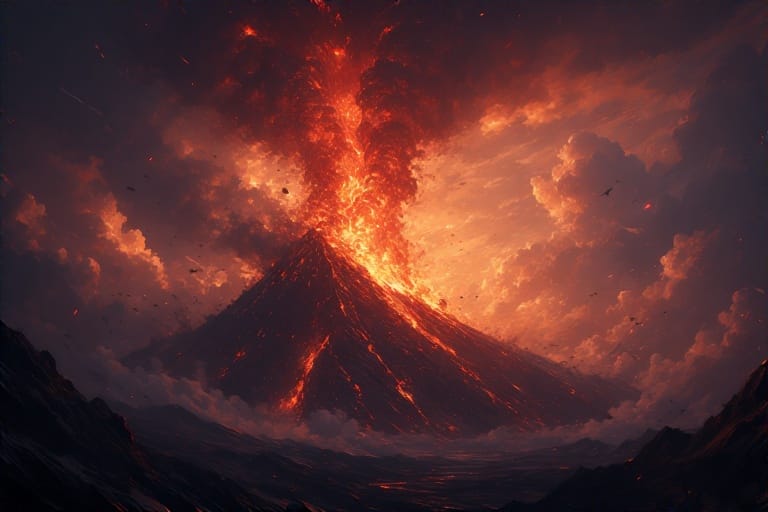
Mount Pelée 1902: The Day Martinique Stood Still
Table of Contents
- Introduction
- Mount Pelée: A Caribbean Giant
- Prelude to Disaster
- The Deadly Eruption of May 8
- Destruction of Saint-Pierre
- The Human Toll
- Scientific Awakening
- Eyewitness Accounts and Survivor Tales
- Global Reactions and Relief Efforts
- Pelée’s Legacy
- Conclusion
- External Resource
- Internal Link
1. Introduction
On May 8, 1902, one of the most devastating volcanic disasters in modern history unfolded in the Caribbean island of Martinique. The towering Mount Pelée, dormant for decades, erupted in a sudden and ferocious explosion that obliterated the coastal city of Saint-Pierre, then known as the “Paris of the Caribbean.” In less than two minutes, over 28,000 people perished, making this the deadliest volcanic eruption of the 20th century.
2. Mount Pelée: A Caribbean Giant
Mount Pelée rises to 1,397 meters (4,583 feet) above the northern end of Martinique. It is part of the Lesser Antilles volcanic arc, where the Atlantic Plate subducts beneath the Caribbean Plate. Though its summit appears tranquil, its geological past is marked by explosive eruptions.
3. Prelude to Disaster
Signs of trouble began in April 1902. Locals observed:
✔️ Earthquakes and subterranean rumbles
✔️ Columns of ash and sulfuric fumes
✔️ Animals behaving erratically
On May 2, a minor eruption occurred, raining ash on nearby communities. Yet, many residents stayed. Political leaders assured citizens there was no imminent danger, even as tremors increased.
4. The Deadly Eruption of May 8
At 7:52 AM, a pyroclastic surge—a boiling cloud of gas, ash, and rock moving at over 100 km/h—burst from the volcano. It moved faster than sound, engulfing Saint-Pierre within moments.
🌋 Temperatures reached over 1,000°C, incinerating everything in its path.
🔥 Trees were flattened, buildings vaporized, metal twisted.
💨 It lasted mere minutes but left an eternal mark.
5. Destruction of Saint-Pierre
Saint-Pierre, once a thriving port city with grand architecture, was reduced to rubble.
✔️ Over 98% of the population died.
✔️ Only a handful survived, including the infamous prisoner Ludger Sylbaris, protected by his underground cell.
✔️ Ships in the harbor burst into flames.
6. The Human Toll
✔️ An estimated 28,000 to 30,000 lives lost.
✔️ Entire families and neighborhoods vanished.
✔️ Relief workers reported charred bodies frozen mid-action.
This eruption remains one of the deadliest natural disasters in Caribbean history.
7. Scientific Awakening
Mount Pelée’s eruption gave rise to the term “nuée ardente” (glowing cloud).
Scientists began studying pyroclastic flows more seriously.
Geologists reclassified Pelée as a Peléan-type volcano, capable of sudden, lethal outbursts.
This event significantly advanced volcanology, highlighting the importance of early warning systems.
8. Eyewitness Accounts and Survivor Tales
✔️ Ludger Sylbaris, buried in a stone cell, emerged with burns but alive—his story captivated the world.
✔️ Survivors from neighboring areas described total darkness, hurricane-force winds, and the sound of “a thousand cannons.”
Their stories formed the emotional core of this catastrophic event.
9. Global Reactions and Relief Efforts
✔️ News spread rapidly via telegraph and newspapers.
✔️ Aid came from France, the United States, and other nations.
✔️ Saint-Pierre was never fully rebuilt—Fort-de-France became the island’s main city.
The world mourned, and scientific missions arrived soon after.
10. Pelée’s Legacy
Mount Pelée still looms over Martinique, now monitored closely.
Its eruption serves as a case study in volcanic risk, communication failures, and human vulnerability.
The city of Saint-Pierre stands today as a quiet memorial to lives lost and the importance of disaster readiness.
11. Conclusion
The Mount Pelée eruption of 1902 was a disaster of immense magnitude, wiping out a vibrant community in minutes. Yet from its ashes rose scientific insight, global solidarity, and enduring memory. As natural disasters continue to shape our world, Pelée remains a stark reminder of how quickly life can change.
12. External Resource
🌐 Wikipedia: 1902 eruption of Mount Pelée

