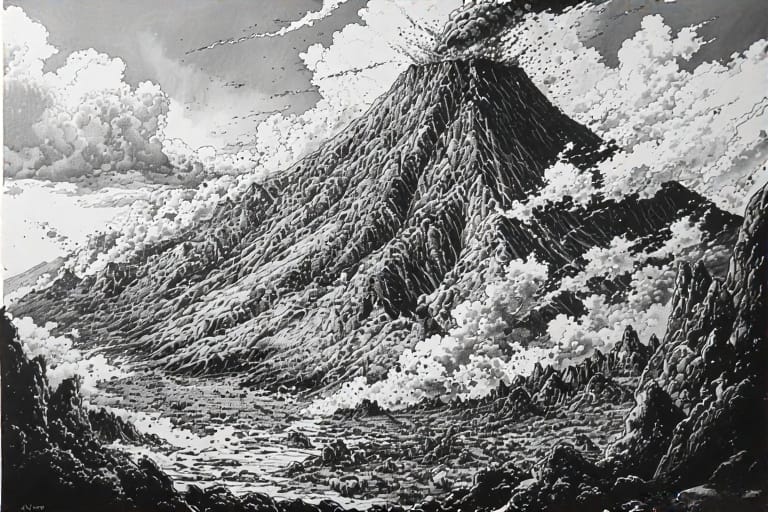
Mount Etna 1669: Sicily’s Fiery Catastrophe
Table of Contents
- Introduction
- Mount Etna: A Volcanic Icon
- Life in 17th Century Sicily
- Foreshocks and Preludes
- The March 11 Eruption Begins
- The Advance of the Lava Flow
- Panic in Catania
- Impact on the People and Land
- Religious Interpretations and Responses
- Long-Term Consequences
- Legacy in Science and Culture
- Conclusion
- External Resource
- Internal Link
1. Introduction
On March 11, 1669, Mount Etna—Europe’s most active volcano—unleashed one of the most devastating eruptions in its history. Over the course of weeks, lava poured down its slopes, burying villages, destroying farmland, and threatening the major city of Catania.
The 1669 eruption remains the largest recorded historical eruption of Mount Etna, marking a turning point for both the physical and cultural landscape of eastern Sicily.
2. Mount Etna: A Volcanic Icon
Towering above the island of Sicily, Mount Etna has long been both feared and revered.
✔️ One of the most active volcanoes in the world
✔️ Located along the subduction zone between the African and Eurasian plates
✔️ Eruptions have been recorded since antiquity
By the 17th century, Etna’s periodic rumblings were part of Sicilian life.
3. Life in 17th Century Sicily
Sicily in the 1600s was a place of agriculture, Catholic tradition, and frequent seismic activity. Catania, located on Etna’s southeast flank, was a growing city reliant on nearby fertile volcanic soil.
✔️ Population centered in small farming villages
✔️ Religious processions were common for protection from natural disasters
✔️ Local authorities lacked scientific understanding of volcanology
4. Foreshocks and Preludes
The eruption didn’t come without warning.
✔️ Foreshocks and tremors were reported days before
✔️ Animals reportedly grew restless
✔️ Sulfuric smells and smoke emerged from fissures
Despite these signs, the scale of the coming eruption was underestimated.
5. The March 11 Eruption Begins
A violent explosion marked the opening of a long fissure on Etna’s southern slope.
✔️ Lava fountains reached hundreds of meters high
✔️ The main vent formed near Monte Frumento
✔️ Lava flows began to move rapidly toward populated areas
6. The Advance of the Lava Flow
Over the next several days, lava engulfed villages like Nicolosi and Mascalucia.
✔️ The flow was nearly 10 km long
✔️ Lava buried churches, homes, and entire communities
✔️ Molten rock reached the walls of Catania by mid-April
The city’s fate hung in the balance.
7. Panic in Catania
The lava flow breached Catania’s defensive walls.
✔️ Citizens fled in terror
✔️ Local leaders and clergy organized mass prayers
✔️ Efforts to divert the lava—including building trenches—largely failed
Ultimately, the flow stopped just short of Catania’s core, sparing the city’s center but devastating its outskirts.
8. Impact on the People and Land
The human toll and environmental transformation were immense:
✔️ Thousands of homes destroyed
✔️ Farmland rendered barren by volcanic rock
✔️ Local economy severely disrupted
Survivors had to rebuild entire communities from scratch.
9. Religious Interpretations and Responses
In a deeply religious society, the eruption was seen as divine punishment or a test of faith.
✔️ Processions of saints’ relics were carried toward the lava
✔️ Churches held continuous masses
✔️ Survivors constructed votive chapels in gratitude for divine intervention
The eruption’s spiritual significance remains embedded in local culture.
10. Long-Term Consequences
The eruption left long-lasting scars:
✔️ Changed the course of rivers and terrain
✔️ Altered the geography of the Catania plain
✔️ Cemented Mount Etna’s status as a feared but respected force of nature
Reconstruction took decades, but the people endured.
11. Legacy in Science and Culture
Although modern volcanology didn’t exist in 1669, records from monks, officials, and travelers helped later scientists.
✔️ One of the first well-documented lava flow disasters in Europe
✔️ Inspired early studies in lava behavior and eruption forecasting
✔️ Continues to influence cultural identity and local traditions
Mount Etna’s 1669 eruption became a cornerstone in volcanic history.
12. Conclusion
The Mount Etna eruption of 1669 was not merely a natural disaster—it was a defining moment in Sicilian history. It reshaped the landscape, tested faith, and left behind stories that continue to echo centuries later.
Nature’s fury and humanity’s resilience collided on that fateful spring day, forging a legacy still visible in the lava fields of Sicily.
13. External Resource
🌐 Wikipedia: 1669 Etna eruption

