Mount Fuji 1707: When Ash Darkened Edo’s Sky
Table of Contents
- Introduction
- Mount Fuji Before 1707
- The Edo Period: Prosperity and Peace
- The Prelude to Eruption
- The Hōei Eruption Begins
- Ash Over Edo
- The Human and Agricultural Toll
- Cultural Responses and Superstitions
- Scientific Understanding Then and Now
- Mount Fuji’s Volcanic Legacy
- Conclusion
- External Resource
- Internal Link
1. Introduction
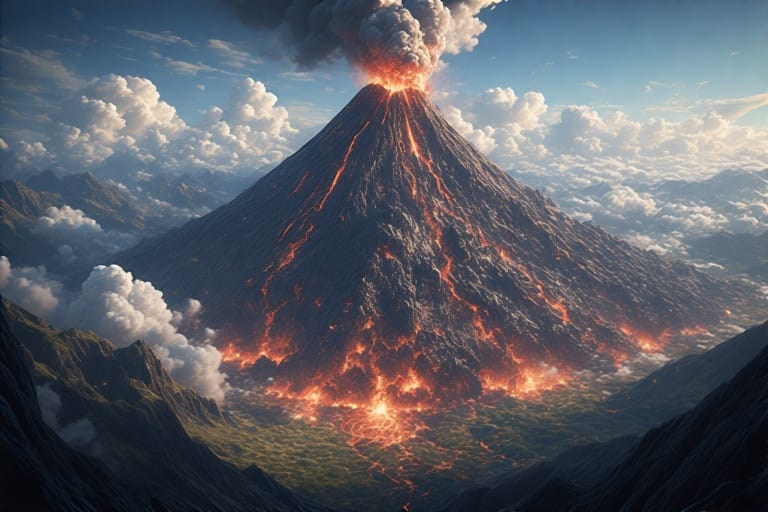
On December 16, 1707, Mount Fuji, Japan’s most revered volcano, erupted in an event now known as the Hōei Eruption. It was the mountain’s last major eruption, and its effects were felt across central Japan, especially in the capital region of Edo (modern-day Tokyo).
Unlike many volcanic eruptions that come with lava and fire, this one brought ash—tons of it. The eruption painted the sky gray for weeks and crippled agriculture, shaking the balance of the peaceful Edo period.
2. Mount Fuji Before 1707
Long before the Hōei eruption, Mount Fuji had been dormant for centuries.
✔️ Last eruption recorded in 864 AD (Jōgan Eruption)
✔️ Considered a symbol of harmony and sacredness
✔️ Heavily featured in Shinto mythology and Japanese poetry
The mountain stood tall and silent—but nature had not forgotten it.
3. The Edo Period: Prosperity and Peace
Japan in the early 1700s was under the Tokugawa Shogunate.
✔️ Political stability and isolationist policies
✔️ Agricultural production at its peak
✔️ Cities like Edo (Tokyo) and Kyoto thriving
People were not prepared for nature’s sudden fury.
4. The Prelude to Eruption
Weeks before the eruption, tremors began shaking the region.
✔️ In October 1707, the Great Hōei Earthquake (estimated magnitude 8.6) struck offshore
✔️ Triggered a series of aftershocks and crustal shifts
✔️ Volcanic pressure under Mount Fuji intensified rapidly
Then, on December 16, the earth opened.
5. The Hōei Eruption Begins
The eruption was explosive and ash-heavy, without lava flows.
✔️ Ash columns soared 20 km into the air
✔️ Volcanic material covered hundreds of kilometers
✔️ No lava, but cinders and pumice rained down for 16 days
People from as far as Kyoto and Edo saw the sky darken.
6. Ash Over Edo
The capital city of Edo, over 100 kilometers away, was not spared.
✔️ Ash thickness reached 4 cm in parts of the city
✔️ Rooftops collapsed under the unexpected weight
✔️ People wore cloth over their faces, thinking disease was spreading
Air quality worsened, visibility dropped, and panic spread through the streets.
7. The Human and Agricultural Toll
Though there was little immediate loss of life, the aftereffects were devastating:
✔️ Farms destroyed as ash suffocated rice fields
✔️ Rivers choked with volcanic debris
✔️ Food shortages and inflation soon followed
Communities took years to recover, and many migrated from rural areas.
8. Cultural Responses and Superstitions
As always in Japanese history, the natural disaster sparked spiritual reflection:
✔️ Many believed the eruption was punishment from the gods
✔️ Religious rituals increased at Fuji shrines
✔️ Artists began portraying Fuji not only as serene, but powerful and destructive
Mount Fuji became both a muse and a menace.
9. Scientific Understanding Then and Now
In the Edo period, volcanology did not yet exist.
✔️ Observations were recorded by monks, scholars, and travelers
✔️ Modern scientists use these records to model ash dispersal
✔️ The eruption site, Hōei Crater, remains visible today
It’s now one of the most studied events in Japanese geology.
10. Mount Fuji’s Volcanic Legacy
Since 1707, Fuji has remained dormant—but never forgotten.
✔️ Listed as a Decade Volcano for risk awareness
✔️ Monitored constantly by the Japan Meteorological Agency
✔️ Emergency plans exist for potential future eruptions
The Hōei eruption reminds Japan of the mountain’s dual identity.
11. Conclusion
The 1707 eruption of Mount Fuji shook not only the land but also the minds and hearts of the people. Though it lacked lava, its impact through ash, agriculture, fear, and transformation was long-lasting. To this day, it shapes how Japanese culture views its most sacred mountain—not just as a symbol of peace, but also of raw, hidden power.

