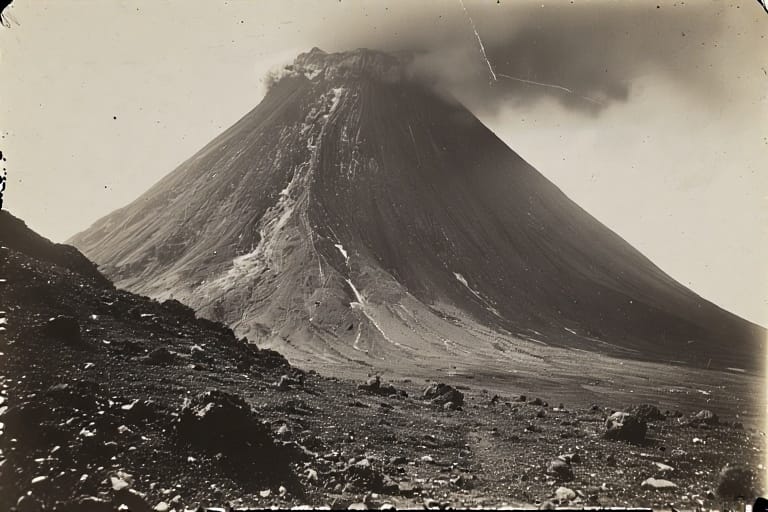
Mount Unzen 1792: When Fire Met the Sea
Table of Contents
- Introduction
- Mount Unzen: A Volcanic Background
- Japan in the Edo Period
- Prelude to the Disaster
- The Eruption Begins
- The Deadly Landslide
- Shimabara Bay Tsunami
- The Human Cost
- Eyewitness Accounts and Records
- Geological Insights
- Cultural and Historical Legacy
- Lessons from the Past
- Conclusion
- External Resource
- Internal Link
1. Introduction
On May 21, 1792, the eruption of Mount Unzen in Japan unleashed a chain reaction of devastation. While the eruption itself was relatively moderate, it triggered a gigantic landslide that plunged into the sea, generating a powerful tsunami that swept across Shimabara Bay.
The resulting wave destroyed coastal communities and caused the deaths of an estimated 15,000 people, making it the deadliest volcanic disaster in Japan’s recorded history.
2. Mount Unzen: A Volcanic Background
✔️ Located in Kyushu, southern Japan
✔️ Part of the Unzen-Amakusa National Park
✔️ Known for its frequent andesitic eruptions
✔️ One of the most active and dangerous volcanoes in Japan
Mount Unzen is actually a volcanic complex, not a single peak. In 1792, the lava dome Mayuyama played a central role in the disaster.
3. Japan in the Edo Period
The late 18th century was a time of relative peace in Japan under the Tokugawa shogunate.
✔️ Communities near Unzen relied on farming and fishing
✔️ Religion and spirituality heavily influenced daily life
✔️ Natural disasters were often seen as spiritual omens
Mount Unzen had erupted before—but nothing could prepare the region for what was to come.
4. Prelude to the Disaster
Months before May 1792, signs of unrest appeared:
✔️ Increased seismic activity
✔️ Small-scale eruptions and steam venting
✔️ Cracking and shifting observed near Mayuyama Dome
Residents were uneasy, but there was little understanding of how imminent the threat was.
5. The Eruption Begins
In the early morning of May 21, Mount Unzen erupted.
✔️ Ash and gases rose into the sky
✔️ Tremors shook the region
✔️ Villagers fled to higher ground
But it wasn’t the eruption that would seal their fate—it was what happened next.
6. The Deadly Landslide
A massive portion of Mayuyama Dome collapsed in a landslide.
✔️ Estimated 340 million cubic meters of rock and debris
✔️ Slid down the mountain at incredible speed
✔️ Entered Ariake Sea near Shimabara
The impact displaced enormous volumes of water—setting the stage for a tsunami.
7. Shimabara Bay Tsunami
The landslide-generated tsunami was devastating.
✔️ Waves over 20 meters high in some areas
✔️ Struck both Shimabara Peninsula and opposite shores
✔️ Wrecked homes, ships, and rice paddies
The water receded only to return again and again, compounding the destruction.
8. The Human Cost
✔️ More than 15,000 people killed
✔️ Entire villages wiped out
✔️ Survivors suffered from injuries, hunger, and displacement
The death toll makes it the most lethal volcanic-related disaster in Japan’s history.
9. Eyewitness Accounts and Records
Although this occurred in the 18th century, many records survive:
✔️ Samurai scribes and monks documented the chaos and aftermath
✔️ Local oral traditions preserved personal stories
✔️ Government archives noted the impact on land and economy
These accounts paint a vivid picture of fear, faith, and resilience.
10. Geological Insights
Modern volcanologists studied the 1792 disaster to understand:
✔️ How lava dome collapses can trigger tsunamis
✔️ Risk patterns for coastal volcanic zones
✔️ Long-term tectonic activity around Kyushu
The event remains a key case study in geohazard research.
11. Cultural and Historical Legacy
✔️ Shrines and memorials erected in Shimabara
✔️ Anniversary observances held each year
✔️ Featured in historical documentaries and literature
The eruption left a mark not just on the land—but on the soul of the nation.
12. Lessons from the Past
Today, Japan has one of the most advanced volcano monitoring systems in the world.
✔️ Early warning networks
✔️ Evacuation drills
✔️ Public education campaigns
Much of this progress traces back to tragedies like Unzen.
13. Conclusion
The Mount Unzen eruption and tsunami of 1792 remains a chilling reminder of nature’s ability to devastate—and of human vulnerability in its path. But it also shows how societies can grow stronger through memory, science, and preparedness.
Japan remembers. And it prepares.
14. External Resource
🌐 Wikipedia: 1792 Unzen earthquake and tsunami

