Kīlauea 2018: Hawaii’s Fiery Reckoning
Table of Contents
- Introduction
- The Volcano: Kīlauea’s Profile
- Precursors and Warnings
- Leilani Estates: Ground Zero
- The Eruption Unfolds
- Lava Flows and Fissures
- Evacuations and Community Impact
- Scientific Monitoring and Discoveries
- Environmental Consequences
- Media Coverage and Global Reaction
- Cultural and Historical Significance
- Recovery and Long-Term Effects
- Lessons and Preparedness
- Conclusion
- External Resource
- Internal Link
1. Introduction
On May 3, 2018, the Kīlauea volcano on Hawaii’s Big Island erupted explosively, forever altering the landscape of Leilani Estates and neighboring regions. Over the next several weeks, fountains of lava, sulfuric fumes, and newly formed fissures threatened lives, homes, and nature alike.
It was a stark reminder that Hawaii, despite its paradise image, rests on volatile ground.
2. The Volcano: Kīlauea’s Profile
✔️ One of the most active volcanoes on Earth
✔️ Located in Hawai‘i Volcanoes National Park
✔️ Known for its frequent effusive eruptions
✔️ Linked to the Pacific Plate hotspot
Kīlauea had been erupting almost continuously since 1983. But 2018 was different.
3. Precursors and Warnings
Signs of trouble appeared in April:
✔️ Seismic swarms near Pu‘u ‘Ōō cone
✔️ Collapse of the crater floor
✔️ Ground deformation and gas emissions
The USGS issued alerts, but the rapid progression of events caught many by surprise.
4. Leilani Estates: Ground Zero
Nestled in the Puna District, Leilani Estates became the epicenter of disaster.
✔️ On May 3, fissures began ripping open roads and lawns
✔️ Lava fountains soared up to 90 meters high
✔️ Dozens of homes were quickly swallowed
People fled with what they could carry.
5. The Eruption Unfolds
Over 3 months, the eruption evolved:
✔️ 24 fissures opened across the Lower East Rift Zone
✔️ Over 700 homes destroyed
✔️ Nearly 14 square kilometers of new land formed
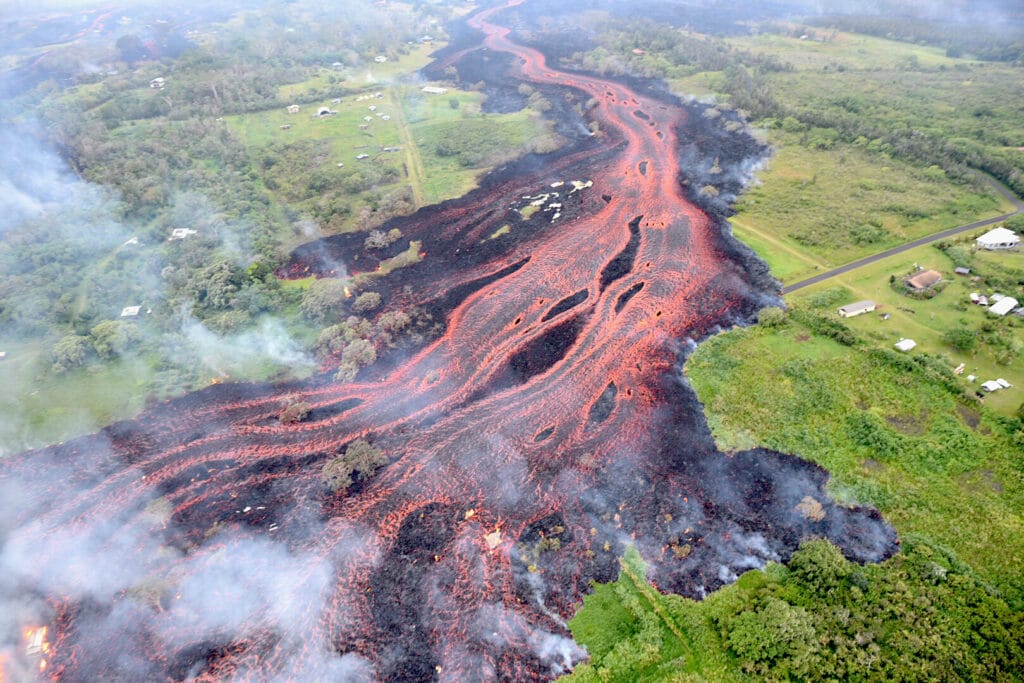
Some lava flows reached the Pacific Ocean, creating toxic laze plumes.
6. Lava Flows and Fissures
The molten rivers were both mesmerizing and menacing:
✔️ Fissure 8 became the most dominant
✔️ Lava temperatures exceeded 1,100°C
✔️ Flows moved at speeds of up to 24 km/h
They carved paths through forests, highways, and neighborhoods.
7. Evacuations and Community Impact
✔️ Over 2,000 residents evacuated
✔️ Shelters and aid stations quickly established
✔️ Schools and businesses closed indefinitely
The tight-knit Puna community faced trauma, displacement, and uncertainty.
8. Scientific Monitoring and Discoveries
The eruption was a field day for volcanologists:
✔️ Real-time GPS, seismic, and gas data collected
✔️ Drone footage mapped lava flows
✔️ New models of rift dynamics were developed
The USGS’s constant updates became vital to the public.
9. Environmental Consequences
✔️ Air quality declined due to SO2 emissions
✔️ Lava overtook coastal habitats and rainforests
✔️ New ecosystems began forming on fresh lava fields
The island’s ecosystem would take decades to fully recover.
10. Media Coverage and Global Reaction
✔️ Dramatic footage went viral worldwide
✔️ Tourists flocked to view the lava (from a distance)
✔️ Global discussions emerged on climate, safety, and resilience
Kīlauea reminded the world of Earth’s unpredictable forces.
11. Cultural and Historical Significance
✔️ Native Hawaiians revere Pele, goddess of volcanoes
✔️ Eruptions seen as part of her ongoing presence
✔️ The event reinforced cultural ties to nature and respect
Local traditions mixed with science in interpreting the eruption.
12. Recovery and Long-Term Effects
✔️ New land created along the coast
✔️ Rebuilding efforts began cautiously
✔️ Mental health services provided to survivors
Many chose not to return. Others rebuilt with hope.
13. Lessons and Preparedness
✔️ Community alert systems refined
✔️ Land-use planning reconsidered
✔️ Greater investment in disaster resilience
Hawaii emerged stronger—but ever aware.
14. Conclusion
The 2018 Kīlauea eruption was not just a natural event. It was a moment of reckoning, of destruction and rebirth. It showed the raw force of geology—and the unbreakable spirit of communities rooted in ancient land.
15. External Resource
🌐 Wikipedia: 2018 lower Puna eruption

