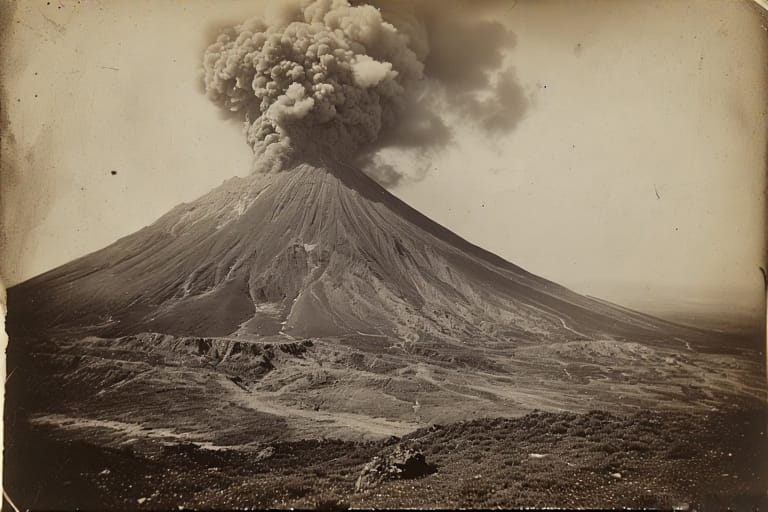
Ambrym 1913: Fire in the Heart of the Pacific
Table of Contents
- Introduction
- Ambrym Volcano: A Fiery Twin
- Geological Background
- Eruption Timeline and Sequence
- Ashfall and Lava Flow Impact
- Effects on Local Villages
- Colonial Response and Reports
- Environmental Aftermath
- Cultural Interpretation of the Eruption
- Volcanic Monitoring and Challenges
- Legacy in Vanuatu’s Volcanic History
- Conclusion
- External Resource
- Internal Link
1. Introduction
On December 7, 1913, the Ambrym Volcano—one of the most active volcanoes in the South Pacific—erupted violently in the New Hebrides (now Vanuatu). This event was both dramatic and destructive, with ash columns rising into the stratosphere and lava flows reshaping the island’s geography.
Despite its remote location, the eruption was widely felt, displacing communities and prompting international interest in Pacific volcanic activity.
2. Ambrym Volcano: A Fiery Twin
✔️ Ambrym features twin lava lakes within a large caldera
✔️ Part of the Pacific Ring of Fire
✔️ Prior eruptions date back centuries
The 1913 eruption was one of the largest in Ambrym’s recorded history.
3. Geological Background
✔️ Ambrym is a basaltic stratovolcano
✔️ Characterized by explosive eruptions and effusive lava flows
✔️ Frequent seismic activity prior to major events
Its position on a subduction zone makes it especially volatile.
4. Eruption Timeline and Sequence
✔️ Early December: tremors reported by missionaries and locals
✔️ December 7: Main eruption, massive ash plumes and lava
✔️ Ash cloud reached over 12 km altitude
Eyewitnesses described the sky turning dark at midday.
5. Ashfall and Lava Flow Impact
✔️ Ash blanketed northern and eastern parts of Ambrym
✔️ Lava flows destroyed vegetation and croplands
✔️ Villagers reported breathing issues and eye irritation
Homes made of traditional materials were especially vulnerable.
6. Effects on Local Villages
✔️ Several coastal villages evacuated
✔️ Livestock lost due to ash poisoning and lack of forage
✔️ Water sources contaminated by volcanic debris
The eruption disrupted daily life for months.
7. Colonial Response and Reports
✔️ Then under joint British-French colonial administration
✔️ Missionaries and colonial officers documented the event
✔️ Relief was minimal due to the island’s remoteness
Scientific records were limited but valuable.
8. Environmental Aftermath
✔️ Forests destroyed in the caldera region
✔️ Coral reefs near lava entry points damaged
✔️ Soil fertility decreased in heavily ash-covered zones
Recovery took decades in some ecosystems.
9. Cultural Interpretation of the Eruption
✔️ Some communities saw the eruption as a punishment
✔️ Rituals and storytelling helped communities cope
✔️ Spirits of the volcano integrated into oral histories
Volcanoes are deeply embedded in local cosmology.
10. Volcanic Monitoring and Challenges
✔️ No modern instruments in 1913
✔️ Observations relied on missionaries and sailors
✔️ Today, the Vanuatu Meteorology and Geo-Hazards Department (VMGD) monitors Ambrym
Modern systems remain essential due to continued eruptions.
11. Legacy in Vanuatu’s Volcanic History
✔️ Marked a new chapter in regional awareness
✔️ Led to better documentation in future decades
✔️ Highlighted vulnerability of island populations
The 1913 eruption remains a key event in Vanuatu’s geological memory.
12. Conclusion
The Ambrym eruption of 1913 was more than an isolated natural event—it was a dramatic reminder of the raw geological power beneath the Pacific islands. The event changed landscapes, disrupted lives, and planted the seeds of modern volcanic awareness in the region.
Though time has passed, the black scars on Ambrym’s terrain still whisper of that fateful day.

