Table of Contents
- Dawn Over the Balkans: The Calm Before the Storm
- Roots of Conflict: Nationalism and Empire in Early 20th Century Balkans
- The Declining Ottoman Empire: Fragile and Vulnerable
- The Balkan League: An Unlikely Alliance Forms
- The Spark Ignites: Declaring War from Cetinje
- Montenegro’s Bold Step: The First Shot of the First Balkan War
- Mobilization and March: Armies on the Move
- Siege of Scutari: A Clash for Control
- Battles Across the Balkans: Strategy, Valor, and Tragedy
- The Role of Serbia: Expansion and Ambition
- Bulgaria’s Military Surge: Tactical Prowess and Political Aims
- Greece’s Naval Power: Commanding the Seas
- The Ottoman Resistance: From Desperation to Defeat
- Civilians in the Crossfire: Human Cost of the War
- Diplomatic Maneuvers and the Great Powers’ Watchful Eyes
- Endgame: The Treaty of London and the New Balkan Map
- The Aftershocks: Seeds of Future Conflicts
- Montenegro’s Transformation: National Pride and New Challenges
- Remembering the War: Memory, Monuments, and Myth
- Conclusion: Lessons From the First Balkan War
- FAQs
- External Resource
- Internal Link
Dawn Over the Balkans: The Calm Before the Storm
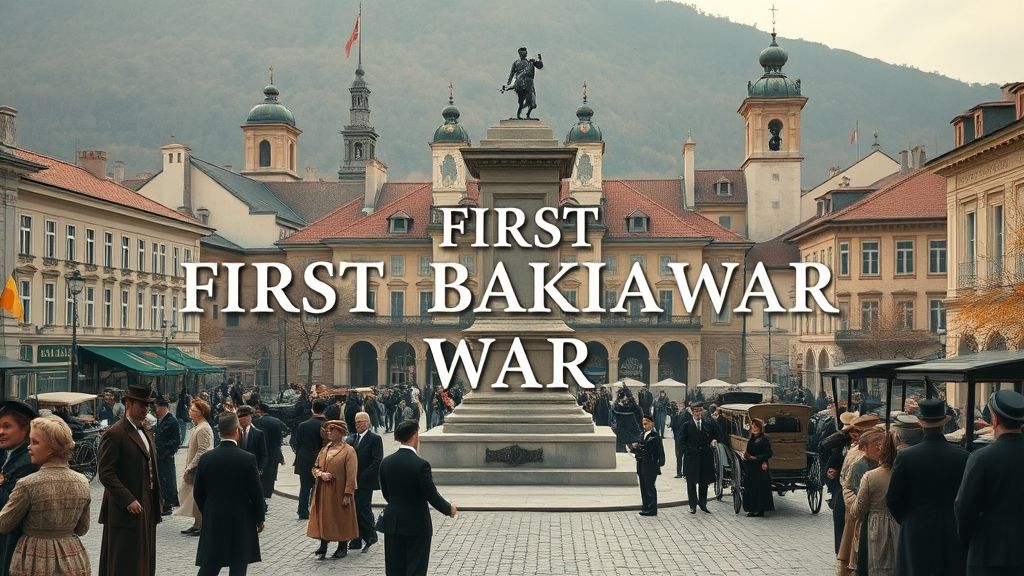
On the crisp morning of October 8, 1912, as the sun cast long shadows over the rugged terrain of Cetinje, Montenegro’s ancient capital, an air of tense anticipation hung over the city. Smoke curls lazily from chimneys; the distant clatter of horses’ hooves breaks the silence. Citizens, villagers, and soldiers gathered in small groups, whispers circulating of a monumental announcement. The clouds above mirrored the uncertainty below—heavy, brooding, pregnant with the promise of something that would ripple through the Balkans and beyond.
At exactly 10:30 AM, the declaration of war was read aloud by King Nikola I. Montenegro, the smallest but one of the oldest players in the Balkan arena, had taken the decisive first step against the Ottoman Empire. The First Balkan War had officially begun.
The moment was electric, filled with the dual forces of hope and dread. For many Montenegrins, it was a chance to reclaim what was considered rightfully theirs—territory, pride, and sovereignty. For others, it was the beginning of a brutal conflict that would tear apart empires, redraw borders, and ignite tensions that would eventually lead to the Great War.
Roots of Conflict: Nationalism and Empire in Early 20th Century Balkans
To understand why Montenegro fired the first salvo, one must grasp the seismic shifts shaking the Balkans at the dawn of the 20th century. The region was a mosaic of ethnicities, religions, and ambitions—a tinderbox of nationalism fueled by centuries of Ottoman rule.
Slavic peoples, Greeks, Albanians, and others, each nurtured potent national identities, long suppressed or subdued under Ottoman suzerainty. The 19th century saw waves of nationalist awakenings — from Serbs’ uprisings to Bulgarian cultural renaissance — that set the stage for an inevitable clash.
But the roots of conflict extended beyond identity. The Ottoman Empire, known historically as the “Sick Man of Europe,” was hemorrhaging territory and influence. European powers eyed the Balkans with a mixture of opportunism and anxiety. Russia, Austria-Hungary, Britain, and France all nurtured interests—some overlapping, others directly competing—on this volatile chessboard.
Montenegro, Serbia, Bulgaria, and Greece sensed a historic opportunity: if the Ottomans could be pushed back, the Balkan peoples might finally carve out modern nation-states.
The Declining Ottoman Empire: Fragile and Vulnerable
The Ottoman Empire in 1912 was a shadow of its former self. Years of military defeats, bureaucratic corruption, and ethnic rebellions had sapped its strength. The Young Turk Revolution of 1908 had promised reforms but resulted in little substantial change.
Its European territories—especially Macedonia, Kosovo, and Thrace—were an ungovernable morass of unrest and competing loyalties. The Ottoman military, though large on paper, suffered from poor training, outdated equipment, and low morale.
The empire’s diplomatic isolation grew as the Great Powers carved spheres of influence. Russia sought access to warm-water ports; Austria-Hungary aimed to prevent Slavic nationalism from threatening its multi-ethnic empire. Britain focused on securing routes to India and maintaining control over seaways.
Against this backdrop, the Ottoman government faced a dilemma: hold on at all costs or negotiate painful concessions. The Balkan states, sensing weakness, opted for war.
The Balkan League: An Unlikely Alliance Forms
Despite historic rivalries and mutual suspicions, Montenegro, Serbia, Bulgaria, and Greece forged an alliance known as the Balkan League in 1912. This coalition surprised many observers, uniting former foes against a common enemy.
The League’s creation was a masterstroke of diplomacy, largely brokered by Russia, which sought to weaken the Ottomans without direct intervention. By pooling their military resources and coordinating offensives, the Balkan states hoped to expel Ottoman forces from Europe.
Each had its own ambitions: Serbia dreamed of uniting all South Slavs under its banner; Bulgaria sought to reclaim Macedonia; Greece aimed to expand into Epirus and Crete; Montenegro longed to regain lost lands around its borders.
Though tensions simmered beneath the surface, the Balkan League agreed to mobilize simultaneously, striking a decisive blow before the Ottomans could fully respond.
The Spark Ignites: Declaring War from Cetinje
Montenegro’s announcement on October 8, 1912, was not merely symbolic. Though small in size, Montenegro’s declaration was the official opening salvo of the First Balkan War.
King Nikola I, a shrewd and determined ruler, framed the war as a righteous crusade to liberate Christian brethren under Ottoman yoke. The Montenegrin army, though modest, was battle-hardened, infused with fierce patriotism and the memory of past struggles for autonomy.
The atmosphere in Cetinje was electric as church bells tolled, soldiers marched to muster, and citizens prepared for months of uncertainty. The nearby mountains and valleys would soon echo with gunfire and the cries of war.
Montenegro’s Bold Step: The First Shot of the First Balkan War
Just beyond Cetinje, near the Ottoman border, Montenegrin forces moved swiftly. Their first objective: Dulcigno (now Ulcinj), a strategic coastal town under Ottoman control.
Montenegrin skirmishers launched raids, testing Ottoman defenses. The clash was both tactical and symbolic. It was the first time in decades that Montenegrin soldiers crossed borders on offensive missions.
This bold move galvanized the Balkan League, spurring Serbia, Bulgaria, and Greece to mobilize fully. Montenegro had set the stage. The war had ignited.
Mobilization and March: Armies on the Move
Mobilization across the Balkans was a chaotic but determined process. Conscripts from villages and towns poured into training camps. Military commanders scrambled to coordinate plans amid rough terrain and limited infrastructure.
By late October, armies were massed, marching through mountainous passes, river valleys, and coastal plains. Supply lines strained, communication faltered, yet enthusiasm remained high.
Soldiers, many barely out of boyhood, carried the hopes of their nations on tired shoulders. Letters home spoke of excitement mingled with fear. The collective heartbeat of the Balkan peoples surged into battle.
Siege of Scutari: A Clash for Control
One of the war’s defining early battles unfolded around Scutari (Shkodër), a heavily fortified Ottoman stronghold in northern Albania, close to Montenegro.
Montenegrin and Serbian forces laid siege to the city, facing fierce Ottoman resistance. The fighting was grueling—artillery barrages, daring infantry assaults, and prolonged hardship tested both sides.
Scutari’s siege became emblematic of the war’s intensity; it lasted for months, exacting a heavy toll on soldiers and civilians alike.
Battles Across the Balkans: Strategy, Valor, and Tragedy
Beyond Scutari, the war raged from the plains of Macedonia to the hills of Thrace. Serbian forces scored key victories at Kumanovo and Prilep, lifting morale and opening pathways towards Ottoman-held territories.
Bulgaria’s army delivered crushing blows in Thrace, capturing key positions, while Greek troops took forward positions in Epirus and on the Aegean coast.
Yet victory was never easy. Fierce resistance, harsh terrain, and the ravages of disease made every advance costly. Stories of heroism and sacrifice emerged, but so did tragedies—villages burned, families displaced, and civilians caught in the crossfire.
The Role of Serbia: Expansion and Ambition
Serbia was arguably the primary beneficiary of the war. Its military successes expanded its influence across Kosovo, Macedonia, and parts of northern Albania.
But Serbia’s ambitions were double-edged. With expanded territory came greater responsibility—and tension, especially with Bulgaria over disputed lands.
Belgrade emerged from the conflict more confident and assertive, setting the scene for future Balkan rivalries. It was a turning point, both triumphant and fraught with peril.
Bulgaria’s Military Surge: Tactical Prowess and Political Aims
Bulgaria’s army was the most modern and well-organized of the League. Its initial victories shattered Ottoman resistance in Thrace and parts of Macedonia.
However, disputes over territorial division with Serbia and Greece foreshadowed fractures. Bulgarian national aspirations clashed with its allies', sowing seeds for the Second Balkan War just months later.
Despite these tensions, Bulgaria’s military prowess during the First Balkan War earned it a central role in reshaping the Balkan map.
Greece’s Naval Power: Commanding the Seas
Greece brought a critical advantage: a modern navy. Greek ships controlled the Aegean Sea, cutting off Ottoman reinforcements and supply routes.
Naval dominance enabled Greek forces to capture key islands and coastal cities, securing strategic positions.
This maritime superiority not only tipped the balance but boosted Greek morale and national prestige.
The Ottoman Resistance: From Desperation to Defeat
Despite the odds, Ottoman forces fought tenaciously. Commanders adapted, employing guerrilla tactics and fortifying key positions.
Yet internal dissent, logistical failures, and international isolation wore down Ottoman resolve. The empire’s days as a dominant Balkan power were numbered.
By early 1913, Ottoman leaders sought armistice, signaling defeat but not final collapse.
Civilians in the Crossfire: Human Cost of the War
War’s toll extended far beyond armies. Civilians suffered displacement, famine, and atrocities.
Entire villages were uprooted; cultural heritage sites were damaged. Refugees flooded borders, straining resources and inflaming nationalist sentiments.
Eyewitness accounts recall the fear and resilience of those caught between armies — mothers clutching children, elders recalling peace now shattered.
Diplomatic Maneuvers and the Great Powers’ Watchful Eyes
As battles unfolded, European powers watched warily. Russia favored Balkan Christian states; Austria-Hungary feared Serbian expansion; Britain and France sought stability and control over strategic routes.
Diplomatic pressure, secret deals, and rapid negotiations culminated in the Treaty of London (May 1913), ending the war but planting new seeds of discord.
This interplay of diplomacy and conflict highlighted the Balkans as the continent’s powder keg.
Endgame: The Treaty of London and the New Balkan Map
The Treaty of London dramatically reshaped southeastern Europe. The Ottoman Empire ceded almost all of its European territories.
The Balkan states gained significant lands, but disagreements over borders—particularly in Macedonia and Albania—sparked immediate tension.
Albania’s independence was upheld, creating a new state amid the regional turmoil.
The Aftershocks: Seeds of Future Conflicts
The First Balkan War was not the end, but a prologue. Friction between allies led to the Second Balkan War, where former partners turned against Bulgaria.
Moreover, unresolved tensions and nationalist fervor contributed to the assassination of Archduke Franz Ferdinand in 1914—igniting World War I.
The conflict underscored how local wars could ripple into global catastrophes.
Montenegro’s Transformation: National Pride and New Challenges
For Montenegro, the war was a moment of pride and survival. Its role in the conflict enhanced its international standing.
Yet, the newly acquired territories brought governance challenges, economic strain, and the need to integrate diverse populations.
King Nikola’s dreams of a united South Slavic kingdom remained alive but elusive.
Remembering the War: Memory, Monuments, and Myth
Today, the First Balkan War occupies a complex space in collective memory.
In Montenegro and beyond, monuments commemorate fallen heroes; literature and film recount tales of valor and sacrifice.
Yet myths persist—both of glorification and caution—reminding future generations of the costs of nationalism and armed conflict.
Conclusion: Lessons From the First Balkan War
The outbreak of the First Balkan War in Cetinje was more than a military campaign; it was a moment when dreams, ambitions, and fears collided amid a profoundly intricate geopolitical landscape.
Montenegro’s bold declaration signaled a shift not only in territorial control but in the balance of power. The war revealed nationalism’s double-edged sword—its power to unify but also to divide.
From the shadows of this conflict rose lessons still relevant today: the dangers of unchecked ambition, the perils that lie when great powers manipulate regional struggles, and the enduring human cost of war.
As we look back on October 8, 1912, we see not just a declaration from a small Balkan capital but a flashpoint whose reverberations shaped the modern world.
FAQs
Q1: Why did Montenegro declare war first in 1912?
Montenegro declared war first as a symbolic and strategic move to initiate the Balkan League’s coordinated attack on the Ottoman Empire. King Nikola I saw it as an opportunity to liberate Christian lands and assert Montenegro’s position in the region.
Q2: What were the primary causes of the First Balkan War?
Longstanding nationalist aspirations, the weakening Ottoman Empire, competing territorial claims, and alliances among Balkan states fueled the conflict. The Balkan League aimed to expel Ottoman presence from Europe.
Q3: How did the Balkan League manage to coordinate their attack?
Despite historic rivalries, Montenegro, Serbia, Bulgaria, and Greece united diplomatically with Russian support. They agreed on a collective military strategy to strike the Ottomans simultaneously.
Q4: What was the significance of the Siege of Scutari?
The Siege of Scutari was one of the war’s longest and bloodiest battles, symbolizing Montenegro’s determination and the protracted nature of the conflict. It also highlighted the war’s heavy civilian toll.
Q5: How did the Great Powers react to the First Balkan War?
Many powers watched cautiously, balancing support and opposition. Russia backed Slavic allies, Austria-Hungary was wary of Serbian expansion, and Britain aimed to maintain stability, ultimately influencing peace negotiations.
Q6: In what ways did the First Balkan War lead to World War I?
The war intensified nationalist tensions, redrew borders, and fueled rivalries, particularly between Serbia and Austria-Hungary. These dynamics directly contributed to the assassination of Archduke Franz Ferdinand and the outbreak of WWI.
Q7: What was Montenegro’s role and legacy after the war?
Montenegro gained territory, enhanced its regional standing, and fostered national pride. However, it faced challenges in governance and integration of new lands, remaining a key player in Balkan politics.
Q8: How is the First Balkan War remembered today?
Through monuments, literature, and scholarship, the war is commemorated with a complex legacy—both as a liberation struggle and a cautionary tale about the costs of ethnic nationalism and imperial decline.