Table of Contents
- A Sultry Summer’s Day Ignites a Powder Keg
- The Shifting Sands of Balkan Alliances
- The Aftermath of the First Balkan War: Unrest and Unmet Expectations
- Bulgaria’s Growing Ambitions and the Seeds of Conflict
- Serbia and Greece: Partners Turned Adversaries
- Romania and the Ottoman Empire: Opportunists Eyeing Gains
- June 29, 1913: Sofia at the Brink of War
- The Opening Shots: Bulgaria Strikes First
- The Balkan Peninsula Erupts: Mobilization and Chaos
- Battles and Border Clashes: The War Spreads
- The Role of Diplomacy—and Its Failure
- Civilians Caught in the Crossfire: Stories from the Ground
- The War’s Swift Progression: Bulgaria’s Initial Advances and Setbacks
- Romania’s Entry and the Turning Tide
- Ottoman Counterattacks and the Resurrection of an Empire
- International Responses and the Looming Shadow of Great Powers
- The Treaty of Bucharest in Retrospect: Redrawing a Contested Map
- Political Upheavals and National Disillusionments
- The War’s Cultural and Social Legacy in the Balkans
- Seeds of Future Conflicts: The Balkan Wars as Prelude to World War I
- Reflections from Leaders and Soldiers: Voices of 1913
- Conclusion: A Fragile Peace Born from Fire
- FAQs on the Second Balkan War
- External Resource: Wikipedia Link
- Internal Link: Visit History Sphere
A Sultry Summer’s Day Ignites a Powder Keg
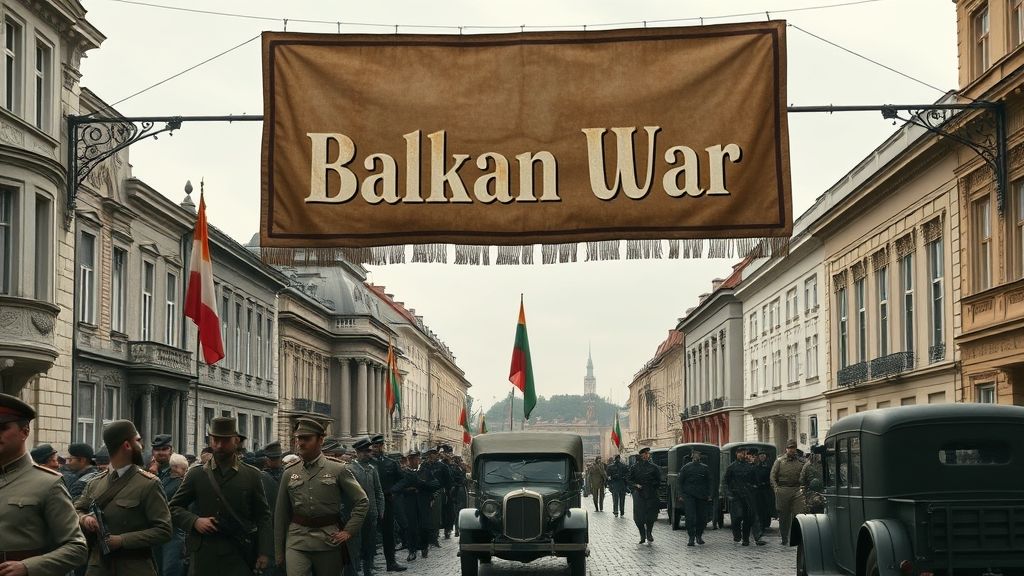
June 29, 1913. The city of Sofia simmered beneath a blistering summer sun, its streets buzzing with a restless energy that masked a deeper tension. The air was thick not just with heat, but with the unspoken anxieties of a nation poised at the edge of chaos. News crackled through telegram wires and whispered in cafés: Bulgaria was about to launch its assault on former allies. The Second Balkan War was about to erupt, and the fateful choice would soon be etched in history.
It was more than just guns and borders. It was about pride, betrayal, ambition, and survival in a region long torn by centuries of war, empire, and ethnic divisions. The opening salvo fired that day in Sofia would unravel fragile alliances and set the stage for a conflict far larger—a cataclysm whose reverberations would echo into the First World War.
The Shifting Sands of Balkan Alliances
The turn of the 20th century found the Balkans a mosaic of ethnicities, religions, and emerging nation-states—all jostling under the waning gaze of the Ottoman Empire. The Great Powers of Europe looked upon the region both as a puzzle and a powder keg, wary of igniting conflict that could spiral beyond their control.
The First Balkan War, fought barely a year earlier, had united Bulgaria, Serbia, Greece, and Montenegro against their common Ottoman foe. On paper, this alliance—the Balkan League—had succeeded spectacularly, securing large swaths of territory. Yet beneath the triumphant celebrations lay jealousies and resentments over who deserved which spoils.
National ambitions soon seemed irreconcilable. Bulgaria’s demands clashed with Serbian and Greek claims, the cartography of history redrawn by pressed pens and drawn swords. The alliances frayed, and the peace was a fragile veneer barely concealing the approaching storm.
The Aftermath of the First Balkan War: Unrest and Unmet Expectations
Victory left Bulgaria with a bitter taste. The treaties forged in London left certain prized territories in the hands of Serbia and Greece, particularly the region of Macedonia—a land with complex identities and claims from all sides. Bulgarian leaders felt cheated, their sacrifices undervalued by their erstwhile allies.
In Sofia’s parliament and streets, voices grew louder, urging a reassertion of Bulgaria’s rights. Military leaders and nationalists alike pushed for a new campaign to seize what was deemed rightfully Bulgarian soil. The wounds of the previous war festered, and the promise of unity dissolved into a powder keg of grievances.
Serbia, flush from territorial gains, was unwilling to cede ground. Greece shared similar sentiments, proud of its expansion and unwilling to risk reversal. The stage was set: old friends eyed one another as rivals, and the whispers of war grew into roars.
Bulgaria’s Growing Ambitions and the Seeds of Conflict
Bulgaria’s King Ferdinand and General Mihail Savov stood at the epicenter of the coming conflict. A mélange of nationalism, realpolitik, and a desire to assert Bulgaria as the dominant Balkan power spurred decisions that would unleash war.
Military preparations accelerated behind closed doors. Strategic plans aimed at swift offensives to seize contested regions were drawn up. The government justified measures to its restless population with impassioned calls of national destiny and defense against encroachment.
Yet not all in Bulgaria were unanimous. Some warned that the risks were immense, that the fragile European peace might shatter under renewed Balkan fire. These voices, however, were drowned out by fervor and a hunger for retribution.
Serbia and Greece: Partners Turned Adversaries
For Serbia, the fruits of the First Balkan War were a testament to their growing power. Control over Kosovo and parts of Macedonia bolstered national pride. But Bulgarian claims threatened to unravel these gains.
Greece, too, found itself in a delicate position. The expansion of southern Epirus and Macedonia was a victory that could not be reversed. Moreover, the Greek leadership saw Bulgaria’s challenge as not only territorial but existential.
As tensions heightened, secret negotiations and military realignments began. Serbia and Greece tacitly aligned against Bulgaria, ready to meet force with force. Old comrades prepared for battle lines that split brother from brother.
Romania and the Ottoman Empire: Opportunists Eyeing Gains
While Bulgaria, Serbia, and Greece prepared to clash, other regional players watched closely. Romania, north of the Danube, eyed Bulgaria suspiciously, concerned by its growing ambition. Bucharest prepared its army discreetly, contemplating entry if the spoils favored expansion.
The Ottoman Empire, despite its losses, saw opportunity amidst chaos. Recent reforms and modernization efforts had revitalized military strength, and Istanbul considered regaining lost provinces if Balkan powers weakened each other.
These peripheral forces poised themselves for action—a reminder that in the Balkans, no conflict remained isolated for long.
June 29, 1913: Sofia at the Brink of War
The fateful morning in Sofia crackled with energy and dread. Delegations from Serbia and Greece withdrew abruptly from peace talks. The Bulgarian government issued ultimatums.
By afternoon, orders were dispatched to troops massed at the borders. The airfields hummed, trains rumbled with reinforcements, and the nervous city braced itself.
Then, as dusk fell, the guns roared. Bulgarian artillery opened fire on Serbian positions in Macedonia. The Second Balkan War had begun.
The Opening Shots: Bulgaria Strikes First
Bulgaria’s initial offensives were swift and brutal. Troops surged across mountain passes and plains, pushing into contested territories. The rhythm of war—a cacophony of gunfire, cries, and thunderous marches—filled the air.
Yet resistance was fierce. Serbian and Greek defenders, aware of Bulgaria’s treachery, fought with desperation and determination. The frontlines wavered and shifted, with each side exacting heavy casualties.
Sofia’s optimism steeped in early success soon faced sobering reality: this war would be neither quick nor easy.
The Balkan Peninsula Erupts: Mobilization and Chaos
What began along narrow borderlands rapidly spilled across the Balkan Peninsula. Montenegro revived hostilities, joining Serbia and Greece. Romania declared war on Bulgaria in early July, opening a new front in the north.
Civilians found themselves caught in a maelstrom of displacement and violence. Refugee columns snaked through villages, while towns saw desperation grow alongside military movements.
Communication lines faltered, and misinformation spread. The Balkan map transformed daily, lines redrawn in blood and fire.
Battles and Border Clashes: The War Spreads
From the hills of Macedonia to the plains of Dobrudja, the Second Balkan War unfolded in a series of fierce engagements. Notable battles such as the Battle of Bregalnica saw staggering casualties and feats of valor.
Bulgaria’s army, though disciplined, was stretched thin and confronting enemies on multiple fronts. Greece held its ground in the south, while Serbian forces pressed westward.
Romanian troops swiftly advanced into Dobrudja, overwhelming Bulgarian defenses with superior numbers and coordination. The Ottoman Empire used the distraction to retake parts of Eastern Thrace.
The Role of Diplomacy—and Its Failure
Amidst the violence, diplomatic efforts sputtered and failed. The Great Powers—Austria-Hungary, Russia, Germany, France, and Britain—watched with growing concern but hesitated to intervene decisively.
Conflicting interests and alliances prevented a united front to stop the Balkan war machine. Russia sympathized with Serbia but wished to avoid wider conflict; Austria-Hungary feared Serbian expansion; Germany advocated for stability but had limited Balkan influence.
Ultimately, diplomacy proved powerless against the momentum of national ambitions and mutual distrust.
Civilians Caught in the Crossfire: Stories from the Ground
The human cost of the war often remains buried beneath strategic accounts. But in villages shadowed by tank and trumpet, lives were shattered.
A Macedonian family forced from their home near Bitola told tales of loss and resilience. Greek peasants witnessed neighbors turned into foes overnight. Bulgarian communities in contested areas faced reprisals.
Accounts of starvation, disease, and displacement document a war that consumed not just territory, but generations.
The War’s Swift Progression: Bulgaria’s Initial Advances and Setbacks
In the first weeks, Bulgaria advanced strongly against Serbia and Greece, seeking to secure vital positions. Yet as Romanian forces poured across the Danube and the Ottoman Empire made gains in Thrace, the tide began to turn.
Bulgarian supply lines faltered, morale declined, and internal disagreements surfaced. King Ferdinand’s decisions faced criticism, and a sense of overreach permeated military circles.
The front stabilized into a grueling stalemate, emblematic of a war that few had wished for but none could avoid.
Romania’s Entry and the Turning Tide
Romania’s sudden intervention shocked contemporaries and altered the war’s balance. Motivated by territorial claims and the desire to check Bulgarian power, Romanian troops swiftly captured Southern Dobruja.
With a fresh and formidable army on its northern flank, Bulgaria faced a new strategic nightmare. This campaign hastened Bulgaria’s retreat and pressured negotiations.
For Bucharest, the war was both a moment of opportunity and a challenge to integrate new lands and peoples.
Ottoman Counterattacks and the Resurrection of an Empire
Perhaps most unexpected was the Ottoman Empire’s resurgence. Capitalizing on Balkan infighting, Ottoman forces seized Edirne (Adrianople), a symbolic and strategic victory.
This marked a rare reversal for the once-declining empire and injected a new dimension into the conflict. For the Ottomans, it was a painful but meaningful step towards reclaiming glory.
For Balkan states, it was a grim reminder that old empires were not yet defeated.
International Responses and the Looming Shadow of Great Powers
As battlefields lit up, the European powers wrangled behind closed doors. The possibility that Balkan conflicts could ignite a larger continental war hung in the balance.
Austria-Hungary’s nervousness about Serbia’s expansion increased tensions with Russia. Germany and France prepared for uncertainty. Britain watched from afar, wary but reluctant to commit.
The Second Balkan War thus foreshadowed the gigantism of the coming global conflict, a tragic rehearsal for the calamities of 1914.
The Treaty of Bucharest in Retrospect: Redrawing a Contested Map
By August 1913, exhaustion and pressure forced a ceasefire. The Treaty of Bucharest redrew boundaries once more, leaving Bulgaria diminished and bitter.
Serbia and Greece solidified their gains in Macedonia; Romania secured Dobruja; the Ottoman Empire reclaimed parts of Thrace.
None emerged fully satisfied; new grievances seeded future instability. The treaty was a fragile patchwork on a continent increasingly restless.
Political Upheavals and National Disillusionments
In Bulgaria, the war’s defeat precipitated political turmoil. King Ferdinand faced mounting criticism; governments changed rapidly; nationalist fervor turned toward introspection and grief.
Similar ripples spread through Serbian and Greek politics. The war’s cost in lives and resources deepened societal cleavages.
Yet, despite disappointments, national mythologies were forged—stories of heroism and sacrifice that shaped Balkan identities for decades.
The War’s Cultural and Social Legacy in the Balkans
The Second Balkan War left scars beyond the battlefield. Literature, art, and oral traditions caught the emotional turbulence of a fractured region.
Songs mourned lost brothers; novels explored themes of betrayal and belonging; new national histories were written with militant fervor.
Yet the war also exposed the fragility of coexistence, a painful lesson carried into later generations.
Seeds of Future Conflicts: The Balkan Wars as Prelude to World War I
In many ways, the Second Balkan War was a prelude, a warning of the wider conflagration to come. It exposed nationalist fervor, fragile alliances, and the volatility of regional conflicts in a Europe balanced on a knife edge.
The entangled interests of the Balkans echoed later in the assassination of Archduke Franz Ferdinand, which would unleash the First World War.
The lessons of 1913 were written in blood, a haunting testament to the dangers of unresolved grievances and rising ambitions.
Reflections from Leaders and Soldiers: Voices of 1913
Amid the chaos, voices from the trenches and chambers give a human dimension. General Savov lamented the war’s toll; King Ferdinand justified his decisions as necessary sacrifices.
Serbian and Greek soldiers wrote letters filled with hope and fear. Civilians documented hardships as well as moments of solidarity.
These testimonies provide invaluable windows into a conflict often overshadowed by broader historical narratives.
Conclusion: A Fragile Peace Born from Fire
The Second Balkan War erupted on June 29, 1913, but it did not merely redraw borders—it shattered trust, ignited bitterness, and altered the course of history. Bulgaria’s bold gamble, Serbia’s and Greece’s hardened resolve, Romania’s opportunism, and the Ottoman Empire’s revival intertwined in a tragic symphony of ambition and despair.
Yet amid the ruin, there lay a profound human story: of nations striving for identity, peoples yearning for peace, and the precarious balances that hold the world at bay. The war's legacy reminds us that history’s darkest moments often emerge not from singular causes but from tangled human desires and fears.
As the guns fell silent and treaties signed, the Balkans inched toward a fragile peace—one that, like the summer of 1913, was burning just beneath the surface.
FAQs on the Second Balkan War
Q1: What triggered the outbreak of the Second Balkan War?
A1: The primary trigger was Bulgaria’s dissatisfaction with territorial divisions after the First Balkan War, particularly over Macedonia, prompting Bulgaria to attack its former allies Serbia and Greece in June 1913.
Q2: Which countries were involved in the Second Balkan War?
A2: Bulgaria fought against Serbia, Greece, Montenegro, Romania, and the Ottoman Empire, who capitalized on the conflict to regain or expand territory.
Q3: How long did the Second Balkan War last?
A3: The war lasted just over a month, from June 29 to late August 1913, culminating in the Treaty of Bucharest.
Q4: What were the main consequences of the war?
A4: Bulgaria lost significant territory and influence; Serbia and Greece gained control over Macedonia; Romania acquired Southern Dobruja; and the Ottoman Empire reclaimed parts of Eastern Thrace.
Q5: How did the war contribute to the outbreak of World War I?
A5: The war heightened tensions among Balkan states and the Great Powers, exposed fragile alliances, and set the stage for nationalist conflicts that spiraled into the global war following the assassination of Archduke Franz Ferdinand.
Q6: Who were the key figures during the war?
A6: King Ferdinand of Bulgaria, General Mihail Savov, and political leaders from Serbia, Greece, and Romania played critical roles in decision-making and military actions.
Q7: What was the international reaction to the Second Balkan War?
A7: The Great Powers were concerned but largely passive due to conflicting interests, thereby allowing the conflict to escalate until it reached a military stalemate.
Q8: How is the Second Balkan War remembered today?
A8: It is seen as a tragic but pivotal episode in Balkan history, illustrating the dangers of nationalism and unresolved territorial disputes, and serving as a prelude to the First World War.