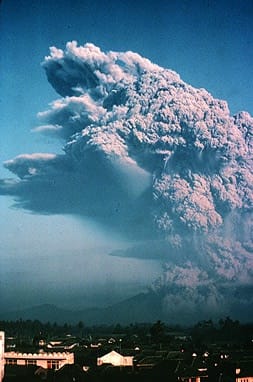
Galunggung 1982: When Ash Met Altitude
Table of Contents
- Introduction
- The Fiery Giant of West Java
- Eruption Timeline and Seismic Activity
- Impact on Local Populations
- Aviation Crisis in the Sky
- Geological Mechanics and Eruption Type
- National and International Response
- Environmental and Agricultural Fallout
- Scientific Study and Ash Monitoring
- Cultural Reflections and Local Narratives
- Long-Term Consequences for Aviation Safety
- Conclusion
- External Resource
- Internal Link
1. Introduction
On April 5, 1982, Mount Galunggung in West Java, Indonesia erupted with sudden and forceful intensity. Although Galunggung was known for past activity, this eruption quickly gained global attention—not just for its local destruction, but for how it endangered lives at cruising altitude.
Two months into the eruption, a British Airways 747, Flight 9, encountered an ash cloud invisible to the crew, which caused all four engines to fail temporarily. The incident became a turning point in volcanic aviation safety.
2. The Fiery Giant of West Java
✔️ Elevation: 2,167 meters (7,110 feet)
✔️ Located 180 km southeast of Jakarta
✔️ Stratovolcano with history of explosive eruptions
Galunggung’s 1982 activity surprised many due to its long dormancy since its last major eruption in 1882.
3. Eruption Timeline and Seismic Activity
✔️ Early April: tremors and small ash emissions noted
✔️ April 5: violent eruption begins
✔️ Volcanic Explosivity Index (VEI) estimated at 4
✔️ Periodic eruptions continued until January 1983
The main phase included Plinian-style explosions and heavy ashfall.
4. Impact on Local Populations
✔️ Over 40,000 people evacuated
✔️ Homes destroyed or buried by ash
✔️ Livestock and agriculture severely affected
Villages downwind of the crater were coated in thick ash, and daily life was disrupted for months.
5. Aviation Crisis in the Sky
✔️ On June 24, 1982, British Airways Flight 9 flew into the ash cloud
✔️ All engines flamed out, causing a brief glide descent
✔️ Engines restarted after descending below the ash
✔️ Aircraft landed safely in Jakarta
The near-miss highlighted that volcanic ash is invisible to radar and highly dangerous to jet engines.
6. Geological Mechanics and Eruption Type
✔️ Explosive eruption of andesitic to basaltic lava
✔️ Significant pyroclastic flows and ash column up to 15 km high
✔️ Ash dispersed across Southeast Asia
Galunggung’s position on the Sunda Arc explains its high explosivity.
7. National and International Response
✔️ Indonesian government coordinated mass evacuations
✔️ Local aid centers established for displaced residents
✔️ Aviation authorities worldwide issued new ash hazard protocols
The event brought volcano–aviation collaboration to the forefront.
8. Environmental and Agricultural Fallout
✔️ Ashfall contaminated rivers and soil
✔️ Crops like rice and cassava destroyed
✔️ Wildlife habitats damaged
Recovery took years in some areas, especially for farmers.
9. Scientific Study and Ash Monitoring
✔️ Event led to more volcanic ash advisory centers (VAACs)
✔️ Improved satellite detection of ash clouds
✔️ Galunggung used as a case study in pilot training worldwide
It became a global model for airspace safety near volcanoes.
10. Cultural Reflections and Local Narratives
✔️ Some saw the eruption as a divine sign
✔️ Oral histories preserve tales of glowing skies and black rain
✔️ Eruption date remembered annually in nearby villages
Local folklore interwove natural disaster with spiritual interpretation.
11. Long-Term Consequences for Aviation Safety
✔️ Creation of International Airways Volcano Watch (IAVW)
✔️ New cockpit procedures for ash encounters
✔️ Increased pilot training and risk mapping
Many of today’s aviation protocols trace back to Flight 9’s experience.
12. Conclusion
The 1982 eruption of Mount Galunggung is remembered not just for its terrestrial damage, but for the invisible threat it posed to global aviation. It reshaped both volcanic monitoring and pilot training, proving that ash can be as dangerous as fire.
From the mountains of Java to the skies above, Galunggung’s legacy still flies with us today.
13. External Resource
🌐 Wikipedia: 1982 Galunggung Eruption

