Table of Contents
- Dawn over Dublin: The Birth of a Rebellion
- Ireland on the Brink: Political and Cultural Tensions before 1916
- The Seeds of Revolution: The Rise of Irish Nationalism
- Planning the Uprising: Secret Meetings and Hidden Agendas
- Easter Monday, April 24, 1916: The Rising Ignites
- The Proclamation of the Irish Republic: A Bold Declaration
- The Fighting in the Streets: Heroes and Chaos
- British Response: Military Might versus Rebel Resolve
- The Siege of the General Post Office: Symbolism and Strategy
- The Rising’s Ripple Effect: Civilian Life Amidst Conflict
- The Execution of Leaders: Martyrs or Traitors?
- Public Reaction: From Outrage to Reverence
- The Rising’s Impact on World War I and International Perceptions
- Political Fallout: Shifting Sands in Irish and British Politics
- The Road to Independence: How 1916 Shaped Modern Ireland
- Remembering Easter Rising: Memory, Myth, and Identity
- Voices from the Past: Eyewitness Accounts and Personal Stories
- Women in the Rising: Unsung Architects of Revolution
- Legacy in Literature and Art: Ireland’s Cultural Reckoning
- Conclusion: Easter Rising as the Spark of a Nation’s Soul
- FAQs: Understanding the Easter Rising and Its Significance
- External Resource: Wikipedia Link
- Internal Link: Visit History Sphere
Dawn over Dublin: The Birth of a Rebellion
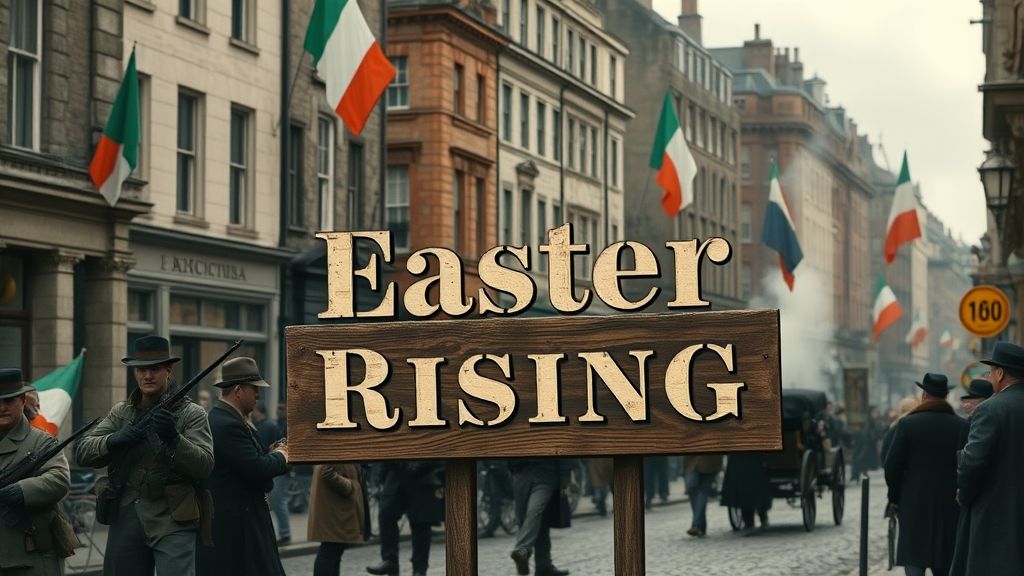
On a mild spring morning, April 24, 1916, as the first gentle light of dawn spread across the rooftops of Dublin, the city awoke unaware of the historic upheaval about to shatter its streets. The air, laden with the scent of blooming hawthorn and damp earth, was thick with tension and expectation. In tightly held whispered meetings and behind shuttered windows, a small but defiant group of men and women readied themselves for an act that would rattle the British Empire to its core—an armed insurrection proclaiming Ireland’s right to freedom and sovereignty.
The Easter Rising, as it would come to be known, was not a spontaneous eruption. It was the culmination of decades of simmering resentment, cultural reawakening, and political ferment. At precisely 12:00 pm, the rebels began their march, seizing key buildings and raising the tricolour flag over the General Post Office, signaling the dawn of a new Ireland. Blood would soon stain the streets of Dublin, and the aftermath would echo far beyond the city limits. This is the story of a rebellion—a story of hope, sacrifice, and the relentless quest for identity.
Ireland on the Brink: Political and Cultural Tensions before 1916
To understand the Easter Rising, one must first peer into the turbulent landscape of early 20th-century Ireland—a land steeped in beauty yet deeply scarred by colonization and division. For centuries, Ireland languished under British rule, enduring a complex web of political, social, and economic suppression. The 19th century had already seen great upheavals: the catastrophic Great Famine, the agitation for home rule, and cultural revivals that sought to reclaim a distinct Irish voice.
By 1916, these tensions had boiled under the surface. The Home Rule Act, granting limited self-government, was passed but postponed indefinitely due to the outbreak of World War I. Meanwhile, the island was split: the largely Protestant north was staunchly unionist; the predominantly Catholic south, nationalist and increasingly radicalized. Economic hardships, linguistic revival in the Gaelic League, and burgeoning political movements like Sinn Féin collided against the backdrop of a world at war.
The Seeds of Revolution: The Rise of Irish Nationalism
The nationalist fervor was no longer content with mere political concessions. Stalwarts of Irish independence—seasoned veterans of past rebellions mixed with fiery youth inspired by revolutionary ideals across Europe—saw the war as an opportunity to strike. The Irish Republican Brotherhood (IRB), a clandestine organization, had long coveted an armed uprising. The Gaelic Revival culture imbued the movement with a poetic spirit, while leaders like Patrick Pearse articulated a vision of Ireland steeped in language, religion, and heroic sacrifice.
Among the restless youth were the Irish Volunteers, a paramilitary force formed in response to both British oppression and unionist paramilitary groups in Ulster. Their ranks swelled with men ready to risk all. Alongside them existed the smaller Irish Citizen Army, a workers’ militia born from labor disputes. These groups symbolized the multifaceted nature of Irish nationalism—fused in a cause transcending mere politics, underpinned by personal and communal identity.
Planning the Uprising: Secret Meetings and Hidden Agendas
The Rising was far from a spontaneous revolt. Behind closed doors in dimly lit rooms, often beneath the bustling streets of Dublin, a cabal of leaders plotted the moment to ignite. Discussions edged with fear, fervor, and calculated risk culminated in the decision: Easter 1916 would be the moment of reckoning. The Rising was to be swift but symbolic; its objectives to seize key government buildings and demonstrate Irish sovereignty in the hope that intervention from Germany, at war with Britain, might tip the scales.
Key figures—Patrick Pearse, Joseph Plunkett, Thomas Clarke, Éamonn Ceannt among them—became the architects of rebellion. They contended with internal dissent: not all Irish Volunteers agreed; many preferred to support Britain in its war effort, hoping home rule would follow victory. But the choice of a small, committed core to act decisively was final. Arms were smuggled, proclamations printed, orders given: Dublin would burn with the fire of revolution.
Easter Monday, April 24, 1916: The Rising Ignites
When the hour struck noon, the calm Dublin streets quickly turned into a patchwork of armed defiance. Around 1,600 insurgents emerged from corners, homes, and hidden caches to take over strategic locations—post offices, the Four Courts, the South Dublin Union. The city itself was a fortress, with barricades raised and rifles cocked.
The British forces were initially caught off guard. For a brief moment, it seemed the rebels’ daring gambit might succeed, their bold proclamation ringing in the air as a new chapter in Irish history. But as the day unfolded, reinforcements flooded into the city, turning the streets into battlefields. For six days, Dublin endured exchanges of gunfire, explosions, and civilian hardship. In the heart of the carnage stood the General Post Office (GPO), the rebel headquarters and symbolic heart of the Rising.
The Proclamation of the Irish Republic: A Bold Declaration
Inside the GPO, Patrick Pearse and his comrades read aloud the Proclamation of the Irish Republic, a manifesto declaring Ireland’s independence and the rights of its people. It was a moving and resolute statement, invoking the sacrifices of past heroes and pledging a new dawn of freedom, equality, and justice.
The document boldly promised to cherish religious and civil liberties equally, pledging “cherish all the children of the nation equally.” This aspirational manifesto was meant to unite a dozen centuries of conflict into a hopeful future. Yet, it was simultaneously a declaration of war—an act that would seal the fates of those brave enough to sign it.
The Fighting in the Streets: Heroes and Chaos
The rebellion was marked by both acts of courage and tragic chaos. Urban combat unfolded amidst narrow alleys, public buildings, and bustling markets. The rebels were poorly armed and outnumbered, but their determination was fierce. Snipers perched on rooftops, couriers braved British patrols, and medics struggled amid the smoke and rubble.
Civilians were caught in the crossfire—homes shattered, lives upended, businesses destroyed. Yet the spirit of resolve endured. Notorious figures like James Connolly and Michael Collins emerged, their stories entwined with the violence and idealism. Connolly, wounded but steadfast, commanded rebels at the GPO, embodying sacrifice. Collins, less prominent in the Rising but vital in later independence efforts, was observing closely.
British Response: Military Might versus Rebel Resolve
The British response was swift and brutal. Thousands of troops streamed into Dublin, supported by artillery and even naval bombardments from the Liffey River. Buildings like the GPO were shelled relentlessly, forcing the rebels into a losing siege.
Martial law was declared, curfews imposed, and military courts set up. The government was unforgiving; surrender was demanded. The rebels fought valiantly, but by April 29, the resistance crumbled. The surviving leaders surrendered to spare further bloodshed, knowing well the price they might pay.
The Siege of the General Post Office: Symbolism and Strategy
The GPO was not just a military objective—it was a symbol. The heart of communication and power in Dublin, its occupation sent a clear signal to the world that Ireland was no longer just a colony but a nation proclaiming its independence.
The siege of the GPO became the defining episode of the Rising. Inside, the rebels faced continuous bombardment and fires, the building reduced to ruins. Yet it was there that Patrick Pearse finally ordered the surrender. The final withdrawal from the GPO marked not just the collapse of the Rising but the end of an audacious dream shaped in ash and courage.
The Rising’s Ripple Effect: Civilian Life Amidst Conflict
As bullets flew and buildings burned, the civilians of Dublin bore silent witness. Families fled their homes, shops shuttered, streets emptied. Yet, amid fear and suffering, community bonds were forged. Relief efforts, clandestine aid, and acts of kindness appeared alongside the destruction.
The Rising was, in many ways, a tragedy of a city caught between hope and horror. Casualties numbered around 450 deaths—both combatants and civilians—and thousands injured. The psychological wound to Dubliners was profound, their city transformed into a battlefield for causes larger than themselves.
The Execution of Leaders: Martyrs or Traitors?
The British government’s reaction post-Rising was as severe as the conflict itself. Within weeks, sixteen leaders of the Rising were executed by firing squad, including Pearse, Connolly, Clarke, and Plunkett. The executions were meant to cow the Irish population and quell future insurrections.
But the opposite happened. These men became martyrs, their deaths galvanizing public opinion and fueling sympathy for Irish independence. The solemn funerals and widespread mourning transformed them into legends—figures etched into Irish collective memory as heroes who gave everything for freedom.
Public Reaction: From Outrage to Reverence
Initially, many Dubliners were wary or even hostile towards the rebels, seeing them as reckless disruptors during a time of war. However, the executions changed the mood dramatically. Outrage swept through Ireland, inspiring a wave of nationalist fervor.
Public reverence for the Rising’s leaders grew, and participation in nationalist movements swelled. Sinn Féin, little involved in the Rising itself, became the political voice of this new generation, winning overwhelming support in the 1918 General Election. The Easter Rising had lit a fire that could not be extinguished.
The Rising’s Impact on World War I and International Perceptions
How did the Easter Rising resonate beyond Ireland? It was an event that caught the eye of a world engulfed in the colossal conflict of World War I. While many in Britain viewed it as a betrayal during wartime, others admired the rebels’ audacity.
Germany had briefly considered supporting the Irish cause, hoping to destabilize Britain, but logistical difficulties prevented significant aid. More importantly, the Rising injected a poignant dimension into the war—highlighting colonial aspirations, the limits of empire, and the human cost of imperialism and nationalist struggle.
Political Fallout: Shifting Sands in Irish and British Politics
The Rising irreversibly altered the political landscape. It shattered the dominance of constitutional nationalism embodied by John Redmond and the Irish Parliamentary Party, which had championed Home Rule.
In place rose Sinn Féin, demanding outright independence. The brutal suppression, executions, and martial law alienated many moderate Irish voters. British authorities, facing a growing challenge, found themselves locked in a cycle of repression and resistance that would escalate into the Irish War of Independence (1919-1921).
The Road to Independence: How 1916 Shaped Modern Ireland
The Easter Rising was the prologue to Ireland’s struggle for statehood. Though a military failure in itself, it sowed the seeds for a political victory.
The subsequent years—marked by guerrilla warfare, political negotiation, and cultural revival—eventually led to the Anglo-Irish Treaty of 1921, partition of the island, and the foundation of the Irish Free State. The Rising’s call for freedom reverberated across generations, shaping the identity, politics, and symbolism of modern Ireland.
Remembering Easter Rising: Memory, Myth, and Identity
Ireland’s reckoning with 1916 is as much about memory as history. Annual commemorations, monuments like the Garden of Remembrance in Dublin, and schools teaching the Proclamation keep the Rising alive.
Yet memory is not static; it is contested terrain where myth and fact intertwine. The Rising’s heroes are celebrated, but so is reflection on the complexities—the costs, divisions, and unintended consequences. Ireland continues to grapple with what 1916 means in its national story.
Voices from the Past: Eyewitness Accounts and Personal Stories
Beyond official records, it is the human voices that bring Easter Rising to life. Letters from soldiers, diaries of civilians, and testimonies capture the fear, hope, and confusion of those caught in the uprising.
For example, Anne Devlin, secretary to Thomas Clarke, was imprisoned and tortured, embodying the silent suffering of many women. Civilian accounts reveal the terror of shellfire and the resilience of a city under siege, lending an intimate portrait to a grand historical tableau.
Women in the Rising: Unsung Architects of Revolution
Women played critical roles in the Rising, whether as couriers, nurses, combatants, or organizers. The Irish Citizen Army included women fighters like Constance Markievicz, who later became the first woman elected to the British Parliament.
Their contributions were vital but often overshadowed in history. Yet, they challenged societal norms and asserted that the fight for Irish freedom was also a fight for gender inclusion. Their courage and sacrifices remain inspirational.
Legacy in Literature and Art: Ireland’s Cultural Reckoning
The Easter Rising inspired a wealth of artistic expression—from poems by W.B. Yeats, whose “Easter, 1916” famously lamented the “terrible beauty” of the event, to novels, plays, and paintings that grappled with the rebellion’s meaning.
This cultural output reflected both pride and tragedy, capturing Ireland’s complex relationship with its revolutionary past. It fueled a continuing creative dialogue on identity, memory, and the cost of freedom.
Conclusion: Easter Rising as the Spark of a Nation’s Soul
The Easter Rising was a moment when a small group dared to dream fiercely of freedom, even against overwhelming odds. Though crushed in blood and fire, the rebellion became the crucible from which modern Ireland emerged.
It taught invaluable lessons on sacrifice, resilience, and the power of ideas. Beyond politics and battles, it was a deeply human story—of voices raised in defiance, of lives reshaped by conviction, and a nation’s soul kindled anew.
Ireland’s story would never be the same after that April morning in 1916. The spirit of the Rising still stirs hearts—reminding us of the enduring struggle for dignity, justice, and self-determination.
FAQs
Q1: What was the main cause behind the Easter Rising?
The primary cause was Irish nationalist frustration with British rule, compounded by the postponement of Home Rule due to World War I. The leaders sought to declare independence and capitalize on Britain’s wartime distraction.
Q2: Who were the key leaders of the 1916 Rising?
Among the principal figures were Patrick Pearse, Thomas Clarke, James Connolly, Joseph Plunkett, and Éamonn Ceannt. Each played a vital role in planning or executing the rebellion.
Q3: How did the British government respond to the Rising?
The British responded with military force, quashing the rebellion within six days. Subsequently, they executed sixteen leaders by firing squad, aiming to suppress nationalist sentiments.
Q4: What was the public reaction in Ireland after the Rising?
Initially mixed, the public opinion shifted after the executions of the leaders, moving from condemnation to widespread sympathy and support for independence movements.
Q5: What impact did the Easter Rising have on World War I?
While a minor military engagement compared to the global war, it exposed imperial vulnerabilities and ignited political tensions that complicated British war efforts.
Q6: How did the Easter Rising influence Irish independence?
It was a catalyst for the Irish War of Independence, inspiring political activism and weakening support for Home Rule proponents, ultimately leading to the creation of the Irish Free State.
Q7: Were women involved in the 1916 Rising?
Yes, women played essential roles as fighters, couriers, and supporters. Figures like Constance Markievicz became symbols of female participation in the nationalist struggle.
Q8: How is the Easter Rising commemorated today?
It is commemorated annually on Easter Monday with ceremonies, parades, and public education, reflecting on its enduring significance in Irish identity and history.