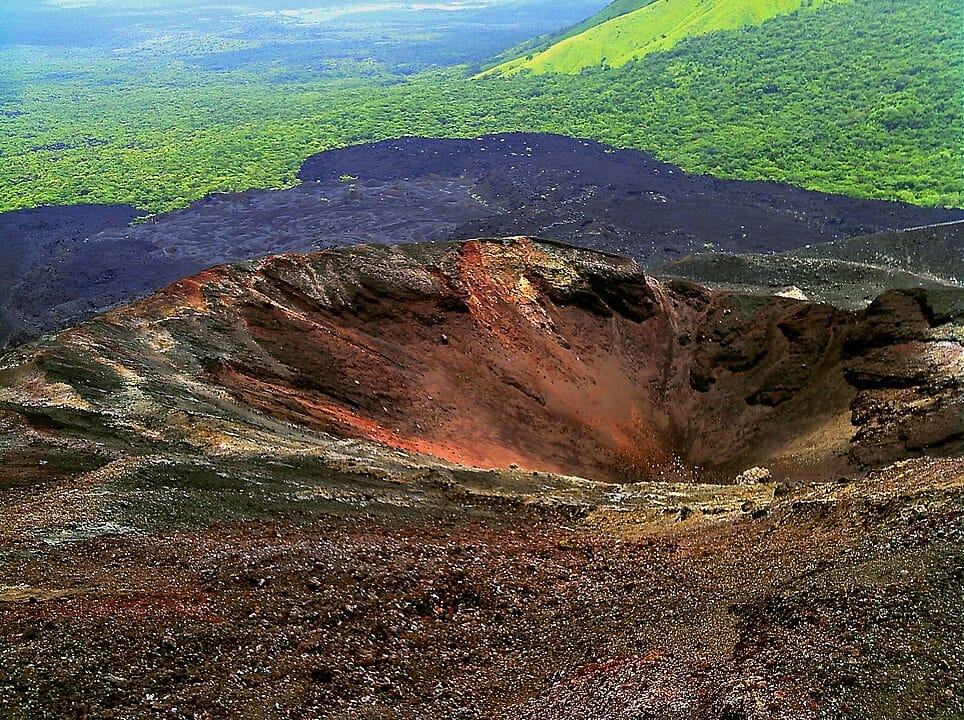
Cerro Negro 1999: Nicaragua’s Ash Giant Awakens Again
Table of Contents
- Introduction
- Cerro Negro: A Young and Fierce Volcano
- Historical Background of Eruptions
- August 1999 Eruption Timeline
- Environmental and Human Impact
- Volcanic Monitoring in Nicaragua
- Ashfall and Agricultural Damage
- Community Response and Recovery
- Regional and Global Scientific Attention
- Lessons Learned for Future Preparedness
- Conclusion
- External Resource
- Internal Link
1. Introduction
On August 5, 1999, Cerro Negro, one of the youngest volcanoes in Central America, reminded Nicaraguans of its presence with a forceful eruption. Though not its most destructive event, this episode painted the skies with ash and disrupted life across nearby communities, including the city of León.
2. Cerro Negro: A Young and Fierce Volcano
✔️ Formed in 1850, youngest in Central America
✔️ Known for frequent Strombolian eruptions
✔️ Rises to about 728 meters above sea level
Despite its modest size, Cerro Negro’s eruptions can have major regional consequences.
3. Historical Background of Eruptions
✔️ Previous eruptions in 1947, 1968, 1971, 1992
✔️ Known for intense ash columns and lava bombs
✔️ The 1992 eruption was particularly powerful, impacting air travel and agriculture
Locals have grown accustomed to the cycles of activity, yet each eruption brings new challenges.
4. August 1999 Eruption Timeline
✔️ August 5: Volcanic tremors detected in early hours
✔️ Eruption began before sunrise
✔️ Ash columns rose several kilometers high
✔️ Light ashfall reported in León, Malpaisillo, and surrounding towns
Flights were briefly delayed and roads coated in black ash.
5. Environmental and Human Impact
✔️ Ash damaged crops and covered rooftops
✔️ Respiratory issues reported among residents
✔️ Livestock health affected due to water contamination
Thankfully, no fatalities were reported.
6. Volcanic Monitoring in Nicaragua
✔️ Overseen by INETER (Instituto Nicaragüense de Estudios Territoriales)
✔️ Seismic and gas monitoring in place since early 1990s
✔️ The 1999 eruption spurred further investment in early warning systems
Volcano observatories played a critical role in minimizing casualties.
7. Ashfall and Agricultural Damage
✔️ Coffee and maize crops were hardest hit
✔️ Ash reduced sunlight and photosynthesis
✔️ Contaminated soil slowed growth in following seasons
Farmers had to adapt through government support and rotating cultivation areas.
8. Community Response and Recovery
✔️ Local brigades cleared ash from roads and buildings
✔️ Schools suspended for several days
✔️ Public health campaigns distributed masks and water sanitation kits
Recovery was swift thanks to coordination between municipal leaders and INETER.
9. Regional and Global Scientific Attention
✔️ International volcanologists observed and sampled ejecta
✔️ Satellite imagery captured real-time ash dispersion
✔️ The event provided key data for modeling small explosive eruptions
The 1999 eruption helped refine future hazard mitigation strategies.
10. Lessons Learned for Future Preparedness
✔️ Highlighted importance of real-time communication with rural populations
✔️ Prompted updates to volcano hazard maps
✔️ Reinforced the need for resilient infrastructure in high-risk zones
Nicaragua emerged better prepared for future Cerro Negro activity.
11. Conclusion
The Cerro Negro eruption of August 1999 may not have made global headlines, but for those living nearby, it was a vivid reminder of the raw power embedded beneath their soil. With ash-filled skies, disrupted crops, and a mobilized community, the event stands as a key chapter in Nicaragua’s volcanic legacy.

