Table of Contents
- The Dawn of April 12, 1927: Shanghai on the Brink
- The Roar of Revolution: Tensions Leading to the Massacre
- The Players in Shanghai: Nationalist Kuomintang and the Communist Party
- The Fractured Alliance: From Cooperation to Catastrophe
- The Early Morning Strike of the Whites: The Coup Unfolds
- Bloody Streets: The Violence that Shattered a Movement
- The Role of Chiang Kai-shek: Architect or Opportunist?
- Foreign Interests and Their Shadow over Shanghai
- The Aftermath: Casualties, Arrests, and Repression
- The Split of the Left: How the CCP Reacted
- The End of the First United Front: Political Earthquake in China
- The Nationalist Party’s Consolidation of Power in Shanghai
- International Reactions: Shockwaves Beyond China’s Shores
- The Shift in Revolutionary Strategy: From Urban Uprising to Rural Insurgency
- Echoes Through Time: The Long-Term Impact on Chinese Civil War
- The Shanghai Massacre in Memory and Historiography
- Revisiting the Event: New Interpretations and Sources
- Human Stories from the Massacre: Voices from the Shadows
- The Shanghai Massacre’s Role in Shaping Modern China
- Understanding Political Violence: Lessons from 1927 Shanghai
- Conclusion: The Shattered Dream and a Nation Reforged
- FAQs: Key Questions about the Shanghai Massacre
- External Resource
- Internal Link
The Dawn of April 12, 1927: Shanghai on the Brink
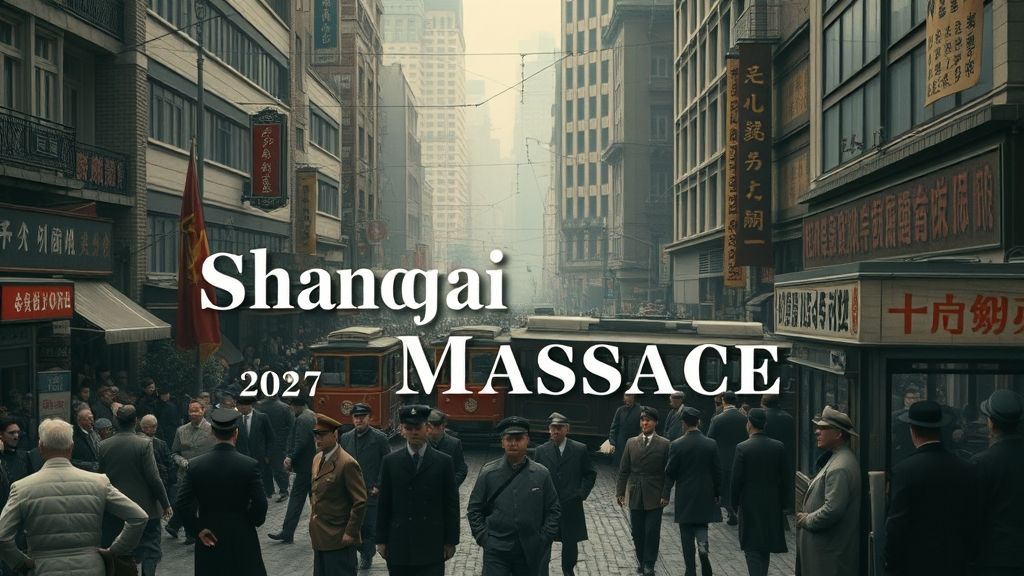
Shanghai awoke beneath heavy gray clouds on the morning of April 12, 1927, a city pulsing with contradictions. It was a place where East and West embraced uneasily—glittering skyscrapers jutted defiant against neon-lit opium dens, foreign concessions sat side by side with crumbling tenements. The city was electrified by political fervor, embodying both hope and danger. But on that day, the fog of promise gave way to smoke and gunfire. The air thickened with fear as power shifted abruptly, violently. The event that would later be known as the Shanghai Massacre—a brutal purge of communists by their erstwhile Nationalist allies—was about to cast a long shadow over China’s fragile dream of unity and revolution.
The Roar of Revolution: Tensions Leading to the Massacre
To understand the carnage that would unfold, one must grasp the tinderbox of early 20th-century China. The Qing dynasty had fallen in 1911, leaving the young Republic riddled with warlord factions and foreign imperialist factions hungry for control. Within this chaos, ideas of nationalism, communism, and reform rippled fiercely through urban centers like Shanghai.
Since the 1920s, the Kuomintang (KMT or Nationalist Party), led by Sun Yat-sen, sought to unify China under a nationalist banner. A pragmatic alliance had formed between the KMT and the Chinese Communist Party (CCP), cemented by the Comintern, aiming to expel imperialists and overthrow the warlords. But beneath this camaraderie simmered mutual suspicion, ideological discord, and competing visions of China's future.
Shanghai, a bustling port city and industrial powerhouse, became a strategic nerve center. It was also a bastion of labor unrest, harboring radical Communists invigorated by the success of the Soviet Revolution. Strikes and protests shook the city, sowing unrest that alarmed conservative elements within the KMT and foreign business interests wary of socialist disruption.
The Players in Shanghai: Nationalist Kuomintang and the Communist Party
By early 1927, power in Shanghai rested uneasily in the hands of a coalition. The left wing of the KMT, more sympathetic to workers and radicals, worked alongside the Communists in the First United Front. But the party was rife with factionalism. Chiang Kai-shek, a rising star within the Nationalists, embodied the right-wing, militaristic faction determined to wrest control from both warlords and communists alike.
The Communists, under leaders like Zhou Enlai and Chen Duxiu, had deep roots in Shanghai’s working class. Their influence in trade unions and militant mobs was considerable, and the threat they posed to capitalist and nationalist interests was taken seriously—especially by foreign powers and Shanghai’s business elite.
Adding to the combustible mix were the foreign concessions, where authorities turned a blind eye or collaborated in the suppression of leftist agitators, fearing the loss of their lucrative footholds.
The Fractured Alliance: From Cooperation to Catastrophe
The alliance was never stable. The ideological chasm between nationalists who sought state control and communists who aimed at radical social transformation was vast. In early 1927, the National Revolutionary Army, nominally united, split along factional lines. Tensions escalated after the successful Northern Expedition, designed to liberate China from warlord rule, as Chiang and his supporters eyed the communists as rivals to be eliminated.
By April, Chiang had resolved that the alliance had served its purpose. Seeking to consolidate his personal power, he prepared to break the coalition with coordinated violence, supported by conservative KMT factions, business tycoons, and foreign military advisors. The city’s streets were about to become a battlefield.
The Early Morning Strike of the Whites: The Coup Unfolds
At dawn on April 12, forces loyal to Chiang Kai-shek—Kuomintang troops, police, and gangsters—launched a coordinated strike against communist strongholds in Shanghai. The suddenness was devastating.
Barricades were shattered, communist offices stormed, union leaders arrested or executed without trial. The operation was ruthless, crushing the city's labor movement and striking a devastating blow to the CCP in its primary urban base.
Key strategic points were seized by Chiang’s troops. The skyline of Shanghai bore witness to scenes of cold-blooded massacres. Historical witness accounts recall an atmosphere thick with smoke and the sharp scent of gunpowder, punctuated by gunshots and cries.
Bloody Streets: The Violence that Shattered a Movement
Violence erupted on a scale that shocked even seasoned observers. Estimates of deaths vary widely; some historians suggest thousands of communists, sympathizers, and union members were killed during the purge and its aftermath.
The victims were often rounded up under accusations of sedition or treason and summarily executed. The brutal street fighting was accompanied by targeted assassinations, mass arrests, and forced disappearances. Entire communities were terrorized.
Chiang’s forces also employed local gangs and mercenaries—some infamous for their brutality—to help root out the remnants of communist resistance.
The Role of Chiang Kai-shek: Architect or Opportunist?
For years, historians have debated Chiang Kai-shek’s role in the massacre. Was he the cold architect who planned the purge with calculated precision, or a man responding to pressures from elites and foreign powers fearful of communist radicalism?
Chiang himself later justified the massacre as a necessary step to “cleanse” the revolution and protect China from chaos. His aspirations for a centralized, non-communist state took precedence over alliance and principle.
Whatever the interpretation, the massacre cemented Chiang’s leadership of the KMT but devastated communist ranks, forcing them underground and into new strategies.
Foreign Interests and Their Shadow over Shanghai
Foreign powers watching Shanghai closely played a tacit role in the events. British, American, and Japanese concessions served as sanctuaries for fleeing refugees and platforms for intervention.
Many foreign businessmen feared the rise of communism would threaten their investments and control over trade. Some accounts indicate foreign police and militants provided intelligence or even active support to the Nationalist purge.
The tragedy was not only a civil conflict but a clash with imperialist overtones, with Shanghai as the geopolitical chessboard.
The Aftermath: Casualties, Arrests, and Repression
Following the massacre, thousands of communists were imprisoned, tortured, or executed. Trade unions were dismantled or brought under KMT control, effectively crushing the labor movement in Shanghai.
The KMT quickly moved to stabilize the city under their governance, enforcing strict surveillance and censoring the press. Fear and mistrust permeated daily life.
The CCP was forced into survival mode, abandoning open politics in the city and shifting to rural areas and clandestine operations—a pivot that would change the course of Chinese revolutionary history.
The Split of the Left: How the CCP Reacted
The massacre fractured the fragile alliance of the First United Front. The CCP saw the betrayal as a devastating blow and adopted a more militant, underground approach to resistance.
Leaders like Mao Zedong advocated for rural insurgencies, viewing the peasantry as the revolutionary engine rather than urban workers. This strategic shift evolved into the Chinese Communist Party’s long guerrilla war against the Kuomintang.
The massacre hardened ideological lines and deepened the civil war that would convulse China for decades.
The End of the First United Front: Political Earthquake in China
With the purge, the First United Front effectively collapsed. The fragile coalition between the Nationalists and Communists was shattered, plunging China into a violent civil strife that defined the next twenty-plus years.
To many, the events symbolized the betrayal of revolutionary ideals, and the victory of opportunistic factionalism. The dream of a united front fighting foreign domination and warlords lay in ruins on the streets of Shanghai.
The Nationalist Party’s Consolidation of Power in Shanghai
Chiang Kai-shek’s Nationalist government consolidated power following the massacre, ruling Shanghai with an iron grip. The city became a showcase for KMT modernization and control—but at the price of political suppression.
The control of Shanghai symbolized a broader effort by the Nationalists to extend state authority across China, alienating leftist forces and sowing seeds of future conflict.
International Reactions: Shockwaves Beyond China’s Shores
News of the massacre reverberated internationally. Western governments expressed concern but largely refrained from direct intervention. The Soviet Union condemned the purge vigorously, as it dashed hopes for a proletarian revolution allied with the KMT.
Communist parties worldwide viewed Shanghai as a cautionary tale, influencing their policies and approaches in colonial and semi-colonial contexts.
China's internal struggle became a microcosm of wider ideological battles between fascism, communism, and nationalism in the tumultuous interwar era.
The Shift in Revolutionary Strategy: From Urban Uprising to Rural Insurgency
One of the most profound consequences of the massacre was the CCP’s strategic realignment. Urban centers were now dangerous battlegrounds; the party turned to mobilizing peasants in the countryside.
Mao’s theory of protracted people’s war emerged more forcefully from this shift, setting a path that would eventually lead to the foundation of the People's Republic of China in 1949.
This tactical transformation underscored the massacre’s deep imprint on Chinese revolutionary thought.
Echoes Through Time: The Long-Term Impact on Chinese Civil War
The violent rupture in Shanghai was a pivotal moment in the Chinese Civil War. It deepened the hostility between the two main political forces and entrenched a pattern of brutality and betrayal.
Civil war would ebb and flow in the decades that followed, but the spring of 1927 marked a definitive break that shaped politics, ideology, and society.
The Shanghai Massacre in Memory and Historiography
For decades, the Shanghai Massacre was a subject of political propaganda and contested memory. The Nationalists framed it as a “necessary cleanse,” while the Communists mourned it as a martyrdom.
Historians have struggled to piece together reliable data amid conflicting sources. Over time, new archival materials and testimonies have provided a more nuanced picture, allowing a fuller appreciation of the event’s complexity.
Revisiting the Event: New Interpretations and Sources
Recent scholarship has revisited April 12, 1927, employing newly available Chinese archives and international records. These studies highlight the massacre as not only political betrayal but also a symbol of urban class struggle, foreign intervention, and fractured modernity.
These reinterpretations complicate simplified narratives, showing a human tragedy entangled in global and domestic forces.
Human Stories from the Massacre: Voices from the Shadows
Beyond grand politics, the massacre was a human catastrophe. Oral histories recount the terror of families torn apart, workers betrayed, and ordinary citizens caught in the crossfire.
These personal testimonies remind us that behind every historical event are lives disrupted and dreams destroyed.
The Shanghai Massacre’s Role in Shaping Modern China
Ultimately, the massacre reshaped China’s trajectory—deepening divides but also catalyzing new revolutionary paths. It marks a break from uniting nationalism to fateful civil war and transformative ideologies.
Its legacy is visible in China’s political landscape and collective memory, a reminder of both the costs of political betrayal and the fierce striving for national renewal.
Understanding Political Violence: Lessons from 1927 Shanghai
The events underscore how political violence can become both a tool and a trap. The massacre illustrates dangers of factionalism, intrigue, and external interference in revolutionary processes.
History teaches that political purges can extinguish potentials but also provoke new forms of struggle—lessons that resonate far beyond China’s borders.
Conclusion
The Shanghai Massacre of April 12, 1927, is not merely an episode of political violence but a mirror reflecting the tumult, hopes, and tragedies of early modern China. It shattered a fragile alliance, unleashed torrents of bloodshed, and forced a great revolution to rethink its strategies. More than a century later, the echoes of that violent morning continue to reverberate, reminding us that the road to nationhood is often paved with betrayal and sacrifice.
Yet amidst the blood and ashes lay seeds of resilience. The massacre forged a hardened Communist Party, impelled by new visions of revolution born in exile and struggle. It also sealed the fate of Chiang Kai-shek’s Nationalists, who, while momentarily triumphant, faced a country increasingly divided.
The story of April 12 is thus a tale of fracture and forging, despair and endurance—a deeply human saga at the heart of China’s rise.
FAQs
Q1: What triggered the Shanghai Massacre in April 1927?
The massacre was triggered by Chiang Kai-shek’s decision to break the alliance with the Chinese Communist Party, fearing their growing influence would destabilize his nationalist vision and threaten foreign and elite interests.
Q2: How many people were killed during the Shanghai Massacre?
Exact numbers are difficult to determine. Estimates vary widely, but historians agree that thousands of communists, labor activists, and sympathizers were killed or disappeared.
Q3: What role did foreign powers play in the massacre?
Foreign powers, particularly British, American, and Japanese concessions, provided tacit support or turned a blind eye, fearing communist takeover would threaten their control over Shanghai’s trade and governance.
Q4: How did the Chinese Communist Party respond after the massacre?
The CCP went underground, shifted focus from urban activism to rural insurgency, and adopted guerrilla tactics that laid the groundwork for its eventual rise to power.
Q5: Why is the Shanghai Massacre considered a turning point in Chinese history?
It marked the collapse of the First United Front, intensified the civil war, and dramatically altered revolutionary strategies—setting the stage for decades of conflict.
Q6: How is the massacre remembered in China today?
Memory varies: the CCP views it as a tragic betrayal and a catalyst for revolution, while the KMT historically framed it as a necessary purge. Today, it is recognized as a critical event that shaped modern China.
Q7: Could the massacre have been avoided?
Historians debate this, but tensions, ideological conflicts, and interests suggest that violent rupture was unfortunately likely given the political climate.
Q8: What lessons does the Shanghai Massacre offer for understanding political violence?
It exemplifies how ideological rivalries and power struggles can rapidly escalate into catastrophic violence, particularly when compounded by foreign influence and factionalism.